



News
Fuel price may drop as Dangote, NNPC agree on N766/litre



Marketers have demanded direct access to Premium Motor Spirit (petrol) from the Dangote refinery, criticising the firm grip of the Nigerian National Petroleum Corporation on the market.
The National Publicity Secretary of the Independent Petroleum Marketers Association of Nigeria, Chinedu Ukadike, said the market should be open for all in line with the willing-buyer and willing-seller commitment earlier made by the corporation.
The NNPCL had last Saturday said it was not the sole off-taker of products from the Dangote refinery, adding that the refinery was free to sell its petrol to any marketer.
But a week after the statement, the Federal Government announced that the company would be the sole buyer of petrol from the refinery.

At a press briefing in Abuja on Friday, the Minister of Finance and the Coordinating Minister of the Economy, Wale Edun, noted that interested marketers would have to buy the product from the national oil firm through its trading company.
The minister, represented by the Executive Chairman of the Federal Inland Revenue Service, Dr Zacceus Adedeji, also announced that the Dangote refinery would commence the distribution of petrol to marketers on Sunday with an initial 25 million litres per day.
He said, “I am glad to announce that all agreements have been put in place, and the loading of the first batch of PMS, as already announced by NNPC, will commence on Sunday, September 15, 2024. And from October 1, NNPC will commence the supply of crude oil to the Dangote refinery to be paid in naira.
“In return, Dangote refinery will supply PMS and diesel of equivalent value to the domestic market to be paid in naira. But for now, PMS will only be sold to NNPC. NNPC will then sell to various marketers.”
Reacting, Ukadike said the market should be liberalised.
“It should be open for all in line with the willing-buyer and willing-seller comments made by the NNPC. We are also looking at how to build our logistics and come up with our price,” he stated.
Also, the National President of the Petroleum Products Retail Outlets Association of Nigeria, Billy Gillis-Harry, raised concerns over the risks of creating a new domestic monopoly in the oil and gas sector.
Gillis-Harry said, “Right now, even on Saturday, that business (petrol) is going to start rolling out tomorrow (Sunday), we don’t know what the price might be. Nobody has informed us about anything; we are not aware of what the government is doing.
“We don’t know any of the pricing templates yet or the matrix that will bring about the pricing template. We have been asking Dangote or anybody that is in charge of this transaction to be transparent, but somehow, we have not got any of that information.
“We are about to leave NNPC monopoly from importation and now we are also going to have that in a domestic environment, that portends danger for the industry.”
300 NNPC trucks load fuel today
The NNPC on Saturday said it had mobilised 300 trucks to lift PMS from the Dangote refinery today.
The spokesperson for the corporation, Olufemi Soneye, told one of our correspondents that the mobilisation of trucks to the refinery was based on the agreement reached by both parties as regards the lifting of petrol from the $20bn Lekki-based facility.
In a post on his official X handle that showed some trucks lining up at the refinery, Soneye said, “NNPC Ltd trucks are arriving at the Dangote refinery in preparation for the scheduled petrol loading on Sunday, September 15, 2024. By the end of today (Saturday), at least 300 trucks will be stationed at the refinery’s fuel loading gantry.”
Reacting to this while speaking to Sunday PUNCH, Soneye said, “Yes, trucks have indeed been mobilised there. Nobody has picked up anything yet. NNPC was given a September 15 date; it is lining up trucks there so that if they open the gates for it to move in and load, then it will load.”
Oil marketers confirmed that the NNPC had started moving trucks to the plant to load products, adding that the national oil company would also load PMS using its vessels.
They also noted that the price of Dangote petrol had not been made public yet, stating that independent marketers would only buy the commodity from the NNPC for now.
The National Operations Controller of IPMAN, Mustapha Zarma, said, “Independent marketers have not been given any offer by Dangote to ascertain the actual off-take price.
“So, for now independent marketers will be taking the product from NNPC, but hopefully in the next few weeks, we may start getting it directly from Dangote.”
Zarma noted that the NNPC would offtake the product from the Dangote refinery using tankers and ships that would move the PMS to coastal depots in Warri and Port Harcourt.
Dangote petrol at N766/litre
Sunday PUNCH gathered that the Dangote refinery would sell its petrol at N766 to the NNPC.
Multiple sources from the Federal Ministry of Petroleum Resources, NNPC, and major energy marketers confirmed that the deal to supply crude to the Dangote refinery in naira was a key factor that led to the PMS price.
“What we are going to see based on the deal between NNPC and Dangote is similar to the DSDP (Direct Sale of crude oil and Direct Purchase of petroleum products) transactions that used to exist between NNPC and foreign refineries in the past.
“And this has really impacted positively on the price of petrol that Dangote is selling to NNPC, because the cost is around N766/litre. But I can’t tell how much NNPC is going to sell to marketers now,” a major marketer, who spoke to Sunday PUNCH in confidence due to lack of authorisation to comment on the matter, stated.
Another senior aide to President Bola Tinubu, who spoke on condition of anonymity, confirmed that the petrol would be sold at 766/litre.
Pump price may reduce
Reacting to the Dangote fuel price, a senior IPMAN official said if marketers could get the product at N766, they would need to add the cost of transportation, levies, and other margins.
He said, “Give and take, we can sell at N790 in Lagos. In the far north, it may be N820 per litre because of the distance.”
Gillis-Harry, however, said his group was not aware of the price of fuel from the Dangote refinery.
“Well, it will be acceptable because now we are paying NNPC N870 for a litre, so if we see it at N766, it is cheaper and we will prefer to buy that.
“I cannot determine how much we will sell to Nigerians; we will work out the retail price. It is not one individual or one organisation’s prerogative to put a price, we will work it out and we will argue out our point.
“We are ready to support Dangote, but they are not talking to us. We are the people they need; I have over 6,000 retail outlets under my management, but Dangote is not talking to us”, he added.



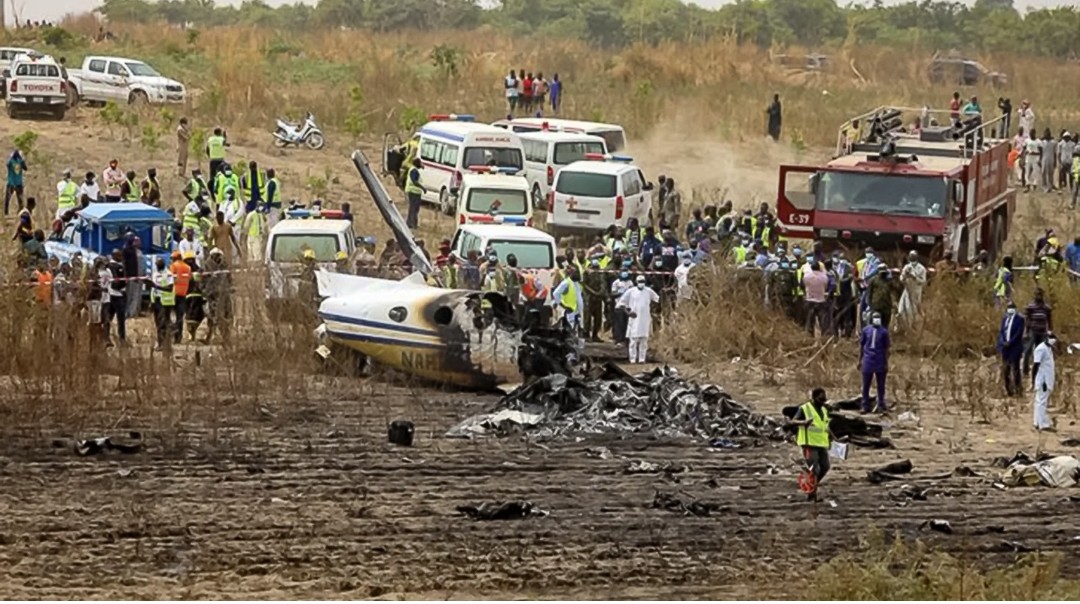
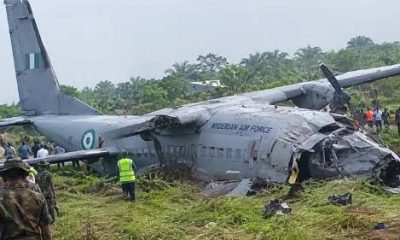
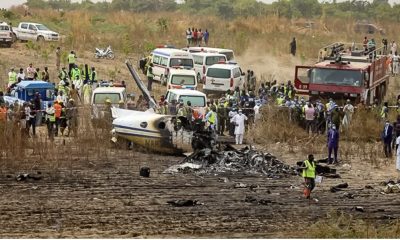
A Nigerian Air Force ATR-42 aircraft on a routine flight from Benin City to Lagos crashed into a swamp in Igbokoda, Ilaje Local Government Area of Ondo State, on Monday after reportedly disappearing from radar shortly after take-off.
The aircraft, with tail number NGR 931, lost communication with air traffic controllers at about 9:13am. A senior air traffic controller, who spoke anonymously, said repeated attempts to re-establish contact with the aircraft failed.
According to the source, personnel around Okitipupa later reported hearing a loud bang suspected to have come from the crash site.
The Minister of Aviation and Aerospace Development, Festus Keyamo, confirmed that the aircraft had disappeared from radar and that all efforts to raise it on radio were unsuccessful.
He later announced that the wreckage had been located near the Naval Base in Igbokoda.
Keyamo said 32 people—25 passengers and seven crew members—were on board.
The Nigerian Air Force confirmed the crash, saying the aircraft was on a routine mission from Benin to Lagos and that search-and-rescue operations had commenced in coordination with relevant authorities.
The crash site, located in a swampy creek, proved difficult to access, with military personnel, emergency responders and local fishermen joining the rescue operation.
Governor Lucky Aiyedatiwa said no survivor had been found as of Monday evening, although the authorities had yet to officially announce a death toll.
The governor said rescuers recovered parts of the aircraft, identification cards and military uniforms from the site.
President Bola Tinubu expressed sadness over the incident and directed the Nigerian Air Force to immediately commence a thorough investigation into the cause of the crash.
Investigators are expected to examine the wreckage, flight path, weather conditions, maintenance records and air traffic control communications. Efforts were also being made to recover the aircraft’s flight recorder, which could provide crucial information about its final moments.
The cause of the crash remains unknown.
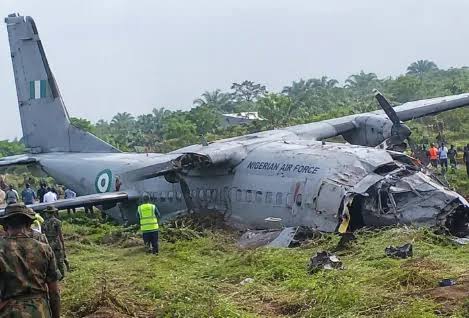
Ondo State Governor, Lucky Aiyedatiwa, has disclosed that no survivor has so far been found following the crash of a Nigerian Air Force aircraft in Igbokoda, Ilaje Local Government Area of the state.
Aiyedatiwa made this known during an interview with Channels Television on Monday, saying local residents, security personnel and emergency responders had searched the crash site without finding anyone alive.
The governor said he received information about the incident at about 10:30am after the chairman of the local government contacted him.
According to him, residents living across the river from the Nigerian Navy base in Igbokoda heard a loud sound and subsequently saw the aircraft plunge into a swampy area.
He explained that personnel of the Nigerian Navy initially stayed back to determine whether the crash had triggered a fire or explosion before proceeding to the site.
“When they noticed that it’s just an accident, they didn’t see any sign of fire. So they moved in, trying to see if they could rescue the people,” Aiyedatiwa said.
He added that officials of the state emergency management agency, local residents and personnel of the Amotekun Corps later joined the search and rescue operation.
“But from the information we got, no single life was saved up to this moment. They could not see any living soul that was in that aircraft,” the governor said.
Aiyedatiwa said searchers recovered parts of the aircraft, including pieces of the wings, identification cards and military uniforms, which helped establish that the aircraft was a military plane.
“But they saw the ruins, some of the wreckage from the wings of the aircraft, you know, some ID cards, I was told, and then uniform. That was when they knew it was a military aircraft,” he said.
The governor described the incident as a painful development, noting that the crash occurred not only in Ondo State but also in his home local government area.
“So it’s a sad situation today. And we’re all really, really agreed as a Nigerian. And also it happens in my own state, not just my state, even in my own local government where I’m from,” he said.
Aiyedatiwa expressed sympathy for the military personnel involved, describing them as officers assigned to protect the territorial integrity of Nigeria.
The Nigerian Air Force had earlier confirmed that an ATR-42 aircraft with tail number NGR 931 crashed in Igbokoda while on a routine mission from Benin, Edo State, to Lagos.
Minister of Aviation and Aerospace Development, Festus Keyamo, said preliminary information indicated that 25 passengers and seven crew members were on board the aircraft.
The Nigerian Air Force said search and rescue operations were ongoing following the crash.
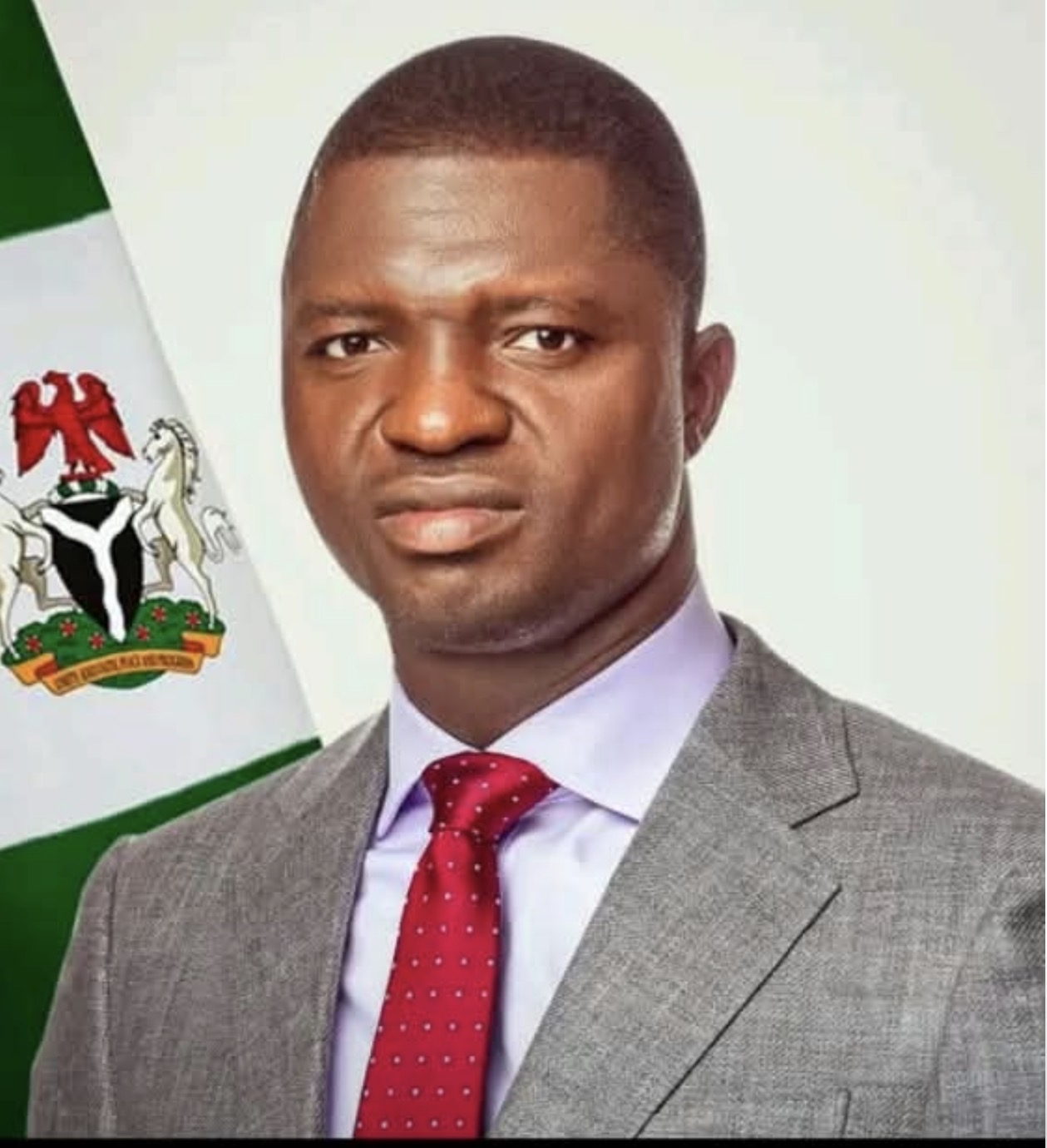
“If You Have Evidence Against Stanley Mbam, Charge Him; Otherwise, Release Him” — Oganiru Izzi
A socio-cultural organisation of Izzi extraction, Oganiru Izzi, has challenged Ebonyi State Governor, Chief Francis Ogbonna Nwifuru, to either release the state’s sacked Commissioner for Works, Mr Stanley Mbam, or charge him before a competent court if the government has credible evidence of wrongdoing against him.
The group said the continued detention of the former commissioner without a formal charge raises concerns about due process, constitutional rights and the rule of law.
The leader of Oganiru Izzi, Mr Godwin Mbam, made the demand while speaking with correspondents of National Issue Newspapers at the Crack Department of the Ebonyi State Police Command in Abakaliki.
Mbam condemned what he described as the prolonged detention of Stanley Mbam without allowing a court to determine whether he had committed any offence.
He challenged the state government to produce evidence if it believes the former commissioner committed a criminal offence.
“If there is credible evidence against him, charge him to court and let the court decide. If there is no case against him, he should be released,” Mbam said.
He also appealed to the Ebonyi State Police Command to uphold the Constitution and resist any pressure that could result in unlawful detention.
Vanco Flyover: “We Will Reveal the Full Details”
Mbam also issued a three-day challenge to Governor Nwifuru, declaring that if the former commissioner was not released or charged to court, his organisation would make public what it described as the “full details” of the Vanco Flyover project.
According to him, the proposed disclosure would address issues surrounding the project, including its funding, payments, contractual arrangements and other financial details.
“We will let the world know the full details of the Vanco Flyover and how the funds were utilised,” he warned.
He further challenged the state government to demonstrate transparency by making relevant documents concerning the project available to the public.
“What About the Alleged ₦1.5 Billion Forfeiture?”
The Izzi group also questioned what it described as the selective application of the state government’s anti-corruption campaign.
Mbam referred to allegations involving an account reportedly frozen by the Economic and Financial Crimes Commission (EFCC) and an alleged ₦1.5 billion forfeiture to the Federal Government.
He questioned why, according to him, the governor had allegedly not taken similar action if the facts surrounding the matter warranted it.
Mbam stressed that he was not opposed to the fight against corruption but insisted that any anti-corruption campaign must be comprehensive, transparent and applied equally.
“If Governor Nwifuru wants to fight corruption, let him fight it holistically. Nobody should be targeted while other serious allegations are ignored,” he said.
“If Nwifuru Says He Knows Nothing, We Will Produce the Facts”
Mbam further challenged Governor Nwifuru to publicly state whether he was aware of alleged corruption issues within the Ministry of Works.
“If Nwifuru publicly claims that he is unaware of corruption in the Works Ministry, I will make public the facts available to me. The facts will shock the state,” he declared.
He insisted that the matter should not degenerate into a political vendetta, arguing that the appropriate place to determine criminal liability is a court of law.
According to him, the people of Ebonyi State deserve clear answers concerning the Vanco Flyover and other issues involving public funds.
“Everybody Should Be Subject to the Law”
The Oganiru Izzi leader maintained that the controversy should be resolved through transparency, documentary evidence and due process.
“If there is a case, charge him. If there is no case, release him. The government cannot claim to be fighting corruption while abandoning the principles of justice and the rule of law,” he said.
Mbam warned that failure to address the issues could compel the organisation to make further disclosures concerning the Vanco Flyover and other matters it considers to be in the public interest.
By Our Correspondent
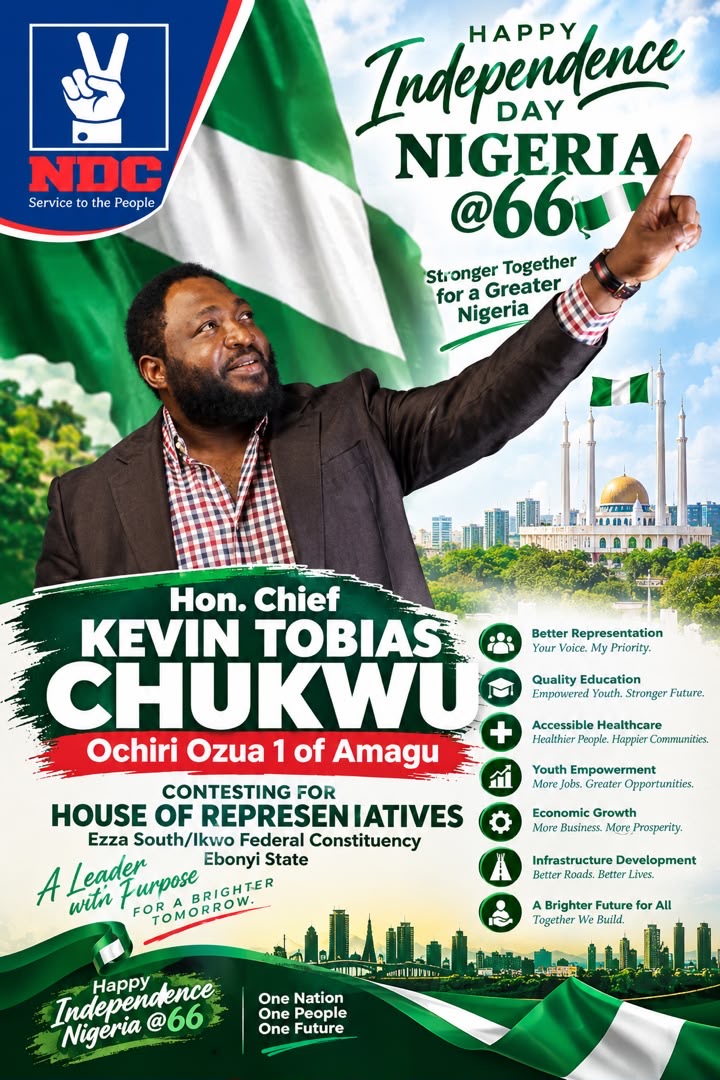
As Nigeria celebrates its 66th Independence Anniversary, the candidate for the House of Representatives seat representing the Ezza South/Ikwo Federal Constituency, Hon. Chief Kevin Tobias Chukwu, has called on Nigerians to remain hopeful and committed to building a better country.
Chukwu, also known as Ochiri Ozua 1 of Amagu Ikwo, made the call in an Independence Day message to Nigerians, particularly the people of Ezza South/Ikwo Federal Constituency and Ebonyi State.
He described the anniversary as not only a moment for celebration but also an opportunity to reflect on the state of the nation and the responsibilities of leaders in building a Nigeria that meets the aspirations of its citizens.
According to him, Nigeria’s journey since independence has been marked by significant challenges, with millions of citizens currently facing economic hardship, while young people continue to search for opportunities and many communities contend with insecurity and uncertainty.
Despite these challenges, the Ebonyi politician said the resilience of Nigerians remained a source of hope for the country’s future.
“I believe in the resilience of our people. I believe in the ingenuity of our youths, the strength of our women, the wisdom of our elders and the determination of ordinary Nigerians who wake up every morning and refuse to give up on this country,” he said.
Chukwu, however, stressed that hope must be matched by responsible leadership, arguing that public office should be viewed as a responsibility rather than a privilege.
He called for leadership that prioritises the protection of lives, creation of economic opportunities, provision of infrastructure, strengthening of institutions and responsible management of national resources.
The candidate also emphasised the need to create an environment where young Nigerians can pursue successful lives within the country and where hard work, merit and enterprise are rewarded.
He said Nigeria had “come too far to surrender to hopelessness,” urging citizens and leaders alike to remain committed to the country’s progress.
“A better Nigeria is still possible, but it will require responsible leadership, accountable institutions and citizens who refuse to give up on their country,” he said.
Chukwu concluded by expressing optimism about Nigeria’s future, declaring: “Nigeria will rise. Nigeria must rise. And together, we must build the Nigeria we deserve.”
He also paid tribute to the nation’s past heroes, praying that their sacrifices would continue to inspire the country.
“May the labour of our heroes past never be in vain,” he said, as he wished Nigerians a happy 66th Independence Anniversary.
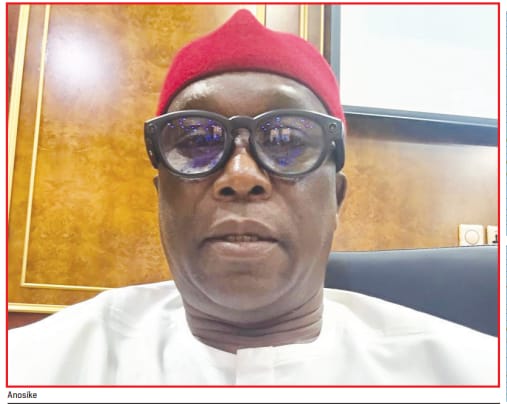
By Okey Maduforo, Awka
As Nigeria celebrates its 66th anniversary of independence from colonial rule, democracy in the country has continued to evolve and deepen, the Anambra State Chairman of the All Progressives Congress (APC), Senator Emma Anosike, has said.
Anosike made the observation in a message to mark Nigeria’s Independence anniversary, noting that despite the challenges the country had encountered since 1960, its democratic system had continued to improve under successive administrations.
According to him, since the return to democratic rule in 1999, Nigeria has witnessed relatively smooth transitions from one administration to another, while citizens have continued to exercise their fundamental rights to hold governments accountable for their performance.
“Before the return of the democratic process, it was indeed difficult and near taboo to challenge the leadership of the country, and those who may have attempted it in the past faced grave consequences.
“Similarly, we have had smooth transitions from one dispensation to another, producing five presidents through the ballot and not through the barrel of the gun. These elected presidents were produced by different political parties.”
Anosike said the administration of President Bola Ahmed Tinubu had sustained the country’s democratic principles and created an avenue for Nigerians, irrespective of tribe, race or religion, to express their views on government policies and programmes.
“Under the stewardship of President Bola Ahmed Tinubu, Nigerians have been enjoying the freedom to express themselves over issues, policies and programmes of government, and those expressions have been shaping and guiding the administration of Mr President,” he said.
The APC chairman said Nigeria’s 66th independence anniversary provided an opportunity for citizens to reflect on the country’s journey as a nation and the progress made since independence.
He said President Tinubu’s Independence Day broadcast had offered another opportunity for Nigerians to renew their hope for a greater and more prosperous country.
Anosike also commended what he described as the “enormous infrastructural development” taking place across the country under the Tinubu administration.
He urged Nigerians to continue to support and have faith in the administration as the country approaches the 2027 general elections.

-
 News5 days ago
Nigeria @66: Democracy Evolving, Says Anambra APC Chairman Anosike
-
 News5 days ago
Nigeria at 66: Ebonyi Reps Candidate Urges Nigerians to Keep Hope Alive
-
 News2 days ago
Sacked Works Commissioner: Release or Charge Him to Court, Oganiru Izzi Challenges Nwifuru
-
 News9 hours ago
No Survivor Found Yet in Ondo Air Crash — Aiyedatiwa
-
 Crime2 days ago
Police Deploy DIG, Two Commissioners to Rescue 20 Abducted Prospective Corps Members
-

 Politics11 hours ago
2027: Odii Will Not Step Down, Says Spokesperson
-
 News1 hour ago
How NAF Plane Vanished From Radar Shortly After Take-Off, Crashes In Ondo Swamp
-
 EverydayNews Telescope2 hours ago
Nkalagu Cement Factory: Project or 2027 Political Promise?