





Crime
Okigwe Road: The ‘Uniformed Robbery’ Motorists Can No Longer Ignore

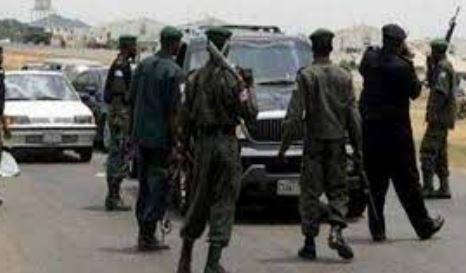

The alleged daylight robbery of motorists and commuters by men in military and police uniforms along the Okigwe axis of the Enugu–Port Harcourt Road is becoming too brazen to ignore.
For motorists travelling from Enugu towards Okigwe, the ordeal reportedly begins shortly after Lokpanta, where a series of checkpoints can quickly turn an ordinary journey into an encounter with fear, intimidation and demands for money.
What makes the situation particularly disturbing is the difficulty in identifying the security personnel manning some of these checkpoints. On some occasions, their vehicles are unmarked. At other times, motorists say it is difficult to determine whether the men are police officers, soldiers or personnel of another security formation.
Yet, according to accounts from commuters and motorists, the alleged modus operandi remains remarkably similar.
A commercial bus is stopped and searched. Two or three young passengers may be singled out and labelled “Yahoo boys” — a term commonly used to describe suspected internet fraudsters. From there, an alleged demand for money follows, with some victims reportedly told to produce N50,000 or more.

The demand, according to the accounts, is often required in cash.
The victim is then left with little choice but to mount an okada to the nearest Point-of-Sale terminal, frequently around the Hausa settlement at Lokpanta, withdraw the demanded cash and return to the checkpoint.
For private motorists, the allegation takes a slightly different form. The vehicle may suddenly be described as stolen or suspicious. Instead of a formal verification process, the alleged encounter reportedly degenerates into negotiation, with the motorist expected to pay an agreed amount before being allowed to continue the journey.
Then the checkpoint goes back to business as usual.
The most troubling aspect of these allegations is not merely the money reportedly extorted from motorists. It is the mystery surrounding the identity and authority of the men operating the checkpoints.
Who are they?
Which security formation do they belong to?
Who deployed them?
And under whose authority are they operating?
One victim reportedly became so concerned about the identity of the personnel that he contacted an Army officer for assistance. The officer, in turn, reportedly reached out to police and Army formations in Abia State to establish whether the men were operating under their command.
The response, according to the victim’s account, was that none of the formations contacted recognised the team as theirs.
That raises an even more disturbing question: if they are not from Abia, Imo, Ebonyi or Enugu security formations, where exactly did they come from?
The Enugu–Port Harcourt corridor is one of the most important transportation routes in the Southeast. Thousands of people use it daily for business, work, family commitments and interstate travel. Security checkpoints are supposed to provide protection, prevent crime and reassure travellers.
They should not become sources of fear.
Of course, legitimate security operations must be distinguished from allegations of criminal conduct. Police officers and soldiers have a responsibility to stop suspected criminals, inspect vehicles and investigate suspicious movements. But where money is demanded from citizens without transparent legal justification, where suspects are allegedly forced to withdraw cash from POS operators, and where the identity of the personnel involved cannot be established, the matter demands urgent investigation.
There is also a wider security concern.
If genuine security personnel are involved, their respective commands need to identify them and establish whether their conduct is authorised.
If they are not genuine security personnel, then the possibility of criminals impersonating police officers or soldiers becomes even more serious.
Either way, the authorities cannot afford to look away.
The repeated complaints from motorists along the Okigwe axis deserve more than informal assurances. The police, Army and other relevant security agencies should investigate the checkpoints, establish the identity of the personnel operating them and make public the formations responsible for security operations along the route.
The Abia State, Imo, Enugu and Ebonyi Government and the relevant local authorities also have a responsibility to demand answers.
For too long, motorists have reportedly endured harassment, intimidation and alleged extortion along this stretch of road.
The question is no longer whether travellers are complaining.
They are.
The real question is: who are the men behind these checkpoints, who authorised them, and why are motorists allegedly being forced to pay cash before they can continue their journeys?
That question requires an answer — and it requires one urgently.


Islamic cleric, Sheikh Ahmad Gumi, has said some bandits he engaged with claimed they could not abandon their violent activities because they feared being killed if they surrendered or gave up their weapons.
Gumi said the armed men described the persistent attacks as a cycle of revenge, alleging that military operations and killings in their communities had fuelled their resolve to continue attacking.
According to the cleric, some of the bandits admitted that the bloodshed had become excessive but insisted they felt compelled to sustain the violence in retaliation for attacks against their communities.
“One of the bandits was telling us the bloodshed is too much,” Gumi said.
He added, “They, too, are not happy. And they say they are forced to do it.”
Gumi made the remarks during an interview on PAPShow, published on October 29, with excerpts from the conversation circulating widely on social media on Tuesday.
Explaining the grievances of the armed groups, the cleric said they accused security forces and local vigilantes of killing women and children during operations initially aimed at tackling cattle rustling.
He said the bandits questioned the killing of civilians in their communities and viewed such incidents as justification for retaliatory attacks.
“But why did they kill their women and children? Why are they killing their women and children? Why are the vigilantes arresting them and killing them? Why?” he quoted the bandits as asking.
Gumi said the armed men believed the situation had degenerated into a cycle of violence characterised by revenge, attacks and counterattacks.
“So, they feel it’s a field of blood, revenge, attack and counterattack,” he said.
The cleric called for negotiations to end the killings, arguing that religious leaders should help create an avenue for dialogue between the parties.
“So, we, as clergy, our own duty is to look at how to stop it. Let’s stop the bloodshed. Let’s come to the table,” he said.
Asked why the bandits could not abandon their activities, Gumi attributed their reluctance to fears that they would be killed if they surrendered.
“Because they thought they were killed. So, we need to reaffirm to them, to put confidence in them that they will not be killed,” he said.
The cleric also alleged that financial sponsorship and rivalry among armed groups were contributing to the proliferation of sophisticated weapons.
Asked whether individuals were financing the bandits, Gumi said such a possibility could not be ruled out.
“It’s possible now. You know, it’s possible now,” he said.
He explained that rival groups were acquiring more powerful weapons to outmatch and intimidate one another, creating what he described as an arms race.
“They buy more weapons because there’s an arms race between them. You know, there are different groups.
“There’s an arms race. So, this den has more machine guns than this one. So, they should fear them,” he said.
On the source of the firearms, Gumi claimed that the armed groups obtained weapons through illegal markets, where buyers could access them if they had the money.
“Well, it’s a black market, like drugs. It’s a black market. If you just have the money, you get them,” he said.
Gumi further alleged that foreign intelligence agencies were involved in supplying weapons to armed groups operating in Nigeria, although he did not provide evidence to substantiate the claim.
“Foreign intelligence definitely have a hand in it,” he said.
Asked whether foreign countries could be supplying weapons to Nigerian bandits and terrorists, the cleric said it was possible, suggesting that countries with strategic interests in Nigeria could be involved.
“It’s possible,” he replied.

…Ondo State Police Arrest Suspect, Recover Three Bags of Fake Dollar Notes
Men of the Ondo State Police Command have uncovered a suspected counterfeit United States dollar printing factory in Kiniso Village, via Ajue, Odigbo Local Government Area, arresting one suspect and recovering three bags of suspected fake dollar notes.
The operation followed a complaint by a businessman, Yusuf Nasiru, from Sabo, Okitipupa, who allegedly lost $6,000, equivalent to about N8.6 million, to two men in a fraudulent foreign exchange transaction.
The suspects reportedly approached Nasiru for a currency exchange transaction but allegedly returned counterfeit dollar notes to him.
According to Nasiru, the incident occurred on October 25, 2026, when two men, identified as Peter Desmond and Olami Toro, visited his shop and requested to exchange United States dollars for their naira equivalent.
He said he handed over $6,000 to the men but they later returned the money, claiming they did not have enough funds to complete the transaction, before leaving.
Nasiru said he subsequently discovered that the dollar notes returned to him were counterfeit and reported the incident to the police on October 28.
The State Police Public Relations Officer, Abayomi Jimoh, who confirmed the arrest and discovery of the suspected printing factory, said detectives immediately commenced an investigation following the complaint.
Jimoh said operatives from the Okitipupa Divisional Police Headquarters launched an investigation, while intelligence gathering and technical tracking led them to Kiniso Village, where one of the suspects was traced.
He disclosed that police operatives raided the suspected hideout on October 29 following intelligence provided by members of the community.
However, some occupants reportedly escaped through the perimeter fence during the operation.
A search of the premises led to the recovery of three bags containing suspected counterfeit United States dollar notes and a small wooden box believed to be connected to the alleged illegal printing operation.
The arrested suspect, whose identity was not disclosed, reportedly provided useful information to assist the ongoing investigation.
The police spokesman said the command had ordered an intensified investigation to apprehend other members of the suspected criminal network and establish the full extent of its operations.
He reiterated the command’s commitment to bringing all those found culpable to justice and warned members of the public against engaging in suspicious foreign exchange transactions with unverified individuals.
Jimoh also advised residents to authenticate foreign currencies before accepting them and report suspicious activities to the nearest police station.

Troops of the Nigerian Army, in collaboration with operatives of the Department of State Services (DSS), have arrested a suspected kidnapper while attempting to collect a ₦200,000 ransom from a female resident of Nasarawa State.
The suspect, identified as Mukaila Iliyasu, was apprehended at Akwaba in Eggon Local Government Area of the state during a joint intelligence-led operation involving troops of Sector 2, Joint Task Force Operation Whirl Stroke, and DSS operatives.
The arrest followed intelligence reports that the suspect had allegedly threatened to abduct a woman unless she paid him ₦200,000.
The Acting Media Information Officer of Operation Whirl Stroke, Lieutenant Ahmad Zubairu Zubairu, disclosed this in a statement.
According to the statement, DSS operatives alerted the military to the threat on October 29, prompting the deployment of security personnel to track down the suspect and prevent the planned abduction.
In a coordinated operation, a soldier reportedly went undercover and posed as the person assigned to deliver the ransom.
The suspect was subsequently arrested while collecting the money, with operatives recovering the sum of ₦200,000 believed to be the ransom demanded from the intended victim.
The military described the operation as a successful intelligence-driven intervention that prevented a possible kidnapping and demonstrated the effectiveness of inter-agency collaboration in tackling criminal activities.
Following his arrest, Iliyasu was handed over to the DSS for further investigation and possible prosecution.
The Force Commander of Operation Whirl Stroke and General Officer Commanding, 5 Division of the Nigerian Army, Major General Moses Kolo Gara, commended the troops and DSS operatives for their professionalism, courage and effective coordination.
Gara urged security personnel to sustain their collaboration and strengthen intelligence sharing to combat kidnapping and other security threats across their areas of responsibility.
He also emphasised the importance of continued cooperation among security agencies in protecting lives, securing communities and maintaining peace in the region.

The Federal Capital Territory (FCT) Police Command has arrested a Benue-based pastor, Edwin Nwabueze, and his alleged accomplice, Sadiq Jamiu, in connection with the theft of a Toyota Camry in Abuja.
The vehicle was reportedly stolen at UTC Plaza in Garki, prompting a police investigation that led to the arrest of Nwabueze at his residence on October 27, 2026.
In a statement issued on Friday, the FCT Police Public Relations Officer, Josephine Adeh, disclosed that Nwabueze identified himself as a pastor with Salvation Power Bible Ministry in the North Bank area of Benue State.
The suspect, who hails from Oji River Local Government Area of Enugu State, reportedly led police operatives to another location where Jamiu was subsequently arrested.
According to the police, preliminary investigations revealed that Nwabueze had previously been arrested by the Benue State Police Command in connection with vehicle theft cases.
The command further alleged that both suspects belonged to an interstate car theft syndicate specialising in stealing and selling vehicles across different states.
Police authorities said investigations were ongoing to uncover the full extent of the syndicate’s activities and track down other members currently at large.
The suspects remain in police custody and are expected to be charged in court upon the conclusion of investigations.
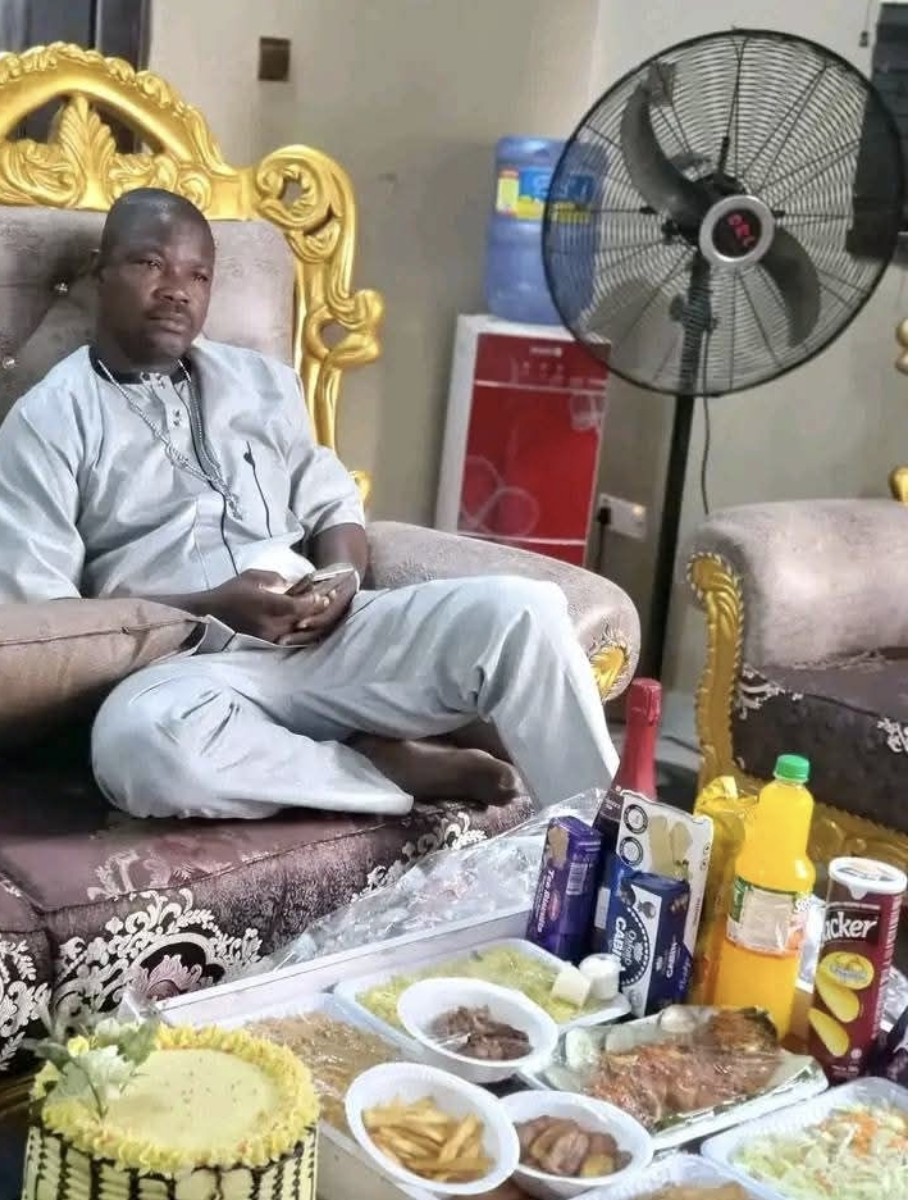
The family of a 46-year-old Ondo State businessman, Kayode Akinbolusere, popularly known as Tolufe, has raised suspicions over the circumstances surrounding his death, calling on security agencies to investigate claims that he may have been forced to record a farewell video before his demise.
Akinbolusere, who owned Esther Estate in Ondo State, was reportedly found dead in his office in Igba on Thursday after allegedly ingesting a poisonous substance.
Before his death, the businessman reportedly recorded a video in which he reflected on his personal struggles, acknowledged his wife’s support over the years and expressed his intention to leave his properties to her and their three children residing in Canada.
In the footage, which subsequently circulated on social media, Akinbolusere maintained that he was making the declaration voluntarily and had not been pressured by anyone.
He recalled starting his business from scratch and praised his wife, Esther, for standing by him during difficult times, particularly when he worked as a barber.
However, the deceased’s uncle, Femi Akinbolusere, has questioned the circumstances surrounding the recording, suggesting that his nephew’s statements and mannerisms raised serious concerns.
Speaking with newsmen, Femi wondered why the businessman repeatedly spoke about surrendering his properties, alleging that he might have been acting under duress.
He urged investigators to critically examine the footage to establish whether another person was present or exerting pressure on the deceased.
The grieving uncle further demanded an autopsy to determine the actual cause of death, insisting that the family deserved answers.
According to him, the circumstances surrounding the incident were too suspicious to be dismissed without a comprehensive investigation.
He also called on the police to question individuals who might have information about the businessman’s final moments, including his wife.
Police Recover Suspected Poison Bottles, Rule Out Visible Signs of Violence
Meanwhile, the Ondo State Police Command has confirmed that an investigation has commenced into the incident.
In a statement issued on Friday, the command’s spokesperson, Abayomi Jimoh, disclosed that the businessman, a resident of Road 7, Housing Estate, Igba, was discovered dead in his office beside BOVAS Petrol Station at approximately 3 p.m. on Thursday.
According to the police, operatives from the Bolorunduro Division visited the scene following a report of the incident and recovered two empty bottles suspected to have contained Sniper insecticide from a nearby bush.
The command also acknowledged the existence of the viral video in which the deceased reportedly lamented his personal difficulties.
Police said his remains had been evacuated to the State Hospital Morgue for preservation and further examination.
Although preliminary examination revealed no visible injuries or signs of violence on his body, the command maintained that investigations were ongoing.
The family’s allegations of possible coercion have not been independently established, while the precise circumstances surrounding Akinbolusere’s death remain under investigation.


-
 News5 days ago
Police Promotes Over 4,000 Officers, Elevates Two to DIG, 10 to AIG
-
 Crime4 days ago
Police Arrest Pastor, Accomplice Over Alleged Car Theft in Abuja
-

 Crime4 days ago
BREAKING: Sowore Hospitalised After Attack in Ekiti, Brother, Campaign Members Reportedly Macheted
-
 News4 days ago
Enugu West Senate: Court Dismisses Suit, Affirms OAU Onyema as ADC Candidate
-

 News4 days ago
NUJ to induct Arthur Eze into Hall of Fame as Umahi receives Bridge Builder Award
-
 Crime5 days ago
Estate Developer Commits Suicide After Emotional Farewell Video, Leaves Properties to Wife, Children
-

 Crime4 days ago
Businessman’s Suspected Suicide: Family Alleges Foul Play, Demands Autopsy
-

 Crime4 days ago
Tenant Smashes Landlord’s For Increasing Rent Increase From N300,000 to N1 Million