


Politics
Edo Guber Poll: Parties mobilise huge funds for vote-buying


There are indications that the leading political parties in the Edo governorship election are ready to outdo one another in vote-buying to win the poll scheduled for next Saturday.
Our correspondents gathered that the parties had started amassing “war chests” in a desperate bid to compromise voters.
A highly credible source said the Edo poll could set a new record for vote-buying in the history of elections in the country.
“A vote could go as high as between N15,000 and N20,000. There are plans by agents of some of the parties to mop up voter cards. How they intend to use the cards is what nobody knows. This is why the Economic and Financial Crimes Commission and the Independent Corrupt Practices Commission are being deployed for the election,” the source added.
Another source confirmed plans by the parties for what he called “heavy vote-buying”.

“I can confirm to you that the parties are ready to do whatever it takes to win this election and that includes paying as high as N20,000 for a vote.
“Unfortunately, doling out of gift items during campaigns has become entrenched in our political system with voters themselves mortgaging their votes for a ‘pot of pottage’. The voters are all partners in crime and what they fail to understand is that collecting gift items and cash from candidates and political parties makes them vulnerable.
“They will not have the moral justification to question the government if it fails in its responsibility to provide developmental projects in the state. After all, they (the electorate) have been paid upfront.
“Unless the Independent National Electoral Commission and security agencies work together to ensure that citizens are discouraged from selling their votes, this might be an election where the buying of votes becomes an all-time high,” the source added.
Another source urged INEC and security agencies to monitor the activities of parties and their agents on election day.
He said, “I have spoken to some members of two of the leading parties and they said that they are preparing to bring out cash to induce voters. So INEC and security agencies should be ready to combat this.”
Parties already paying voters
A frontline election monitoring organisation, Yiaga Africa, said both the Peoples Democratic Party and All Progressives Congress had been inducing voters ahead of the election.
Yiaga expressed worry that the parties had abandoned the election mandate and resolved to induce voters with cash and materials.
The Media Officer of the organisation, Jennifer Dafwat, while speaking with Saturday PUNCH, said the group witnessed and documented political parties and politicians distributing cash, presents, and food items to entice voters.
“Election mandates are becoming less credible as a result of this sad trend. These incidents were primarily noticed or heard about in the Uselu market, Egor LGA, where market women received monetary gifts ranging from N1,000 to N2,000 from the APC and PDP parties during their campaign tours.
“Similarly, PDP campaigners gave wrappers to women who joined the campaign gathering in the Amiebonkhian community of Esan North East LGA. In the Ubiaja community of Esan South East LGA, PDP campaigners also gave several store owners shirts, caps, umbrellas, and as much as N2000,” she added.
The Chairman of the Edo State chapter of the Conference of Registered Political Party, Samson Isibor, described the plans as unwholesome.
He noted that whoever bought votes did not mean well for the masses.
While admitting that it would be difficult for people to reject such offers due to economic hardship, he urged the electorate to vote their conscience.
He said, “What they are engaging in is transactional politics, where buying and selling of votes becomes the order of the day.
“We do not want politics to degenerate into this. Those who buy votes are not coming to serve the people. You don’t need to buy votes from the people you want to serve. All you have to do is sell your manifesto to them.”
PDP, APC, LP exchange tackles
The Deputy National Youth Leader of the PDP, Timothy Osadolor, disclosed that the APC had demonstrated a significant propensity for vote-buying.
Osadolor stated, “The APC has shown that they are not prepared for the election; they are gearing up for violence and vote buying. That is why they have not campaigned on issues but have instead relied on federal might.
“In contrast, the PDP is ready for this election and any future elections because we have done our homework and the people are with us. We also have the most credible candidate, and the incumbent Governor, Godwin Obaseki, has achieved a lot, which will swing votes to the PDP.
“The APC has demonstrated a significant propensity for violence and has even recruited some members of the Nigeria Police Force into their scheme. We also know they are planning to engage in heavy vote buying, which will be resisted.”
The PDP National Publicity Secretary, Debo Ologunagba, also said the APC had shown signs it was not committed to a free, fair, and credible election.
He said, “Since it became evident that the PDP candidate, Asue Ighodalo, is heading towards decisive victory, the APC and its candidate, Monday Okpebholo, have become desperate, resorting to violence and intimidation to undermine the will of Edo State voters. Reports indicate that the APC has set up a torture squad to abduct innocent Edo residents and take them to undisclosed locations.
“This use of violence and intimidation reveals that the APC and its ineffective candidate are intimidated by Dr Asue Ighodalo’s growing popularity in Edo State.”
Ologunagba also claimed that the APC was importing thugs from Imo State to assist in an election manipulation scheme.
He noted that residents were prepared to use every lawful means to confront and resist attempts to disrupt the governorship election.
But the APC dismissed the allegations, insisting that Governor Obaseki was plotting to rig the September 21 governorship election.
The National Publicity Director of the party, Bala Ibrahim, said, “The PDP has made a name in rigging. But because their rigging mechanism has been uncovered and defeated, everything about them falls around rigging. Now that they can not unleash their rigging tactics, they have refused to sign the Peace Accord.
“They have seen that the people are ready to protect their votes and won’t allow rigging; this is why they are making noise all over the place about arrest, rigging, vote-buying and others. This is even a sign that the PDP has lost grip and the real meaning and intent of democracy.”
Ibrahim denied that the APC had plans to buy votes, adding that the party lacked the means.
Also, the Publicity Secretary of the APC in Edo State, Peter Uwadiae, said his party had no reason to engage in vote-buying.
He said, “We are not in the business of buying votes and we don’t have any reason to do such. We are not paying for votes. Buying of votes is an electoral offence and we cannot be seen to be committing an offence when we are planning to win the election.
“The only party that will buy votes is the one that feels it has not been accepted and this is a wrong step to be taken by any political party that means well for the Edo people.
“We are a decent party, we have done so well in our campaign and the people have shown that we are accepted and are ready to demonstrate that on election day.”
The Labour Party Public Relations Officer, Sam Uruopa, distanced his party from vote-buying, saying only the APC and PDP were known for such.
He said, “The APC and the PDP are the ones involved in vote-buying if what you heard is correct. That has been their practice, they also rig elections and are involved in other electoral malpractices. We are urging INEC and the security agencies to watch officials of these political parties closely, especially during the election.
“For the LP, we are not vote buyers and the people are with us. However, we are scared about this age-long practice they have been known for, that they have used to cripple this country and used to bastardise the electoral system.”
The Deputy Director General, Media, Asue/Ogie Campaign Management Council, Olu Martin, said parties that did not have popular candidates engaged in the practice.
He said, “I can’t speak for other parties but it is not unusual in a democracy to see people trying to induce voters, especially for parties who don’t have popular candidates.
“For us in the PDP, our fellowship is organic, our candidate is known, our manifesto is clear, we have endeared ourselves to the people. We even have people who are donating to us and ready to mobilise people to go out and vote. They are even ready to give us money to run the campaign. If you buy votes, you now become like a social contractor hoping to recoup what you have spent. It is the people that will suffer.”




ABAKALIKI — The camp of the Peoples Democratic Party (PDP) governorship candidate, Chief Dr Ifeanyi Chukwuma Odii, has dismissed reports suggesting that he may withdraw from the 2027 Ebonyi State governorship race and support Governor Francis Nwifuru.
In a statement signed by Odii’s spokesperson, Chief Emmanuel Chidi Igwe, the campaign described the reported withdrawal as false, insisting that Odii remains committed to contesting the election.
According to Igwe, “Chief Dr Ifeanyi Chukwuma Odii will never, under any condition, step down from the 2027 governorship contest.”
The statement said Odii’s political camp remains focused on what it described as its campaign position: “Odii must run and win.”
It added that any political discussions, persuasion or negotiations involving other individuals should not be interpreted as a decision by Odii to abandon his governorship ambition.
Camp Rejects Withdrawal Narrative
The Odii camp further described reports of a possible withdrawal as a political narrative allegedly being promoted by individuals opposed to his candidacy.
Igwe challenged those behind the reports to produce evidence showing that Odii had personally announced his withdrawal from the race.
“There is a fundamental difference between reporting that a politician intends to persuade Chief Odii to withdraw and reporting that Chief Odii has agreed to withdraw,” the statement said, stressing that the latter would require evidence from the candidate himself.
The spokesperson also urged journalists, bloggers and online publishers to maintain professional standards when reporting political developments, warning against presenting speculation or the intentions of third parties as established decisions by political candidates.
24-Hour Retraction Demand
The camp has consequently demanded that publishers of the alleged withdrawal story retract or prominently correct their reports within 24 hours, unless they can produce an authentic statement from Odii confirming that he has decided to withdraw from the 2027 contest.
The statement also reminded online publishers of their responsibilities under Nigerian law, citing the Cybercrimes (Prohibition, Prevention, etc.) Act 2015, as amended, as well as other laws relating to unlawful online publications and defamatory material.
The spokesperson clarified that the reference to the law was not intended as a threat against legitimate journalism or political criticism, but as a reminder that political disagreements should remain within the bounds of the law.
The statement concluded by reaffirming that Odii remains in the 2027 governorship race and urged members of the public to regard reports of his withdrawal as unverified unless supported by a direct statement from him.
By Petrus Obi, London
London — The Peoples Democratic Party (PDP) governorship aspirant in Ebonyi State, Ifeanyi Odii, has intensified his criticism of the administration of Governor Francis Nwifuru, insisting that the people of the state deserve a different approach to governance.
Odii, who spoke with EverydayNewsngr.net in London, said what he described as the “fire brigade approach” of the Nwifuru administration was not the kind of governance Ebonyi needs.
According to him, the state requires a government with a clear vision, long-term planning and the capacity to deliver meaningful development to its people.
“The fire brigade approach of the Nwifuru government is not what the state needs,” Odii said.
He added: “I am coming to bring a new lease of life to my people.”
Odii’s comments come amid renewed political debate in Ebonyi State following the recent removal of the state Commissioner for Works. The development has attracted attention from opposition circles, with critics using it to question aspects of the administration’s handling of governance and infrastructure.
The PDP chieftain said the people of Ebonyi should expect more than what he described as reactive governance, arguing that development should be driven by a coherent programme capable of producing lasting results.
He maintained that his political ambition was motivated by a desire to provide what he described as purposeful leadership and improve the welfare of residents across the state.
“We deserve better government in Ebonyi State,” Odii said, stressing that his vision was centred on giving the people renewed confidence in government and creating opportunities for them to prosper.
As political activities ahead of the next governorship election continue to gather momentum, governance, infrastructure, accountability and the delivery of public services are expected to feature prominently in the emerging contest.
Odii’s intervention in London is likely to add further momentum to the political conversation, particularly as opposition figures seek to distinguish their vision for Ebonyi from that of the incumbent administration.

STATEMENT BY CHIEF EMMANUEL CHIDI IGWE,
SPOKESPERSON TO CHIEF DR. IFEANYI CHUKWUMA ODII
The 2027 governorship election in Ebonyi State is not a family affair, nor is it a matter to be decided by one individual or political godfather. It is a democratic contest, and Ebonyians will ultimately decide who becomes their governor through the ballot box.
No aspirant should be expected to step down simply because another politician believes he should. Every qualified candidate has the right to contest, present his programme and seek the mandate of the people.
Let me make this clear: since Senator Dave Umahi did not bring Chief Dr. Ifeanyi Chukwuma Odii into the governorship race, he cannot now claim the authority to ask him to step down. Chief Odii has his own political identity, supporters, convictions and legitimate right to seek the mandate of Ebonyians.
The decision to contest or withdraw belongs to the candidate, while the ultimate decision on who governs Ebonyi State belongs to the people.
The 2027 election should therefore be about issues, programmes, records, accountability and the future of Ebonyi—not political arrangements made by individuals behind closed doors.
Chief Dr. Ifeanyi Chukwuma Odii is prepared to place his vision and programme before Ebonyians and subject them to public scrutiny. Those seeking to retain power should equally be prepared to defend their records before the electorate.
Ebonyi 2027 is not a family arrangement. It is a contest for the confidence of the people. The people of Ebonyi State—not individuals—will have the final say.
Chief Emmanuel Chidi Igwe
Spokesperson to Chief Dr. Ifeanyi Chukwuma Odii
Politics
BREAKING: SaharaReporters Report on Arrest of Enugu Traditional Ruler, Ex-Lawmaker Is False and Misleading
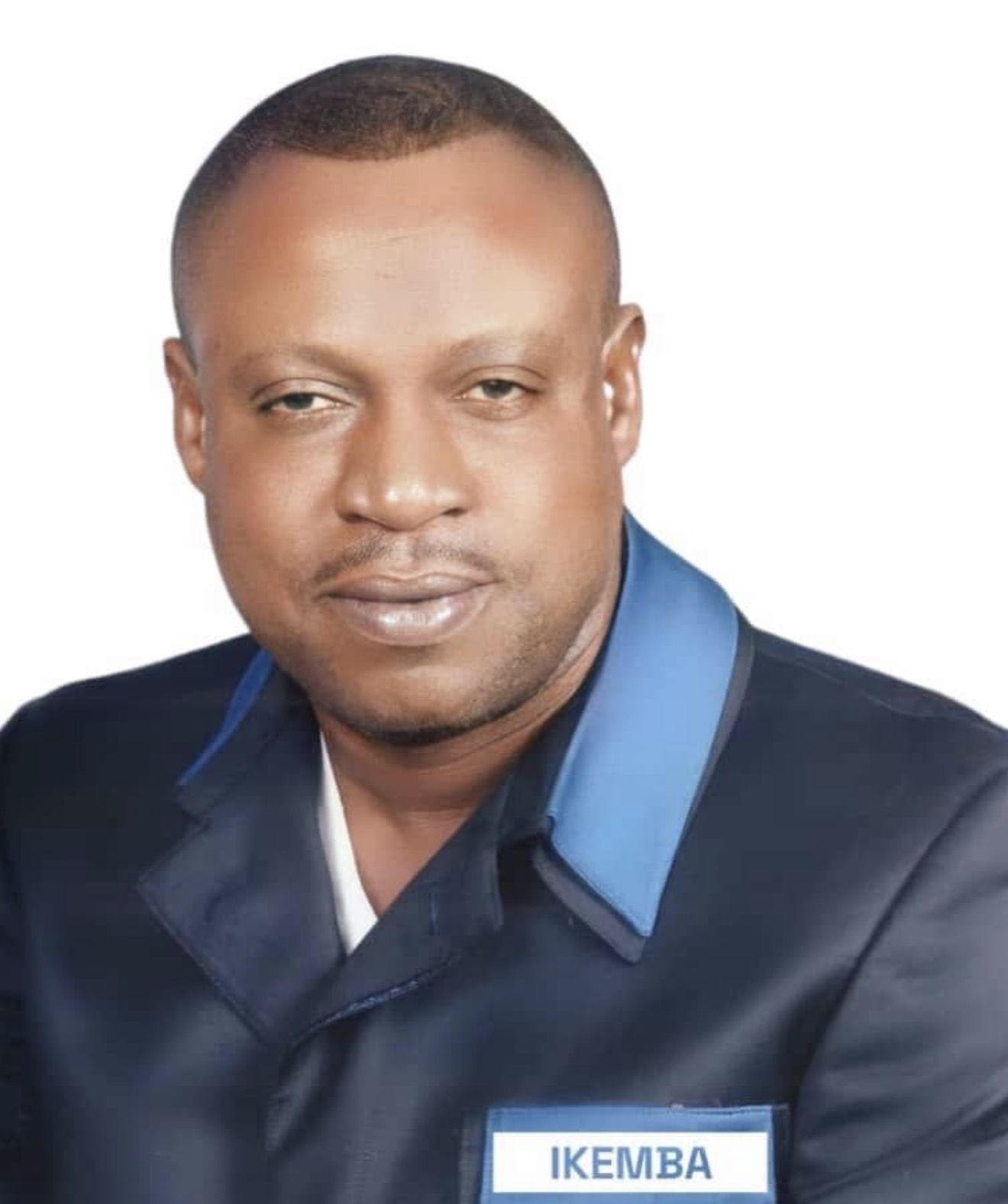
The recent publication by SaharaReporters alleging that prominent Enugu traditional ruler, Igwe Obiora Igwesi, his brother and former federal lawmaker, Hon. Uchenna Sunday A. Igwesi (USA Igwesi), and eight others were arrested over an alleged attack on an NDC ward meeting in Obuoffia, Nkanu West Local Government Area, is false and deeply misleading.
The report is being described as a deliberate attempt to damage the reputation of respected leaders in Enugu State and create unnecessary political tension ahead of the 2027 elections.
Contrary to the claims contained in the publication, there was no arrest ordered by the Inspector-General of Police against Igwe Obiora Igwesi, Hon. USA Igwesi, or the other individuals named in connection with any alleged attack on an NDC meeting. There was also no operation by detectives from Zone 13 Command, Ukpo, Dunukofia, Anambra State, as alleged in the report.
Similarly, the purported petition dated September 15, 2026, and the allegations of conspiracy, unlawful possession of firearms, attempted murder, assault, threatening violence and stealing are strongly disputed and described as fabricated claims intended to create a damaging narrative around the individuals concerned.
The broader allegation that the 17 Local Government Areas of Enugu State have experienced coordinated armed attacks allegedly sponsored by Local Government Chairmen to silence the opposition is equally rejected as unfounded.
Attempts to associate Igwe Obiora Igwesi and Hon. USA Igwesi with criminal activity or political violence are viewed as an unacceptable effort to tarnish the image of individuals who have served their communities and contributed to the development of Enugu State.
The public, particularly the people of Enugu State, is therefore urged to exercise caution and verify the facts independently before accepting or circulating the allegations contained in the SaharaReporters publication.
Enugu State remains focused on peace, stability and development. Political disagreements should not be allowed to degenerate into the circulation of unverified allegations capable of inflaming tensions or damaging the reputations of individuals.
The position being maintained by the affected parties is clear: there was no arrest of the named individuals in connection with the alleged incident, no evidence has been presented establishing that any Local Government Chairman sponsored an attack, and the allegations contained in the publication are disputed in their entirety.
The public is encouraged to await verifiable facts from the appropriate authorities rather than rely on claims that have not been independently substantiated.
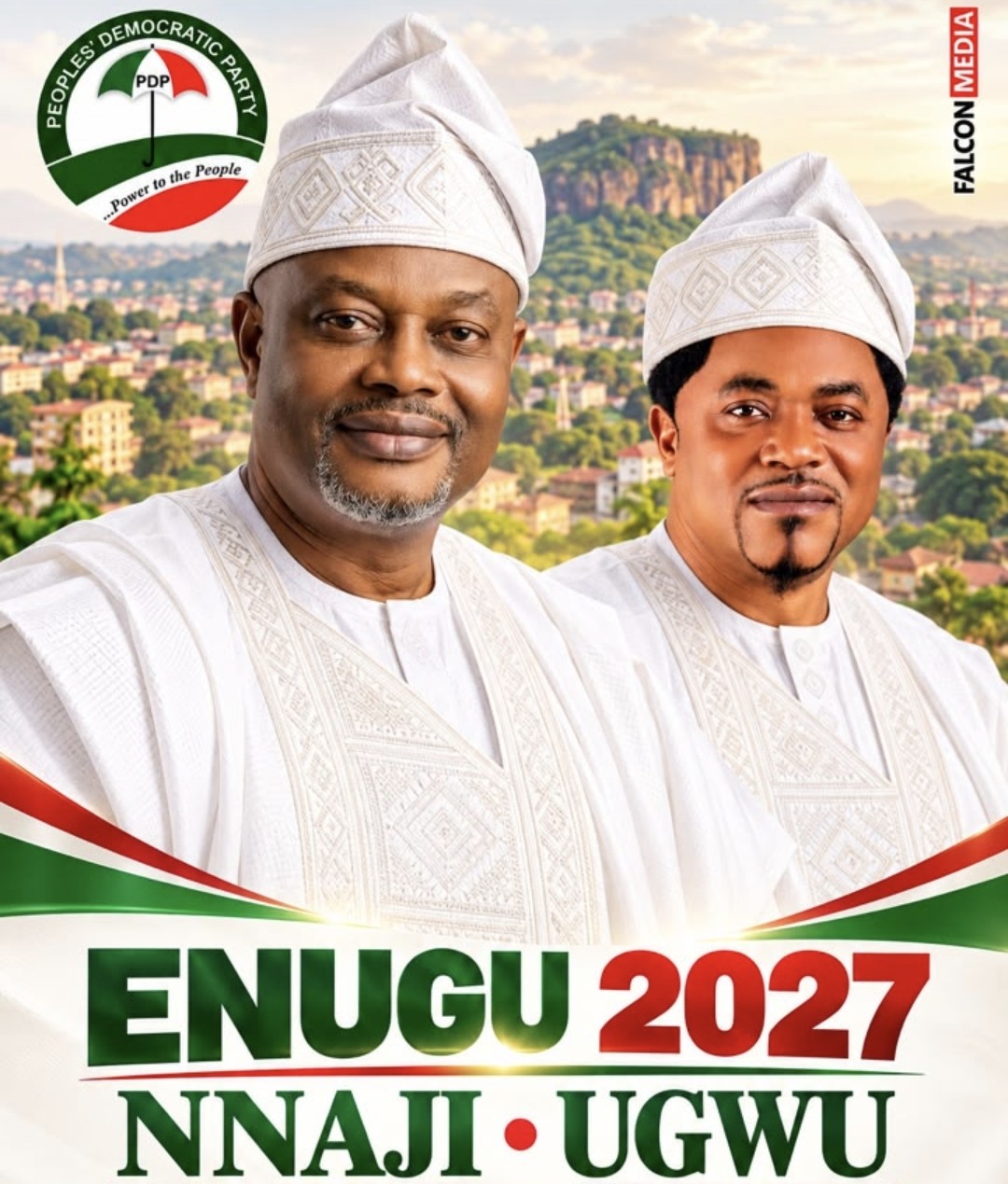
Fresh legal questions emerge over Chijioke Ugwu’s membership registration after Supreme Court restores party-register provisions
By Our Correspondent
Fresh legal questions have emerged over the Peoples Democratic Party’s 2027 governorship ticket in Enugu State following the Supreme Court’s restoration of key provisions of the Electoral Act dealing with political party membership registers and the conduct of primaries.
The questions centre on Chief Chijioke Peter Ugwu, who was recently announced by the PDP governorship candidate, Chief Uche Geoffrey Nnaji, as his running mate.
Nnaji announced Ugwu’s selection on September 24, shortly after the Supreme Court delivered its landmark judgment restoring Sections 77(5), 77(6), 77(7) and 84(2) of the Electoral Act 2026. Ugwu’s selection was subsequently reported by several Nigerian media outlets.
But documents and information available to this newspaper raise a question that could potentially become significant if the PDP ticket is challenged in court.
The PDP governorship primary in Enugu State was conducted on May 25, 2026.
However, Ugwu is understood to have registered as a PDP member on May 31, 2026 — six days after the governorship primary.
This means that if the May 31 registration date is accurately reflected in the party’s official records, his name could not have appeared in the PDP membership register submitted to the Independent National Electoral Commission (INEC) before the May 25 governorship primary.
That immediately raises the question:
Can a person who was not a member of the party on the date of its governorship primary subsequently be selected as the deputy governorship candidate without the Supreme Court’s restored membership-register provisions affecting the ticket?
What the Supreme Court restored
The Supreme Court, in a unanimous judgment delivered on September 24, set aside the Court of Appeal’s earlier decision which had declared the disputed provisions of the Electoral Act unconstitutional.
The apex court upheld the validity of Sections 77(5), 77(6), 77(7) and 84(2), following an appeal by INEC against the Court of Appeal judgment in the case involving the Zenith Labour Party.
Section 77(5) provides that only persons whose names are contained in a political party’s membership register submitted to INEC at least 21 days before a primary, congress or convention may participate in the exercise.
Section 77(6) requires political parties to use the membership register submitted to INEC for their primaries, congresses and conventions.
Section 77(7) deals with the consequence of failure by a party to submit its membership register within the prescribed period.
These provisions are now back in force following the Supreme Court judgment. Legal opinions suggest that the law’s insistence on the membership register submitted to INEC is relevant to the validity of the party’s eventual nomination process, depending on how the PDP formally nominated and submitted its governorship and deputy governorship candidates.
The precise documents will therefore be crucial.
Among the questions likely to arise are:
What date did the PDP submit its membership register to INEC?
Was Ugwu’s name contained in that register?
When exactly did Ugwu become a registered PDP member?
Was he a PDP member before the register was submitted to INEC?
How did the PDP formally nominate him as running mate?
Was the nomination made through a procedure recognised by the Electoral Act and the party’s constitution?
The controversy is coming at a sensitive time for the PDP, which has only recently unveiled Ugwu as Nnaji’s running mate. Ugwu, from Nguru in Nsukka Local Government Area, is an entrepreneur, philanthropist and community leader who runs businesses in logistics, contracting, consultancy and hospitality.
However, the governorship candidate and the deputy governorship candidate constitute a single electoral ticket. Therefore, any legal or constitutional issue affecting the eligibility of the deputy governorship candidate automatically has implications for the validity of the joint ticket, including the governorship candidate.
Another legal opinion available to this newspaper insists that “the gubernatorial ticket is a joint one. If the name of a deputy governor is not on the digital register, it invalidates the entire process.”
In the 2019 Bayelsa governorship election, APC’s David Lyon was declared winner. His running mate was Biobarakuma Degi-Eremienyo.
The Supreme Court later disqualified Degi-Eremienyo over the documents he submitted to INEC. The crucial point was that the Supreme Court held that his disqualification affected the joint ticket he shared with David Lyon. Consequently, the court ordered INEC to withdraw the Certificate of Return issued to Lyon and his deputy.
This happened one day before Lyon was due to be sworn in as governor. The certificate was subsequently issued to Douye Diri of the PDP, who had the next-highest lawful votes and the required geographical spread.

-

 Politics4 days ago
2027: Odii Will Not Step Down, Says Spokesperson
-

 News3 days ago
How NAF Plane Vanished From Radar Shortly After Take-Off, Crashes In Ondo Swamp
-

 News4 days ago
No Survivor Found Yet in Ondo Air Crash — Aiyedatiwa
-
 EverydayNews Telescope3 days ago
Nkalagu Cement Factory: Project or 2027 Political Promise?
-
 Crime3 days ago
Court Denies Alleged Fake Pastor Bail as Seven Witnesses Await Trial
-
 News1 day ago
Curfew Continues as Soludo Sets Up Commission of Inquiry Over Aguleri–Umuoba Anam Clash
-

 News3 days ago
NAF Crash Claims Pilot 16 Days After Wedding
-
 Education1 day ago
Ihejirika Hails Mbah’s Infrastructure Drive as Coal City University Inaugurates Governing Council