



News
Controversial Enugu Centenary Land: Has A Daniel Truly Come to Judgment?



When the Enugu State House of Assembly adopted the report of its Special Committee on Land Matters and Disputes in 2024, many observers described it as a watershed moment in the long-running controversy surrounding the Centenary City land in Amechi and Obeagu communities.
The report attracted national attention because it tackled a dispute that had generated numerous court cases, allegations of intimidation, destruction of property, community unrest, and claims involving some of the most influential figures in the state.
For many residents of Amechi and Obeagu, the Assembly’s intervention provided the first official platform where their grievances appeared to receive impartial consideration. The committee’s findings were widely commended for their detailed examination of the circumstances surrounding the acquisition and development of over 1,097 hectares of ancestral land.
At the heart of the controversy was the allegation that Private Estates International West Africa Limited (PEIWA), operating under a development agreement with the Enugu State Government, relied on questionable documents to assert rights over vast portions of land originally linked to a proposed university project initiated during the administration of former Anambra State Governor, Dr. Jim Nwobodo.
After reviewing submissions from the parties, the Assembly committee identified several inconsistencies in documents connected with the acquisition process. Among its findings were concerns regarding the authenticity of a survey plan purportedly prepared for the “Permanent Site of Enugu State University of Science and Technology” in 1985, despite the fact that Enugu State had not yet been created at that time.
Controversial Enugu Centenary Land: A Daniel Has Come To Judgement
The committee also questioned the authenticity of signatures and official endorsements appearing on key documents, including survey records, gazette notices, and correspondences allegedly executed on behalf of traditional authorities in Amechi and Obeagu communities.
Based on these findings, the committee concluded that the host communities had established that they were not properly carried along in the acquisition process and recommended dialogue, compensation, government intervention, and a comprehensive audit of lands developed under the Centenary City project.
At the time, many hailed the report as evidence that the legislature was willing to confront powerful interests in defence of justice and accountability.
Two years later, events appear to have given fresh significance to those findings.
Today, Kingsley Eze, Chamberlin Mbachu and Private Estates International (W.A.) Limited are facing criminal charges before the Federal High Court, Enugu, in connection with the alleged forgery of a survey plan linked to the disputed acquisition of ancestral lands in Amechi and Obeagu communities.
According to the charge sheet in Charge No. FHC/EN/CR/84/2025, the defendants are accused of conspiring to forge a survey plan titled “Permanent Site of Enugu State University of Science and Technology” purportedly dated 1985.
The prosecution alleges that the defendants knowingly made or uttered the survey plan as a genuine document despite its alleged falsity. The offences are said to be punishable under relevant provisions of the Miscellaneous Offences Act.
The criminal charges have drawn renewed attention to the conclusions reached by the Enugu State House of Assembly in 2024, particularly its observations regarding inconsistencies surrounding the same survey plan and related acquisition documents.
The developments have also prompted further advocacy from civil society organisations. The Rule of Law and Accountability Advocacy Centre (RULAAC) has called on the Inspector-General of Police to direct the Police Monitoring Unit to take over investigations and prosecutions connected with the dispute, investigate allegations of misconduct against certain police officers, and review criminal proceedings allegedly used for harassment and intimidation.
In a separate petition dated May 28, 2026, RULAAC also urged the Inspector-General of Police to intervene in two criminal cases pending before the Federal High Court, Enugu, citing repeated failures by law enforcement authorities to produce defendants for arraignment.
The cases include Charge No. FHC/EN/CR/84/2025, IGP v. Kingsley Eze & 2 Others, and Charge No. FHC/EN/CR/222/2024, IGP v. Alex Ifeadi & 2 Others.
As the criminal proceedings continue, many observers believe the matter has entered a decisive phase. The allegations that were once the subject of community petitions, legislative inquiries and public debate are now before a court of law for determination.
Whether the Assembly’s 2024 report marked the beginning of accountability or merely one chapter in a much longer struggle remains to be seen. What is clear, however, is that the issues raised by the Amechi and Obeagu communities have not faded away. Instead, they have evolved into a legal test that could shape public confidence in land administration, governance and the rule of law in Enugu State for years to come.
If the legislative findings, criminal investigations and court proceedings ultimately converge on the truth, then many residents may indeed conclude that, at long last, a Daniel has come to judgment.

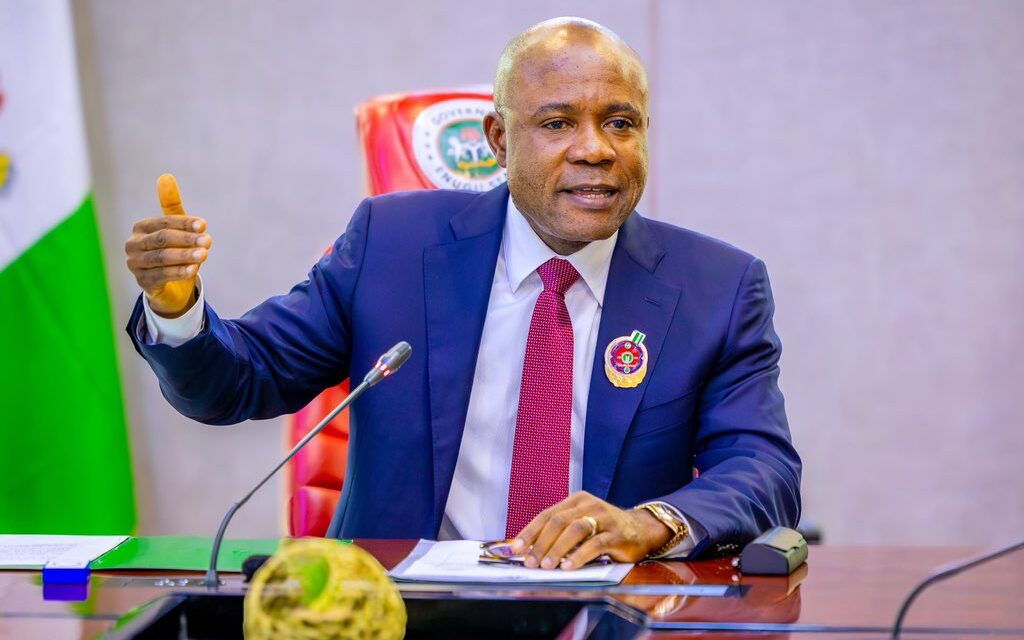
Enugu State Governor, Dr Peter Ndubuisi Mbah, has called on the police to conduct a thorough and impartial investigation into violence surrounding a recent political gathering in the state, during which a citizen was reportedly shot and injured.
The governor, in an address to the people of Enugu State, expressed concern over the incident, assuring affected individuals and their families that their safety and well-being remained a priority.
Mbah said the reported violence had raised concerns about public safety and the peace the state had worked to maintain, stressing that all citizens must be able to exercise their political rights without fear or intimidation.
He reiterated the Enugu State Government’s position on allegations of involvement in the violence, stating that the government’s primary responsibility was to protect lives, uphold the law and ensure that justice was served.
The governor also said he expected the police to investigate the incident thoroughly and without bias, adding that anyone found responsible would be held accountable through the appropriate legal process, irrespective of their political connections.
“Every citizen, whatever their political affiliation, must be able to exercise their political rights without fear or violence,” Mbah said.
He urged residents to remain committed to peace as authorities work to establish the circumstances surrounding the incident.
The governor concluded his message by expressing concern for those affected by the violence and praying for the continued peace and progress of Enugu State.

The South-East Development Commission (SEDC) has briefed the Senate Committee on the Commission’s activities and development priorities for the South-East region during an oversight visit to Enugu on Monday.
The meeting focused on critical infrastructure and development needs across the region, including road connectivity, rural electrification, access to clean water, education, environmental sustainability and strategic projects aimed at unlocking the South-East’s economic potential.
During the engagement, the Senate Committee stressed the need for improved staff welfare, effective institutional development and sustained collaboration between the Commission and the National Assembly to ensure the successful implementation of its mandate.
The Committee also passed a vote of confidence in the leadership of the SEDC, expressing support for the initiatives undertaken by the Commission so far.
The development comes as the Commission continues efforts to address longstanding infrastructure challenges and promote sustainable economic growth across the South-East.
The SEDC reiterated its commitment to working with relevant stakeholders to attract strategic investments and implement practical interventions that will improve livelihoods, strengthen regional integration and promote inclusive development.
The Commission’s mandate covers the five South-East states of Abia, Anambra, Ebonyi, Enugu and Imo, with a focus on advancing development initiatives capable of improving the living conditions of residents and enhancing the region’s economic competitiveness.
News
REC urges Enugu residents not to wait for rush hours in Claims/Objections, PVC collection windows

The Independent National Electoral Commission (INEC) has urged residents of Enugu State to avoid waiting for rush hours before participating in the ongoing Claims and Objections, and Permanent Voter Card (PVC) collection windows.
INEC, on Friday, Oct. 9, 2026, commenced nationwide Claims and Objections for fresh registrants and PVC collection for those who did transfer of voting location and those who are yet to collect their PVCs.
INEC Residents Electoral Commissioner (REC) for Enugu State, Dr Chukwuemeka Chukwu, during a press briefing on Friday in Enugu, said that the Claims and Objections window would last for seven days from Oct. 9 to Oct. 15.
Chukwu said that both exercises would commence simultaneously on Oct. 9 across all the 260 Registration Areas (RAs) in the 17 Local Government Areas of Enugu State.
He said that INEC had concluded training and retraining for designated personnel on the procedures and processes for the Display and Hearing of Claims and Objections, as well as the distribution of PVCs.
According to him, I urge all eligible persons concerned to take advantage of this opportunity and avoid waiting until rush hours or the last day before visiting their designated Registration Areas.
He said, “The Display and Hearing of Claims and Objections is an important aspect of the voter registration process.
“It provides an opportunity for eligible citizens to examine the voters’ register and bring forward legitimate claims or objections regarding entries in the register in accordance with the Commission’s established procedures.
“This process is designed to help identify and correct errors, address legitimate concerns, and improve the accuracy and integrity of the voters’ register ahead of future electoral activities.
“I therefore encourage members of the public to visit their respective Registration Areas during the seven-day period to participate in the exercise and bring any legitimate claims or objections to the attention of designated INEC officials”.
On PVC distribution, Chukwu said the distribution was intended for eligible citizens who registered during first-phase of the Continuous Voter Registration (CVR) and those who applied for voter transfers or replacement of lost or damaged PVCs.
He said, “All affected persons are strongly advised to visit the appropriate Registration Areas where their PVCs are available and collect them within the stipulated period.
“They should follow the instructions of designated INEC officials to ensure an orderly and seamless process. The PVC collection will continue till December.”
The REC disclosed that Enugu State currently had a total of 2,213,768 registered voters across its 17 council area, adding that the figure underscored the importance of maintaining an accurate, credible, and up-to-date voters’ register.
He said that commission remained committed to ensuring that eligible citizens had the opportunity to participate in the electoral process in accordance with the law.
“I call on all stakeholders, community leaders, civil society organisations, political parties, and members of the public to support the successful conduct of these exercises by sensitising eligible citizens and encouraging them to participate.
“INEC Enugu State remains committed to transparency, inclusiveness, professionalism, and the continuous improvement of the electoral process,” he added.

Questions Over Geological Studies, Core Drilling, Mining Licence and 2027 Political Timing
By Our Correspondent
ABAKALIKI — The proposed new cement factory in Ebonyi State is generating growing questions over the technical evidence behind the project, particularly the availability of a commercially viable limestone deposit, geological studies, core drilling, laboratory analysis and the required mineral rights.
The project has been presented as a major industrial investment capable of transforming the state’s economy, creating employment and strengthening its industrial base.
But before a cement factory can become a viable commercial project, one fundamental question must be answered: Where is the raw material?
Limestone is the principal raw material for conventional cement production. Establishing its suitability and commercial viability requires more than identifying rocks on the surface.
It ordinarily involves geological mapping, geophysical surveys, exploratory drilling, core recovery and core logging, followed by laboratory analysis of the samples.
The laboratory tests are expected to establish the chemical composition and quality of the limestone, including its calcium carbonate content and the levels of silica, alumina, iron, magnesium and other materials that could affect cement production.
The drilling and analysis also help establish the thickness, continuity and quality of the deposit and ultimately provide the basis for estimating the quantity of recoverable limestone available to sustain the proposed factory.
It is therefore against this technical background that questions are being asked about the proposed Ebonyi project.
Where are the geological and geophysical survey reports? Where are the core-drilling records and core logs? Where are the laboratory results? What quantity of limestone has been established, and how many years could the reserve sustain the proposed factory?
There is also the question of the project’s mineral title or mining licence.
The promoters and the state government may need to identify the precise limestone deposit on which the proposed factory will depend and make clear the mineral rights covering the area.
The issue is particularly significant because establishing a cement plant requires enormous capital investment. Investors would ordinarily need credible geological data and a proven raw-material reserve before committing substantial resources to construction.
Political Questions
The timing of the announcement has also raised political questions, coming as Ebonyi and other parts of the South-East move towards the 2027 general elections.
Critics may therefore question whether the proposed cement factory is already at an advanced technical and investment stage or whether the announcement is still largely a proposal.
That question can only be conclusively answered by documents.
If the project has progressed beyond the conceptual stage, the government should be able to provide evidence of the geological investigations, exploratory drilling, core analysis, reserve estimation, mineral rights and feasibility work supporting it.
Conversely, if these processes are still ongoing, the government could clarify that the project remains at the preliminary stage and provide a realistic timeline for completing the studies and moving to construction.
There is nothing inherently wrong with announcing an industrial project at an early stage. What would be problematic is creating the impression that a commercially ready cement factory is imminent when the fundamental geological and regulatory groundwork has not yet been completed.
Public Demand for Evidence
The controversy, therefore, is not whether Ebonyi should establish another cement factory. It is whether the proposed project is backed by the technical evidence required for such an investment.
The Ebonyi State Government and promoters of the project should clarify:
– The exact location of the limestone deposit;
– The geological and geophysical studies already completed;
– The number and location of exploratory boreholes;
– The results of core drilling and core logging;
– The laboratory analysis of the limestone samples;
– The estimated proven and recoverable limestone reserves;
– The expected lifespan of the deposit;
– The mineral title or mining licence covering the deposit;
– The environmental and other regulatory approvals;
– The identity of the investors and financing arrangements; and
– The projected construction and production timelines.
Until these questions are answered with verifiable evidence, doubts about the technical readiness of the proposed factory are likely to persist.
For Ebonyi residents, the demand is straightforward:
Show the geological studies. Show the core-drilling results. Show the laboratory analysis. Show the limestone reserve estimate. Show the mining licence.
Those documents, more than political declarations, will demonstrate whether the proposed cement factory is a fully developed industrial project or an investment proposal still awaiting the technical groundwork required to make it viable.
News
Governor Mbah Hails Chibuikem Emmanuel as Youth Entrepreneurship Reference Point, Commends Powell Homes’ Housing Investment

………..As Council Chairman, Traditional Ruler Applaud Quality of Work at Hosanna Estate, Ibagwa Nike.
Governor Peter Ndubuisi Mbah has praised the business prowess and vision of the Managing Director of Powell Homes and Shelters, Architect Chibuikem Onyekachi Emmanuel, calling him a reference point for youths in entrepreneurship.
Governor Mbah made this known Wednesday during the official commissioning of Hosana Estate, Ibagwa Nike, where he also commended Powell Homes and Shelters Ltd. for investing in the state’s housing sector.
The Governor, who was represented by his Deputy, Barr Ifeanyi Ossai, stated that such a gesture by an Enugu-born entrepreneur was part of the state government’s development agenda, driven by resilience and a determination to leave Enugu better than it was inherited.
He also commended the Managing Director of Powell Homes and Shelters Ltd. as well as other investors for committing resources to Enugu, describing their investments as an encouragement to the government’s drive to reposition the state.
Barr Ossai assured investors and residents that the administration of Governor Peter Ndubuisi Mbah would continue to provide a safe environment for businesses and communities to thrive.
According to him, “As government, our primary objective is to provide security for the people and I’m delighted with what I’ve seen about the estate,” he said, while encouraging the investors to cooperate with the estate management for effective management of the development.
He also assured residents that the government would continue expanding infrastructure across the state.
“On our part, we’ll keep expanding infrastructure and for all those we’ve not attended to, do not be disappointed, we’re already on that path and we’re progressing geometrically. However, I thank all the investors and assure you that as a government, we’ll continue to provide security for the state.”
Speaking at the event, the Chairman of Enugu East Local Government Area, Beloved-Dan Anike, commended Powell Homes and Shelters for choosing Ibagwa Nike for the project, noting that the ongoing dualisation of the road had positioned the area as an emerging urban centre.
He also stated that Powell Homes and Shelters Ltd. had “blazed the trail” by investing in what he described as a future goldmine, adding that the local government was committed to supporting the development agenda of Governor Mbah.
The council chairman also noted that housing developments such as Hosana Estate would contribute to addressing the country’s housing deficit, particularly in Enugu State.
The traditional ruler of Ibagwa Nike, His Royal Highness, Igwe Emma Ugwu, expressed satisfaction with the project, saying the community understood and supported the development initiatives of Powell Homes and Shelters Ltd.
He recalled that when members of the community approached him to make enquiries about the project, he assured them that it was consistent with the developmental agenda of Governor Mbah and the community’s quest to support genuine businesses.
“When my people came to my palace to make enquiries about the project, I assured them that it aligns with the developmental initiative of His Excellency, Dr Peter Ndubuisi Mbah, and that the company is genuine and reliable.”
The traditional ruler also thanked the Managing Director of Powell Homes and Shelters Ltd. for choosing Ibagwa Nike as the location for the estate, assuring him that the community would give their best to make the project a success.
In his remarks, the Managing Director of Powell Homes and Shelters Ltd., Architect Chibuikem Onyekachi Emmanuel, said the commissioning was more than the unveiling of another housing project, describing it as a celebration of vision, perseverance, partnership and purpose.
He attributed the successful completion of the project to the grace of God and the collective efforts of everyone who contributed to bringing the vision to reality.
“Today is not simply about commissioning another housing project. It is a celebration of vision, perseverance, partnership and the power of purpose. Above all, we acknowledge that it is by the grace of Almighty God that we have reached this point. What we are witnessing today is a reflection of His faithfulness and the collective efforts of everyone who contributed, in one way or another, to bringing this vision to reality.”
Architect Chibuikem Onyekachi Emmanuel, on behalf of the Board, Management and entire team of Powell Homes and Shelters Ltd., also appreciated Governor Mbah, represented at the event by Deputy Governor Ossai, for honouring the commissioning.
He explained that the company viewed housing as more than the construction of physical structures, describing a home as a source of security, dignity and stability for families.
“At Powell Homes and Shelters, we believe that housing is more than bricks, concrete and physical structures. A home represents security. A home represents dignity. A home provides stability for families. Access to decent housing contributes significantly to the development of healthy, productive and prosperous communities.”
He also posited that Hosana Estate was conceived as a planned and functional community designed to meet the needs of modern families rather than merely as a collection of houses.
He further stated that the estate was equipped with essential infrastructure and amenities, including internal roads, drainage systems, electricity infrastructure, recreational facilities, a synthetic football pitch and a children’s playground.
The Managing Director also acknowledged the significant housing deficit facing Nigeria and the financial difficulties confronting many families, saying the company was determined to make homeownership more accessible. He added that the company would continue to develop quality homes at affordable price points while exploring innovative financing models, strategic partnerships and appropriate housing solutions to enable more Nigerians and members of the organised private sector to own homes.
“The commissioning of Hosana Estate marked not an end but a new phase in the company’s expansion plans. While today marks the successful completion and commissioning of Hosana Estate, our journey does not end here. If anything, this achievement strengthens our resolve to do more. We are also committed to expanding our housing developments outside Enugu. This is because Powell Homes and Shelters Ltd. is committed to building more homes, developing more communities and expanding access to decent housing, not only in Enugu but in other parts of Nigeria where the need exists.”

-

 Politics3 days ago
Odii Shuts Down Abakaliki, Buys Fuel for Thousands of Supporters at Grand Reception
-

 Crime4 days ago
Freed NYSC Graduates Offered South-West Postings After Kidnap
-

 Business3 days ago
Value Circle Africa berths in Enugu, promises wealth creation
-
Entertainment5 days ago
The Green Panther: Meet the Singer Behind ‘Heal Nigeria’ and ‘Higher Higher’
-
 Crime4 days ago
Court Remands US-Based Car Dealer Over Alleged $680,000 Fraud
-
 Politics3 days ago
2027: Over 30,000 Enugu Teachers Endorse Mbah, Tinubu, Cite Welfare Improvements, Increased Education Funding
-
 Politics2 days ago
2027: Enugu Alleges Opposition Plot to Import Armed Thugs, Bandits
-

 Opinion2 days ago
EBONYI GUBER 2027: Are Clergy, Youths, Political Stakeholders Becoming Accomplices in Bad Governance?