


News
Fuel scarcity to worsen as NNPCL admits $6bn debt



There are indications that the pump price of premium motor spirit, popularly known as petrol, may rise in filling stations as the Nigerian National Petroleum Company Limited finally admitted that it was facing challenges due to a $6bn debt.
After weeks of denial, the NNPC admitted on Sunday that it owed its petrol suppliers the sum of $6bn, saying it was facing financial strains due to petrol supply costs.
In a statement by its Chief Corporate Communications Officer, Olufemi Soneye, the state-owned energy company subtly confirmed that the debt was the reason for the fuel queues in filling stations across the country, stating that it is impacting supply sustainability.
It was reported in July that Nigeria’s debt to suppliers of petrol surpassed $6bn, making the NNPC struggle to cover the gap between fixed pump prices and international fuel costs.

A Reuters report stated that the national oil company began struggling early this year when late PMS payments surpassed $3bn.
The company had still not paid for some January imports, traders said, and the debt keeps piling up. Under contract terms, NNPC is meant to pay within 90 days of delivery.
“The only reason traders are putting up with it is the $250,000 a month (per cargo) for late payment compensation,” one industry source said.
Since June, Nigeria’s tenders to buy PMS were smaller, traders said.
From two in July, three more traders were said to have stopped supplying PMS to the NNPC as of now, making a total of five unpaid traders.
But Soneye, in August, denied that the NNPC owed international oil traders $6.8bn.
“NNPC Ltd does not owe the sum of $6.8bn to any international trader(s). In the oil trading business, transactions are carried out on credit, so it is normal to have outstanding amounts at certain times. However, NNPC Ltd, through its subsidiary NNPC Trading, maintains many open trade credit lines with several traders. The company is fulfilling its obligations on a first-in-first-out basis,” he stated.
The NNPC has given various reasons for the lingering fuel crisis, including bad weather and the inability of vessels to discharge, among others, but none of the measures it has taken stopped the queues at the filling stations.
On Sunday, the company made a U-turn in admitting that it was facing financial constraints.
“NNPC Ltd has acknowledged recent reports in national newspapers regarding the company’s significant debt to petrol suppliers.
“This financial strain has placed considerable pressure on the company and poses a threat to the sustainability of fuel supply,” Soneye said in a statement titled, ‘NNPC Ltd Faces Financial Strain Due to PMS Supply Costs, Impacting Supply Sustainability.’
He added that the company was collaborating with relevant government agencies and other stakeholders to maintain a consistent supply of petroleum products nationwide.
“In line with the Petroleum Industry Act, NNPC Ltd remains dedicated to its role as the supplier of last resort, ensuring national energy security.
“We are actively collaborating with relevant government agencies and other stakeholders to maintain a consistent supply of petroleum products nationwide.”
As Nigerians continue to complain over the lingering fuel crisis since July, the sudden admission by the NNPC of a claim it had severally denied, fuelled speculations that the Federal Government might stop paying what it termed “under-recovery” or shortfall on imported petrol.
The company is said be contemplating taking the only way out of the debt challenges, which was to stop paying shortfalls that might no longer be sustainable.
When this happens, operators said the price of petrol would rise above N1,000 and interested accredited marketers would be able to import petrol, thereby removing the NNPC monopoly.
FG pays subsidies
Recently, the NNPC, being the sole importer of petrol, admitted that the Federal Government subsidised the current price of PMS, which the marketers recently put at N1, 117 per litre.
Though the NNPC denied paying fuel subsidies to marketers in the last nine years, it said the government allowed it to sell at a price below the landing cost.
The Chief Financial Officer of the company, Alhaji Umar Ajiya, stated this in Abuja when the company presented its 2023 report.
“In the last eight to nine years, NNPC has not paid anybody a dime as subsidy; no one has been paid a kobo by NNPC in the name of subsidy. No marketer has received any money from us by way of subsidy.
“What has been happening is that we have been importing PMS, which has been landing at a specific cost price, and the government tells us to sell it at half price. So, the difference between the landing price and that half price is a shortfall.
“And the deal is between the Federation and NNPC to reconcile. Sometimes, they give us money, so there is no money exchanging hands with any marketer in the name of subsidy,” he said.
He stated that credit lines were prevalent in downstream businesses based on the worldwide commercial system.
He added that the company was in an open credit agreement with PMS suppliers in the past, with term-line contracts for payment.
Also, Dapo Segun, the Executive Vice President of Downstream at NNPCL, said that establishing an open credit agreement with suppliers spoke volumes about the credibility the national oil company had built over time.
“Concerning the outstanding to the suppliers, it is not in that magnitude that has been put out, it is lower than the $6.8bn
“What really matters is the relationship between us and our suppliers to ensure that we keep faith in making these payments to our suppliers, which we have done over time.
“You would understand that it is not a static figure, and I wouldn’t want to quote any figure. When we make payments, it goes down, and when they supply products, it goes up. It is a dynamic way, but the most important thing is to ensure that we continue to make PMS available across the country,” he said.
According to the NNPC, being the only importer of petrol, the Federal Government pays it to sell fuel to Nigerians at a subsidised rate.



…As Onitsha South Mayor Empowers Workers
By Okey Maduforo, Awka
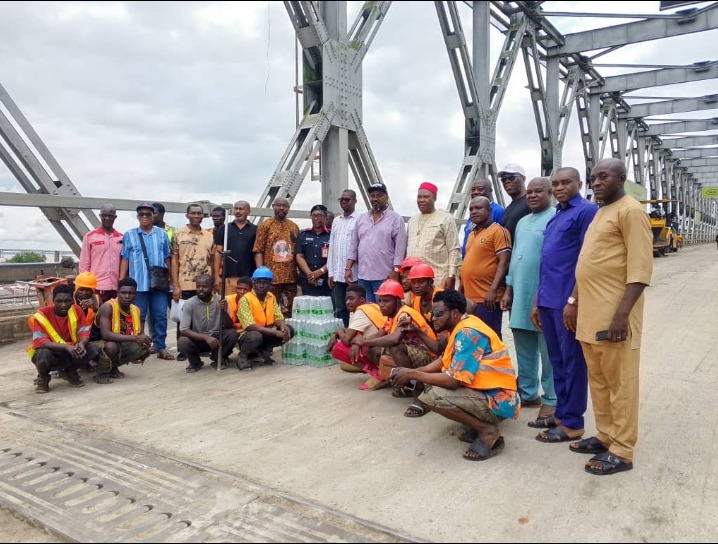
Maintenance and rehabilitation works at the recently closed First Niger Bridge are being hampered by poor lighting during night shifts and inadequate sanitary facilities at the site.
Recall that before the closure of the bridge, the Minister of Works, Engr. Dave Umahi, had disclosed that efforts would be made to carry out some of the rehabilitation works at night.
However, some of the workers at the site said poor lighting was affecting effective monitoring of activities on the bridge, while the poor sanitary condition of the area was also posing a threat to their health.
The workers made the complaints during a working visit to the bridge by the Mayor of Onitsha South Local Government Area, Chief Emeka Orji.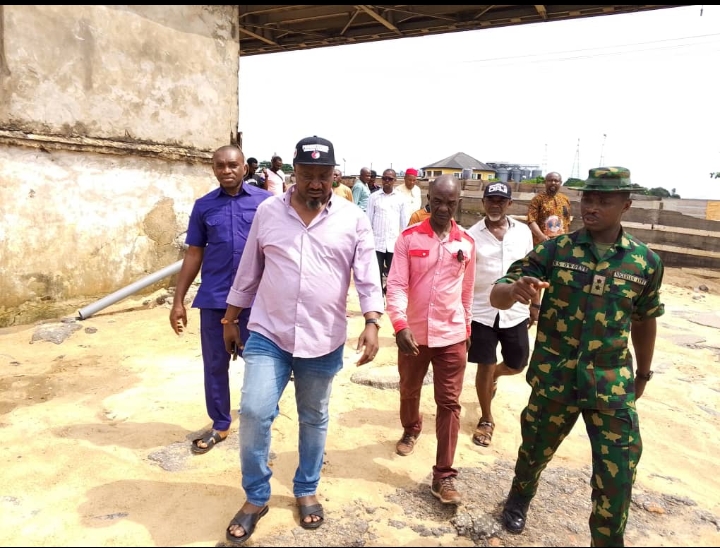
Orji, who was accompanied by the Secretary of the Local Government, Barr. Paul Onuachalla, and executives of the Fegge Community Landlords/Tenants Welfare Association, led by its Chairman, Chief Nnamdi Onugha, provided cooked meals and packs of bottled water to the personnel and workers at the site.
Speaking after the visit, Orji said the gesture was aimed at supporting the workers and showing solidarity with the Federal Government’s rehabilitation efforts on the bridge.
He said, “To support the workers and give them a sense of belonging, that is why we came to appreciate them. We will continue doing so from time to time as part of our Corporate Social Responsibility.”
The Mayor also disclosed that the council had provided facilities, including mobile toilets and water tanks, while arrangements were being made for water tankers to supply water to the tanks.
Orji further stressed the importance of the military presence in Onitsha South, noting that the personnel would contribute to security, rapid response and protection of the bridge, Onitsha South and parts of Ogbaru Local Government Area.
He added that the council would continue to strengthen its collaboration with security agencies to ensure maximum security across Onitsha South Local Government Area.
Earlier, after inspecting the environment with the Mayor, the Officer in Charge, who pleaded anonymity, identified poor lighting at the bridge at night as one of the major challenges confronting the personnel.
According to him, the situation makes it difficult to effectively monitor activities around the bridge, particularly during night shifts.
He also complained about the poor sanitary condition of the under-bridge environment where the personnel camp, saying they had to clean up the area themselves upon arrival.
The officer further appealed for improved accommodation and food support for the personnel.
He, however, commended the Mayor for the visit and assistance, saying the gesture made the workers feel appreciated.
“We feel loved and appreciated. We are happy seeing you around,” he said.

Africa’s richest industrialist, Aliko Dangote, has revealed that he bought his first private jet at the age of 22 and a half.
Dangote made the disclosure on Monday in Lagos during the formal launch of the Initial Public Offering (IPO) of Dangote Petroleum Refinery and Petrochemicals on the Nigerian Exchange.
Reflecting on his business journey, the billionaire said he had enjoyed travelling by private jet over the years but was now comfortable using commercial flights.
He also urged wealthy Nigerians to channel more of their resources into productive investments rather than luxury assets.
Dangote particularly appealed to affluent Nigerians who spend huge sums on private aircraft to consider investing such wealth in industries and businesses that could contribute to Nigeria’s economic growth.
“I try as much as I can to encourage people who are riding $900 million aircraft to please go and put that into production. We are not going to be a great nation without doing something productive,” he said.
He stressed that directing private wealth towards productive ventures would help strengthen the economy, create jobs and provide greater opportunities for national development.
The Niger Delta Chamber of Commerce, Industry, Trade, Mines and Agriculture (NDCCITMA) has rejected claims that it appropriated or “stole” the idea of Niger Delta Economic and Investment Summit from another organisation whose application was reportedly pending before the Federal Ministry of Trade.
NDCCITMA considers the allegation misleading and wishes to set the record straight.
The concept of Niger Delta Economic and Investment Summit is a broad and widely recognised platform used globally to bring together government, the private sector, investors, businesses, development partners and other stakeholders to deliberate on economic growth and development. The use of the term “Economic Summit” does not, in itself, establish exclusive ownership of the concept by any individual or organisation.
More importantly, the chronology of events does not support the allegation being made against NDCCITMA.
While the said application was reportedly still pending before the Ministry of Trade as at September 2025, NDCCITMA had already gone through the appropriate processes and received approval from the Ministry of Trade in August 2025.
NDCCITMA did not rely on, copy, or appropriate the pending application of any other party in arriving at its name or identity
It is also important to distinguish between a concept and legally protected intellectual property, such as a registered trademark, proprietary material or other enforceable intellectual property right.
NDCCITMA remains committed to conducting its activities in accordance with applicable laws and regulatory requirements.Most importantly, in Suit No: FHC/PHC/CS/57/2026 filed on same subject matter in Portharcourt by the petitioner, the learned Judge had restrained the plaintiff from further interfering with the Summit being planned by the NDCCITMA. NDCCITMA will continue respect the rule of law
We therefore urge the public, stakeholders, the media to disregard any narrative unless such claims are supported by verifiable facts and relevant legal documentation.
NDCCITMA firmly rejects the allegation and maintains that its activities and identity were developed and pursued independently and through the appropriate regulatory channels.
The organisation remains focused on its mandate of promoting commerce, industry, trade, agriculture, investment and sustainable economic development across the Niger Delta region.
Signed:
Management
Niger Delta Chamber of Commerce, Industry, Trade, Mines and Agriculture (NDCCITMA)

The Cross River State Commissioner for Power and Renewable Energy, Prince Eka Williams Abang, has died at a hospital in Abuja.
Williams reportedly died suddenly on Saturday, September 12, 2026, while receiving medical treatment.
His death was announced on Sunday by his brother, Nkang William, who expressed shock over the sudden loss.
The deceased was described by family members and associates as a dedicated public servant whose death had left a significant void.
A former councillor representing Abo Ward in Boki Local Government Area, Pius Kejuo Osang, said he was still struggling to understand the development.
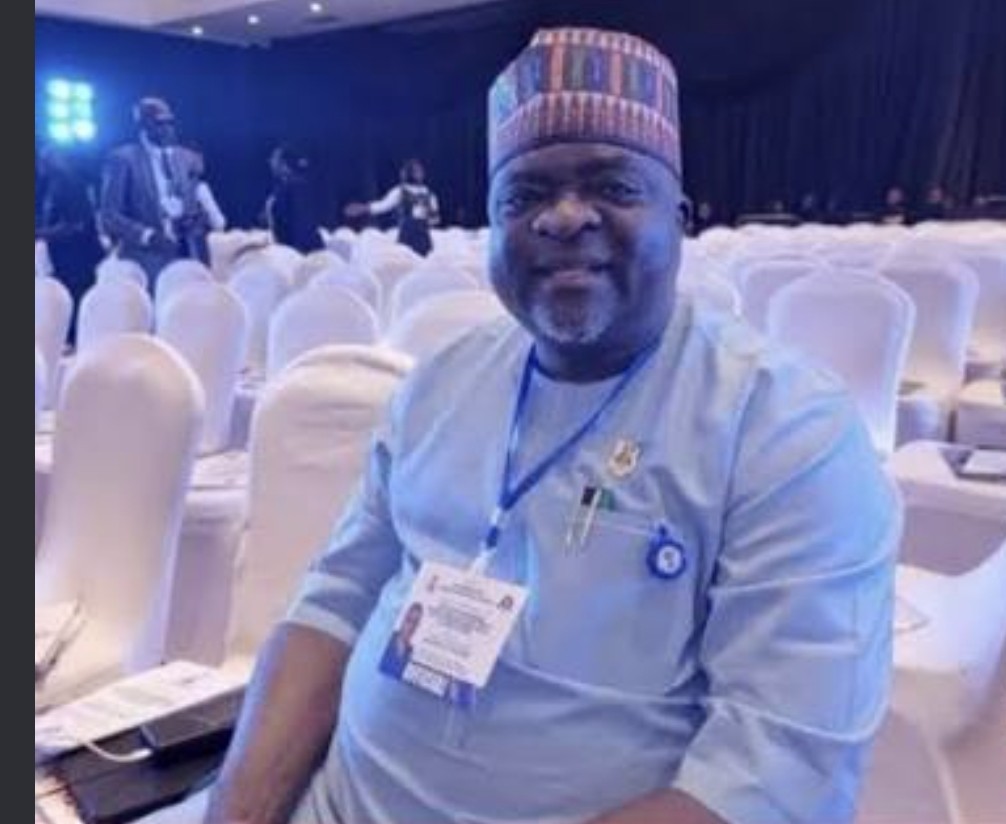
Late Abang
“I don’t understand, I was with him on Tuesday, I slept in his hotel,” Osang said.
Michael Gabriel Jr., Executive Media Assistant to Senator John Owan-Enoh, Minister of State for Industry, also described Williams as “a dedicated public servant and a good man.”
He said Ikom Local Government Area had lost a committed public servant, adding that Williams’ life of service, humility and impact would remain in the memories of those he touched.
The commissioner’s death has thrown Cross River’s political and public service circles into mourning, with condolences pouring in for his family, colleagues and associates.
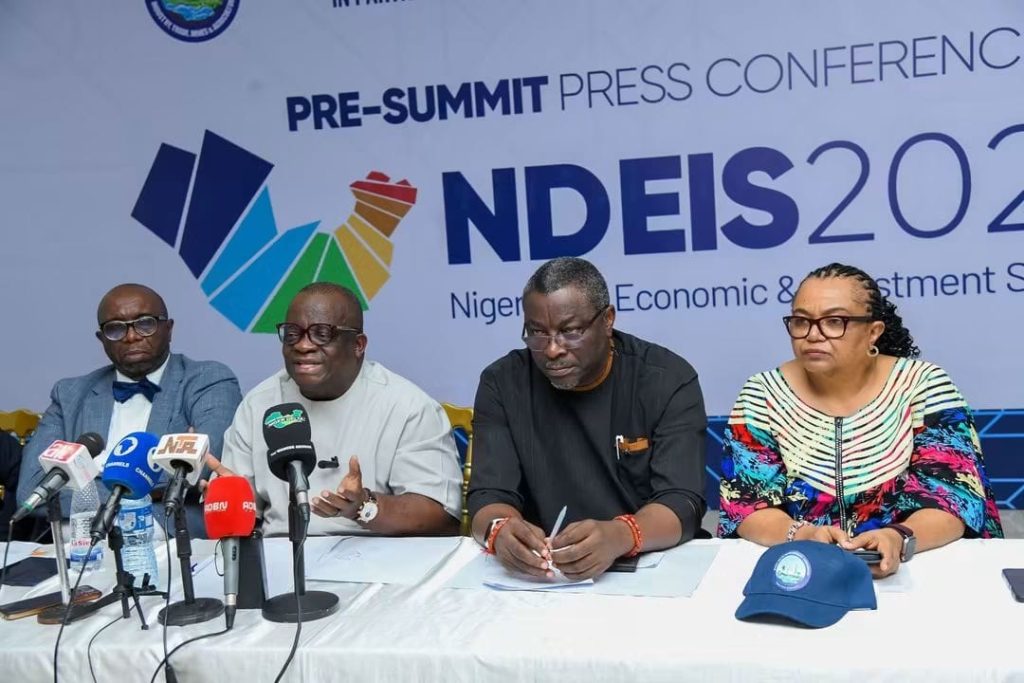
The Board Chairman of the Niger Delta Chambers of Commerce, Industry, Trade, Mines and Agriculture, NDCCITMA, Ambassador Idaere Ogan, has identified the Niger Delta Development Commission, NDDC, and the governments of the nine Niger Delta states as development partners in building a sustainable regional investment ecosystem.
Addressing newsmen at the Obi Wali Cultural Centre in Port Harcourt, Ogan reaffirmed NDCCITMA’s commitment to successfully hosting the Niger Delta Economic and Investment Summit from September 15 to 17 in the Rivers State capital.
The NDCCITMA Chairman said the Summit was a strategic, private-sector-led platform to mobilise investment and unlock the Niger Delta region’s economic potential, anchored on the theme: “Driving Investment, Innovation and Industrial Growth in the Niger Delta.”
He stated: “Our vision is to bring together the nine Niger Delta states, the Federal Government, the Niger Delta Development Commission, organised private sector, domestic and international investors, development finance institutions, multilateral organisations, financial institutions, project developers and other strategic partners around a common objective: To transform the Niger Delta from a predominantly resource-dependent economy into a diversified, productive, industrialised and globally competitive regional economy.”
According to Ogan, the Summit was designed not merely as another conference, but as an investment and transaction platform, stating: “I dare say that the region possesses opportunities far beyond crude oil.
“From gas and petrochemicals to agriculture and agro-processing; maritime and blue economy; manufacturing; aviation and transportation; renewable energy; tourism; digital economy; logistics; infrastructure and financial services, the Niger Delta possesses the resources and market opportunities required to become one of Africa’s leading investment destinations.”
We intend to showcase strategic investment opportunities capable of transforming the regional economy, including agro-industrial and oil-palm value chains, gas utilisation and gas-based industries, regional transportation and aviation, maritime infrastructure, industrial and logistics hubs, renewable energy, manufacturing, skills development, digital infrastructure and other high-impact projects.
The Counsel to the Legal Representative of NDCCITMA, Mr Sammie Somiari, SAN, affirmed that the Summit organiser was committed to conducting its activities in accordance with applicable laws and regulatory requirements.
He noted that in a suit filed by the founder of NDEIS, Kenule Nwiya Jnr, over an alleged trademark infringement, the court restrained the plaintiff from further interfering with the Summit being planned by the NDCCITMA.
Somiari assured that the Summit would proceed as planned, as there was no legal encumbrance to the economic and investment platform.
Also speaking, the NDDC Director of Commercial and Industrial Development, Mrs Lyna Okara, observed that the Summit would promote stronger economic integration among the nine Niger Delta states.
She noted that the investment forum would produce tangible outcomes: investment commitments, project partnerships, financing opportunities, policy recommendations, and clearly defined implementation frameworks.
Seledi Thompson-Wakama
Director, Corporate Affairs
September 12, 2026

-
 News1 day ago
Sept. 26 Polls: ‘ENSIEC is over 90% ready’ – Chairman
-

 Politics1 day ago
2027: Odii: I’ll Attract ₦2tn Investment to Ebonyi in Six Months
-

 News4 days ago
FCC Urges Enugu Youths to Prepare for Federal Job Opportunities
-
 Crime1 day ago
Gunmen Attack Commercial Bus, Kill Nine Passengers
-

 News23 hours ago
Commissioner Dies Suddenly at Abuja Hospital
-

 Crime2 days ago
Enugu Police Probe Alleged Disruption of Political Gatherings, Warn Against Violence
-
 News2 days ago
Hotel Building Collapses in Enugu Kills One, Traps Workers
-

 News1 day ago
Why Nigerian Leaders Should Spend Vacations at Home – Ebonyi Reps Candidate