Connect with us
Maduka University Advert

Special Report

ENUGU @ 31: Governor Ugwuanyi’s imperative in the indomitability of the Wawa Spirit

Published

on

Maduka University
By Steve Oruruo
When the erudite Dan O. Chukwu , Ph.D, Professor of History, Nnamdi Azikiwe University, Awka in his lecture at the Government House titled “ ENUGU STATE AT 31: SUSTAINING THE DREAMS OF THE FOUNDING FATHERS” on the 31st anniversary ceremony organized by the Enugu State Development Association (ESDA) in conjunction with the State Government intuitively opined that WAWA simply means “Wisest Area in West Africa”, a resoundingly deafening echo of applause eclipsed the predominantly seasoned audience who might have elusively searched for the most correct or suitable interpretation of the cliche, though in discordant but concomitant perspectives. The first conjecture is to delightfully imagine the flurry of personalities that bear the insignia of ENUGU’S indigeneity and the audacity of their exploits on the canvass of the planet. The second, is to be daringly confronted with the anxieties from the grave of our forebears as to whether the current political class has lifted leadership beyond mere pedestrian romanticization or not. As our minds agitate in further interrogation of the import, purport and perhaps more accurately the validity of the above claim, every 27th day of August inviolably resonates with every Wawa man as his Independence Day.
On Tuesday , the 27th of August, 1991, the Parliament of the Republic of Moldova adopted the document, “Declaration of Independence of the Republic of Moldova”, ratifying the birth of a new Nation. On the same day, several nautical miles away, in Nigeria, a distinct set of people was also writing the prologue of their new destiny. A military Decree created Enugu State alongside eight other states in the federation including Abia, Delta, Jigawa, Kebbi, Osun, Kogi, Taraba, and Yobe.
*Saturday, August 27, 2022, marked the 31st year since our great state was created from the eastern two-thirds of the old Anambra state. Inspite of the travails of our checkered history, the embedded discriminatory vestiges, the conspiracy of profaning silence by the repressive home grown imperialists and the slurring recriminations by those who survived the knees on their necks , we have every cause to celebrate how far we have come as a people and our enduring collective achievements over the years. Our purposeful existence today is a testimony, to the buoyantly magnanimous mercies, grace, faithfulness and favour of God.*
It is unfortunate however, that our celebration appears to be tainted by the somber specters of the lingering maladies of leadership failure – insecurity at the level of existential threat, corruption at an industrial scale, oil theft at an unprecedented height, galloping inflation, ethnic chauvinism, religious bigotry, astronomical fare tickets and of course biting poverty to mention but a few. The foundation of the Nigeria’s economy with her fiscal policies reels in convulsive throes and pangs in its quest to meet both the exigent infrastructural and recurrent imperative. The economy of our state has also suffered severe contractions as a consequence of a national economic malaise bedeviling the country.
Therefore, our celebration also calls for sober reflection on the state of the nation. The demand for unity, oneness and solidarity is dire. By the grace of the Almighty God, we will defiantly emerge from these murky waters, stronger and better. Triumphing over trials and tribulations is as pivotally ingrained as it is fundamentally entrenched in the character of the Wawa man. It is the insignia of our indomitability. It resonates with the indestructibility of our hope.
The creation of our dear Enugu State on the 27th day of August, 1991 by the then Head of State, General Ibrahim Babangida, was destiny in invincible manifestation. The preludial antecedents and circumstances of that historic moment featured an adroit interplay of divine providence and the spirited agitations of some of our bravest heroes. Those men and women, some of whom still live in our midst today, secured our right to self-determination and set the foundation for the evolution of the Enugu we are proud to have today. Luckily for us, their unflappable courage, unbridled enthusiasm, unflagging energy, unmitigated strength of character and implacable commitment still inherently course through our veins. We must then rediscover ourselves and unbridle our enormous potential to push Enugu to even greater heights.
Our capital city, Enugu, occupies a prime place in Nigeria’s political history as the cradle of Igbo civilization. Following the discovery in 1909, and subsequent mining of coal in commercial quantity, Enugu rose in prominence, morphing into a cosmopolitan settlement. Afterwards, it became the administrative headquarters of Southern and Eastern Provinces in 1929; capital of Eastern Region from 1954 to 1967; capital of the defunct State of Biafra for the greater part of the Nigeria civil war between 1967 and 1970; capital of East Central State from 1970 to 1976; capital of the old Anambra State from 1976 to 1991; and capital of the Old Enugu State when Ebonyi state was part of us.
*As a people, we are profoundly grateful in unmistakable terms to the political generosity, sagacity and goodwill of our past leaders who improvised to write elegant chapters in our historic narrative: His Excellencies, the legendary Nnamdi Azikiwe, famously regarded as the father of Nigerian Nationalism; Michael Iheonukara Okpara, the Premier of Eastern Nigeria, during the first republic, the great Ukpabi Asika and Sir Francis Akanu Ibiam, Senator Jim Nwobodo and Chief Christian Onoh, former democratically elected governors of the old Anambra state whose precocious leadership acuities chaperoned the emergence of Enugu State. To the military governors whose reign preceded the birthing of our dear state, we appreciate your time too.*
*Since the turn of our creation in 1991, the state has been divinely and gorgeously decorated with remarkable Governors under whom giant leaps were resoundingly despatched with sublimity and stunning exquisiteness: His Excellencies, Dr. Okwesilieze Nwodo, Distinguished Senator Dr. Chimaroke Nnamani and the elegant Barrister Sullivan Iheanacho Chime.*
Through the instrumentality of victory at a gubernatorial election, Governor Ifeanyi Ugwuanyi willfully entered into a social contract with Ndi Enugu to preserve our cherished socio-cultural heritage, sustain our sense of pride and steer a voyage towards the vista of a new Enugu.
He took an oath to spread a message of rejuvenated hope, enduring peace and sustained development to our people; to bind up the broken hearted; to proclaim liberty to every law-abiding Wawa man caught in the enfeebling web of poverty and under-development. He committed himself to employment generation; enhanced social services and good governance; rural development; security and justice.
Four years later, in 2019, Ndi Enugu re-enacted their immeasurable love, self-sacrifice, sense of justice and equity to seamlessly deliver one of the most remarkable electoral victories in the history of our nation. They renewed their social contract with the Governor and enthused him with more robust impetus to further stretch the frontiers of good governance.
On this occasion of our state’s 31st anniversary, I stand crested on this rare ephemerality to glean the surface of his achievements these past seven years that God in conjunction with man has graciously kept him in office.
Recall that our state was in dire financial straits when he mounted the saddle of leadership in 2015. The allocation from the centre was abysmally poor and dwindling, due to the economic recession exacerbated by drastic drop in crude oil price. It was a time when many states in the country struggled to offset their monthly wage bills. Instead of cowering and resigning to fate, Governor Ugwuanyi set out to reinvent and re-strategize.
As a crucial first step, he applied himself to accountability, honesty and prudent management of resources. He curbed unnecessary expenditures, plugged loopholes of misappropriation and systematically grew our IGR profile. Quite positively, Enugu State was ranked 9th  in 2020 out of 36 states and the FCT, in terms of IGR performance to underline the intentional novel trajectory . His creative strategies, shrewdness, prudence and painstaking efforts have amassed incredible results. He has been engendering conciliation and fostering goodwill. He has been synergizing priorities and interests, forging new bonds and cultivating a sustainable culture of peace. His government has remained stoical in its commitment to open-door participatory democracy.
Cognizant of the definitive premium of indispensability derived from the electorate by the power of his mandate, the importance of inclusivity and the weightier demands from the Almighty God; the Enugu Governor built bridges across divides, united age-long foes and forged new bonds of alliances and friendship; all geared towards a robust development of the Southeast capital, returning the clemency of the state’s ambiance and triggering a seismic socio-economic prosperity.
For the past 7 years, he has been deliberate and strategic in retooling the security architecture in Enugu state to ensure we always stay ahead of emerging dynamics. He has never lost sight of his primary constitutional responsibility, which is to secure our lives, properties and interests. Governor Ugwuanyi has indeed spawned a re-engineering of our political psyche to imbibe the healthier culture of consensus, concessions, tranquility and adopt a sense of unison in replacement of the usual animosity, unhealthy rivalry, bickering, restiveness and unbridled violence that have almost always enveloped our socio-political landscape. To this effect, the State Government among other things procured and donated hundreds of vehicles including 100 units of Innoson Vehicle Manufacturing (IVM) patrol vans with communication gadgets to security agencies in the state. Enugu’s 1,700-pesonnel Forest Guards, the first in the South East geo-political zone and the-repositioning of Enugu vigilante groups with 260 vehicles to compliment the efforts of our national security agencies.
Today, Enugu state is one of the most peaceful and secured states in the federation. On this fertile ground, Governor Ugwuanyi has sown and nourished policies to transform the state into a foremost investment destination of choice in the Southeastern divide of the Niger. The first Enugu Investment Summit which was piloted by Enugu State Economic and Investment Committee was conceived to put Enugu on the global business map. And it sure did with aplomb, as Enugu state leapfrogged from its 2014 World Bank Ease of Doing Business ranking as 27th out of 36 states, including FCT Abuja, to 2nd in Ease of Starting Business and 3rd in Ease of Doing Business in the 2018 World Bank Ease of Doing Business sub-national ranking.
*Governor Ugwuanyi’s developmental strides on all facets have sought to re-balance the scale of the urban-rural contrast. He has consciously discountenanced with the parochial misconception that development can only be viewed to have been accomplished only if adjudged via the prism and precincts of urban renewal. Long-forgotten communities have been remembered with social amenities. He has charted new territories, connected communities and established economic-oriented rural-urban linkages. His grassroots development agenda has been in perfect sync with his urban renewal drive, both coalescing into inclusive non-discriminatory governance. From the valleys of the Milliken Hill to Opi Nsukka dual carriageway; from Ebonyi River bridge Ikem to the bridges in Udenu ring roads; from Iva Valley road in Enugu North LGA to Nkalagu-Eha Amufu road neglected for over 35 years; from Ukpabi-Nimbo- Ugbene- Ajima-Eziani road to Neke-Mbu-Ogbodu Aba-Obollo Etiti inter-community road linking Isiuzo and Udenu LGAs; from Inyi-Akpugoeze road in Oji River LGA to Ituku road in Awgu LGA and down to Amurri road in Nkanu West LGA to mention but a few, he has courageously lifted the knees on the neck of rural dwellers through the construction of major road networks.* The newly constructed first flyover in Enugu, connecting Abakpa-Nike Lake- Isiuzo-.Opi Nsukka axis was painstakingly provided by the State Government to ease traffic and ameliorate the sufferings of the people .
*Having directly felt the pangs of Urban/rural dichotomy and the attendant neglect, he is condemned to re-engineer a re-awakening by re-integrating the hinterlands into the affairs and benefits of governance, through infrastructural renaissance and multi-dimensional economic development. Governor Ugwuanyi’s Government is challenging an unhealthy tradition of rural-urban bias and provoking new pacesetting trends.*
*Instructively, out of the shadows and shackles of the traumatic and inglorious abandonment of the past, emerged a resilient rural personnel grinding out survival through the socioeconomic easements offered by this administration. Under his watch as a Governor, his government had vehemently stood with the people. It will neither pander to elitist whims that serve the interests of a few Lords of the Manor in a recycled serfdom nor adopt self-serving policies that negate the yearnings of the plebeians.*
*Governor Ifeanyi Lawrence Ugwuanyi has unequivocally promised to remain resolutely committed to his convictions and allied to the advocacy that the sovereignty of the law, supremacy of human dignity, inclusivity and commonality in governance, the necessity of due process and the triumph of collective freedom, by far, outweigh the whimsical and pyrrhic victory in selective patronage.*
He has always acknowledged the civil service as the engine room of his government and partners in progressive leadership. No wonder he initiated and sustained the tradition of paying salaries on or before the 24th of every month and the novel 13th month miracle in the first six years of his regime despite contending with multifaceted challenges . His government’s promptness in implementing the new National Minimum Wage depicts his unwavering devotion to this pool of very consummate, resourceful and dedicated men and women. The welfare of pensioners and elder statesmen and women, who served the state with dignity and dedication for long years, is manifestly a priority in Ugwuanyi’s government. Consequently, the State Government has reached a new agreement with the primary school teachers and the NULGE to further strengthen the healthy relationship between the two. This is in a time when about nine states in the federation cannot pay salaries; three of which are from the South-East Geo-political zone.
The Enugu governor seizes every chance to recognize with admiration, the tremendous sacrifices and efforts of our healthcare workers who have been unrelenting on the frontlines of our fight to contain the ravaging, debilitating but mutating effects of the COVID-19 pandemic. They have been reliable stakeholders in our health sector reform endeavours. Evidently, the government’s goal to provide the people with quality, accessible and affordable healthcare is being pursued with unyielding determination and profound vigour; a glimpse of the preparedness to respond swiftly and effectively to the evolving challenges posed by this novel Corona virus pandemic and other health related issues.
This regime has completed and equipped the ultra-modern Diagnostic Centre inherited from the previous administration. In the interim, it functions as a COVID-19 Isolation and Treatment Centre, complementing the other two centres in ESUT Teaching Hospital and Nsukka.
Governor Ugwuanyi’s project 2020 healthcare infrastructural renaissance drive saw to the upgrade of seven general hospitals including Poly General Hospital and Udi General Hospital. In furtherance to his unalloyed commitment to total recovery, he has also constructed and renovated district hospitals and health centres in the state, especially in the rural areas. He reconstructed and erected new structures at the Colliery Hospital, Enugu, which now operates as an Infectious Disease Isolation and Treatment Centre. The state government awarded and executed multiple contracts for the construction of 7 units of Type 3 Primary Health Care Centre in 7 LGAs. Today, they have become the cynosure of all eyes. The trajectory that Governor Ugwuanyi has set in motion continues on a conscious but well- tailored glide.
Since Governor Ugwuanyi’s election into office, the Enugu education sector has flourished. He has been investing massively in the training of our youths; the future of Enugu’s economy and leadership. Re-tooling our leadership training and recruitment process has become an impediment that must be diligently resolved to give our future a chance. These days, when the allurement of politics, the mesmeric glitz of social life and the immoral trappings of Advanced Fee Fraud appear to have eclipsed intellect, it is so gratifying to see an emerging generation from this side of our geographical divide, with a profound penchant and flair not only for esotericism but also for science and technology. Interestingly the state government has offered scholarships to 680 indigent Engineering students of Enugu State Polytechnic, Iwollo, and the Institute of Management and Technology, Enugu. Also 22 post-secondary school indigent students are currently rounding off their studies at Mewar University India on state-awarded scholarships, just as more are being speedily readied for Cambridge university and other international tertiary institutions.
Through ENSUBEB and PPSMB, the government has constructed, renovated and equipped over a thousand classroom blocks, offices and hostels across all zones and levels of education in the state. It is salient to mention that no other administration, from the military to civilian has enforced such an unprecedented volume of intervention in the annals of our history.
Governor Ugwuanyi’s  government loves, respects and believes in the prowess of teachers. The governor is aware of the weight of responsibility on their shoulders to mould our younger generation into great men and women. To address yawning shortfalls, the government recruited over five thousand primary and secondary school teachers, converted about a thousand existing volunteer teachers to permanent staff and released all outstanding arrears of promotion, thus suggesting that teachers are the heroes and indispensable partners in the remaking of our tomorrow’s fate.
The government’s extensive infrastructural development efforts in the Institute of Management and Technology (IMT) facilitated its transitioning into a degree-awarding institution and the recovery of hitherto-lost accreditation for several courses. The regime is also transforming the landscape and capacity of other state-owned institutions including the Enugu State University of Science and Technology (ESUT), Enugu State College of Education Technical (ESCET) and Enugu State Polytechnic, Iwollo.
This administration is building the first degree-awarding institution in Education in the South East zone, the Enugu State University of Education in Ihe, Awgu LGA. The government prides itself as one of its many historic firsts. In a similar vein, the administration has returned Enugu State University of Science and Technology to its original multi-campus structure with a new campus already speedily constructed in Enugu North Senatorial Zone. We now have SUMAS; State University of Medical and Applied Sciences at Igbo-eno. The Governor of the State did attract the Federal Polytechnic Ohodo in Igbo-Etiti LGA through persistent diplomacy and unfaltering goodwill. In furtherance of his commitment to economic expansion via the frontiers of Education, the Faculty of Agriculture Campus of Enugu State Polytechnic Iwollo has now been established in Udenu Local Government Area.
*Cautiously aware that social justice flows from the estuary of Judicial activities than from the firth of religious crusades, Governor Ugwuanyi’s government has diligently made several interventions in the Judiciary in order to promote fairness, equity and speedy dispensation of justice. In line with the above, it constructed the first Enugu State Customary Court of Appeal Headquarters complex in Enugu and several other court buildings across the rural, suburban and urban areas in the state. Amongst a myriad of other projects, the regime successfully established Multi-Door Court House in Enugu and renovated the State Judiciary Headquarters complex, Enugu all in a bid to accentuate a Judicial system; trademarked with inalienable independence, robust infrastructure, unquestionable competencies, untainted probity, unscathed transparency, glaring incorruptibility and unflagging commitment to rule of law, due process, rectitude, enduring peace and sustainable orderliness.*
Governor Ugwuanyi has empowered 3,600 traders with 50, 000 naira each under the Enugu State Traders Empowerment Scheme. He has also empowered 750 youths in skills acquisition under the Sustainable Development goals (SDGs). Over a thousand of our finest young men and women are currently engaged under Enugu Clean Team Project and are the secret behind Enugu’s spotless surroundings and unclogged drainages. Sequel to the divergent cravings of our various communities in line with their peculiarities, the State Government made a provision of five million Naira to every community to enhance speedy development.
Taking cognizance of the fact that Enugu’s economy is predominantly agrarian, the government has been implementing the greatest agricultural reform program since the creation of the state 31 years ago. The administration approved the establishment of two World Bank projects, namely IFAD and APPEALS programmes for women and youths agricultural empowerment for which it regularly pays counterpart funds. A select beneficiaries of Enugu’s agricultural Renaissance just returned from a training session in Benue State in what is to be tagged the latest in the series such outings.
The administration has rehabilitated facilities at Ajali and Oji River Water Treatment Schemes; with an intent to improving water supply to Enugu metropolis and its environs. Yet, efforts are still being tenaciously redoubled to enhance improved reticulation. The numerous housing development initiatives by the government are targeted at addressing accommodation deficits arising from the steady influx of people into the state.
With the support of Ndi Enugu, governor Ifeanyi Ugwuanyi orchestrated the revival of our legendary football Club: Rangers International, the flagship sigil or terra-sigillata of our post-war resilience, an effigy of the indestructibility of our hope, the symbol of our collective bravery and a movement of our fraternity. For the first time in our 31-year old history, Rangers International won the Nigeria Professional Football League(NPFL) and the Unity League Federation Cup (Challenge Cup) titles in the 2015/2016 and 2016/2017 seasons, breaking a jinx that held sway for 32 and 35 inglorious years. The amiable governor has promised to continue to tear down limitations, surpass expectations and engender a re-engineering of giant successes in the sports sector. While the administration was busy constructing a historical edifice that will serve the people as the State Secretariat Annex in Ede Oballa, Nsukka, Governor Ugwuanyi never rested until a befitting monument of a stadium was constructed in Nsukka to enable further discovery of talents.
At 31, Enugu State has taken off on a blistering note with the speed of a gazelle. Only in the month of August, 2022 an Enugu State indigene emerged the first African to win AFS Award for YOUNG GLOBAL CITIZENS since 1914, just like the State has equally emerged first in the latest WAEC RESULTS just recently released.
At 31, especially under the genial, affable and peace loving Governor, Rt. Hon. Dr. Lawrence Ifeanyichukwu Ugwuanyi, Enugu remains an unconquerable and resilient state that will continue to renew her faith and rewrite her credentials while resolutely threading the path of mutual respect for her unity in diversity.
At 31, how best can Ndi Enugu properly esteem the invaluable exploits as well as  commemorate and better propel the vision of  our past heroes such as Chief Onyeama Onwusi, the great Chief Barr. Aniweta Charles Abangwu, His Excellency Chief CC Onoh, Chief Enechi Onyia, SAN, Justice Augustine Nnamani, Prof Samson Chukwuka Ukpabi, His Excellency Sen. Jim Ifeanyichukwu Nwobodo, HRM Igwe Edward Nnaji, Commodore Anthony Eneuwa Oguguo, HRH Igwe Dr J. U. Nwodo, Justice Charles Onyeama, Rear Admiral. Allison Madueke, HRH Igwe P.C.N Egbogu, HRH Igwe Udemgaba Maduka, Alhaji. Chief Abdulaziz Chivuzo Ude, Chief ARC. Isaac Ugwu, Chief Barr. John Edozie, HRH Igwe Nathan Anyi Ogbu, Chief Dan Agbo, Chief Nduka Eya, ageless and irrepressible patron of Enugu State Traditional Rulers Council, HRH Igwe Abel Ogbonnaya Nwobodo and a host of others, than to massively support the emergence of the PDP Gubernatorial candidate, Dr Barr. Peter Ndubuisi Mba who has vigorously led a sustained, robust and transformational advocacy to alter the status-quo and chaperon a rejuvenated and even more viable economy, capable of rescuing Enugu State from the capitulating national economic grid; a quagmire and disaster no state can be insulated from except something extraordinarily unconventional is provoked.
*Steve Oruruo is the Special Adviser to the Governor of Enugu State on Information*
Advertisement
Click to comment

Leave a Reply

Your email address will not be published. Required fields are marked *

Special Report

Federal Roads: Umahi Closing the Gap as Tinubu Addresses Years of Neglect in South-East
Published

on

Maduka University

By PETRUS OBI

The Federal Government’s renewed intervention in major infrastructure projects across the South-East is beginning to give fresh meaning to the argument that the region is witnessing a stronger federal presence under President Bola Ahmed Tinubu.
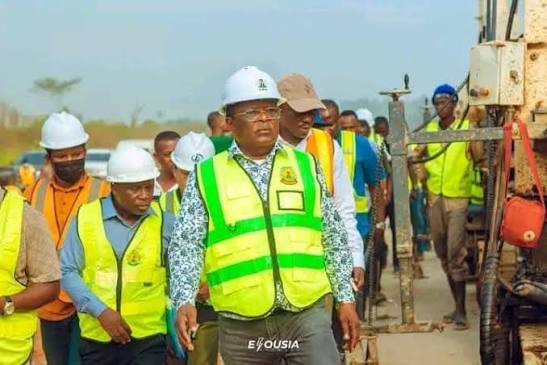
At the centre of the renewed push is the Minister of Works, Senator Dave Umahi, whose aggressive supervision of federal road projects has placed the region’s long-standing infrastructure deficit firmly on the national agenda.
The latest demonstration of that commitment is the ongoing reconstruction of the 65-kilometre Afikpo-Uturu-Okigwe Federal Road, linking communities and major highways across Ebonyi, Abia and Imo states.
During an inspection of the project in Okigwe, Umahi disclosed that the Federal Government had commenced preparatory works to remove a mountain more than 60 metres high that has for years constituted a major danger to motorists and contributed to fatal accidents along the route.
“This mountain, by the command of President Bola Ahmed Tinubu, must collapse for the people of South-East,” the minister declared, underscoring the administration’s determination to confront difficult infrastructure challenges rather than continue to allow them to hinder economic activity and endanger lives.
The mountain section represents one of the most technically demanding portions of the project. According to the contractor, Hi-Tech Construction, three excavators are being deployed to intensify excavation and reshape the terrain to create a safer and more efficient road alignment.
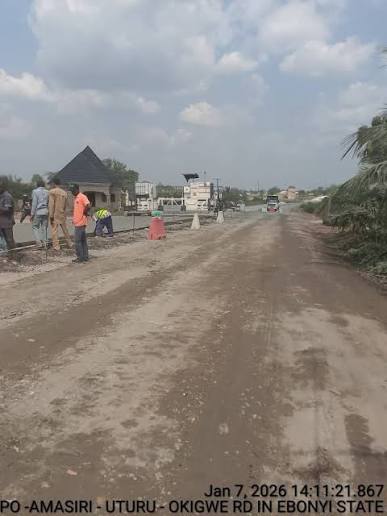
For a region where poor road infrastructure has historically been blamed for restricting trade, increasing transportation costs and slowing economic development, the significance of the project goes beyond the road itself.
The Afikpo-Uturu-Okigwe corridor is an important arterial route connecting communities and adjoining federal highways. When completed, it is expected to improve movement between Ebonyi, Abia and Imo, open up markets and strengthen regional integration.
More than 20 kilometres of the 65-kilometre project have already been completed, according to the Minister of Works, with the remaining sections progressing under the Federal Government’s tax-credit arrangement involving Dangote Industries Limited as sponsor and Hi-Tech Construction as contractor.
The project is also notable for the use of concrete pavement, which Umahi described as superior to what is obtainable on some other major federal highway projects.
But the Afikpo-Uturu-Okigwe road is only one component of a wider federal infrastructure push across the South-East.
Other major projects highlighted by the Presidency include the Enugu-Onitsha, Enugu-Port Harcourt, Enugu-Abakaliki, Abakaliki Trans-Sahara and Onitsha-Owerri roads.
Taken together, the projects suggest an attempt to address some of the region’s most persistent infrastructure bottlenecks while integrating its commercial centres more effectively with the national economy.
For Umahi, the issue is not merely the number of projects being undertaken, but their practical impact on the lives and economic fortunes of the people.
The minister has consistently argued that the Federal Government’s interventions in the South-East should be judged through tangible infrastructure delivery rather than political sentiments.
That argument is particularly significant in a region that has, for years, complained of inadequate federal infrastructure investment and what many residents perceive as neglect.
The ongoing projects therefore offer the Tinubu administration an opportunity to change that narrative through visible delivery on the ground.
The mountain at Okigwe provides perhaps the clearest symbol of the challenge.
For decades, the obstacle stood as a physical barrier to smoother transportation, while accidents and difficult road conditions imposed additional costs on motorists and communities.
Its planned removal is consequently more than an engineering exercise. It represents an attempt to physically dismantle one of the obstacles that have impeded movement, commerce and connectivity in the region.
Beyond road construction, improved connectivity could have wider economic consequences. Better roads can reduce travel time, improve the movement of agricultural produce and manufactured goods, strengthen access to schools and health facilities, and encourage investment along previously difficult corridors.
This is why the intervention is being viewed as part of a broader effort to close the infrastructure gap in the South-East.
The Senior Special Assistant to the President on Community Engagement, South-East, Barrister Chioma Nweze, reinforced this position, saying the projects would strengthen connectivity, open up communities and markets and stimulate commercial activities across the region.
The scale of the ongoing interventions provides the Tinubu administration with a strong opportunity to demonstrate that federal presence in the South-East can be defined not by political rhetoric but by roads, bridges, connectivity and economic infrastructure.
And with Umahi taking a hands-on approach to monitoring projects, the Federal Government appears determined to make infrastructure delivery one of the most visible signs of its engagement with the region.
If the Afikpo-Uturu-Okigwe road is completed as planned, including the removal of the 60-metre mountain, it could become one of the most striking examples of how a difficult infrastructure challenge can be transformed into an economic opportunity.
For the South-East, where infrastructure deficit has long featured prominently in conversations about federal neglect, the emerging picture is one of a region increasingly being brought into the centre of the Federal Government’s infrastructure agenda.
Continue Reading

Special Report

HOW ANTI PARTY ACTIVITIES MAY CAUSE APC TWO SENATE SEATS

Published

on

Maduka University

By Emma Igwe
In Ebonyi South, a scenario is playing out, following the loss of Igariwey Idu in securing the APC ticket for Edda/Afikpo North federal constituency, and the likely disposition of his followers to work against APC candidates. These anti-party activities and internal political realignments are now intersecting with broader dynamics in Ebonyi North and Ebonyi South senatorial districts, where the All Progressives Congress (APC) may face unexpected setbacks due to deep-rooted local interests, personal influence networks, and intra-party divisions.

In Ebonyi North, the political landscape is particularly complex, driven largely by a long-standing kindred dichotomy between the two dominant subgroups, Unwueru and Igbojima.
This internal division continues to influence voting behaviour across Izzi, Abakaliki, and Ebonyi local government areas, often outweighing party ideology or candidate competence. At the same time, the ripple effects of political dissatisfaction in Ebonyi South—especially from aggrieved APC stakeholders like Igariwey Idu—are beginning to shape cross-district alignments and quiet opposition strategies that could weaken APC’s overall electoral strength.

The APC candidate in Ebonyi North, Senator Onyekachi Peter Nwebonyi, who serves as Deputy Chief Whip and hails from the Unwueru subunit of Izzi, is widely acknowledged for his legislative performance and constituency projects across various communities in the district. However, his political strength is being challenged by deep-seated intra-ethnic sentiments, with his kindred of origin becoming a major political liability in the current contest. Some local political actors within Izzi are reportedly not fully aligned with his candidacy, further weakening his grassroots consolidation.

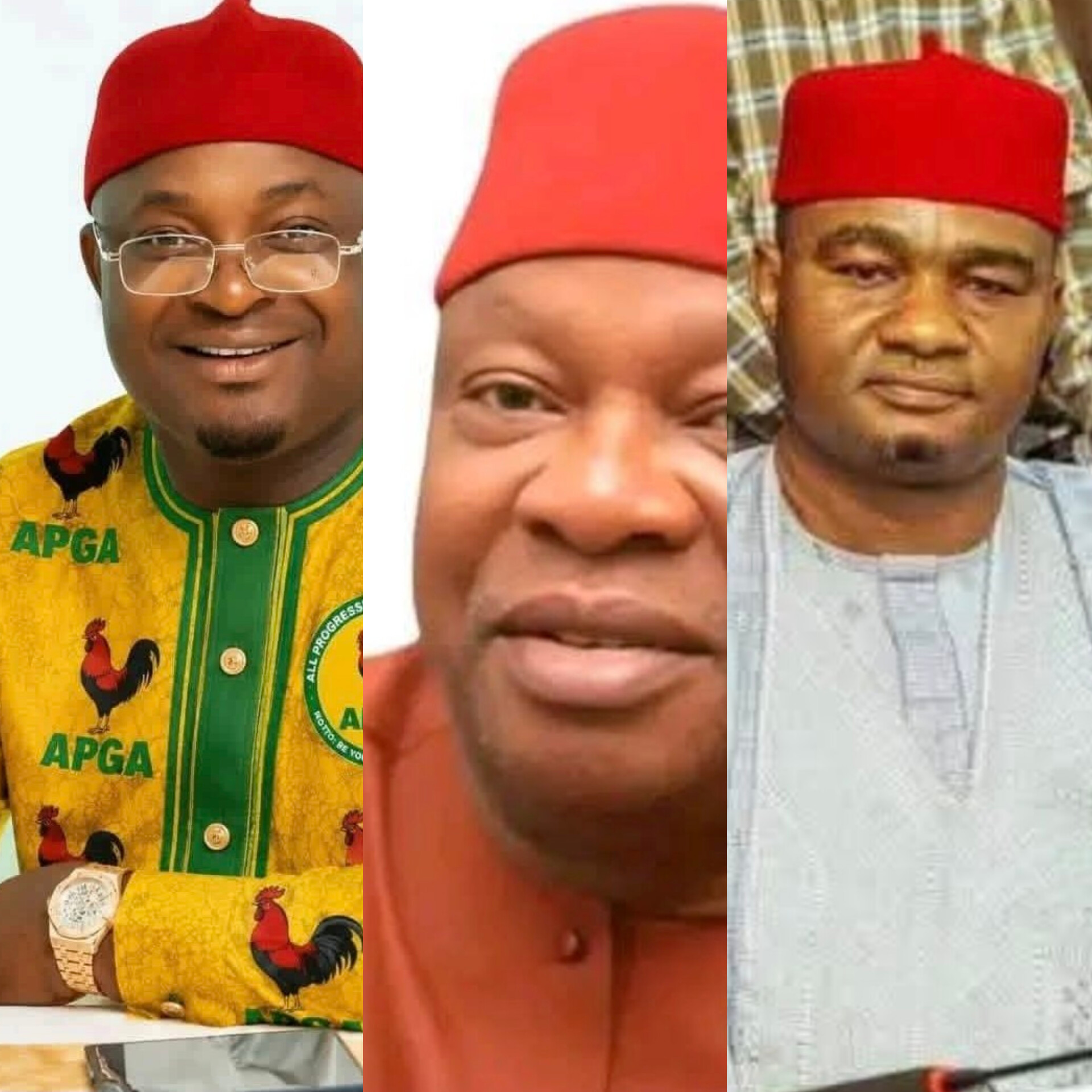
On the other hand, Chief Chikaodili Ojemba of the All Progressives Grand Alliance (APGA), who hails from the Igbojima axis—the same broader bloc as Governor Francis Ogbonna Nwifuru—appears to be gaining significant traction. Despite running under APGA, Ojemba is perceived by many as enjoying tacit support from influential political structures within the state. His alignment with both Governor Nwifuru and President Bola Ahmed Tinubu, at least in political posture, has further strengthened his acceptability across party lines.

Ojemba’s appeal is also reinforced by his position as chairman of the Quarry Dealers Association of Ebonyi State, as well as his philanthropic engagements, including recent scholarship awards to indigent students within the senatorial district. These activities have enhanced his visibility and grassroots goodwill, particularly among younger voters and economically disadvantaged communities.

Advertisement

While Senator Nwebonyi maintains a strong record of attracting federal projects and development initiatives across the district, the contest is increasingly being shaped less by performance and more by identity politics. The election is gradually evolving into a struggle for kindred supremacy rather than a comparison of competence or legislative effectiveness.

Demographically, the Igbojima bloc holds a population advantage and also benefits from the perceived influence of the incumbent governor, which may translate into significant electoral gains for Ojemba. He is also expected to perform strongly in Izzi areas, where local sentiments and political alignments are currently fluid.

In urban centres such as Abakaliki and parts of Ebonyi local government area, APGA may also enjoy considerable support due to the presence and influence of non-indigenous populations, particularly Anambra indigenes who have established strong socio-economic networks in these areas.

In a parallel development, Toochukwu Ogalagu, the APGA House of Representatives candidate for Ohaukwu/Ebonyi Federal Constituency, is also expected to command strong followership in urban centres such as Ezzangbo, Effium, and Alioma. However, he may face stronger resistance in Mgbo-speaking areas, where the incumbent representative retains influence. The simultaneous conduct of both senatorial and House of Repre

Advertisement
Continue Reading

Special Report

UMAHI: THE HABILA CASE -Separating Facts from Falsehood

Published

on

Maduka University

BY Emma Igwe

“Those who live ahead of their time should always expect criticism.”

Dr. Nnamdi Azikiwe

Dr. Nnamdi Azikiwe reportedly made this statement on two notable occasions.

The first was during the campaign for Nigeria’s independence, when Southern members of the then National Assembly advocated for self-rule while many Northern members opposed the move. When Dr. Azikiwe was interviewed at Heathrow Airport in the United Kingdom, he responded with those words.

The second was during the Nigeria–Biafra War. After advocating dialogue between Nigeria and Biafra, Radio Biafra reportedly labelled him a saboteur. Once again, he repeated the same statement. Supporters argue that history later vindicated his position.

A Religious Reflection

If Jesus Christ, revered by Christians as the Saviour of the world, was persecuted and crucified despite His innocence, then public criticism and unfounded allegations against public figures should not come as a surprise.

Advertisement

It is painful for anyone to be associated with a crime in which they had no involvement.

Sen. David Umahi: A Record of Public Service

Supporters of Sen. David Umahi point to a number of achievements during his political career, including:

  1. Becoming the first Deputy Governor in Ebonyi State to openly oppose the imposition of candidates within the Peoples Democratic Party (PDP), eventually emerging as Governor.
  2. Introducing the use of concrete pavement technology for road construction in Ebonyi State.
  3. Prioritising infrastructure development over patronage politics and the distribution of public resources.

When Sen. Umahi defected from the PDP to the All Progressives Congress (APC), he faced widespread criticism, particularly in the South-East. Today, many of those who opposed his decision have also joined the APC.

His supporters also argue that his performance as Minister of Works and his strong defence of President Bola Tinubu’s policies have attracted political opposition and criticism from rivals.

The Main Issue: The Death of Ms. Mary Habila

It is not disputed that Ms. Mary Habila died at Sen. David Umahi’s country home. However, the central issue should be determined by facts rather than assumptions.

The mere fact that a person dies at another person’s residence does not, by itself, establish that the owner or occupant is responsible for the death.

Advertisement

Liability can only be established through credible and verifiable evidence.

Among the issues that require proper investigation are:

  • Whether there is evidence linking any individual to the cause of the death.
  • Whether those present cooperated fully with law enforcement authorities.
  • Whether medical assistance was sought promptly and the incident duly reported.
  • The findings of forensic experts, medical examiners, and other investigators.

The cause and circumstances surrounding Ms. Mary Habila’s death are matters that should be determined through lawful investigation.

The Legal Position

Both criminal and civil liability must be established through credible evidence demonstrating that an unlawful act caused the death.

Sen. David Umahi has consistently denied any wrongdoing and has stated that he has cooperated with the relevant authorities throughout the investigation.

Ultimately, the circumstances surrounding the incident should be determined by witness testimony, forensic evidence, medical reports, and other admissible evidence—not by speculation based solely on the location where the death occurred.

Advertisement

It is a fundamental principle of justice that every person is presumed innocent until proven guilty by a court of competent jurisdiction. Accordingly, any conclusion regarding legal responsibility must rest on established facts and the applicable law, rather than suspicion or conjecture.

The occurrence of a death at Sen. Umahi’s residence, standing alone, is insufficient to establish legal liability without clear and convincing evidence linking him to the cause of the death.
Continue Reading

Special Report

The Five Missing NELAN Engineers: A Test of Nigeria’s Commitment to Justice

Published

on

Maduka University

By Okey Nwanguma

Nearly five years after five Nigerian engineers disappeared while carrying out their professional duties in Ebonyi State, the country still has no credible answers. Their families remain trapped between hope and despair, while the justice system appears unable—or unwilling—to establish the truth.

This is no longer merely the story of five missing professionals. It has become a defining test of Nigeria’s commitment to human rights, the rule of law, and public accountability.

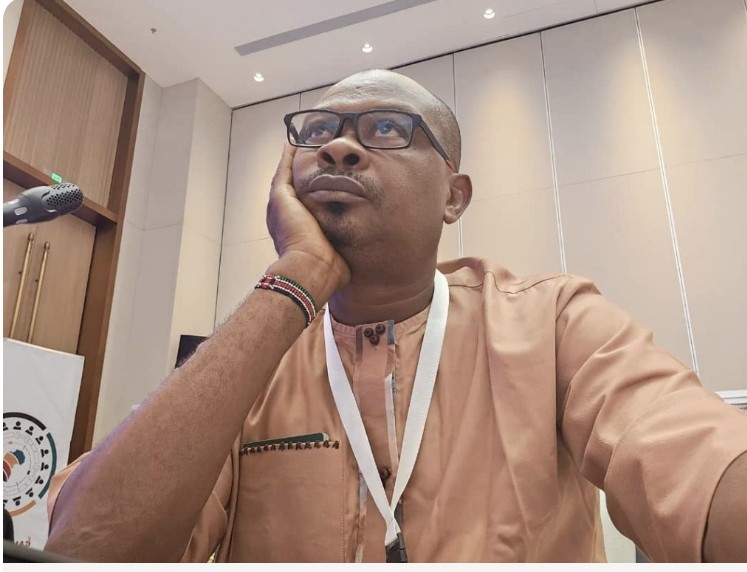
On 3 November 2021, Engr. Nelson Onyemeh, Engr. Ernest Edeani, Engr. Ikechukwu Ejiofor, Engr. Samuel Aneke, and Engr. Stanley Nwazulum left Enugu for Ebonyi State to supervise the construction of the Abakaliki Ring Road under a contract funded by the African Development Bank (AfDB). They never returned.
Okey Nwanguma

The engineers were employees of NELAN Consulting Limited, an independent engineering consultancy appointed through an international competitive bidding process to supervise the project in accordance with AfDB standards. Their role was not ceremonial. Independent supervision is central to ensuring that public infrastructure projects meet contractual specifications, maintain quality standards, and protect public resources from abuse.

Their disappearance would have been shocking under any circumstances. But the allegations that preceded it make the case especially disturbing.

Advertisement

According to the families, disagreements had arisen between NELAN and the Ebonyi State Government over project supervision, certification of completed work, and control of payments. They allege that the engineers refused to compromise their professional obligations by certifying work outside the procedures required under the AfDB-financed contract.

These allegations have been denied, and no court has established that they are connected to the disappearance. Yet they provide a context that any serious investigation cannot afford to ignore.

The rule of law demands neither blind acceptance of accusations nor premature dismissal of them. It demands an impartial investigation guided solely by evidence.

Instead, the public has been presented with a series of troubling contradictions.

The engineers disappeared without trace. Government officials reportedly attributed the incident to communal violence. Later, public statements suggested they had been killed based on alleged confessions, even while investigations were reportedly still ongoing. Yet no bodies have been conclusively identified.

Advertisement

Perhaps the most disturbing aspect is the reported DNA evidence. According to the families, skeletal remains presented as belonging to the missing engineers were subjected to independent DNA analysis, which reportedly excluded them as belonging to the victims. One set of remains was reportedly identified as female.

If accurate, such findings raise fundamental questions. What became of the original investigation? Why were contradictory forensic findings not fully explained? What happened to the search for the missing engineers?

These are not political questions. They are questions of justice.

Equally troubling are reports that prosecutions proceeded while the fate of the victims remained uncertain and that the proceedings have since become stalled. Justice delayed is often justice denied—not only for defendants but also for victims and their families.

The wives of the missing engineers have refused to allow the case to disappear into official silence. Their petitions to the President, the National Assembly, the National Human Rights Commission, security agencies, and professional bodies reflect not merely personal grief but an insistence that the Nigerian state fulfil its constitutional obligations.

Advertisement

Their central demand is simple: tell us the truth.

The Constitution guarantees the right to life. International human rights law imposes on governments a positive obligation to conduct prompt, effective, impartial and transparent investigations whenever people disappear under suspicious circumstances. Families also have a right to know the truth about what happened to their loved ones.

These obligations do not expire with time.

Nor should they depend on the political status of those whose actions may come under scrutiny.

It is equally important to emphasize that allegations against any individual, including former Ebonyi State Governor and current Minister of Works, Senator David Umahi, remain allegations unless established through credible evidence and due process. Justice demands accountability, but it also demands fairness. The objective is not to convict people in newspaper headlines or on social media, but to establish the truth through lawful investigation.

Advertisement

Precisely because allegations and counter-allegations have persisted for years without resolution, there is now a compelling case for an independent federal-level review of the investigation. Such a review should involve investigators with no prior involvement in the matter, modern forensic expertise, and transparent public reporting.

Nigeria cannot afford unresolved disappearances involving professionals carrying out public duties on major infrastructure projects. If engineers, auditors, consultants, journalists, lawyers, or civil servants cannot discharge their professional responsibilities without fear, public accountability itself becomes endangered.

This case is therefore about far more than five missing engineers.

It is about whether public institutions inspire confidence or suspicion.

It is about whether forensic evidence is pursued wherever it leads.

Advertisement

It is about whether political influence can overshadow justice.

Above all, it is about whether every Nigerian life carries equal value before the law.

The families have waited for nearly five years. That is far too long.

Justice demands answers.

The rule of law demands accountability.

Advertisement

Nigeria demands the truth.

Continue Reading

Special Report

Travails of Uche NNAJI, A Rebuttal

Published

on

Maduka University

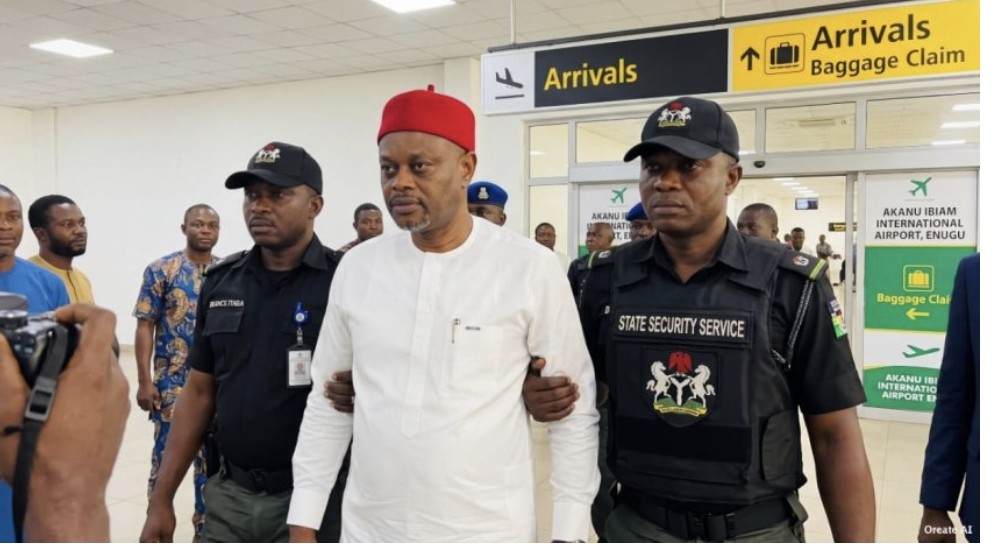
The attention of Enugu State Government has been drawn to a salacious report in the social media, credited to one Igboayaka O.Igboayaka, purportedly of Ohaneze Youth council, wherein he made an obvious, clearly laughable attempt to drag the name and office of Executive Governor of Enugu State, His Excellency, Dr. Peter Ndubuisi Mbah, into odious travails of disgraced former Minister of Science and Technology, Uche NNAJI.

It was obviously a convenient, last ditch effort to deflect attention and liability by dragging the name of the Governor into the mess Uche NNAJI had single-handedly inflicted on himself!

Pray, up until this moment, at what point in this matter did the name of Dr Mbah, feature in all these, whether as complainant or witness?

When did red herring become an acceptable defence against certificate forgery?

On all available records, the Federal Republic of Nigeria is the complainant in the criminal complaint against Uche Nnaji, definitely NOT Peter Mbah!

Advertisement

It is, therefore , absurd and disingenuous to think that accusing a perceived adversary of involvement in one’s unsavoury situation, in itself, would mitigate assured fate, tilt public opinion or hamstring legitimate law enforcement.

It is germain to state categorically here, that Governor Peter Mbah has filed no complaints against Uche NNAJI anywhere, civil or criminal.

Is being a sitting Governor sufficient to make one accountable for all criminal liabilities of any or all his opponents?

It would have been better for cheap hirelings like Igboayaka to explore available legal and/or judicial means under the law, to assist Mr NNAJI prove his innocence swiftly, rather than spending precious time and effort seeking to drag in someone that has nothing whatsoever, to do with his situation.

And threatening a statutory institution like ICPC, to dissuade it from performing it’s lawful duty, because a politically exposed person is involved, would set a dangerous precedent: availing criminal immunity to all manner of fugitives, who ordinarily deserve to be in jail.

Advertisement

It is unhelpful, indeed unnecessary here, going into the merits or demerits of the case against suspect, Uche Nnaji, but it would have made better sense to channel his endeavours to mounting a credible legal defence for self, than procuring charlatans and social media goons, to seek to use blackmail and intimidation to help him escape justice.

The best a well-advised accused person can ask for, is an expeditious, free and fair trial, not immunity !

Uche NNAJI should be anxious and ready for his impending day in court,so he can have the chance to prove his innocence, once and for all…

His Excellency,Governor Peter Mbah, is focused on governance, and has neither interest in, nor time for frivolities.

Signed:

Advertisement

Onyekwere Nwobodo
Special Adviser on Media, to the Executive Governor.
July 8,2026.

Continue Reading
Advertisement

Trending