


Special Report
Enugu workers hail outstanding LG Chairman’s track record of success


Hon Vitus Okechi is the Executive Chairman, Igboeze South Local Government Area of Enugu State.
He was among the current crop of Local Government Chairmen elected in few months back.

Hon Vitus Okechi
The former Commissioner who served in the Ministries of Housing, Youth and Sports as well as that of Transport, took the Council by storm. While his colleagues were still savouring their electoral victory, the Igboeze South Council boss had commenced work.
In a very short period after his swearing in his presence was already being felt.
The Local Government Headquarters started wearing new looks.
Leaking roofs were fixed. New and improved infrastructure and office epuipment were brought in to replace outdated and obsolete ones.
A new lease of life and a better working environment was put in place.

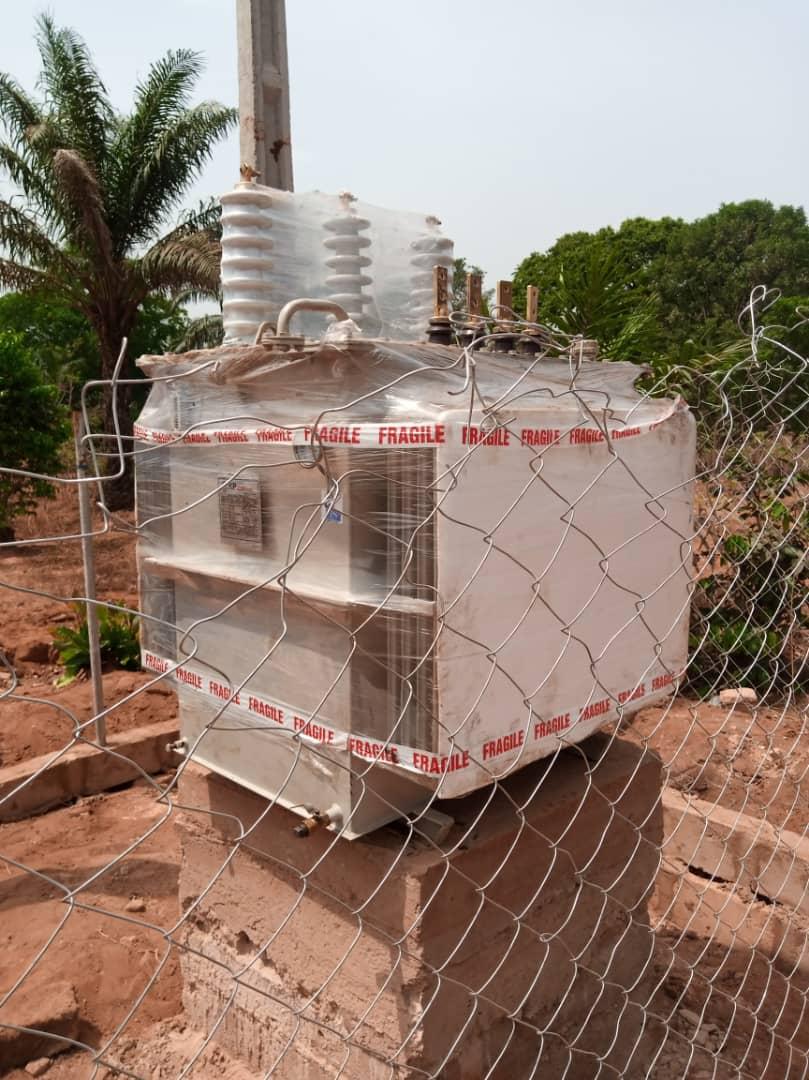
The Council and it’s host Community that had been in darkness for years due to bad transformer, had power restored.

One of the brand new transformers installed by the Council
Two brand new transformers were procured to restore power in Ibeagwa and Iheaka Communities.
Security which has become an issue in the South East, received quick attention. Security vehicles were repaired and put in good shape. Abandoned vehicles were also recovered and made operational.
Within the short period Hon Vitus Okechi attracted a skill acqusition centre to engage the youths and make them more productive.
It was the first of its kind in Local Government Administration in Enugu State. Elated Local Government workers would not keep quiet in the midst of the turnaround being witnessed in the Council Area in such a short period of the new Administration.
They therefore, decided to formally write a commendation letter in appreciation to the good works of the new Chairman, Hon Vitus Okechi.
On behalf of the Igboeze South Local Government workers, Hyginus Valentine Udoka, signed the letter to the Chairman.
The letter read in part: “you are the man who came, saw and conquered. You transformed the erstwhile sleeping Ministry of Transport to its enviable position today.
“Precisely, on your inception as the Hon. Commissioner, Ministry of Transport in 2015, you met a ministry that was solely dependent on the government financial support for virtually all its needs.
“All the departments were operating in less expected level and the staffing was not ideal. As at then, the most formidable department was the Vehicle Inspection Officers (VIO), this department which was later divided into two main active units saw to an increase in the revenue generation of the ministry to over 80% from 11% at the inception of your tenure.

MOT Traffic Enforcers: A creation of Hon Vitus Okechi
“Akin to this, was the Traffic Enforcement Unit that had with its leader a total number of 21 Officers and Men. You recruited a total number of 314 officers, to which Igbo-Eze South LGA sons and daughters were adequately employed and of which we ever remain indebted.You did not stop here.
“You were able to increase the revenue generation of this unit to above 300% and also saw to the procuring of all the necessary approvals from the State Government.
“You created an enabling environment, which gave synergy with other sister organisations like the Federal Road Safety Corps and at a point was able to get the Nigerian Army Provost Corp to train some of the officers.
” A Riders Permit Unit was equally created in the Ministry. This gave way to Security tailored identification mode for all the Keke Riders in the State. This period also saw to the re-organisation, development of all other revenue base of the Ministry and saw to the stoppage of illegal and distortedly collection of transport revenue.
“Some of the areas that were developed and are still being maintained include but not limited to proper issuance of road worthiness, keke ticket, National Union of Road Transport emblem and the setting up of unions that saw to the peaceful existence of the transport sector in the state.
“Hon. Okechi; as already known is a formidable technocrat. You have used your leadership quality and technical-know-how in the creation of the various jobs for the teeming youths in the state through the creation of Enugu State Traffic Enforcement Authority (ESTEA). This is one more laudable achievement of yours which saw the curbing of the traffic menace which Enugu road users were earlier experiencing, in addition to the huge revenue which the traffic defaulters pay into the State IGR.
“While commending you for a job well done in the transport sector which cannot be over emphasized, one is drawn to note also that this great feat was equally replicated in the Youths & Sports as well as the Housing Ministries.
“With your achievements in all the Ministries you presided as a Commissioner, we are not surprised with the achievements already recorded within the short period as Igboeze South Local Government Chairman.
We know you have done extremely well as Commissioner, Ministry of Transport, Youths & Sports and Housing. You have been doing well as the Executive Chairman, Igboeze South LGA, we do acknowledge that and also give you accolade for that, but as Oliver Twist, we will always ask for more, we ask for more empowerment and job creation to our people.
“We are asking because we believe, we also know that you have the capacity, the commitmemt and dedication to serve your people.
“It may not be an easy task in the face of current Economic realities, but ask for your best within the limited resources.
“Thanks for all you have done, as Igbo-Eze South LGA has never had it so good and remain blessed, the Mayor of Igbo-Eze South LGA, Hon. Vitus Okechi.”
Special Report
Federal Roads: Umahi Closing the Gap as Tinubu Addresses Years of Neglect in South-East
By PETRUS OBI
The Federal Government’s renewed intervention in major infrastructure projects across the South-East is beginning to give fresh meaning to the argument that the region is witnessing a stronger federal presence under President Bola Ahmed Tinubu.
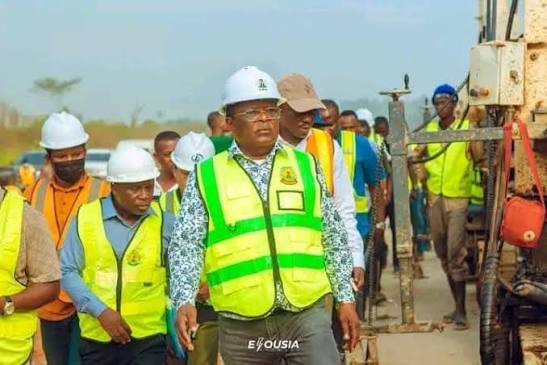
At the centre of the renewed push is the Minister of Works, Senator Dave Umahi, whose aggressive supervision of federal road projects has placed the region’s long-standing infrastructure deficit firmly on the national agenda.
The latest demonstration of that commitment is the ongoing reconstruction of the 65-kilometre Afikpo-Uturu-Okigwe Federal Road, linking communities and major highways across Ebonyi, Abia and Imo states.
During an inspection of the project in Okigwe, Umahi disclosed that the Federal Government had commenced preparatory works to remove a mountain more than 60 metres high that has for years constituted a major danger to motorists and contributed to fatal accidents along the route.
“This mountain, by the command of President Bola Ahmed Tinubu, must collapse for the people of South-East,” the minister declared, underscoring the administration’s determination to confront difficult infrastructure challenges rather than continue to allow them to hinder economic activity and endanger lives.
The mountain section represents one of the most technically demanding portions of the project. According to the contractor, Hi-Tech Construction, three excavators are being deployed to intensify excavation and reshape the terrain to create a safer and more efficient road alignment. 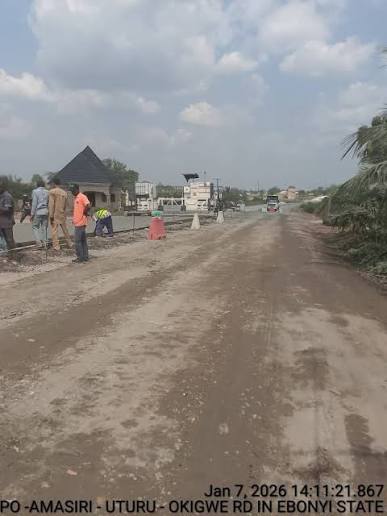
For a region where poor road infrastructure has historically been blamed for restricting trade, increasing transportation costs and slowing economic development, the significance of the project goes beyond the road itself.
The Afikpo-Uturu-Okigwe corridor is an important arterial route connecting communities and adjoining federal highways. When completed, it is expected to improve movement between Ebonyi, Abia and Imo, open up markets and strengthen regional integration.
More than 20 kilometres of the 65-kilometre project have already been completed, according to the Minister of Works, with the remaining sections progressing under the Federal Government’s tax-credit arrangement involving Dangote Industries Limited as sponsor and Hi-Tech Construction as contractor.
The project is also notable for the use of concrete pavement, which Umahi described as superior to what is obtainable on some other major federal highway projects.
But the Afikpo-Uturu-Okigwe road is only one component of a wider federal infrastructure push across the South-East.
Other major projects highlighted by the Presidency include the Enugu-Onitsha, Enugu-Port Harcourt, Enugu-Abakaliki, Abakaliki Trans-Sahara and Onitsha-Owerri roads.
Taken together, the projects suggest an attempt to address some of the region’s most persistent infrastructure bottlenecks while integrating its commercial centres more effectively with the national economy.
For Umahi, the issue is not merely the number of projects being undertaken, but their practical impact on the lives and economic fortunes of the people.
The minister has consistently argued that the Federal Government’s interventions in the South-East should be judged through tangible infrastructure delivery rather than political sentiments.
That argument is particularly significant in a region that has, for years, complained of inadequate federal infrastructure investment and what many residents perceive as neglect.
The ongoing projects therefore offer the Tinubu administration an opportunity to change that narrative through visible delivery on the ground.
The mountain at Okigwe provides perhaps the clearest symbol of the challenge.
For decades, the obstacle stood as a physical barrier to smoother transportation, while accidents and difficult road conditions imposed additional costs on motorists and communities.
Its planned removal is consequently more than an engineering exercise. It represents an attempt to physically dismantle one of the obstacles that have impeded movement, commerce and connectivity in the region.
Beyond road construction, improved connectivity could have wider economic consequences. Better roads can reduce travel time, improve the movement of agricultural produce and manufactured goods, strengthen access to schools and health facilities, and encourage investment along previously difficult corridors.
This is why the intervention is being viewed as part of a broader effort to close the infrastructure gap in the South-East.
The Senior Special Assistant to the President on Community Engagement, South-East, Barrister Chioma Nweze, reinforced this position, saying the projects would strengthen connectivity, open up communities and markets and stimulate commercial activities across the region.
The scale of the ongoing interventions provides the Tinubu administration with a strong opportunity to demonstrate that federal presence in the South-East can be defined not by political rhetoric but by roads, bridges, connectivity and economic infrastructure.
And with Umahi taking a hands-on approach to monitoring projects, the Federal Government appears determined to make infrastructure delivery one of the most visible signs of its engagement with the region.
If the Afikpo-Uturu-Okigwe road is completed as planned, including the removal of the 60-metre mountain, it could become one of the most striking examples of how a difficult infrastructure challenge can be transformed into an economic opportunity.
For the South-East, where infrastructure deficit has long featured prominently in conversations about federal neglect, the emerging picture is one of a region increasingly being brought into the centre of the Federal Government’s infrastructure agenda.
By Emma Igwe
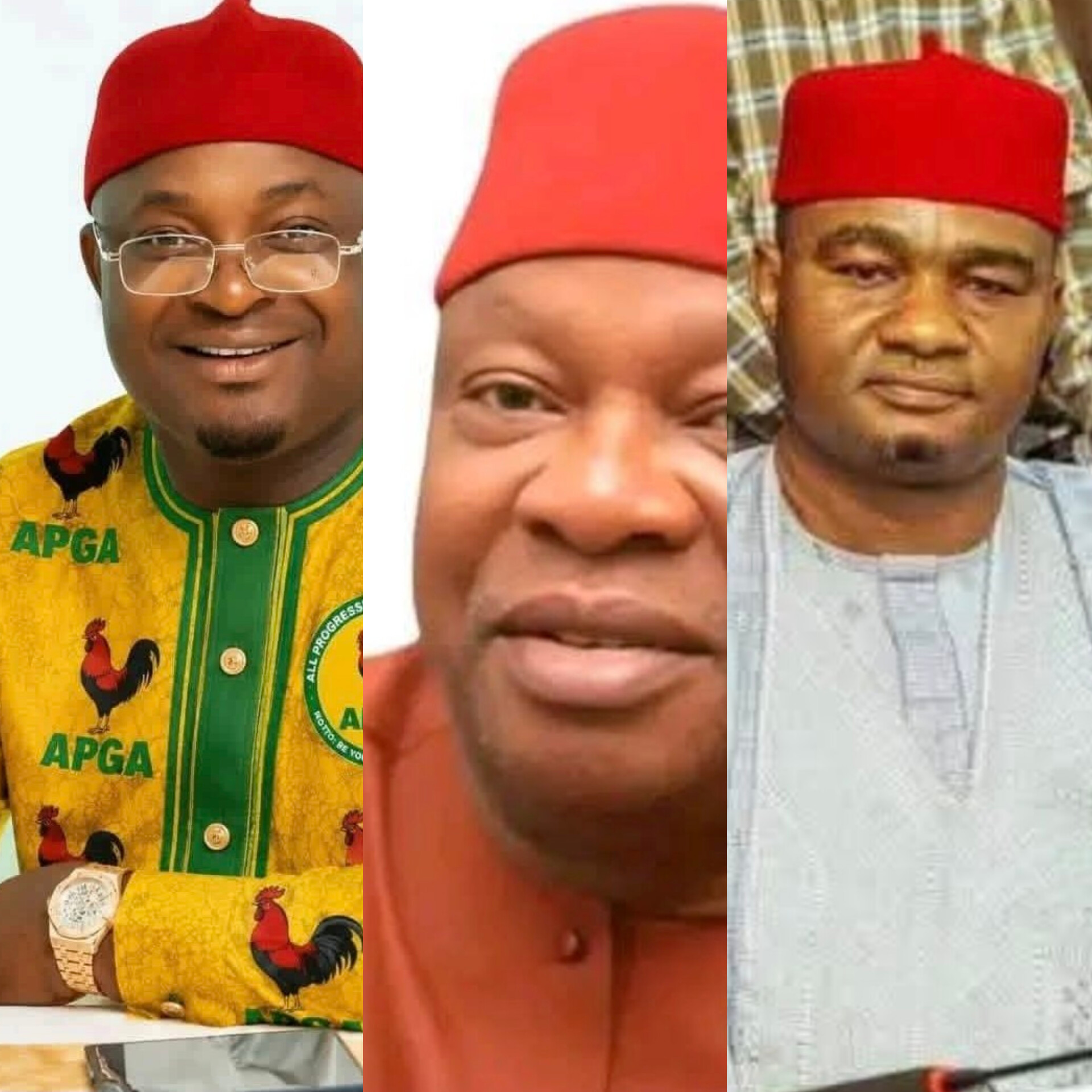
In Ebonyi South, a scenario is playing out, following the loss of Igariwey Idu in securing the APC ticket for Edda/Afikpo North federal constituency, and the likely disposition of his followers to work against APC candidates. These anti-party activities and internal political realignments are now intersecting with broader dynamics in Ebonyi North and Ebonyi South senatorial districts, where the All Progressives Congress (APC) may face unexpected setbacks due to deep-rooted local interests, personal influence networks, and intra-party divisions.
In Ebonyi North, the political landscape is particularly complex, driven largely by a long-standing kindred dichotomy between the two dominant subgroups, Unwueru and Igbojima.
This internal division continues to influence voting behaviour across Izzi, Abakaliki, and Ebonyi local government areas, often outweighing party ideology or candidate competence. At the same time, the ripple effects of political dissatisfaction in Ebonyi South—especially from aggrieved APC stakeholders like Igariwey Idu—are beginning to shape cross-district alignments and quiet opposition strategies that could weaken APC’s overall electoral strength.
The APC candidate in Ebonyi North, Senator Onyekachi Peter Nwebonyi, who serves as Deputy Chief Whip and hails from the Unwueru subunit of Izzi, is widely acknowledged for his legislative performance and constituency projects across various communities in the district. However, his political strength is being challenged by deep-seated intra-ethnic sentiments, with his kindred of origin becoming a major political liability in the current contest. Some local political actors within Izzi are reportedly not fully aligned with his candidacy, further weakening his grassroots consolidation.
On the other hand, Chief Chikaodili Ojemba of the All Progressives Grand Alliance (APGA), who hails from the Igbojima axis—the same broader bloc as Governor Francis Ogbonna Nwifuru—appears to be gaining significant traction. Despite running under APGA, Ojemba is perceived by many as enjoying tacit support from influential political structures within the state. His alignment with both Governor Nwifuru and President Bola Ahmed Tinubu, at least in political posture, has further strengthened his acceptability across party lines.
Ojemba’s appeal is also reinforced by his position as chairman of the Quarry Dealers Association of Ebonyi State, as well as his philanthropic engagements, including recent scholarship awards to indigent students within the senatorial district. These activities have enhanced his visibility and grassroots goodwill, particularly among younger voters and economically disadvantaged communities.
While Senator Nwebonyi maintains a strong record of attracting federal projects and development initiatives across the district, the contest is increasingly being shaped less by performance and more by identity politics. The election is gradually evolving into a struggle for kindred supremacy rather than a comparison of competence or legislative effectiveness.
Demographically, the Igbojima bloc holds a population advantage and also benefits from the perceived influence of the incumbent governor, which may translate into significant electoral gains for Ojemba. He is also expected to perform strongly in Izzi areas, where local sentiments and political alignments are currently fluid.
In urban centres such as Abakaliki and parts of Ebonyi local government area, APGA may also enjoy considerable support due to the presence and influence of non-indigenous populations, particularly Anambra indigenes who have established strong socio-economic networks in these areas.
In a parallel development, Toochukwu Ogalagu, the APGA House of Representatives candidate for Ohaukwu/Ebonyi Federal Constituency, is also expected to command strong followership in urban centres such as Ezzangbo, Effium, and Alioma. However, he may face stronger resistance in Mgbo-speaking areas, where the incumbent representative retains influence. The simultaneous conduct of both senatorial and House of Repre

BY Emma Igwe
“Those who live ahead of their time should always expect criticism.”
— Dr. Nnamdi Azikiwe
Dr. Nnamdi Azikiwe reportedly made this statement on two notable occasions.
The first was during the campaign for Nigeria’s independence, when Southern members of the then National Assembly advocated for self-rule while many Northern members opposed the move. When Dr. Azikiwe was interviewed at Heathrow Airport in the United Kingdom, he responded with those words.
The second was during the Nigeria–Biafra War. After advocating dialogue between Nigeria and Biafra, Radio Biafra reportedly labelled him a saboteur. Once again, he repeated the same statement. Supporters argue that history later vindicated his position.
A Religious Reflection
If Jesus Christ, revered by Christians as the Saviour of the world, was persecuted and crucified despite His innocence, then public criticism and unfounded allegations against public figures should not come as a surprise.
It is painful for anyone to be associated with a crime in which they had no involvement.
Sen. David Umahi: A Record of Public Service
Supporters of Sen. David Umahi point to a number of achievements during his political career, including:
- Becoming the first Deputy Governor in Ebonyi State to openly oppose the imposition of candidates within the Peoples Democratic Party (PDP), eventually emerging as Governor.
- Introducing the use of concrete pavement technology for road construction in Ebonyi State.
- Prioritising infrastructure development over patronage politics and the distribution of public resources.
When Sen. Umahi defected from the PDP to the All Progressives Congress (APC), he faced widespread criticism, particularly in the South-East. Today, many of those who opposed his decision have also joined the APC.
His supporters also argue that his performance as Minister of Works and his strong defence of President Bola Tinubu’s policies have attracted political opposition and criticism from rivals.
The Main Issue: The Death of Ms. Mary Habila
It is not disputed that Ms. Mary Habila died at Sen. David Umahi’s country home. However, the central issue should be determined by facts rather than assumptions.
The mere fact that a person dies at another person’s residence does not, by itself, establish that the owner or occupant is responsible for the death.
Liability can only be established through credible and verifiable evidence.
Among the issues that require proper investigation are:
- Whether there is evidence linking any individual to the cause of the death.
- Whether those present cooperated fully with law enforcement authorities.
- Whether medical assistance was sought promptly and the incident duly reported.
- The findings of forensic experts, medical examiners, and other investigators.
The cause and circumstances surrounding Ms. Mary Habila’s death are matters that should be determined through lawful investigation.
The Legal Position
Both criminal and civil liability must be established through credible evidence demonstrating that an unlawful act caused the death.
Sen. David Umahi has consistently denied any wrongdoing and has stated that he has cooperated with the relevant authorities throughout the investigation.
Ultimately, the circumstances surrounding the incident should be determined by witness testimony, forensic evidence, medical reports, and other admissible evidence—not by speculation based solely on the location where the death occurred.
It is a fundamental principle of justice that every person is presumed innocent until proven guilty by a court of competent jurisdiction. Accordingly, any conclusion regarding legal responsibility must rest on established facts and the applicable law, rather than suspicion or conjecture.
The occurrence of a death at Sen. Umahi’s residence, standing alone, is insufficient to establish legal liability without clear and convincing evidence linking him to the cause of the death.
By Okey Nwanguma
Nearly five years after five Nigerian engineers disappeared while carrying out their professional duties in Ebonyi State, the country still has no credible answers. Their families remain trapped between hope and despair, while the justice system appears unable—or unwilling—to establish the truth.
This is no longer merely the story of five missing professionals. It has become a defining test of Nigeria’s commitment to human rights, the rule of law, and public accountability.
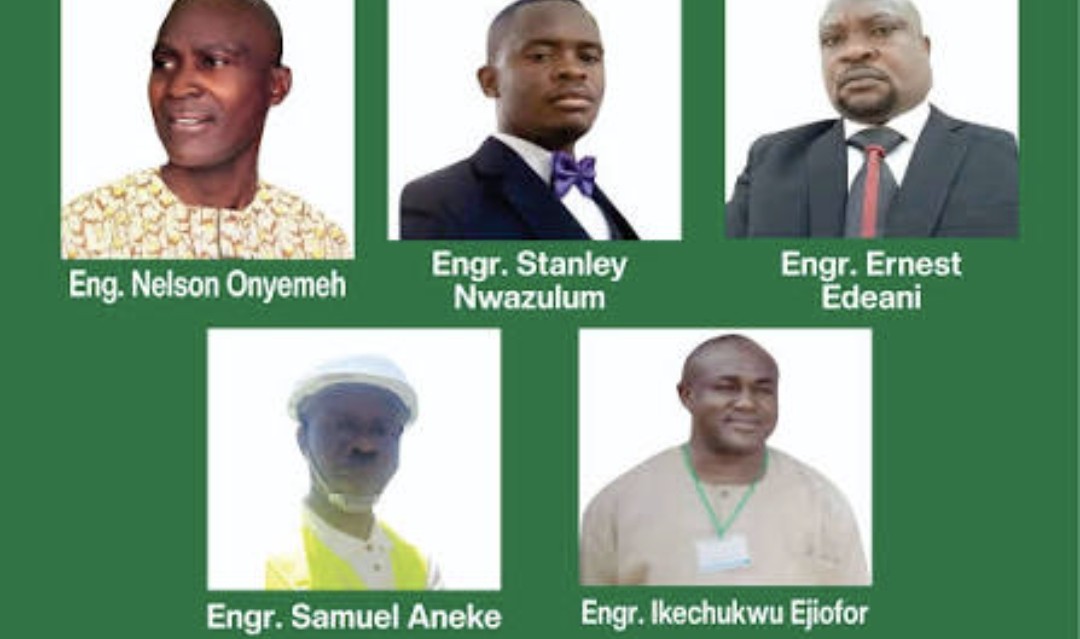
On 3 November 2021, Engr. Nelson Onyemeh, Engr. Ernest Edeani, Engr. Ikechukwu Ejiofor, Engr. Samuel Aneke, and Engr. Stanley Nwazulum left Enugu for Ebonyi State to supervise the construction of the Abakaliki Ring Road under a contract funded by the African Development Bank (AfDB). They never returned.
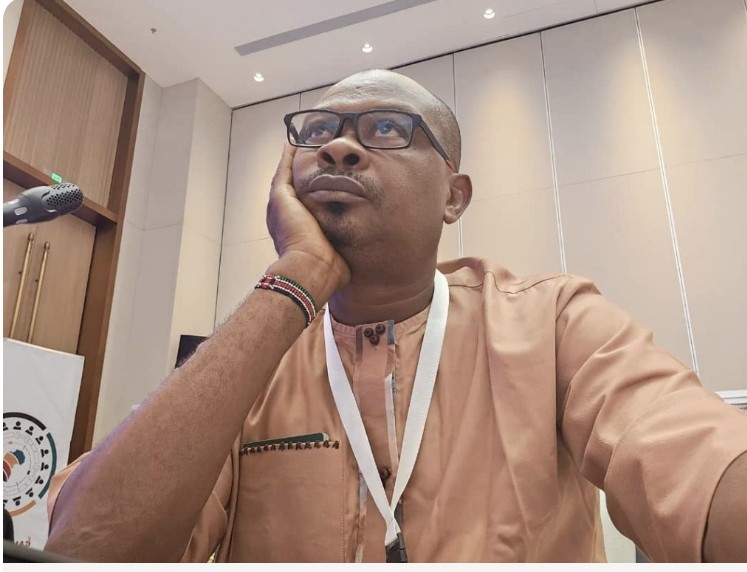
Okey Nwanguma
The engineers were employees of NELAN Consulting Limited, an independent engineering consultancy appointed through an international competitive bidding process to supervise the project in accordance with AfDB standards. Their role was not ceremonial. Independent supervision is central to ensuring that public infrastructure projects meet contractual specifications, maintain quality standards, and protect public resources from abuse.
Their disappearance would have been shocking under any circumstances. But the allegations that preceded it make the case especially disturbing.
According to the families, disagreements had arisen between NELAN and the Ebonyi State Government over project supervision, certification of completed work, and control of payments. They allege that the engineers refused to compromise their professional obligations by certifying work outside the procedures required under the AfDB-financed contract.
These allegations have been denied, and no court has established that they are connected to the disappearance. Yet they provide a context that any serious investigation cannot afford to ignore.
The rule of law demands neither blind acceptance of accusations nor premature dismissal of them. It demands an impartial investigation guided solely by evidence.
Instead, the public has been presented with a series of troubling contradictions.
The engineers disappeared without trace. Government officials reportedly attributed the incident to communal violence. Later, public statements suggested they had been killed based on alleged confessions, even while investigations were reportedly still ongoing. Yet no bodies have been conclusively identified.
Perhaps the most disturbing aspect is the reported DNA evidence. According to the families, skeletal remains presented as belonging to the missing engineers were subjected to independent DNA analysis, which reportedly excluded them as belonging to the victims. One set of remains was reportedly identified as female.
If accurate, such findings raise fundamental questions. What became of the original investigation? Why were contradictory forensic findings not fully explained? What happened to the search for the missing engineers?
These are not political questions. They are questions of justice.
Equally troubling are reports that prosecutions proceeded while the fate of the victims remained uncertain and that the proceedings have since become stalled. Justice delayed is often justice denied—not only for defendants but also for victims and their families.
The wives of the missing engineers have refused to allow the case to disappear into official silence. Their petitions to the President, the National Assembly, the National Human Rights Commission, security agencies, and professional bodies reflect not merely personal grief but an insistence that the Nigerian state fulfil its constitutional obligations.
Their central demand is simple: tell us the truth.
The Constitution guarantees the right to life. International human rights law imposes on governments a positive obligation to conduct prompt, effective, impartial and transparent investigations whenever people disappear under suspicious circumstances. Families also have a right to know the truth about what happened to their loved ones.
These obligations do not expire with time.
Nor should they depend on the political status of those whose actions may come under scrutiny.
It is equally important to emphasize that allegations against any individual, including former Ebonyi State Governor and current Minister of Works, Senator David Umahi, remain allegations unless established through credible evidence and due process. Justice demands accountability, but it also demands fairness. The objective is not to convict people in newspaper headlines or on social media, but to establish the truth through lawful investigation.
Precisely because allegations and counter-allegations have persisted for years without resolution, there is now a compelling case for an independent federal-level review of the investigation. Such a review should involve investigators with no prior involvement in the matter, modern forensic expertise, and transparent public reporting.
Nigeria cannot afford unresolved disappearances involving professionals carrying out public duties on major infrastructure projects. If engineers, auditors, consultants, journalists, lawyers, or civil servants cannot discharge their professional responsibilities without fear, public accountability itself becomes endangered.
This case is therefore about far more than five missing engineers.
It is about whether public institutions inspire confidence or suspicion.
It is about whether forensic evidence is pursued wherever it leads.
It is about whether political influence can overshadow justice.
Above all, it is about whether every Nigerian life carries equal value before the law.
The families have waited for nearly five years. That is far too long.
Justice demands answers.
The rule of law demands accountability.
Nigeria demands the truth.
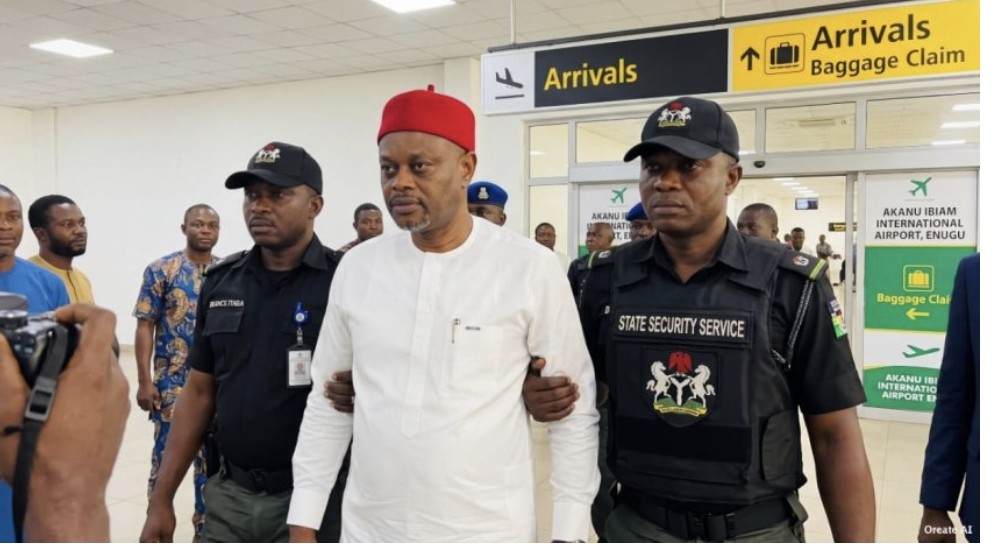
The attention of Enugu State Government has been drawn to a salacious report in the social media, credited to one Igboayaka O.Igboayaka, purportedly of Ohaneze Youth council, wherein he made an obvious, clearly laughable attempt to drag the name and office of Executive Governor of Enugu State, His Excellency, Dr. Peter Ndubuisi Mbah, into odious travails of disgraced former Minister of Science and Technology, Uche NNAJI.
It was obviously a convenient, last ditch effort to deflect attention and liability by dragging the name of the Governor into the mess Uche NNAJI had single-handedly inflicted on himself!
Pray, up until this moment, at what point in this matter did the name of Dr Mbah, feature in all these, whether as complainant or witness?
When did red herring become an acceptable defence against certificate forgery?
On all available records, the Federal Republic of Nigeria is the complainant in the criminal complaint against Uche Nnaji, definitely NOT Peter Mbah!
It is, therefore , absurd and disingenuous to think that accusing a perceived adversary of involvement in one’s unsavoury situation, in itself, would mitigate assured fate, tilt public opinion or hamstring legitimate law enforcement.
It is germain to state categorically here, that Governor Peter Mbah has filed no complaints against Uche NNAJI anywhere, civil or criminal.
Is being a sitting Governor sufficient to make one accountable for all criminal liabilities of any or all his opponents?
It would have been better for cheap hirelings like Igboayaka to explore available legal and/or judicial means under the law, to assist Mr NNAJI prove his innocence swiftly, rather than spending precious time and effort seeking to drag in someone that has nothing whatsoever, to do with his situation.
And threatening a statutory institution like ICPC, to dissuade it from performing it’s lawful duty, because a politically exposed person is involved, would set a dangerous precedent: availing criminal immunity to all manner of fugitives, who ordinarily deserve to be in jail.
It is unhelpful, indeed unnecessary here, going into the merits or demerits of the case against suspect, Uche Nnaji, but it would have made better sense to channel his endeavours to mounting a credible legal defence for self, than procuring charlatans and social media goons, to seek to use blackmail and intimidation to help him escape justice.
The best a well-advised accused person can ask for, is an expeditious, free and fair trial, not immunity !
Uche NNAJI should be anxious and ready for his impending day in court,so he can have the chance to prove his innocence, once and for all…
His Excellency,Governor Peter Mbah, is focused on governance, and has neither interest in, nor time for frivolities.
Signed:
Onyekwere Nwobodo
Special Adviser on Media, to the Executive Governor.
July 8,2026.

-
 News2 days ago
No Survivor Found Yet in Ondo Air Crash — Aiyedatiwa
-
 News2 days ago
How NAF Plane Vanished From Radar Shortly After Take-Off, Crashes In Ondo Swamp
-
 News4 days ago
Sacked Works Commissioner: Release or Charge Him to Court, Oganiru Izzi Challenges Nwifuru
-
 Politics2 days ago
2027: Odii Will Not Step Down, Says Spokesperson
-
 Crime3 days ago
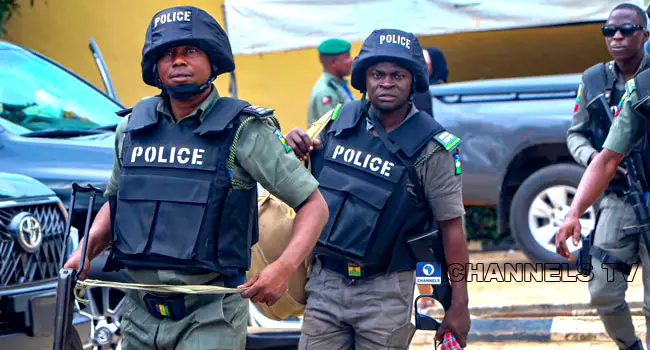
Police Deploy DIG, Two Commissioners to Rescue 20 Abducted Prospective Corps Members
-
 EverydayNews Telescope2 days ago
Nkalagu Cement Factory: Project or 2027 Political Promise?
-
 Crime21 hours ago
Court Denies Alleged Fake Pastor Bail as Seven Witnesses Await Trial
-

 News21 hours ago
NAF Crash Claims Pilot 16 Days After Wedding