



Special Report
TB Joshua: ‘We thought it was heaven but then terrible things happened’

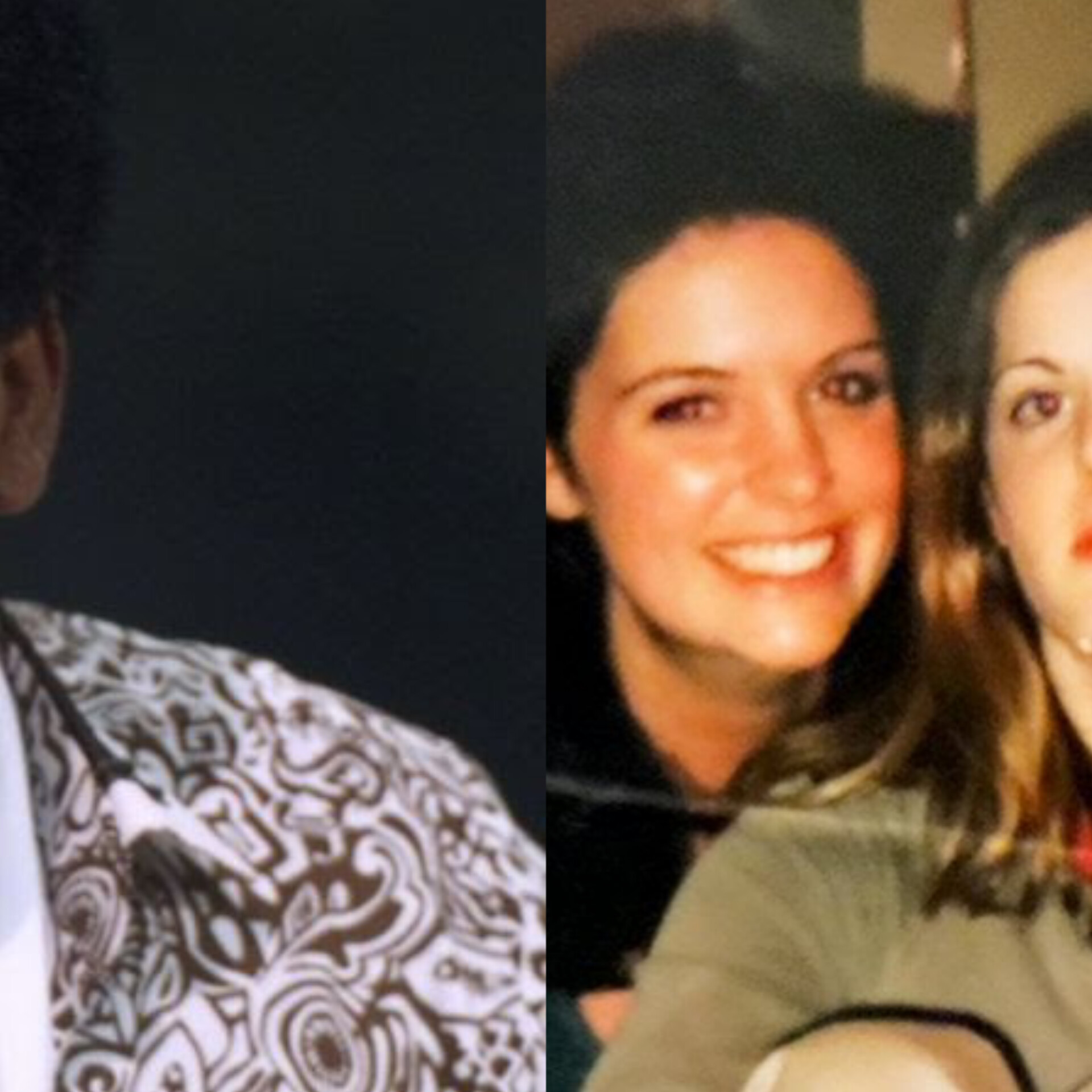

TB Joshua, a charismatic Nigerian leader of one of the world’s biggest evangelical churches, secretly committed sexual crimes on a mass scale, a BBC investigation spanning three continents has found. Testimony from dozens of survivors suggests Joshua was abusing and raping young women from around the world several times a week for nearly 20 years.
In early 2002, in the depths of a grey English winter, 21-year-old Rae disappeared.
The last time many of her friends saw her was at university in Brighton. She had been studying graphic design, living in a shared house 25 minutes from the sea. Rae was bright and popular.
“For me, it was like she died, but I couldn’t grieve her,” says Carla, Rae’s best friend at the time.
Carla knew where Rae had gone. But the truth of it was hard to explain to their friends. A few weeks previously, she and Rae had travelled to Nigeria together, in search of a mysterious man who could seemingly heal people with his hands.

He was a Christian pastor, with a black beard, in white robes. His name was TB Joshua. His followers called him “The Prophet”.
Rae and Carla planned to visit his church, the Synagogue Church of All Nations [Scoan], for just one week. But Rae never came home. She had moved into Joshua’s compound.
“I left her there,” says Carla, tears flowing freely. “Never will I ever forgive myself for that.”
The church looms like a gothic temple over the Ikotun neighbourhood in Lagos, Africa’s largest city. Joshua designed all 12 storeys of the compound adjoining it, where he lived alongside many of his followers. He oversaw the construction of the multiple staircases to his bedroom. The three doors to it, in and out. The hidden prayer room full of tiny mirrors. The “clinic” downstairs.
We have interviewed many people who lived inside. They paint a picture of a concrete labyrinth; a nightmarish world where reality slipped away and horrors unfolded.
Numerous women say they were sexually assaulted by Joshua, with a number claiming they were repeatedly raped behind closed doors. Some say they were forced to have abortions after becoming pregnant.
Today, Rae is back in England, living in a beautiful hamlet in the countryside. She’s smiley and laughs freely, but there’s something restless about her.
“On the outside I look normal, but I’m not,” she says.
When Rae talks about her years in Lagos, her lips tighten. She talks breathlessly. At times, the colour visibly drains from her face. She spent 12 years inside Joshua’s compound.
“This story is like a horror story. It’s like something you watch in fiction, but it’s true.”
The two-year investigation, in collaboration with international media platform Open Democracy, has involved more than 15 BBC journalists across three continents. They gathered archive video recordings, documents, and hundreds of hours of interviews to corroborate Rae’s testimony and uncover further harrowing stories. More than 25 eyewitnesses and alleged victims, from the UK, Nigeria, Ghana, US, South Africa and Germany, have provided accounts of what it was like inside Joshua’s compound, with the most recent experiences in 2019.
More on TB Joshua and allegations
Allegations: Church leader abused and raped disciples, BBC finds
Profile: Nigeria’s disgraced televangelist
The Synagogue Church of All Nations did not respond to the allegations, but said previous claims have been unfounded.
Former followers have previously tried to speak out about abuse, but say they have been silenced or discredited by Scoan, and two say they were physically assaulted. When the BBC’s Africa Eye was filming outside the church, a security guard shot above the heads of the crew after they refused to hand over their material.
Many of our interviewees have waived their legal right to anonymity, in most cases asking just their surnames be omitted. Others asked that their identities remain hidden for fear of reprisals.
The man at the heart of Scoan is regarded as one of the most influential pastors in African history. He died, unexpectedly, in June 2021, just days after many of our first interviews were recorded. On the day of his funeral, Lagos ground to a halt as mourning crowds packed the streets.
TB Joshua was hugely influential in Nigeria – and across the world
Some 50,000 people would attend Joshua’s services every week, and the church became a top site for foreign visitors to Nigeria. His global television and social media empire was among the most successful Christian networks in the world, with millions of viewers spanning Europe, the Americas, South East Asia and Africa. His YouTube channel had hundreds of millions of views.
The church is still popular today, led by his widow Evelyn and a new team of disciples.
An interview with Nelson Mandela’s daughter in 2013 shows a portrait of Joshua sitting on the former president of South Africa’s desk. In his lifetime, Joshua attracted dozens of politicians and celebrities to his church, including sporting legends such as Chelsea FC striker Didier Drogba and at least nine African presidents.
For support and information on sexual abuse, please consult this BBC Actionline within the UK. And for more information on cults, please see The Family Survival Trust
Many of his followers were drawn by his philanthropy, but most came for his so-called miracles. Joshua systematically filmed spectacular “healings” throughout his career. After Joshua prayed for them, individuals on camera testified to being cured of ailments ranging from cancer and HIV/Aids, to chronic migraines and blindness.
“We’d never… seen anything like that before,” says Solomon Ashoms, a journalist who covers African religion.
“The mysteries that he had, the secrets that he carried, [were] what people followed.”
A number of Joshua’s videos show men with severely infected genitals, which burst open and then miraculously heal when he raises his arm in prayer. Others show women struggling to give birth, who instantaneously deliver their children when Joshua approaches. After each event, those involved would testify to being saved.
TB Joshua deliberately courted Westerners to market his brand, former insiders say
Video tapes of Joshua’s healings were circulating among evangelical churches throughout Europe and Africa in the late 1990s and early 2000s.
Rae, who had grown up with conservative Christian values, was inspired to travel to Lagos after watching these videos, shown to her by a South African acquaintance.
“I was gay and I didn’t want to be,” she says. “I thought: ‘Well, maybe this is the answer to my problems. Maybe this man can straighten me out. Like if he prays for me, I won’t be gay any more.’”
Another British woman, Anneka, from Derby, in the Midlands, says she was also entranced by the videos.
Anneka says the videos of Joshua’s “miracles” compelled her to travel to Nigeria – and join the church
“The whole room went completely still,” she says, describing the moment her church congregation first encountered the tapes when she was 16.
“This is what Jesus would have done,” she remembers thinking. She, too, went on to travel to Nigeria.
Neither Rae nor Anneka, nor many of the young people who left their home countries to meet Joshua in the early 2000s, paid for their tickets. Church groups across England raised funds to send pilgrims to Lagos to witness these miracles – and Joshua contributed Scoan money himself, senior former church insiders say. Later, once the church was well established, he charged high prices for pilgrims to come and stay.
Bisola, a Nigerian who spent 14 years inside the compound, says courting Westerners was a key tactic.
“He used the white people to market his brand,” she says.
Former insiders estimate Joshua made tens of millions of dollars from pilgrims and other money streams – fundraising, video sales, and stadium appearances abroad. He rose from poverty to become one of Africa’s richest pastors.
Agomoh Paul says he was in charge of the “miracles” production
“That guy [was] a genius,” says Agomoh Paul, a man once regarded as Joshua’s number two in the church, who left after 10 years in the compound.
“Everything… [he did was] planned out.”
A major part of this planning was the faking of the “miracles” says Agomoh Paul, which he says he oversaw.
He and other sources say that those “cured” had often been paid to perform or exaggerate their symptoms before their supposed healing took place. In some cases, they say, people had been unknowingly drugged or given medicine to improve their conditions while at the church, and later persuaded to give testimony about their recovery. Others were falsely told they had tested positive for HIV/Aids and that, thanks to Joshua’s ministrations, they had now become virus-free.
When Rae landed in the seething heat of Lagos, she saw miracles too. Dozens of people came and testified to having been healed of serious illnesses.
“I had a really involuntary reaction. I just broke down in floods of tears,” she says.
It was then that Rae was chosen. Joshua singled her out to become a “disciple” – an elite group of followers who served him and lived with him inside his compound.
Rae thought she was going to study under Joshua, to “cure” her sexuality, to learn how to heal people.
The reality was very different.
“We all thought we were in heaven, but we were in hell,” she says. “And in hell terrible things happen.”
Disciples: The Cult of TB Joshua
A shocking journey into a maze of manipulation and terrifying abuse perpetrated by one of the most powerful religious figures of the 21st Century
Watch now on BBC iPlayer (UK Only) or on the BBC Africa YouTube channel
World of Secrets – The Disciples
A nine-episode season – a shocking journey into a maze of manipulation and terrifying abuse
Listen now on BBC Sounds
Sixteen of the former disciples we interviewed, including Rae, provided first-hand testimony of sexual assault or rape by Joshua. Many say it happened frequently – as much as two to four times a week – for the duration of their time in the compound. Some described violent rapes which left them struggling to breath or bleeding.
Many believed they were the only ones being assaulted and did not dare share what was happening to them with the other disciples, as they were all encouraged to report on each other.
According to Victoria, who asked us to change her name for safety reasons, and who spent more than five years in the compound, other sexual assault victims were often hand picked by Joshua from the church congregation.
She says she was picked out while attending the church’s Sunday school, and says she was raped in Joshua’s private quarters a few months later, after her parents entrusted her into his care. She was then recruited as a resident disciple.
Victoria says Joshua ordered some of his most trusted Nigerian disciples to help identify new victims. The group was informally known as the “fishing department” and she says it ultimately coerced her into joining.
Another disciple involved in similar recruitment was Bisola.
Image caption,
Bisola says she was forced by Joshua to select young women for him to abuse
“TB Joshua asked me to recruit virgins for him… So that he could bring them into the disciple-fold and disvirgin them,” she says.
She participated because of both “indoctrination” and threats of violence, she says, adding she herself was repeatedly raped by Joshua.
A number of women say they were under the age of legal of consent – which is 18 in Lagos state – when they were sexually assaulted or raped. This offence can lead to the death penalty in Nigeria.
Jessica Kaimu, now a broadcast journalist in Namibia, says she was just 17 and a virgin when Joshua raped her in the bathroom of his penthouse, within weeks of her becoming a disciple.
Image caption,
Jessica Kaimu says she was repeatedly raped by TB Joshua
“I was screaming and he was whispering in my ear that I should stop acting like a baby… I was so traumatised, I couldn’t cry,” she says.
Jessica says this encounter was repeated again and again, throughout the five years she spent as a disciple. Her account mirrors that of other women who spoke to the BBC, and also of accounts by four of Joshua’s male personal servants who were given the job of clearing up the physical evidence of this abuse.
Many of the details of our interviewees’ accounts are too graphic to publish. They include multiple first-hand accounts of women being stripped naked, and raped with objects – including one woman who says it happened to her twice before the age of 15.
“It was so painful, he violated me,” the woman, who asked to remain anonymous, says. “Words cannot properly express it. It scarred me for life.”
A number of interviewees who say they were raped and became pregnant by Joshua, explain how they were also then given forced abortions inside the compound – in an area known as the “medical department” or “clinic”.
“It would all be done in secrecy,” says Sihle, a South African former disciple, who says she had three forced abortions in the church.
“You are given a concoction to drink and you get sick. Or they put these metal pieces in your vagina and they extract whatever. And you don’t know whether they’re [accidentally] pulling out your womb.”
Sihle wept throughout her interview, as did Jessica who says she was given five forced abortions.
Bisola says she witnessed “dozens” of abortions during her 14 years inside the church. At times, she says she would climb to the highest floor of the compound and cry, begging God to save her.
The disciples served his every need. They gave him massages, helped him dress, sprayed perfume when he entered the room. They placed plastic gloves on his hands so he could eat his food without touching a crumb.
Rather than call him by his name, they were all encouraged to address him as “Daddy”. It’s not uncommon for a Nigerian pastor in the Pentecostal tradition to be addressed this way, but the disciples say it was a term Joshua insisted on.
“My mind was like it had been shaken,” says Anneka. “There was no cognitive clarity at all… Reality was skewed completely.”
The physical design of the compound deepened their disorientation.
“It was a maze of staircases,” says Rae.
In 2014, the construction cost lives. A six-storey guest house built for international guests collapsed, killing at least 116 people.
A subsequent local government report found structural failure and shoddy building work to be the cause of the collapse. No-one has ever been prosecuted.
Some of our interviewees told us they believe the death toll was significantly higher than reported, explaining that a number of Nigerian nationals who had been working on the guesthouse were not listed as victims, and that church members had botched rescue attempts and hidden bodies at night.
They say Joshua also prevented the emergency services from assisting rescue efforts in the immediate aftermath, ever aware of his public profile.
His grip on communication was always tight, our sources say.
Rae says it was only after she left that she realised that her family and friends had been sending her emails. She had never received them.
Joshua restricted disciples’ access to phones and email accounts, our interviewees say.
“He wanted to control everybody, everything,” says Agomoh Paul. “What he was really scrambling for [was] the control of people’s minds.”
The disciples say they were made to work, without pay, for long hours each day – running all aspects of the megachurch. All say sleep deprivation was routine, with lights left on in the dormitories at night.
Anneka says they never had more than four hours of sleep at a time.
Image caption,
Scoan continues to thrive today, under the leadership of Joshua’s widow, Evelyn
If anyone was caught napping without permission, or contravening any other of Joshua’s rules, they would be punished. Nineteen former disciples described witnessing violent attacks or torture within the compound, carried out by Joshua or on his orders.
Other disciples described being stripped and whipped themselves, with electrical cables and a horse whip known as a koboko. Among those allegedly targeted in this way were trainee disciples as young as seven.
The compound in Lagos had 12ft-high [3.7m] walls and armed guards. But what really kept the disciples there was the fanatical loyalty he generated, and deep-rooted fears instilled by Joshua about what might happen to them if they did escape.
“It was a psychological prison,” says Rae. “It’s extremely difficult to understand how somebody can go through psychological abuse to the extent that they lose their critical thinking.”
“Scoan fits the definition of a cult rather precisely,” says Dr Alexandra Stein, an honorary fellow at the University of Sussex and member of The Family Survival Trust, which raises public awareness of cult groups.
She has encountered multiple Scoan survivors, and says Joshua isolated his victims, putting them through “coercively controlling processes of stress, fear, guilt and shame”. She adds this meant they became too frightened to leave.
All the BBC interviewees spoke of “brainwashing”, “indoctrination” and “mind control” – and many described life as a disciple under Joshua as like being in a “cult”.
Rae says for her, it is the psychological torture that has left the deepest scars. She says Joshua subjected her to a form of punishment known as “adobe” for two years, during which she was forbidden from leaving the compound, and nobody inside was allowed to talk to her.
“I was basically in total isolation… I had a complete breakdown,” she says. “I tried to commit suicide five times.”
Image caption,
Rae is now back in the UK after 12 years in the Scoan compound
In being pushed to the brink, something cracked in Rae’s mind. Twelve years of indoctrination began to unravel.
“He made a huge mistake, he lost control of me,” she says.
While travelling with the church on a tour to Mexico, Rae slipped away from the disciples. She never went back.
Her life is now very different. But she has to live with the disappointment that there is no way to hold Joshua to account.
“TB Joshua dying before facing justice for the atrocities he committed, has been deeply frustrating. It’s only added to the gross sense of injustice felt by all of us as his victims.”
We contacted Scoan with the allegations in our investigation. They did not respond to them, but denied previous claims against TB Joshua.
“Making unfounded allegations against Prophet TB Joshua is not a new occurrence… None of the allegations was ever substantiated,” they wrote.
Special Report
Federal Roads: Umahi Closing the Gap as Tinubu Addresses Years of Neglect in South-East
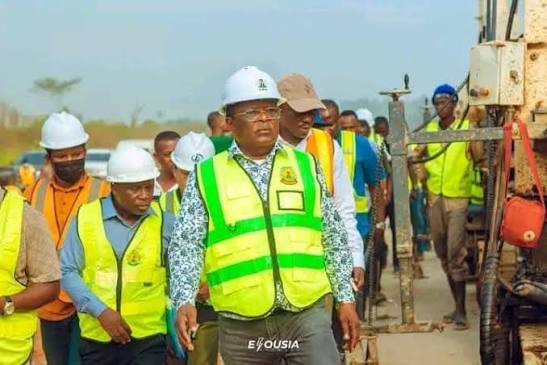
By PETRUS OBI
The Federal Government’s renewed intervention in major infrastructure projects across the South-East is beginning to give fresh meaning to the argument that the region is witnessing a stronger federal presence under President Bola Ahmed Tinubu.
At the centre of the renewed push is the Minister of Works, Senator Dave Umahi, whose aggressive supervision of federal road projects has placed the region’s long-standing infrastructure deficit firmly on the national agenda.
The latest demonstration of that commitment is the ongoing reconstruction of the 65-kilometre Afikpo-Uturu-Okigwe Federal Road, linking communities and major highways across Ebonyi, Abia and Imo states.
During an inspection of the project in Okigwe, Umahi disclosed that the Federal Government had commenced preparatory works to remove a mountain more than 60 metres high that has for years constituted a major danger to motorists and contributed to fatal accidents along the route.
“This mountain, by the command of President Bola Ahmed Tinubu, must collapse for the people of South-East,” the minister declared, underscoring the administration’s determination to confront difficult infrastructure challenges rather than continue to allow them to hinder economic activity and endanger lives.
The mountain section represents one of the most technically demanding portions of the project. According to the contractor, Hi-Tech Construction, three excavators are being deployed to intensify excavation and reshape the terrain to create a safer and more efficient road alignment. 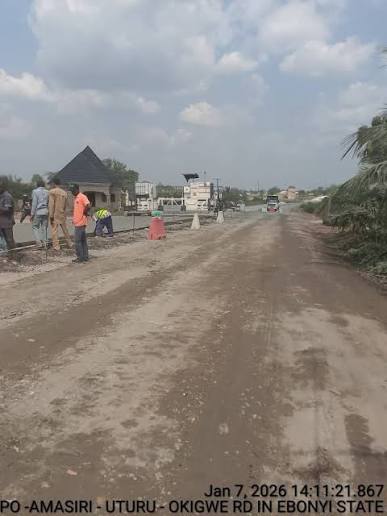
For a region where poor road infrastructure has historically been blamed for restricting trade, increasing transportation costs and slowing economic development, the significance of the project goes beyond the road itself.
The Afikpo-Uturu-Okigwe corridor is an important arterial route connecting communities and adjoining federal highways. When completed, it is expected to improve movement between Ebonyi, Abia and Imo, open up markets and strengthen regional integration.
More than 20 kilometres of the 65-kilometre project have already been completed, according to the Minister of Works, with the remaining sections progressing under the Federal Government’s tax-credit arrangement involving Dangote Industries Limited as sponsor and Hi-Tech Construction as contractor.
The project is also notable for the use of concrete pavement, which Umahi described as superior to what is obtainable on some other major federal highway projects.
But the Afikpo-Uturu-Okigwe road is only one component of a wider federal infrastructure push across the South-East.
Other major projects highlighted by the Presidency include the Enugu-Onitsha, Enugu-Port Harcourt, Enugu-Abakaliki, Abakaliki Trans-Sahara and Onitsha-Owerri roads.
Taken together, the projects suggest an attempt to address some of the region’s most persistent infrastructure bottlenecks while integrating its commercial centres more effectively with the national economy.
For Umahi, the issue is not merely the number of projects being undertaken, but their practical impact on the lives and economic fortunes of the people.
The minister has consistently argued that the Federal Government’s interventions in the South-East should be judged through tangible infrastructure delivery rather than political sentiments.
That argument is particularly significant in a region that has, for years, complained of inadequate federal infrastructure investment and what many residents perceive as neglect.
The ongoing projects therefore offer the Tinubu administration an opportunity to change that narrative through visible delivery on the ground.
The mountain at Okigwe provides perhaps the clearest symbol of the challenge.
For decades, the obstacle stood as a physical barrier to smoother transportation, while accidents and difficult road conditions imposed additional costs on motorists and communities.
Its planned removal is consequently more than an engineering exercise. It represents an attempt to physically dismantle one of the obstacles that have impeded movement, commerce and connectivity in the region.
Beyond road construction, improved connectivity could have wider economic consequences. Better roads can reduce travel time, improve the movement of agricultural produce and manufactured goods, strengthen access to schools and health facilities, and encourage investment along previously difficult corridors.
This is why the intervention is being viewed as part of a broader effort to close the infrastructure gap in the South-East.
The Senior Special Assistant to the President on Community Engagement, South-East, Barrister Chioma Nweze, reinforced this position, saying the projects would strengthen connectivity, open up communities and markets and stimulate commercial activities across the region.
The scale of the ongoing interventions provides the Tinubu administration with a strong opportunity to demonstrate that federal presence in the South-East can be defined not by political rhetoric but by roads, bridges, connectivity and economic infrastructure.
And with Umahi taking a hands-on approach to monitoring projects, the Federal Government appears determined to make infrastructure delivery one of the most visible signs of its engagement with the region.
If the Afikpo-Uturu-Okigwe road is completed as planned, including the removal of the 60-metre mountain, it could become one of the most striking examples of how a difficult infrastructure challenge can be transformed into an economic opportunity.
For the South-East, where infrastructure deficit has long featured prominently in conversations about federal neglect, the emerging picture is one of a region increasingly being brought into the centre of the Federal Government’s infrastructure agenda.
By Emma Igwe
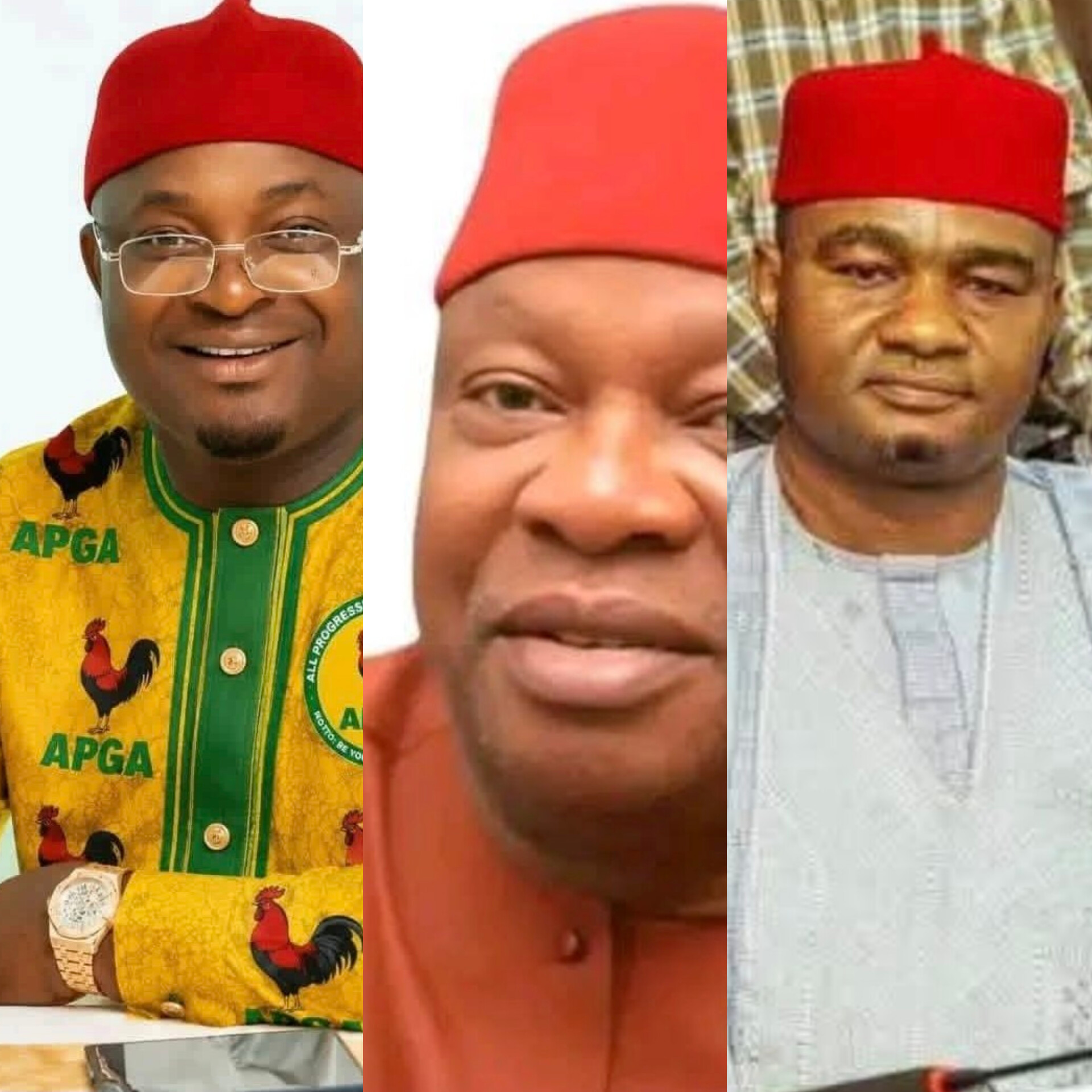
In Ebonyi South, a scenario is playing out, following the loss of Igariwey Idu in securing the APC ticket for Edda/Afikpo North federal constituency, and the likely disposition of his followers to work against APC candidates. These anti-party activities and internal political realignments are now intersecting with broader dynamics in Ebonyi North and Ebonyi South senatorial districts, where the All Progressives Congress (APC) may face unexpected setbacks due to deep-rooted local interests, personal influence networks, and intra-party divisions.
In Ebonyi North, the political landscape is particularly complex, driven largely by a long-standing kindred dichotomy between the two dominant subgroups, Unwueru and Igbojima.
This internal division continues to influence voting behaviour across Izzi, Abakaliki, and Ebonyi local government areas, often outweighing party ideology or candidate competence. At the same time, the ripple effects of political dissatisfaction in Ebonyi South—especially from aggrieved APC stakeholders like Igariwey Idu—are beginning to shape cross-district alignments and quiet opposition strategies that could weaken APC’s overall electoral strength.
The APC candidate in Ebonyi North, Senator Onyekachi Peter Nwebonyi, who serves as Deputy Chief Whip and hails from the Unwueru subunit of Izzi, is widely acknowledged for his legislative performance and constituency projects across various communities in the district. However, his political strength is being challenged by deep-seated intra-ethnic sentiments, with his kindred of origin becoming a major political liability in the current contest. Some local political actors within Izzi are reportedly not fully aligned with his candidacy, further weakening his grassroots consolidation.
On the other hand, Chief Chikaodili Ojemba of the All Progressives Grand Alliance (APGA), who hails from the Igbojima axis—the same broader bloc as Governor Francis Ogbonna Nwifuru—appears to be gaining significant traction. Despite running under APGA, Ojemba is perceived by many as enjoying tacit support from influential political structures within the state. His alignment with both Governor Nwifuru and President Bola Ahmed Tinubu, at least in political posture, has further strengthened his acceptability across party lines.
Ojemba’s appeal is also reinforced by his position as chairman of the Quarry Dealers Association of Ebonyi State, as well as his philanthropic engagements, including recent scholarship awards to indigent students within the senatorial district. These activities have enhanced his visibility and grassroots goodwill, particularly among younger voters and economically disadvantaged communities.
While Senator Nwebonyi maintains a strong record of attracting federal projects and development initiatives across the district, the contest is increasingly being shaped less by performance and more by identity politics. The election is gradually evolving into a struggle for kindred supremacy rather than a comparison of competence or legislative effectiveness.
Demographically, the Igbojima bloc holds a population advantage and also benefits from the perceived influence of the incumbent governor, which may translate into significant electoral gains for Ojemba. He is also expected to perform strongly in Izzi areas, where local sentiments and political alignments are currently fluid.
In urban centres such as Abakaliki and parts of Ebonyi local government area, APGA may also enjoy considerable support due to the presence and influence of non-indigenous populations, particularly Anambra indigenes who have established strong socio-economic networks in these areas.
In a parallel development, Toochukwu Ogalagu, the APGA House of Representatives candidate for Ohaukwu/Ebonyi Federal Constituency, is also expected to command strong followership in urban centres such as Ezzangbo, Effium, and Alioma. However, he may face stronger resistance in Mgbo-speaking areas, where the incumbent representative retains influence. The simultaneous conduct of both senatorial and House of Repre

BY Emma Igwe
“Those who live ahead of their time should always expect criticism.”
— Dr. Nnamdi Azikiwe
Dr. Nnamdi Azikiwe reportedly made this statement on two notable occasions.
The first was during the campaign for Nigeria’s independence, when Southern members of the then National Assembly advocated for self-rule while many Northern members opposed the move. When Dr. Azikiwe was interviewed at Heathrow Airport in the United Kingdom, he responded with those words.
The second was during the Nigeria–Biafra War. After advocating dialogue between Nigeria and Biafra, Radio Biafra reportedly labelled him a saboteur. Once again, he repeated the same statement. Supporters argue that history later vindicated his position.
A Religious Reflection
If Jesus Christ, revered by Christians as the Saviour of the world, was persecuted and crucified despite His innocence, then public criticism and unfounded allegations against public figures should not come as a surprise.
It is painful for anyone to be associated with a crime in which they had no involvement.
Sen. David Umahi: A Record of Public Service
Supporters of Sen. David Umahi point to a number of achievements during his political career, including:
- Becoming the first Deputy Governor in Ebonyi State to openly oppose the imposition of candidates within the Peoples Democratic Party (PDP), eventually emerging as Governor.
- Introducing the use of concrete pavement technology for road construction in Ebonyi State.
- Prioritising infrastructure development over patronage politics and the distribution of public resources.
When Sen. Umahi defected from the PDP to the All Progressives Congress (APC), he faced widespread criticism, particularly in the South-East. Today, many of those who opposed his decision have also joined the APC.
His supporters also argue that his performance as Minister of Works and his strong defence of President Bola Tinubu’s policies have attracted political opposition and criticism from rivals.
The Main Issue: The Death of Ms. Mary Habila
It is not disputed that Ms. Mary Habila died at Sen. David Umahi’s country home. However, the central issue should be determined by facts rather than assumptions.
The mere fact that a person dies at another person’s residence does not, by itself, establish that the owner or occupant is responsible for the death.
Liability can only be established through credible and verifiable evidence.
Among the issues that require proper investigation are:
- Whether there is evidence linking any individual to the cause of the death.
- Whether those present cooperated fully with law enforcement authorities.
- Whether medical assistance was sought promptly and the incident duly reported.
- The findings of forensic experts, medical examiners, and other investigators.
The cause and circumstances surrounding Ms. Mary Habila’s death are matters that should be determined through lawful investigation.
The Legal Position
Both criminal and civil liability must be established through credible evidence demonstrating that an unlawful act caused the death.
Sen. David Umahi has consistently denied any wrongdoing and has stated that he has cooperated with the relevant authorities throughout the investigation.
Ultimately, the circumstances surrounding the incident should be determined by witness testimony, forensic evidence, medical reports, and other admissible evidence—not by speculation based solely on the location where the death occurred.
It is a fundamental principle of justice that every person is presumed innocent until proven guilty by a court of competent jurisdiction. Accordingly, any conclusion regarding legal responsibility must rest on established facts and the applicable law, rather than suspicion or conjecture.
The occurrence of a death at Sen. Umahi’s residence, standing alone, is insufficient to establish legal liability without clear and convincing evidence linking him to the cause of the death.
By Okey Nwanguma
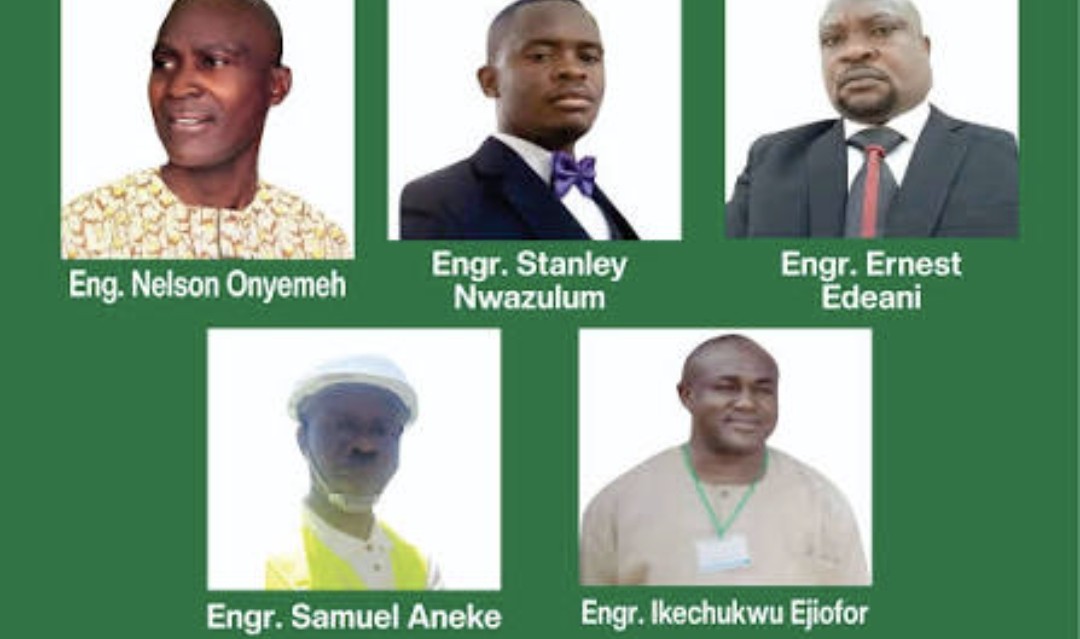
Nearly five years after five Nigerian engineers disappeared while carrying out their professional duties in Ebonyi State, the country still has no credible answers. Their families remain trapped between hope and despair, while the justice system appears unable—or unwilling—to establish the truth.
This is no longer merely the story of five missing professionals. It has become a defining test of Nigeria’s commitment to human rights, the rule of law, and public accountability.
On 3 November 2021, Engr. Nelson Onyemeh, Engr. Ernest Edeani, Engr. Ikechukwu Ejiofor, Engr. Samuel Aneke, and Engr. Stanley Nwazulum left Enugu for Ebonyi State to supervise the construction of the Abakaliki Ring Road under a contract funded by the African Development Bank (AfDB). They never returned.
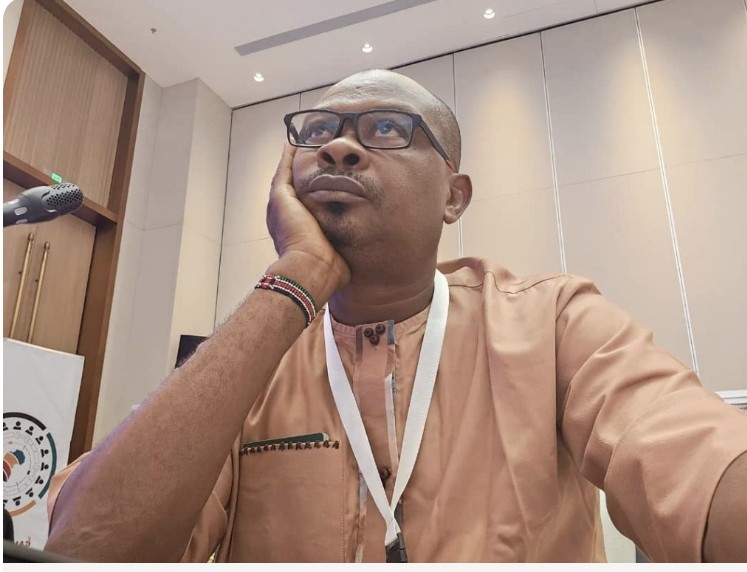
Okey Nwanguma
The engineers were employees of NELAN Consulting Limited, an independent engineering consultancy appointed through an international competitive bidding process to supervise the project in accordance with AfDB standards. Their role was not ceremonial. Independent supervision is central to ensuring that public infrastructure projects meet contractual specifications, maintain quality standards, and protect public resources from abuse.
Their disappearance would have been shocking under any circumstances. But the allegations that preceded it make the case especially disturbing.
According to the families, disagreements had arisen between NELAN and the Ebonyi State Government over project supervision, certification of completed work, and control of payments. They allege that the engineers refused to compromise their professional obligations by certifying work outside the procedures required under the AfDB-financed contract.
These allegations have been denied, and no court has established that they are connected to the disappearance. Yet they provide a context that any serious investigation cannot afford to ignore.
The rule of law demands neither blind acceptance of accusations nor premature dismissal of them. It demands an impartial investigation guided solely by evidence.
Instead, the public has been presented with a series of troubling contradictions.
The engineers disappeared without trace. Government officials reportedly attributed the incident to communal violence. Later, public statements suggested they had been killed based on alleged confessions, even while investigations were reportedly still ongoing. Yet no bodies have been conclusively identified.
Perhaps the most disturbing aspect is the reported DNA evidence. According to the families, skeletal remains presented as belonging to the missing engineers were subjected to independent DNA analysis, which reportedly excluded them as belonging to the victims. One set of remains was reportedly identified as female.
If accurate, such findings raise fundamental questions. What became of the original investigation? Why were contradictory forensic findings not fully explained? What happened to the search for the missing engineers?
These are not political questions. They are questions of justice.
Equally troubling are reports that prosecutions proceeded while the fate of the victims remained uncertain and that the proceedings have since become stalled. Justice delayed is often justice denied—not only for defendants but also for victims and their families.
The wives of the missing engineers have refused to allow the case to disappear into official silence. Their petitions to the President, the National Assembly, the National Human Rights Commission, security agencies, and professional bodies reflect not merely personal grief but an insistence that the Nigerian state fulfil its constitutional obligations.
Their central demand is simple: tell us the truth.
The Constitution guarantees the right to life. International human rights law imposes on governments a positive obligation to conduct prompt, effective, impartial and transparent investigations whenever people disappear under suspicious circumstances. Families also have a right to know the truth about what happened to their loved ones.
These obligations do not expire with time.
Nor should they depend on the political status of those whose actions may come under scrutiny.
It is equally important to emphasize that allegations against any individual, including former Ebonyi State Governor and current Minister of Works, Senator David Umahi, remain allegations unless established through credible evidence and due process. Justice demands accountability, but it also demands fairness. The objective is not to convict people in newspaper headlines or on social media, but to establish the truth through lawful investigation.
Precisely because allegations and counter-allegations have persisted for years without resolution, there is now a compelling case for an independent federal-level review of the investigation. Such a review should involve investigators with no prior involvement in the matter, modern forensic expertise, and transparent public reporting.
Nigeria cannot afford unresolved disappearances involving professionals carrying out public duties on major infrastructure projects. If engineers, auditors, consultants, journalists, lawyers, or civil servants cannot discharge their professional responsibilities without fear, public accountability itself becomes endangered.
This case is therefore about far more than five missing engineers.
It is about whether public institutions inspire confidence or suspicion.
It is about whether forensic evidence is pursued wherever it leads.
It is about whether political influence can overshadow justice.
Above all, it is about whether every Nigerian life carries equal value before the law.
The families have waited for nearly five years. That is far too long.
Justice demands answers.
The rule of law demands accountability.
Nigeria demands the truth.
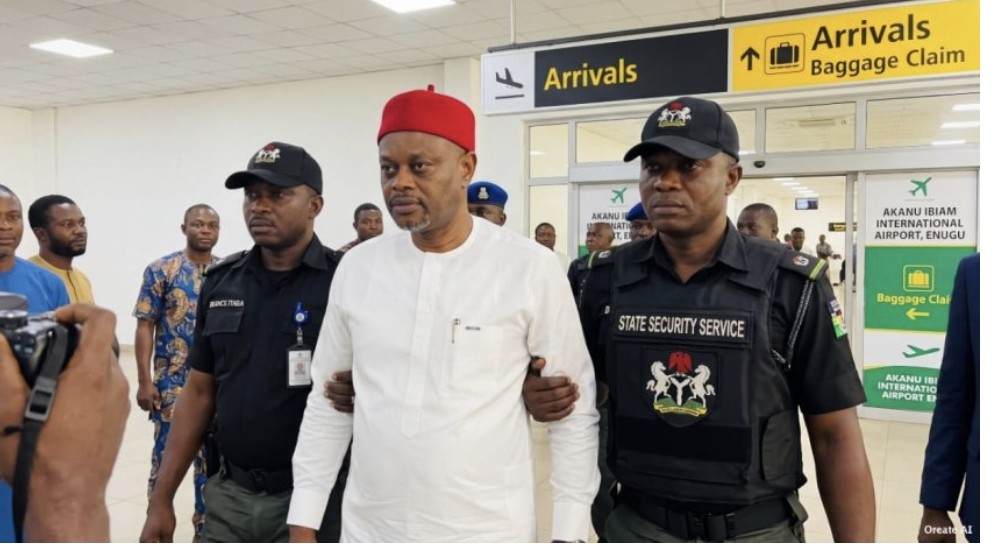
The attention of Enugu State Government has been drawn to a salacious report in the social media, credited to one Igboayaka O.Igboayaka, purportedly of Ohaneze Youth council, wherein he made an obvious, clearly laughable attempt to drag the name and office of Executive Governor of Enugu State, His Excellency, Dr. Peter Ndubuisi Mbah, into odious travails of disgraced former Minister of Science and Technology, Uche NNAJI.
It was obviously a convenient, last ditch effort to deflect attention and liability by dragging the name of the Governor into the mess Uche NNAJI had single-handedly inflicted on himself!
Pray, up until this moment, at what point in this matter did the name of Dr Mbah, feature in all these, whether as complainant or witness?
When did red herring become an acceptable defence against certificate forgery?
On all available records, the Federal Republic of Nigeria is the complainant in the criminal complaint against Uche Nnaji, definitely NOT Peter Mbah!
It is, therefore , absurd and disingenuous to think that accusing a perceived adversary of involvement in one’s unsavoury situation, in itself, would mitigate assured fate, tilt public opinion or hamstring legitimate law enforcement.
It is germain to state categorically here, that Governor Peter Mbah has filed no complaints against Uche NNAJI anywhere, civil or criminal.
Is being a sitting Governor sufficient to make one accountable for all criminal liabilities of any or all his opponents?
It would have been better for cheap hirelings like Igboayaka to explore available legal and/or judicial means under the law, to assist Mr NNAJI prove his innocence swiftly, rather than spending precious time and effort seeking to drag in someone that has nothing whatsoever, to do with his situation.
And threatening a statutory institution like ICPC, to dissuade it from performing it’s lawful duty, because a politically exposed person is involved, would set a dangerous precedent: availing criminal immunity to all manner of fugitives, who ordinarily deserve to be in jail.
It is unhelpful, indeed unnecessary here, going into the merits or demerits of the case against suspect, Uche Nnaji, but it would have made better sense to channel his endeavours to mounting a credible legal defence for self, than procuring charlatans and social media goons, to seek to use blackmail and intimidation to help him escape justice.
The best a well-advised accused person can ask for, is an expeditious, free and fair trial, not immunity !
Uche NNAJI should be anxious and ready for his impending day in court,so he can have the chance to prove his innocence, once and for all…
His Excellency,Governor Peter Mbah, is focused on governance, and has neither interest in, nor time for frivolities.
Signed:
Onyekwere Nwobodo
Special Adviser on Media, to the Executive Governor.
July 8,2026.

-
 News1 day ago
No Survivor Found Yet in Ondo Air Crash — Aiyedatiwa
-
 Politics1 day ago
2027: Odii Will Not Step Down, Says Spokesperson
-
 News22 hours ago
How NAF Plane Vanished From Radar Shortly After Take-Off, Crashes In Ondo Swamp
-
 News3 days ago
Sacked Works Commissioner: Release or Charge Him to Court, Oganiru Izzi Challenges Nwifuru
-
 EverydayNews Telescope22 hours ago
Nkalagu Cement Factory: Project or 2027 Political Promise?
-
 Crime3 days ago
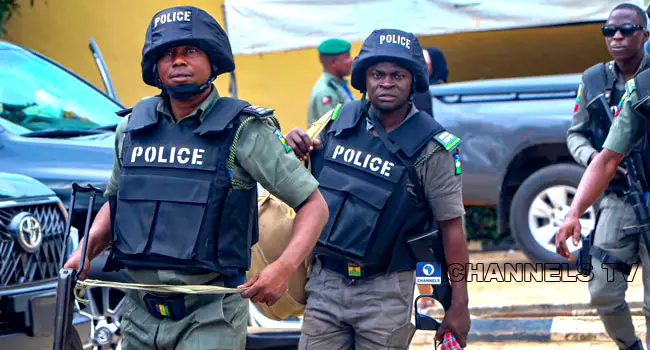
Police Deploy DIG, Two Commissioners to Rescue 20 Abducted Prospective Corps Members
-
 Crime6 hours ago
Court Denies Alleged Fake Pastor Bail as Seven Witnesses Await Trial
-

 News6 hours ago
NAF Crash Claims Pilot 16 Days After Wedding