



Finance
EFCC Storms Kogi Governor’s Lodge in Search of Yahaya Bello



The ongoing conflict between the Economic and Financial Crimes Commission (EFCC) and the former governor of Kogi State is far from resolved.
On Wednesday night, EFCC operatives reportedly besieged the Kogi Government Lodge in Asokoro in an attempt to forcibly arrest Yahaya Bello.
This information was confirmed in a statement issued by Bello’s Director of Media, Ohiare Michael, who alleged that EFCC operatives were shooting indiscriminately.
Earlier that same day, a photograph of Bello alongside the current Kogi governor at the Abuja office of the EFCC appeared online, suggesting that the former governor had voluntarily reported to the commission.
In a subsequent report, the EFCC stated that Bello was not in their custody; however, Bello claimed that the commission instructed him to leave and return at a later date.

In a recent development, Michael condemned the alleged attack and called on Nigerians to hold the EFCC accountable if anything happens to Bello.
The statement reads: “We have received reports that individuals suspected to be EFCC operatives are currently at the Kogi Government Lodge in Asokoro, attempting to forcefully arrest former Governor Yahaya Bello. They have been shooting indiscriminately.
“We want to make it clear that the EFCC should be held responsible if anything unfortunate happens to him.
“Tonight’s incident was unnecessary, as the former governor willingly presented himself to the EFCC for questioning. The EFCC had no questions for Alh. Yahaya Bello earlier in the day, yet suddenly they are attempting to arrest him.
“This action is condemnable. It highlights the reason many Nigerians believe the EFCC is engaged in political battles rather than pursuing its mandate to combat corruption. This situation reflects deeper issues beyond the fight against corruption. We will keep Nigerians informed.”
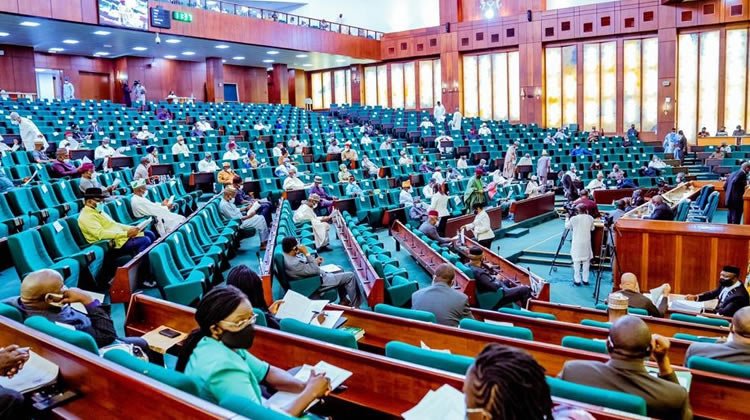
The House of Representatives on Thursday, resolved to carry out a comprehensive audit of loans secured by the federal and state governments since the return to democratic government in 1999.
In the past 25 years, the country has enjoyed democratic governance under the leadership of five presidents, namely Olusegun Obasanjo, Umaru Yar’Adua, Goodluck Jonathan, Muhammadu Buhari and the incumbent Bola Tinubu.
Within the period, billions of dollars were borrowed to fund developmental projects even as the governments of the respective 36 states of the federation also incurred foreign and local debts.
The decision of the House to probe public loans followed the adoption of a motion on notice sponsored by the member representing Surulere II Federal Constituency of Lagos State, Mr Lanre Okunola.
The motion was on the “Need to ensure proper public debt oversight on the federal and state government loans and the proper utilisation of all borrowed funds.”
Citing data from the Debt Management Office, Okunola said, “Nigeria’s public debt profile, including external and domestic debts, recently released indicate that as of March 31, 2024, public debt in the country has grown significantly over the years at N121.67tn ($91.46bn) with loans sourced from domestic and international lenders by the federal and state governments to fund various projects and budget deficits.”
He quoted the same report as indicating that “The nation’s debt rose by N24.33tn in three months from N97.34tn ($108.23bn) in December 2023 to N121.67tn ($91.46bn).”
The lawmaker noted that while borrowing is a vital means for financing development, unchecked debt accumulation poses enormous risks to Nigeria’s fiscal stability and future economic growth.
He said the 1999 Constitution, the Fiscal Responsibility Act (2007), and the Debt Management Office Establishment Act (2003) empower the National Assembly to approve all government loans and ensure proper utilisation.
He further argued that “Over 40 per cent of developing countries, including Nigeria, spend more on debt services and repayments of loans, leading to inefficiencies in government finances at the expense of funding critical sectors of the economy such as education, healthcare, infrastructure and social policy.”
In his words, “Many loans from state governments are drawn from commercial banks and certified by the Federal Ministry of Finance are contracted without full compliance without full compliance with constitutional requirements for National Assembly approval.
“Additionally, there are instances where borrowed funds are not effectively utilised for their intended purposes, undermining the benefits of such loans to the citizens.”
Following members’ support for the motion, the House mandated its Committee on Aids, Loans and Debt Management to carry out a comprehensive audit and oversight of all loans obtained by the federal and state governments since the inception of the current democratic dispensation and report back within a month for further legislative action.

The naira appreciated against the dollar on Tuesday at the official foreign exchange market.
FMDQ data showed that the naira gained at N1630.35 per dollar on Tuesday from N1670.65 exchanged on Monday. This represents N40.3 appreciation.
Meanwhile, at the black market, the naira dropped further to N1748 per dollar on Tuesday from N1746 traded the previous day.
This comes as FX transaction turnover increased to $242.59 million on Tuesday from $81.17 million on Monday when the naira depreciated.
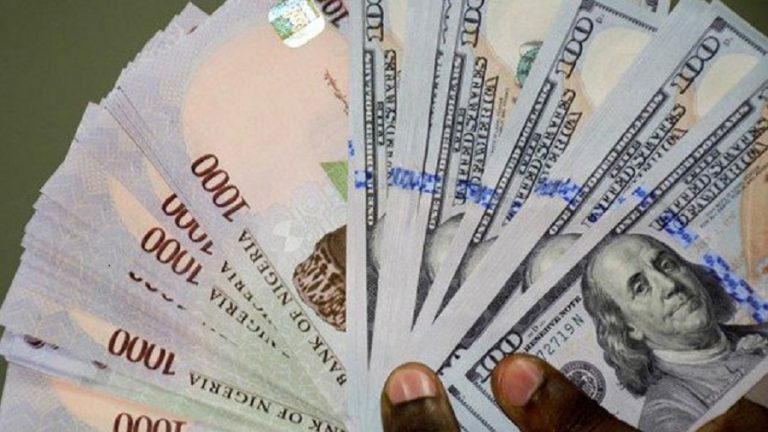
The Naira today depreciated to N1,725 per dollar in the parallel market from N1,710 per dollar on Thursday.
However, the Naira appreciated to N1,600.78 per dollar in the Nigerian Autonomous Foreign Exchange Market, NAFEM.
Data from FMDQ showed that the indicative exchange rate for NAFEM fell to N1,600.78 per dollar from N1,660.49 per dollar on Thursday, indicating N59.71 appreciation for the naira.
The volume of dollars traded (turnover) in the official market grew by 6.2 per cent to $350.72 million from $330.18 million traded on Thursday.
The naira further depreciated against the dollar in the foreign exchange market.
The FMDQ data showed that the naira again weakened to N1660.49 per dollar on Thursday from N1659.69 exchanged on Wednesday.
Though the naira depreciated by N0.8 against the dollar on Thursday, it has lost N107.5 in the last three days.
Meanwhile, at the black market, the naira exchanged at N1705 per dollar on Thursday, the same rate as Wednesday.
This comes as FX transaction turnover stood at $330.18 million on Thursday from $217.86 million recorded on Tuesday.
Olayemi Cardoso, the Governor of the Central Bank of Nigeria, said on Wednesday, while speaking at the Nigerian Economic Summit, NES, that a weak naira is advantageous with adequate investment into the country.
“In terms of persuasion, what we need now is to ensure that investments are here. Take, for example, now it may seem like a threat in the sense that the exchange rate has come down so low,” he said.
The development comes as the World Bank said the naira is among the worst-performing currencies in Africa.
Naira’s fluctuations in the FX market have continued untamed despite interventions by the Central Bank of Nigeria.
The Central Bank of Nigeria said it has sold foreign exchange worth $20,000 to eligible Bureau De Change operators at N1590 per dollar foreign exchange rate to tackle the FX crisis across the country.
This was disclosed by the apex bank in a circular signed by the Acting Director of Trade and Exchange Department, W. J Kanya, on Wednesday.
According to the CBN, the move will help operators meet retail market demand for eligible invisible transactions.
“This is to inform the Bureau De Change Operators and the general public that the CBN will be providing additional liquidity to this segment of the foreign exchange market.
“To this end, the CBN has approved the sale of US$20,000.00 to each eligible BDC at the rate of N1,590/$. This is to meet the demand for invisible transactions,” it said.
This as the apex bank warned BDCs not to sell to Nigerians at a margin of not more than one percent above the N1590 per dollar purchase rate.
“All BDCs are allowed to sell to eligible end-users at a margin of NOT MORE THAN one percent above the purchase rate from CBN.
“Eligible BDCs interested in this transaction are directed to make the Naira payment to the CBN Deposit Account Numbers with them.
“Also, payment confirmation and all necessary documentation for disbursement are to be submitted at the appropriate CBN branches (Abuja, Awka, Kano, and Lagos) for collection of the $20,000.00. Please be guided accordingly,” the statement concluded.
The latest intervention of the central bank comes after the Nigerian naira dropped significantly on Wednesday to N1667.42 and N1705 per dollar at the official and parallel foreign exchange markets.
This is the seventh intervention by CBN in the FX market in recent times.

-
 News3 days ago
C’RIVER 2027 BUDGET: GOV OTU PRESENTS ₦987.8bn ESTIMATES TO ASSEMBLY
-

 EverydayNews Telescope4 days ago
Enugu East Senate: The Dark Side of Ada Ogbu, NDC Candidate
-
 News5 days ago
Tension Mounts in Awka Anglican Diocese as Supervising Bishop Ezeofor Moves to Take Over Wednesday
-
 News2 days ago
Holy Ghost Transformation: How Enugu North Chairman Ibenaku Onoh Ended Years of Traffic Chaos, Roadside Trading
-
 EverydayNews Telescope4 days ago
Ebonyi 2027: The People’s Quest For ODII Vs Compromised Stakeholders
-
 Politics2 days ago
One Feared Dead, Several Injured as Thugs Attack Ebonyi NDC Assembly Candidate, Burn Campaign Vehicle
-
 Politics4 days ago
2027: Tinubu Has No Hand in Alleged Assassination Plot Against Atiku – APC
-
 Economy5 days ago
Fuel Subsidy Removal Irreversible, Nigeria Won’t Return to Egypt — Tinub