



News
Ogun FTZ saga: Chinese to seize Nigeria assets in eight countries

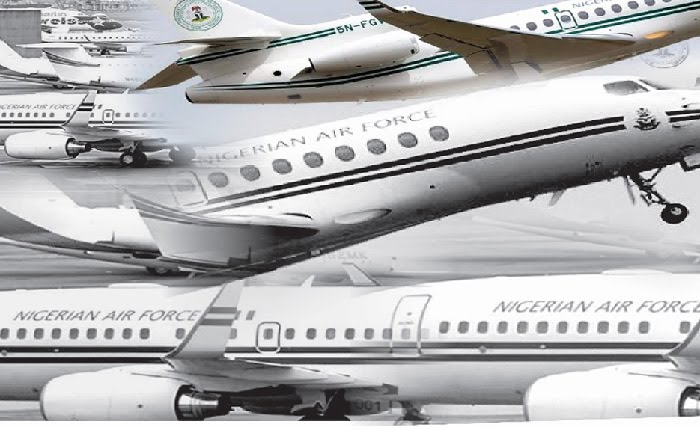

Zhongshan Fucheng Industrial Investment Co. Limited, the Chinese firm that got a court injunction to ground three presidential jets belonging to the Federal Government in Europe, has initiated plans to seize other Nigerian assets in the United Kingdom, United States of America and in six other countries, The PUNCH has learnt.
The company has also instituted legal proceedings in about eight jurisdictions globally, regarding the dispute.
The other countries include Belgium, Canada, France, Singapore and the British Virgin Islands, documents relating to the case, which were obtained by our correspondent, were revealed on Thursday.
This comes as the Federal Government vowed to protect its foreign assets from “predators.”

There has been serious controversy following reports that the Chinese company got judgement to ground three presidential jets belonging to the Federal Government.
In 2001, China and Nigeria signed a bilateral investment treaty aimed at promoting commercial investment between the two countries.
In 2007, Ogun State reportedly entered into a joint venture agreement with a Chinese company and another company to create the Ogun Guangdong Free Trade Zone Company. The Nigeria Export Processing Zones Authority, a Federal Government entity that oversees free-trade zones in Nigeria, then delegated control and operation of the free-trade zone to the company.
In 2010, the Ogun Guangdong Free Trade Zone Company contracted with Zhongshan’s parent company to develop an industrial park in the free-trade zone. The goal was for Zhongshan’s parent company to develop the park and build factories in it for tenants to use.
In the first half of 2016, however, the agreement between both parties was terminated, leading to Zhongshan filing lawsuits in Nigerian federal and state courts seeking reinstatement of its contractual rights but the legal proceedings were discontinued in Spring 2018.
However, a French court, recently, authorised the seizure of three of Nigeria’s presidential jets, two of the jets – a Dassault Falcon 7X and a Boeing 737 – are part of Nigeria’s presidential air fleet that were recently put up for sale and the third, an Airbus 330 purchased by Nigeria, but not yet delivered.
Zhongshan had again dragged Ogun to court, where an independent arbitral tribunal, chaired by the former President of the UK Supreme Court, awarded the Chinese firm $74.5m compensation, which Ogun was yet to pay.
The court order prohibited Nigeria from moving or selling the presidential jets until the Chinese firm was paid the $74.5m by Ogun, its sub-national.
However, documents indicated that the Chinese company attempted to seize a jet being recovered by the country from Dan Etete as proceeds from fraudulent acts in Canada.
The Federal Government had tracked down and grounded the luxury private jet purchased by former petroleum minister, Etete, with some of the alleged proceeds of the notorious $1.3bn Malabu OPL245 oil deal.
“The goal is clear – that Mr Etete will avoid the seizure of an asset he got with stolen Nigerian money, with Zhongshan’s connivance.”
According to the documents, Zhongshan was originally engaged as a developer and manager of Fucheng Industrial Park but was asked to manage the facility after the government terminated the joint venture with CAI because it didn’t meet the necessary requirements.
The document claimed that the Ogun government cancelled the contract after it received a Diplomatic Note 1601 from the Economic and Commercial Section of the PRC Consulate in Lagos, alleging that Guangdong illegally held shares in China Africa Investment Limited, a state asset and that entity (New South Group) was the company properly entitled to manage OGFTZ.
The document read, “In 2007, the Ogun State Government, in partnership with the Guangdong province in China conceived and set up the Ogun Guangdong Free Trade Zone, which sits on 2,000 hectares in Igbesa, Ogun State.
“Ogun State signed a Joint Venture Agreement directly with China Guangdong Xinguang China-Africa Investment Limited representing Guangdong Province in the joint venture. OGFTZ houses several enterprises as well as subdevelopments, including one Fucheng Industrial Park, measuring 224 hectares. In 2010, OGFTZ contracted Zhongshan to develop and manage Fucheng Industrial Park.
“However, in 2012, Ogun State terminated the joint venture with CAI because CAI had not met obligations under the 2007 JVA. Ogun State then appointed Zhongshan as an interim manager of the Zone, since it was already managing Fucheng Industrial Park. In June 2012, Zhongshan assumed management control of a 51 per cent stake in CAI and subsequently signed another JVA with Ogun State Government in September 2013.”
It further stated that the company had been making efforts to enforce the tribunal award.
“As of August 2024, there are court proceedings in about eight jurisdictions of the world regarding this dispute.
“These include USA, UK, Belgium, Canada, France, and the British Virgin Islands. Till date, Zhongshan has not realised a single penny from the Award, and all signs indicate that Zhongshan is unlikely to do so anytime soon.”
It added that the company was still tracking the location of Nigerian assets abroad.
Meanwhile, a court document has revealed that the Chinese company was demanding compensation of $130.6m due to a breach of contract by reneging on terms between both parties to create the Ogun Guangdong Free Trade Zone.
The document obtained by our correspondent on Thursday, however, listed the Federal Government as the defendant because the direct agreement was between Nigeria and China and not with the company based on international treaty conditions.
The case filed at the United States District Court for the District of Columbia (No. 1:22-cv-00170) was argued April 22, 2024 and decided August 9, 2024 by Circuit Judges Millett, Katsas and Childs.
In presenting its argument, the company stated that Nigeria violated the Investment Treaty with China in five ways “by failing to provide Zhongshan with fair and equitable treatment, engaging in unreasonable discrimination, neglecting to protect Zhongshan, breaching the contract, and wrongfully expropriating investments without compensation.”
Giving details of the deal, the company said it invested millions of dollars and significant resources to develop and build infrastructure in the industrial park, including roads, utilities and opened services such as a hospital, hotel, supermarket, and bank.
By 2016, businesses had moved into the zone and Nigeria had collected approximately N160m in tax revenue from the free-trade zone.
It read, “In the first half of 2016, however, Ogun State terminated its agreements with Zhongshan. Ogun claimed that a different Chinese company was legally entitled to Zhongshan’s share of the free-trade zone and that Zhongshan had defrauded Ogun.
“Things continued to deteriorate. One Ogun official texted a Zhongshan executive, urging him ‘as a friend’ to ‘leave peacefully when there is opportunity to do so, and avoid forceful removal, complications and possible prosecution.’ The next month, Ogun issued an arrest warrant for two executives, alleging a ‘criminal breach of trust.’
“Nigerian federal police arrested one Zhongshan executive at gunpoint and held him for ten days. During that time, the police denied the executive food and water, beat him, intimidated him, and questioned him about the whereabouts of the other executive.
“Based on these findings, the arbitral tribunal found that Nigeria had breached its obligations under the Investment Treaty and that Zhongshan was entitled to $55.6m in compensation from Nigeria and $75,000 in moral damages, along with interest and legal and arbitral fees.”
Reacting, the Attorney General of the Federation and Minister of Justice, Lateef Fagbemi (SAN), said his office and that of the National Security Adviser have commenced legal and diplomatic moves to recover the three presidential aircraft seized by the Chinese firm.
This was contained in a statement by the Special Adviser to the President on Communication and Publicity, Office of the AGF, Kamarudeen Ogundele, on Thursday in Abuja.
The statement read, “On 14th August 2024, the Federal Government of Nigeria became aware of the interim attachment of three presidential aircraft undergoing routine maintenance in France. The said temporary attachment was made pursuant to exparte orders issued by the Judicial Court of Paris dated 7 March 2024 and 12 August 2024 respectively at the instance of Messrs. Zhongshan Fucheng Industrial Investment Co. Limited, a Chinese company seeking to enforce a Final Award granted in its favour on 26 March 2021, against one of Nigeria’s sub-nationals, Ogun State.
“It is to be noted that the arbitral award arose from an arbitration proceeding which commenced in 2018 as a fallout of a contractual dispute between the Chinese company and Ogun State Government over the operation and management of Ogun Guangdong Free Trade Zone.
“We wish to clarify that, though the dispute originated from engagements of the Ogun State Government, however, the consequential enforcement actions are being directed against the Federal Government and its assets in line with extant principles of international law, which holds that the actions of a subnational or local entity are attributable to the state or country itself.
“The offices of the National Security Adviser and the Attorney-General of the Federation have already set in motion both legal and diplomatic steps to ensure the discharge of the inappropriate orders against the aircrafts, which are covered by sovereign immunity.
“While, further actions are being put in place to resolve the entire dispute through available legal means, the firm position of the Federal Government remains that the aircraft in question are sovereign assets used solely for sovereign purposes and are therefore immune from attachment as Zhongshan has sought to do.”
Meanwhile, the Presidency, in a statement titled ‘Chinese company’s fraudulent attempt to strip Nigeria’s assets abroad’, on Thursday said the efforts by Zhongshan to take over the jets were fraudulent.
The Presidency argued that the use and nature of the jets as assets of a sovereign entity whose assets were protected by diplomatic immunity forbade any foreign court from issuing an order against them.
It said it is convinced that the Chinese company “misled” the Judicial Court of Paris regarding the use and nature of the assets it sought to attach and did not fully disclose to the court as required by law.
The statement, signed by the Special Adviser to the President on Information and Strategy, Mr. Bayo Onanuga, “The Presidency is aware of the various failed attempts by a Chinese company, Zhongshan Fucheng Industrial Investment Co. Limited, to take over offshore assets of the Federal Government of Nigeria through subterfuge.
“The Federal Government is not under any contractual obligation with the company. The case in which Zhongshan is trying to use every unorthodox means to strip our offshore assets is between the company and the Ogun State Government.”
Also, the Ogun State Government, on Thursday, faulted the judicial process that led to the provisional attachment of three Nigerian government-owned aircraft in France by the Judicial Court of Paris on March 7 and August 2, 2024.
In a statement signed by the Special Adviser to Governor Dapo Abiodun on Media and Strategy, Kayode Akinmade, the state government described the latest development as “the new antics by the Chinese company to appropriate Nigerian assets in foreign jurisdictions, as past efforts had continually failed.”
The statement described the legal process “as nothing but a total charade with fraudulent notion,” adding that the company deliberately concealed the litigation from both the Nigerian government and Ogun State, as well as their legal counsels before hurriedly securing orders of seizure.
The state government said the company must have misled the Judicial Court of Paris on the use and nature of the assets it sought to attach and not make full disclosure to the court as required by law.
The statement read, “On 14 August 2024, the attention of the Ogun State Government was drawn to the provisional attachment of three Nigerian government-owned aircraft in France by the Chinese company, Zhongshan Fucheng Industrial Investment Co. Ltd. (Zhongshan).
“Ogun State also learned of two orders of the Judicial Court of Paris dated 7 March 2024 and 12 August 2024 respectively, both obtained by Zhongshan without notice being duly given to the Federal Government of Nigeria, Ogun State or their legal counsel.
“This is the latest in a series of ill-advised attempts by Zhongshan to attach Nigerian-owned assets in foreign jurisdictions, none of which have to date led to the recovery of any sums from Nigeria.
“Each of the three aircraft is used solely for sovereign purposes and as such are immune from attachment under international and French laws.
“In obtaining the provisional attachments, Zhongshan deliberately withheld information from the Federal Government of Nigeria, Ogun State and their legal counsel.
“Just like the P&ID case, this is another unfortunate case of unscrupulous individuals masquerading as foreign investors with the sole aim of defrauding Ogun State and Nigeria.
“It should be recalled that the underlying contract between Ogun State and Zhongshan was executed in 2007, 12 years before the present administration, for the management of a free-trade zone. The parties entered into a dispute in 2015 with arbitration commencing in 2016.”
It added, “By 2019, when the current State Administration took office, the hearing at the arbitration had been all but concluded. The Arbitral Panel awarded over 60 million USD against the Federal Government of Nigeria (FGN) which was a co-Defendant, when all Zhongshan had done was to build a perimeter fence around the free-trade zone. Needless to say this was a bad/unfair decision.
“The present State Administration could not in all good conscience allow such an unconscionable and baseless decision, which would dissipate the commonwealth of the good people of Ogun State, to stand.
“Accordingly, and based on erudite legal advice, this Administration resolved to resist the enforcement of the award. The resistance was successful in eight different jurisdictions. Currently, there are pending appeals against recognition orders issued in both the US and UK,” the statement read.



News
SEDC to Launch 50,000-Hectare Agro-Mechanisation Project in Enugu to Tackle Unemployment, Insecurity
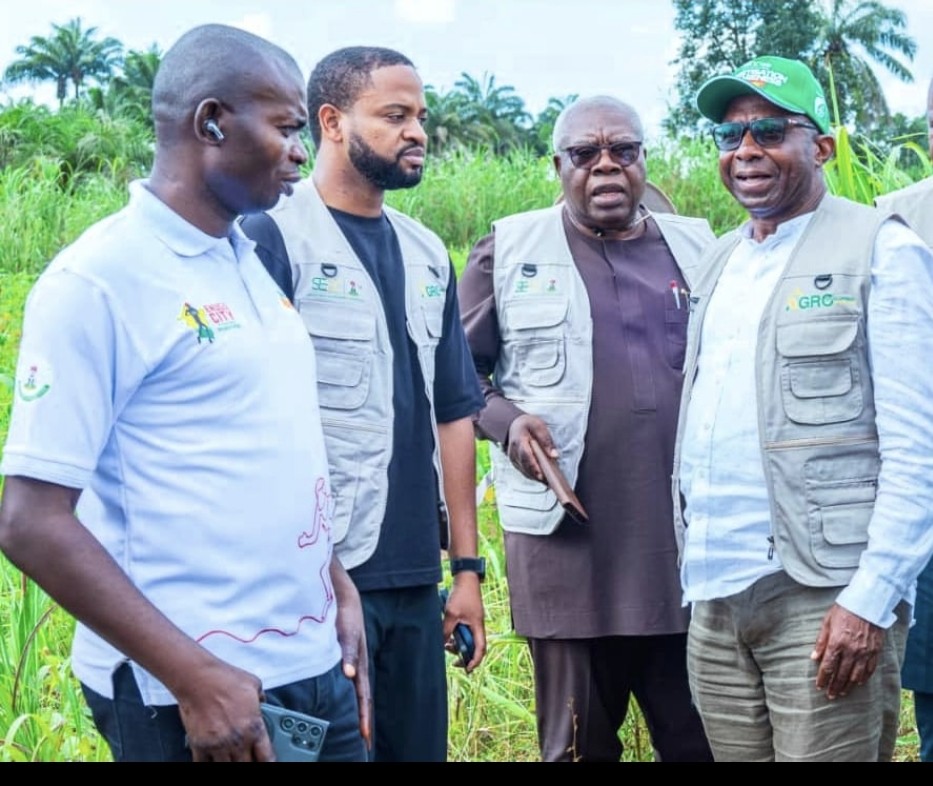
The South-East Development Commission (SEDC) has concluded arrangement for the kick-off the zone-wide 50,000-hectare agro-mechanisation project in Enugu community meant to tackle insecurity, unemployment and food insecurity.
The SEDC zone-wide 50,000-hectare agro-mechanisation, which is meant to be established in each of the 15 senatorial zones of the five South-East states, would commence at a pilot scheme level on Sept. 22.
This is contained in a statement issued by the media aide to the Governor of Enugu State, Chief Uche Anichukwu, on Wednesday in Enugu.
The Managing Director of the Commission, Mr Mark Okoye, disclosed this during a community engagement at the pilot project site in Nomeh Unateze community in Nkanu East Local Government Area of Enugu State on Tuesday.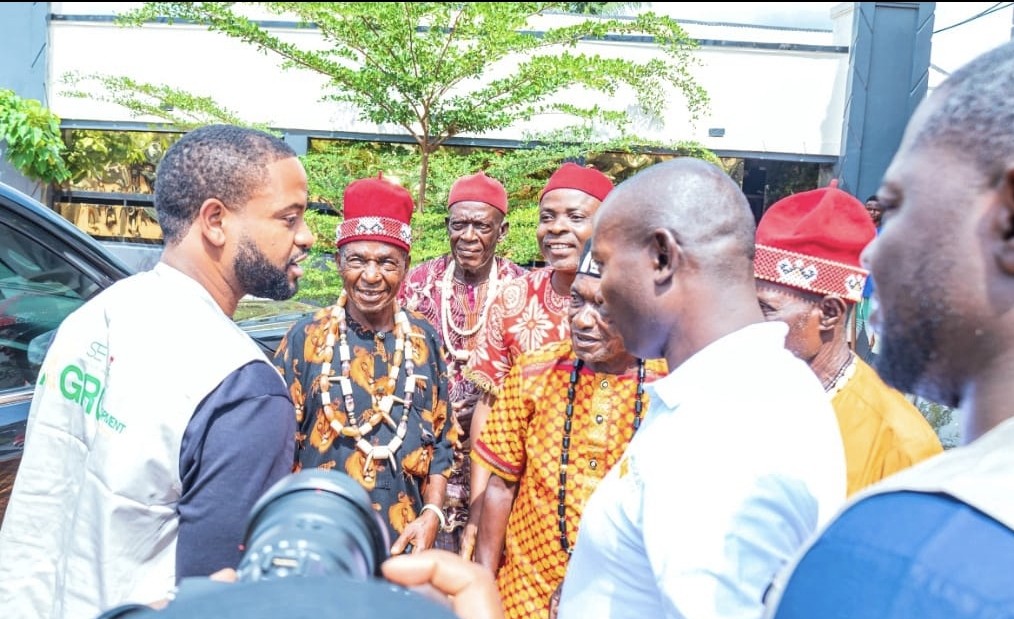
Okoye said the SEDC had, following its establishment in 2024, used the first year to do extensive studies and design a blueprint that cuts across different areas of the South-East economy.
He said the agro-mechanisation projects, remained a major part of the commission’s blueprint, explaining that it would address insecurity, unemployment, and food security.
According to him, so, what we are here for is one of our flagship initiatives, which is called the South-East Agro Mechanisation Programme or the South East Agro Development Programme.
Okoye said that the SEDC was committed to develop up to 50,000 hectares of land and that would be used for mechanised farming across the region.
“We are here for a pre-assessment, pre-flag-off visit to see the area, understand the level of work that needs to be done and ensure that contractors can start mobilising so that once we hit the site we start running.
“Because a big part of what we are looking at is how to address food insecurity and unemployment, ensuring that we are producing what we put on the table.
“We are starting with pilot programmes where we are taking 200 to 300 hectares of farmland across 15 senatorial zones and developing them to standard farms.
“Where you not only have cassava, maize, some of our staple crops, but also some cash crops. In some areas, there will be the centres for learning and centres for productivity,” he said.
Okoye said that Gov. Peter Mbah would flag off the project on Tuesday, adding the SEDC team came to assess the area, meet with the community and ensurr that all the plans are in place.
“And within the second we put this investment here, at least N4 billion or N5 billion of added investment will come in,” he said.
Okoye commended President Bola Tinubu for addressing the long yearning by the South-East for a commission to mobilise resources and coordinate development in the region.
He urged the people to reciprocate the numerous gestures by supporting the Tinubu to continue the development efforts post 2027.
He further revealed that the commission would soon roll ou an investment agency to help mobilise local and Diaspora investments for the region’s speedy development.
A community leader in the community, Chief Uche Anichukwu, described the agro-mechanisation project as one of the blessings of the APC, Tinubu and Mbah administrations to Enugu State in general and Nomeh Unateze in particularly.
Anichukwu, who is also media aide to the Governor of Enugu State, said that the Nenwe-Nomeh-Mburubu-Nara road, with a spur to Oduma, had created ready and multiple access to market for the proposed agricultural project.
Speaking, Chairman, Nomeh Unateze Town Union Caretaker Committee, Dr Chukwudi Anyianuka, and other community stakeholders, reiterated their support for the project.
They commended Tinubu and Mbah for siting the project in their community.
“We are very happy. We cannot wait to see it actualised and we promise that we are going to provide everything that is necessary to make sure that this is established.
“The Commission has taken a methodical approach to regional development.
“Rather than the pitfall of throwing money at development challenges, it undertook a study of the region and came up with a master plan, which includes this initiative, to reinvent the South-East,” Anyianuka added.
Also present at the interactive session were the members of the traditional council of Nomeh Unateze and community heads.
…As Onitsha South Mayor Empowers Workers
By Okey Maduforo, Awka
Maintenance and rehabilitation works at the recently closed First Niger Bridge are being hampered by poor lighting during night shifts and inadequate sanitary facilities at the site.
Recall that before the closure of the bridge, the Minister of Works, Engr. Dave Umahi, had disclosed that efforts would be made to carry out some of the rehabilitation works at night.
However, some of the workers at the site said poor lighting was affecting effective monitoring of activities on the bridge, while the poor sanitary condition of the area was also posing a threat to their health.
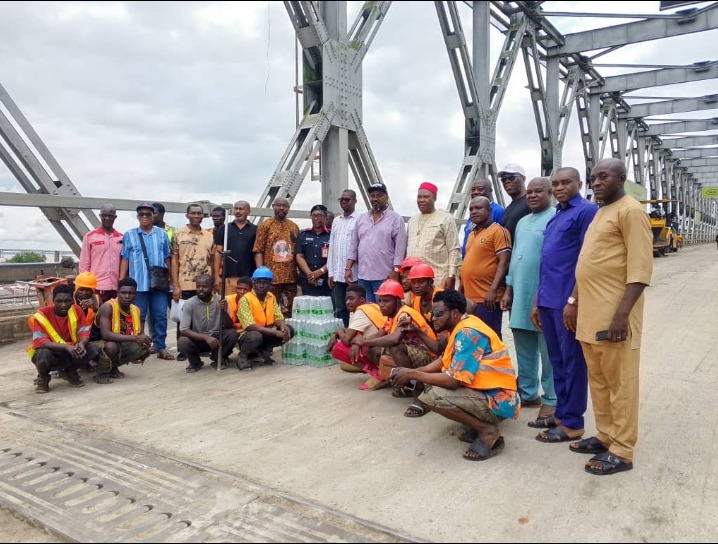
The workers made the complaints during a working visit to the bridge by the Mayor of Onitsha South Local Government Area, Chief Emeka Orji.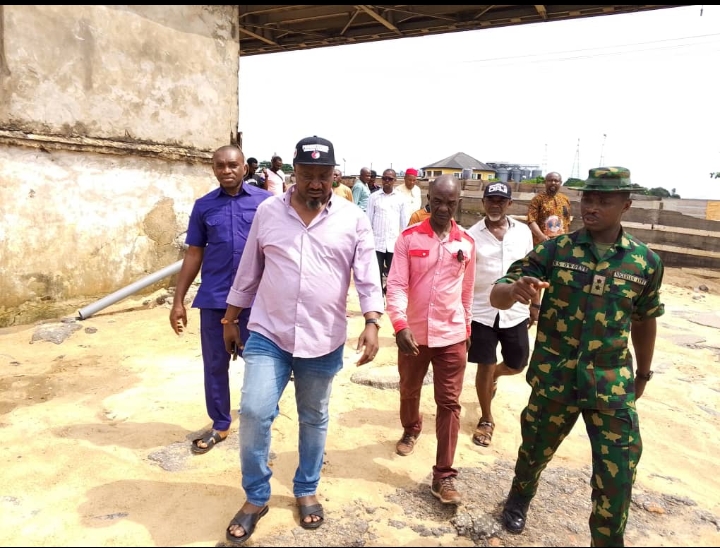
Orji, who was accompanied by the Secretary of the Local Government, Barr. Paul Onuachalla, and executives of the Fegge Community Landlords/Tenants Welfare Association, led by its Chairman, Chief Nnamdi Onugha, provided cooked meals and packs of bottled water to the personnel and workers at the site.
Speaking after the visit, Orji said the gesture was aimed at supporting the workers and showing solidarity with the Federal Government’s rehabilitation efforts on the bridge.
He said, “To support the workers and give them a sense of belonging, that is why we came to appreciate them. We will continue doing so from time to time as part of our Corporate Social Responsibility.”
The Mayor also disclosed that the council had provided facilities, including mobile toilets and water tanks, while arrangements were being made for water tankers to supply water to the tanks.
Orji further stressed the importance of the military presence in Onitsha South, noting that the personnel would contribute to security, rapid response and protection of the bridge, Onitsha South and parts of Ogbaru Local Government Area.
He added that the council would continue to strengthen its collaboration with security agencies to ensure maximum security across Onitsha South Local Government Area.
Earlier, after inspecting the environment with the Mayor, the Officer in Charge, who pleaded anonymity, identified poor lighting at the bridge at night as one of the major challenges confronting the personnel.
According to him, the situation makes it difficult to effectively monitor activities around the bridge, particularly during night shifts.
He also complained about the poor sanitary condition of the under-bridge environment where the personnel camp, saying they had to clean up the area themselves upon arrival.
The officer further appealed for improved accommodation and food support for the personnel.
He, however, commended the Mayor for the visit and assistance, saying the gesture made the workers feel appreciated.
“We feel loved and appreciated. We are happy seeing you around,” he said.

Africa’s richest industrialist, Aliko Dangote, has revealed that he bought his first private jet at the age of 22 and a half.
Dangote made the disclosure on Monday in Lagos during the formal launch of the Initial Public Offering (IPO) of Dangote Petroleum Refinery and Petrochemicals on the Nigerian Exchange.
Reflecting on his business journey, the billionaire said he had enjoyed travelling by private jet over the years but was now comfortable using commercial flights.
He also urged wealthy Nigerians to channel more of their resources into productive investments rather than luxury assets.
Dangote particularly appealed to affluent Nigerians who spend huge sums on private aircraft to consider investing such wealth in industries and businesses that could contribute to Nigeria’s economic growth.
“I try as much as I can to encourage people who are riding $900 million aircraft to please go and put that into production. We are not going to be a great nation without doing something productive,” he said.
He stressed that directing private wealth towards productive ventures would help strengthen the economy, create jobs and provide greater opportunities for national development.

The Niger Delta Chamber of Commerce, Industry, Trade, Mines and Agriculture (NDCCITMA) has rejected claims that it appropriated or “stole” the idea of Niger Delta Economic and Investment Summit from another organisation whose application was reportedly pending before the Federal Ministry of Trade.
NDCCITMA considers the allegation misleading and wishes to set the record straight.
The concept of Niger Delta Economic and Investment Summit is a broad and widely recognised platform used globally to bring together government, the private sector, investors, businesses, development partners and other stakeholders to deliberate on economic growth and development. The use of the term “Economic Summit” does not, in itself, establish exclusive ownership of the concept by any individual or organisation.
More importantly, the chronology of events does not support the allegation being made against NDCCITMA.
While the said application was reportedly still pending before the Ministry of Trade as at September 2025, NDCCITMA had already gone through the appropriate processes and received approval from the Ministry of Trade in August 2025.
NDCCITMA did not rely on, copy, or appropriate the pending application of any other party in arriving at its name or identity
It is also important to distinguish between a concept and legally protected intellectual property, such as a registered trademark, proprietary material or other enforceable intellectual property right.
NDCCITMA remains committed to conducting its activities in accordance with applicable laws and regulatory requirements.Most importantly, in Suit No: FHC/PHC/CS/57/2026 filed on same subject matter in Portharcourt by the petitioner, the learned Judge had restrained the plaintiff from further interfering with the Summit being planned by the NDCCITMA. NDCCITMA will continue respect the rule of law
We therefore urge the public, stakeholders, the media to disregard any narrative unless such claims are supported by verifiable facts and relevant legal documentation.
NDCCITMA firmly rejects the allegation and maintains that its activities and identity were developed and pursued independently and through the appropriate regulatory channels.
The organisation remains focused on its mandate of promoting commerce, industry, trade, agriculture, investment and sustainable economic development across the Niger Delta region.
Signed:
Management
Niger Delta Chamber of Commerce, Industry, Trade, Mines and Agriculture (NDCCITMA)
The Cross River State Commissioner for Power and Renewable Energy, Prince Eka Williams Abang, has died at a hospital in Abuja.
Williams reportedly died suddenly on Saturday, September 12, 2026, while receiving medical treatment.
His death was announced on Sunday by his brother, Nkang William, who expressed shock over the sudden loss.
The deceased was described by family members and associates as a dedicated public servant whose death had left a significant void.
A former councillor representing Abo Ward in Boki Local Government Area, Pius Kejuo Osang, said he was still struggling to understand the development.
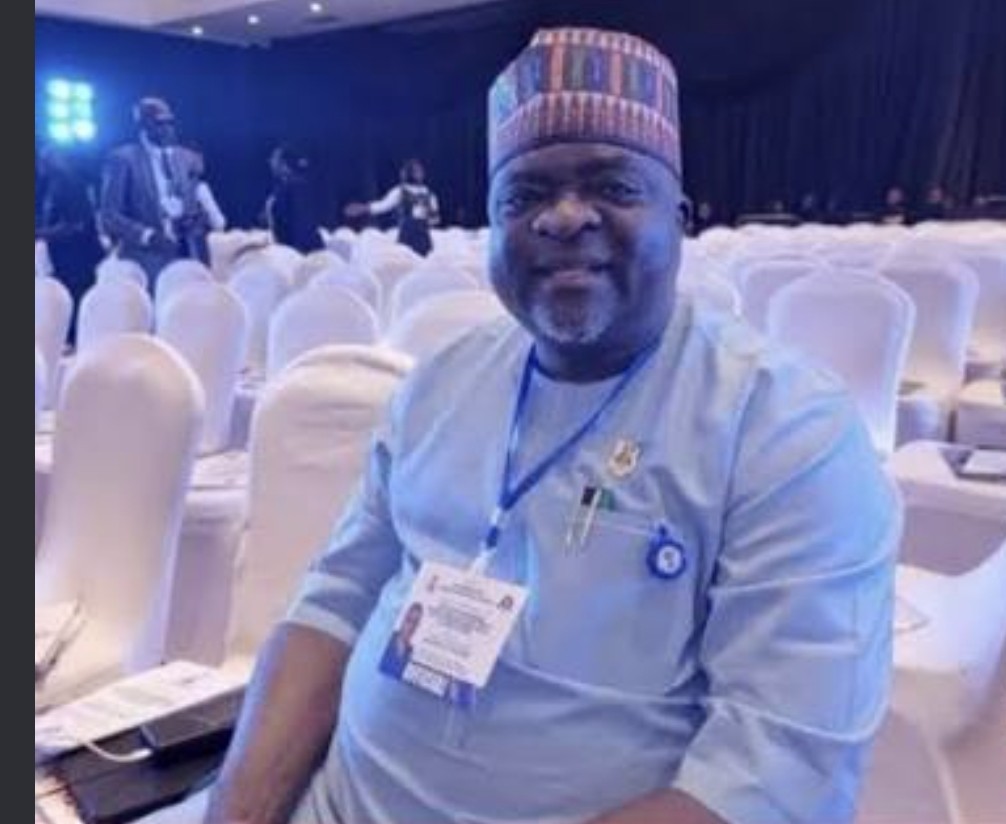
Late Abang
“I don’t understand, I was with him on Tuesday, I slept in his hotel,” Osang said.
Michael Gabriel Jr., Executive Media Assistant to Senator John Owan-Enoh, Minister of State for Industry, also described Williams as “a dedicated public servant and a good man.”
He said Ikom Local Government Area had lost a committed public servant, adding that Williams’ life of service, humility and impact would remain in the memories of those he touched.
The commissioner’s death has thrown Cross River’s political and public service circles into mourning, with condolences pouring in for his family, colleagues and associates.

-

 News2 days ago
Commissioner Dies Suddenly at Abuja Hospital
-

 Politics2 days ago
2027: Odii: I’ll Attract ₦2tn Investment to Ebonyi in Six Months
-
 News2 days ago
Sept. 26 Polls: ‘ENSIEC is over 90% ready’ – Chairman
-
 Crime2 days ago
Gunmen Attack Commercial Bus, Kill Nine Passengers
-
 Crime3 days ago
Enugu Police Probe Alleged Disruption of Political Gatherings, Warn Against Violence
-
 News2 days ago
Why Nigerian Leaders Should Spend Vacations at Home – Ebonyi Reps Candidate
-
 News3 days ago
Hotel Building Collapses in Enugu Kills One, Traps Workers
-
 Foreign2 days ago
Four Nigerians Jailed 17 Years Over Fake Marriage Document Scheme in UK