



Politics
What many people don’t know about me –Ikpeazu




Abia State governor, Dr Okezie Ikpeazu, a biochemist, got his PHD at 29 and became a politician by accident. In this interview, he opens up on so many issues including his upbringing, education, marriage and incursion into politics.
As a son to a common man, how did you brave the odds to become the governor of Abia State?
I am from a humble background. My father was a teacher and my mother a nurse. I have two siblings. I went to public schools like every other child. The advantage I had, was that my father placed a premium on education and invested a lot of time to ensure we’re educated. As a teacher, my father was often transferred around Abia State. So, I went to different primary schools just as my father was moving from one location to the other. I attended Umuogele primary school and Amaise central school. My secondary school was at Ihie high school. Then, I proceeded to the University of Maiduguri. I was a Jambite at 16 and got my doctorate in biochemistry at 29. I knew I was preparing for a career as a lecturer in the university. I lectured at Calabar Polytechnic, Ebonyi state University and Enugu State University where I was Head of Department, at a time, a member of the University Senate.
How did you venture into politics from the classroom?
It was accidental. I would say my father had a strong influence over me because he was interested in politics. At a point, he was the election officer for federal constituency elections. He was a strong member of the NRC and I have sympathy for SDP at some point, doing some youth activism. That was how I developed an interest in leadership. I understudied some leaders, read a few books about Odumegwu Ojukwu, Nnamdi Azikiwe and Obafemi Awolowo. So, after my stay as a lecturer, I was appointed the Transition Committee Chairman of my LGA. I later became Special Adviser, Chairman of College of Health, the General manager of Abia state Passengers Integration Management Safety Scheme and the deputy manager of Abia Waste Management Agency in Abia zone.
A lot of people do not know how you fared during your time in these agencies. Can you give us insight into your stewardship?

My motor is integrity and hard work. I believe in solving a problem. First, I study problems and formulate a strategy to solve them. When I took over waste management in Aba, I had 62 -68 heaps of rubbish. Each of them took like two trucks to clear. People were flinging waste from the windows of their cars. We set a procedure where waste management has to be done from 5 pm. So, at 5 pm every day I rolled out my trucks and worked throughout the night so that my trucks won’t have to compete with the daily traffic for space. I delivered my mandate. As the Chairman of the College of Health, I got Accreditation for five courses and established the Laboratories. I turned that school from the school of Hygiene to the college of health. As a General Manager of ASPIMSS, I started the regular Ambulance service for accident victims. I laid the foundation and built up to the lintel level what we will soon commission as the first trauma centre in Abia State. At every point, where I find myself, I try to leave a mark.
That leads us to your emergence as the PDP gubernatorial candidate in 2015. Some people believe that you were not prepared for governance and never worked for it. Was that the case?
I scaled the PDP primaries and won the governorship election on merit. The success I recorded in my previous positions, relationships and contacts played key roles in the primaries and victory. My strongest point was not a fat bank account but my contact and the goodwill I had. I assembled a strong political and economic team. We had the likes of the late Chijioke Nwakodo, John Nwangborogwu and Kingsley Megwara in the political team, while individuals like Dr Enelamah and Emeka Onwuka, former MD of Diamond bank formed the economic team. I had a strong plan and agenda. And at that time, I commissioned my study on the economic issues bedevilling Abia State. I had brilliant Abians come together and then we crafted the five-point agenda which later became the five pillars of development. My selling point was that I was going to bring humility to bear. I was going to be unassuming. I was going to create a platform for all those who have something to contribute to come to the table so that together we will build an Abia that guarantees a better life for her people. So, getting into the primaries, I knew I stood a very good chance because those who were running against me at that time were leveraging their wealth, their contacts and what the presidency would help them do. But I was presenting myself as a commoner for the common people. People were looking for a government they can feel, touch and relate with. I also discovered that politicians would prefer to deal with somebody that has felt what they are feeling now rather than somebody that is imported from elsewhere. We approached the delegates and spoke with them. On that day, we were very confident because of the endorsements from everyone including the then governor.
Let’s look at growing up. What were the challenges and how were you able to overcome them?
Growing up was exciting and challenging. My father was disciplined, personified. We had time for breakfast, siesta, lunch and homework. Usually, after lunch, homework and then a siesta. And at that time, 4:30 was the time for soccer. So, My friends who were not part of this strict regimen would be playing ball to my pleasure. I would sneak out to enjoy soccer but only to return with 12 or 24 strokes almost on daily basis. You cannot be found doing the wrong thing at any time. How you speak, look, walk and respond to people, were all part of the training. My father taught me early enough to seek and do whatever would give me joy and peace of mind. Whatever that is just, virtuous and pure. My mother taught me compassion and to win without raising a finger. So, I had to find a way to evolve into the man that I’ve become using these nuggets I got from both parents. In school, I was also bullied because I was the smallest in the class. There were no boreholes then, so, I had to fetch water and submit it in the kitchen for them to qualify me for a meal. All these things prepared me for the challenges in life. That was why I remain calm almost to the discomfort of many of my friends because even in the heat of a crisis, I find the strength to remain calm, calculated and focused on what I want to do. I also had a very disciplined younger sister who would report me to my parents at any time I fall short of expectation.
How and where did you meet your wife and what was the word you wooed her with?
My mother and my mother-in-law were working in the same hospital. So, it made it difficult for me; I nearly lost my mind in terms of getting her to agree to marry me because of all my negative attributes. If I didn’t wash my plate after eating, my mother will narrate to my mother-in-law because both of them were working in the same hospital. So, when I made up my mind in my second year in the university, I think it was a party, I walked up to her, I knew her very well but we’re not in a relationship. Then, I walked up to her and said I want to marry you Nkechi. At that time, even now I think my wife is opening up a little bit, growing up she was very difficult to excite. To make her laugh was a problem. So, she didn’t even react in any way but her designation suggests to me she wants to hang around me. Since I came from the angle of marriage, I decided to keep my distance. It was 10 years’ interval, that’s why she has a lot of respect for me. So, we were unofficially married for 10 years and officially married for 25 years. If you put the years together, it will be 35 years of marriages (laughs).
Let us into your closest, what kind of a husband and father are you to your wife and children?
I taught my children our family virtues. My father taught me the virtues of integrity. Integrity capital for me is more important than money. So, I have taught my children that. They trust me and they can connect with me properly. My grandfather was a blacksmith. The family dogma today is that you heat the iron when it is hot. It means teaching them how to take opportunities. The tragedy of many public officers is that they get too busy that they leave their family for public office and by the time they return, they would have lost the family. Greater thanks to internet technology. I have a chat group with my boys; I have a chat group with my girls and my wife. We have one for family talk. To my wife, I have the utmost respect for her. She has a special place in my heart where no other can occupy. She is extremely supportive and I listen to her. She is a kind and nice woman. She can also be very firm and disciplined. On the eve of our wedding, I drew my green and red lines. For instance, I said to her I love my friends, I can hang out with my friends. If you noticed I’m hanging out with friends, give us some space. I am your chief defender and protector. Nothing will undermine you. So, she doesn’t come between me and my friends and that’s important for me.
What’s that secret about you that people do not know?
The part of my life that many people do not know about is that before I became governor, I had less than 20 publications in biochemistry. But I have 76 now. As the governor, I have chaired two research groups, one at Michael Okpara University. I am writing a 10-chapter book in biochemistry. I have written seven chapters. I asked the young lecturers working with me to do two to three chapters for recognition. That book is special. It’s titled the Biochemistry of Environmental Pollution.
Let’s talk about Kinetic Abia, why did you leave it late?
As a biochemist, I define issues at the molecular level. What we’re doing is a research-based government. From the beginning in 2015, I had people plan out where we were going. I asked myself, for instance, Aba road in Umuahia, why was it such a difficult road to handle? When I found out the problem, I started to ask what Engineering device and strategy are we going to deploy to solve this problem and I got that answer. The next answer we wanted was, who is competent and capable of doing it? That was how I arrived at Arab contractors. Arab contractors deployed what they called capillary to make sure that the presence of that tube there does not stop the flow of water and that has solved the problem. This is the third year of that road and it’s standing without a pothole. And you come to Aba, was it that the previous administration did no road? The answer is no, I was part of the last administration when some money was voted for this railway junction along Aba Owerri road. Then why is it that all the roads, Osusu road and Port Harcourt road collapsed? Ehere Umuola, Ukaegbu roads, all had plantain and other trees flourishing in the middle of the road? Since I had been part of the government, I knew that the government had deployed resources but no solution. Then, I found out that because water had sat on these roads for a while, the texture of the soil had compromised and became silty. So, doing flexible pavement on these roads will not solve all the problems. The second issue was that those roads were without drainages. We had to start desilting of Aba river to prepare a recipient water for the storm water because we wanted to channel all drainages there. What you are seeing is a product of painstaking planning and tackling issues at the molecular level until it fits into expectations. For the first time, we have an end to end drainage from Asa Nnentu to No1 Port Harcourt road, meaning that I have done 70 per cent of the job. I am being scientific in dealing with the issues that confront us in Abia and much more will happen. By the time I do Ohanku, Obohia, and Ngwa road, I have done Osusu and do Ọmụma, and do Port Harcourt road, I will now ask the people, what else do you want? We will certainly do all these roads.
When are we going to see the completion of the Osisioma bridge and other projects of your predecessor?
We have paid the contractor handling the Osisioma flyover to get the project done. We could not do much last year because the stage they are now can only be done during the dry season. If you go there today, you’ll be amazed at how fast that flyover has gone. I am sure that in a few months, we will be done. For me, in our books, the Osisioma flyover is done and dusted. As for the new Government House, I am a firm believer that government is a continuum. My predecessor left behind many legacy projects, one of them was the ICC. Now, we are on the Government House project. My commitment to you is that I will sleep in that building before I leave the office.
The recent microfinance bank controversy seemed to have made a mess of the SME goal of your administration. What transpired?
The issue of Microfinance Bank is not tied to our SME. We are still the SME Capital of Nigeria. Those who brought up the issue of the SME and the microfinance bank are clutching on straws. When we came in 2015, we undertook a deep study of the SME issues. They are funding, electricity, automation and capacity building and marketing. Our people could not engage in e-trading and could not market beyond their customers from Togo. I looked at how we can become part of the big leather and garment multi-billion economy of the world. How do we capture the 200 million persons in Nigeria wearing made in Aba? That was why we consider electricity as the most important. We have ensured that Abia would become the first state in Nigeria that will have an uninterruptible power supply before the end of my administration. We will achieve it through Geometrics. Also, I collaborated with the Federal Government to give Ariaria independent power. The next one was financing. It was out of our control. It’s either through the Bank of Industry or other finance agencies. Getting our SME’s to get access to these grants and loans FG gives through banks was also a problem. We have tried to put them together through cooperative societies and for the first time, some of them have benefited. Of all of these, four problems were identified, the one we could control was marketing, and that was how I became the brand ambassador of made in Aba. I wear and promote made in Aba dresses. I took it to the National Assembly and the presidency. We took it to former President Olusegun Obasanjo. The culmination of our efforts was the day the 50,000 pairs order was placed by the military and if you calculate 10,000 per person multiplied by 50,000, you know how much it impacted on GDP of the common shoemaker in Aba. The quality of shoes coming from Aba today will compare to the imported ones. Throughout Christmas, that shoe factory was doing shoes for the Nigerian military and couldn’t complete it till the second week of January this year and we have very bright prospects of doing the same thing for the Police. Another is finance. Can we own an SME of our own? We had a commissioner, Gab Igboko who, working with then SSG decided to support the government to acquire a microfinance bank. Their proposal was approved by the State Executive Council and the microfinance bank was opened at Ngwa road and we started lending to People. We opened the bank for the benefit of Akara, yam and tomato sellers. But the naysayers and those who feel they want to run the government down decided to write a petition even to CBN. Whatever they are digging inside the issue around the bank, I wish them well. I insist that, for the sake of our poor people, the shoemakers, for the sake of the SME we are promoting, we should have a place they can go and borrow money. Some people need ₦50,000, some need ₦150,000, some ₦200,000, not everybody needs the millions we are talking about. It’s an unfortunate development that Abia has degenerated into this kind of vitriolic society where we demarket ourselves and the state. Whether they agree or not, the profound indices of development and socioeconomic growth are a creation of a better life which is my moto. It’s manifesting that today, between November and January, we have Kilimanjaro, Chicken Republic, Dominos, Cold Stone, market Square and Cine21 where people go and watch movies. The investors didn’t come here because I am their in-law, they came here because we are one of the states with strong infrastructure.
In one of your outings, a certain traditional ruler asked you to marry a second wife and also go to the senate. You didn’t respond. Does that mean you have jettisoned the idea of returning to the classroom?
I didn’t respond because I didn’t want to sound disrespectful to him. He should have known that I am in the middle of my second tenure. It’s a time I need to keep my hands steady on the wheels. I am not thinking of 2023. I have a huge government business to do. In Abia, you must have your eyes on the ball otherwise even your closest allies will derail. You have had some people who served as commissioners in strategic ministries going outside to say the government is not doing well. So, I have to personally supervise a lot of things. For such a person who just one year after leaving office becomes a critic, it means ab initio, he lacked foresight. That is my way of saying that I am focused on what I have to do. My voracious publication of 76 scientific academic books in various areas of biochemistry tells you that I have a very strong affinity for returning to the classroom. But it is good for my people to desire that I do something else. But it would be immoral for me in 2021 to abandon governance and begin to think of 2023.
The issue of power rotation versus retention is gathering momentum in the build-up to 2023. Do you have any plan to alter the PDP zoning arrangement?
I can’t ensure anything because I am a product of God’s grace, mercy and benevolence. I also do not entertain questions about who want to succeed me in 2023; it would amount to using an elbow to push me out of the seat. I am still the governor. But I have had my fair share of distraction, 13 Court cases lasting three years, COVID year in which I was hospitalised for eight weeks, several months of lockdown and Zero productivity from workers. God in his time will make everything right. The aspirations of my brothers from Abia North is valid and the thinking of some people who also want power in some section of Abia Central is also valid. Until we get to that point, I will talk to those who are from different political families and ourselves about what is the right thing to do? But what will happen will certainly happen. I do not think the attempt of governors to foist successors on people has succeeded 100 per cent. By the time I leave in 2023, I will make sure I won’t be forgetting anything in the Government House.
What should Abians expect from your administration from now till 2023?
Completion of all our major projects. A substantially renewed Aba and Umuahia, with more street lights. You’ll also see cottage industries in many local governments. I want to build 17 cottage agro-allied industries. I am happy to say that in a few months, we will be operationalising the first phase in seven local governments. The equipment has arrived in 14 containers from India. We are thinking of bringing the expatriates and then thinking of installation in those local governments. So, I want to see a rejuvenation of the rural economy. Abians will see an uninterrupted power supply and that will lead to a boom. I am happy to announce that the FG, in January, gazetted Enyimba Economic City as a free zone for manufacture. That is a milestone. Abia under my watch is the first state in Ala Igbo to record export free zone, which is futuristic and transformational.
SUN




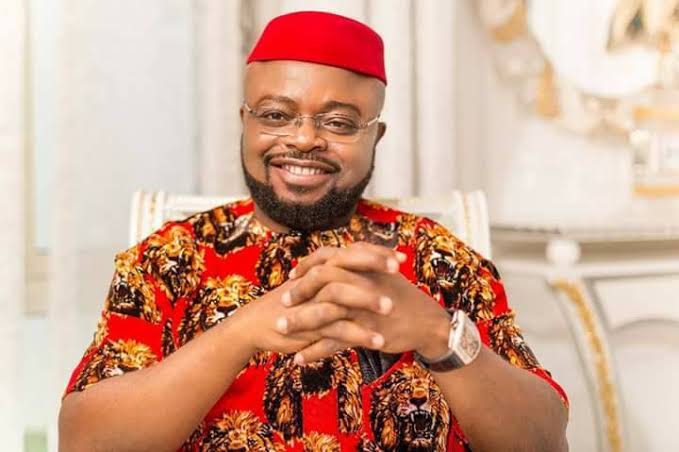
ABAKALIKI — The camp of the Peoples Democratic Party (PDP) governorship candidate, Chief Dr Ifeanyi Chukwuma Odii, has dismissed reports suggesting that he may withdraw from the 2027 Ebonyi State governorship race and support Governor Francis Nwifuru.
In a statement signed by Odii’s spokesperson, Chief Emmanuel Chidi Igwe, the campaign described the reported withdrawal as false, insisting that Odii remains committed to contesting the election.
According to Igwe, “Chief Dr Ifeanyi Chukwuma Odii will never, under any condition, step down from the 2027 governorship contest.”
The statement said Odii’s political camp remains focused on what it described as its campaign position: “Odii must run and win.”
It added that any political discussions, persuasion or negotiations involving other individuals should not be interpreted as a decision by Odii to abandon his governorship ambition.
Camp Rejects Withdrawal Narrative
The Odii camp further described reports of a possible withdrawal as a political narrative allegedly being promoted by individuals opposed to his candidacy.
Igwe challenged those behind the reports to produce evidence showing that Odii had personally announced his withdrawal from the race.
“There is a fundamental difference between reporting that a politician intends to persuade Chief Odii to withdraw and reporting that Chief Odii has agreed to withdraw,” the statement said, stressing that the latter would require evidence from the candidate himself.
The spokesperson also urged journalists, bloggers and online publishers to maintain professional standards when reporting political developments, warning against presenting speculation or the intentions of third parties as established decisions by political candidates.
24-Hour Retraction Demand
The camp has consequently demanded that publishers of the alleged withdrawal story retract or prominently correct their reports within 24 hours, unless they can produce an authentic statement from Odii confirming that he has decided to withdraw from the 2027 contest.
The statement also reminded online publishers of their responsibilities under Nigerian law, citing the Cybercrimes (Prohibition, Prevention, etc.) Act 2015, as amended, as well as other laws relating to unlawful online publications and defamatory material.
The spokesperson clarified that the reference to the law was not intended as a threat against legitimate journalism or political criticism, but as a reminder that political disagreements should remain within the bounds of the law.
The statement concluded by reaffirming that Odii remains in the 2027 governorship race and urged members of the public to regard reports of his withdrawal as unverified unless supported by a direct statement from him.
By Petrus Obi, London
London — The Peoples Democratic Party (PDP) governorship aspirant in Ebonyi State, Ifeanyi Odii, has intensified his criticism of the administration of Governor Francis Nwifuru, insisting that the people of the state deserve a different approach to governance.
Odii, who spoke with EverydayNewsngr.net in London, said what he described as the “fire brigade approach” of the Nwifuru administration was not the kind of governance Ebonyi needs.
According to him, the state requires a government with a clear vision, long-term planning and the capacity to deliver meaningful development to its people.
“The fire brigade approach of the Nwifuru government is not what the state needs,” Odii said.
He added: “I am coming to bring a new lease of life to my people.”
Odii’s comments come amid renewed political debate in Ebonyi State following the recent removal of the state Commissioner for Works. The development has attracted attention from opposition circles, with critics using it to question aspects of the administration’s handling of governance and infrastructure.
The PDP chieftain said the people of Ebonyi should expect more than what he described as reactive governance, arguing that development should be driven by a coherent programme capable of producing lasting results.
He maintained that his political ambition was motivated by a desire to provide what he described as purposeful leadership and improve the welfare of residents across the state.
“We deserve better government in Ebonyi State,” Odii said, stressing that his vision was centred on giving the people renewed confidence in government and creating opportunities for them to prosper.
As political activities ahead of the next governorship election continue to gather momentum, governance, infrastructure, accountability and the delivery of public services are expected to feature prominently in the emerging contest.
Odii’s intervention in London is likely to add further momentum to the political conversation, particularly as opposition figures seek to distinguish their vision for Ebonyi from that of the incumbent administration.
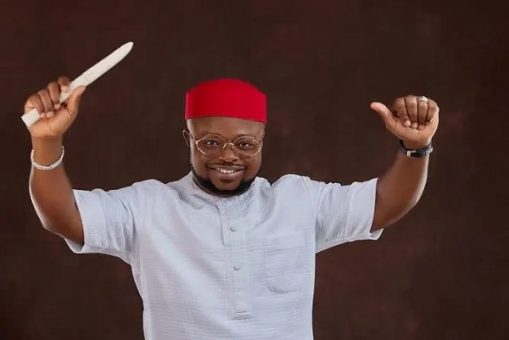
STATEMENT BY CHIEF EMMANUEL CHIDI IGWE,
SPOKESPERSON TO CHIEF DR. IFEANYI CHUKWUMA ODII
The 2027 governorship election in Ebonyi State is not a family affair, nor is it a matter to be decided by one individual or political godfather. It is a democratic contest, and Ebonyians will ultimately decide who becomes their governor through the ballot box.
No aspirant should be expected to step down simply because another politician believes he should. Every qualified candidate has the right to contest, present his programme and seek the mandate of the people.
Let me make this clear: since Senator Dave Umahi did not bring Chief Dr. Ifeanyi Chukwuma Odii into the governorship race, he cannot now claim the authority to ask him to step down. Chief Odii has his own political identity, supporters, convictions and legitimate right to seek the mandate of Ebonyians.
The decision to contest or withdraw belongs to the candidate, while the ultimate decision on who governs Ebonyi State belongs to the people.
The 2027 election should therefore be about issues, programmes, records, accountability and the future of Ebonyi—not political arrangements made by individuals behind closed doors.
Chief Dr. Ifeanyi Chukwuma Odii is prepared to place his vision and programme before Ebonyians and subject them to public scrutiny. Those seeking to retain power should equally be prepared to defend their records before the electorate.
Ebonyi 2027 is not a family arrangement. It is a contest for the confidence of the people. The people of Ebonyi State—not individuals—will have the final say.
Chief Emmanuel Chidi Igwe
Spokesperson to Chief Dr. Ifeanyi Chukwuma Odii
Politics
BREAKING: SaharaReporters Report on Arrest of Enugu Traditional Ruler, Ex-Lawmaker Is False and Misleading

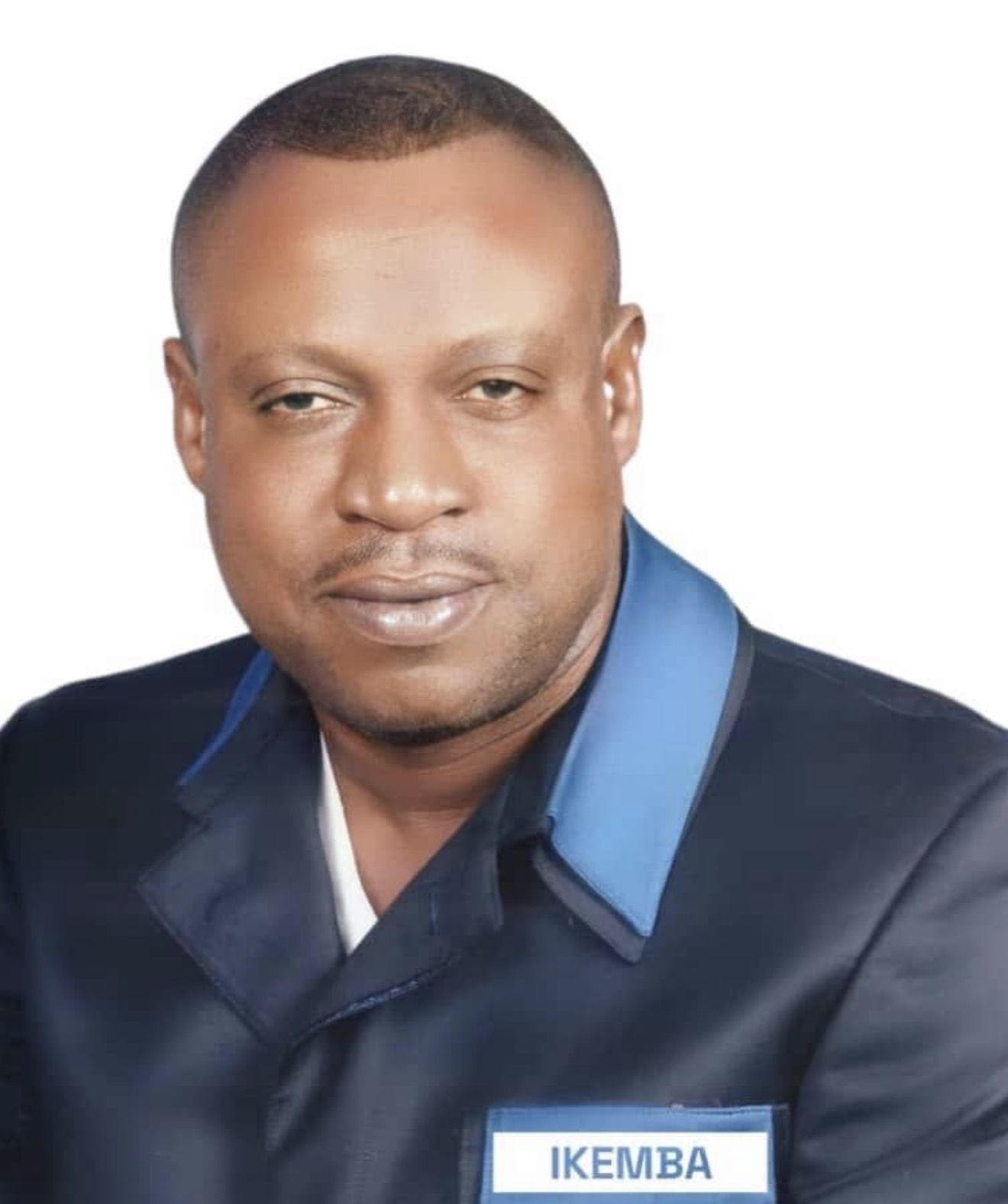
The recent publication by SaharaReporters alleging that prominent Enugu traditional ruler, Igwe Obiora Igwesi, his brother and former federal lawmaker, Hon. Uchenna Sunday A. Igwesi (USA Igwesi), and eight others were arrested over an alleged attack on an NDC ward meeting in Obuoffia, Nkanu West Local Government Area, is false and deeply misleading.
The report is being described as a deliberate attempt to damage the reputation of respected leaders in Enugu State and create unnecessary political tension ahead of the 2027 elections.
Contrary to the claims contained in the publication, there was no arrest ordered by the Inspector-General of Police against Igwe Obiora Igwesi, Hon. USA Igwesi, or the other individuals named in connection with any alleged attack on an NDC meeting. There was also no operation by detectives from Zone 13 Command, Ukpo, Dunukofia, Anambra State, as alleged in the report.
Similarly, the purported petition dated September 15, 2026, and the allegations of conspiracy, unlawful possession of firearms, attempted murder, assault, threatening violence and stealing are strongly disputed and described as fabricated claims intended to create a damaging narrative around the individuals concerned.
The broader allegation that the 17 Local Government Areas of Enugu State have experienced coordinated armed attacks allegedly sponsored by Local Government Chairmen to silence the opposition is equally rejected as unfounded.
Attempts to associate Igwe Obiora Igwesi and Hon. USA Igwesi with criminal activity or political violence are viewed as an unacceptable effort to tarnish the image of individuals who have served their communities and contributed to the development of Enugu State.
The public, particularly the people of Enugu State, is therefore urged to exercise caution and verify the facts independently before accepting or circulating the allegations contained in the SaharaReporters publication.
Enugu State remains focused on peace, stability and development. Political disagreements should not be allowed to degenerate into the circulation of unverified allegations capable of inflaming tensions or damaging the reputations of individuals.
The position being maintained by the affected parties is clear: there was no arrest of the named individuals in connection with the alleged incident, no evidence has been presented establishing that any Local Government Chairman sponsored an attack, and the allegations contained in the publication are disputed in their entirety.
The public is encouraged to await verifiable facts from the appropriate authorities rather than rely on claims that have not been independently substantiated.
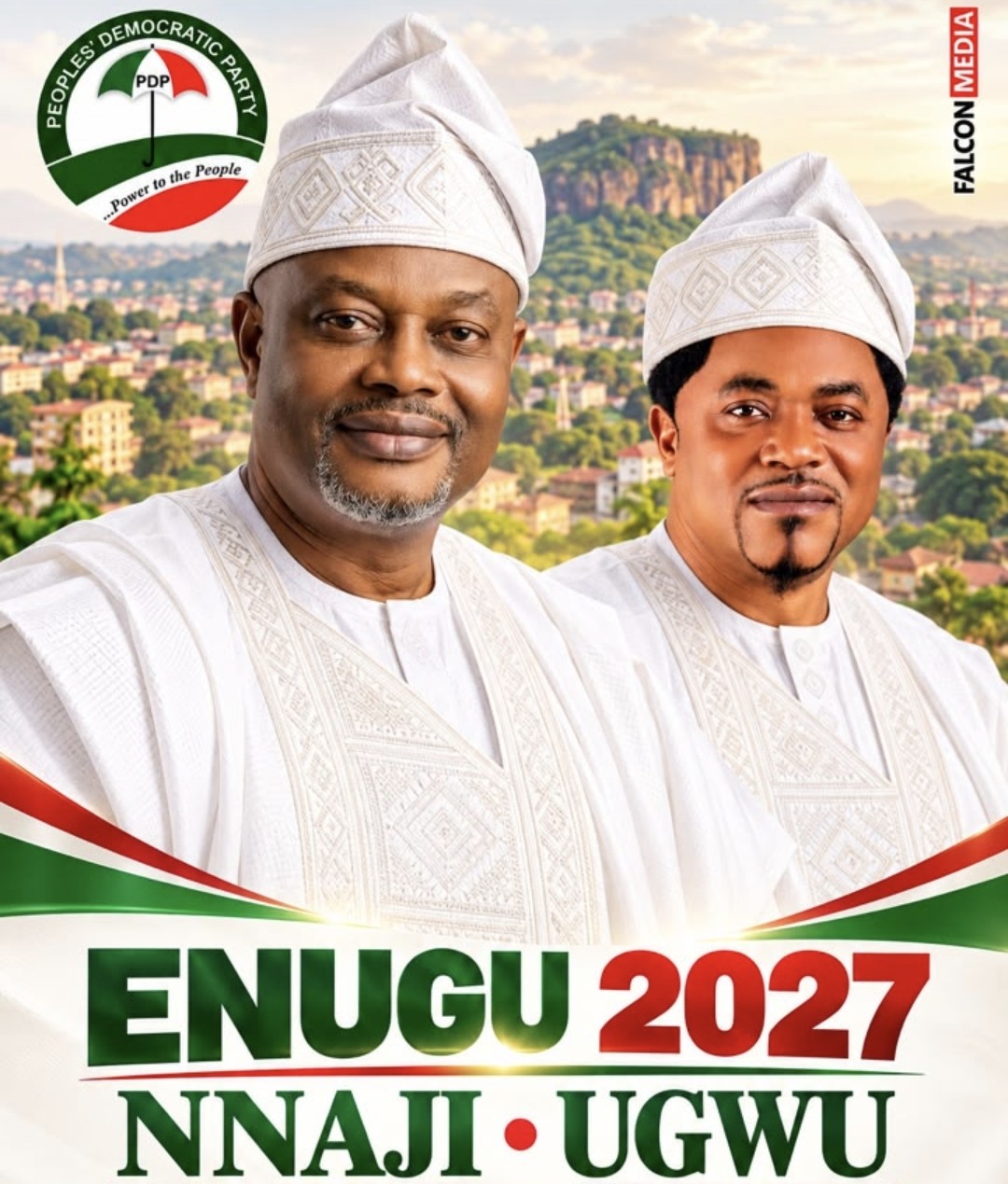
Fresh legal questions emerge over Chijioke Ugwu’s membership registration after Supreme Court restores party-register provisions
By Our Correspondent
Fresh legal questions have emerged over the Peoples Democratic Party’s 2027 governorship ticket in Enugu State following the Supreme Court’s restoration of key provisions of the Electoral Act dealing with political party membership registers and the conduct of primaries.
The questions centre on Chief Chijioke Peter Ugwu, who was recently announced by the PDP governorship candidate, Chief Uche Geoffrey Nnaji, as his running mate.
Nnaji announced Ugwu’s selection on September 24, shortly after the Supreme Court delivered its landmark judgment restoring Sections 77(5), 77(6), 77(7) and 84(2) of the Electoral Act 2026. Ugwu’s selection was subsequently reported by several Nigerian media outlets.
But documents and information available to this newspaper raise a question that could potentially become significant if the PDP ticket is challenged in court.
The PDP governorship primary in Enugu State was conducted on May 25, 2026.
However, Ugwu is understood to have registered as a PDP member on May 31, 2026 — six days after the governorship primary.
This means that if the May 31 registration date is accurately reflected in the party’s official records, his name could not have appeared in the PDP membership register submitted to the Independent National Electoral Commission (INEC) before the May 25 governorship primary.
That immediately raises the question:
Can a person who was not a member of the party on the date of its governorship primary subsequently be selected as the deputy governorship candidate without the Supreme Court’s restored membership-register provisions affecting the ticket?
What the Supreme Court restored
The Supreme Court, in a unanimous judgment delivered on September 24, set aside the Court of Appeal’s earlier decision which had declared the disputed provisions of the Electoral Act unconstitutional.
The apex court upheld the validity of Sections 77(5), 77(6), 77(7) and 84(2), following an appeal by INEC against the Court of Appeal judgment in the case involving the Zenith Labour Party.
Section 77(5) provides that only persons whose names are contained in a political party’s membership register submitted to INEC at least 21 days before a primary, congress or convention may participate in the exercise.
Section 77(6) requires political parties to use the membership register submitted to INEC for their primaries, congresses and conventions.
Section 77(7) deals with the consequence of failure by a party to submit its membership register within the prescribed period.
These provisions are now back in force following the Supreme Court judgment. Legal opinions suggest that the law’s insistence on the membership register submitted to INEC is relevant to the validity of the party’s eventual nomination process, depending on how the PDP formally nominated and submitted its governorship and deputy governorship candidates.
The precise documents will therefore be crucial.
Among the questions likely to arise are:
What date did the PDP submit its membership register to INEC?
Was Ugwu’s name contained in that register?
When exactly did Ugwu become a registered PDP member?
Was he a PDP member before the register was submitted to INEC?
How did the PDP formally nominate him as running mate?
Was the nomination made through a procedure recognised by the Electoral Act and the party’s constitution?
The controversy is coming at a sensitive time for the PDP, which has only recently unveiled Ugwu as Nnaji’s running mate. Ugwu, from Nguru in Nsukka Local Government Area, is an entrepreneur, philanthropist and community leader who runs businesses in logistics, contracting, consultancy and hospitality.
However, the governorship candidate and the deputy governorship candidate constitute a single electoral ticket. Therefore, any legal or constitutional issue affecting the eligibility of the deputy governorship candidate automatically has implications for the validity of the joint ticket, including the governorship candidate.
Another legal opinion available to this newspaper insists that “the gubernatorial ticket is a joint one. If the name of a deputy governor is not on the digital register, it invalidates the entire process.”
In the 2019 Bayelsa governorship election, APC’s David Lyon was declared winner. His running mate was Biobarakuma Degi-Eremienyo.
The Supreme Court later disqualified Degi-Eremienyo over the documents he submitted to INEC. The crucial point was that the Supreme Court held that his disqualification affected the joint ticket he shared with David Lyon. Consequently, the court ordered INEC to withdraw the Certificate of Return issued to Lyon and his deputy.
This happened one day before Lyon was due to be sworn in as governor. The certificate was subsequently issued to Douye Diri of the PDP, who had the next-highest lawful votes and the required geographical spread.

-
 News1 day ago
No Survivor Found Yet in Ondo Air Crash — Aiyedatiwa
-
 News1 day ago
How NAF Plane Vanished From Radar Shortly After Take-Off, Crashes In Ondo Swamp
-
 News3 days ago
Sacked Works Commissioner: Release or Charge Him to Court, Oganiru Izzi Challenges Nwifuru
-
 Politics1 day ago
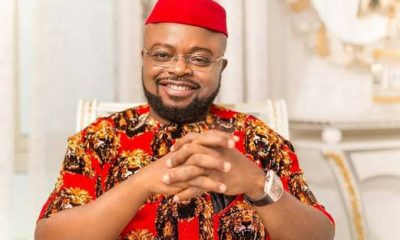
2027: Odii Will Not Step Down, Says Spokesperson
-
 Crime3 days ago
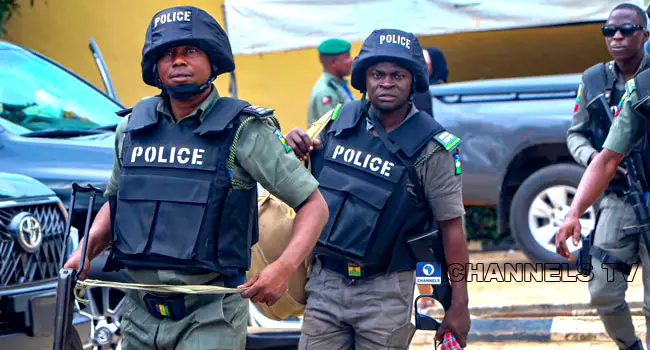
Police Deploy DIG, Two Commissioners to Rescue 20 Abducted Prospective Corps Members
-
 EverydayNews Telescope1 day ago
Nkalagu Cement Factory: Project or 2027 Political Promise?
-
 Crime9 hours ago
Court Denies Alleged Fake Pastor Bail as Seven Witnesses Await Trial
-

 News8 hours ago
NAF Crash Claims Pilot 16 Days After Wedding