



Special Report
Isi-Uzo: Prototype of Enugu’s Changing Development Narratives Under Gov Mbah



By Obiora Obeagu
Isi-Uzo is a rural area and one of the oldest local governments in Enugu State, sharing borders with Benue and Ebonyi States. It ranks low on the bottom rung of the ladder as one of the least developed LGAs in the state. Lack of requisite infrastructure has stalled its socio-economic development for over 48 years of its existence as a Council. The burgeoning agri-business of the agrarian populace of Isi-Uzo has equally been mired by insecurity: farmers-herders conflicts, banditry, and sundry criminalities. The lurking complexities of this underlying insecurity triggered a December 2022 unprecedented crisis that turned Eha-Amufu, in Isi-Uzo, into a ghost town. It saw the people – leaders, elders, youth, women and children – scatter across Isi-Uzo and neighbouring communities.
Therefore, the 2023 general elections came at a time when the people of Isi-Uzo, like the psalmist wrote in Psalm 121, lifted up their eyes to the hills and wondered where their help would come from. However, though Isi-Uzo people were united in that prayer, they were divided in where the answer to the prayer would come from. But Governor Peter Mbah’s manifesto was laden with humongous and clear vision: To grow Enugu State’s economy from $4.4 billion to $30 billion; to make Enugu the premier destination for investment, business, tourism, and for living; to eradicate poverty, just to name a few. Thus, it was not surprising that our people, in their thousands and against all odds, chose capacity over kinship. But the good news is that he has given those who stuck out their necks to fight for his victory causes to thump their chests about the choice they made.
Dr. Mbah’s ban of illegal sit-at-home a few days after his swearing-in was a signpost that it is indeed business unusual. The action sent a glimmer of hope to Ndi Enugu and the hopeful agrarian people of Isi-Uzo, whose economic potentials and freedom have been battered by over 15 years farmers-herders conflicts and banditry. This is because to the people of Isi-Uzo, their very vast and arable land resources remain their oil well. With our untapped land and natural resources, Isi-Uzo has the capacity to become the hub of agri-business in Enugu and neighbouring states if our agro-potentials are well harnessed.

Today, Mbah is taking some unprecedented, strategic steps to address the age-long and hydra-headed security challenges in Eha-Amufu and Isi-Uzo. The context and content of his kinetic and non-kinetic actions mark a remarkable departure from the norm. He is deploying security, infrastructure, and agriculture produce city projects to confront these challenges. For instance, there is an ongoing 22km asphalt road, with drainages, bridges and culverts, from Agape area to Orie-Ogbete in Mgbuji farm settlement. It is the first in the history of our people by any administration in the State.
The nature of the soil and dilapidated roads in Eha-Amufu and some other Isi-Uzo communities make the farm settlement terrains inaccessible and worse during rains. This mega project is already addressing problems of bad terrain and tackling insecurity, as local farmers, who hitherto deserted their farms out of fear have gone back, in their numbers, to farming this season. The project is poised to revive agri-business and bolster huge economic development with the re-establishment of the popular inter-state Orie-Ogbete market. It was abandoned over two years ago, after heavily armed and camouflaged bandits from neighbouring state swooped on our people and massacred them in their numbers on 6th January, 2022, burning them along with their shops and goods.
What’s more? Presently, there is ongoing road intervention by the Mbah administration to link these vulnerable Isi-Uzo communities and enhance security operations from Ikpapkara Aguamede – Uzam Ado–Odoba–OnuAdo–Orenu – Ojeshi–Akpugo flushing out to Ikem-Nkwo road that links Enugu and Benue States.
Very significant also is the ongoing construction of the 40km Owo-Ubanu-Amankanu-Neke-Ikem dual carriageway. This road will now serve as a gateway to the North Central. For instance, those traveling to the North from Ebonyi and parts of South-South like Cross Rivers wouldn’t need to go through 9th Mile. Governor Mbah has also promised to open up the about 17.5km Ikem-Nkwo-Odenigbo Eha-Amufu-Ichama-Benue State road that will join the Owo dual carriageway where it terminated at Ikem. These projects will spring up new businesses.
The Mbah administration has equally set up a military camp at Ogbete and security buffer zones across the affected border communities and flashpoint areas in Isi-Uzo LGA. Presently, there are over 200 military and security forces across Eha-Amufu communities of Eha-Ohuala, Aguamede and Ikem-Nkwo in Isi-Uzo to sustain security operations around the forest zones and border areas. The planned military barracks and restructuring of local security will ensure proactive operations, while the innovative Enugu State Security Trust Fund activated by the government will enhance and guarantee sustainable security interventions. The measures are yielding positive results, as the usual stories of killings, kidnappings, and burning of houses and properties in Isi-Uzo are fast waning. Internally Displaced Persons (IDPs) have also returned to their communities.
In the face of dwindling oil resources, our ailing economy and high rate of unemployment in the country, agriculture is the way to go. Governor Mbah has set machinery in motion for the innovative Produce City projects in Isi-Uzo and other parts of the state. This will, among others, harness arable and fallow land banks for commercial agriculture projects involving production, processing, packaging and marketing of farm products like rice, cassava, palm oil, yam, maize, among others. The government is gathering data with plans to integrate local farmers into the project and empower them with agricultural inputs. This will help them engage in large scale agriculture that will create wealth and improve their livelihoods. And only a few weeks ago, the administration sealed a N100bn deal with a private investor to revive the moribund United Palm Products Ltd palm plantations established by the Dr. Michael Okpara Government in the 1st Republic.
Malcolm X, a US civil rights activist, described education as the passport to the future, for tomorrow belongs to those who prepare for it today. I have always said that education is the sure road to freedom for our disadvantaged children, our hope for tomorrow, in rural areas whose only crime is being born into poor families in our local communities with a poor learning environment. But that is going to change with the smart school project initiative of Governor Peter Mbah, the first of its kind in the country and possibly in Africa. It will provide a world-class learning environment and equipment. Each Smart School comprises an interactive digital whiteboard, an internet system, robotics and artificial intelligence centre, modern ICT centre, two science laboratories (for primary and junior secondary), hybrid multimedia library, creative production studio, 25 inclusive classrooms and 700 Android tablets.
Currently, Smart school projects, scattered across Enugu’s 260 wards, are ongoing in 9 out of the 11 wards in Isi-Uzo. The Governor said the smart school will provide free education for early years to Junior Secondary 3. This will drastically reduce the number of out-of-school children and curb the proliferation of quack private schools in education for business in the state. Teachers are being recruited and trained for the task ahead. The provision for teachers’ quarters will curb the menace of teacher absenteeism and lost teaching hours.
Nelson Mandela said that Education is the most powerful weapon with which you can use to change the world. For me, the smart school project is the best revolution to not only Enugu State, but Africa and the Governor has laid foundation for human empowerment and legacy that will shape the future of our successive generations and give the state a quantum leap.
There is a popular saying that health is wealth. The Mbah administration is facilitating access to quality healthcare for our rural populace, especially women, children and the aged. Government’s plan to construct 260 Type 2 Primary Healthcare Centres is also rubbing off well on Isi-Uzo where such constructions, including living quarters for health workers, are ongoing. Aside from ridding the system of decrepit health structures, it will ensure access to modern medical facilities and healthcare with doctors and nurses on ground.
Governor Mbah is strategically opening up new economic corridors in our localities and Enugu State. He is leveraging on his enormous and digital wealth of experience in public and private sectors to reinvent governance in Enugu State. His 521.5 Billion 2024 “Budget of Disruptive Economic Growth” was a marked departure from the norm. With N414.3 billion capital expenditure over N107.2 billion recurrent expenditure, it carries weight with potential to positively impact the development trajectory of our dear Enugu State. It is, therefore, not surprising that BugIT ranked Mbah Administration the most prudent and least recurrent spender among the 36 states.
My encounter with Governor Peter Mbah reveals a leader with intellectual prowess, who is passionate about his people and, who is ever poised to translate his vision into action. There is hardly anything more obvious than the fact that he is delivering on his promises. Enugu State is witnessing unprecedented projects and transformation across key sectors like Education, Health, Agriculture, Security, Roads Infrastructures, ICT, among others. The 180 days commissioning and delivery of promised water, renewed the hope of a better life for Ndi Enugu. The revival of moribund assets like the abandoned Hotel Presidential and Enugu International Conference Centre, coupled with the recent flag-off of 5-Star Hotel project will boost tourism and the economy of Enugu State.
One year is too short a time to determine if an administration has delivered on its four-year mandate or not, but it is enough to check if the proper foundations have been laid and if a government is on the path to deliver on its promises. So far, Governor Mbah has laid a solid foundation and is on a sure footing and path to transforming Enugu State. And his many completed, commissioned and ongoing projects like roads where he recently commissioned 71 urban roads, the smart schools, Command and Control Centre, Primary Healthcare Centres, etc, bear testimonies to his commitment and determination.
Obeagu, immediate past Council Chairman, Isi-Uzo LGA, is a Human Rights Lawyer and Fellow, Institute of Global Peace and Conflict Management



Special Report
Federal Roads: Umahi Closing the Gap as Tinubu Addresses Years of Neglect in South-East
By PETRUS OBI
The Federal Government’s renewed intervention in major infrastructure projects across the South-East is beginning to give fresh meaning to the argument that the region is witnessing a stronger federal presence under President Bola Ahmed Tinubu.
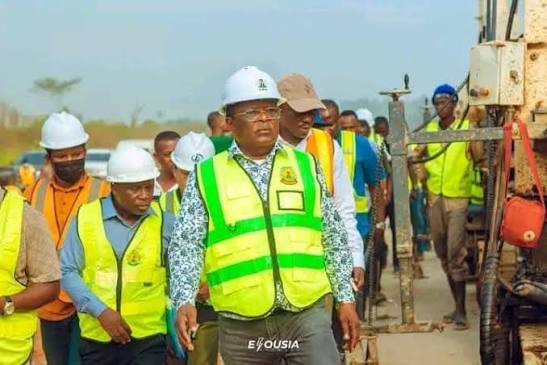
At the centre of the renewed push is the Minister of Works, Senator Dave Umahi, whose aggressive supervision of federal road projects has placed the region’s long-standing infrastructure deficit firmly on the national agenda.
The latest demonstration of that commitment is the ongoing reconstruction of the 65-kilometre Afikpo-Uturu-Okigwe Federal Road, linking communities and major highways across Ebonyi, Abia and Imo states.
During an inspection of the project in Okigwe, Umahi disclosed that the Federal Government had commenced preparatory works to remove a mountain more than 60 metres high that has for years constituted a major danger to motorists and contributed to fatal accidents along the route.
“This mountain, by the command of President Bola Ahmed Tinubu, must collapse for the people of South-East,” the minister declared, underscoring the administration’s determination to confront difficult infrastructure challenges rather than continue to allow them to hinder economic activity and endanger lives.
The mountain section represents one of the most technically demanding portions of the project. According to the contractor, Hi-Tech Construction, three excavators are being deployed to intensify excavation and reshape the terrain to create a safer and more efficient road alignment. 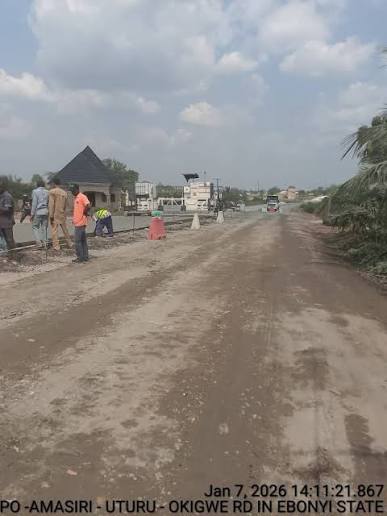
For a region where poor road infrastructure has historically been blamed for restricting trade, increasing transportation costs and slowing economic development, the significance of the project goes beyond the road itself.
The Afikpo-Uturu-Okigwe corridor is an important arterial route connecting communities and adjoining federal highways. When completed, it is expected to improve movement between Ebonyi, Abia and Imo, open up markets and strengthen regional integration.
More than 20 kilometres of the 65-kilometre project have already been completed, according to the Minister of Works, with the remaining sections progressing under the Federal Government’s tax-credit arrangement involving Dangote Industries Limited as sponsor and Hi-Tech Construction as contractor.
The project is also notable for the use of concrete pavement, which Umahi described as superior to what is obtainable on some other major federal highway projects.
But the Afikpo-Uturu-Okigwe road is only one component of a wider federal infrastructure push across the South-East.
Other major projects highlighted by the Presidency include the Enugu-Onitsha, Enugu-Port Harcourt, Enugu-Abakaliki, Abakaliki Trans-Sahara and Onitsha-Owerri roads.
Taken together, the projects suggest an attempt to address some of the region’s most persistent infrastructure bottlenecks while integrating its commercial centres more effectively with the national economy.
For Umahi, the issue is not merely the number of projects being undertaken, but their practical impact on the lives and economic fortunes of the people.
The minister has consistently argued that the Federal Government’s interventions in the South-East should be judged through tangible infrastructure delivery rather than political sentiments.
That argument is particularly significant in a region that has, for years, complained of inadequate federal infrastructure investment and what many residents perceive as neglect.
The ongoing projects therefore offer the Tinubu administration an opportunity to change that narrative through visible delivery on the ground.
The mountain at Okigwe provides perhaps the clearest symbol of the challenge.
For decades, the obstacle stood as a physical barrier to smoother transportation, while accidents and difficult road conditions imposed additional costs on motorists and communities.
Its planned removal is consequently more than an engineering exercise. It represents an attempt to physically dismantle one of the obstacles that have impeded movement, commerce and connectivity in the region.
Beyond road construction, improved connectivity could have wider economic consequences. Better roads can reduce travel time, improve the movement of agricultural produce and manufactured goods, strengthen access to schools and health facilities, and encourage investment along previously difficult corridors.
This is why the intervention is being viewed as part of a broader effort to close the infrastructure gap in the South-East.
The Senior Special Assistant to the President on Community Engagement, South-East, Barrister Chioma Nweze, reinforced this position, saying the projects would strengthen connectivity, open up communities and markets and stimulate commercial activities across the region.
The scale of the ongoing interventions provides the Tinubu administration with a strong opportunity to demonstrate that federal presence in the South-East can be defined not by political rhetoric but by roads, bridges, connectivity and economic infrastructure.
And with Umahi taking a hands-on approach to monitoring projects, the Federal Government appears determined to make infrastructure delivery one of the most visible signs of its engagement with the region.
If the Afikpo-Uturu-Okigwe road is completed as planned, including the removal of the 60-metre mountain, it could become one of the most striking examples of how a difficult infrastructure challenge can be transformed into an economic opportunity.
For the South-East, where infrastructure deficit has long featured prominently in conversations about federal neglect, the emerging picture is one of a region increasingly being brought into the centre of the Federal Government’s infrastructure agenda.
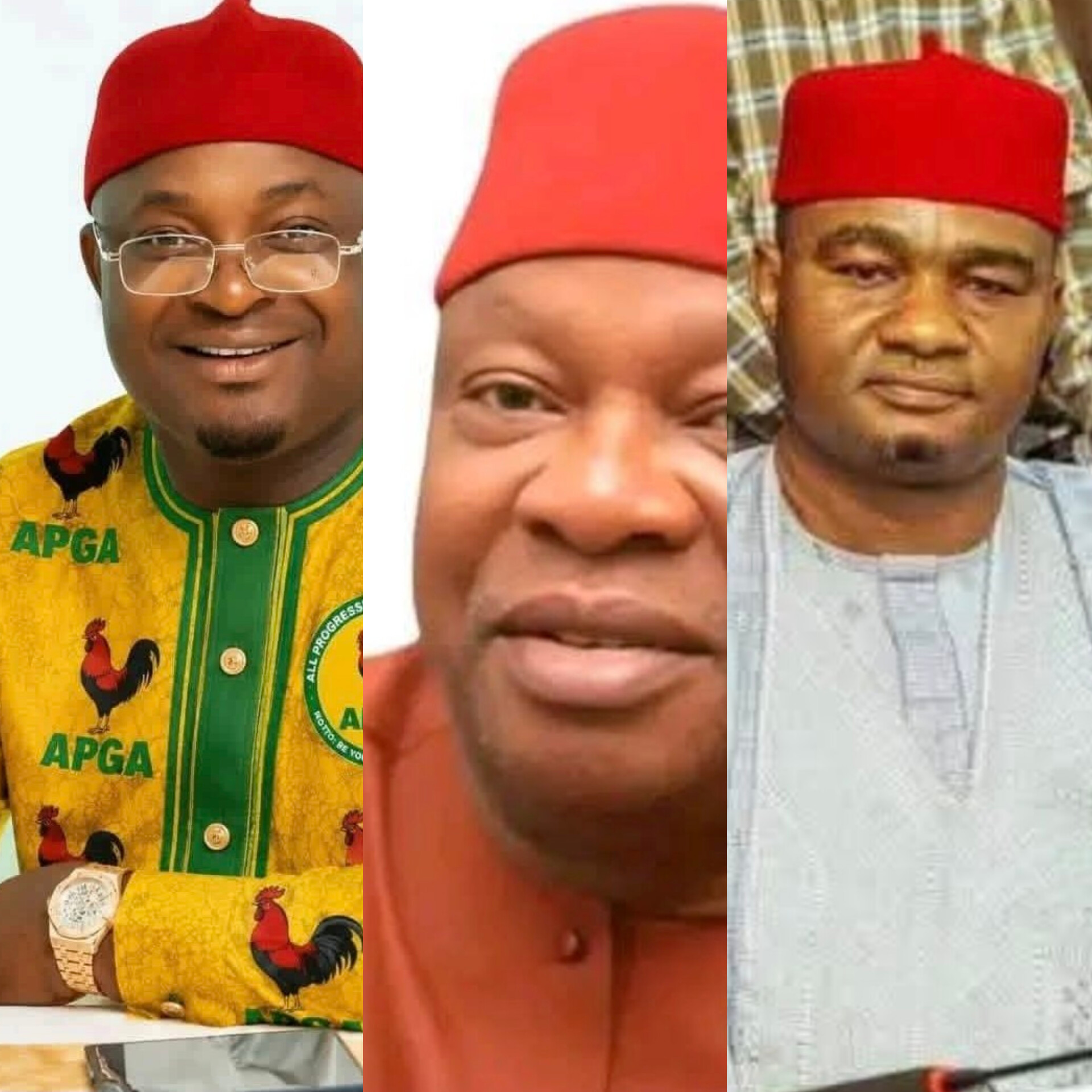
By Emma Igwe
In Ebonyi South, a scenario is playing out, following the loss of Igariwey Idu in securing the APC ticket for Edda/Afikpo North federal constituency, and the likely disposition of his followers to work against APC candidates. These anti-party activities and internal political realignments are now intersecting with broader dynamics in Ebonyi North and Ebonyi South senatorial districts, where the All Progressives Congress (APC) may face unexpected setbacks due to deep-rooted local interests, personal influence networks, and intra-party divisions.
In Ebonyi North, the political landscape is particularly complex, driven largely by a long-standing kindred dichotomy between the two dominant subgroups, Unwueru and Igbojima.
This internal division continues to influence voting behaviour across Izzi, Abakaliki, and Ebonyi local government areas, often outweighing party ideology or candidate competence. At the same time, the ripple effects of political dissatisfaction in Ebonyi South—especially from aggrieved APC stakeholders like Igariwey Idu—are beginning to shape cross-district alignments and quiet opposition strategies that could weaken APC’s overall electoral strength.
The APC candidate in Ebonyi North, Senator Onyekachi Peter Nwebonyi, who serves as Deputy Chief Whip and hails from the Unwueru subunit of Izzi, is widely acknowledged for his legislative performance and constituency projects across various communities in the district. However, his political strength is being challenged by deep-seated intra-ethnic sentiments, with his kindred of origin becoming a major political liability in the current contest. Some local political actors within Izzi are reportedly not fully aligned with his candidacy, further weakening his grassroots consolidation.
On the other hand, Chief Chikaodili Ojemba of the All Progressives Grand Alliance (APGA), who hails from the Igbojima axis—the same broader bloc as Governor Francis Ogbonna Nwifuru—appears to be gaining significant traction. Despite running under APGA, Ojemba is perceived by many as enjoying tacit support from influential political structures within the state. His alignment with both Governor Nwifuru and President Bola Ahmed Tinubu, at least in political posture, has further strengthened his acceptability across party lines.
Ojemba’s appeal is also reinforced by his position as chairman of the Quarry Dealers Association of Ebonyi State, as well as his philanthropic engagements, including recent scholarship awards to indigent students within the senatorial district. These activities have enhanced his visibility and grassroots goodwill, particularly among younger voters and economically disadvantaged communities.
While Senator Nwebonyi maintains a strong record of attracting federal projects and development initiatives across the district, the contest is increasingly being shaped less by performance and more by identity politics. The election is gradually evolving into a struggle for kindred supremacy rather than a comparison of competence or legislative effectiveness.
Demographically, the Igbojima bloc holds a population advantage and also benefits from the perceived influence of the incumbent governor, which may translate into significant electoral gains for Ojemba. He is also expected to perform strongly in Izzi areas, where local sentiments and political alignments are currently fluid.
In urban centres such as Abakaliki and parts of Ebonyi local government area, APGA may also enjoy considerable support due to the presence and influence of non-indigenous populations, particularly Anambra indigenes who have established strong socio-economic networks in these areas.
In a parallel development, Toochukwu Ogalagu, the APGA House of Representatives candidate for Ohaukwu/Ebonyi Federal Constituency, is also expected to command strong followership in urban centres such as Ezzangbo, Effium, and Alioma. However, he may face stronger resistance in Mgbo-speaking areas, where the incumbent representative retains influence. The simultaneous conduct of both senatorial and House of Repre

BY Emma Igwe
“Those who live ahead of their time should always expect criticism.”
— Dr. Nnamdi Azikiwe
Dr. Nnamdi Azikiwe reportedly made this statement on two notable occasions.
The first was during the campaign for Nigeria’s independence, when Southern members of the then National Assembly advocated for self-rule while many Northern members opposed the move. When Dr. Azikiwe was interviewed at Heathrow Airport in the United Kingdom, he responded with those words.
The second was during the Nigeria–Biafra War. After advocating dialogue between Nigeria and Biafra, Radio Biafra reportedly labelled him a saboteur. Once again, he repeated the same statement. Supporters argue that history later vindicated his position.
A Religious Reflection
If Jesus Christ, revered by Christians as the Saviour of the world, was persecuted and crucified despite His innocence, then public criticism and unfounded allegations against public figures should not come as a surprise.
It is painful for anyone to be associated with a crime in which they had no involvement.
Sen. David Umahi: A Record of Public Service
Supporters of Sen. David Umahi point to a number of achievements during his political career, including:
- Becoming the first Deputy Governor in Ebonyi State to openly oppose the imposition of candidates within the Peoples Democratic Party (PDP), eventually emerging as Governor.
- Introducing the use of concrete pavement technology for road construction in Ebonyi State.
- Prioritising infrastructure development over patronage politics and the distribution of public resources.
When Sen. Umahi defected from the PDP to the All Progressives Congress (APC), he faced widespread criticism, particularly in the South-East. Today, many of those who opposed his decision have also joined the APC.
His supporters also argue that his performance as Minister of Works and his strong defence of President Bola Tinubu’s policies have attracted political opposition and criticism from rivals.
The Main Issue: The Death of Ms. Mary Habila
It is not disputed that Ms. Mary Habila died at Sen. David Umahi’s country home. However, the central issue should be determined by facts rather than assumptions.
The mere fact that a person dies at another person’s residence does not, by itself, establish that the owner or occupant is responsible for the death.
Liability can only be established through credible and verifiable evidence.
Among the issues that require proper investigation are:
- Whether there is evidence linking any individual to the cause of the death.
- Whether those present cooperated fully with law enforcement authorities.
- Whether medical assistance was sought promptly and the incident duly reported.
- The findings of forensic experts, medical examiners, and other investigators.
The cause and circumstances surrounding Ms. Mary Habila’s death are matters that should be determined through lawful investigation.
The Legal Position
Both criminal and civil liability must be established through credible evidence demonstrating that an unlawful act caused the death.
Sen. David Umahi has consistently denied any wrongdoing and has stated that he has cooperated with the relevant authorities throughout the investigation.
Ultimately, the circumstances surrounding the incident should be determined by witness testimony, forensic evidence, medical reports, and other admissible evidence—not by speculation based solely on the location where the death occurred.
It is a fundamental principle of justice that every person is presumed innocent until proven guilty by a court of competent jurisdiction. Accordingly, any conclusion regarding legal responsibility must rest on established facts and the applicable law, rather than suspicion or conjecture.
The occurrence of a death at Sen. Umahi’s residence, standing alone, is insufficient to establish legal liability without clear and convincing evidence linking him to the cause of the death.
By Okey Nwanguma
Nearly five years after five Nigerian engineers disappeared while carrying out their professional duties in Ebonyi State, the country still has no credible answers. Their families remain trapped between hope and despair, while the justice system appears unable—or unwilling—to establish the truth.
This is no longer merely the story of five missing professionals. It has become a defining test of Nigeria’s commitment to human rights, the rule of law, and public accountability.
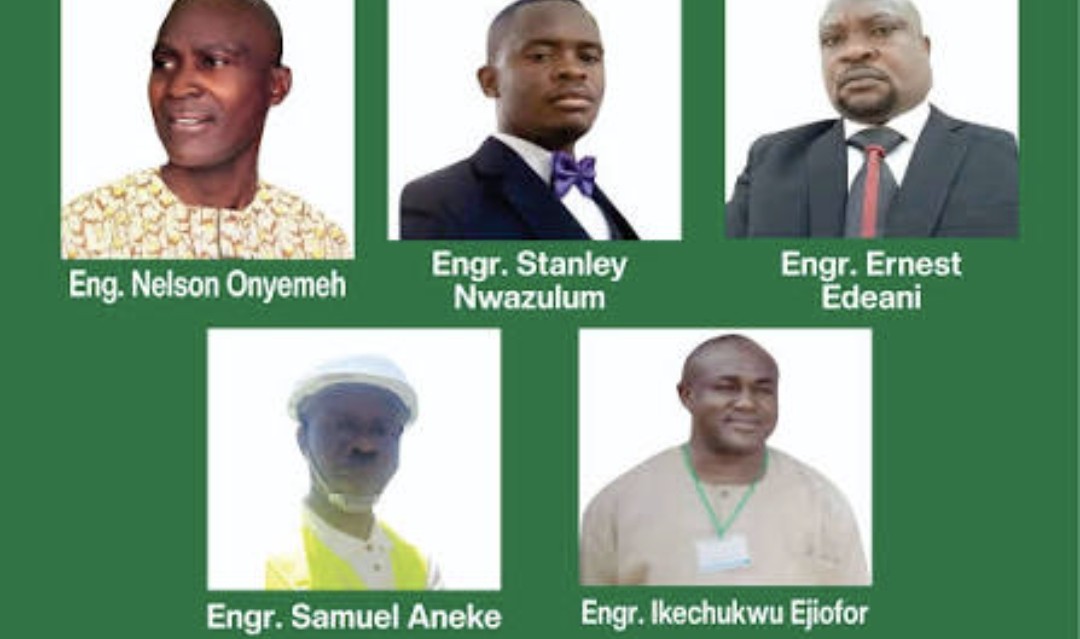
On 3 November 2021, Engr. Nelson Onyemeh, Engr. Ernest Edeani, Engr. Ikechukwu Ejiofor, Engr. Samuel Aneke, and Engr. Stanley Nwazulum left Enugu for Ebonyi State to supervise the construction of the Abakaliki Ring Road under a contract funded by the African Development Bank (AfDB). They never returned.
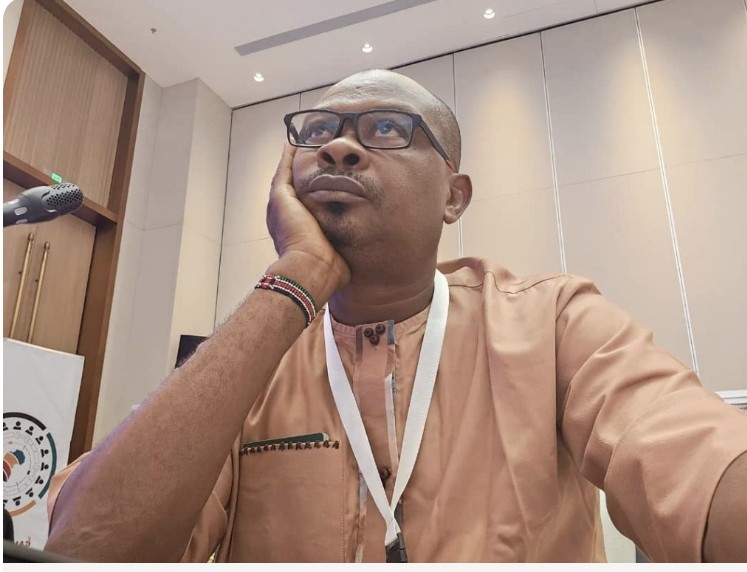
Okey Nwanguma
The engineers were employees of NELAN Consulting Limited, an independent engineering consultancy appointed through an international competitive bidding process to supervise the project in accordance with AfDB standards. Their role was not ceremonial. Independent supervision is central to ensuring that public infrastructure projects meet contractual specifications, maintain quality standards, and protect public resources from abuse.
Their disappearance would have been shocking under any circumstances. But the allegations that preceded it make the case especially disturbing.
According to the families, disagreements had arisen between NELAN and the Ebonyi State Government over project supervision, certification of completed work, and control of payments. They allege that the engineers refused to compromise their professional obligations by certifying work outside the procedures required under the AfDB-financed contract.
These allegations have been denied, and no court has established that they are connected to the disappearance. Yet they provide a context that any serious investigation cannot afford to ignore.
The rule of law demands neither blind acceptance of accusations nor premature dismissal of them. It demands an impartial investigation guided solely by evidence.
Instead, the public has been presented with a series of troubling contradictions.
The engineers disappeared without trace. Government officials reportedly attributed the incident to communal violence. Later, public statements suggested they had been killed based on alleged confessions, even while investigations were reportedly still ongoing. Yet no bodies have been conclusively identified.
Perhaps the most disturbing aspect is the reported DNA evidence. According to the families, skeletal remains presented as belonging to the missing engineers were subjected to independent DNA analysis, which reportedly excluded them as belonging to the victims. One set of remains was reportedly identified as female.
If accurate, such findings raise fundamental questions. What became of the original investigation? Why were contradictory forensic findings not fully explained? What happened to the search for the missing engineers?
These are not political questions. They are questions of justice.
Equally troubling are reports that prosecutions proceeded while the fate of the victims remained uncertain and that the proceedings have since become stalled. Justice delayed is often justice denied—not only for defendants but also for victims and their families.
The wives of the missing engineers have refused to allow the case to disappear into official silence. Their petitions to the President, the National Assembly, the National Human Rights Commission, security agencies, and professional bodies reflect not merely personal grief but an insistence that the Nigerian state fulfil its constitutional obligations.
Their central demand is simple: tell us the truth.
The Constitution guarantees the right to life. International human rights law imposes on governments a positive obligation to conduct prompt, effective, impartial and transparent investigations whenever people disappear under suspicious circumstances. Families also have a right to know the truth about what happened to their loved ones.
These obligations do not expire with time.
Nor should they depend on the political status of those whose actions may come under scrutiny.
It is equally important to emphasize that allegations against any individual, including former Ebonyi State Governor and current Minister of Works, Senator David Umahi, remain allegations unless established through credible evidence and due process. Justice demands accountability, but it also demands fairness. The objective is not to convict people in newspaper headlines or on social media, but to establish the truth through lawful investigation.
Precisely because allegations and counter-allegations have persisted for years without resolution, there is now a compelling case for an independent federal-level review of the investigation. Such a review should involve investigators with no prior involvement in the matter, modern forensic expertise, and transparent public reporting.
Nigeria cannot afford unresolved disappearances involving professionals carrying out public duties on major infrastructure projects. If engineers, auditors, consultants, journalists, lawyers, or civil servants cannot discharge their professional responsibilities without fear, public accountability itself becomes endangered.
This case is therefore about far more than five missing engineers.
It is about whether public institutions inspire confidence or suspicion.
It is about whether forensic evidence is pursued wherever it leads.
It is about whether political influence can overshadow justice.
Above all, it is about whether every Nigerian life carries equal value before the law.
The families have waited for nearly five years. That is far too long.
Justice demands answers.
The rule of law demands accountability.
Nigeria demands the truth.
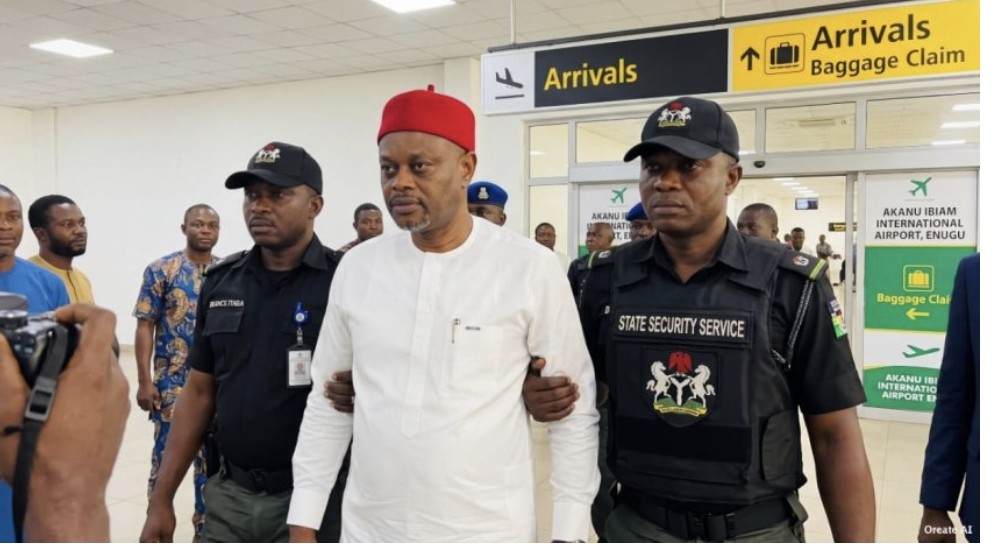
The attention of Enugu State Government has been drawn to a salacious report in the social media, credited to one Igboayaka O.Igboayaka, purportedly of Ohaneze Youth council, wherein he made an obvious, clearly laughable attempt to drag the name and office of Executive Governor of Enugu State, His Excellency, Dr. Peter Ndubuisi Mbah, into odious travails of disgraced former Minister of Science and Technology, Uche NNAJI.
It was obviously a convenient, last ditch effort to deflect attention and liability by dragging the name of the Governor into the mess Uche NNAJI had single-handedly inflicted on himself!
Pray, up until this moment, at what point in this matter did the name of Dr Mbah, feature in all these, whether as complainant or witness?
When did red herring become an acceptable defence against certificate forgery?
On all available records, the Federal Republic of Nigeria is the complainant in the criminal complaint against Uche Nnaji, definitely NOT Peter Mbah!
It is, therefore , absurd and disingenuous to think that accusing a perceived adversary of involvement in one’s unsavoury situation, in itself, would mitigate assured fate, tilt public opinion or hamstring legitimate law enforcement.
It is germain to state categorically here, that Governor Peter Mbah has filed no complaints against Uche NNAJI anywhere, civil or criminal.
Is being a sitting Governor sufficient to make one accountable for all criminal liabilities of any or all his opponents?
It would have been better for cheap hirelings like Igboayaka to explore available legal and/or judicial means under the law, to assist Mr NNAJI prove his innocence swiftly, rather than spending precious time and effort seeking to drag in someone that has nothing whatsoever, to do with his situation.
And threatening a statutory institution like ICPC, to dissuade it from performing it’s lawful duty, because a politically exposed person is involved, would set a dangerous precedent: availing criminal immunity to all manner of fugitives, who ordinarily deserve to be in jail.
It is unhelpful, indeed unnecessary here, going into the merits or demerits of the case against suspect, Uche Nnaji, but it would have made better sense to channel his endeavours to mounting a credible legal defence for self, than procuring charlatans and social media goons, to seek to use blackmail and intimidation to help him escape justice.
The best a well-advised accused person can ask for, is an expeditious, free and fair trial, not immunity !
Uche NNAJI should be anxious and ready for his impending day in court,so he can have the chance to prove his innocence, once and for all…
His Excellency,Governor Peter Mbah, is focused on governance, and has neither interest in, nor time for frivolities.
Signed:
Onyekwere Nwobodo
Special Adviser on Media, to the Executive Governor.
July 8,2026.

-
 News3 days ago
C’RIVER 2027 BUDGET: GOV OTU PRESENTS ₦987.8bn ESTIMATES TO ASSEMBLY
-

 EverydayNews Telescope3 days ago
Enugu East Senate: The Dark Side of Ada Ogbu, NDC Candidate
-
 News2 days ago
Holy Ghost Transformation: How Enugu North Chairman Ibenaku Onoh Ended Years of Traffic Chaos, Roadside Trading
-

 Opinion5 days ago
Christian Chinyeaka Ohaa: THE BUTTERFLY THAT THINKS IT’S A BIRD!
-
 News4 days ago
Tension Mounts in Awka Anglican Diocese as Supervising Bishop Ezeofor Moves to Take Over Wednesday
-
News5 days ago
Awka Anglican Diocese Rejects Primate’s Six-Month Suspension of Archbishop Ibezim, Threatens Exit
-
 EverydayNews Telescope3 days ago
Ebonyi 2027: The People’s Quest For ODII Vs Compromised Stakeholders
-
News5 days ago
We Are Fighting Principalities, Spiritual Forces, Not Flesh and Blood – Archbishop Ibezim