


Politics
Those fighting for Biafra, Oduduwa Republic are irritants –Tanko Yakassai



12 min read
Elder statesman, Alhaji Tanko Yakassai has carpeted those groups and individuals seeking self- determination as well as those agitating for the creation of Biafra and Oduduwa Republic.
In an interview with VINCENT KALU, the 96-year-old founding member of the Arewa Consultative Forum (ACF) described the Oduduwa Republic and Biafra agitators as irritants, even as he insisted that the debate about true and fiscal federalism is absolute nonsense.
Nigeria is troubled on many fronts: – Boko Haram in the North-East, bandits in the Northwest, herders- farmers clashes in most states, kidnapping, armed robbery and other crimes. What gave rise to these?
It is poverty occasioned by unemployment brought about by lack of programmes by the rulers.

Are you satisfied with the manner the government is handling the insecurity in the country?
No, no. I made a recommendation that the government should hold a meeting of experienced security operators – retired military, police, and other security agencies. When this large number of experienced people comes together, they will be able to develop some ideas on how to tackle all the security problems. But if the government feels that they alone have the solution to the problem, they will always be in trouble.
Some people are suggesting granting amnesty to the bandits as a way of halting their criminal activities. Do you agree with that?
Remember that the late President Yar’Adua was advised to speak to the Niger Delta militants. He appointed a minister who made recommendations, which were accepted by both the president and the militants. Then, a meeting took place. Then through the process of the meeting, the militants made their points, and the president accepted parts of their points, like giving them jobs, giving them scholarship overseas for studies, giving them some allowances, etc. He implemented it, and we don’t hear any war by the militants. Get a national meeting of people experienced in security issues to discuss these insecurity problems and come up with ideas. They will definitely give some leeway to government on how to tackle the problem and solve it. Two heads are better than one and ten are better nine.
When you talk of amnesty, it is only an aspect of the problem. If you are going to talk of amnesty, it has happened before with the Niger Delta militants. It was part of the recommendation; not just one item. If you gather the security experts, they will make a number of recommendations and from there the government chooses the ones that will solve the problems and then the conditions will be put to the bandits and if they accept, then the government goes into action.
Besides the security challenges, there are also the Biafra and Oduduwa Republic agitators. Some groups in the South-South have given the international oil companies notice to vacate the region. What does all this portend for the country?
These separatist agitators by whatever name they are called are irritants. Anybody, who doesn’t want to stay in Nigeria or who doesn’t want Nigeria as it is, is free to bring his own ideas or alternatives. Nobody has proffered alternatives to Nigeria. It is simple to make complaints, but what is the way out? People should come up with solutions. When you break up Nigeria, it is the same Nigerians that will retire into some units, and that will not solve the problem. If you know the reality or the background of the problem, then you see how you to solve it. Doctors will diagnose your problem and find out the type of disease you are suffering from and prescribe the medicine that will make you better. I hope there will be more Nigerians who proffer solutions to Nigerian problems than complaining. Complaining is not a positive thing.
How do we arrive at solutions to all these complaints?
I told you right from the beginning that it is poverty, unemployment and what have you. I will tell you my own little thinking. By the time this government assumed office, if they had come up with a programme of power; because the biggest problem in Nigeria which brought about all these is lack of electricity power, which is supposed to jump start the growth of small, medium and large industries. Now we are talking of power in a locality, when you provide modular power, either at local government level, a state level, at zonal level, people will create industries ranging from small to big ones left, right and centre and that will create employment for unemployed people. Employment will bring income to the unemployed and then they begin to attend to their various needs, and then their problems will begin to be solved bit by bit until they are solved fully. We have a country where you can grow any type of crop, and if we have a very good agriculture programme, we will be able to engage millions of people overnight because agriculture is the biggest avenue of engaging the largest number of people. It is a question of a programme by the government and all these programmes will help them. We have our previous National Development Plans, if we can take them and look at the ones we have not tackled and which one we have tackled and we didn’t succeed, gradually we will be sorting out our problems and all these problems will disappear because people are attacking others and robbing them of their things because they don’t have money. Have you seen anybody who is gainfully employed and still engaged in banditry? Most of the bandits are unemployed and if you can get them employment, they stop banditry. There is a lot we can do in this country about this problem; but we have to put heads together.
Talking about putting heads together, some people hold the view that most of the country’s problem will be solved if we restructure the country to true federalism, fiscal federalism, as we had in the First Republic?
There is nothing like true federalism. I attended a seminar way back in 1956 at the University College, Ibadan. It was a seminar on ‘Federalism’. Experts on constitutional federalism all over the world were invited. The record is there. All of them said there was no instance where two constitutions were similar. Every federal constitution is unique. There is nothing like true federalism. Every federalism is true, and it is done according to the constitution of the country where it is adopted.
So, all this talk of fiscal federalism and true federalism is nonsense. Nobody ever produced a paper to say what they are. Because of lack of what to say, some people pick it as a slogan and spread it all over the place and the younger people who didn’t know the problem will pick it and begin to talk about it. There is nothing called true federalism because every federalism is true federalism to the people that adopted the system.
Nigeria federalism is true to our people. We started with three regions and then an additional region, the Mid West. Then Gowon created 12 states and people said it was not enough and agitated for more and we went to 19 and 21 until we are now 36. Now they are saying we should go back to three regions. I hope when we go back to three regions people will stop agitating for more states. South-East and South-South should all be merged as one region, the entire South-West should merge as one region and the entire North becomes one region. The condition should be that once we go there, it is the end of agitations for more regions or states.
What they suggest is that even if the states are the federating units, that the centre is over-concentrated with power. They want the way it was in the First Republic where most of the items on the Exclusive List are moved to the Concurrent List?
Like what in the Exclusive List?
Education, Police, Prison, etc.
Education in the First Republic wasn’t exclusive. Police is excusive, but education is not, as you have state universities and federal universities. You have state colleges as well as federal colleges.
If education is not on the Exclusive List, why are states running the educational system, the curricular, etc based on federal government directives?
Who stopped them from changing the system and adopting theirs? Each state has its own legislature as well as executive council. Each state has elected governors, whose functions are defined by the constitution. However, you cannot exclude the federal government from any sector, but you can expand and allow state to participate in it. Definitely, you cannot deny the federal government because it is the government.
On the police, we started with the Native Authority Police in the North, State Police in the West, and people cried against it and I was a victim way back in 1953. Because of the way the local police was being run, everybody was crying. The military at the time of Gowon decided to merge the police to have a single police for Nigeria.
Those who are asking for Regional or State Police are only looking for an opportunity to recruit their party members. The day you create state or local police is the day you end democracy in Nigeria because they will recruit their party members into the police and they will not allow any opposition to exist. We have seen it in practical terms today. No opposition can win election conducted by a State Electoral Commission. Tell me where opposition party won majority in local government election conducted by state electoral commission. The moment you create a state or local government police, this is what is going to happen. Everybody will be force to belong to the party in power in the state. How many policemen did we have when we had three or four regions? What was the revenue allocated to policing at that time? How many policemen do we have now in the country? What is the percentage of the revenue that you are now allocating to policing in Nigeria? Our problem is how to increase the number of policemen in Nigeria. We are not increasing the number of policemen corresponding with the number of problems of security in the country. I will never support State Police or Local Government Police because that will be the end of democracy in Nigeria. I want democracy; there is no system of government in the world today that is accepted to the people of the world other than democracy. Anything that will erode it is a taboo and we shouldn’t attempt that. State police will kill democracy in Nigeria or any country that adopted it. Don’t let us kill democracy because without it we cannot develop.
Still on federalism, during the First Republic, each region produced and gave the centre. But now every state produces and sends to the centre and the centre dishes out to them. At that time the revenue allocation formulae was based on the Raisman Commission which stipulated 50 per cent to the producing region and 50 per cent to the centre. That is part of the restructuring they are talking about.
It was the time the centre was not producing anything. Now the bulk of the national revenue is coming through the centre because of oil. This is the reason you get from the centre, but that doesn’t stop all this huge amount of money the states are spending on building houses and so on. If they had used it in developing agriculture; if they had devoted them to small-scale industries, it would have been a different thing altogether. Go to every state, check their budget, see how much is spent to run the office of the governor, the office of the secretary to the government, commissioners, permanent secretaries and bureaucracy. Records show that bureaucracy in Nigeria consumes about 70 per cent of our revenue and they are only left with 30 per cent. In those times they are talking about, it was not the case. Now the main revenue is oil and everybody is thinking of how to get his own share of the oil. The federal government before didn’t have much money as it is getting today. We have two or three major sources of revenue – oil and tax. Now, all of them you have 13 per cent derivation. From the money you collected from oil, you give 13 per cent to the states generating the oil. How many states that are taking 13 per cent are using it to generate employment for the people? What they do is to build big mansion; they are not addressing problem of unemployment. This is what we need.
President Buhari, before he jetted out on Tuesday, directed the security chiefs to identify where the bandits are and go after them. Why is it that the security chiefs claim not to know where the bandits are, but somebody like Sheikh Gumi knows where they are and have met with them?
Go to Buhari media advisers and ask them this question. I have nothing to do with the government; I’m a layman like you. I’m not a government man and I have nothing to do with the government, so I cannot answer this question. You have to direct this question to the government.
Or to Sheikh Gumi himself?
Gumi was invited.
Was he invited or maybe he took the initiative as his own way of finding solutions to the problem?
He was invited. Are you not reading the papers? He was invited by the governor and they decided on where and where to go and he provided security and he went and met the people and so on and so forth. He was invited.
It was Zamfara State that he first of all went?
Yes. He was received by the governor. He didn’t go there on his own. They provided transportation, security for him, accommodation, etc. You better find out.
2023 is fast approaching, and the tempo of the debate over where the presidency should come from is high. Some argue that power should remain in the North; the Southerners say it must rotate to the South. In the South, the South-East says, if there is equity, justice and fair play. As one of the few remaining titans of the Nigeria project, what is your position on this thorny issue?
We have a multi-party system in this country. The APC zoned the presidency to the North, now they say they are going to change it. When they decide where to zone it to, the PDP is not bound by that decision, so also other parties. Let them do it; it is their own business, but I will tell you nothing will change unless we change the whole system. The political parties we have in this country today are not committed to any programme. They hire intellectuals to write manifestoes for them. The manifestoes in their constitution didn’t emanate from the need of the people or the situation on the ground. In our days, we would appoint some members of our party, provide funds to them to go round the country and find out what were the problems confronting people; problems bedevilling the country. They would come back and itemise them. We would appoint people who would go through those programmes and make recommendations on how the party was going to tackle the programmes. We put that thinking into manifestoes to show that we know the problems and these are how we are going to solve them. None of the political parties that we have in this country went round the country or appointed people specifically to find out the problem in every part of the country and come up with a national policy, and how the party should tackle those problems. Nobody is doing it. Members of a party looking for power are looking for opportunity to make money. Look at people contesting election, look at their position before contesting election; go to their houses and see the type of cars they are driving. Then a year after the election, go to their houses, look at the cars they are now driving and their houses. Are they the same as before?
So, anywhere the presidency comes from is immaterial now?
Nothing will change unless the parties have programmes, not programmes that editors write in good English for them, but programmes after finding out what is bedevilling the country. Let them get experts to draw programmes on how to tackle the problems and solve them. In England or even America, President Biden during his electioneering campaigns, he identified problems and promised what he would do to solve them and that is what he is going about doing. We don’t do that in this country. In 2015, APC made three promises. One of them was to tackle insurgency in the country. Go and see how many of them the party has been able to solve within the period it has been in power for six years.

The Ebonyi State Government has effectively restricted political campaigns and gatherings in Ezza South Local Government Area, directing political parties and groups to obtain prior approval from the council chairman before holding such events.
The directive, issued by the Chairman of Ezza South Local Government Area, Hon. Chinedu Mkpuma, follows a recent security breach in Amaezekwe community amid growing concerns over political violence ahead of the 2027 general elections.
In a statement made available to journalists in Abakaliki, Mkpuma expressed dismay over the security situation and said the measure was necessary to protect lives and property, maintain public order and prevent further security breaches.
He acknowledged the constitutional rights of citizens to freedom of association and peaceful assembly but warned that political gatherings in the local government area must henceforth receive prior approval from his office.
The chairman added that violations of the directive would attract appropriate action in accordance with the law.
Meanwhile, the Labour Party governorship candidate, Eze Oko, has condemned the reported killings and alleged attacks on opposition parties in the state, calling on political leaders to end violence and intimidation.
Oko questioned why opposition members were allegedly being targeted and urged youths to resist attempts by politicians to use them as instruments of violence.
He called for a level playing field for all political parties and candidates, insisting that political competition should be based on ideas, manifestos and records of performance rather than violence.
The LP candidate also cautioned political leaders against inflammatory statements capable of fuelling tension during the electioneering period.
He urged candidates seeking re-election to allow their achievements to speak for them instead of allegedly engaging political thugs to intimidate opponents.
Oko further appealed to youths to reject political thuggery and violence, while extending his condolences to the families of those reportedly killed in the incident.
The development comes as political activities begin to gather momentum ahead of the 2027 general elections, with renewed calls for security agencies to investigate reported attacks and ensure that all political parties can operate without intimidation.
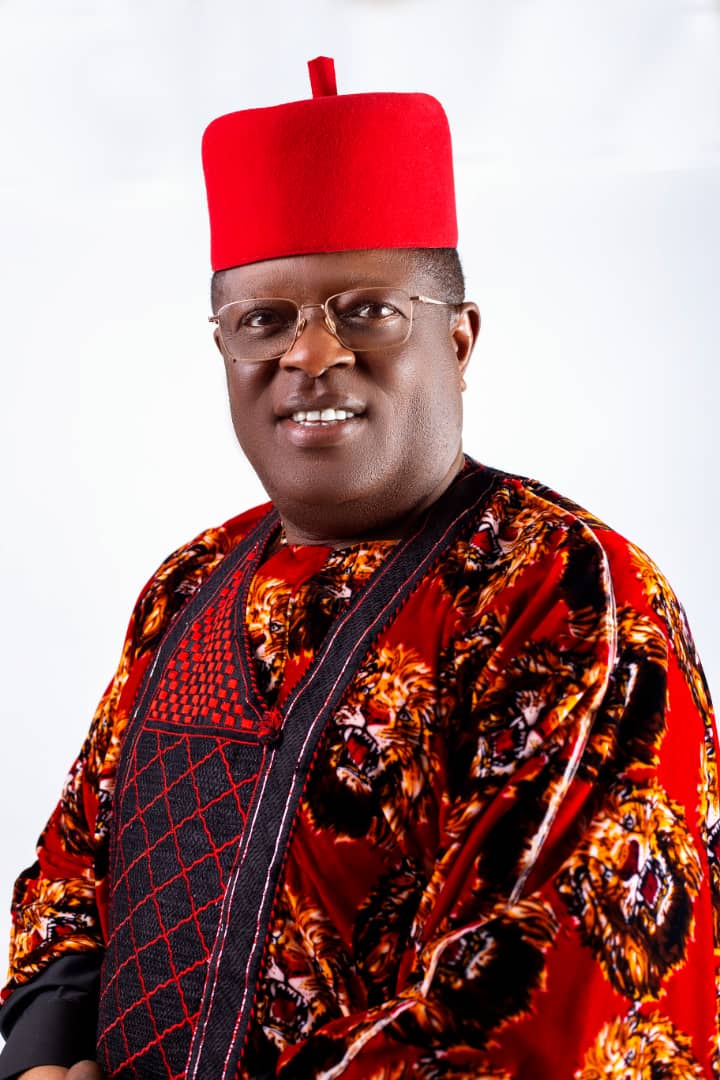
The Minister of Works and former Governor of Ebonyi State, Senator David Umahi, has declared that 2027 is not the South-East’s turn to produce Nigeria’s president, insisting that former Anambra State Governor, Peter Obi, is not the region’s best presidential candidate.
Umahi, who made the declaration during an interview with ARISE News on Friday, defended South-East political leaders supporting President Bola Tinubu’s re-election bid, maintaining that their political choices should not be interpreted as betrayal of the Igbo presidential ambition.
“Peter Obi is not the best of our finest in South East. He’s not the best, he can never be the best,” Umahi declared.
The minister faulted Obi’s approach to the 2023 presidential election, alleging that he failed to adequately consult governors and other influential political stakeholders in the South-East before pursuing his ambition.
“You cannot play politics in South East without consulting people like us,” he maintained.
According to Umahi, any presidential aspirant seeking to represent the collective aspirations of the region must first engage critical stakeholders and build the necessary political consensus.
He argued that Obi’s performance in the 2023 presidential election did not automatically make him the South-East’s most qualified presidential candidate, stressing that the region boasts several other capable political figures.
Umahi also questioned why Anambra State should be given preferential consideration whenever the opportunity arises for the South-East to produce Nigeria’s president.
Citing Nigeria’s first President, Dr Nnamdi Azikiwe, who hailed from the area now constituting Anambra State, the minister maintained that Ebonyi, Enugu, Abia and Imo states equally deserve consideration in future presidential arrangements.
On the growing support for Tinubu among South-East political leaders ahead of 2027, Umahi dismissed allegations that those backing the president had abandoned the region’s political interests.
He insisted that the South-East’s path to the presidency lies in strategic negotiations, consensus-building and alliances with other geopolitical zones rather than presenting loyalty to Obi as the ultimate test of commitment to the Igbo cause.
The former Ebonyi governor had earlier challenged comparisons between himself and Obi during a political engagement in Benin City in September, declaring that he saw no area in which the former Anambra governor was superior to him.
While expressing confidence that the South-East would eventually produce Nigeria’s president, Umahi maintained that the region’s opportunity had not yet arrived, insisting that “it is not yet our turn.”
Politics
2027: APGA, APC Set for Joint Meeting in Anambra to Mobilise Support for Tinubu’s Re-election


By Okey Maduforo, Awka
The All Progressives Grand Alliance (APGA) and the All Progressives Congress (APC) in Anambra State have scheduled a joint meeting for November 1 to strengthen collaboration and mobilise support for President Bola Ahmed Tinubu’s re-election bid in 2027.
The planned meeting comes amid claims that the two parties are not working together in the state to advance Tinubu’s second-term ambition.
The meeting, convened by Anambra State Governor, Professor Chukwuma Charles Soludo, in his capacity as the state coordinator for Tinubu’s re-election campaign, is expected to bring together leaders and members of both parties, including serving and former political officeholders and members of their respective national and state working committees.
The APC State Chairman, Senator Emma Anosike, also confirmed the meeting, telling reporters that he would lead members of his party to attend the gathering.
The development is expected to counter claims of disunity between the two parties over the president’s re-election project in Anambra State.
According to an announcement dated October 22 and signed by Dr Ben Nwankwo, Chief of Staff to the Governor and Coordinator of the Secretariat for the Presidential Campaign Council in Anambra State, the meeting will take place at the International Convention Centre, Awka.
Proceedings are scheduled to begin at 1 p.m., while accreditation will commence at 10 a.m. Participants have been directed to arrive early, as the doors will be closed once the meeting begins.
Attendance is restricted to duly accredited invitees drawn from designated categories of political officeholders, party officials and other stakeholders who remain members of APGA or APC.
Those invited include serving and former governors and deputy governors of Anambra State; members of the national, zonal and state working committees of both parties; and serving and former members of the National and State Assemblies from the state.
All APGA and APC candidates for the 2027 general elections who are members of either party have also been invited.
Other participants expected at the meeting include serving and former political appointees in the state and federal governments, members of the PBAT/APC Presidential Campaign Council from Anambra State, as well as serving and former elected local government chairmen, mayors and transition committee chairmen affiliated with either party.
The invitation list also covers current and former members of the boards of trustees of APGA and APC from Anambra State, coordinators of Tinubu support groups, and serving local government chairmen, secretaries, women leaders and youth leaders of the two parties.
Elected councillors, ward chairmen of APGA and APC, as well as members of the state working committees of the Accord Party and the Peoples Democratic Party (PDP), are also listed among the invitees.
The announcement further stated that selected stakeholders nominated by the state chairmen of APGA and APC, alongside individuals nominated by the state coordinator of the Presidential Campaign Council, would attend the meeting.
It explained that the notice was intended to ensure that all eligible stakeholders were informed of the gathering, adding that anyone who falls within the specified categories would be deemed invited.
The joint meeting is expected to provide a platform for the two parties to coordinate their political activities in Anambra State ahead of the 2027 presidential election.
Strengthen the headline and opening
Trim the lengthy invitation list
Make the report more neutral
…Unveils 17 Buses for Grassroots Mobilisation
…Expresses Confidence in Tinubu, Mbah’s Victory
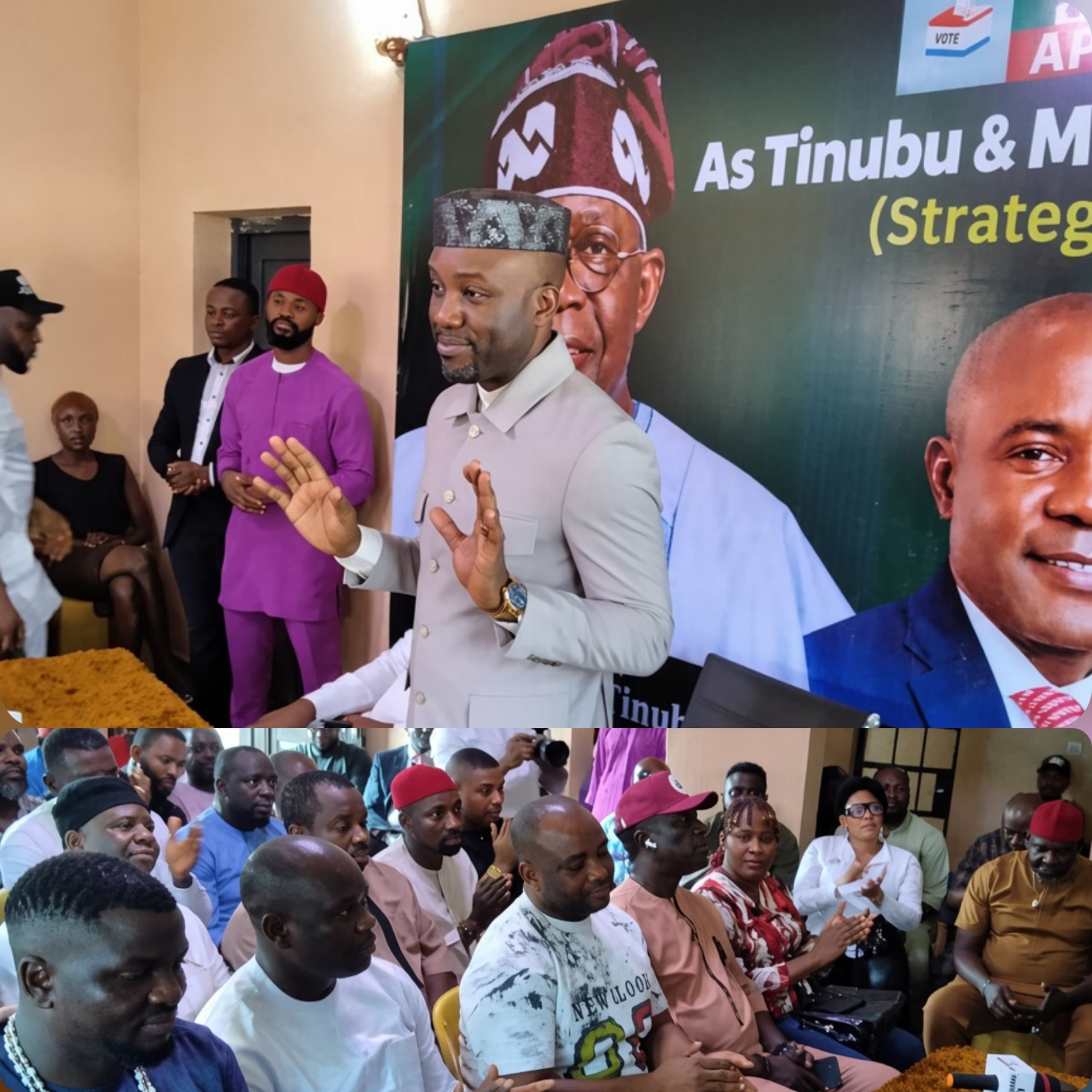
Nigeria’s Minister of Innovation, Science and Technology, Dr. Kingsley Tochukwu Udeh, SAN, is set to unveil his grassroots mobilisation and political support group, As Tinubu and Mbah Move (ATM), ahead of the 2027 general elections.
The minister has also expressed confidence in the re-election of President Bola Tinubu and Enugu State Governor Peter Mbah.
Udeh disclosed this on Wednesday, October 21, 2026, during a strategy meeting at the group’s secretariat, where he unveiled 17 branded Toyota buses to support the movement’s grassroots mobilisation ahead of the elections.
Addressing members, the Senior Advocate of Nigeria urged them to work towards securing victory for the All Progressives Congress (APC), particularly in the presidential and governorship elections.
He said the buses were provided to facilitate mobilisation and strengthen the movement’s presence across communities, wards and polling units.
Expressing confidence in the electoral prospects of Tinubu and Mbah, Udeh said the movement must distinguish itself from political groups that generate publicity without translating their activities into electoral gains.
“I want this group to be different so that it will not end in noise-making. The aim is to make APC win from top to bottom, especially the President and the Governor,” he said.
He charged members to take responsibility for delivering their respective polling units and wards, stressing that grassroots engagement remained crucial to electoral success.
“Politics is local. Everybody should work to ensure that APC wins in their respective wards and polling units,” he added.
Udeh explained that ATM was established to provide members with a platform to connect with political leaders and contribute to the activities of the party.
According to him, active participation in grassroots mobilisation could also create opportunities for members to engage government officials and seek assistance in addressing challenges facing their communities.
The minister, who described himself as not being a career politician, said integrity and the fulfilment of commitments were central to his dealings with people.
He also pledged to spend more time in the South-East during the campaign period to coordinate the movement’s activities.
Earlier, the ATM Coordinator, Igboke Onyebuchi, said the meeting was convened to establish and ratify the movement’s structures ahead of the planned commencement of local government-level mobilisation in November.
Onyebuchi described ATM as a political movement rather than an ordinary group, explaining that some members were motivated by their desire to support Governor Mbah and acknowledge his role in Udeh’s ministerial appointment.
“We are doing this to support the governor for giving such a smart young person the opportunity to be a minister. This has not happened in recent times,” he said.
He explained that the movement comprised community mobilisers, union leaders and individuals from the civic space, many of whom were not career politicians but were willing to contribute to the political process.
According to him, ATM plans to adopt an innovative, community-based approach to mobilisation, focusing on reaching rural residents and strengthening the APC’s existing grassroots structures.
He added that a community map had been developed to guide the movement’s engagement with residents.
Onyebuchi thanked Udeh for providing members with a platform to participate in the political process, expressing hope that the movement would encourage greater political opportunities for young people with strong professional and intellectual backgrounds.
Politics
One Feared Dead, Several Injured as Thugs Attack Ebonyi NDC Assembly Candidate, Burn Campaign Vehicle

…Ebonyi Democratic Movement Blames Police Commissioner, Demands Immediate Redeployment
The campaign convoy of the National Democratic Congress (NDC) candidate for Ezza South State Constituency in the Ebonyi State House of Assembly, Barr. Rollins Offia Nwali, has reportedly come under armed attack at two separate locations in Amaezekwe Community, Ezza South Local Government Area of Ebonyi State, leaving one person feared dead and several others injured.
The attackers, suspected to be political thugs, also reportedly set ablaze a 2024 Toyota Hilux vehicle belonging to the campaign convoy.
According to preliminary accounts, trouble began when Nwali, who was scheduled to meet with his polling unit canvassers, received information that some government officials allegedly accompanied by armed hoodlums had stormed the meeting venue.
The officials reportedly warned that they had received orders from above to prevent opposition candidates from holding campaign activities during the swearing-in ceremonies of local government chairmen in the state.
Sensing danger, Nwali reportedly directed his convoy to turn back a few metres from the venue.
However, suspected political thugs riding motorcycles and tricycles allegedly opened fire on the convoy, resulting in an exchange of gunfire involving security personnel, including operatives of the Department of State Services (DSS) attached to the candidate.
About five persons reportedly sustained gunshot injuries, while one person was feared killed during the confrontation.
The casualty figures could not be independently verified.
In another attack a few metres away, a separate group of suspected hoodlums, reportedly operating in a Mercedes-Benz vehicle and tricycles, allegedly intercepted the retreating convoy, opened fire and set one of its Toyota Hilux vehicles ablaze.
A state government appointee was accused of leading the second group of attackers.
Reacting to the development, Chairman of the Ebonyi Democratic Movement, Chief Emmanuel Igwe Chidi, condemned the incident and accused the Ebonyi State Commissioner of Police of failing to address what he described as recurring political violence against opposition figures in the state.
Igwe alleged that the failure of the police to prosecute individuals previously implicated in electoral violence, despite several petitions submitted to the state command and the Inspector-General of Police, had emboldened suspected political thugs.
He recalled that the movement had earlier organised a nationwide protest over alleged persecution of opposition members and the deteriorating security situation in Ebonyi State.
The EBM chairman consequently called on the Inspector-General of Police to immediately redeploy the Ebonyi State Commissioner of Police, arguing that the measure had become necessary to restore public confidence in the neutrality of the police ahead of the 2027 general elections.
He also demanded a comprehensive investigation into the Amaezekwe attacks, insisting that all those found culpable must be identified and prosecuted irrespective of their political affiliations or positions in government.
Igwe further urged security agencies to guarantee adequate protection for opposition candidates and their supporters, stressing that no government official or political interest has the authority to prevent citizens from exercising their constitutional rights to political participation.
He warned that democracy would be endangered if political competition was allowed to degenerate into intimidation, gunfire and destruction of property rather than being determined through the ballot box.
The allegations against government officials and the police, as well as the circumstances surrounding the reported death, remain unverified. The accounts provided did not include responses from the Ebonyi State Government or the Police Command.
Separate reported facts from allegations
Tighten the casualty and attack sequence
Use a more legally cautious headline

-
 News3 days ago
C’RIVER 2027 BUDGET: GOV OTU PRESENTS ₦987.8bn ESTIMATES TO ASSEMBLY
-

 EverydayNews Telescope4 days ago
Enugu East Senate: The Dark Side of Ada Ogbu, NDC Candidate
-
 News3 days ago
Holy Ghost Transformation: How Enugu North Chairman Ibenaku Onoh Ended Years of Traffic Chaos, Roadside Trading
-
 News5 days ago
Tension Mounts in Awka Anglican Diocese as Supervising Bishop Ezeofor Moves to Take Over Wednesday
-
 EverydayNews Telescope4 days ago
Ebonyi 2027: The People’s Quest For ODII Vs Compromised Stakeholders
-
Politics2 days ago
One Feared Dead, Several Injured as Thugs Attack Ebonyi NDC Assembly Candidate, Burn Campaign Vehicle
-
 News4 days ago
Cross River Assembly Passes State Police Bill with 22 Votes
-
 Politics4 days ago
2027: Tinubu Has No Hand in Alleged Assassination Plot Against Atiku – APC