





Crime
Tension in North As Resurgent terror attacks unsettle Residents



Boko Haram, bandits and armed herders were said to have sacked no fewer than 250 communities in the region, with 6,000 displaced residents reported to be sleeping in religious houses in Plateau State.
On Tuesday, Governor Caleb Mutfwang of Plateau State stated that hoodlums had taken over 64 communities in the state.
Gunmen had attacked communities in Hurti, Josho, Daffo, and others in Manguna, Bokkos Local Government Area of the state on April 2, killing at least 52 people.
No fewer than 383 houses were burnt and 1,800 displaced.

Similarly, the Borno State Governor, Babagana Zulum, expressed concern over the growing influence of Boko Haram in his state.
Zulum, during a security meeting at the Government House on Thursday, said, “Renewed Boko Haram attacks and kidnappings in many communities daily without confrontation signal that Borno State is losing ground.”
The Shehu of Borno, Abubakar el-Kanemi, noted that Abadam, Marte and Guzamala LGAs were already under the control of the insurgents.
Governor Hyacinth Alia of Benue State in January 2025 said over 1,000 households were displaced in a series of attacks on communities across the state from December 29, 2024, to January 9, 2025.
No fewer than 100 communities spread across 26 council wards in five LGAs of the state were alleged to have been occupied by bandits.
The Chairman of Agatu LGA, Melvin Ejeh, who spoke to our correspondent, claimed that the hoodlums hoisted flags after sacking the communities.
The leader of the three socio-cultural groups in the state (Mdzou U Tiv, Ochi’Kidoma and Omn’Igede), Iorbee Ihagh, a retired Comptroller of Prisons, decried the invasion of the state by hoodlums, adding that many communities were still under their control.
Ihagh, who also doubles as the President General of Mdzou U Tiv Worldwide, said, “The situation in Moon council ward is pathetic. Every public institution in the area, including schools, health centres and market places, was destroyed and many houses burnt. Personally, my house in the village was burnt. Nobody can access any community there. When my wife died last year, I couldn’t take her corpse home because herdsmen had taken over the communities.”
252 attacks on Borno in five months – Ndume
The Senator representing Borno South Senatorial District, Ali Ndume, said between November 2024 and now, there had been more than 252 attacks in Borno State alone.
Ndume stated this while appearing on Politics Today on Channels Television on Friday.
While confirming that three councils in the state were under the control of Boko Haram, he berated the Minister of Information and National Orientation, Mohammed Idris, for calling on Nigerians to ignore Zulum’s claim that Borno was losing ground to the insurgents.
Ndume attributed the renewed attacks by Boko Haram insurgents to inadequate deployment of troops in the state and lack of ammunition.
The vocal senator insisted that insecurity had remained stagnant, contrary to claims by President Bola Tinubu’s administration that things had improved.
He said, “From November last year to date, there were over 252 attacks in Borno State. We have lost more than 100 soldiers; we have lost nearly 300 civilians even though our soldiers gallantly killed over 800 of the terrorists within this period.
“No, we cannot say things are getting better, we cannot also say things are getting worse. We are in a stagnated situation because when you say we are getting it right today, tomorrow you hear another thing just like what happened in Plateau State last week. Lukarawa came in Sokoto, Kebbi and attacked two days ago, the situation is the same thing in Katsina.”
“The President should concentrate on three things — security, welfare of citizens and economy. If it is possible, he should declare a state of emergency in these three areas.”
We sleep under mango trees – IDPs
Many displaced persons in Agagbe IDP camp in Gwer West LGA of Benue State, lamented that they were ‘living in hell on earth.’
A displaced person, Terna Ibaah, said people were registering in the camp daily due to frequent attacks on communities.
He said the influx of displaced persons into the camp had overstretched the capacity of the facility.
“There are five locations in Agagbe camp, but what we are experiencing now is overpopulation, resulting in many people sleeping under mango trees. Little children who do not have any shelter to lay their heads sleep on their wrappers because they don’t have sleeping mats or mattresses,” he added.
Also speaking, a female IDP, who identified herself as Ugba-Kpa-Nyir, stated that she and her three kids, aged three, five, and seven, went to the camp three weeks ago after armed herders ransacked her village and killed seven people, including her husband.
Speaking in her local language, Nyir said, “We left our village with nothing after armed herders attacked on the first Saturday of March. Seven people were killed, including my husband.
“The whole community has been taken over by armed herders. At the time we arrived in the camp, there was nothing. I had only my three children and we rely on old inmates to survive.”
‘Over 6,000 find shelter in Plateau churches’
Bandit attacks have also ravaged many communities in Plateau State, leaving a trail of death, destruction, and displacement in their wake.
A visit to Bokkos LGA where attacks occurred on Tuesday, observed that the communities had been deserted.
Many survivors had also fled their homes, seeking refuge in nearby towns or IDP camps.
The Chairman of the Community Peace Observers in Bokkos LGA, Kefas Mallai, revealed that about 2,000 IDPs were staying at St. Thomas Catholic Church, including about 780 displaced residents from Daffo community.
According to indigenes, about 4,000 displaced persons were camping at the ECWA Church in Hurti community.
“Many of the IDPs are sleeping on bare floors. We have more than 5,000 people taking refuge in different camps in Bokkos alone. That is the situation following the recent attacks carried out by bandits in some communities, which left over 50 persons dead.
“The people are facing the challenge of food. They need food to eat, and they need their houses repaired because they’ve been destroyed. Also, their farm implements and foodstuffs have been set ablaze by the bandits.
“We have some communities like Josho that have been completely taken over by the Fulani. Ganda community is facing a similar situation,” Mallai added.
Our correspondents gathered that apart from Bokkos, bandits had also occupied many communities in neighbouring local government areas, including Barkin Ladi and Riyom.
The National President of the Berom Youth Moulders Association, Solomon Mwantiri, attributed the attacks to the control of rich natural and mineral resources in the affected areas.
Communities under bandit control in Sokoto
Many communities, especially in the eastern senatorial zone of Sokoto State, were also reported to have fallen under the control of bandits.
Our correspondent learnt that most of the communities were in Isa, Sabon Birni, Goronyo, Tangaza, Rabah, Gada, Illela, and Wurno LGAs of the state.
A security expert, Mahmud Abdullahi, told Saturday PUNCH that the majority of the bandits controlling the communities were linked to wanted terrorist kingpin, Bello Turji.
He said the bandits imposed taxes on their hosts before allowing access to farms and livestock.
“In many instances, you can only make use of your farm when permitted to do so — not on your terms or conditions.
“I know of a community where these people determine when and how the market should be operated. You can only go to the market on days they approve; otherwise, you will pay dearly for it. Most of these communities are known to the government, but they won’t talk about it, and they will also harass you if you try to,” he stated.
Another security expert, who spoke on condition of anonymity, confirmed the presence of bandits in some communities in the Sabon Birni LGA of the state.
“I know of some communities in that area where they still collect taxes from the people before allowing them access to farms and other activities. It is disturbing and worrisome that despite all the outcry, the government has not found a lasting solution to such problems,” he stated.
He revealed that a highly anticipated peace negotiation between four rival bandit groups failed, raising fears of continued violence and instability in the region.
The expert added, “The meeting, held in the remote village of Usu in Birnin Magaji LGA of Katsina State, brought together representatives of notorious armed leaders, including Gwaska Dan Karami, Alhaji Shingi, and Bello Turji.
“The talks were meant to ease internal conflicts and end longstanding rivalries among the groups. However, tension quickly flared as demands were tabled. Alhaji Shingi’s representatives accused Gwaska Dan Karami of encroaching on their territory and threatened retaliation. They also demanded the return of stolen cattle belonging to a resident of Safana LGA in Katsina State.
“Another contentious issue involved weapons allegedly seized from the late Sani Dangote. Gwaska Dan Karami was urged to return the guns and compensate Dangote’s family by purchasing new firearms.
“Despite initial hopes, the meeting unravelled when Bello Turji’s group refused to engage in the negotiations altogether. Turji’s faction, instead vowed to continue targeting Gwaska Dan Karami, declaring their intent to hunt him down.”
He said the collapse of the talks sparked renewed fears of escalating violence in parts of Zamfara, Sokoto, Katsina, and neighbouring states already grappling with insecurity.
How bandits replace imams, flog residents – Chairman’s aide
However, the Special Adviser on Security Matters to the Chairman of Tangaza LGA, Gazali Raka, denied the presence of bandits in the area.
But he admitted that the council had a growing presence of Lakurawa terrorists.
Raka said the Lakurawa agents, unlike before when they operated at night, now carry out their activities in broad daylight, regardless of the presence of security personnel.
He said, “We don’t have bandits anymore in Tangaza Local Government, and no community here is under their control. But we have more presence of Lakurawa.
“Some of the big names among the bandits have now switched to Lakurawa. We have people like Mezabo and Charambe, who were once arrested by the DSS. Though he was charged to court, he was later released. He has now become one of the strongest Lakurawa agents. We also have Alela, another top member of Lakurawa here in Tangaza.
“Do you know that they now operate even during the day, right in town? They harass people in most communities. When you go to Ruwa-Wuri, Masalaci, among other communities, they move freely, and soldiers are doing nothing to stop them.
“If they see anyone playing music on their phone or in their shop, they will destroy the device and give that person 50 strokes of the cane. They go to any mosque and summon the imam for questioning. If he fails to answer, he gets flogged and replaced.
“The most annoying part is that only the Nigerian Police Force is helping us. They come out both during the day and at night — unlike the soldiers, who have stopped operating at night,” he stated.
But the lawmaker representing Sabon Birnin West in the state House of Assembly, Almustapha Boza, confirmed that bandits had taken control of some communities in Isa LGA.
He promised to provide details but had not responded as of the time of filing this report.
When contacted, the Special Adviser on Security Matters to the Sokoto State Governor, Col. Ahmed Usman (retd.), denied knowledge of any community being under the control of bandits.
While admitting there were security challenges, especially in the eastern senatorial district of the state, he said security agents, in conjunction with the state Community Guard Corps, were working to tackle the problem.

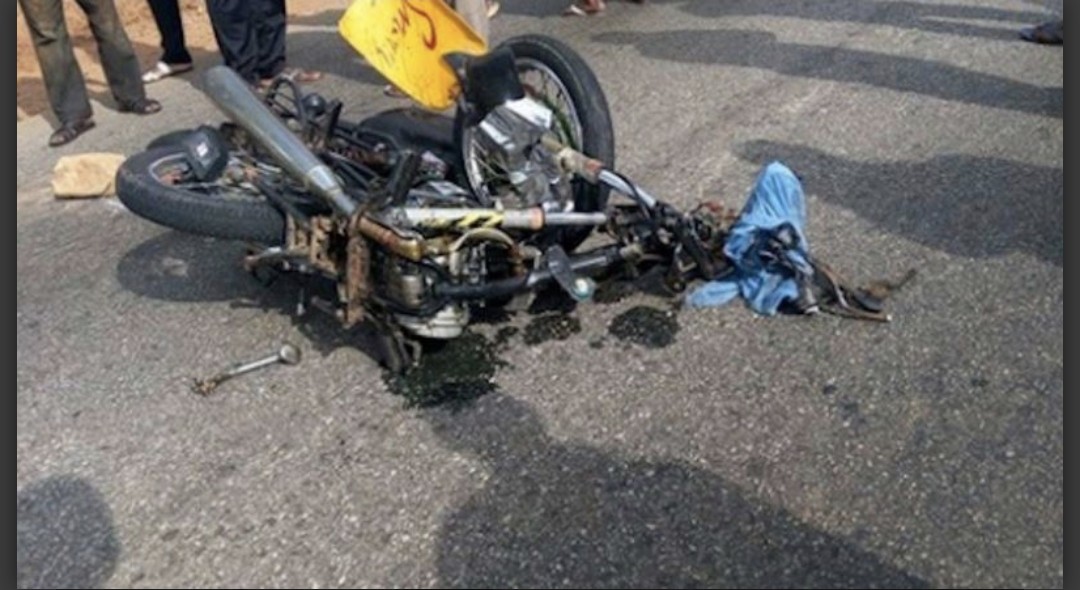
A 25-year-old amateur boxer, Kehinde Asimiyu, popularly known as KBlaq, has been stabbed to death following a disagreement over transport fare involving a commercial motorcyclist in Oyo State.
The incident occurred at Olodo Garage in Lagelu Local Government Area of the state.
The Oyo State Police Command confirmed the killing, announcing the arrest of two suspects in connection with the incident.
The Police Public Relations Officer, DSP Olayinka Ayanlade, said in a statement that the command received a report of the incident on November 1, 2026.
According to the police, the deceased was allegedly stabbed with a broken bottle by a suspect identified as Taiwo Babarinde during the disagreement.
“Following receipt of the report, police operatives, accompanied by a patrol team, immediately mobilised to the scene, while the victim was rushed to Academy Hospital, Texaco, Iwo Road, Ibadan, where he was confirmed dead by the doctor on duty,” the statement said.
The police added that the deceased’s remains were subsequently deposited at Adejare Embalming Centre for preservation, while photographs were taken as part of the preliminary investigation.
Two suspects, identified as Taiwo Babarinde, who allegedly inflicted the fatal injury, and Ishola Semiu, who is suspected of involvement in the incident, have been arrested.
“Both suspects are currently in police custody, while the case has been transferred to the State Criminal Investigation Department (SCID), Iyaganku, Ibadan, for comprehensive investigation,” Ayanlade stated.
The police said investigations were ongoing to establish the circumstances surrounding the killing.
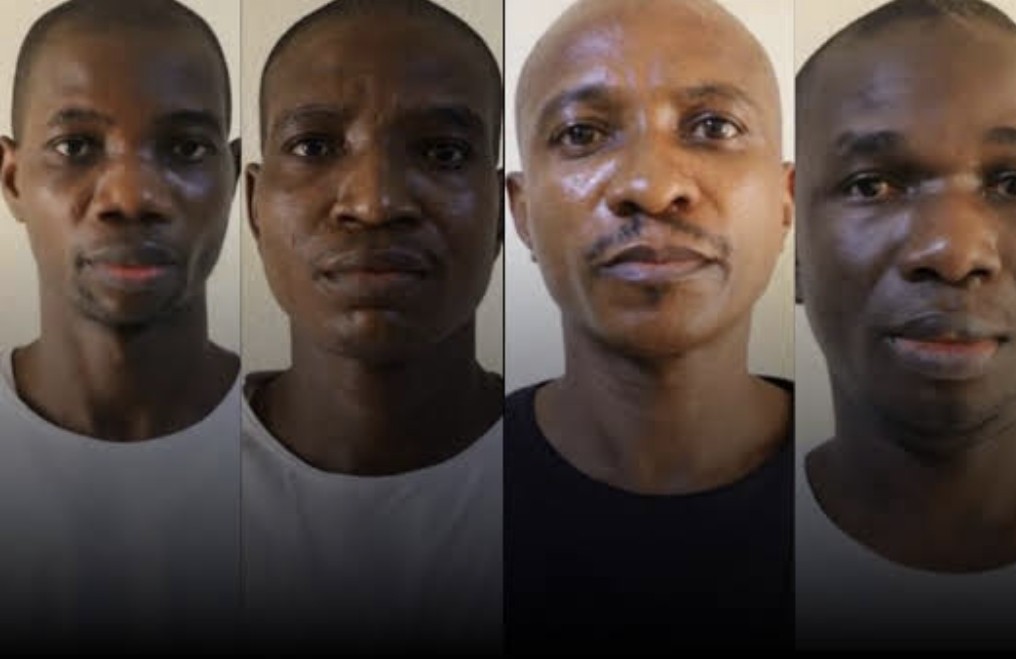
The Department of State Services (DSS) has released four men arrested over suspected links to the Indigenous People of Biafra (IPOB) and awarded them a total of N20 million in compensation after investigations cleared them of the allegations.
The four men described their release as the happiest day of their lives after spending about four years in DSS custody.
The Director-General of the DSS, Oluwatosin Adeola Ajayi, reportedly ordered their release and the payment of N5 million to each of them following their clearance.
The beneficiaries are Emele Uduma Ibe, Berefgagha Appah, Ondokeyilemi Aggry and Oyeinmokebebeton Aggry. They were arrested in May 2022 in Sampou and Akeddei communities in Kolokuma/Opokuma and Sagbama Local Government Areas of Bayelsa State.
According to Vanguard, a source familiar with the development disclosed that investigations established that the men had been misled into believing they would receive a monthly payment of N100,000 under the Federal Government’s Amnesty Programme.
They were allegedly lured by individuals linked to IPOB, who are currently facing trial.
Speaking on behalf of the four men, Emele Uduma Ibe expressed gratitude to the DSS leadership, describing the day of their release as the happiest moment of his life.
He said the experience had taught him valuable lessons which he intended to share with others, while offering prayers for the DSS Director-General and the management of the Service.
Meanwhile, their lawyer, Deji Adeyanju & Partners, commended the DSS for its efforts towards national security and respect for human rights.
The law firm particularly praised Ajayi’s approach to human rights issues, describing the level of hygiene and professionalism within the Service as exceptional.
The development is part of a broader review of inherited terrorism-related cases initiated by Ajayi after assuming office in 2024.
The DSS reportedly reviewed more than 300 cases, with the exercise leading to a reduction in the number of detainees at its facilities to about 100 following investigations. The agency has also reportedly paid over N1 billion in compensation to individuals cleared of allegations or affected by operational mistakes.
Other beneficiaries include a Jos-based businessman who received N20 million after being mistakenly shot by DSS operatives in Plateau State, Chineze Ozoadibe, who was paid N10 million following her wrongful arrest, and Sunday Ifedi, who also received N10 million after investigations cleared him of links to IPOB.
Kenneth Okechukwu Nwafor was similarly awarded N5 million after investigations absolved him of IPOB-related allegations.
A source disclosed that the four newly released men would also receive psychological and medical support, in addition to assistance with their reintegration into society.
In a recent media interview, Ajayi acknowledged that the DSS, like every human institution, could make mistakes, stressing that such errors must be addressed.
He reportedly maintained that whenever the Service acknowledges wrongdoing, it has a responsibility to provide remedies, including compensation, while improving its operations in line with the rule of law.

Islamic cleric, Sheikh Ahmad Gumi, has said some bandits he engaged with claimed they could not abandon their violent activities because they feared being killed if they surrendered or gave up their weapons.
Gumi said the armed men described the persistent attacks as a cycle of revenge, alleging that military operations and killings in their communities had fuelled their resolve to continue attacking.
According to the cleric, some of the bandits admitted that the bloodshed had become excessive but insisted they felt compelled to sustain the violence in retaliation for attacks against their communities.
“One of the bandits was telling us the bloodshed is too much,” Gumi said.
He added, “They, too, are not happy. And they say they are forced to do it.”
Gumi made the remarks during an interview on PAPShow, published on October 29, with excerpts from the conversation circulating widely on social media on Tuesday.
Explaining the grievances of the armed groups, the cleric said they accused security forces and local vigilantes of killing women and children during operations initially aimed at tackling cattle rustling.
He said the bandits questioned the killing of civilians in their communities and viewed such incidents as justification for retaliatory attacks.
“But why did they kill their women and children? Why are they killing their women and children? Why are the vigilantes arresting them and killing them? Why?” he quoted the bandits as asking.
Gumi said the armed men believed the situation had degenerated into a cycle of violence characterised by revenge, attacks and counterattacks.
“So, they feel it’s a field of blood, revenge, attack and counterattack,” he said.
The cleric called for negotiations to end the killings, arguing that religious leaders should help create an avenue for dialogue between the parties.
“So, we, as clergy, our own duty is to look at how to stop it. Let’s stop the bloodshed. Let’s come to the table,” he said.
Asked why the bandits could not abandon their activities, Gumi attributed their reluctance to fears that they would be killed if they surrendered.
“Because they thought they were killed. So, we need to reaffirm to them, to put confidence in them that they will not be killed,” he said.
The cleric also alleged that financial sponsorship and rivalry among armed groups were contributing to the proliferation of sophisticated weapons.
Asked whether individuals were financing the bandits, Gumi said such a possibility could not be ruled out.
“It’s possible now. You know, it’s possible now,” he said.
He explained that rival groups were acquiring more powerful weapons to outmatch and intimidate one another, creating what he described as an arms race.
“They buy more weapons because there’s an arms race between them. You know, there are different groups.
“There’s an arms race. So, this den has more machine guns than this one. So, they should fear them,” he said.
On the source of the firearms, Gumi claimed that the armed groups obtained weapons through illegal markets, where buyers could access them if they had the money.
“Well, it’s a black market, like drugs. It’s a black market. If you just have the money, you get them,” he said.
Gumi further alleged that foreign intelligence agencies were involved in supplying weapons to armed groups operating in Nigeria, although he did not provide evidence to substantiate the claim.
“Foreign intelligence definitely have a hand in it,” he said.
Asked whether foreign countries could be supplying weapons to Nigerian bandits and terrorists, the cleric said it was possible, suggesting that countries with strategic interests in Nigeria could be involved.
“It’s possible,” he replied.

…Ondo State Police Arrest Suspect, Recover Three Bags of Fake Dollar Notes
Men of the Ondo State Police Command have uncovered a suspected counterfeit United States dollar printing factory in Kiniso Village, via Ajue, Odigbo Local Government Area, arresting one suspect and recovering three bags of suspected fake dollar notes.
The operation followed a complaint by a businessman, Yusuf Nasiru, from Sabo, Okitipupa, who allegedly lost $6,000, equivalent to about N8.6 million, to two men in a fraudulent foreign exchange transaction.
The suspects reportedly approached Nasiru for a currency exchange transaction but allegedly returned counterfeit dollar notes to him.
According to Nasiru, the incident occurred on October 25, 2026, when two men, identified as Peter Desmond and Olami Toro, visited his shop and requested to exchange United States dollars for their naira equivalent.
He said he handed over $6,000 to the men but they later returned the money, claiming they did not have enough funds to complete the transaction, before leaving.
Nasiru said he subsequently discovered that the dollar notes returned to him were counterfeit and reported the incident to the police on October 28.
The State Police Public Relations Officer, Abayomi Jimoh, who confirmed the arrest and discovery of the suspected printing factory, said detectives immediately commenced an investigation following the complaint.
Jimoh said operatives from the Okitipupa Divisional Police Headquarters launched an investigation, while intelligence gathering and technical tracking led them to Kiniso Village, where one of the suspects was traced.
He disclosed that police operatives raided the suspected hideout on October 29 following intelligence provided by members of the community.
However, some occupants reportedly escaped through the perimeter fence during the operation.
A search of the premises led to the recovery of three bags containing suspected counterfeit United States dollar notes and a small wooden box believed to be connected to the alleged illegal printing operation.
The arrested suspect, whose identity was not disclosed, reportedly provided useful information to assist the ongoing investigation.
The police spokesman said the command had ordered an intensified investigation to apprehend other members of the suspected criminal network and establish the full extent of its operations.
He reiterated the command’s commitment to bringing all those found culpable to justice and warned members of the public against engaging in suspicious foreign exchange transactions with unverified individuals.
Jimoh also advised residents to authenticate foreign currencies before accepting them and report suspicious activities to the nearest police station.
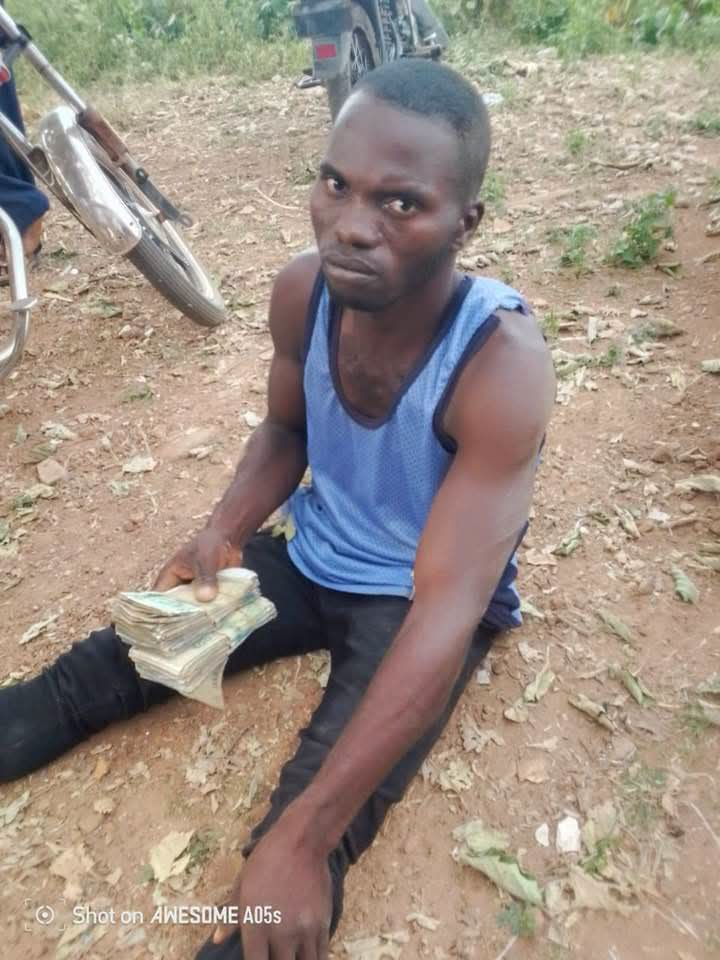
Troops of the Nigerian Army, in collaboration with operatives of the Department of State Services (DSS), have arrested a suspected kidnapper while attempting to collect a ₦200,000 ransom from a female resident of Nasarawa State.
The suspect, identified as Mukaila Iliyasu, was apprehended at Akwaba in Eggon Local Government Area of the state during a joint intelligence-led operation involving troops of Sector 2, Joint Task Force Operation Whirl Stroke, and DSS operatives.
The arrest followed intelligence reports that the suspect had allegedly threatened to abduct a woman unless she paid him ₦200,000.
The Acting Media Information Officer of Operation Whirl Stroke, Lieutenant Ahmad Zubairu Zubairu, disclosed this in a statement.
According to the statement, DSS operatives alerted the military to the threat on October 29, prompting the deployment of security personnel to track down the suspect and prevent the planned abduction.
In a coordinated operation, a soldier reportedly went undercover and posed as the person assigned to deliver the ransom.
The suspect was subsequently arrested while collecting the money, with operatives recovering the sum of ₦200,000 believed to be the ransom demanded from the intended victim.
The military described the operation as a successful intelligence-driven intervention that prevented a possible kidnapping and demonstrated the effectiveness of inter-agency collaboration in tackling criminal activities.
Following his arrest, Iliyasu was handed over to the DSS for further investigation and possible prosecution.
The Force Commander of Operation Whirl Stroke and General Officer Commanding, 5 Division of the Nigerian Army, Major General Moses Kolo Gara, commended the troops and DSS operatives for their professionalism, courage and effective coordination.
Gara urged security personnel to sustain their collaboration and strengthen intelligence sharing to combat kidnapping and other security threats across their areas of responsibility.
He also emphasised the importance of continued cooperation among security agencies in protecting lives, securing communities and maintaining peace in the region.


-
 Crime3 days ago
End Of The Road: Kidnapper Arrested While Collecting ₦200,000 Ransom
-

 Politics5 days ago
Enugu APC Warns Residents Against NDC’s ‘Alarmism’, Urges Vigilance
-
 Politics1 day ago
Court Nullifies Enugu NDC Primary, Orders INEC to Delist Candidate
-

 Politics5 days ago
Nwifuru vs Wike: Gov fights back says No Rainbow Coalition In Ebonyi
-

 Sports3 days ago
Super Falcons Receive $100,000 Each as Tinubu Fulfils Reward Pledge
-

 Opinion5 days ago
HONOURABLE REP. BASHIR ZUBAIRU USMAN: BLESSED HEART, BLESSED MIND
-
 News4 days ago
Man arrested for Allegedly Pushing 17-Year-Old Girl From Two-Storey Building in Imo
-
 News4 days ago
2027: Ex-Sokoto Deputy Governor Urges Northerners To Support Tinubu’s Re-election