


News
FAAC bonanza: Govs face questions as payouts hit N47tn



This scrutiny follows the revelation that the Federation Account disbursed about N47tn to the three tiers of government in the three years since the removal of petrol subsidy.
This was as the Federal Government, 36 states and 774 local governments shared a cumulative N93.216tn as revenue from the Federation Account between 2017 and 2025, with more than half of the amount distributed in the three years following the economic reforms introduced by the Federal Government in 2023.
These figures were disclosed in a document obtained by our correspondent from the Federal Ministry of Finance on Sunday.
It showed that N47.25tn, representing about 50.7 per cent of the N93.13tn shared during the period, was distributed between 2023 and 2025 alone, highlighting the sharp expansion in revenues following the removal of petrol subsidy, exchange rate reforms and increased revenue mobilisation.

But policy analysts, civil society groups and other critics say the increase in revenue has not translated into a corresponding improvement in the living conditions of Nigerians facing rising living costs, unemployment, poverty and inadequate public services.
In an interview, a policy analyst, Adebayo Abubakar, said the removal of subsidy had increased government revenues but argued that the additional funds had not always translated into spending that reflected the economic hardship facing Nigerians.
“Roads, bridges, drainage and other infrastructure remain important, but some governments appear to favour conspicuous projects while schools, healthcare facilities, water supply and other basic services receive inadequate attention,” he said.
The removal of petrol subsidy and other economic reforms introduced by the Federal Government in 2023 have triggered an unprecedented surge in revenue flowing into the Federation Account, with the 36 states and 774 local government areas receiving significantly higher allocations amid growing questions over how the windfall has translated into improved infrastructure, security and public services.
The sharp increase in Federation Account Allocation Committee payouts has, however, placed state governors under renewed scrutiny, as many Nigerians continue to grapple with high living costs, poor infrastructure and worsening insecurity despite the substantial growth in revenues available to subnational governments.
While some governors have linked higher FAAC receipts to road construction, bridges, healthcare, education, workers’ welfare and other projects, residents in some states said the increased revenue had not resulted in improved public services or reduced economic hardship.
Findings by The PUNCH showed that the Federal Government, states and local governments received about N47tn from the Federation Account in the three years following the reforms, exceeding the amount shared in the preceding six-year period and reigniting the debate over the benefits and consequences of the subsidy removal policy.
FAAC disbursements
The document showed that FAAC distributions rose from N5.64tn in 2017 to N21.90tn in 2025, representing an increase of about 288 per cent over the nine-year period.
Year-by-year, net FAAC stood at N5.64tn in 2017, N7.98tn in 2018, N7.85tn in 2019, N7.11tn in 2020, N8.12tn in 2021 and N9.18tn in 2022. It subsequently rose to N10.09tn in 2023, N15.26tn in 2024 and a record N21.90tn in 2025.
The development highlights the dramatic transformation in Nigeria’s federation revenue following the removal of petrol subsidy, reforms in the foreign exchange market and efforts to improve revenue mobilisation.
It also exposes the limits of measuring Nigeria’s revenue growth in naira terms alone. While the removal of petrol subsidy, foreign exchange reforms and improved revenue mobilisation helped to push FAAC allocations sharply higher, a significant part of the increase reflects the devaluation of the naira.
For instance, Nigeria shared N7.98tn through FAAC in 2018, which, at the Central Bank of Nigeria exchange rate at the time, was equivalent to about $26bn. By 2025, the amount shared had risen almost threefold to N21.9tn. However, when converted at the CBN exchange rate for 2025, the allocation was worth only about $14.4bn.
In other words, while FAAC distribution increased by about 174 per cent in naira terms between 2018 and 2025, its dollar value fell by roughly 45 per cent, or about $11.6bn.
The comparison suggests that the apparent surge in federation revenue was driven not only by increased revenue generation and reforms, but also by the weaker naira, which translated dollar-denominated oil and other foreign currency earnings into substantially larger amounts of naira.
The document showed that net FAAC allocations stood at N5.64tn in 2017 and rose to N7.98tn in 2018, representing a 29 per cent increase. However, growth was not sustained in the following two years.
The distributable revenue fell by two per cent to N7.85tn in 2019. It declined further by 10 per cent to N7.11tn in 2020, reflecting the economic disruptions associated with the COVID-19 pandemic and developments in the oil market.
The distributable revenue, however, recovered to N8.12tn in 2021 and increased to N9.18tn in 2022. The document put the average annual growth rate for the pre-reform period at eight per cent. But the sharpest increase came after the reforms introduced in 2023.
Net FAAC rose to N10.09tn in 2023, representing a nine per cent increase. It then jumped by 34 per cent to N15.26tn in 2024 and expanded by another 30 per cent to a record N21.90tn in 2025.
This means the average annual growth rate accelerated from eight per cent in the pre-reform period to 24 per cent between 2023 and 2025. In effect, the pace of growth in distributable federation revenue was three times higher in the post-reform period than the average recorded before the reforms.
The figures also showed the extraordinary weight of the last three years in Nigeria’s federation revenue history. Of the N93.13tn shared between 2017 and 2025, the N47.25tn distributed between 2023 and 2025 alone exceeded the combined allocations recorded in several earlier years, meaning that every N2 shared over the nine-year period contained more than N1 distributed after the reforms.
Finance ministry speaks
The Federal Ministry of Finance, in its assessment of the reforms, said states and local governments had received substantially higher allocations, increasing the resources available to subnational governments for salaries, pensions, infrastructure and other public responsibilities.
The ministry said, “States and local governments received significantly higher allocations through the Federation Account, increasing the resources available to meet salaries, pensions, infrastructure and other responsibilities at the subnational level that benefit the people.”
It added that, compared with the monthly run-rate before the removal of petrol subsidy, “states received about N9.17tn in additional allocations from June 2023 to December 2025,” while local governments received about N6.66tn in additional allocations during the same period.
Further analysis of tier-by-tier annual distribution figures for 2022 to 2025 showed that the Federal Government received N1.996tn in 2022, N3.749tn in 2023, N4.570tn in 2024 and N7.024tn in 2025, bringing its four-year allocation to about N17.34tn.
The figures showed that the states emerged as the biggest beneficiaries of the post-reform expansion in FAAC receipts. Their annual allocation jumped from N4.18tn in 2023 to N8.93tn in 2025, more than doubling within two years. In 2024, states received N6.53tn, exceeding the Federal Government’s N4.57tn allocation in the figures contained in the document.
A World Bank analysis similarly identified 2024 as a turning point when state governments received more from FAAC distributable revenues than the Federal Government, reflecting a structural shift in the pattern of federation revenue distribution.
The expansion in FAAC receipts has been linked largely to the fiscal reforms introduced by President Bola Tinubu’s administration after it assumed office in May 2023.
The reforms included the removal of petrol subsidy and changes to the foreign exchange regime, alongside efforts to improve tax collection and revenue remittances.


A former Deputy Governor of Sokoto State, Mukhtar Shehu Shagari, has called on northerners to support President Bola Tinubu’s re-election bid in the 2027 general elections, citing infrastructure development and ongoing economic reforms.
Shagari, who also served as Minister of Water Resources and is currently Chairman of the Governing Board of the Nigerian Inland Waterways Authority, made the call while congratulating Tinubu, the leadership of the All Progressives Congress and other party stakeholders on the successful flag-off of the party’s presidential campaign in Kaduna State on Saturday.
In a statement issued by his media aide, Musa Ubandawaki, on Monday, Shagari described the event as a demonstration of the APC’s organisational strength, unity and determination to mobilise support for Tinubu ahead of the 2027 presidential election.
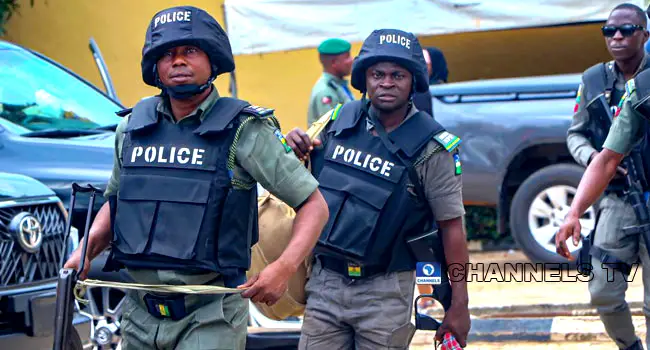
The Imo State Police Command has arrested a 26-year-old man, Ifeanyi Chukwu Joseph, for allegedly pushing a 17-year-old girl, Chiamaka Chukwuokore, from a two-storey building in Owerri, the state capital.
The incident reportedly occurred on Sunday, November 1, 2026, following an altercation between the suspect and the victim.
The Police Public Relations Officer, Henry Okoye, confirmed the arrest on Monday, disclosing that the victim is the younger sister of the suspect’s girlfriend.
According to the police, the incident happened at about 1pm along Mbonu Ejike Street, Ikeneagbu, Owerri.
Okoye said the victim sustained serious injuries after allegedly being pushed from the building and was rushed to a nearby hospital, where she is currently receiving treatment in critical condition.
He added that an angry mob gathered after the incident and attempted to lynch the suspect before police operatives intervened and rescued him.
In a statement, the command said the suspect had been taken into custody and was undergoing investigation to establish the circumstances surrounding the incident and facilitate appropriate legal action.
The police also appealed to members of the public to refrain from spreading unverified information about the incident and allow investigators to carry out their duties.
The Commissioner of Police, Audu Bosso, assured residents that the incident was being thoroughly investigated and that anyone found culpable would face the law.
He urged members of the public to remain calm and avoid taking the law into their hands, assuring them that further developments would be communicated as the investigation progresses.
News
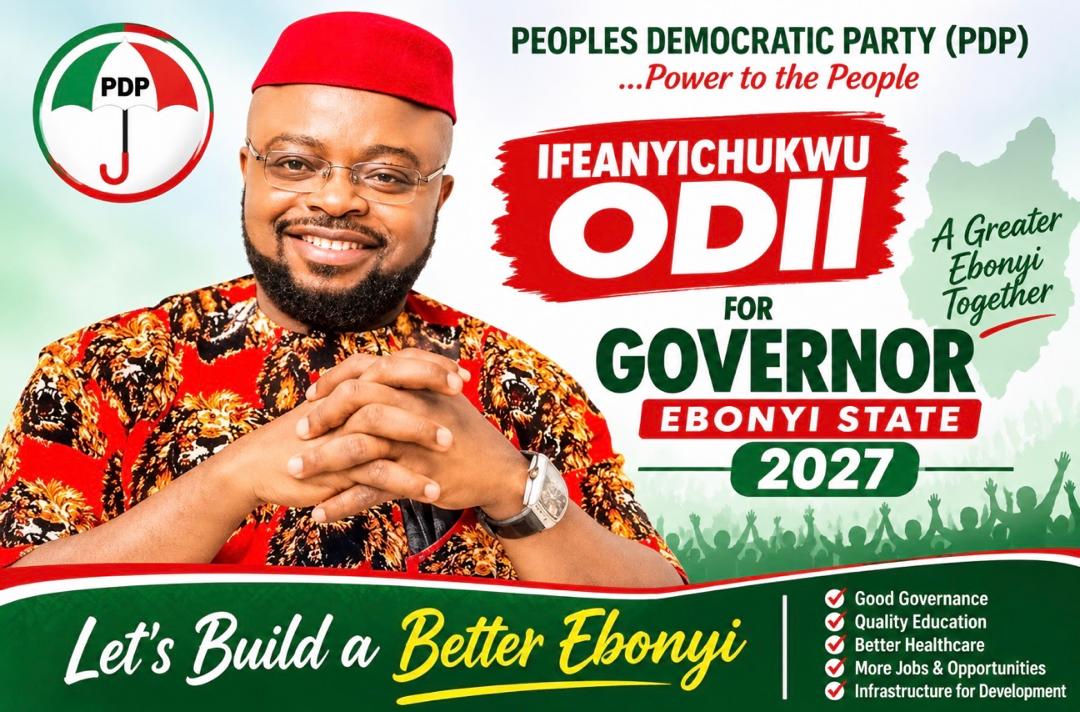
Between Odii and Nwifuru: When Will the Debate Hold? Time to Know Who Should Actually Step Down

The noise from political jobbers and beneficiaries of the present administration calling on the leading governorship candidate in Ebonyi State, Chief Ifeanyichukwu Odii (Anyichuks), to step down for Governor Francis Nwifuru may soon be put to rest. The opportunity has finally presented itself for Ebonyians to determine who genuinely deserves to govern them beyond 2027.
Odii has challenged Governor Nwifuru to a public debate. What better opportunity could there be for a sitting governor to defend his record, justify his stewardship and demonstrate why he deserves another four years in office?
For those who have made a career out of asking Odii to abandon his governorship ambition, the challenge presents a golden opportunity. Rather than dissipating energy on political propaganda, intimidation and sponsored commentaries, they should encourage their principal to accept the invitation.
After all, Nwifuru has been governor for more than three years. He has enjoyed access to billions of naira in public resources, exercised enormous executive powers and had sufficient time to demonstrate his capacity to transform Ebonyi State.
On the other hand is Odii, an internationally successful businessman who, without holding public office or controlling government allocations, has reportedly built over 158 houses for the less privileged, provided bursaries and scholarships to students across Ebonyi State and undertaken numerous philanthropic interventions that have touched lives across communities.
If one man could achieve so much with his personal resources, should Ebonyians not be interested in hearing what he intends to accomplish with the enormous resources available to the state?
Nwifuru is a lawyer, even if his academic journey came through adult education. One would ordinarily expect a lawyer, particularly one who has occupied the offices of Speaker and Governor, to possess sufficient confidence, articulation and understanding of public affairs to confront a businessman in an open debate.
On paper, therefore, the contest should favour Nwifuru. He has the advantage of incumbency, access to government records and firsthand knowledge of every decision taken by his administration.
But Odii has thrown down the gauntlet. There is no going back.
The world is waiting. Ebonyians are waiting. The governor’s response is all that is needed before a date can be fixed.
Indeed, there may be no better way of settling the growing argument over who should step down for whom. Let both men appear before an independent panel, present their records, defend their programmes and answer questions without prepared political praise singers.
Whoever demonstrates superior capacity, credibility, vision and understanding of the challenges confronting Ebonyi should earn the confidence of the electorate.
And if Nwifuru performs so convincingly, perhaps Odii’s supporters will have reasons to reconsider their position. But if Odii exposes the weaknesses of the present administration and presents a more credible alternative, those asking him to step down should bury their heads in shame.
For Nwifuru, the debate should ordinarily be an easy one. He already knows where the traps are. He knows the questions that have continued to trouble Ebonyians. He should therefore prepare adequately to navigate them.
Let us help him with a few.
First is the abandoned Vanco Flyover.
The governor must come prepared to explain how much public money has gone into that project, how many buildings and business premises were demolished to accommodate it, what compensation was paid and why the project has remained uncompleted more than three years into his administration.
He should also explain the economic losses suffered by traders, property owners, motorists and other residents whose livelihoods have been disrupted.
His predecessor, Senator David Umahi, constructed numerous flyovers within comparable periods. What, therefore, is so technically challenging about Vanco that the present administration has been unable to deliver it?
Is it inadequate funding, poor planning, contractual incompetence or simply a failure of leadership?
Nwifuru must convince the debate panel and Ebonyians that Vanco is not a monumental advertisement of his administration’s inability to translate promises into results.
Secondly, the governor should come with the documents concerning the three aircraft reportedly purchased for the proposed Ebonyi Air.
Two years after the announcement, where are the aircraft?
Were payments made? To whom? Under what contractual arrangements? What delivery dates were agreed upon, and why have the aircraft yet to arrive?
Or was the money mistakenly paid into a wrong account?
Ebonyians deserve answers, not another round of political explanations packaged as achievements.
Then comes the proposed new cement factory at Nkalagu, perhaps one of the most interesting subjects Odii should bring before the debate panel.
Nwifuru must explain how his administration intends to deliver a multibillion-naira cement factory within its advertised timeframe when serious questions remain about the necessary geological and geophysical investigations, core drilling, laboratory analysis, mining rights and regulatory approvals.
What is the actual status of the mining licence? What is the legal position regarding the existing rights reportedly held by Ibeto until 2048? Has the government established the commercial viability of the limestone deposit it intends to exploit?
A cement factory is not a constituency project that can be announced at a political rally and commissioned with rented equipment.
It requires serious technical preparation, substantial investment, verifiable mineral reserves and a clearly established legal framework.
If these fundamentals have not been addressed, what exactly is the governor promising Ebonyians? A functional cement factory or another attractive campaign slogan designed to secure re-election in 2027?
Odii, as an accomplished businessman, should be particularly interested in interrogating the commercial assumptions behind this project. This is where the difference between understanding business and merely announcing investments may become painfully obvious.
But beyond abandoned infrastructure, missing aircraft and questionable project timelines lies an even more disturbing issue: the deteriorating political atmosphere in Ebonyi State.
Governor Nwifuru must answer questions concerning allegations of intimidation and violence against opposition figures.
His reported warning to handpicked local government chairmen that they risk losing their positions if they fail to deliver their council areas politically deserves serious interrogation.
What exactly does delivering a council area mean in a democracy? Is the responsibility of a local government chairman to provide governance to the people or to secure electoral victory for the governor?
Since the emergence of these political threats, disturbing incidents of violence involving opposition figures have been reported in Ohaukwu, Ezza South, Onicha and Ivo council areas, with some resulting in deaths.
Although responsibility for these attacks must be established through credible investigations, the governor cannot escape questions about the political atmosphere under his watch.
Why has political competition become so frightening? Why should citizens feel threatened because they support another political party? Why should opposition activities become matters requiring the permission or approval of those holding government offices?
And, most importantly, why does an incumbent governor who claims to have performed creditably appear so uncomfortable with the growing political influence of his principal challenger?
If Nwifuru has delivered the dividends of democracy, why should he be worried about Odii?
If the people are satisfied with his administration, why the apparent desperation to secure political loyalty from local government officials?
A performing governor should be campaigning with completed projects, not relying on political foot soldiers to demand that his opponent withdraw from the contest.
The debate must also examine the broader question of governance. What has become of the hopes and expectations of Ebonyians who welcomed Nwifuru into office in 2023? Has the state made sufficient progress in employment generation, industrialisation, infrastructure, healthcare, education and economic empowerment?
What is the measurable difference between Ebonyi before his inauguration and Ebonyi today?
These are questions that cannot be answered through commissioned newspaper articles, television appearances by political appointees or the familiar chorus of praise singers whose livelihoods depend on remaining close to the corridors of power.
They require facts, figures, evidence and courage.
Odii, too, will come prepared to explain his development agenda, economic blueprint and strategy for delivering sustainable prosperity to Ebonyians.
He will be there to demonstrate how would translate his private-sector experience into effective public administration.
Let both men stand before the people without the protective walls of political office or the manufactured applause of hired supporters.
Let Nwifuru defend his three years of stewardship, and let Anyichuks explain why he believes he can do better.
For once, let Ebonyi politics move away from threats, propaganda, intimidation and the arrogance of incumbency to a genuine contest of ideas, competence and character.
The people are entitled to know who has the capacity to manage their collective resources and who merely considers political office an entitlement.
The challenge has been issued. The stage is waiting.
Governor Nwifuru should accept it, name his preferred date and face Odii.
After the debate, perhaps the political jobbers who have been shouting that Anyichuks should step down will finally discover that they have been directing their advice to the wrong candidate.
Between Odii and Nwifuru, who should actually step down?
Let the debate hold. Let Ebonyians judge.
Police, Agunechemba Reinforce Security Operations
By Okey Maduforo, Awka
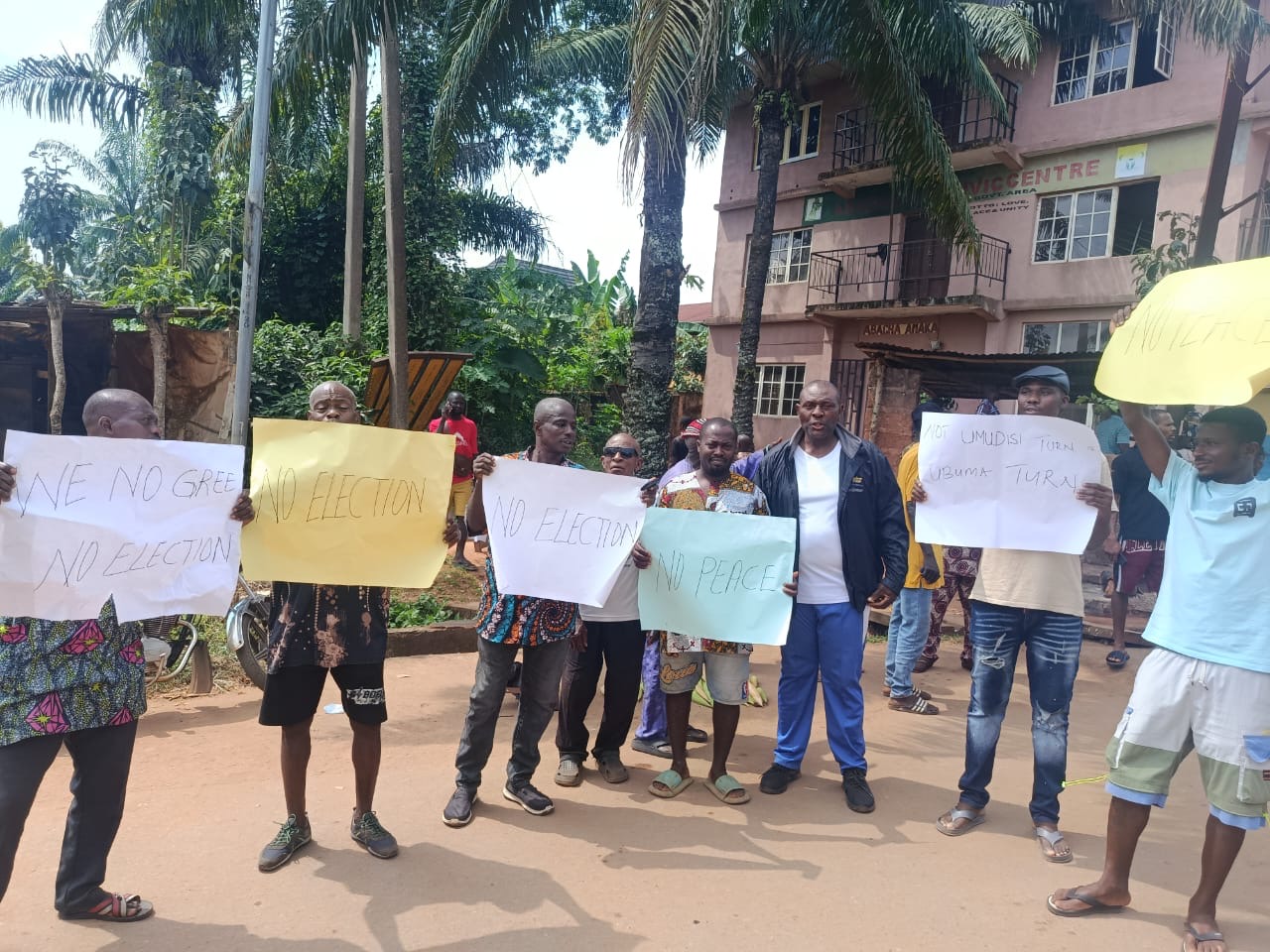
Tension has heightened in Abacha Community, Idemili North Local Government Area of Anambra State, following the conduct of an election for the position of President-General of the town.
The election reportedly took place despite a pending petition by the Akanato quarter of the community before the Ministry of Local Government and Chieftaincy Affairs.
Representatives of the Ministry, led by Mr Chukwuma Joseph Echidiegwu, were present at the election and reportedly advised the parties to establish a peace committee to address the lingering dispute.
However, the situation was brought under control following the intervention of officers of the Anambra State Police Command, led by the Divisional Police Officer (DPO), alongside operatives of the Agunechemba Security Squad.
The intervention became necessary after aggrieved members of the community stormed the election venue, insisting that the exercise should not proceed.
The disagreement reportedly centres on allegations of imbalance in the distribution of traditional and community leadership positions.
Members of the Akanato quarter argued that Umudisi Village, which currently occupies the positions of traditional ruler and Prime Minister, was also seeking to produce the next President-General of the community.
They described the arrangement as unjust and marginalising, insisting that leadership positions should be distributed equitably among the constituent villages.
Consequently, the Akanato quarter boycotted the election, maintaining that allowing one section of the community to occupy all the major leadership positions was unacceptable.
Speaking on the development, the leader of the Akanato quarter, Chief Jonahs Okafor, said the arrangement amounted to a deliberate shortchange of other sections of the community.
“So this is actually the matter and, as a matter of fact, we boycotted the election. Those who participated in the election were people from the other quarter of the community,” he said.
Okafor further disclosed that the Chairman of the Electoral Committee, Mr Obinna Obika, resigned on the eve of the election, explaining that he could not be part of any process capable of destabilising the peace of the community.
In his resignation letter, made available to journalists by Okafor, Obika cited growing disagreements and divisions among the various clans over the distribution of leadership positions.
He stated that the controversies had created an atmosphere of tension, mistrust and uncertainty, turning what should have been a collective exercise into a source of division and hostility.
“It is deeply painful to witness a situation where brothers who ought to stand together for the common good of Abacha have been divided into opposite camps, with threats of legal action also taking a considerable toll on my personal peace of mind, well-being and health,” he stated.
Obika added that his decision to step aside was in the interest of his personal well-being and, more importantly, the peace and stability of the community.
Explaining their position further, Okafor appealed to Governor Chukwuma Charles Soludo to intervene, noting that Abacha Community comprises seven villages, with four belonging to one section and three to the other.
He urged the governor to address what he described as an imbalance and marginalisation in the sharing of leadership positions.
“The Akanato people are peace-loving, respect constituted authority and are law-abiding. We cannot take the law into our hands.
“Hence, we appeal to our governor, who believes in equity, fairness and good conscience, to intervene in this matter. We have implicit confidence that he will do the needful,” he said.
Meanwhile, security operatives have reportedly reinforced their presence in the community and remain on alert to respond swiftly to any possible breakdown of law and order.
By Chinedu Sabastine
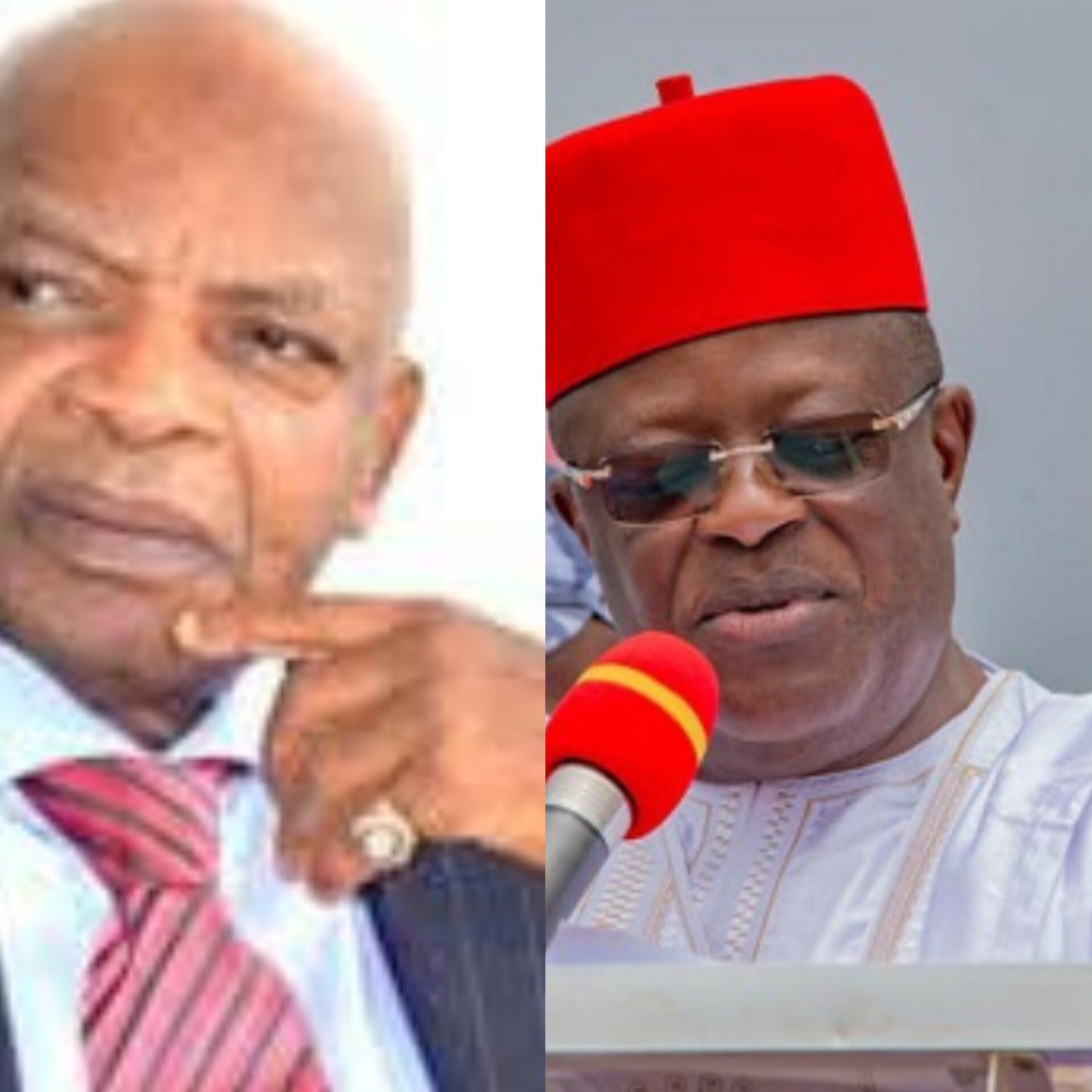
The Nigeria Union of Journalists (NUJ), Enugu State Council, South-East, will on November 5, 2026 induct renowned businessman, Engr. Arthur Eze, into its Hall of Fame during its annual Press Week celebration in Enugu.
The union will also honour the Minister of Works, Senator David Umahi, with the Pillar of the South-East Bridge Builder Award in recognition of his contributions to the region.
The event, scheduled to hold at the International Conference Centre (ICC), Enugu, is expected to attract more than 500 journalists and media executives, government officials, business leaders, traditional rulers, political stakeholders and other distinguished personalities.
The annual Press Week provides a platform for stakeholders to deliberate on issues affecting the media, governance and society.
Engr. Eze was the first person to renovate the NUJ Secretariat at No 4, Rangers Avenue Independence Layout, Enugu to ensure that media practitioners are being safe in a good environment.
He has contributed to the development of media practitioners, individual, institutions, churches and families across the Nation, his human capital development is massive.
Your nomination is a recognition of the remarkable legacy you have built over the years through your outstanding contributions to human empowerment, media practitioner empowerment, philanthropy, enterprise development, mentorship, capacity building, community advancement and the creation of opportunities for individuals and communities to prosper.
Your life and accomplishments stand as a compelling testimony to the power of vision, resilience, enterprise and service. Through your initiatives and interventions, you have demonstrated an uncommon commitment to lifting people, strengthening communities and opening pathways of opportunity for generations.
At a time when societies require individuals with the courage and capacity to transform dreams into possibilities, your remarkable journey continues to distinguish you as an outstanding builder of people, creator of opportunities and philanthropist of enduring impact.
The NUJ Enugu State Council considers this recognition particularly significant because your contributions go beyond material philanthropy. They represent a profound philosophy of investing in humanity, empowering the less privileged, nurturing enterprise, supporting communities and creating platforms through which individuals can achieve their potential.
This year’s press week celebration is expected to bring together key figures from different sectors to celebrate outstanding contributions and promote dialogue on the role of the media in society.


-
 News5 days ago
Police Promotes Over 4,000 Officers, Elevates Two to DIG, 10 to AIG
-

 Crime4 days ago
Police Arrest Pastor, Accomplice Over Alleged Car Theft in Abuja
-

 Crime4 days ago
BREAKING: Sowore Hospitalised After Attack in Ekiti, Brother, Campaign Members Reportedly Macheted
-
 News4 days ago
Enugu West Senate: Court Dismisses Suit, Affirms OAU Onyema as ADC Candidate
-

 Crime4 days ago
Businessman’s Suspected Suicide: Family Alleges Foul Play, Demands Autopsy
-
 News4 days ago
NUJ to induct Arthur Eze into Hall of Fame as Umahi receives Bridge Builder Award
-
 Crime5 days ago
Estate Developer Commits Suicide After Emotional Farewell Video, Leaves Properties to Wife, Children
-

 Crime4 days ago
Tenant Smashes Landlord’s For Increasing Rent Increase From N300,000 to N1 Million