



Politics
Soludo in early lead, wins 7 local governments as voting continues today

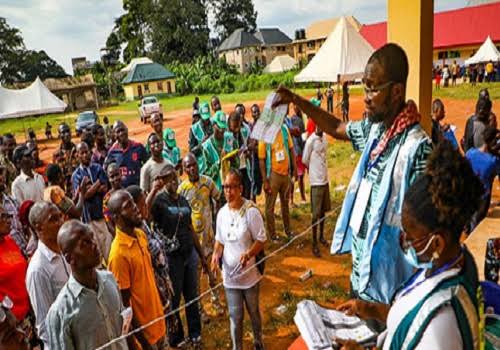

The All Progressives Grand Alliance, APGA has maintained an easy clearing seven local governments so far concluded and announced BY INEC.
So far, in the 7 LGAs concluded and announced, APGA has won all.
They are
Orumba South
Awka South
Onitsha South
Anambra East
Njikoka
Aguata
Anaocha
The results are accessible on the INEC results platform through the electronic transmission system.
Meanwhile, three top contenders in the yet-to-be concluded Anambra State governorship election, which commenced on Saturday, have won their respective polling units.
This was prior to the announcement by the Independent National Electoral Commission that voting would continue on Sunday (today).

The extension was due to the malfunctioning of the newly deployed Bimodal Voter Accreditation System, which disrupted accreditation and voting in some areas, the commission said.
The top contenders were the candidates of the All Progressives Grand Alliance, Chukwuma Soludo; All Progressives Congress, Andy Uba; and Peoples Democratic Party, Valentine Ozigbo.
The APC candidate, who voted at Saint Peter’s Catholic School, Uga Ward 16, Polling Unit 10 of Aguata Local Government, scored 80, followed by APGA with 10 votes, YPP scored five votes while PDP scored two votes.
The candidate of the PDP, who voted at polling unit 010 Social Center, Ward 005, of the Aguata Local Government, Area scored 75 votes, followed by APGA with eight votes while the APC scored two.
The candidate of APGA, who voted at Isuofia Ward 13, Unit 002 in the Aguata LGA, scored 126 votes while PDP scored five and both APC and YPP scored three votes each.
Voter apathy, late arrival of materials, vote-buying mar polls
Meanwhile, the election was marred by voter apathy, vote-buying, late arrival of materials and the malfunction of the BVAS machine.
Despite the efforts by INEC to ensure a hitch-free exercise, there were several complaints from voters in towns like Awka, Onitsha, Nnewi, Isuofia and some other parts of the state.
Voting was expected to start by 8.30am but as of 11am voting was yet to commence in most centres in Awka, the state capital. With over two hours into the voting exercise, the people of Mgbakwu in Awka North were still awaiting voting materials, which later arrived after midday.
Party agents and voters waiting at Central School lamented the absence of materials and electoral officers. The school houses the two polling units in the town.
A party agent, Benneth Aniezeofor, lamented that the development would impact the exercise negatively as people might lose interest.
“Late arrival of materials will disenfranchise many voters and people may run out of patience and leave which is not good for the election,” he added.
Another resident said, “We called them and they told us the materials and polling officers were on the way. We also got the information that the vehicle being used to convey the material developed a fault in the way. One can only hope that the materials will arrive. We have to vote.”
When contacted, the spokesperson for INEC in the state, Reginald Onyeukwu, directed one of our correspondents to his superior.
He said, “I am far away at Aghamelum, please make a report to my HOD in the office, maybe there are some problems.”
Due to low voter turnout at Nkwo Market Square in Akwa Central, party agents were seen going from one house to another and calling family members and friends on the telephone to come out and vote.
One of the party agents, Joseph Nnake, attributed the apathy to fear, saying low voter turnout could mar the exercise. He also described the election as peaceful.
One of our correspondents observed vote-buying at the Nkwo Market Square. Voters were paid N2,500. After voting, the interested voters were ushered to a secluded room to collect the money. A police officer was also heard telling his junior colleague to collect their own share of the money from party agents.
At Ward 19, Unit 8 at the Ezenifite Town Hall, Okpuno in Awka South Local Government Area, voting finally commenced at about 9.35am.
The Registration Area Officer, Ibrahim Ganiyu, disclosed that they worked overnight at the centre to ensure that ad hoc staff moved to the field early on Saturday. He noted that corps members needed further guidance regarding the process.
Reports from other local government areas across the state indicated that voting did not commence at 8.30am. A 63-year-old woman, Madam Theresa, said she would wait till voting started.
“I am a native of Cross River State but my late husband hailed from this town. I came out to vote. I am not afraid of any kind of harassment or intimidation. Even if they shoot me, I will die and go to where my late husband is,” she said.
At Ward 9, Ezimezi in Amawbia, Awka South Local Government, a mild drama ensued as voters protested the instruction by the presiding officer, Ahmed Abdulahi, who said ‘No facemask, no voting’.
Irked by the order, a former Anambra State House of Assembly member, Chikodi Aghanya, described the instruction as “rubbish”.
A presiding officer however explained that it was INEC’s instruction and they would implement it, while admitting that they were having challenges with the network to operate.
Meanwhile, Governor Willie Obiano and his deputy, Dr Nkem Okeke, hailed the process, describing it as transparent.
The governor, who has cast his ballot at Eri Primary School, Unit 004, Otuocha 1, Aguleri, Anambra East LGA of the state said, “I appeal to Ndi Anambra to come out and vote as the voting exercise would last for only a few hours. I commend the voting process, it was fast and easy. I am optimistic that the entire exercise would be free and fair across the state.”
Why I displayed my ballot paper – Deputy gov
The deputy governor, who had dumped APGA for the APC weeks before the election, displayed his ballot paper to other voters before dropping it in the ballot box.
Okeke, who voted at Ward 3, polling unit 005, Umueze Awozu, Enugwu-Ukwu, said he did so to dispel rumours that he had returned to APGA. He commended INEC for the new technology it deployed for the exercise.
He stated, “I had to reveal my ballot paper because there have been rumours that I had defected back to APGA, which is not true. You just saw that I voted for my party, the APC,” he added.
“I’m impressed with the turnout. The process was transparent. Credit should be given to the Federal Government for providing the enabling environment. The presence of the security personnel gave the people courage to come out to vote.
“This is the easiest voting experience I have ever had; the process is unified. In previous elections, I had issues with fingerprints, but this was different.”
However, at Alor Ward 1 in the Idemili South Local Government Area, scores of voters could not vote as of 11.46am as the BVAS machine did not respond.
The presiding officer, who asked not to be named, said the BVAS could not capture the voters.
The National Chairman of APGA, Chief Victor Oye, expressed reservations over the exercise, especially the poor performance of the BVAS machine.
Oye, while voting at Amawbia ward 3, Polling Unit 003 in Awka South Local Government, said, “With the massive turnout of voters at the polling unit, I am afraid that many eligible voters might be disenfranchised. It appears INEC is working in partnership with APC to rig the election.”
The Minister of Labour and Employment, Dr Chris Ngige, who battled with the BVAS for over an hour waited to cast his vote despite the hiccup.
Read Also
Anambra election: NYSC hails corps members
CSO decries vote-buying, low turnout in Anambra election
Anambra 2021: Election like no other
The minister called on INEC to make arrangements for manual accreditation when the machine fails so the people could exercise their franchise.
He said, “I have been here for over an hour without success. I’m not impressed. The failure rate is between 25 and 30 per cent. This is not encouraging. INEC should not be packing the equipment after each election. They should be testing such machines a week before elections in a mock trial. I won’t leave here until I vote.”
Meanwhile, the APC candidate, Andy Uba, who spoke at Otiogba Centre, Ugah Ward 1 polling unit 015, 021, 022, stated that he was optimistic that he would win given the defections into the party before the election.
He added, “I have voted without any problem. The BVAS is working in my polling unit and I am sure INEC is working to fix the problems that have been noticed.”
The PDP candidate, Mr Valentine Ozigbo, called for an extension of voting hours to ensure that no eligible voter was denied the opportunity to vote.
He said, “I call on INEC to extend the voting hours to allow eligible voters to cast their ballot since the delay is not their fault but it is due to the malfunctioning BVAS.”
Also, the candidate of APGA, Charles Soludo, said his party would win the election if the election was free, fair and credible. The BVAS, however, malfunctioned in his polling unit, causing a delay for hours.
Soludo, who voted at 5.10pm after waiting for almost six hours, said he had to remain in the queue for the women and the aged people to vote as soon as the BVAS started working.
After casting his vote, he commended INEC for its efforts to ensure a peaceful and smooth process, while thanking the people for being calm and peaceful in spite of the logistics challenges.
He said, “I voted after a long wait and there was no way I would jump the queue. My 90-year-old father was also in the queue, so allowing them to vote before me was the right thing to do. I believe the will of God will prevail no matter the delay.”
My intention is to become servant leader’
Speaking with journalists on Saturday after voting, Soludo said his people urged him to contest and that his aim was to win the election with a wide margin and be a servant leader.
He said, “I always say that I am an incredible optimist. When we were in court after the primaries, I did make a statement that the judiciary will always come through and that went to the Appeal Court and the Supreme Court. They actually came through.
“It is not just winning, but winning with a wide margin. I’m more interested in the legitimacy of the process, because for me the mandate I seek is people’s mandate to be their servant leader and that is satisfactory to me.”
Also, a former governor of the state, Mr Peter Obi, also said he was disappointed with the malfunctioning of the BVAS and delay in the commencement of voting.
Speaking with journalists after casting his vote at his Umudim Akasi ward 2, unit 019 in Agulu Community, Anaocha Local Government Area of the state, Obi stated, “It took a while for the exercise to start and when it did, the BVAS were not working, which shouldn’t be. I have also been getting calls from across the state.
“For most communities, the problem is the non-arrival of all voting materials and of course here (Agulu town), there was a delay, which shouldn’t be. I have voted and in this boot there is always voter turnout. My appeal is that no eligible voter should be allowed to go without voting.”
Meanwhile, counting of votes began in several polling units on Saturday evening, including Unit 002 Ward 01, Ekwulu Village Hall, Umuona and Units 004, 005, 006 and 007. Also at Units 014 and 013 Ward 001 in Community High School, Nanka in Orumba North Local Government, voting was still in progress as of 5pm.
INEC extends voting till Sunday
Meanwhile, INEC extended voting till Sunday in areas where voting could not be concluded on Saturday.
The state Resident Electoral Commissioner, Dr Nkwachukwu Orji, said at a press briefing at the commission’s headquarters in Awka, the state capital, on Saturday that the poll would open at 8.30am and close at 4pm on Sunday.
He said the revised closing time would apply to areas where polling units opened after 8.30am.
He said, “In line with existing regulations and guidelines of the commission, any intending voter who is in the queue by 4pm shall be allowed to vote. All Polling Units staff must comply with this directive.
“The time extension arose out of several field reports that voters had problems with accreditation. The commission is currently investigating the reason the accreditation devices, Bimodal Voter Accreditation System, worked perfectly in some polling units but not in others. In some of the cases, it would seem that this resulted from software glitches.
“Our technicians have already built an update for the device software to prevent further challenges. The update is currently being installed in the concerned BVAS and we request voters, candidates and agents to be patient and allow our technical staff to solve the problem.
“The commission wishes to reiterate that in cases of sustained malfunction of the BVAS, the Presiding Officer must inform the voters and polling agents that accreditation and voting for the affected polling unit shall continue tomorrow or at another time determined by the commission.”
The REC promised that no voter would be disenfranchised. He, however, lamented that some ad hoc staff and transporters contracted to move polling materials and personnel failed to show up.
He added, “Our deployment has also been adversely affected by transport challenges in some locations. It must be noted that on account of security concerns, some of the transporters that were mobilised and collected 50 per cent of their sign-on fee backed out at the last moment, leaving some of our ad hoc staff stranded.
“Also, some of the trained ad hoc staff backed out at the last moment. The commission is on top of these challenges and extant regulations and guidelines will be applied on a case-by-case basis.
“Consequently, we are harvesting areas where voting will realistically no longer take place today, including places where substantial disruption has occurred to enable a possible recommencement of voting at another time, in line with extant laws and the regulations and guidelines of the commission.
“We appeal to all voters, candidates, stakeholders, communities and political parties to remain calm and law-abiding. We assure you that the commission is determined to make all votes count.”
Security agents commended for tight security
Our correspondents observed that in spite of the apprehension over the election, the exercise was peaceful. Voters, party agents, candidates and other stakeholders commended the security agents for a peaceful poll. Security was tight in different parts of the state and at the polling units.
It was also observed that three policemen were assigned to each polling unit while soldiers and men of the Nigeria Security and Civil Defence Corps patrolled the major highways and streets.
Also, INEC headquarters in the state where the final results would be announced was heavily guarded by policemen and soldiers as of the time of filing this report.
A resident, who spoke on condition of anonymity, noted that the presence of the security personnel helped to curb violence. “It is good that the many security personnel were brought to the state for this election. There was no problem and no violence was recorded,” he said.
As of 7.41pm, patrol teams were on the Onitsha/Enugu highway to ensure that the state remained peaceful.




ABAKALIKI — The camp of the Peoples Democratic Party (PDP) governorship candidate, Chief Dr Ifeanyi Chukwuma Odii, has dismissed reports suggesting that he may withdraw from the 2027 Ebonyi State governorship race and support Governor Francis Nwifuru.
In a statement signed by Odii’s spokesperson, Chief Emmanuel Chidi Igwe, the campaign described the reported withdrawal as false, insisting that Odii remains committed to contesting the election.
According to Igwe, “Chief Dr Ifeanyi Chukwuma Odii will never, under any condition, step down from the 2027 governorship contest.”
The statement said Odii’s political camp remains focused on what it described as its campaign position: “Odii must run and win.”
It added that any political discussions, persuasion or negotiations involving other individuals should not be interpreted as a decision by Odii to abandon his governorship ambition.
Camp Rejects Withdrawal Narrative
The Odii camp further described reports of a possible withdrawal as a political narrative allegedly being promoted by individuals opposed to his candidacy.
Igwe challenged those behind the reports to produce evidence showing that Odii had personally announced his withdrawal from the race.
“There is a fundamental difference between reporting that a politician intends to persuade Chief Odii to withdraw and reporting that Chief Odii has agreed to withdraw,” the statement said, stressing that the latter would require evidence from the candidate himself.
The spokesperson also urged journalists, bloggers and online publishers to maintain professional standards when reporting political developments, warning against presenting speculation or the intentions of third parties as established decisions by political candidates.
24-Hour Retraction Demand
The camp has consequently demanded that publishers of the alleged withdrawal story retract or prominently correct their reports within 24 hours, unless they can produce an authentic statement from Odii confirming that he has decided to withdraw from the 2027 contest.
The statement also reminded online publishers of their responsibilities under Nigerian law, citing the Cybercrimes (Prohibition, Prevention, etc.) Act 2015, as amended, as well as other laws relating to unlawful online publications and defamatory material.
The spokesperson clarified that the reference to the law was not intended as a threat against legitimate journalism or political criticism, but as a reminder that political disagreements should remain within the bounds of the law.
The statement concluded by reaffirming that Odii remains in the 2027 governorship race and urged members of the public to regard reports of his withdrawal as unverified unless supported by a direct statement from him.
By Petrus Obi, London
London — The Peoples Democratic Party (PDP) governorship aspirant in Ebonyi State, Ifeanyi Odii, has intensified his criticism of the administration of Governor Francis Nwifuru, insisting that the people of the state deserve a different approach to governance.
Odii, who spoke with EverydayNewsngr.net in London, said what he described as the “fire brigade approach” of the Nwifuru administration was not the kind of governance Ebonyi needs.
According to him, the state requires a government with a clear vision, long-term planning and the capacity to deliver meaningful development to its people.
“The fire brigade approach of the Nwifuru government is not what the state needs,” Odii said.
He added: “I am coming to bring a new lease of life to my people.”
Odii’s comments come amid renewed political debate in Ebonyi State following the recent removal of the state Commissioner for Works. The development has attracted attention from opposition circles, with critics using it to question aspects of the administration’s handling of governance and infrastructure.
The PDP chieftain said the people of Ebonyi should expect more than what he described as reactive governance, arguing that development should be driven by a coherent programme capable of producing lasting results.
He maintained that his political ambition was motivated by a desire to provide what he described as purposeful leadership and improve the welfare of residents across the state.
“We deserve better government in Ebonyi State,” Odii said, stressing that his vision was centred on giving the people renewed confidence in government and creating opportunities for them to prosper.
As political activities ahead of the next governorship election continue to gather momentum, governance, infrastructure, accountability and the delivery of public services are expected to feature prominently in the emerging contest.
Odii’s intervention in London is likely to add further momentum to the political conversation, particularly as opposition figures seek to distinguish their vision for Ebonyi from that of the incumbent administration.

STATEMENT BY CHIEF EMMANUEL CHIDI IGWE,
SPOKESPERSON TO CHIEF DR. IFEANYI CHUKWUMA ODII
The 2027 governorship election in Ebonyi State is not a family affair, nor is it a matter to be decided by one individual or political godfather. It is a democratic contest, and Ebonyians will ultimately decide who becomes their governor through the ballot box.
No aspirant should be expected to step down simply because another politician believes he should. Every qualified candidate has the right to contest, present his programme and seek the mandate of the people.
Let me make this clear: since Senator Dave Umahi did not bring Chief Dr. Ifeanyi Chukwuma Odii into the governorship race, he cannot now claim the authority to ask him to step down. Chief Odii has his own political identity, supporters, convictions and legitimate right to seek the mandate of Ebonyians.
The decision to contest or withdraw belongs to the candidate, while the ultimate decision on who governs Ebonyi State belongs to the people.
The 2027 election should therefore be about issues, programmes, records, accountability and the future of Ebonyi—not political arrangements made by individuals behind closed doors.
Chief Dr. Ifeanyi Chukwuma Odii is prepared to place his vision and programme before Ebonyians and subject them to public scrutiny. Those seeking to retain power should equally be prepared to defend their records before the electorate.
Ebonyi 2027 is not a family arrangement. It is a contest for the confidence of the people. The people of Ebonyi State—not individuals—will have the final say.
Chief Emmanuel Chidi Igwe
Spokesperson to Chief Dr. Ifeanyi Chukwuma Odii
Politics
BREAKING: SaharaReporters Report on Arrest of Enugu Traditional Ruler, Ex-Lawmaker Is False and Misleading
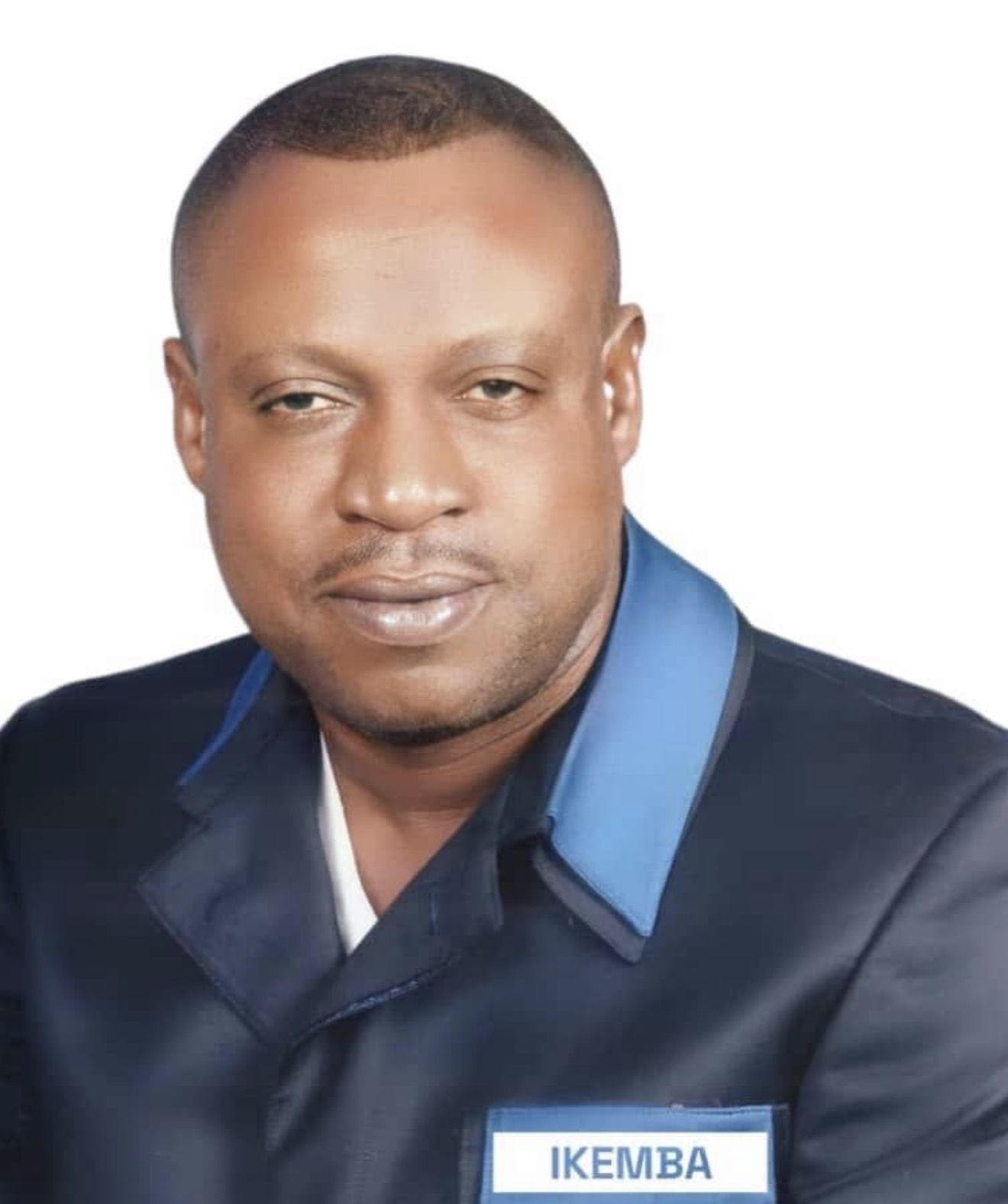
The recent publication by SaharaReporters alleging that prominent Enugu traditional ruler, Igwe Obiora Igwesi, his brother and former federal lawmaker, Hon. Uchenna Sunday A. Igwesi (USA Igwesi), and eight others were arrested over an alleged attack on an NDC ward meeting in Obuoffia, Nkanu West Local Government Area, is false and deeply misleading.
The report is being described as a deliberate attempt to damage the reputation of respected leaders in Enugu State and create unnecessary political tension ahead of the 2027 elections.
Contrary to the claims contained in the publication, there was no arrest ordered by the Inspector-General of Police against Igwe Obiora Igwesi, Hon. USA Igwesi, or the other individuals named in connection with any alleged attack on an NDC meeting. There was also no operation by detectives from Zone 13 Command, Ukpo, Dunukofia, Anambra State, as alleged in the report.
Similarly, the purported petition dated September 15, 2026, and the allegations of conspiracy, unlawful possession of firearms, attempted murder, assault, threatening violence and stealing are strongly disputed and described as fabricated claims intended to create a damaging narrative around the individuals concerned.
The broader allegation that the 17 Local Government Areas of Enugu State have experienced coordinated armed attacks allegedly sponsored by Local Government Chairmen to silence the opposition is equally rejected as unfounded.
Attempts to associate Igwe Obiora Igwesi and Hon. USA Igwesi with criminal activity or political violence are viewed as an unacceptable effort to tarnish the image of individuals who have served their communities and contributed to the development of Enugu State.
The public, particularly the people of Enugu State, is therefore urged to exercise caution and verify the facts independently before accepting or circulating the allegations contained in the SaharaReporters publication.
Enugu State remains focused on peace, stability and development. Political disagreements should not be allowed to degenerate into the circulation of unverified allegations capable of inflaming tensions or damaging the reputations of individuals.
The position being maintained by the affected parties is clear: there was no arrest of the named individuals in connection with the alleged incident, no evidence has been presented establishing that any Local Government Chairman sponsored an attack, and the allegations contained in the publication are disputed in their entirety.
The public is encouraged to await verifiable facts from the appropriate authorities rather than rely on claims that have not been independently substantiated.

Fresh legal questions emerge over Chijioke Ugwu’s membership registration after Supreme Court restores party-register provisions
By Our Correspondent
Fresh legal questions have emerged over the Peoples Democratic Party’s 2027 governorship ticket in Enugu State following the Supreme Court’s restoration of key provisions of the Electoral Act dealing with political party membership registers and the conduct of primaries.
The questions centre on Chief Chijioke Peter Ugwu, who was recently announced by the PDP governorship candidate, Chief Uche Geoffrey Nnaji, as his running mate.
Nnaji announced Ugwu’s selection on September 24, shortly after the Supreme Court delivered its landmark judgment restoring Sections 77(5), 77(6), 77(7) and 84(2) of the Electoral Act 2026. Ugwu’s selection was subsequently reported by several Nigerian media outlets.
But documents and information available to this newspaper raise a question that could potentially become significant if the PDP ticket is challenged in court.
The PDP governorship primary in Enugu State was conducted on May 25, 2026.
However, Ugwu is understood to have registered as a PDP member on May 31, 2026 — six days after the governorship primary.
This means that if the May 31 registration date is accurately reflected in the party’s official records, his name could not have appeared in the PDP membership register submitted to the Independent National Electoral Commission (INEC) before the May 25 governorship primary.
That immediately raises the question:
Can a person who was not a member of the party on the date of its governorship primary subsequently be selected as the deputy governorship candidate without the Supreme Court’s restored membership-register provisions affecting the ticket?
What the Supreme Court restored
The Supreme Court, in a unanimous judgment delivered on September 24, set aside the Court of Appeal’s earlier decision which had declared the disputed provisions of the Electoral Act unconstitutional.
The apex court upheld the validity of Sections 77(5), 77(6), 77(7) and 84(2), following an appeal by INEC against the Court of Appeal judgment in the case involving the Zenith Labour Party.
Section 77(5) provides that only persons whose names are contained in a political party’s membership register submitted to INEC at least 21 days before a primary, congress or convention may participate in the exercise.
Section 77(6) requires political parties to use the membership register submitted to INEC for their primaries, congresses and conventions.
Section 77(7) deals with the consequence of failure by a party to submit its membership register within the prescribed period.
These provisions are now back in force following the Supreme Court judgment. Legal opinions suggest that the law’s insistence on the membership register submitted to INEC is relevant to the validity of the party’s eventual nomination process, depending on how the PDP formally nominated and submitted its governorship and deputy governorship candidates.
The precise documents will therefore be crucial.
Among the questions likely to arise are:
What date did the PDP submit its membership register to INEC?
Was Ugwu’s name contained in that register?
When exactly did Ugwu become a registered PDP member?
Was he a PDP member before the register was submitted to INEC?
How did the PDP formally nominate him as running mate?
Was the nomination made through a procedure recognised by the Electoral Act and the party’s constitution?
The controversy is coming at a sensitive time for the PDP, which has only recently unveiled Ugwu as Nnaji’s running mate. Ugwu, from Nguru in Nsukka Local Government Area, is an entrepreneur, philanthropist and community leader who runs businesses in logistics, contracting, consultancy and hospitality.
However, the governorship candidate and the deputy governorship candidate constitute a single electoral ticket. Therefore, any legal or constitutional issue affecting the eligibility of the deputy governorship candidate automatically has implications for the validity of the joint ticket, including the governorship candidate.
Another legal opinion available to this newspaper insists that “the gubernatorial ticket is a joint one. If the name of a deputy governor is not on the digital register, it invalidates the entire process.”
In the 2019 Bayelsa governorship election, APC’s David Lyon was declared winner. His running mate was Biobarakuma Degi-Eremienyo.
The Supreme Court later disqualified Degi-Eremienyo over the documents he submitted to INEC. The crucial point was that the Supreme Court held that his disqualification affected the joint ticket he shared with David Lyon. Consequently, the court ordered INEC to withdraw the Certificate of Return issued to Lyon and his deputy.
This happened one day before Lyon was due to be sworn in as governor. The certificate was subsequently issued to Douye Diri of the PDP, who had the next-highest lawful votes and the required geographical spread.

-

 Politics4 days ago
2027: Odii Will Not Step Down, Says Spokesperson
-

 News4 days ago
No Survivor Found Yet in Ondo Air Crash — Aiyedatiwa
-

 EverydayNews Telescope4 days ago
Nkalagu Cement Factory: Project or 2027 Political Promise?
-
 News4 days ago
How NAF Plane Vanished From Radar Shortly After Take-Off, Crashes In Ondo Swamp
-
 Crime3 days ago
Court Denies Alleged Fake Pastor Bail as Seven Witnesses Await Trial
-
 News1 day ago
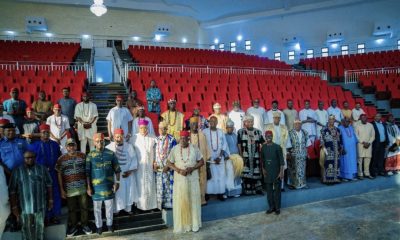
Curfew Continues as Soludo Sets Up Commission of Inquiry Over Aguleri–Umuoba Anam Clash
-

 Education1 day ago
Ihejirika Hails Mbah’s Infrastructure Drive as Coal City University Inaugurates Governing Council
-

 News3 days ago
NAF Crash Claims Pilot 16 Days After Wedding