



News
Presidency backs Christian Senate president, Betara, Gagdi step down



It explained that Nigeria could not afford to have a Muslim as a Senate President at this time having produced Muslims as President and the Vice-President.
Vice-President Kashim Shettima, who said these at a dinner with lawmakers across party lines in Abuja on Saturday night, noted that the party came up with the consensus ticket of Senator GodsWill Akpabio as Senate President and Jibrin Barau as Deputy in the interest of the stability of the country.
Shettima said this as two aspirants for the position of the Speaker of the House of Representatives, Aliyu Betara and Yusuf Gagdi, were reported to have stepped down.
Explaining the position of President Bola Tinubu, the Vice-President said Nigeria could not afford to have a Muslim as a Senate President since both the President and VP are Muslims, stressing that the President of the Senate should be a Christian.

The uproar over the same faith presidential ticket of the All Progressives Congress which featured Tinubu and Shettima in the run-up to the February 25 presidential poll.
Having won the election, parliamentarians and other stakeholders had been clamouring for the balance of power and inclusivity, insisting that a Christian must be included in the nation’s top power hierarchy.
In response to this, the APC’s National Working Committee zoned the Senate President to the South-South and nominated Akpabio, a Christian, as the preferred candidate and Senator Jibrin Barau from North-West for Deputy Senate President.
Similarly, the party nominated Tajudeen Abbas (Kaduna/North-West) for Speaker; and Benjamin Kalu (Abia/South-East) for Deputy Speaker.
However, some aspirants for the Senate Presidency and the Speaker have continued to insist on contesting for the positions in open defiance of the zoning arrangement announced by the ruling party in early May.
The recalcitrant contestants including Senators Abdulaziz Yari (Zamfara West), Orji Kalu ( Abia North) and Osita Izunaso ( Imo West), and Sani Musa from Niger State, said they would not step down for the party’s consensus aspirants for the two senate leadership positions.
But validating the zoning arrangement at the dinner, the Vice President attributed the APC’s decision to President Tinubu’s administration’s desire to foster inclusivity in the interest of the nation.
Senator Shettima said, “Here we are with a Muslim president and a Muslim vice president in a multi-ethnic, multi-religious polity like ours. I was a child of circumstance.
“Equity, justice, and fairness demand that the number three citizen of this country should be of the Christian faith. What binds us together supersedes whatever divides us. But most importantly, we should make deliberate efforts to take inclusivity in governance.”
Shettima further appealed to the lawmakers to consider the interest of the country above that of their pockets.
He said, “This is a young nation where every community will like to have fair representation on the dinner table of their kinsmen.
“Politics is about perception, politics is about optics. I want to appeal to you, I want to appeal to your conscience. There is stability and inclusivity and togetherness in this nation that supersedes the depth of our pockets, stability of our pockets.
“Under the current dispensation, the worst, the most incompetent southern Christian is better than the most puritanical northern Muslim for the presidency of the Senate. We are talking about the sustainability of the nation; the nation is at a crossroads.”
The Vice President submitted that some parts of the country felt excluded from the previous administration as the president, senate president, speaker and others were of the Muslim faith, adding it would be wrong to have a repeat of such a situation in the current government.
He said, “Number one, two, three, four, and five all from the same faith for God’s sake, we can’t do that. I am ready to kneel and beg my colleagues in the Senate for the sake of the nation. This is for the survival of this nation. I am even going to talk to a senator tonight just for the sake of this nation.”
The consensus candidate of the party, Senator Akpabio noted that the lawmakers were willing to work for the stability of the country.
Akpabio said, “Vice President, sir, we have committed ourselves to your administration alongside President Bola Tinubu to ensure the stability of Nigeria.”
In his comment, Senator Barau reiterated the president’s commitment to the progress, unity, and stability of the country.
He assured that the 10th Assembly would commit itself to the values of unity and peaceful co-existence of the nation.
The Director-General of the Stability group, Senator Ali Ndume, noted that the group was assured of votes from 80 lawmakers but currently has assurance from 73 senators.
Meanwhile, Emeka Nwala, the Chief Press Secretary to Senator Kalu, noted that Yari and Kalu were still in the race and not backing down.
In the same vein, the media consultant to Senator Izunaso, Kehinde Olaosebikan, noted that his boss couldn’t back down in the last days, especially knowing that he is the best man for the job.
Related News
Betara, Gagdi stepped down for Abbas — Campaign organisation
10th Assembly: APC group backs Betara
N’Assembly: Anti-zoning group condemns alleged plan to arrest Betara, Yari
He said, “We have not stepped down and we are not stepping down. Sen Izunaso is the best among them, he will win. Nigeria deserves the best. It’s about service to Nigeria.
“We are not talking about being a running mate to someone. We are talking about him being the Senate President. I’m not aware if a decision has been made on a running mate with Yari.”
Speaking on the number of lawmakers on his side, he said they have several people on their side but reeling out figures wasn’t an assurance of getting people’s votes.
Efforts to get comments from Senator Yari’s camp proved abortive as phone calls made to the Assistant Director General of his campaign team, Senator Abdul Nengi failed.
In a new development, the Joint Task – 10th Assembly, a coalition of members-elect of the 10th House of Representatives across party lines, has said two leading contenders, Aliyu Betara and Yusuf Gagdi, have stepped down for the APC consensus speakership candidate.
The Tajudeen Abbas/ Benjamin Kalu Joint Task Campaign Office made the claim in a statement issued in Abuja on Sunday.
The development is coming ahead of plans by the G-7 to announce its final resolution on the speakership race on Monday (today).
The group includes the incumbent Deputy Speaker Ahmed Wase; the Chairman of the House Committee on Navy, Yusuf Gagdi; Chairman, the House Committee on Appropriations, Aliyu Betara; Chairman, House Committee on Water Resources, Sada Soli; Chinedu Ogah, Miriam Onuoha, and Sani Jaji.
The Joint Task’s statement was titled ‘Disregard claims that Tinubu wasn’t aware of Rt. Hon. Tajudeen Abbas’ adoption by APC…Rt. Hon. Abbas expresses readiness to win on the floor on Tuesday…as Betara, Gagdi step down for Abbas.’
The group was refuting reports that Tinubu did not expressly direct the lawmakers to vote for Abbas and Kalu during his meeting with the members-elect last week.
It partly read, “It has come to the attention of the Joint Task – 10th Assembly that some aspirants for the Speakership of the 10th House of Representatives claimed that the President/Commander-in-Chief of the Armed Forces of the Federal Republic of Nigeria, His Excellency Bola Ahmed Tinubu, never mentioned the name of Rt. Hon. Tajudeen Abbas was his preferred candidate for Speaker, but the President only said he aligned with the position of the All Progressives Congress National Working Committee on the zoning arrangement.
“It is pertinent to mention that the so-called G-7 no longer exists as key members of the forum such as Rt. Hon. Alhassan Ado Doguwa, Rt. Hon. Muktar Aliyu Betara, Rt. Hon. Yusuf Adamu Gagdi, Rt. Hon. Makki Yalleman and Rt. Hon. Raheem Tunji Olawuyi, among others, have since dropped their speakership ambitions and declared support for the Abbas/Kalu ticket.
“It is worthy to note that Betara and Gagdi announced that they stepped down for Rt. Hon. Tajudeen Abbas today, Sunday June 11, 2023 after a meeting with President Bola Ahmed Tinubu and Vice President Kashim Shettima.
“As of Sunday, June 11, Rt. Hon. Tajudeen Abbas (Ph.D.) has secured the endorsement of the overwhelming majority of members-elect across the eight political parties in the six geopolitical zones, and he is ready to compete on the floor of the House and take the mantle of leadership of the 10th House come Tuesday, June 13, 2023.”
The campaign organisation stated that the APC NWC, on May 8 “consulted with the President before reaching that resolution.”
The Abbas/Kalu group added, “Therefore, it is preposterous to claim that President Bola Ahmed Tinubu was not aware of the adoption of Rt. Hon. Tajudeen Abbas as the Speaker. We urge the public, especially the media, to disregard such claims.”
Neither Betara nor Gagdi could be reached as of press time on Sunday night to confirm if they had stepped down from the speakership race, and for whom.
In the meantime, the Coalition of Northern Groups has raised concerns about plans to allegedly arrest and intimidate northern aspirants for the National Assembly principal offices.
In a statement on Sunday by CNG spokesperson, Abdul-Azeez Suleiman, the group said the elements who were hatching the evil plans were “bent on smearing the good relationship of the President, Asiwaju Bola Ahmed Tinubu, and the North”.
Suleiman, in the statement, disclosed that the widely speculated plot involved the introduction of a suspicious voting system to track the NASS voting patterns as well as a plan to block members-elect opposed to the candidacy of Akpabio, from gaining access to the NASS complex on the day of the inauguration.
Meanwhile, Betara an Gagdi, on Sunday night withdrew their candidacy to support the zoning arrangement of the APC.
Vice President Kashim Shettima disclosed this at the end of closed-door negotiations between President Bola Tinubu and both lawmakers which held at Tinubu’s Asokoro residence on Sunday evening.
He told journalists that President Tinubu was pleased with the gesture of Aliyu Betara and Yusuf Gadgi to place the interest of the party above their personal ambitions.
Flanked by the Betara and Gagdi, Shettima said “Rt. Hon Betara and Gadgi have graciously accepted to step down and endorse the candidature of Tajudeen Abbas for the speakership of the Federal House of Representatives.
“The President was quite touched by their gesture because what binds us together is superior to whatever that divides us.
We are one big APC family and together, we shall cross the Rubicon on Tuesday. We cannot thank them enough for their sacrifice and we want to commend the roles played by the Chief of Staff to Mr. President, His Excellency the Governor of Niger State, by the leadership of the party here represented by the Deputy National Chairman (North). I think our party members will breathe a sigh of relief.”
Therefore, the Vice President urged other contenders such as the current Deputy Speaker, Ahmed Wase, Sada Soli and Aminu Jaji to emulate the gesture.
“We call on the other candidates such as Rt. Hon. Wase, Hon. Sada Soli and Rt. Hon. Aminu Jaji, to also see reasons to channel their candidacy to Abbas so that as a family, we can create a better future for our dear nation,” he said.
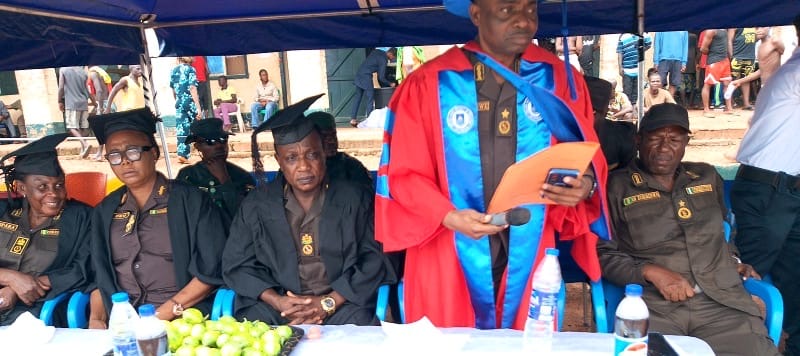
The National Open University of Nigeria (NOUN) has matriculated 70 inmates enrolled in various undergraduate programmes at its Special Study Centre within the Maximum-Security Custodial Centre, Enugu.
The matriculation took place on Wednesday during the 31st matriculation ceremony of the centre.
In an address at the ceremony, the Controller-General of the Nigerian Correctional Service (NCoS), Sylvester Nwakuche, described the event as a milestone in the Service’s commitment to using education as an instrument for the reformation, rehabilitation and reintegration of inmates.
Nwakuche, who was represented by the Assistant Controller-General of Corrections in charge of Zone M, Prisca Oku, said the NCoS would continue to strengthen correctional education and expand opportunities for academic, vocational and skills development across custodial centres.
He encouraged the matriculating inmates to remain focused, abide by the rules and regulations of both the university and the Service, and strive to become worthy ambassadors of the correctional education programme.
“I therefore encourage our matriculating inmates to remain focused, uphold the rules and regulations of the University and the Service, and strive to become worthy ambassadors of the correctional education programme,” he said.
He added: “To the matriculating students, I also urge you to embrace this opportunity with seriousness, discipline and determination.
“Your present circumstances should not define your future; rather, let this opportunity equip you with the knowledge, skills and character needed to build a productive and responsible life beyond custody.
“Your academic journey is not merely about obtaining a qualification; it is also about transforming your mindset, broadening your horizons and preparing yourselves for meaningful reintegration into society.”
Speaking at the ceremony, the Vice-Chancellor of NOUN, Prof. Udoma Oji Udoma, said the university had continued to provide quality and accessible higher education to inmates by offering 100 per cent tuition-free education at all levels.
Udoma, who was represented by the Director of NOUN Enugu Study Centre, Prof. Loveth Ekwueme, said the university had consistently championed inclusivity by providing educational opportunities for inmates.
“NOUN affirms its belief that education is a fundamental right, not a privilege,” he said.
According to him, the initiative reflects NOUN’s commitment to national development, social justice and the rehabilitation of citizens who deserve a second chance.
“To our new students: today you pledge to uphold the values of scholarship, discipline, and integrity. Your enrollment signifies courage, determination, and the desire to transform your lives through knowledge.
“Remember that education is the most powerful tool for personal renewal and societal reintegration,” he said.
The Controller of Corrections in Enugu State, Mr Valins Obizue, encouraged inmates to take advantage of the free educational opportunities available to them and pursue academic qualifications that could improve their lives.
Obizue commended the Controller-General of the NCoS and NOUN for providing a veritable and accessible platform for the reformation and academic advancement of inmates across the country.
In his welcome address, the Officer-in-Charge of the NCoS Maximum-Security Custodial Centre, Enugu, Dr Sunday Igwe, said the study centre commenced in July 2011 with 12 students but had grown to 262 students.
Igwe described the growth as more than a numerical increase, saying it represented “262 dreams, 262 aspirations, 262 opportunities and 262 journeys towards personal and professional development.”
He said the NCoS firmly believed that education was one of the most powerful instruments for human development, reformation, rehabilitation, reintegration, empowerment and positive transformation.
“Our custodial environment is not only about security and safe custody. It is also about preparing individuals for meaningful contributions to society.
“The presence and growth of NOUN academic activities within this environment demonstrates that education can flourish wherever there is commitment, discipline and determination.
“NOUN remains and offers the foremost Open and Distance Learning opportunity in Nigeria,” he said.
One of the matriculating inmates, whose name was withheld, appreciated the Controller-General of the NCoS and the Vice-Chancellor of NOUN for providing the educational and reformative programme and making it accessible to inmates.
The newly admitted undergraduates enrolled in various programmes, including Public Administration, Peace and Conflict Resolution, and Criminology and Security Studies, among others.
Highlights of the ceremony included the administration of the matriculation oath to the new students and the cutting of the matriculation cake.
By Okey Maduforo, Awka
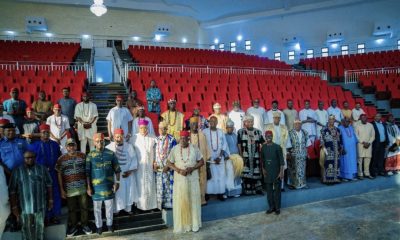
The indefinite curfew imposed on Aguleri and Umuoba Anam communities in Anambra State following their recent communal clash remains in force as Governor Chukwuma Soludo has set up a Judicial Commission of Inquiry to investigate the crisis.
The governor also ordered an immediate ceasefire, warning that the state government would not tolerate further lawlessness or any breach of peace and order in the two communities.
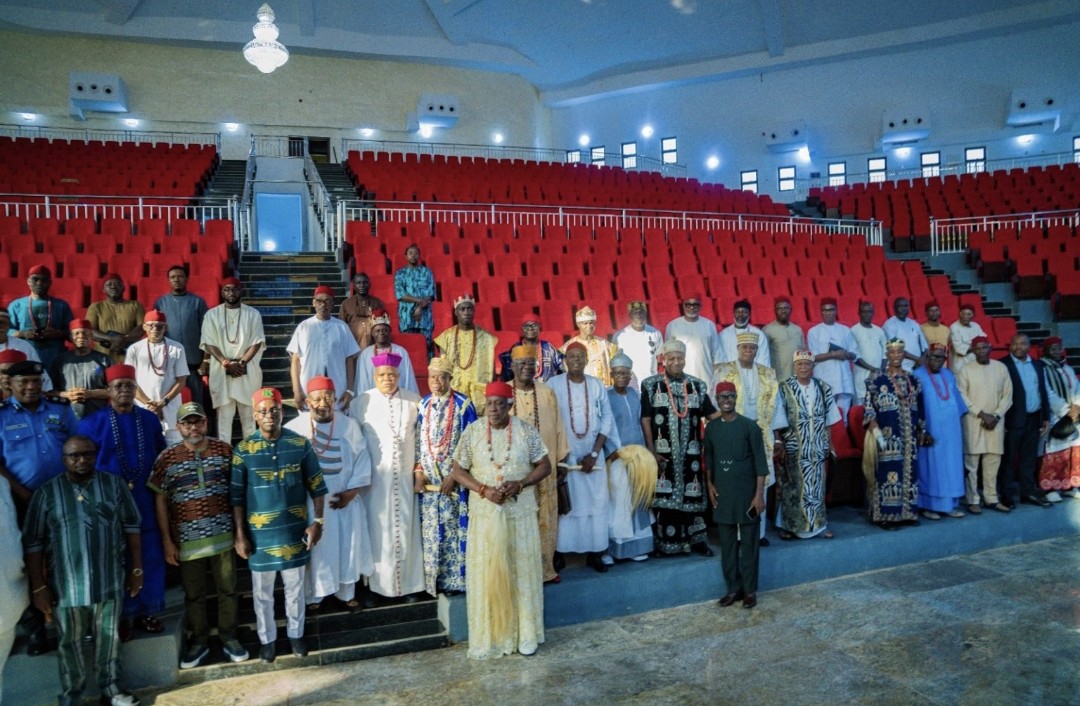
The directives followed a conflict-resolution meeting convened by the governor at the Light House, Awka, which was attended by traditional rulers and other leaders from the affected communities.
At the meeting, the stakeholders agreed that both communities must lay down their arms and embrace peace.
In a statement by the Chief Press Secretary to the governor, Christian Aburime, Soludo lamented the loss of lives and destruction of property, saying the violence was inconsistent with his administration’s vision of a peaceful and prosperous Anambra State.
“Opening the deliberations, the Governor decried the tragic loss of lives and the widespread destruction of properties, emphasizing that such lawlessness is entirely unacceptable to the administration,” the statement said.
Soludo also directed security agencies to maintain a round-the-clock presence in the affected areas to ensure compliance with the ceasefire.
The governor assured the parties that the government would remain “firm, fair, and uncompromising” in its pursuit of lasting peace and justice.
Community leaders, including Igwe Michael Idigo and Hon. Fidel Okafor, condemned the violence, particularly the killing of a minor and an unarmed person from Umuoba Anam, as well as the retaliatory destruction of the historic Idigo Palace.
They called for an immediate end to the hostilities and the prosecution of those responsible for the violence.
Speaking as an observer on behalf of the Umueri community, retired Justice Charles C. Okaa appealed for restraint and urged the state government to enforce the 1982 Supreme Court judgment on boundary matters involving Umueri and Aguleri as part of efforts to achieve a lasting resolution.
The stakeholders also agreed on the immediate cessation of hostilities, prosecution of perpetrators, accountability for community leadership and the rebuilding of the destroyed Idigo Palace.
Condemning the destruction of the traditional palace as an attack on the heritage of the state, Soludo announced that the state government would assist in rebuilding it and restoring its traditional dignity.
The governor also established a Judicial Commission of Inquiry to examine petitions, complaints and historical grievances connected to the crisis. The commission is expected to submit its comprehensive report within four months.
However, the state government has yet to make public the names and number of members of the commission.
Meanwhile, the indefinite curfew remains in force as security agencies continue to maintain heightened surveillance in the affected communities.

For Squadron Leader Ahamefule Aham Man-Ugwueje, Monday was supposed to be another routine day of duty. Instead, the Nigerian Air Force pilot lost his life in the crash of an ATR-42 aircraft in Igbokoda, Ondo State, barely 16 days after his wedding.
Man-Ugwueje had married Flight Lieutenant Damilola Adekunle on September 19, 2026, in an elaborate ceremony in Abuja.
The couple exchanged vows at the Redeemed Christian Church of God, The Masters Place, Utako, Abuja, before proceeding to the Nigerian Army Conference Centre, Asokoro, for the reception.
Details of the wedding were contained in the couple’s invitation and posts shared by vendors who participated in the ceremony. A videographer, Beejay Creates, also shared footage from the event, identifying the couple as bride Damilola and groom Ahamefule.
Man-Ugwueje, who was identified by the Nigerian Air Force as the co-pilot of the ill-fated aircraft, was among the five crew members and 20 passengers who died in the crash.
The aircraft, NAF 931, was on a routine mission from Benin to Lagos when it crashed in a swampy area around Igbokoda in Ilaje Local Government Area of Ondo State.
The Nigerian Air Force on Tuesday confirmed that all 25 people on board died in the accident and released the names of the victims.
The Chief of the Air Staff, Air Marshal Sunday Kelvin Aneke, described the incident as a deeply painful moment for the Nigerian Air Force and the nation, while commiserating with the families, friends and colleagues of the victims.
The Air Force also ordered a comprehensive investigation into the circumstances surrounding the crash.
Man-Ugwueje, whose Facebook profile listed Umuahia, Abia State, as his hometown and Abuja as his current city, was the son of retired Group Captain Man-Ugwueje.
Meanwhile, Ondo State Governor, Lucky Aiyedatiwa, said no survivor was found after security agencies, emergency responders and local residents joined the search for victims at the crash site.
Aiyedatiwa said he was informed of the crash at about 10:30am on Monday after receiving a call from the chairman of Ilaje Local Government Area.
According to the governor, residents across the river from the Nigerian Navy base in Igbokoda heard a loud sound and subsequently saw the aircraft plunge into the swamp.
He said Navy personnel initially exercised caution while trying to determine whether there was a fire or explosion before moving towards the crash site.
“When they noticed that it’s just an accident, they didn’t see any sign of fire. So they moved in, trying to see if they could rescue the people,” the governor said.
Personnel of the local emergency management agency, residents and members of the Amotekun Corps later joined the rescue operation.
However, the search ended in tragedy after authorities confirmed that there were no survivors.
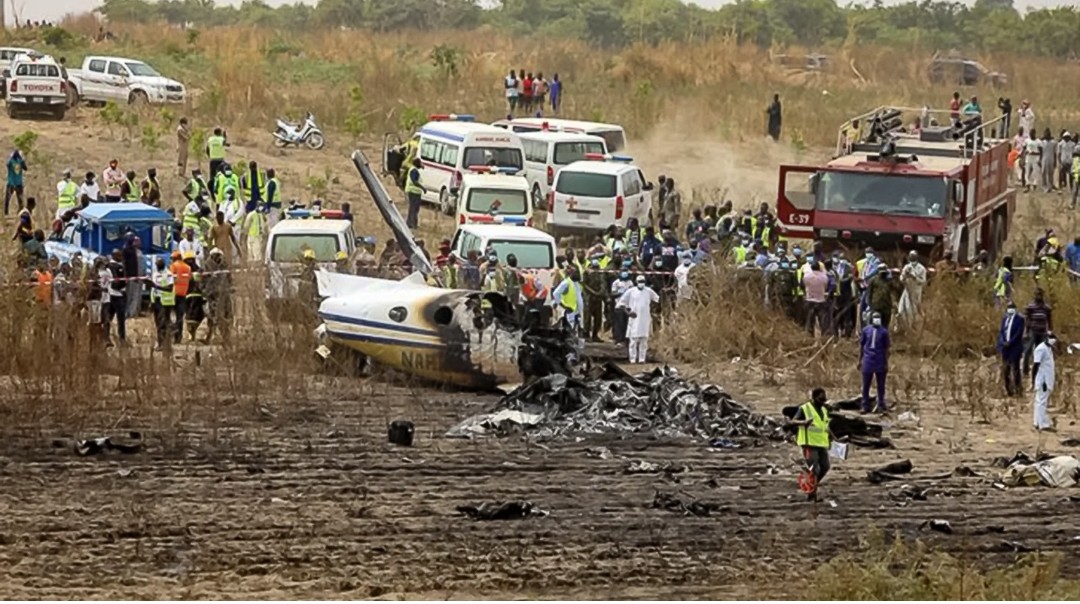
A Nigerian Air Force ATR-42 aircraft on a routine flight from Benin City to Lagos crashed into a swamp in Igbokoda, Ilaje Local Government Area of Ondo State, on Monday after reportedly disappearing from radar shortly after take-off.
The aircraft, with tail number NGR 931, lost communication with air traffic controllers at about 9:13am. A senior air traffic controller, who spoke anonymously, said repeated attempts to re-establish contact with the aircraft failed.
According to the source, personnel around Okitipupa later reported hearing a loud bang suspected to have come from the crash site.
The Minister of Aviation and Aerospace Development, Festus Keyamo, confirmed that the aircraft had disappeared from radar and that all efforts to raise it on radio were unsuccessful.
He later announced that the wreckage had been located near the Naval Base in Igbokoda.
Keyamo said 32 people—25 passengers and seven crew members—were on board.
The Nigerian Air Force confirmed the crash, saying the aircraft was on a routine mission from Benin to Lagos and that search-and-rescue operations had commenced in coordination with relevant authorities.
The crash site, located in a swampy creek, proved difficult to access, with military personnel, emergency responders and local fishermen joining the rescue operation.
Governor Lucky Aiyedatiwa said no survivor had been found as of Monday evening, although the authorities had yet to officially announce a death toll.
The governor said rescuers recovered parts of the aircraft, identification cards and military uniforms from the site.
President Bola Tinubu expressed sadness over the incident and directed the Nigerian Air Force to immediately commence a thorough investigation into the cause of the crash.
Investigators are expected to examine the wreckage, flight path, weather conditions, maintenance records and air traffic control communications. Efforts were also being made to recover the aircraft’s flight recorder, which could provide crucial information about its final moments.
The cause of the crash remains unknown.

Ondo State Governor, Lucky Aiyedatiwa, has disclosed that no survivor has so far been found following the crash of a Nigerian Air Force aircraft in Igbokoda, Ilaje Local Government Area of the state.
Aiyedatiwa made this known during an interview with Channels Television on Monday, saying local residents, security personnel and emergency responders had searched the crash site without finding anyone alive.
The governor said he received information about the incident at about 10:30am after the chairman of the local government contacted him.
According to him, residents living across the river from the Nigerian Navy base in Igbokoda heard a loud sound and subsequently saw the aircraft plunge into a swampy area.
He explained that personnel of the Nigerian Navy initially stayed back to determine whether the crash had triggered a fire or explosion before proceeding to the site.
“When they noticed that it’s just an accident, they didn’t see any sign of fire. So they moved in, trying to see if they could rescue the people,” Aiyedatiwa said.
He added that officials of the state emergency management agency, local residents and personnel of the Amotekun Corps later joined the search and rescue operation.
“But from the information we got, no single life was saved up to this moment. They could not see any living soul that was in that aircraft,” the governor said.
Aiyedatiwa said searchers recovered parts of the aircraft, including pieces of the wings, identification cards and military uniforms, which helped establish that the aircraft was a military plane.
“But they saw the ruins, some of the wreckage from the wings of the aircraft, you know, some ID cards, I was told, and then uniform. That was when they knew it was a military aircraft,” he said.
The governor described the incident as a painful development, noting that the crash occurred not only in Ondo State but also in his home local government area.
“So it’s a sad situation today. And we’re all really, really agreed as a Nigerian. And also it happens in my own state, not just my state, even in my own local government where I’m from,” he said.
Aiyedatiwa expressed sympathy for the military personnel involved, describing them as officers assigned to protect the territorial integrity of Nigeria.
The Nigerian Air Force had earlier confirmed that an ATR-42 aircraft with tail number NGR 931 crashed in Igbokoda while on a routine mission from Benin, Edo State, to Lagos.
Minister of Aviation and Aerospace Development, Festus Keyamo, said preliminary information indicated that 25 passengers and seven crew members were on board the aircraft.
The Nigerian Air Force said search and rescue operations were ongoing following the crash.

-

 Politics3 days ago
2027: Odii Will Not Step Down, Says Spokesperson
-

 EverydayNews Telescope2 days ago
Nkalagu Cement Factory: Project or 2027 Political Promise?
-

 News4 days ago
Sacked Works Commissioner: Release or Charge Him to Court, Oganiru Izzi Challenges Nwifuru
-
 News2 days ago
How NAF Plane Vanished From Radar Shortly After Take-Off, Crashes In Ondo Swamp
-

 News3 days ago
No Survivor Found Yet in Ondo Air Crash — Aiyedatiwa
-
 Crime4 days ago
Police Deploy DIG, Two Commissioners to Rescue 20 Abducted Prospective Corps Members
-
 Crime2 days ago
Court Denies Alleged Fake Pastor Bail as Seven Witnesses Await Trial
-
 News10 hours ago
Curfew Continues as Soludo Sets Up Commission of Inquiry Over Aguleri–Umuoba Anam Clash