





Crime
Police told me to avoid some Lagos bus-stops – Robbery victim



Bewildered Olowu-Oyebayo wondered why those expected to secure the lives and property of citizens would tell her to avoid some bus-stops – Ketu Tipper bus-stop, Church bus-stop, Toll Gate, Ogudu bus-stop, Glass House, including Kosofe area – adding that she was not in doubt that the police knew how deadly those bus-stops were and had done nothing to rid them of criminals.
Narrating her ordeal to our correspondent, Olowu-Oyebayo said she was returning from her office on the Island on Friday, November 25, and owing to the traffic on her way, the staff bus she boarded got to Tipper bus-stop, Ketu, at around 8:00pm.
“It was around five minutes to eight (7:55pm) that I alighted at the bus-stop and I waited for other people to join me as I usually do so that we could move together. I saw two guys at the front and somehow I became suspicious. I asked those we were walking down together if they weren’t suspicious of the two men at our front, but they dismissed my fears and we continued walking.
“Before we knew it, some men started walking towards us from the back and the ones at our front suddenly stopped. Seeing that I was already panicking, those we were walking together started flagging down oncoming cars to see if any would stop to pick us from the place.

“The guys behind us and those ahead now rushed closer to us and one of them started saying ‘Collect her bag, collect her bag.’ On hearing that, I held tight to my bag. Two of them descended on me and began to drag my handbag with me while others were hitting me.
“By this time, those men we were walking together had fled from the scene, perhaps to see if they could get help.
“People were passing by and vehicles were driving by, but no one cared to help me. Instead, people close to the area moved away to a safe distance.
“I held on to my handbag and with my laptop back on my back, I fell to the ground so that the criminals would not be able to take my laptop bag.
“They dragged me on the ground, pulled my hair, beat and injured me until I could no longer hold on to my handbag.
“By the time the men who were walking with me earlier would return with some other people, the criminals had taken my handbag and fled,” she narrated.
Olowu-Oyebayo said the criminals also went away with her mobile phones and bank (ATM) cards.
She expressed surprise that some traders around there told her that she should not have alighted around there at that time of the night, adding that the traders said it was a regular occurrence in the area by “Flower boys.”
She said on getting home later that night, she tried to use her husband’s phone to block her bank accounts but she realised that the money in one of the accounts had been cleared by the criminals.
Having been advised to report the incident at a police station, especially because she lost her ID card and office access card, Olowu-Oyebayo said she visited the Alapare police station as directed by a team of policemen on patrol on the day after the incident.
She said, “On getting to the police station at Alapere with my husband, the officers on duty, after taking my statement, affirmed that they were aware of the criminal activities around Tipper bus-stop.
“To my shock, one of them advised me against stopping at Ketu Tipper bus-stop, Church bus-stop, Toll Gate, Ogudu bus-stop, Glass House, including Kosofe area whenever I’m coming from the office in the evening.
“I was shocked because I couldn’t imagine the fact that the police were aware of these criminal activities and nothing was being done about them. It was also shocking that those who are supposed to protect us are telling us to run away from bus-stops instead of ridding those bus-stops of criminals and making Lagos safe for all.”
She added, “One of the officers said those boys seemed to rub oil or okra on their bodies whenever they went for such operations. The officer, a female, said she had once caught one of the criminals but he slipped from her hands because of what he rubbed on his body.
“Another officer said sometimes the boys would be operating behind them while on patrol and there was no way they could cover everywhere at the same time.
“I wonder who to trust for our security in this state and nation if our police are talking this way. Obviously, there is more to these crimes than meet the eye.”
Our correspondent reached out to the Lagos State Police Command spokesperson, SP Benjamin Hundeyin, regarding the incident and the PPRO said he was hearing such complaint for the first time and promised to take it up.
“This is new to me and I’m hearing it for the first time. We are going to investigate the matter.
“If truly police officers said that, then it’s an indictment on the profession and it’s highly unprofessional, because rather than curb the crimes in those area, citizens are being told to avoid the areas.
“But as I said, we will look into it,” SP Hundeyin said.
“Again, I will like to advise the victim to bring this to the notice of the Divisional Police Officer, because he is responsible for the security in that area. This is why, since I came on board, I’ve continued to publish the phone numbers of all divisional police officers on my social handles and my WhatsApp profile. That’s because I want every citizen to have access to the DPOs.
“And being senior officers, your information is safer with them.
“At my own end, I will ensure that those areas are no longer known for such crimes,” Hundeyin added.


The United States has said Nigeria has yet to make sufficient progress in addressing attacks on Christian communities, warning that the country’s designation as a Country of Particular Concern (CPC) should remain in place.
Assistant Secretary of State for African Affairs, Frank Garcia, stated this while responding to questions from US Congressman Riley Moore during a congressional hearing on violence in Nigeria on Thursday.
Moore questioned the Nigerian government’s efforts to dismantle militia strongholds and kidnapping camps in the Middle Belt, particularly in Benue and Plateau states.
He also demanded explanations for the exclusion of Benue and Plateau from the 10 states covered by Nigeria’s new forest guard initiative, despite persistent attacks in the areas.
The congressman further expressed concern that 1,000 presidentially approved forest guards for Plateau State had yet to be deployed.
Moore maintained that the US should not remove Nigeria from the CPC list, arguing that the country had not done enough to address the violence.
“Before you answer that, we cannot take this CPC designation off of this country. They have not done enough,” he said.
Responding, Garcia acknowledged that Nigeria had not made sufficient progress but maintained that the government was taking steps to address the concerns, although the measures had yet to produce the desired results.
“I think we would agree, as Under Secretary Hooker stated, after our CPC meeting that progress has not been there, but that doesn’t mean that Nigeria is dismissing concerns, and it doesn’t mean that they’re not taking actions, but it does mean that it hasn’t had an impact to this point,” Garcia said.
He identified the establishment of the US-Nigeria Joint Working Group as an important step towards ensuring accountability, noting that the platform would provide a framework for monitoring Nigeria’s commitments and assessing their implementation.
Garcia also acknowledged US-supported counterterrorism operations in the Lake Chad Basin but noted that such efforts had not necessarily addressed the activities of Fulani militants operating across the Middle Belt.
“I would have to characterise the Nigerians’ placement at this point as in building capacity. And that capacity is not deployed, is not being effective yet, and is not moving fast enough, as far as I’m concerned. But we do see a seriousness, and a deployment underway with the Nigerian government,” he said.
In his prepared testimony, Garcia said President Donald Trump’s administration had prioritised the persecution of Christians in Nigeria since the country was redesignated a Country of Particular Concern on October 31, 2025.
He noted that attacks had continued despite diplomatic engagements, citing an attack on a Christian community in Kaduna State on July 27 and killings in Plateau State in August and September.
“Unfortunately, the violence has not stopped,” Garcia said, describing the attacks as an ongoing atrocity.
According to him, the US-Nigeria Joint Working Group, which held its inaugural meeting in Abuja in January and another meeting in Washington in August, had been engaging the Nigerian government on improved security deployments in vulnerable Middle Belt communities, faster responses to early warnings and accountability for perpetrators.
He added that Washington had provided training and equipment to police units responsible for protecting vulnerable communities through its Bureau of International Narcotics and Law Enforcement Affairs.
The US had also expanded biometric information-sharing with Nigeria to help identify and prosecute perpetrators and engaged Nigerian financial institutions on measures to disrupt terrorist financing networks allegedly funding attacks on churches.
Garcia further disclosed that US Under Secretary of State for Political Affairs, Allison Hooker, had raised concerns about civilian casualties, the safe and voluntary return of internally displaced persons and transparency in humanitarian aid delivery during the Joint Working Group’s second meeting.
However, he acknowledged that Nigeria’s security architecture remained stretched, while judicial access to some parts of the Middle Belt remained limited.
Garcia said the US would continue to deploy diplomatic engagements, the CPC designation and targeted security cooperation to press for the protection of Christian communities and accountability for those responsible for attacks.
Meanwhile, the Nigerian Federal Government has consistently rejected allegations of a Christian genocide or systematic religious persecution, maintaining that the country’s security challenges are driven by broader issues, including terrorism, banditry, communal violence and resource conflicts, which affect citizens of different religious backgrounds.

Couple Sentenced To Five Years In Prison Each For Attempting To Sell One-Year-Old So
A Nigerian couple have been sentenced to five years’ imprisonment each for attempting to sell their one-year-old son for exploitation in Cross River State.
The couple, identified as 28-year-old Emmanuel Okechukwu Ogbodo and 22-year-old Peace Ufeabuchi Nnamonu, were convicted by the Federal High Court in Calabar after pleading guilty to conspiracy and attempted child trafficking.
The convicts were sentenced on Wednesday, November 11, 2026, after they were arraigned on November 3, 2026, on a two-count charge bordering on conspiracy and attempted child trafficking.
The charges were brought under Sections 27 and 29 of the Trafficking in Persons (Prohibition) Enforcement and Administration Act, 2015.
Delivering judgment, Justice Rosemary Dugbo Oghoghorie sentenced each defendant to five years’ imprisonment for conspiracy and two and a half years for attempted child trafficking.
However, the court ordered that the sentences should run concurrently, meaning the couple will each spend a total of five years in prison rather than serve the sentences consecutively.
The National Agency for the Prohibition of Trafficking in Persons (NAPTIP), which announced the conviction in statements shared on its Facebook and X accounts, said the prison terms would take effect from the date of the couple’s arrest.
NAPTIP condemned the couple’s actions and reiterated its commitment to prosecuting human trafficking offences and protecting vulnerable persons, particularly children.
The agency also urged members of the public to report suspected cases of child trafficking to the appropriate authorities.

Six fresh graduates of the University of Nigeria, Nsukka (UNN), have reportedly been found dead in an apartment around the Hilltop area of the university community in Enugu State.
The incident, which occurred on Thursday morning, has thrown the university community into mourning and sparked panic among residents and students.
According to a report by Daily Post, the victims, comprising five females and one male, were said to have graduated on Wednesday, a day before their bodies were discovered.
Their graduation celebration has reportedly turned into tragedy, with the circumstances surrounding their deaths yet to be established.
Efforts to reach the Enugu State Police Public Relations Officer, Daniel Ndukwe, for confirmation were unsuccessful, as calls put through to his telephone were not answered.
Meanwhile, anxiety has gripped the Hilltop area and the wider university community, with students and residents seeking answers over the tragic incident.
As of the time of filing this report, the police had yet to issue an official statement on the incident.

Security agencies have launched a manhunt for two convicted inmates who escaped from the Medium Security Custodial Centre in Okene, Kogi State.
The Nigerian Correctional Service confirmed the incident, which reportedly occurred on Sunday, November 8, 2026, saying efforts were underway in collaboration with other security agencies to recapture the fleeing inmates.
The Service’s Public Relations Officer, Chief Superintendent of Corrections Jane Osuji, disclosed this in a statement issued on Tuesday.
According to Osuji, the Controller-General of Corrections has ordered a comprehensive investigation into the incident to establish the circumstances surrounding the escape and identify any possible security breaches.
She explained that the investigation would examine potential lapses in the facility’s security arrangements and determine appropriate measures to prevent a recurrence.
The correctional authorities assured members of the public that all necessary steps were being taken to track down the escapees and return them to custody.
The Service also pledged to provide further updates as verified information emerges from the ongoing investigation.
The incident comes weeks after an awaiting-trial inmate escaped from the Medium Security Custodial Centre in Auchi, Edo State, where he was being held over allegations of conspiracy and stealing.
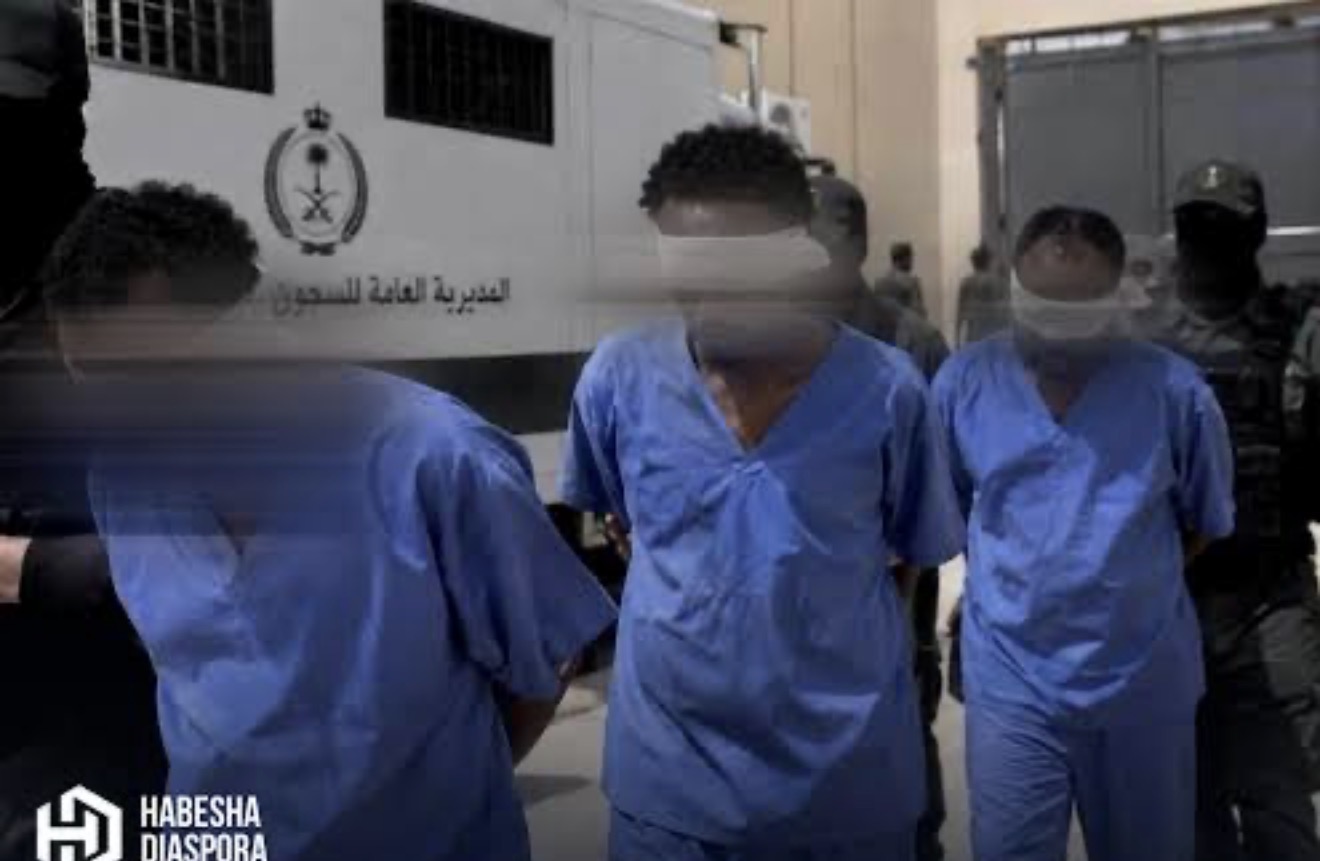
Saudi Arabia has executed five Ethiopian nationals convicted of smuggling hashish into the kingdom, bringing the number of executions carried out in the country this year to 205.
The Saudi Interior Ministry announced the executions on Thursday, November 5, 2026, saying the five men were found guilty of participating in the smuggling of hashish into the country.
According to a statement published by the official Saudi Press Agency, the executions were carried out in the Asir region in southwestern Saudi Arabia.
The latest executions bring to 32 the number of Ethiopian nationals put to death in Saudi Arabia in 2026, making Ethiopians the largest foreign nationality among those executed this year.
Five Ethiopians were reportedly executed in June, while another five were put to death in July over similar drug-related offences.
The latest development comes amid growing international concern over Saudi Arabia’s increasing use of capital punishment, particularly against foreign nationals convicted of drug-related offences.
Human Rights Watch (HRW), in a report published in July, warned that at least 79 Ethiopian nationals remained at imminent risk of execution over similar charges.
The rights organisation also raised concerns about alleged violations of fair trial guarantees, including inadequate access to legal representation and interpretation services for some Ethiopian migrants facing capital punishment.
Saudi Arabia recorded 356 executions in 2025, its highest annual figure on record.
Thousands of Ethiopians live and work in Saudi Arabia, many of whom migrate in search of employment through the dangerous Eastern Route connecting the Horn of Africa to the oil-rich kingdom through Yemen.
The route exposes migrants to serious security and humanitarian risks during their journey.


-
 Politics3 days ago
Wike Defends ₦10m Reward for Councillors, Insists It Is Not Vote-Buying
-
 News5 days ago
FG Seeks Fresh $500m World Bank Loan Ahead of 2027 Presidential Inauguration
-
 Health3 days ago
Enugu Shuts Down Four Illegal Private Hospitals, Warns Operators Against Unsafe Practices
-

 Entertainment4 days ago
Mbah Appoints Nollywood Actress Destiny Etiko as Senior Special Assistant
-
 News5 days ago
Mass Protest Looms in Abacha Community, Anambra, Over PG Election Dispute
-

 Crime1 day ago
Tragedy At UNN As Six Fresh Graduates Are Found Dead In Nsukka Apartment
-
 News4 days ago
US Lecturer Alleges Tinubu Never Attended Chicago State University
-
 Sports4 days ago
Toxic Politics: NFF Officials Block Peter Obi From Greeting Flamingos