


Uncategorized
Petrol soars above N1,000/ltr as Tinubu okays 15% import tariff



The new policy, which takes effect after a 30-day transition period expected to end on 21 November 2025, is part of the government’s strategy to protect local refiners and reduce the influx of cheaper imported products that threaten domestic refining investments.
However, marketers say the move could backfire and push retail prices beyond the reach of average Nigerians.
Commenting in a telephone interview on Thursday, multiple depot operators with knowledge of the matter, who spoke on condition of anonymity, said the decision could further raise the price of petrol, which already sells for around N920 per litre, in many parts of the country.
“As it is, the price of fuel may go above N1,000 per litre. I don’t know why the government will be adding more to people’s suffering,” one of the depot operators said.

Another depot operator added, “Unfortunately, some of the importers are working in alignment with Dangote, which is why the last price increase was general; all players raised their prices at once. Let’s just wait and see what happens next.”
Another operator added that without a clear framework to stabilise market forces and ensure fair competition, the new import duty could trigger another round of price hikes and worsen the hardship faced by consumers.
The National Vice-President of the Independent Petroleum Marketers Association of Nigeria, Hammed Fashola, also agreed that the tariff had its implications, saying it might lead to a price surge.
Fashola said the policy had both positive and negative effects, adding that it could discourage importation while promoting local refining.
The IPMAN leader opined that some marketers moght perceive it as an opportunity to monopolise the sector in favour of Dangote and a few other refineries.
“The 15 per cent tariff on imported fuel has its own implications. Maybe the price will go up, and equally, it will discourage importers from bringing in fuel if it becomes too costly.
“But it has both negative and positive effects on the sector. I see that the government is trying to protect local refiners, but it will have its own implications because people will see it as a way of monopolising the industry for certain people. At the same time, the government aims to protect the local refiners.”
However, Fashola stressed that the failure of the local refiners to supply enough fuel into the domestic market could trigger a fuel crisis.
“If the local refiners fail, it will have its own implications. It may lead to scarcity, and people will not have an alternative. So, it has both positive and negative effects. That’s the way I see it,” he added.
On whether the development is in line with the Petroleum Industry Act, Fashola said, “I don’t think the government will do anything outside the law. They would not like to do anything against the PIA. Ordinarily, everybody would like to see that our local refineries are surviving and they are doing well, which is good for our economy. I don’t think it has anything to do with the PIA.”
In his advice to local refiners, especially the Nigerian National Petroleum Company Limited, Fashola urged them to live up to expectations. He sought the revamp of the Port Harcourt, Warri and Kaduna refineries.
“My advice or my prayer is to the new management of NNPC: the way they are going, I think they are going in the right direction, and they have to do it fast by bringing in investors to revive our refineries. If all NNPC refineries can come on board, it will solve a lot of problems. I hear people trying to say that maybe they’re going to practise monopoly, but that will not be there. This applies to other private refineries like BUA; when they are able to come up, I think that the fear of monopoly will not be there anymore. There will be competition among the refineries, and that will be good for us,” Fashola stated.
Meanwhile, the National President of the Petroleum Products Retail Outlet Owners Association of Nigeria, Billy Gillis-Harry, described the 15 per cent tariff as a win-win situation, stressing that the policy would be tested, though it is not a totally new policy.
“Our expectation is that at some point, it might be reviewed. We are looking for product availability and affordability. We must always keep an eagle eye on these two things. That’s what PETROAN will advise at this time. I want Nigerians to know that if we are looking for cheap fuel and we are driving everybody out of the business, the product will not be available, and then prices will skyrocket.
“As it is today, everybody is working with Dangote, and we know that Dangote cannot satisfy the country. So, there has to be a mix of product availability,” he added.
It was earlier reported that President Tinubu approved the introduction of a 15 per cent ad valorem import duty on petrol and diesel imports into Nigeria.
The initiative is aimed at protecting local refineries and stabilising the downstream market. In a letter dated 21 October 2025, reported publicly on 30 October 2025, and addressed to the Attorney-General of the Federation and Minister of Justice, the Federal Inland Revenue Service and the Nigerian Midstream and Downstream Petroleum Regulatory Authority, Tinubu directed the immediate implementation of the tariff as part of what the government described as a “market-responsive import tariff framework.”
The letter, signed by his Private Secretary, Damilotun Aderemi, and obtained by our correspondent on Thursday, conveyed the President’s approval following a proposal by the Executive Chairman of the FIRS, Zacch Adedeji.
The proposal sought the application of a 15 per cent duty on the cost, insurance and freight value of imported petrol and diesel to align import costs with domestic market realities. The tariff is separate from the additional 5 per cent surcharge to be charged on locally produced and imported fuel in the new tax act, starting January 2026.
Adedeji, in his memo to the President, explained that the measure was part of ongoing reforms to boost local refining, ensure price stability, and strengthen the naira-based oil economy in line with the administration’s Renewed Hope Agenda for energy security and fiscal sustainability.
According to projections contained in the letter, the 15 per cent import duty could increase the landing cost of petrol by an estimated N99.72 per litre, based on an average daily consumption of 19.26 million litres as of September 2025. This translates to an additional N1.92bn in daily import costs and revenue to government coffers.
The letter read, “At current CIF levels, this represents an increment of approximately N99.72 per litre, which nudges imported landed costs towards local cost recovery without choking supply or inflating consumer prices beyond sustainable thresholds. Even with this adjustment, estimated Lagos pump prices would remain in the range of N964.72 per litre ($0.62), still significantly below regional averages such as Senegal ($1.76 per litre), Côte d’Ivoire ($1.52 per litre), and Ghana ($1.37 per litre).”
It added that payments are to be made into a designated Federal Government revenue account managed by the Nigeria Revenue Service, with verification and clearance oversight by the Nigerian Midstream and Downstream Petroleum Regulatory Authority.
“The core objective of this initiative is to operationalise crude transactions in local currency, strengthen local refining capacity, and ensure a stable, affordable supply of petroleum products across Nigeria,” Adedeji stated.
The FIRS boss also warned that the current misalignment between locally refined products and import parity pricing has created instability in the market.
“While domestic refining of petrol has begun to increase and diesel sufficiency has been achieved, price instability persists, partly due to the misalignment between local refiners and marketers,” he wrote.
He noted that import parity pricing, the benchmark for determining pump prices, often falls below cost recovery levels for local producers, particularly during foreign exchange and freight fluctuations, putting pressure on emerging domestic refineries.
Adedeji added that the government’s responsibility was now “twofold: to protect consumers and domestic producers from unfair pricing practices and collusion, while ensuring a level playing field for refiners to recover costs and attract investments.”
He argued that the new tariff framework would discourage duty-free fuel imports from undercutting domestic producers and foster a fair and competitive downstream environment.
The policy comes as Nigeria intensifies efforts to reduce dependence on imported petroleum products and ramp up domestic refining.
The 650,000 barrels-per-day Dangote Refinery in Lagos has commenced diesel and aviation fuel production, while modular refineries in Edo, Rivers and Imo states have started small-scale petrol refining.
However, despite these gains, petrol imports still account for up to 69 per cent of national demand during the 15 months between August 2024 and 10 October 2025.
The FIRS boss noted that the policy is not revenue-driven but corrective, introduced to align import costs with local production realities and prevent duty-free imports from undercutting domestic refineries that are just beginning to recover.
“While domestic refining of PMS has begun to increase and diesel self-sufficiency has been achieved, price instability persists,” the memo stated. “Import parity remains the benchmark for pricing but often sits below the cost-recovery point of local producers, particularly during currency and freight fluctuations.”
It warned that if left unchecked, these pricing distortions could undermine the viability of local refining at a critical time when investors are beginning to return to the sector following years of dormancy.
The new framework, the document added, is expected to encourage fresh investment in refining, storage, and logistics infrastructure while ensuring that local producers and marketers operate on a level playing field.
The tariff is backed by Sections 21 and 22 of the Petroleum Industry Act, which empower the NMDPRA to impose public service obligations on licensees to promote national energy security and economic development. Under Section 3(4) of the PIA, the President is also empowered to issue policy directives to the regulator to enforce such measures.
Under the presidential directive, the NMDPRA is to issue the necessary regulations and gazette publication while prioritising locally refined products in the issuance of import licences.
The regulator will also coordinate with the Implementation Committee on Crude and Refined Products Sales in Naira to oversee progress and determine when tariff adjustments or sunset clauses become necessary.
Tinubu also mandated the NMDPRA to review the tariff periodically, with a view to scaling it down or eliminating it as domestic refining capacity expands.
“In view of the foregoing, Your Excellency is respectfully invited to consider and, if deemed appropriate: approve the introduction of a 15 per cent tariff import duty on Premium Motor Spirit and diesel, to be assessed on the cost, insurance, and freight value at discharge, with all payments made into a designated Federal Government of Nigeria revenue account and verified by the Nigerian Midstream and Downstream Petroleum Regulatory Authority before discharge clearance.
“Direct the NMDPRA and the Nigeria Customs Service to implement a 15 per cent import duty on PMS and diesel, with effect after a 30-day transition period from the date of official notification. Direct the regulator to issue appropriate regulations in this regard and take local production into account first before the issuance of import licences.
“Direct a periodic review of the tariff rate and its continued necessity, including provision for scaling or sunset measures, as domestic Premium Motor Spirit refining capacity expands, under the oversight of the Implementation Committee on Crude and Refined Products Sales in Naira. Respectfully submitted for Your Excellency’s consideration and further directives.”
All of these prayers were approved by President Tinubu for immediate implementation on 21 October 2025.
Meanwhile, the NMDPRA spokesperson, George Ene-Ita, has assured of the full implementation of President Bola Tinubu’s newly approved 15 per cent fuel import tariff once it receives the formal directive from the government.
“We are the sector regulator, and once the policy comes into force, we will definitely play our regulatory role and midwife the process on behalf of the government,” the official told The PUNCH on Thursday. “As of now, I’m not aware of any official communication, but if it is true that the policy has been signed by the President, it will eventually get to us, and there will be no issue implementing it.”
The spokesperson further explained that the downstream market remains fully deregulated, meaning that market forces and competition among operators would determine pump prices once the tariff takes effect.
“Since it is a presidential directive, the template is already there to follow through,” the spokesperson added. “Prices may rise, stay the same, or even drop depending on competition and market realities. Personally, I don’t envisage any sharp increase because the government would have factored in stabilisation mechanisms to ensure that prices at the last mile don’t spiral out of control.”
However, energy analysts expressed caution, warning that while the policy could encourage patronage of local refineries and boost government revenue, it might also pose risks to energy security and retail prices.
An oil and gas expert, Olatide Jeremiah, told one of our correspondents that the new tariff would “inevitably add a mark-up of about N100 per litre to the landing cost of petrol and diesel,” potentially creating unfair price competition among suppliers.
“This move will drive demand towards local refineries and increase government income,” the expert noted. “But it could also trigger price hikes and short-term energy insecurity, as even top energy-producing nations still import about 10 to 15 per cent of their fuel needs. Completely cutting off imports through high tariffs could expose the country to supply risks. The introduction of a 15 per cent tariff will add a mark-up of about N100 per litre to the landing cost of petrol and diesel, and it will give unfair price competition to the supply players.”
Meanwhile, a prominent chieftain of the All Progressives Congress in Delta State, Chief Ayiri Emami, has faulted the President’s approval of a 15 per cent ad valorem import duty on petrol and diesel, warning that the move will worsen the suffering of ordinary Nigerians.
Emami, who is also the Chairman and Chief Executive Officer of A & E Group, an oil, construction and haulage company, raised the concerns at a press conference held in Abuja.
Speaking with journalists in Abuja, he lamented that the policy would “hurt the masses, not marketers.” The APC stalwart also urged the President to suspend it until the government provides more relief to Nigerians.
“Anybody advising Mr President to impose a 15 per cent tax on petroleum right now is not doing him any good. This kind of policy will not hurt marketers; it will hurt ordinary Nigerians. Whatever tax you put on petroleum goes straight back to the people on the streets. Nigerians are already hungry and struggling,” he said.
Authorities in the United Kingdom have imposed movement restrictions on aquatic animals following the confirmation of a Koi herpesvirus (KHV) outbreak at a fish-growing facility in Aspley Guise, Milton Keynes.
The Fish Health Inspectorate (FHI) confirmed the outbreak at a facility at Tree Farm on September 10, triggering statutory measures designed to prevent the virus from spreading to other fish farms and waterways.
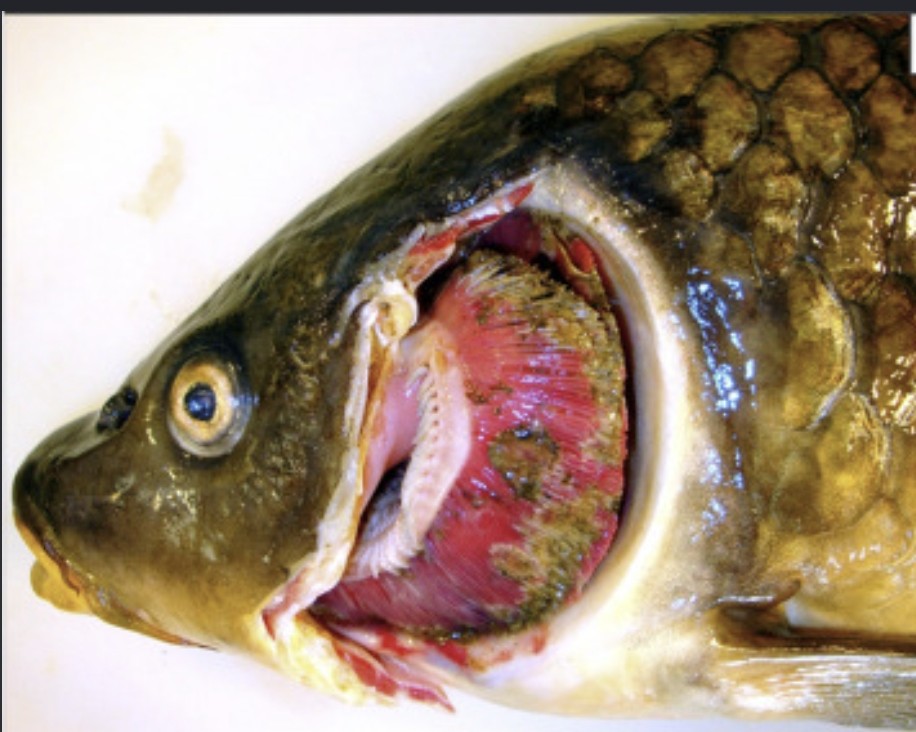
KHV is a serious viral disease that affects common carp and ornamental carp, including koi. According to the UK Government, the disease can cause significant fish deaths, particularly when water temperatures range between 16°C and 28°C.
Affected fish may develop white or brown patches on their gills, damaged or rough skin, excessive loss of mucus and sunken eyes.
However, authorities stressed that KHV poses no risk to human health.
Under the restrictions, operators within the designated area are prohibited from moving aquatic animals, including live fish, eggs or gametes, into, out of or within the affected zone without written approval from the FHI.
Dead aquatic animals and related biological material must also be disposed of through approved Category 2 animal by-product waste procedures.
The FHI will monitor the affected facility and inspect compliance with the restrictions. Operators are required to immediately report any renewed fish deaths or evidence that the disease has spread to other facilities or bodies of water within the designated area.
Any proposed physical changes to affected sites, including alterations to boundaries, water bodies or their use, must also be reported to the inspectorate in advance.
The FHI said requests for necessary permissions should generally be submitted at least five working days before the proposed movement or activity.
Additional control measures could include enhanced biosecurity, further movement restrictions, culling of infected fish, and thorough cleaning and disinfection of affected premises.
KHV outbreaks have been subject to statutory controls in the UK since 2007, with the country maintaining a surveillance programme for the disease.
Authorities have urged fish owners and aquaculture operators to strengthen biosecurity measures and promptly report suspected cases to help prevent further spread.
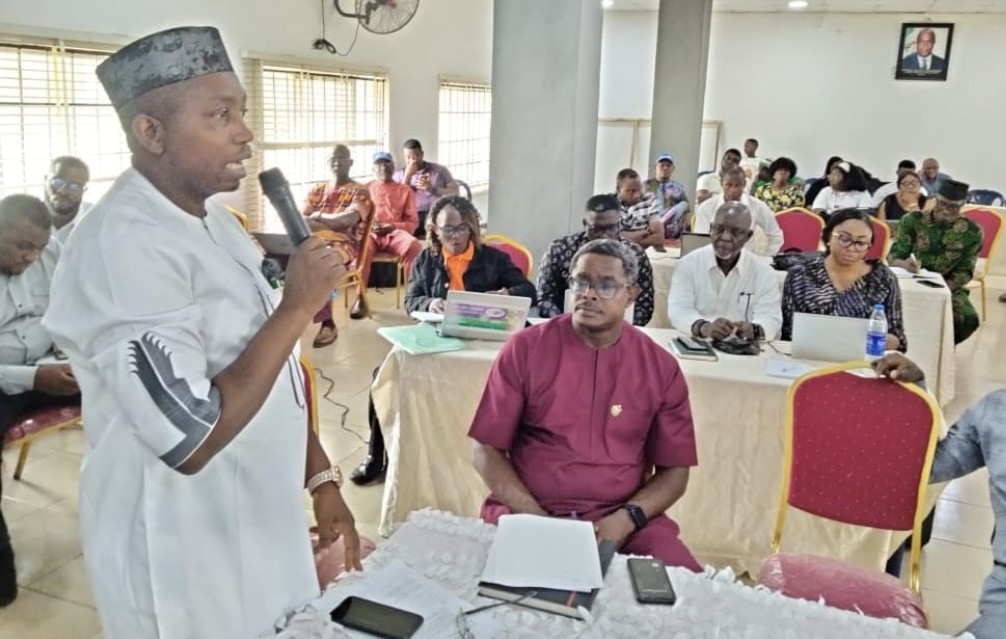
The Enugu State Government has tasked health partners and stakeholders on translating government policies, investments and strategic plans into measurable improvements in health outcomes meant to uplift residents’ health status.
The state Commissioner for Health, Prof. George Ugwu, gave the task on Saturday in Enugu while formally declaring open the 2026 Enugu State Health Sector Joint Annual Review (JAR) Meeting.
Ugwu assured that the state government remained committed in building a stronger, more responsive and resilient health system.
The commissioner called for renewed commitment, accountability and collective action to strengthen healthcare delivery across the state.
He commended Gov. Peter Mbah for his remarkable commitment to transforming the health sector through sustained investments, reforms and initiatives aimed at improving access to quality healthcare for the people.
Ugwu noted that the meeting provided an important platform for partners and stakeholders to take stock of the implementation of the 2026 Annual Operational Plan, assess progress, identify gaps and bottlenecks.
The commissioner said that the meeting would provide opportunities for agreements on practical actions to accelerate health sector performance.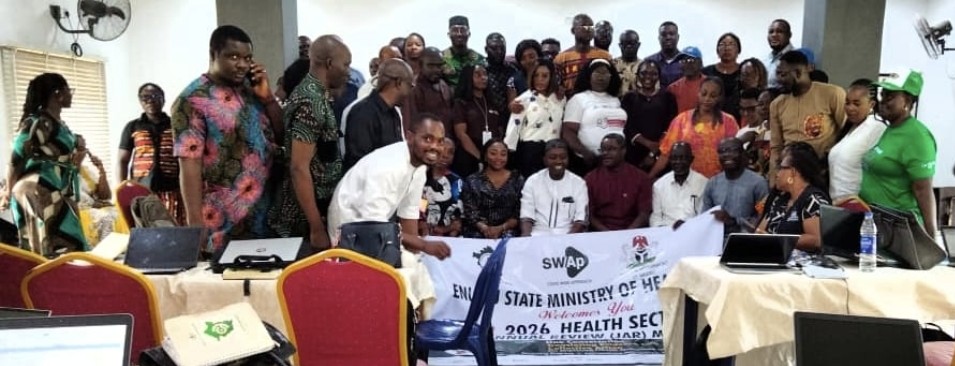
In a remark, the Permanent Secretary, Ministry of Health, Dr. George Nwachi, stressed the importance of the review as a mechanism for strengthening accountability, evidence-based decision-making and effective implementation of health programmes.
Nwachi emphasised the need for stakeholders to critically examine achievements and challenges, close identified implementation gaps and develop realistic priorities that would further improve service delivery across the state.
The technical sessions featured the presentation of the 2025 JAR Resolutions by the Director of Planning, Research and Statistics of the Ministry of Health, Mrs Ann Oguejiofor, providing a basis for assessing progress on previously agreed actions.
The Sector-Wide Approach (SWAp) Desk Officer, Mrs Uju Ewoh, also presented an update on the Maternal and Neonatal Mortality Reduction Innovation and Initiative (MAMII) initiative.
The State Monitoring and Evaluation Officer, Mr Ikechukwu Obodo, presented the validated JAR template to guide the assessment of health sector performance and ensure that the review is anchored on reliable data and measurable indicators.
The outcomes of the two-day critical stakeholders’ meeting would serve as a critical foundation for the development of the 2027 Annual Operational Plan, further advancing Enugu State’s determination to deliver stronger, more efficient and people-centred healthcare services.
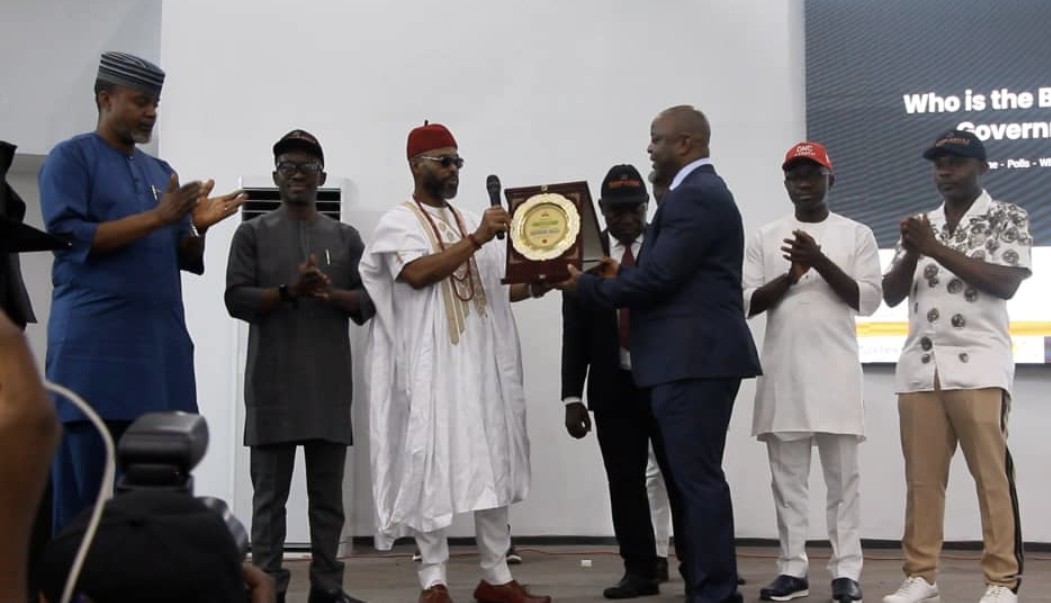
…As Nsukka LG boss, Asogwa bags Best Council Chairman Award_
Governor Peter Ndubuisi Mbah’s transformational leadership and developmental strides took centre stage, yet again, as Enugu Media Village honoured him with an Award of Excellence for dedication to transformational leadership and outstanding governance.
This was even as the Chairman of Nsukka Local Government Area, Engr. Jude Asogwa, emerged winner of the 2025/2026 Enugu State Best Performing Local Government Chairman Award, while Isi-Uzo Council Chairman, Barr. Obiora Obeagu came second in the poll.
The awards were presented during the organisation’s 2025/2026 Best Performing Local Government Chairman Poll and Leadership Recognition Ceremony, which took place at the International Conference Centre, Enugu.
Presenting the awards on behalf of the organisation, the Board of Trustees Chairman of Enugu Media Village and former Chairman of Agwu Local Government Area, Hon. Nnanna Nze, commended Governor Mbah for what he described as his remarkable transformation of the state in just three years.
Nze noted that the governor’s developmental strides in critical sectors of the economy had continued to attract commendation from residents and stakeholders.
Earlier in his welcome address, the Founder and Director General of Enugu Media Village, Mr. Kelvin Uche Edeh, described the organisation as a media platform established to promote developmental governance and ensure that information about government projects reaches the grassroots.
He noted that Governor Mbah had demonstrated that governance was a powerful tool for transforming communities and improving lives.
“Governor Peter Mbah has shown us that governance is about changing communities and transforming systems.
“We are committed to supporting developmental governance by ensuring that information reaches the grassroots across all local government areas,” Edeh stated.
Receiving the award, Governor Mbah said the honour belonged to members of his team and the entire people of Enugu State for entrusting their mandate to him.
He, however, said that the people of Enugu State had only seen a tip of the iceberg, as he remained committed to exceeding expectations in delivering more dividends of democracy to the people.
Mbah, who was represented by the state’s Attorney General and Commissioner for Justice, Barr. Osinachi Nnajieze, said the people of Enugu State deserved only the very best, hence his insistence on excellence, innovation and high performance from members of his administration.
Another major highlight of the event was the emergence of Engr. Jude Asogwa, as winner of the 2025/2026 Enugu State Best Performing Local Government Chairman Award.
The poll, which featured all 17 local government areas of the state, recorded Nsukka Local Government Area as the overall winner with 110,447 votes, ahead of Isi Uzo, Uzo Uwani, Igbo Eze North and Enugu South LGAs, in that order.
In his acceptance speech, Engr. Asogwa, who dedicated the award to God, Governor Mbah, his family and the people of Nsukka, said the recognition reflected his Council’s commitment to delivering development to all 52 communities in the LGA.
He further reaffirmed Nsukka’s support for Governor Mbah’s re-election, citing the administration’s investments in the area such as 20 Smart Green Schools, 21 Type-2 Primary Healthcare Centres, dualization of the over 44.1-kilometre Enugu – Opi – Nsukka Road, the 52.2km Nguru – Lejja – Aku – Akpakume Nze – Egede – Affa – Eke road, and N1 billion oxygen plant, among other development projects designed to improve lives and grow Nsukka and Enugu North Zone’s economy.
“Let me just tell us that the secret of our performance is Dr. Peter Ndubuisi Mbah. He is a leader that supports the local government council chairmen. He is a governor who does not tamper with the allocations of the LGAs. That is the secret of the results you are seeing. In addition, he has delivered 267 Smart Schools and 260 Type 2 Primary Healthcare Centres in the 260 wards.
“So, Nsukka is for Governor Peter Mbah. Also, we had earlier decided as a zone that come 2027, we will support and deliver not only the governor but also President Bola Ahmed Tinubu, whose administration has contributed to the growth and development of our people, including the appointment of the first indigenous Vice Chancellor of the University of Nigeria, Nsukka,” he said.
The event also featured the presentation of Awards of Excellence to distinguished public office holders and leaders in recognition of their contributions to governance, leadership and public service.
Among the awardees were Senator Osita Ngwu, representing Enugu West Senatorial District; Senator Ikeje Asogwa, representing Enugu North Senatorial District; Hon. Chimaobi Sam Atu, representing Enugu North and South Federal Constituency; Barr. Osinachi Nnajieze, Attorney General and Commissioner for Justice; and Chie Chukwudi Nnaji.

The Member representing Ilaje/Ese-Odo Federal Constituency in the House of Representatives, Donland Ojogo, narrowly escaped death on Saturday when his two-vehicle convoy was involved in a road accident.
The incident, which occurred along the Ore–Ondo Road, reportedly involved a commercial bus that dangerously overtook the lawmaker’s vehicle and collided with an oncoming vehicle, causing panic and confusion among road users.
Although Hon. Ojogo, who recently secured a return to the National Assembly, did not sustain any serious injuries, some members of his entourage were affected in the crash.
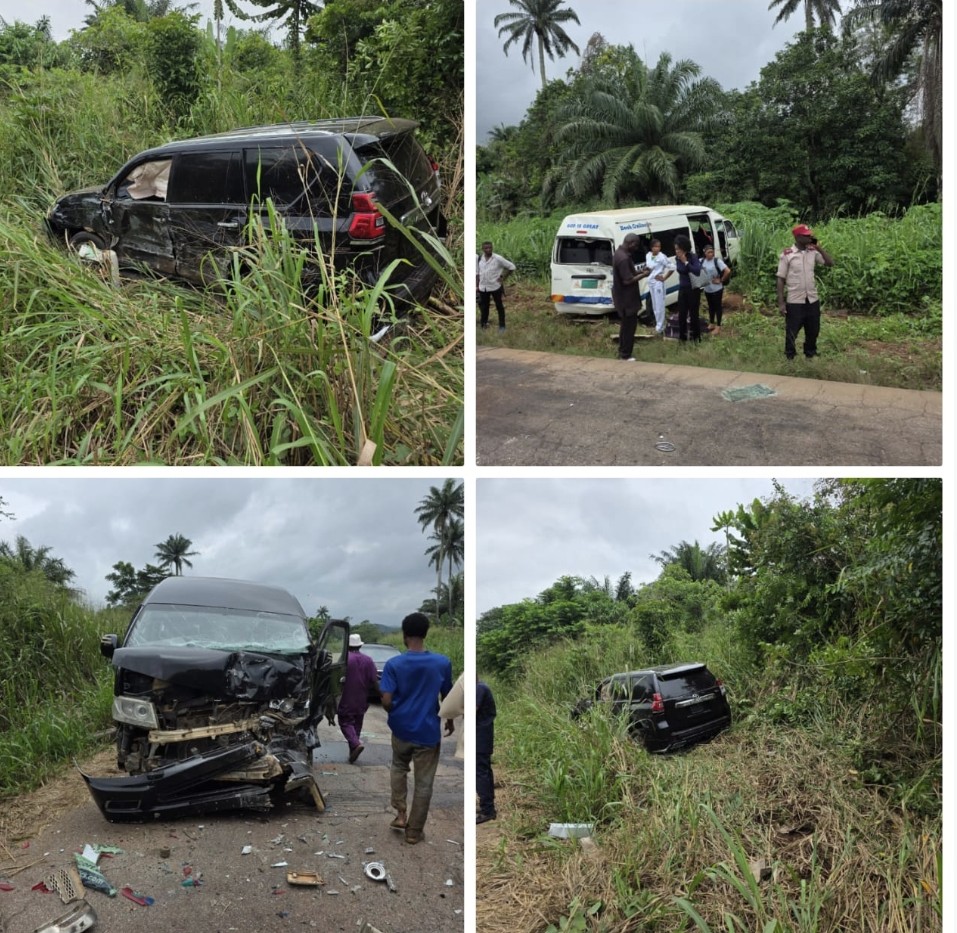
The federal lawmaker was said to be en route to Arogbo in Ese-Odo Local Government Area for a political l engagement when the accident happened.
Reacting to the incident, Ojogo expressed gratitude to God for sparing his life and that of his team, noting that the situation could have been fatal if not for divine intervention.
According to him, “God took perfect control of the situation and prevented what could have turned into a tragic incident.”
He, however, blamed the driver of the commercial bus for the accident, accusing him of reckless driving and impatience on the highway.
Meanwhile, those who sustained injuries in the crash have been rushed to a nearby hospital where they are currently receiving treatment.
Petroleum marketers have slowed fuel purchases from the Dangote Petroleum Refinery amid uncertainty surrounding the company’s decision to sell Premium Motor Spirit (PMS) in U.S. dollars, raising concerns over possible disruptions in fuel supply across Nigeria.
While some marketers claimed that fuel loading had been suspended at the Lekki-based refinery, the company dismissed the reports, insisting that loading operations were continuing as normal.
Industry players, however, said many marketers had deliberately reduced or halted large-scale purchases while awaiting clarification on the refinery’s new pricing structure and the expected landing cost of imported petroleum products.
The National Publicity Secretary of the Independent Petroleum Marketers Association of Nigeria (IPMAN), Chinedu Ukadike, explained that marketers were reluctant to buy large volumes because of uncertainty over future petrol prices.
According to him, products currently in circulation were purchased at between ₦1,250 and ₦1,300 per litre, while fresh supplies could be priced differently depending on the new crude oil pricing template and imported fuel costs.
“The challenge is that marketers do not know whether petrol prices will rise or fall after making fresh purchases. Consumers still expect fuel to be sold at the prevailing pump price, making it risky for marketers to stock up,” Ukadike said.
He noted that although fuel distribution had not stopped entirely, the volume of products being loaded had reduced significantly. He urged the Federal Government to intervene quickly by resolving the pricing uncertainty to restore confidence in the downstream petroleum sector.
Similarly, the IPMAN Western Zone Chairman, Oyewole Akanni, confirmed that the uncertainty had forced many marketers in the South-West to suspend fresh purchases, resulting in temporary closures of some filling stations.
Speaking to the News Agency of Nigeria (NAN), Akanni said the situation followed the reported suspension of PMS loading at the Dangote Refinery about four days ago, forcing marketers to rely on private depots where prices have risen sharply.
According to him, ex-depot prices at private facilities in Lagos now range from ₦1,200 to ₦1,220 per litre, excluding transportation costs, with some depots reportedly selling at up to ₦1,250 per litre. He added that products were still available from suppliers such as NIPCO and Aiteo at around ₦1,200 per litre.
Akanni disclosed that four truckloads of petrol meant for his filling stations had remained at the refinery since loading was reportedly suspended.
“I was supposed to receive four truckloads of PMS four days ago, but that has not happened because the trucks are still at the Dangote Refinery,” he said.
Despite the situation, Akanni maintained that Nigeria was not experiencing fuel scarcity and advised motorists against panic buying. However, he warned that prolonged uncertainty could eventually lead to an increase in pump prices.
The developments have heightened anxiety in the downstream sector, with marketers closely monitoring pricing decisions before resuming normal fuel purchases.

-
 News3 days ago
C’RIVER 2027 BUDGET: GOV OTU PRESENTS ₦987.8bn ESTIMATES TO ASSEMBLY
-

 EverydayNews Telescope4 days ago
Enugu East Senate: The Dark Side of Ada Ogbu, NDC Candidate
-
 News5 days ago
Tension Mounts in Awka Anglican Diocese as Supervising Bishop Ezeofor Moves to Take Over Wednesday
-
 News2 days ago
Holy Ghost Transformation: How Enugu North Chairman Ibenaku Onoh Ended Years of Traffic Chaos, Roadside Trading
-
 EverydayNews Telescope4 days ago
Ebonyi 2027: The People’s Quest For ODII Vs Compromised Stakeholders
-
 Politics2 days ago
One Feared Dead, Several Injured as Thugs Attack Ebonyi NDC Assembly Candidate, Burn Campaign Vehicle
-
 Politics4 days ago
2027: Tinubu Has No Hand in Alleged Assassination Plot Against Atiku – APC
-
 Economy5 days ago
Fuel Subsidy Removal Irreversible, Nigeria Won’t Return to Egypt — Tinub