



Politics
PDP Enugu Ticket: Did Nnaji’s Running Mate Violate Electoral Act?

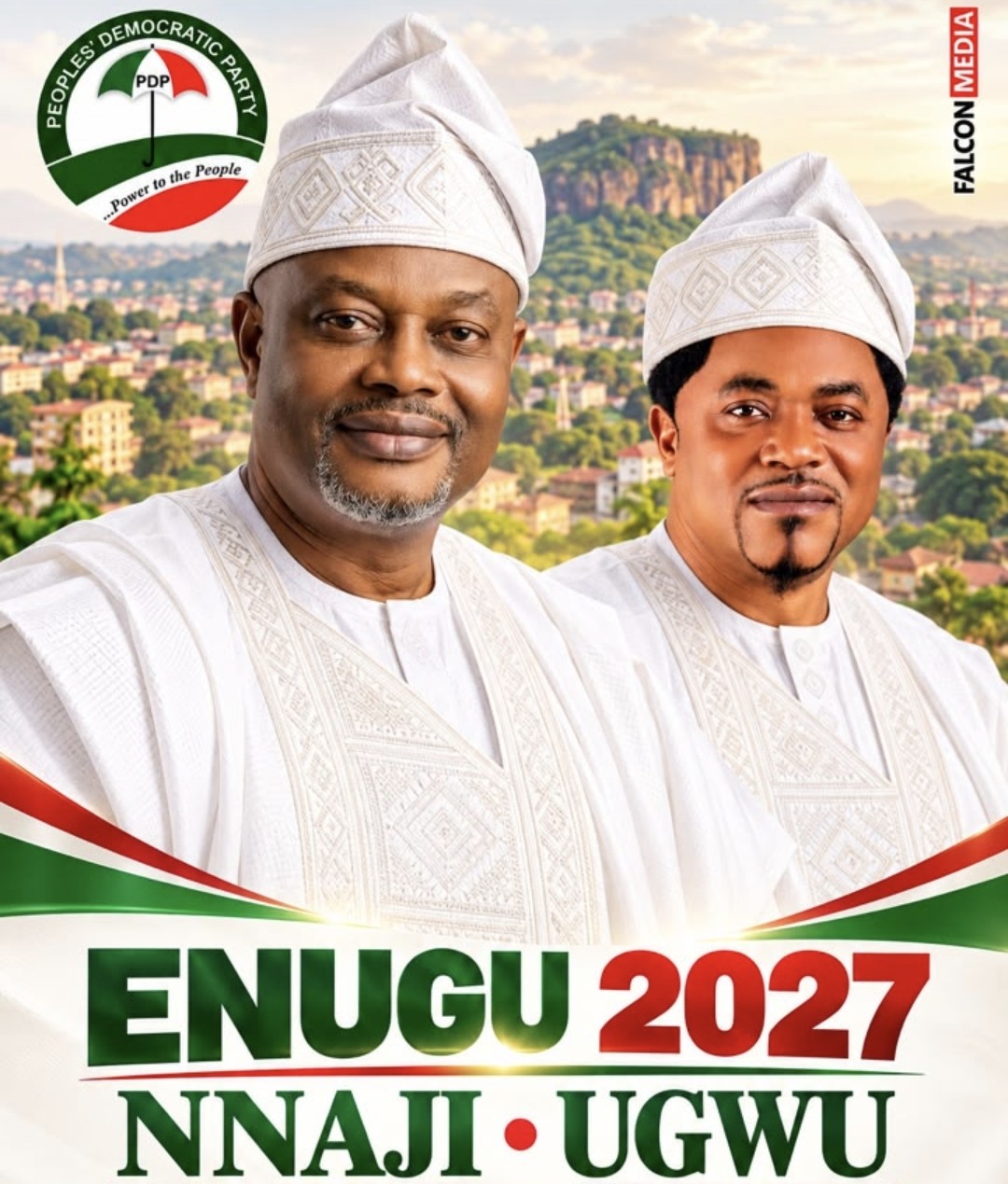

Fresh legal questions emerge over Chijioke Ugwu’s membership registration after Supreme Court restores party-register provisions
By Our Correspondent
Fresh legal questions have emerged over the Peoples Democratic Party’s 2027 governorship ticket in Enugu State following the Supreme Court’s restoration of key provisions of the Electoral Act dealing with political party membership registers and the conduct of primaries.
The questions centre on Chief Chijioke Peter Ugwu, who was recently announced by the PDP governorship candidate, Chief Uche Geoffrey Nnaji, as his running mate.
Nnaji announced Ugwu’s selection on September 24, shortly after the Supreme Court delivered its landmark judgment restoring Sections 77(5), 77(6), 77(7) and 84(2) of the Electoral Act 2026. Ugwu’s selection was subsequently reported by several Nigerian media outlets.
But documents and information available to this newspaper raise a question that could potentially become significant if the PDP ticket is challenged in court.

The PDP governorship primary in Enugu State was conducted on May 25, 2026.
However, Ugwu is understood to have registered as a PDP member on May 31, 2026 — six days after the governorship primary.
This means that if the May 31 registration date is accurately reflected in the party’s official records, his name could not have appeared in the PDP membership register submitted to the Independent National Electoral Commission (INEC) before the May 25 governorship primary.
That immediately raises the question:
Can a person who was not a member of the party on the date of its governorship primary subsequently be selected as the deputy governorship candidate without the Supreme Court’s restored membership-register provisions affecting the ticket?
What the Supreme Court restored
The Supreme Court, in a unanimous judgment delivered on September 24, set aside the Court of Appeal’s earlier decision which had declared the disputed provisions of the Electoral Act unconstitutional.
The apex court upheld the validity of Sections 77(5), 77(6), 77(7) and 84(2), following an appeal by INEC against the Court of Appeal judgment in the case involving the Zenith Labour Party.
Section 77(5) provides that only persons whose names are contained in a political party’s membership register submitted to INEC at least 21 days before a primary, congress or convention may participate in the exercise.
Section 77(6) requires political parties to use the membership register submitted to INEC for their primaries, congresses and conventions.
Section 77(7) deals with the consequence of failure by a party to submit its membership register within the prescribed period.
These provisions are now back in force following the Supreme Court judgment. Legal opinions suggest that the law’s insistence on the membership register submitted to INEC is relevant to the validity of the party’s eventual nomination process, depending on how the PDP formally nominated and submitted its governorship and deputy governorship candidates.
The precise documents will therefore be crucial.
Among the questions likely to arise are:
What date did the PDP submit its membership register to INEC?
Was Ugwu’s name contained in that register?
When exactly did Ugwu become a registered PDP member?
Was he a PDP member before the register was submitted to INEC?
How did the PDP formally nominate him as running mate?
Was the nomination made through a procedure recognised by the Electoral Act and the party’s constitution?
The controversy is coming at a sensitive time for the PDP, which has only recently unveiled Ugwu as Nnaji’s running mate. Ugwu, from Nguru in Nsukka Local Government Area, is an entrepreneur, philanthropist and community leader who runs businesses in logistics, contracting, consultancy and hospitality.
However, the governorship candidate and the deputy governorship candidate constitute a single electoral ticket. Therefore, any legal or constitutional issue affecting the eligibility of the deputy governorship candidate automatically has implications for the validity of the joint ticket, including the governorship candidate.
Another legal opinion available to this newspaper insists that “the gubernatorial ticket is a joint one. If the name of a deputy governor is not on the digital register, it invalidates the entire process.”
In the 2019 Bayelsa governorship election, APC’s David Lyon was declared winner. His running mate was Biobarakuma Degi-Eremienyo.
The Supreme Court later disqualified Degi-Eremienyo over the documents he submitted to INEC. The crucial point was that the Supreme Court held that his disqualification affected the joint ticket he shared with David Lyon. Consequently, the court ordered INEC to withdraw the Certificate of Return issued to Lyon and his deputy.
This happened one day before Lyon was due to be sworn in as governor. The certificate was subsequently issued to Douye Diri of the PDP, who had the next-highest lawful votes and the required geographical spread.

The All Progressives Congress (APC) Presidential Campaign Council has dismissed allegations linking President Bola Tinubu to an alleged plot to assassinate former Vice-President Atiku Abubakar ahead of the 2027 general elections.
The council described the allegation as baseless and politically motivated, insisting that neither President Tinubu, the Presidency nor the ruling APC had any involvement in any purported plan to harm Atiku or other opposition figures.
Spokesman of the council, Dele Alake, made the clarification while reacting to allegations raised by Timi Frank, a member of the African Democratic Congress (ADC), the platform on which Atiku is expected to seek the presidency in 2027.
Alake challenged Frank to submit any credible evidence supporting his claims to the appropriate security agencies rather than resort to what he described as unsubstantiated public accusations.
He also dismissed reports suggesting that security personnel attached to Atiku had been withdrawn, maintaining that the former Vice-President remained under the protection of the Nigeria Police Force and the Department of State Services (DSS).
According to him, President Tinubu had directed relevant security agencies to strengthen security arrangements for presidential, vice-presidential, governorship and deputy governorship candidates ahead of the forthcoming elections.
The APC spokesman accused those promoting the alleged assassination plot of attempting to generate political tension and attract international attention through what he termed “typical opposition rabble-rousing.”
He urged political leaders and their supporters to exercise restraint in their public utterances and refrain from making inflammatory statements capable of creating unnecessary anxiety in the country.
“Let our political competition be peaceful, lawful, and focused on the big issues that matter to Nigerians, not character assassination or wild, baseless allegations,” the statement read.
The council further appealed to political parties and candidates to uphold democratic principles and concentrate their campaigns on issues affecting Nigerians rather than engaging in personal attacks and allegations capable of undermining public confidence in the electoral process.

Political economist and former presidential candidate, Professor Pat Utomi, has warned that Nigeria could be plunged into civil unrest, potentially escalating into a civil war, if political leaders attempt to manipulate the outcome of the 2027 general election against the wishes of Nigerians.
Utomi raised the alarm on Sunday, October 18, 2026, following an impromptu town hall meeting in Manchester, United Kingdom, where he attended a luncheon to which former Labour Party presidential candidate, Peter Obi, was invited.
In a post on his X account, the professor disclosed that what was originally planned as a social gathering unexpectedly turned into an extensive discussion about Nigeria’s political future, particularly concerns surrounding the credibility of the 2027 elections.
According to him, participants expressed deep anxiety over what they perceived as the growing audacity of public officials who speak about the forthcoming elections as though the results had already been predetermined.
“I am in the middle of an accidental town hall meeting in Manchester in the UK. I came to a Lunch to which Peter Obi was invited. I found food I looked forward to deferred for questions on the trouble with Nigeria,” he wrote.
Utomi explained that much of the discussion centred on fears of electoral manipulation and the determination of Nigerians to resist any attempt to undermine the democratic process.
“Many of the questions suggest worry about the boldness of public officials in projecting rigging with results of elections of 2027 considered in the pocket,” he stated.
The political economist warned that the level of determination expressed by participants suggested that Nigerians might no longer tolerate attempts to impose electoral outcomes on them.
“The determination to do whatever will prevent election malpractice suggest we may see a civil war if power tries to muscle the will of the people this time,” Utomi cautioned.
His warning comes amid increasing political activities ahead of the 2027 general election, with concerns over electoral transparency, institutional credibility and public confidence continuing to dominate discussions about Nigeria’s democratic future.
Utomi’s remarks underscore the potential consequences of electoral malpractice and the need for authorities to guarantee a transparent, credible and peaceful electoral process that reflects the genuine choice of Nigerians.
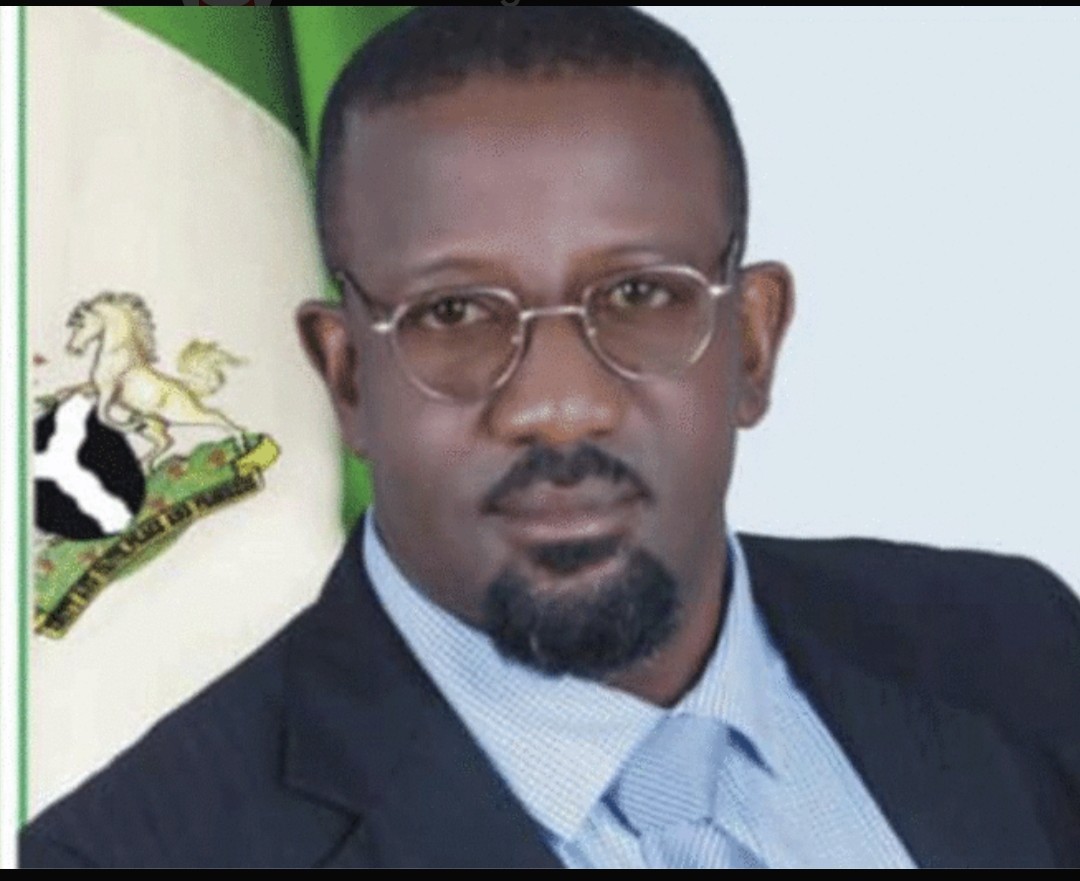
Former South-East campaign spokesman to President Bola Tinubu, Denge Josef Onoh, has dismissed claims that Peter Obi and the Obidient movement are obstacles to the emergence of a Nigerian president of Igbo extraction in 2027.
Onoh, who is Chairman of the Forum of Former Members of the Enugu State House of Assembly, described the position credited to political commentator Segun Sowunmi as misleading and inconsistent with Nigeria’s democratic realities.
Reacting to Sowunmi’s comments on the Selah Meditate Podcast in a statement made available to journalists in Lagos, Onoh insisted that the South-East required no permission from any political bloc to pursue its presidential ambition.
He argued that Obi’s performance in the 2023 presidential election had already demonstrated that the Obidient movement enjoyed nationwide acceptance beyond ethnic and regional considerations.
Citing Obi’s victories in Lagos, Nasarawa, Plateau and the Federal Capital Territory, Onoh maintained that portraying the movement as an exclusively Igbo political platform amounted to a distortion of electoral facts.
“Peter Obi did not run a regional or ethnic campaign,” he declared, stressing that the movement attracted Nigerians across religious, ethnic and geographical divides.
Onoh also accused Sowunmi of double standards for attempting to hold Obi responsible for the activities of some Obidient supporters while allegedly ignoring similar conduct among supporters of other political parties.
According to him, the Obidient movement is a decentralised, citizen-driven political force whose millions of independent supporters cannot reasonably be subjected to the personal control of one individual.
He further rejected suggestions that the entrepreneurial success of Igbo people across Nigeria should weaken their demand for political inclusion and equitable representation.
“An ethnic group’s resilience, entrepreneurial drive, and ability to survive in a hostile economy do not strip them of the right to demand good governance,” Onoh stated.
He maintained that the contributions of Igbo entrepreneurs to banking, aviation, real estate, commerce and other sectors of the Nigerian economy should not be used as justification for denying the region its legitimate political aspirations.
While acknowledging that some individuals from the South-East occasionally conduct themselves inappropriately in their host communities, Onoh argued that such isolated actions should not be deployed to undermine the collective political rights of the region.
He insisted that the South-East must not be compelled to apologise for its democratic choices or abandon its ambition to produce Nigeria’s president.
“The South-East does not need a permission slip from political actors who are stuck in old ways of doing things,” he declared.
Looking ahead to the 2027 general election, Onoh urged political stakeholders to recognise the momentum generated by Obi’s 2023 presidential campaign as an opportunity to strengthen national alliances rather than portray it as a threat to Igbo political advancement.
He maintained that the region’s presidential ambition must be pursued through democratic engagement, competence, strategic partnerships and the ballot box, rather than political concessions dictated by individuals or sectional interests.
By PETRUS OBI
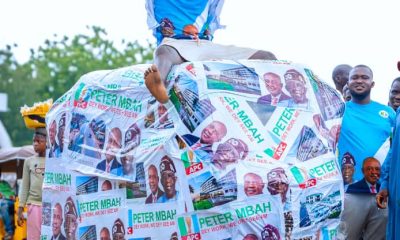
That Enugu has become a construction site is no longer news. That Governor Peter Mbah is determined to turn promises into tangible projects is increasingly evident in the scale of infrastructure development across the state.
When Mbah promised to tackle urban roads across Enugu, many were sceptical. Today, road construction and rehabilitation have become prominent features of the state’s development drive. In three years the governor has extinguished whatever record in road rehabilitation and overall infrastructural developments.
Now, the governor has pledged to rehabilitate the remaining 1,022 urban roads, reaffirming his administration’s commitment to improving connectivity, reducing travel time and easing the burden on motorists and commercial transport operators.
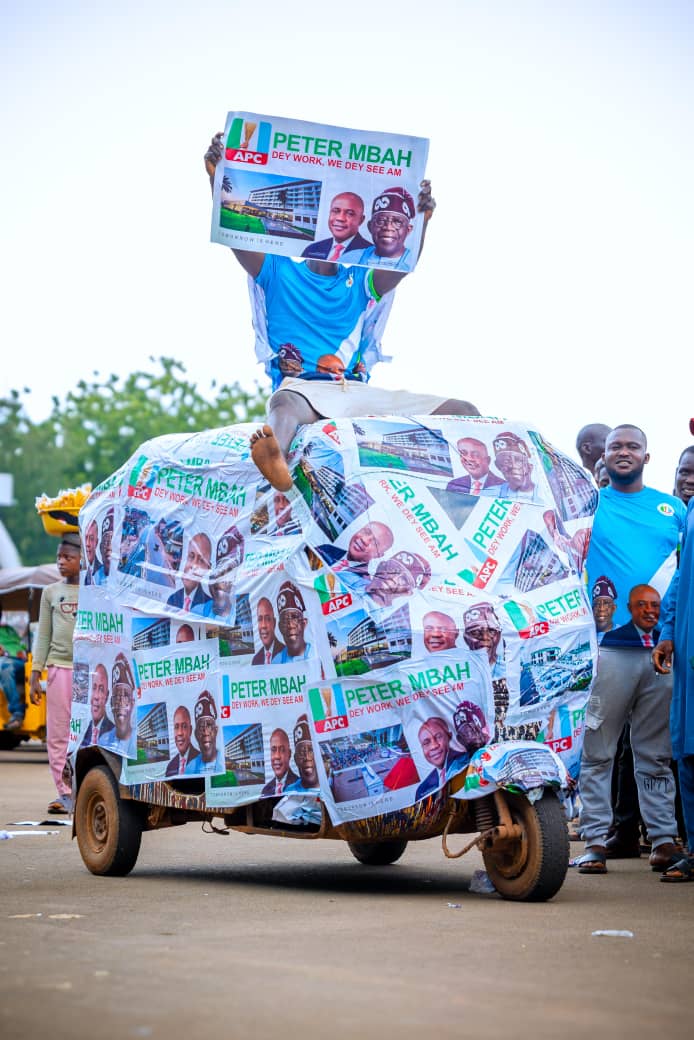
Mbah gave the assurance on Saturday at Okpara Square, Enugu, during the grand finale of the Tricycle Riders Association of Nigeria’s “One Million March,” where Keke riders endorsed him and President Bola Tinubu for re-election in 2027.
Beyond the road promise, the governor announced the abolition of the N750 daily ticketing fee for tricycle operators, extended their operating hours from 9pm to 10pm and reaffirmed their free access to the state’s modern transport terminals.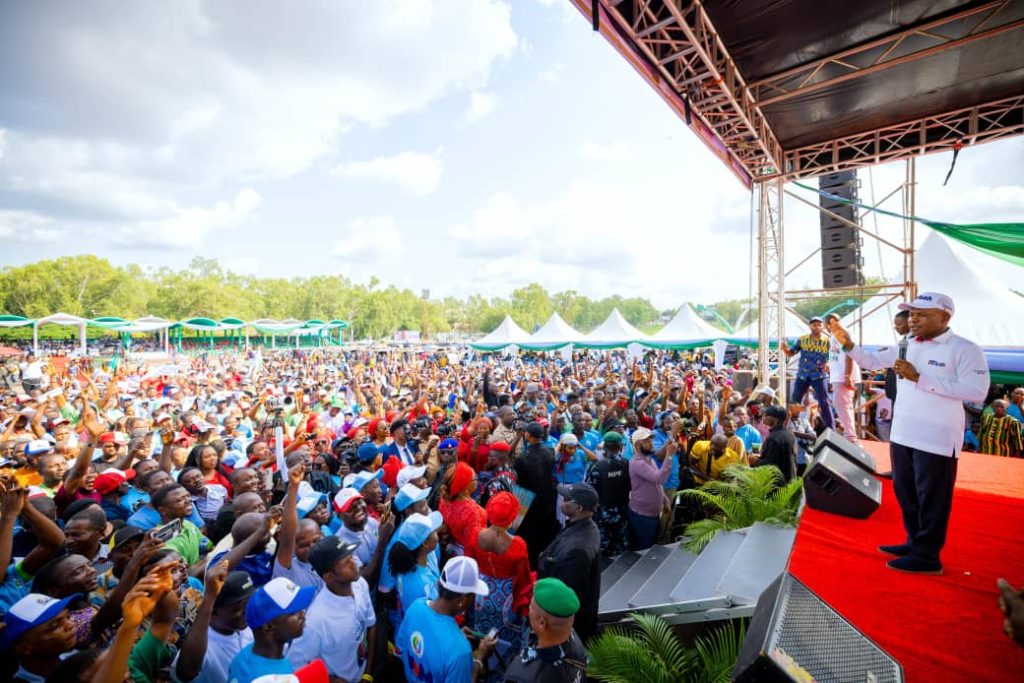
According to Mbah, the measures are designed to reduce operating costs and increase the disposable income of riders whose services remain essential to the movement of workers, students, traders and other residents.
He explained that poor roads impose additional costs on operators through frequent repairs and lost working hours, adding that areas such as Emene, Abakpa, Trans-Ekulu, Awkunanaw, Coal Camp, New Haven, Thinkers Corner and Uwani have roads that are already paved or undergoing construction.
“I can assure you that there will be no road in our city that will be unpaved. We are going to pave all the remaining 1,022 roads,” the governor declared.
The riders’ endorsement, according to the association’s Enugu State Chairman, Comrade Kingsley Edeh, reflects their assessment of improvements in security, infrastructure and social amenities. He also highlighted the 267 Smart Green Schools and the completion of previously abandoned projects, including the International Conference Centre, Nigergas Limited, Sunrise Flour Mills and Hotel Presidential.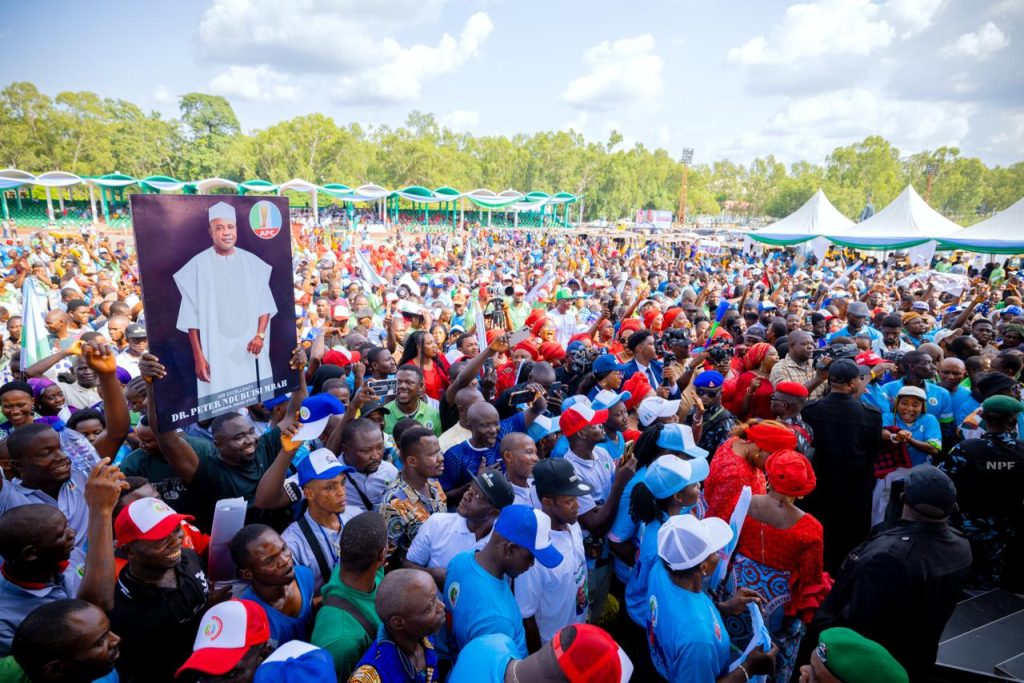
The association’s National Secretary, Comrade Sunday Enang, commended the administration’s investments in roads, modern transport terminals, Enugu Air and an asphalt plant, describing them as initiatives aimed at improving transportation and supporting economic activities.
Mbah also reiterated his administration’s zero tolerance for political violence, warning that no individual or group would be allowed to undermine the peace and security of the state. He vowed that anyone found attempting to disrupt public order would be dealt with in accordance with the law.
The governor urged eligible voters to obtain their Permanent Voter Cards ahead of the 2027 elections, while the association declared its intention to support APC candidates.
With the promise to rehabilitate the remaining 1,022 urban roads, attention now turns to the delivery of the projects and their impact on residents, businesses and commuters.
With Peter Mbah, the deal is as good as done and the roads will soon be delivered.
For Enugu residents, the expectation is clear: better roads, lower transport operating costs and sustained security. As the administration presses ahead with its infrastructure agenda, the governor’s latest pledge adds another major commitment to the state’s ongoing urban transformation.
Politics
2027: Your votes do not count, the Courts Will Endorse It Unless We Do Something-Dele Farotimi warns
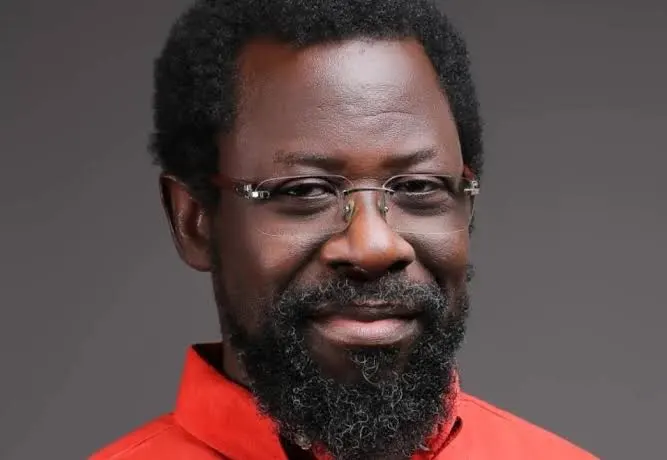
Human rights lawyer and political activist Dele Farotimi has called for a revolution to save Nigeria, urging citizens to unite behind a common national vision and push for fundamental changes to the country’s political and governance systems.
Farotimi made the remarks while expressing concerns about Nigeria’s democracy, the credibility of its electoral process and the role of the judiciary in resolving electoral disputes.
According to the activist, Nigerians risk losing confidence in democracy if their votes are not adequately protected and electoral outcomes are not respected. He warned that public passivity could create conditions for authoritarian rule.
“Your votes do not count and the judiciary will endorse it unless we decide to do something about it, because we are sleeping whilst a dictatorship is being installed in our country, demon-cratically,” he said.
Farotimi argued that Nigeria needs to be restructured and reimagined to address its persistent political challenges. He maintained that meaningful change would require citizens to come together around a clearly defined vision for the country’s future rather than placing their hopes solely in individual politicians.
He said a critical mass of Nigerians who are dissatisfied with the existing system must be mobilised to support an alternative approach to governance.
“The one thing I have never been shy about is to tell you what it will take to save Nigeria. It will take a revolution to save Nigeria,” Farotimi declared.
The activist suggested that such a revolution could be achieved through the ballot box, although he expressed doubts about whether the current political process, on its own, could deliver the transformation Nigeria needs.
He stressed that a credible national vision, backed by purposeful leadership, could encourage greater citizen participation and strengthen public resolve to defend electoral choices.
Farotimi’s remarks highlight broader concerns about electoral integrity, judicial accountability and the need for structural reforms in Nigeria. His call for a democratic revolution centres on collective action, political restructuring and the emergence of a shared vision capable of mobilising citizens towards meaningful change.
As the country approaches another general election cycle, debates over electoral credibility, institutional trust and the future of Nigeria’s democracy are likely to remain central to the national conversation.

-
 Politics4 days ago
2027: Igbo Presidency Not Subject to Anyone’s Approval, Onoh Tackles Sowunmi
-
Politics4 days ago
2027: Nigeria Risks Civil War If Election Results Are Manipulated, Pat Utomi Warns
-
 News4 days ago
Breakaway Looms in Awka Anglican Diocese Over Archbishop Ibezim’s Compulsory Leave
-
 News5 days ago
Five Killed, Several Trapped As Diesel Tanker Crushes Four Cars
-
News5 days ago
Enugu Youths Give Forest Guard Commander 72-Hour Ultimatum Over Alleged AK-47-Wielding Gunmen in Ugwuaji Forests
-
 Politics5 days ago
No Stopping Mbah as Enugu Targets Remaining 1,022 Urban Roads
-
 Crime4 days ago
Okechukwu lauds FG for acknowledging military operations alone cannot end banditry
-
 News3 days ago
Tension Mounts in Awka Anglican Diocese as Supervising Bishop Ezeofor Moves to Take Over Wednesday