



Politics
NASS landlords – Lawmakers who have spent 20 years in Senate, House of Reps

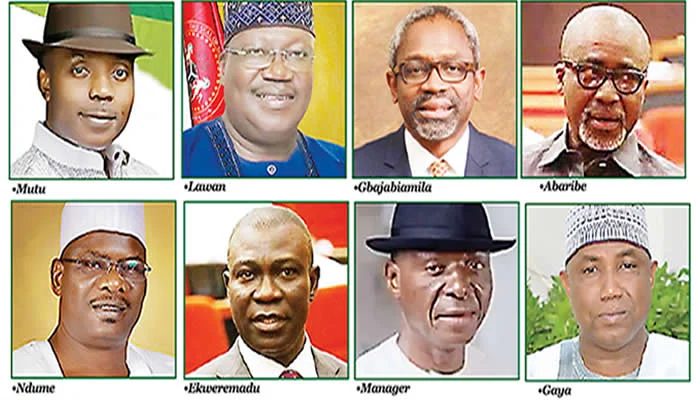

Since Nigeria returned to democracy in 1999, Nigeria has had four presidents – Olusegun Obasanjo, Umaru Yar’Adua, Goodluck Jonathan and the incumbent, Major General Muhammadu Buhari (retd.).
Each of the 36 states would also have had at least three governors within the period, but could be more if any of the governors spent only one term of four years. But in the National Assembly – the nation’s bicameral legislature, made up of the Senate and the House of Representatives – some lawmakers seem to be maintaining permanent seats in the chambers.
Interestingly, some of them have been in the parliament since 1999 and will complete their sixth term in 2023. Several members have been in either the House or the Senate or both since 2003, and they would have spent not less than 20 years in 2023 when the 9th Assembly winds down. The members belong to the ruling All Progressives Congress and the opposition Peoples Democratic Party. Some of them have also switched parties as part of moves to get re-elected.

Opinions are divided on which is better between having long-serving lawmakers and fresh lawmakers every four years. Some persons have argued that returning members have legislative experience and the institutional memory of parliamentary norms and processes.
Those who belong to the former group often cite the example of the United States’ parliaments with many long-serving lawmakers, while those in the latter often argue that the Senate is fast becoming the ‘retirement home’ for former governors and ex-ministers.
Mutu, a typical landlord at the Green Chamber
Representing Bomadi/Patani Federal Constituency in Delta State, Nicholas Mutu has been in the House since 1999. He served as the chairman of the House Committee on Niger Delta Development Commission between 2009 and 2019 – arguably the longest time a member would head the same committee. Not one of the known names when it comes to debates on motions and bills, documents presented to the House Committee on NDDC by the immediate past Minister of Niger Delta Affairs, Senator Godswill Akpabio, had indicated that Mutu is a serial contractor to the commission. While the Olubunmi Tunji-Ojo led committee was investigating mismanagement and fraud in the NDDC, Akpabio had alleged that National Assembly members, especially the previous leadership of the committee, were beneficiaries of contracts from the commission. A list the minister provided showed that Mutu had the highest number of NDDC projects listed against his name.
Lawan: From the green chamber to senate presidency
The incumbent President of the Senate, Ahmad Lawan, has been in the National Assembly since 1999. He was first elected a member of the House where he spent two terms. There he represented Bade/Jakusko Federal Constituency in Yobe State. In 2007, he was elected a senator to represent Yobe North Senatorial District and has retained the seat since then. Lawan became the President of the 9th Senate in 2019. Currently, he is seeking to be the President of Nigeria in 2023, which would depend on the outcome of the presidential primary of the APC scheduled for Monday.
Gbajabiamila: From floor member to Speakership
Femi Gbajabiamila is the current Speaker of the House of Representatives, serving his fifth term. He has been in the House since 2003, representing Surulere 1 Federal Constituency in Lagos State. The lawmaker was the Minority Leader of the House in the 7th National Assembly, and later Majority Leader in the 8th Assembly after his hope of becoming Speaker was dashed. Gbajabiamila has again secured the ticket of the APC to contest for a sixth term in 2023.
Ndume: Two-term Rep, three-term Senator
Since 2003, Ali Ndume has been in the National Assembly. He first represented Chibok/Damboa/Gwoza Federal Constituency in Borno State for two terms; 2003 to 2011, and was in 2011 elected to represent Borno South Senatorial District at the red chamber, a seat he has kept till date. During his stay in the chamber, Ndume had attempted to be President of the Senate at different times. He was the Majority Leader of the House in the 8th Assembly but was sacked over his political stance against that of the then President of the Senate, Bukola Saraki. Ndume was replaced with Ahmad Lawan, who is now the Senate President.
Ekweremadu: The longest-serving presiding officer
The lawmaker representing Enugu West Senatorial District, Senator Ike Ekweremadu, is serving his fifth consecutive term, having been in the Senate since 2003. He attempted to be President of the Senate in 2005 but failed. Senator Ken Nnamani got the position instead. However, Ekweremadu was the Deputy President of the Senate for three consecutive terms – 6th, 7th and 8th, spanning 12 years, a record time as a presiding officer in the National Assembly. The lawmaker had announced his retirement from the Senate in 2023. He joined the governorship race in Enugu but lost the PDP ticket.
Manager: A senator caught on his knees
The Delta South Senatorial District in Delta State has had James Manager as its representative since 2003. The lawmaker may not be returning with the 10th Assembly over his governorship ambition in Delta. A photograph showing Manager on his knees before a former Governor of Delta State, James Ibori, an ex-convict and political godfather of the PDP in the state, had gone viral on the Internet about a year ago.
Ogor: Once upon an opposition leader
Leo Ogor has been representing Isoko-North/Isoko-South Federal Constituency in Delta State at the House of Representatives since 2003. He was the Deputy Majority Leader of the House in the 7th Assembly and Minority Leader in the 8th Assembly. Ogor’s exploits as leader in both majority and minority caucuses is on record, especially during heated debates with his then opponent, Femi Gbajabiamila, who was also Minority Leader and Majority Leader at different times.
Ado-Doguwa: From one Republic to another
Alhassan Ado-Doguwa is the current Majority Leader of the House. He was a member of the House in the botched Third Republic and returned to the parliament in the Fourth Republic to represent Doguwa/Tudun Wada Federal Constituency in Kano State in 2007. According to a document obtained from Ado-Doguwa’s office containing his profile, the lawmaker was said to have made history by becoming “the first Nigerian to be sworn in as a member of the House of Representatives immediately after completing his youth service.” Though he was rumoured to be nursing the ambition to govern Kano State, Ado-Doguwa is said to be one of the top contenders for the speakership seat in the 10th House, even though the election is still about eight months away.
Monguno: A serial speakership aspirant
Mohammed Monguno represents Marte/Monguno/Nganzai Federal Constituency in Borno State. He was first elected a member of the House in the Third Republic (1992/93) and returned to the House in 2007 under the current Fourth Republic. In 2015, Monguno contested the speakership but later stepped down for Gbajabiamila, who was the candidate of the APC. Monguno also lost his deputy speakership bid to Yusuf Lasun. While Yakubu Dogara beat Gbajabiamila to emerge as the Speaker, he kept Lasun as his deputy. Again in 2019, Monguno joined the speakership race and, again, stepped down for Gbajabiamila, who remained the party’s candidate for the position. He is the current Majority Whip of the House.
Gaya: From governorship to lawmaking
Senator Kabiru Gaya was Governor of Kano State in the Third Republic (from 1992 to 1993) on the platform of the National Republican Convention. He has been in the Senate since 2007, representing Kano South Senatorial District.
Abaribe: Alternating between executive and legislature
Senator Enyinnaya Abaribe became the deputy governor of Abia State in 1999, with Orji Uzor Kalu as the governor. Due to his rift with Kalu over his (Abaribe’s) governorship ambition, the state’s House of Assembly moved to impeach him as the deputy governor three times – twice in 2000 and a third time in 2003. To avoid the third attempt being successful, he would later resign his position. However, Abaribe emerged as the lawmaker representing Abia South Senatorial District in the upper chamber of the National Assembly in 2007 and has been there since then. Until last week, he was Minority Leader of the Senate. The senator lost the PDP governorship ticket in his state during last week’s primary, he resigned his membership of the party and minority caucus leadership in the Senate. He has now joined the All Progressives Grand Alliance where he now has the ticket to seek a return to the Senate.
Dogara: A Speaker in majority and minority parties
Representing Bogoro/Dass/Tafawa Balewa Federal Constituency in Bauchi State, Yakubu Dogara, joined the House in 2007. Under a controversial circumstance, he became the Speaker of the House in the 8th Assembly (2015-2019), then as member of the ruling APC. His emergence was controversial because he was not the choice of his party, the APC. The party had preference for Gbajabiamila. Dogara later defected from the APC to the opposition PDP while in office. Though he was re-elected as member of the House in the current Assembly, Dogara, who has not been seen on the floor of the House, defected back to the APC a few months ago.
Betara: The man in charge of appropriation
Another member of the 2007 set is Mukhtar Betara, who represents Biu/Bayo/Shani Federal Constituency in Borno State and currently chairs the House Committee on Appropriation. He was one of the speakership aspirants at the beginning of the current House. His constituents procured the N10m APC expression of interest and nomination forms for him to seek re-election to the House in 2023. He is being tipped by some persons to be the next Speaker.
Abba-Ibrahim: A family in love with lawmaking
Khadijat, the wife of former Yobe State governor, Bukar Abba-Ibrahim, has been in the House since 2007, representing Damaturu/Gujba/Gulani/Tarmuwa Federal Constituency in Yobe State. She was serving her fourth term in 2016 when the President, Major General Muhammadu Buhari (retd.), appointed her as the Minister of State for Foreign Affairs. On January 9, 2019, Abba-Ibrahim resigned from Buhari’s cabinet to contest for a fresh fourth term in the House and she won. Hers seems like a family in love with politics. At a point in time, she and her husband were in the National Assembly. Her husband was governor of Yobe State in the Third Republic – from January 1992 to November 1993. In the Fourth Republic, he became the governor again for two terms – from 1999 to 2007. In 2007, he represented Yobe East Senatorial District, where he was till the 8th Assembly which ended in 2019. Interestingly, Mrs Abba-Ibrahim contested against her stepson to clinch the APC ticket with which she is currently representing her constituency in the House.
PUNCH

The Ebonyi State Government has effectively restricted political campaigns and gatherings in Ezza South Local Government Area, directing political parties and groups to obtain prior approval from the council chairman before holding such events.
The directive, issued by the Chairman of Ezza South Local Government Area, Hon. Chinedu Mkpuma, follows a recent security breach in Amaezekwe community amid growing concerns over political violence ahead of the 2027 general elections.
In a statement made available to journalists in Abakaliki, Mkpuma expressed dismay over the security situation and said the measure was necessary to protect lives and property, maintain public order and prevent further security breaches.
He acknowledged the constitutional rights of citizens to freedom of association and peaceful assembly but warned that political gatherings in the local government area must henceforth receive prior approval from his office.
The chairman added that violations of the directive would attract appropriate action in accordance with the law.
Meanwhile, the Labour Party governorship candidate, Eze Oko, has condemned the reported killings and alleged attacks on opposition parties in the state, calling on political leaders to end violence and intimidation.
Oko questioned why opposition members were allegedly being targeted and urged youths to resist attempts by politicians to use them as instruments of violence.
He called for a level playing field for all political parties and candidates, insisting that political competition should be based on ideas, manifestos and records of performance rather than violence.
The LP candidate also cautioned political leaders against inflammatory statements capable of fuelling tension during the electioneering period.
He urged candidates seeking re-election to allow their achievements to speak for them instead of allegedly engaging political thugs to intimidate opponents.
Oko further appealed to youths to reject political thuggery and violence, while extending his condolences to the families of those reportedly killed in the incident.
The development comes as political activities begin to gather momentum ahead of the 2027 general elections, with renewed calls for security agencies to investigate reported attacks and ensure that all political parties can operate without intimidation.
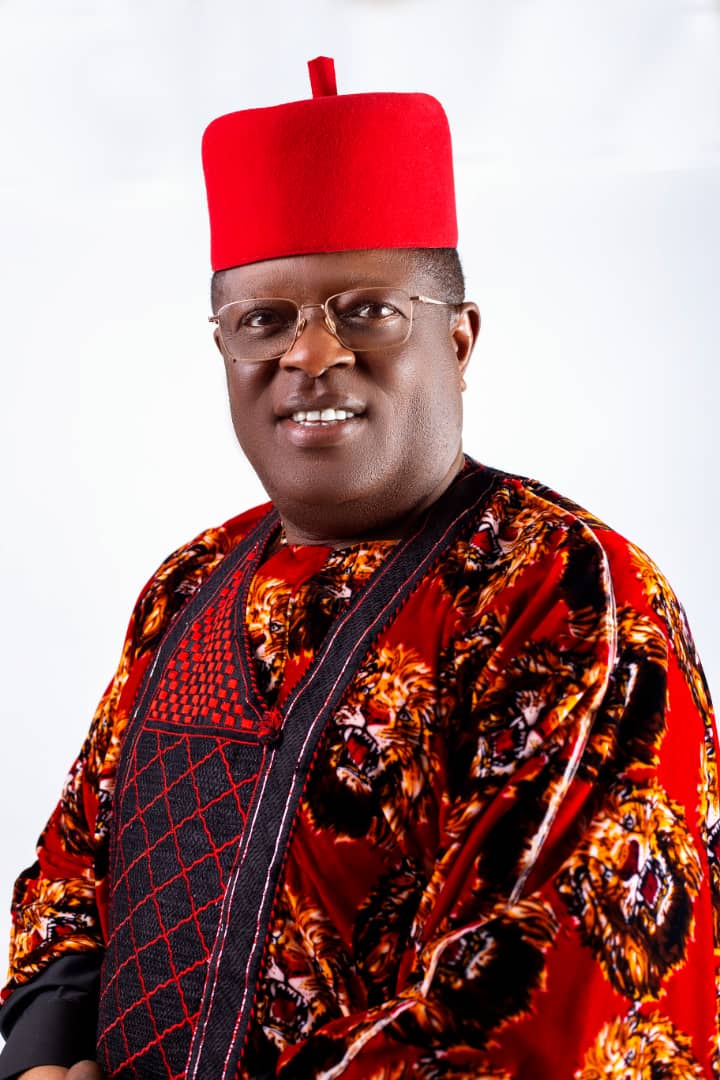
The Minister of Works and former Governor of Ebonyi State, Senator David Umahi, has declared that 2027 is not the South-East’s turn to produce Nigeria’s president, insisting that former Anambra State Governor, Peter Obi, is not the region’s best presidential candidate.
Umahi, who made the declaration during an interview with ARISE News on Friday, defended South-East political leaders supporting President Bola Tinubu’s re-election bid, maintaining that their political choices should not be interpreted as betrayal of the Igbo presidential ambition.
“Peter Obi is not the best of our finest in South East. He’s not the best, he can never be the best,” Umahi declared.
The minister faulted Obi’s approach to the 2023 presidential election, alleging that he failed to adequately consult governors and other influential political stakeholders in the South-East before pursuing his ambition.
“You cannot play politics in South East without consulting people like us,” he maintained.
According to Umahi, any presidential aspirant seeking to represent the collective aspirations of the region must first engage critical stakeholders and build the necessary political consensus.
He argued that Obi’s performance in the 2023 presidential election did not automatically make him the South-East’s most qualified presidential candidate, stressing that the region boasts several other capable political figures.
Umahi also questioned why Anambra State should be given preferential consideration whenever the opportunity arises for the South-East to produce Nigeria’s president.
Citing Nigeria’s first President, Dr Nnamdi Azikiwe, who hailed from the area now constituting Anambra State, the minister maintained that Ebonyi, Enugu, Abia and Imo states equally deserve consideration in future presidential arrangements.
On the growing support for Tinubu among South-East political leaders ahead of 2027, Umahi dismissed allegations that those backing the president had abandoned the region’s political interests.
He insisted that the South-East’s path to the presidency lies in strategic negotiations, consensus-building and alliances with other geopolitical zones rather than presenting loyalty to Obi as the ultimate test of commitment to the Igbo cause.
The former Ebonyi governor had earlier challenged comparisons between himself and Obi during a political engagement in Benin City in September, declaring that he saw no area in which the former Anambra governor was superior to him.
While expressing confidence that the South-East would eventually produce Nigeria’s president, Umahi maintained that the region’s opportunity had not yet arrived, insisting that “it is not yet our turn.”
Politics
2027: APGA, APC Set for Joint Meeting in Anambra to Mobilise Support for Tinubu’s Re-election

By Okey Maduforo, Awka
The All Progressives Grand Alliance (APGA) and the All Progressives Congress (APC) in Anambra State have scheduled a joint meeting for November 1 to strengthen collaboration and mobilise support for President Bola Ahmed Tinubu’s re-election bid in 2027.
The planned meeting comes amid claims that the two parties are not working together in the state to advance Tinubu’s second-term ambition.
The meeting, convened by Anambra State Governor, Professor Chukwuma Charles Soludo, in his capacity as the state coordinator for Tinubu’s re-election campaign, is expected to bring together leaders and members of both parties, including serving and former political officeholders and members of their respective national and state working committees.
The APC State Chairman, Senator Emma Anosike, also confirmed the meeting, telling reporters that he would lead members of his party to attend the gathering.
The development is expected to counter claims of disunity between the two parties over the president’s re-election project in Anambra State.
According to an announcement dated October 22 and signed by Dr Ben Nwankwo, Chief of Staff to the Governor and Coordinator of the Secretariat for the Presidential Campaign Council in Anambra State, the meeting will take place at the International Convention Centre, Awka.
Proceedings are scheduled to begin at 1 p.m., while accreditation will commence at 10 a.m. Participants have been directed to arrive early, as the doors will be closed once the meeting begins.
Attendance is restricted to duly accredited invitees drawn from designated categories of political officeholders, party officials and other stakeholders who remain members of APGA or APC.
Those invited include serving and former governors and deputy governors of Anambra State; members of the national, zonal and state working committees of both parties; and serving and former members of the National and State Assemblies from the state.
All APGA and APC candidates for the 2027 general elections who are members of either party have also been invited.
Other participants expected at the meeting include serving and former political appointees in the state and federal governments, members of the PBAT/APC Presidential Campaign Council from Anambra State, as well as serving and former elected local government chairmen, mayors and transition committee chairmen affiliated with either party.
The invitation list also covers current and former members of the boards of trustees of APGA and APC from Anambra State, coordinators of Tinubu support groups, and serving local government chairmen, secretaries, women leaders and youth leaders of the two parties.
Elected councillors, ward chairmen of APGA and APC, as well as members of the state working committees of the Accord Party and the Peoples Democratic Party (PDP), are also listed among the invitees.
The announcement further stated that selected stakeholders nominated by the state chairmen of APGA and APC, alongside individuals nominated by the state coordinator of the Presidential Campaign Council, would attend the meeting.
It explained that the notice was intended to ensure that all eligible stakeholders were informed of the gathering, adding that anyone who falls within the specified categories would be deemed invited.
The joint meeting is expected to provide a platform for the two parties to coordinate their political activities in Anambra State ahead of the 2027 presidential election.
Strengthen the headline and opening
Trim the lengthy invitation list
Make the report more neutral
…Unveils 17 Buses for Grassroots Mobilisation
…Expresses Confidence in Tinubu, Mbah’s Victory
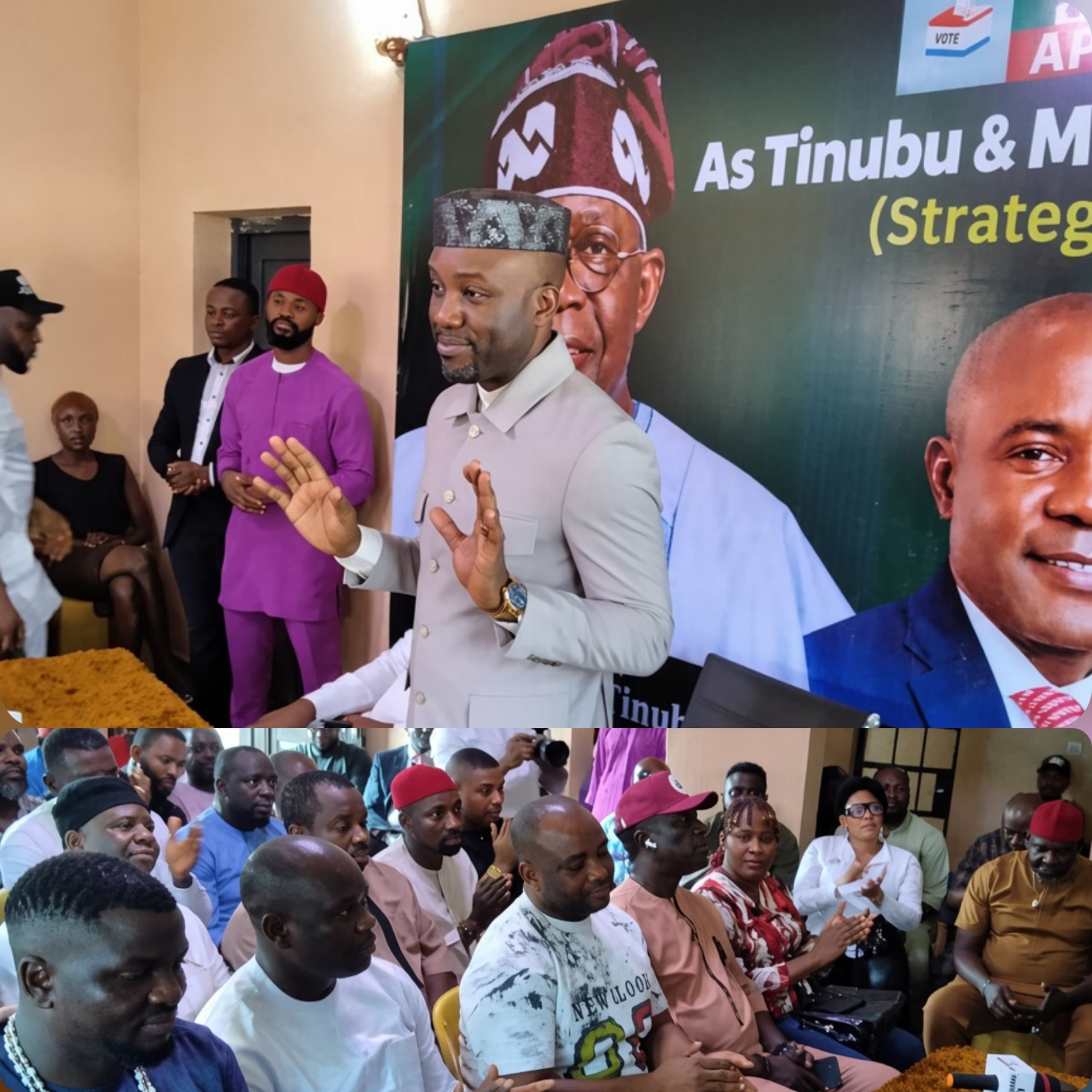
Nigeria’s Minister of Innovation, Science and Technology, Dr. Kingsley Tochukwu Udeh, SAN, is set to unveil his grassroots mobilisation and political support group, As Tinubu and Mbah Move (ATM), ahead of the 2027 general elections.
The minister has also expressed confidence in the re-election of President Bola Tinubu and Enugu State Governor Peter Mbah.
Udeh disclosed this on Wednesday, October 21, 2026, during a strategy meeting at the group’s secretariat, where he unveiled 17 branded Toyota buses to support the movement’s grassroots mobilisation ahead of the elections.
Addressing members, the Senior Advocate of Nigeria urged them to work towards securing victory for the All Progressives Congress (APC), particularly in the presidential and governorship elections.
He said the buses were provided to facilitate mobilisation and strengthen the movement’s presence across communities, wards and polling units.
Expressing confidence in the electoral prospects of Tinubu and Mbah, Udeh said the movement must distinguish itself from political groups that generate publicity without translating their activities into electoral gains.
“I want this group to be different so that it will not end in noise-making. The aim is to make APC win from top to bottom, especially the President and the Governor,” he said.
He charged members to take responsibility for delivering their respective polling units and wards, stressing that grassroots engagement remained crucial to electoral success.
“Politics is local. Everybody should work to ensure that APC wins in their respective wards and polling units,” he added.
Udeh explained that ATM was established to provide members with a platform to connect with political leaders and contribute to the activities of the party.
According to him, active participation in grassroots mobilisation could also create opportunities for members to engage government officials and seek assistance in addressing challenges facing their communities.
The minister, who described himself as not being a career politician, said integrity and the fulfilment of commitments were central to his dealings with people.
He also pledged to spend more time in the South-East during the campaign period to coordinate the movement’s activities.
Earlier, the ATM Coordinator, Igboke Onyebuchi, said the meeting was convened to establish and ratify the movement’s structures ahead of the planned commencement of local government-level mobilisation in November.
Onyebuchi described ATM as a political movement rather than an ordinary group, explaining that some members were motivated by their desire to support Governor Mbah and acknowledge his role in Udeh’s ministerial appointment.
“We are doing this to support the governor for giving such a smart young person the opportunity to be a minister. This has not happened in recent times,” he said.
He explained that the movement comprised community mobilisers, union leaders and individuals from the civic space, many of whom were not career politicians but were willing to contribute to the political process.
According to him, ATM plans to adopt an innovative, community-based approach to mobilisation, focusing on reaching rural residents and strengthening the APC’s existing grassroots structures.
He added that a community map had been developed to guide the movement’s engagement with residents.
Onyebuchi thanked Udeh for providing members with a platform to participate in the political process, expressing hope that the movement would encourage greater political opportunities for young people with strong professional and intellectual backgrounds.
Politics
One Feared Dead, Several Injured as Thugs Attack Ebonyi NDC Assembly Candidate, Burn Campaign Vehicle

…Ebonyi Democratic Movement Blames Police Commissioner, Demands Immediate Redeployment
The campaign convoy of the National Democratic Congress (NDC) candidate for Ezza South State Constituency in the Ebonyi State House of Assembly, Barr. Rollins Offia Nwali, has reportedly come under armed attack at two separate locations in Amaezekwe Community, Ezza South Local Government Area of Ebonyi State, leaving one person feared dead and several others injured.
The attackers, suspected to be political thugs, also reportedly set ablaze a 2024 Toyota Hilux vehicle belonging to the campaign convoy.
According to preliminary accounts, trouble began when Nwali, who was scheduled to meet with his polling unit canvassers, received information that some government officials allegedly accompanied by armed hoodlums had stormed the meeting venue.
The officials reportedly warned that they had received orders from above to prevent opposition candidates from holding campaign activities during the swearing-in ceremonies of local government chairmen in the state.
Sensing danger, Nwali reportedly directed his convoy to turn back a few metres from the venue.
However, suspected political thugs riding motorcycles and tricycles allegedly opened fire on the convoy, resulting in an exchange of gunfire involving security personnel, including operatives of the Department of State Services (DSS) attached to the candidate.
About five persons reportedly sustained gunshot injuries, while one person was feared killed during the confrontation.
The casualty figures could not be independently verified.
In another attack a few metres away, a separate group of suspected hoodlums, reportedly operating in a Mercedes-Benz vehicle and tricycles, allegedly intercepted the retreating convoy, opened fire and set one of its Toyota Hilux vehicles ablaze.
A state government appointee was accused of leading the second group of attackers.
Reacting to the development, Chairman of the Ebonyi Democratic Movement, Chief Emmanuel Igwe Chidi, condemned the incident and accused the Ebonyi State Commissioner of Police of failing to address what he described as recurring political violence against opposition figures in the state.
Igwe alleged that the failure of the police to prosecute individuals previously implicated in electoral violence, despite several petitions submitted to the state command and the Inspector-General of Police, had emboldened suspected political thugs.
He recalled that the movement had earlier organised a nationwide protest over alleged persecution of opposition members and the deteriorating security situation in Ebonyi State.
The EBM chairman consequently called on the Inspector-General of Police to immediately redeploy the Ebonyi State Commissioner of Police, arguing that the measure had become necessary to restore public confidence in the neutrality of the police ahead of the 2027 general elections.
He also demanded a comprehensive investigation into the Amaezekwe attacks, insisting that all those found culpable must be identified and prosecuted irrespective of their political affiliations or positions in government.
Igwe further urged security agencies to guarantee adequate protection for opposition candidates and their supporters, stressing that no government official or political interest has the authority to prevent citizens from exercising their constitutional rights to political participation.
He warned that democracy would be endangered if political competition was allowed to degenerate into intimidation, gunfire and destruction of property rather than being determined through the ballot box.
The allegations against government officials and the police, as well as the circumstances surrounding the reported death, remain unverified. The accounts provided did not include responses from the Ebonyi State Government or the Police Command.
Separate reported facts from allegations
Tighten the casualty and attack sequence
Use a more legally cautious headline

-
 News3 days ago
C’RIVER 2027 BUDGET: GOV OTU PRESENTS ₦987.8bn ESTIMATES TO ASSEMBLY
-

 EverydayNews Telescope4 days ago
Enugu East Senate: The Dark Side of Ada Ogbu, NDC Candidate
-
 News5 days ago
Tension Mounts in Awka Anglican Diocese as Supervising Bishop Ezeofor Moves to Take Over Wednesday
-
 News2 days ago
Holy Ghost Transformation: How Enugu North Chairman Ibenaku Onoh Ended Years of Traffic Chaos, Roadside Trading
-
 EverydayNews Telescope4 days ago
Ebonyi 2027: The People’s Quest For ODII Vs Compromised Stakeholders
-
Politics2 days ago
One Feared Dead, Several Injured as Thugs Attack Ebonyi NDC Assembly Candidate, Burn Campaign Vehicle
-
 Politics4 days ago
2027: Tinubu Has No Hand in Alleged Assassination Plot Against Atiku – APC
-
 Economy5 days ago
Fuel Subsidy Removal Irreversible, Nigeria Won’t Return to Egypt — Tinub