



Politics
N1.3tn Fraud: Okowa’s Detention Provokes Calls For Probe of Ex-Governors



The controversy trailing the arrest of former Governor of Delta State Ifeanyi Okowa has been on the front burner in the state, sparking calls from the ruling party and others for investigation of former state governors.
The arrest of Ifeanyi Okowa, the immediate past Governor of Delta State, by officials of the Economic and Financial Crimes Commission still baffles the state’s residents, especially the political folks, who feel he should have been left off the hook by the anti-graft agency considering his achievements during his eight-year reign.
Operatives of the commission penultimate Monday arrested Okowa over an alleged diversion of N1.3tn.
The N1.3tn reportedly represents the 13 per cent derivation fund from the federation account between 2015 and 2023.

According to sources within the commission, Okowa was at the EFCC office in Port Harcourt, Rivers State, where he was subsequently detained by officials.
One of the sources told The PUNCH immediately after the ex-governor’s arrest, “Okowa was at our Port Harcourt office following an invitation from investigators probing the allegations against him. He was then arrested. The commission is investigating him regarding the N1.3tn 13 per cent derivation fund from the federation account between 2015 and 2023.
“He is also accused of failing to account for the funds, as well as another N40bn he allegedly claimed was used to acquire shares in UTM Floating Liquefied Natural Gas. He reportedly bought shares worth N40bn in one of the country’s major banks, representing an eight per cent equity stake, to support the offshore LNG project. The funds are alleged to have been misappropriated for other purposes.
“Investigators are also examining the alleged diversion of funds by the former governor to acquire estates in Abuja and Asaba, Delta State.”
These days, discussions are often centred on the arrest and release of the politician at places such as bars, ministries, government agencies, and other gatherings in the state capital, Asaba.
Following work resumption on Monday, it was the lead topic as workers sought to know the whereabouts of their former governor and what had happened over the weekend.
The questions begging for answers were many: “Is Okowa still under EFCC? Has Okowa out from EFCC custody?”, “Who are the people behind his detention?” among others.
When the news of Okowa’s arrest broke, key state government officials, especially those who served under him, went into hiding as Governor Sheriff Oborevwori broke the silence.
Oborevwori, who spoke through one of his aides, Director General, Delta State Orientation and Communications Bureau, Latimore Oghenesivbe, said Okowa was innocent until proven guilty.
He said, “On behalf of the government, I urge Deltans to pray for Okowa at this trying time. Okowa is innocent until proven guilty. The arrest of former governor Okowa by EFCC does not in any way fracture his enviable reputation.
“EFCC usually invites suspects based on criminal allegations, which may be true or false, and the law recognises the innocence of all accused persons until proven otherwise
“The news of former governor Ifeanyi Arthur Okowa’s arrest by EFCC is trending based on reports by a section of the traditional media.
“There is no cause for alarm. It is an established procedure in criminal matters to have a suspect arrested based on allegations in form of a petition to the commission.
“Arrest is not a proof of guilt, and not a judgment by a court of competent jurisdiction. The allegations shall be tested in court or courts as the need arises. It’s important for us to keep our fingers crossed.”
Our correspondent gathered that Okowa was released Friday night after spending five days in the custody of EFCC.
Expectedly, the Delta State chapter of the All Progressives Congress lauded the arrest and detention of Okowa, saying “it is a positive step in Nigeria’s ongoing battle against corruption.”
The party further stated that Okowa’s arrest signified the administration’s dedication to tackling financial mismanagement and corruption at both state and federal levels.
The APC state Publicity Secretary, Valentine Onojeghuo, commended the Federal Government for its decisive action, urging the EFCC to continue its investigation into the financial dealings of other former governors and public officials.
The Delta APC emphasised that Okowa’s arrest reflected a broader agenda “to curb corruption, promote transparency and ensure that public funds benefit the citizens rather than serving personal interests.”
The statement further read, “We in the APC wholeheartedly welcome the arrest of former Governor Dr. Ifeanyi Okowa, who oversaw one of the most concerning cases of financial mismanagement during his eight-year tenure.
“His administration allegedly funnelled significant state resources into personal ventures, including establishing a bank, financing a failed presidential ambition, and supporting the controversial imposition of a successor.
“The arrest serves as a caution to all public officeholders, the era of impunity is over and that no one, irrespective of position or political affiliation, is above the law.”
It added, “The fight against corruption must be thorough and unwavering, and we commend the administration’s efforts in this regard.
“The legacy of Dr. Ifeanyi Okowa’s administration is a high debt profile resulting from a reckless borrowing spree, which earned him the notorious nickname of ‘Borrow Borrow Governor.’
“During his eight years in office, Delta State has little to show for the vast federal allocations received. The few substandard roads he constructed, often hailed as the ‘road master,’ have deteriorated rapidly.”
But Chief Press Secretary to Okowa from 2019 to 2023, Olisa Ifeajika, stated that the EFCC did not establish any case against Okowa.
Ifeajika, the Executive Assistant to Governor Sheriff Oborevwori on Public Enlightenment (Projects and Policies), in a statement on Wednesday, said the former governor was only invited to answer questions relating to petitions filed against him.
“The fact of the matter, the first point that needs to be made is that the EFCC has not established any case against Dr Okowa. As is customary with the anti-graft agency, the former governor was invited to answer questions relating to some petitions that were filed against him by some disgruntled elements.
“Upon his return from vacation, and as a man with a clear conscience, Dr Okowa proceeded to the EFCC office in Port Harcourt as requested. The substance of the petition was that Dr Okowa allegedly corruptly enriched himself and used state resources to acquire 80 per cent stake in Premium Trust Bank. He was also alleged to have diverted state resources to build housing estates in Asaba and Abuja and two hotels in Asaba for himself.
“Governor Okowa cleared himself of those allegations as the estate in Abuja is owned by a public figure. The ex-governor lives in his own private house in an estate in Asaba that is occupied by other residents, who are homeowners,” Ifeajika stated.
“Similarly, the owners of the hotels in Asaba are persons known to the public and the EFCC, while Okowa has zero financial interest in Premium Trust Bank. These are facts that are easily verifiable from the Corporate Affairs Commission and by virtue of the Freedom of Information Act.
“The allegation that the former governor allegedly diverted N1.3tn oil derivation funds is as ludicrous as it is outlandish. This is just a rehash of the same spurious allegations that some malicious, myopic, vindictive, and prejudiced persons concocted while Okowa was still in office.”
Nevertheless, a rights activist in Delta State, Anthony Asakitikpi, commended EFCC for its swift arrest of the former governor.
Asakitikpi, who is the South South zonal acting Chairman of Huride, told The PUNCH that all looters of Delta State treasury must be brought to book.
“I sincerely appreciate and commend EFCC for its swift arrest of the former Governor of Delta state, Ifeanyi Okowa. All enemies of Delta people must be brought to book. Okowa is another case study.
“It may also interest you to know that the said Okowa plunged Delta State into huge amount of debts trying to please Atiku during his presidential campaign.
“No tangible evidence of all the money borrowed in the name of Delta state. As it stands, Delta state is still paying for the sins they didn’t commit.
“A situation where public funds are being diverted for personal interest is becoming too alarming. Based on these facts, I hereby call on the EFCC to prosecute Okowa to account for all the borrowed money in the name of Delta State, and to refund same back to Delta State coffers and be made to face the full wrath of the law. We say no to treasury looters.”
Also, another human rights activist, Jude Ojiugo-Onochie, who described Okowa’s arrest as selective, urged EFCC to extend the investigation to other past governors.
“I’m not against the arrest of Okowa, but they should stop selective arrests. Information we are getting is that he was released on Friday. It’s against human rights for EFCC to hold him for five days.”
As has been the case recently, Delta people are watching how Okowa will dance to the anti- corruption music played by the EFCC.
A political and social analyst, Peter Legacy, said, “That Okowa is passing through the investigation of the Economic and Financial Crimes Commission, shouldn’t be an emotional situation in Delta state polity
“I believe in institutions and rule of law. Misappropriation is the bone of contention. The law that established DESOPADEC was specific about financing, remittance and funding.
“By admittance of Dr Okowa’s government, there was obvious misappropriation of funds for expedient reasons. But that doesn’t make up for the principle of misappropriation. If N1m was supposed to go to DESOPADEC by law, the N1m that was supposed to go to DESOPADEC shouldn’t go to Capital Territory Development Agency.
“We have to imbibe the culture of respect for laws and institutions. Let the investigation run its course, if the ex-governor is innocent, we will find out eventually,” he said.
Also, two human rights organisations, Anti-Corruption and Integrity Forum and International Human Rights Commission, faulted the detention of Okowa by the EFCC, describing him as a victim of politics.
The chairman of Anti-corruption and Integrity Forum and Board member of IHRC, Prince Kpokpogri, at a press conference in Abuja, queried the mode of operation of the EFCC.
According to him, Okowa ought to be commended for exhibiting maturity unlike a former Governor of Kogi State, Yahaya Bello, who has defied the EFCC and resisted every attempt to be arrested and arraigned.
He said, “On Monday, October 4, 2024 the news space went agog over the alleged arrest and detention of former Governor of Delta State, Dr. Ifeanyi Okowa, by the Economic and Financial Crimes Commission, EFCC, for allegedly embezzling a whopping N1.3tn of Delta state’s funds.
“Since the news went viral, I have waited patiently for an official statement from the EFCC on the detention of the former governor. It is a given that the anti-graft agency usually makes public such high-profile arrest and detention to show that nobody is above the law.
“However, it is surprising that the EFCC has resorted to using “sources” over such a sensitive matter. As an anti-corruption crusader, I find it a little troubling that the agency is shying away from making its position known when former Governor Okowa honourably presented himself to the Office of the anti-graft agency in Port Harcourt, Rivers State.
“Dr. Okowa ought to be commended for being unlike a former Governor of Kogi State, Yahaya Bello, who has defied the EFCC, resisted every attempt to be arrested and arraigned. This trial by the media using proxies is untenable, vexatious and unfortunate.”
PUNCH
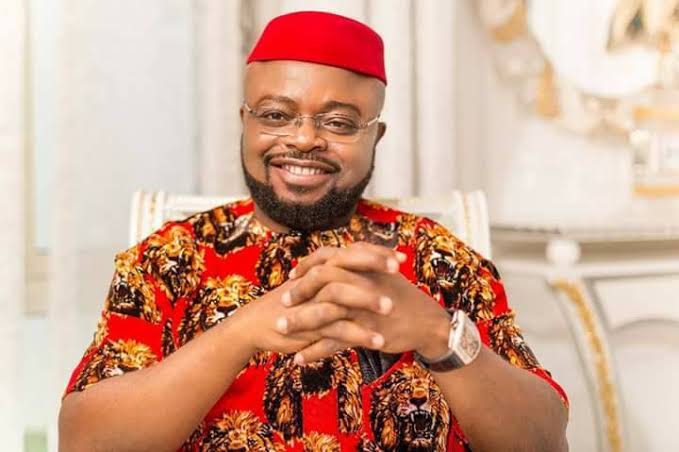
ABAKALIKI — The camp of the Peoples Democratic Party (PDP) governorship candidate, Chief Dr Ifeanyi Chukwuma Odii, has dismissed reports suggesting that he may withdraw from the 2027 Ebonyi State governorship race and support Governor Francis Nwifuru.
In a statement signed by Odii’s spokesperson, Chief Emmanuel Chidi Igwe, the campaign described the reported withdrawal as false, insisting that Odii remains committed to contesting the election.
According to Igwe, “Chief Dr Ifeanyi Chukwuma Odii will never, under any condition, step down from the 2027 governorship contest.”
The statement said Odii’s political camp remains focused on what it described as its campaign position: “Odii must run and win.”
It added that any political discussions, persuasion or negotiations involving other individuals should not be interpreted as a decision by Odii to abandon his governorship ambition.
Camp Rejects Withdrawal Narrative
The Odii camp further described reports of a possible withdrawal as a political narrative allegedly being promoted by individuals opposed to his candidacy.
Igwe challenged those behind the reports to produce evidence showing that Odii had personally announced his withdrawal from the race.
“There is a fundamental difference between reporting that a politician intends to persuade Chief Odii to withdraw and reporting that Chief Odii has agreed to withdraw,” the statement said, stressing that the latter would require evidence from the candidate himself.
The spokesperson also urged journalists, bloggers and online publishers to maintain professional standards when reporting political developments, warning against presenting speculation or the intentions of third parties as established decisions by political candidates.
24-Hour Retraction Demand
The camp has consequently demanded that publishers of the alleged withdrawal story retract or prominently correct their reports within 24 hours, unless they can produce an authentic statement from Odii confirming that he has decided to withdraw from the 2027 contest.
The statement also reminded online publishers of their responsibilities under Nigerian law, citing the Cybercrimes (Prohibition, Prevention, etc.) Act 2015, as amended, as well as other laws relating to unlawful online publications and defamatory material.
The spokesperson clarified that the reference to the law was not intended as a threat against legitimate journalism or political criticism, but as a reminder that political disagreements should remain within the bounds of the law.
The statement concluded by reaffirming that Odii remains in the 2027 governorship race and urged members of the public to regard reports of his withdrawal as unverified unless supported by a direct statement from him.
By Petrus Obi, London
London — The Peoples Democratic Party (PDP) governorship aspirant in Ebonyi State, Ifeanyi Odii, has intensified his criticism of the administration of Governor Francis Nwifuru, insisting that the people of the state deserve a different approach to governance.
Odii, who spoke with EverydayNewsngr.net in London, said what he described as the “fire brigade approach” of the Nwifuru administration was not the kind of governance Ebonyi needs.
According to him, the state requires a government with a clear vision, long-term planning and the capacity to deliver meaningful development to its people.
“The fire brigade approach of the Nwifuru government is not what the state needs,” Odii said.
He added: “I am coming to bring a new lease of life to my people.”
Odii’s comments come amid renewed political debate in Ebonyi State following the recent removal of the state Commissioner for Works. The development has attracted attention from opposition circles, with critics using it to question aspects of the administration’s handling of governance and infrastructure.
The PDP chieftain said the people of Ebonyi should expect more than what he described as reactive governance, arguing that development should be driven by a coherent programme capable of producing lasting results.
He maintained that his political ambition was motivated by a desire to provide what he described as purposeful leadership and improve the welfare of residents across the state.
“We deserve better government in Ebonyi State,” Odii said, stressing that his vision was centred on giving the people renewed confidence in government and creating opportunities for them to prosper.
As political activities ahead of the next governorship election continue to gather momentum, governance, infrastructure, accountability and the delivery of public services are expected to feature prominently in the emerging contest.
Odii’s intervention in London is likely to add further momentum to the political conversation, particularly as opposition figures seek to distinguish their vision for Ebonyi from that of the incumbent administration.
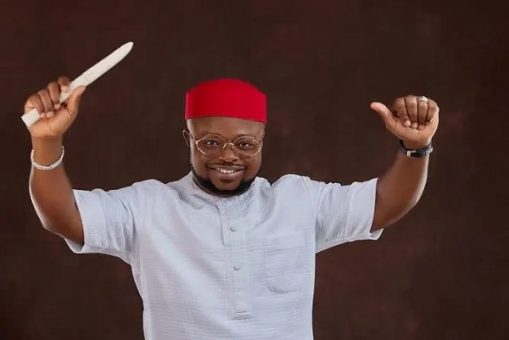
STATEMENT BY CHIEF EMMANUEL CHIDI IGWE,
SPOKESPERSON TO CHIEF DR. IFEANYI CHUKWUMA ODII
The 2027 governorship election in Ebonyi State is not a family affair, nor is it a matter to be decided by one individual or political godfather. It is a democratic contest, and Ebonyians will ultimately decide who becomes their governor through the ballot box.
No aspirant should be expected to step down simply because another politician believes he should. Every qualified candidate has the right to contest, present his programme and seek the mandate of the people.
Let me make this clear: since Senator Dave Umahi did not bring Chief Dr. Ifeanyi Chukwuma Odii into the governorship race, he cannot now claim the authority to ask him to step down. Chief Odii has his own political identity, supporters, convictions and legitimate right to seek the mandate of Ebonyians.
The decision to contest or withdraw belongs to the candidate, while the ultimate decision on who governs Ebonyi State belongs to the people.
The 2027 election should therefore be about issues, programmes, records, accountability and the future of Ebonyi—not political arrangements made by individuals behind closed doors.
Chief Dr. Ifeanyi Chukwuma Odii is prepared to place his vision and programme before Ebonyians and subject them to public scrutiny. Those seeking to retain power should equally be prepared to defend their records before the electorate.
Ebonyi 2027 is not a family arrangement. It is a contest for the confidence of the people. The people of Ebonyi State—not individuals—will have the final say.
Chief Emmanuel Chidi Igwe
Spokesperson to Chief Dr. Ifeanyi Chukwuma Odii
Politics
BREAKING: SaharaReporters Report on Arrest of Enugu Traditional Ruler, Ex-Lawmaker Is False and Misleading
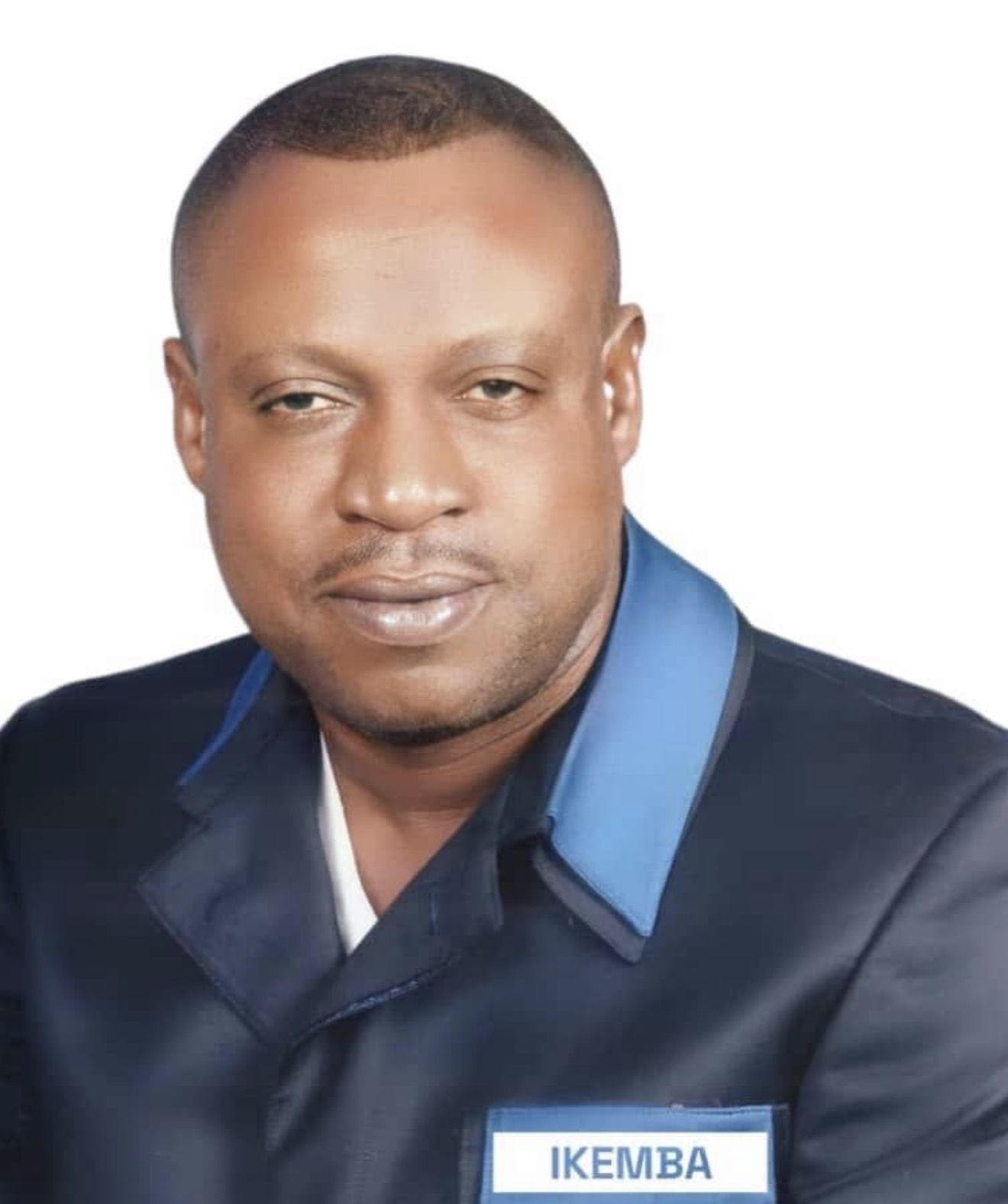
The recent publication by SaharaReporters alleging that prominent Enugu traditional ruler, Igwe Obiora Igwesi, his brother and former federal lawmaker, Hon. Uchenna Sunday A. Igwesi (USA Igwesi), and eight others were arrested over an alleged attack on an NDC ward meeting in Obuoffia, Nkanu West Local Government Area, is false and deeply misleading.
The report is being described as a deliberate attempt to damage the reputation of respected leaders in Enugu State and create unnecessary political tension ahead of the 2027 elections.
Contrary to the claims contained in the publication, there was no arrest ordered by the Inspector-General of Police against Igwe Obiora Igwesi, Hon. USA Igwesi, or the other individuals named in connection with any alleged attack on an NDC meeting. There was also no operation by detectives from Zone 13 Command, Ukpo, Dunukofia, Anambra State, as alleged in the report.
Similarly, the purported petition dated September 15, 2026, and the allegations of conspiracy, unlawful possession of firearms, attempted murder, assault, threatening violence and stealing are strongly disputed and described as fabricated claims intended to create a damaging narrative around the individuals concerned.
The broader allegation that the 17 Local Government Areas of Enugu State have experienced coordinated armed attacks allegedly sponsored by Local Government Chairmen to silence the opposition is equally rejected as unfounded.
Attempts to associate Igwe Obiora Igwesi and Hon. USA Igwesi with criminal activity or political violence are viewed as an unacceptable effort to tarnish the image of individuals who have served their communities and contributed to the development of Enugu State.
The public, particularly the people of Enugu State, is therefore urged to exercise caution and verify the facts independently before accepting or circulating the allegations contained in the SaharaReporters publication.
Enugu State remains focused on peace, stability and development. Political disagreements should not be allowed to degenerate into the circulation of unverified allegations capable of inflaming tensions or damaging the reputations of individuals.
The position being maintained by the affected parties is clear: there was no arrest of the named individuals in connection with the alleged incident, no evidence has been presented establishing that any Local Government Chairman sponsored an attack, and the allegations contained in the publication are disputed in their entirety.
The public is encouraged to await verifiable facts from the appropriate authorities rather than rely on claims that have not been independently substantiated.
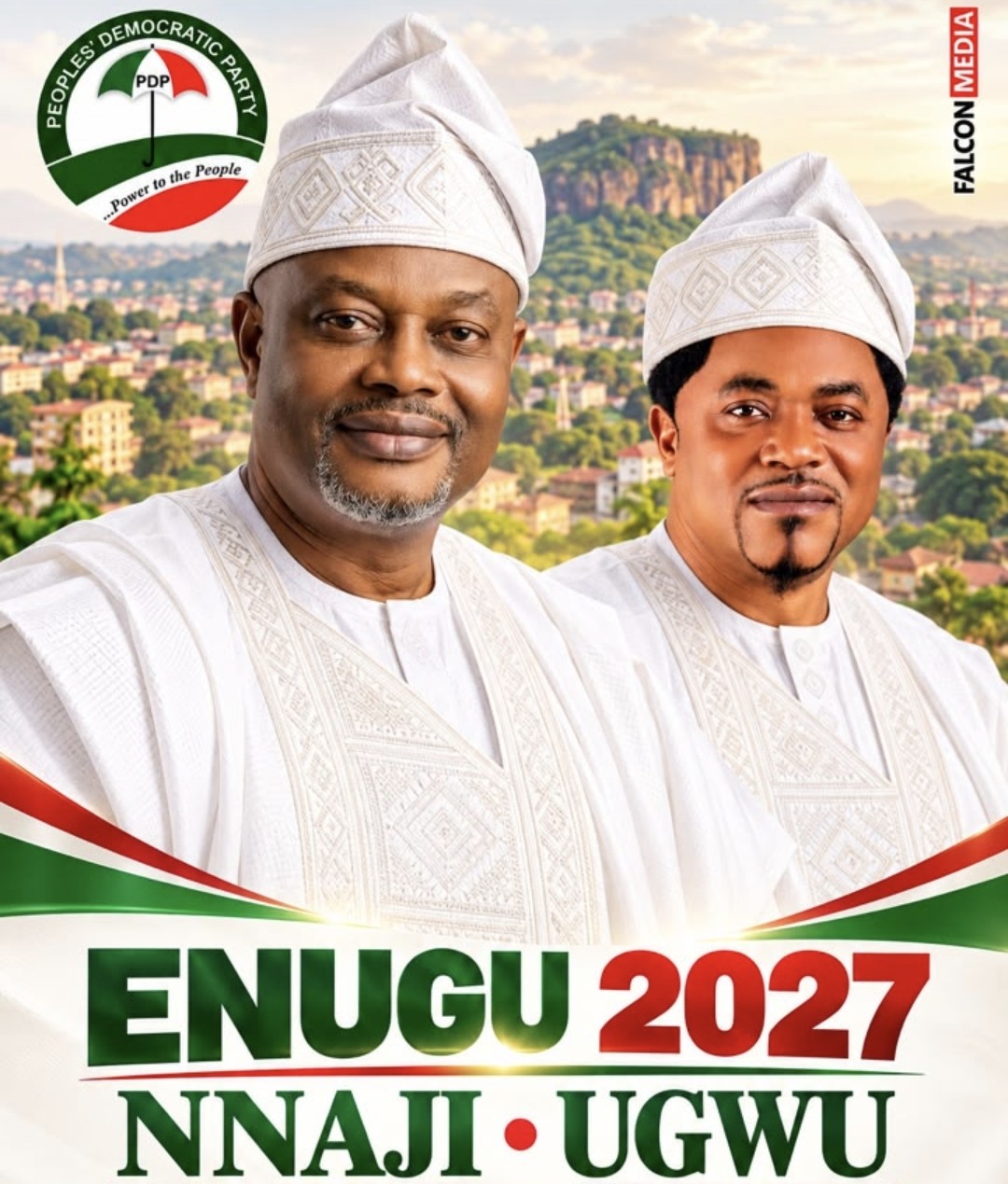
Fresh legal questions emerge over Chijioke Ugwu’s membership registration after Supreme Court restores party-register provisions
By Our Correspondent
Fresh legal questions have emerged over the Peoples Democratic Party’s 2027 governorship ticket in Enugu State following the Supreme Court’s restoration of key provisions of the Electoral Act dealing with political party membership registers and the conduct of primaries.
The questions centre on Chief Chijioke Peter Ugwu, who was recently announced by the PDP governorship candidate, Chief Uche Geoffrey Nnaji, as his running mate.
Nnaji announced Ugwu’s selection on September 24, shortly after the Supreme Court delivered its landmark judgment restoring Sections 77(5), 77(6), 77(7) and 84(2) of the Electoral Act 2026. Ugwu’s selection was subsequently reported by several Nigerian media outlets.
But documents and information available to this newspaper raise a question that could potentially become significant if the PDP ticket is challenged in court.
The PDP governorship primary in Enugu State was conducted on May 25, 2026.
However, Ugwu is understood to have registered as a PDP member on May 31, 2026 — six days after the governorship primary.
This means that if the May 31 registration date is accurately reflected in the party’s official records, his name could not have appeared in the PDP membership register submitted to the Independent National Electoral Commission (INEC) before the May 25 governorship primary.
That immediately raises the question:
Can a person who was not a member of the party on the date of its governorship primary subsequently be selected as the deputy governorship candidate without the Supreme Court’s restored membership-register provisions affecting the ticket?
What the Supreme Court restored
The Supreme Court, in a unanimous judgment delivered on September 24, set aside the Court of Appeal’s earlier decision which had declared the disputed provisions of the Electoral Act unconstitutional.
The apex court upheld the validity of Sections 77(5), 77(6), 77(7) and 84(2), following an appeal by INEC against the Court of Appeal judgment in the case involving the Zenith Labour Party.
Section 77(5) provides that only persons whose names are contained in a political party’s membership register submitted to INEC at least 21 days before a primary, congress or convention may participate in the exercise.
Section 77(6) requires political parties to use the membership register submitted to INEC for their primaries, congresses and conventions.
Section 77(7) deals with the consequence of failure by a party to submit its membership register within the prescribed period.
These provisions are now back in force following the Supreme Court judgment. Legal opinions suggest that the law’s insistence on the membership register submitted to INEC is relevant to the validity of the party’s eventual nomination process, depending on how the PDP formally nominated and submitted its governorship and deputy governorship candidates.
The precise documents will therefore be crucial.
Among the questions likely to arise are:
What date did the PDP submit its membership register to INEC?
Was Ugwu’s name contained in that register?
When exactly did Ugwu become a registered PDP member?
Was he a PDP member before the register was submitted to INEC?
How did the PDP formally nominate him as running mate?
Was the nomination made through a procedure recognised by the Electoral Act and the party’s constitution?
The controversy is coming at a sensitive time for the PDP, which has only recently unveiled Ugwu as Nnaji’s running mate. Ugwu, from Nguru in Nsukka Local Government Area, is an entrepreneur, philanthropist and community leader who runs businesses in logistics, contracting, consultancy and hospitality.
However, the governorship candidate and the deputy governorship candidate constitute a single electoral ticket. Therefore, any legal or constitutional issue affecting the eligibility of the deputy governorship candidate automatically has implications for the validity of the joint ticket, including the governorship candidate.
Another legal opinion available to this newspaper insists that “the gubernatorial ticket is a joint one. If the name of a deputy governor is not on the digital register, it invalidates the entire process.”
In the 2019 Bayelsa governorship election, APC’s David Lyon was declared winner. His running mate was Biobarakuma Degi-Eremienyo.
The Supreme Court later disqualified Degi-Eremienyo over the documents he submitted to INEC. The crucial point was that the Supreme Court held that his disqualification affected the joint ticket he shared with David Lyon. Consequently, the court ordered INEC to withdraw the Certificate of Return issued to Lyon and his deputy.
This happened one day before Lyon was due to be sworn in as governor. The certificate was subsequently issued to Douye Diri of the PDP, who had the next-highest lawful votes and the required geographical spread.

-

 News2 days ago
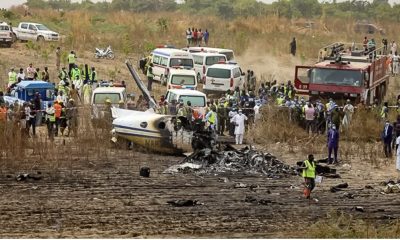
No Survivor Found Yet in Ondo Air Crash — Aiyedatiwa
-
 News1 day ago
How NAF Plane Vanished From Radar Shortly After Take-Off, Crashes In Ondo Swamp
-
 News3 days ago
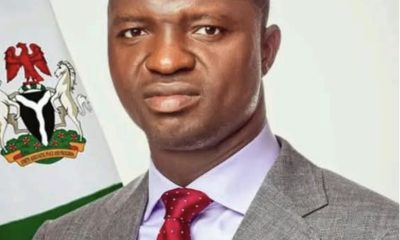
Sacked Works Commissioner: Release or Charge Him to Court, Oganiru Izzi Challenges Nwifuru
-
 Politics2 days ago
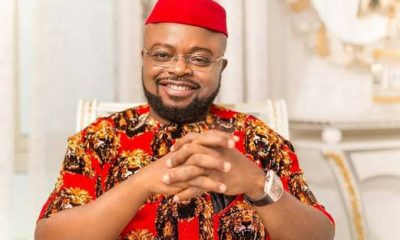
2027: Odii Will Not Step Down, Says Spokesperson
-
 Crime3 days ago
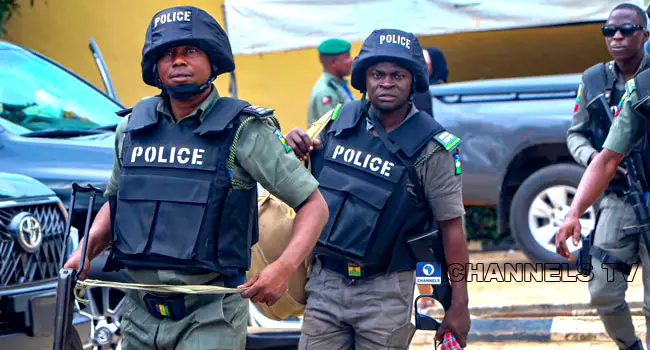
Police Deploy DIG, Two Commissioners to Rescue 20 Abducted Prospective Corps Members
-
 EverydayNews Telescope1 day ago
Nkalagu Cement Factory: Project or 2027 Political Promise?
-
 Crime19 hours ago
Court Denies Alleged Fake Pastor Bail as Seven Witnesses Await Trial
-

 News18 hours ago
NAF Crash Claims Pilot 16 Days After Wedding