



Education
Japa blamed as lecturers shortage hits varsities



The Academic Staff Union of Universities branches in separate interviews with The PUNCH on Sunday confirmed this, adding that the shortage was due to the surge in the exit of the lecturers out of Nigeria and the concerns around the Integrated Personnel and Payroll Information System.
ASUU at the Usmanu Danfodiyo University, Sokoto, said about 100 lecturers had left the university, while the union at the Federal University, Gusau, Zamfara, disclosed that the institution was in need of about 1,000 lecturers to fill the vacancies created by those who had left.
The union at the Federal University of Agriculture, Abeokuta, Ogun State said over 350 academic vacancies were available at the institution, while 27 lecturers had left two faculties at the University of Lagos, as 100 workers at the University of Uyo travelled out of the country.
The union disclosed that about 500 academic vacancies existed at the University of Ilorin in Kwara State, while both academic and non-academic staff of the Olusegun Agagu University of Science and Technology were leaving the country.

The Chairman, Olusegun Agagu University of Science and Technology, Okitipupa, Ondo State, Dr. Rotimi Olorunsola, said many of the staff of the institution, both academic and non-academic, had left the university.
Japa in varsities
Olorunsola said, “Yes, some have japa (travelled out of the country), both the academic staff and non-academic.”
The Head of the Media and Protocol, Adekunle Ajasin University, Akungba Akoko, Mr Victor Akinpelumi, confirmed that many workers of the institution had moved out of the institution.
“It is true many workers, both academic and non-academic, have left the university, but as I am now, I can’t give a specific number. I can confirm that many workers of the university have gone,” he stated.
The Chairman of ASUU, University of Benin, Dr Ray Chikogu, said the shortage of staff in UNIBEN and other universities had been a problem that existed for a long time due to the embargo on employment by the Federal Government.
He said this constituted undue interference by the government in the running of the universities, especially as it affected the recruitment and promotion of staff.
He said, “The teaching staff department is grossly understaffed. For a very long time, academic staff have been overburdened with work in the University of Benin and many other universities in the country.
“It has been a problem for a number of years now because of the embargo on employment in federal universities and the process of recruitment of staff is a very cumbersome one. The university has to obtain permission from the head of service through the accountant-general’s office.
“This is interference by the Federal Government on the internal affairs of the school. What should have been handled by university senates and councils has now been centralised to the point that everything has been muddled up in the university system. It is a very sad situation.
“Many are retiring and they are not being replaced and due to the unfavourable condition much academic staff work under, they have left their jobs and travelled abroad to seek greener pastures, adding to the big problem of brain drain, which is taking its toll on the university system and nothing is being done about it. It appears that the Federal Government is deliberately suffocating the system for reasons best known to them.”
Bureaucratic bottlenecks
The ASUU Chairman at the Federal University of Kashere, Gombe State, Dr Shehu El-rasheed, said a lot of vacancies existed in the varsity due to bureaucratic bottlenecks.
He said, “A lot of vacancies exist but filling the vacancies has become very difficult due to the tough bureaucratic bottlenecks. A vice-chancellor needs to get clearance from about seven Federal Government agencies and parastatals before a single staffer is recruited.
“Senior professors are retiring and no replacement. In FUK, academic staff are leaving in numbers to countries such Malaysia, Oman, New Zealand, and the US.”
El-Rasheed noted that inadequate academic staff in FUK could be associated with inadequate funding, “by the Federal Government and bureaucratic bottlenecks brought by IPPIS; poor remuneration and harsh economic conditions.”
IPP was introduced by the Federal Government a few years ago as part of measures to solve the problem of ghost workers and civil servants who earned multiple salaries.
However, a lot of workers, particularly those in universities, are not comfortable with the initiative, as it does not enable the institutions to employ workers even when such universities are highly understaffed.
The management of the Obafemi Awolowo University and the leadership of ASUU in the institution, while speaking in separate interviews, said there was a shortage of staff members in the university.
The Chairman of the OAU ASUU, Prof Tony Odiwe, decried the poor treatment of academic staff members and demanded a better working environment for the lecturers.
He said, “The government doesn’t care about the system, treating us as if we are slaves, terrible conditions of service, no motivation, and poor facilities. In addition to this, retired members are not being replaced, we are extremely overworked.”
On the shortage of lecturers, Odiwe said, “Our members have gone and many are still planning to leave especially, the younger ones in the system.
“Yes, Japa has contributed immensely to it. It is natural as humans that we want to work or live in a place where we are valued, where we will be fulfilled and contribute to the growth and development of our society.
“Yes, retirement has contributed to it. For example in my department, over five of our members have retired in the last five years and they have not been replaced. You should also add the fact that some of our members have passed on. The IPPIS has caused enormous damage and the earlier it is scrapped the better for all of us.”
Speaking on behalf of the management, OAU Public Relations Officer, Abiodun Olanrewaju, said the institution was facing a shortage of both academic and non-academic staff.
Olanrewaju, however, could not give the number of vacancies in the institution.
He urged the Federal Government to allow the Vice Chancellor of the university, Prof. Simeon Bamire, to fill vacancies that exist within the institution’s workforce.
In Katsina State, the issue of inadequate academic staff in the state-owned Umaru Musa Yar’adua University was raised by workers in the institution.
Findings showed the institution made use of visiting lecturers from the nearby Federal University, Dutsinma, and from other universities across Nigeria.
It was also found that many of the university lecturers also handled extra courses aside from those assigned to them because of inadequate academic staff.
Meanwhile, the ASUU Chairman of the Federal University, Dutsinma, Dr Jibrin Shagari, said, “The FUDMA is affected by mass academy staff exodus, two professors exited the Faculty of Management Sciences last month, as well as a lecturer.
“Some of the staff died, while some slumped and are suffering from stroke. Many academic staff have lost interest in their jobs because of insecurity, overloaded work, non-living wages, no leave due to semester running, withheld salaries, wages, and promotion arrears.
The ASUU Chairman, Usmanu Danfodiyo University, Sokoto, Prof. Nurudeen Almustapha, called on the government and other relevant authorities to urgently address the issue of brain drain in Nigerian universities.
He said the brain drain was a result of the japa syndrome, as well as the non-replacement of retiring staff.
“We are having a serious shortage of lecturers here at UDUS, and I know the issue of Japa syndrome among university lecturers cannot be overlooked.
“Most of the young lecturers who are still very energetic now look for opportunities outside the country where they can explore their God-given talent better.
“Also, there has not been any recruitment in the last few years to replace those who are retiring or leaving the profession for greener pastures.
He, however, confirmed that between the year 2000 and now, at least 100 persons had left the school either due to retirement or japa syndrome.
The chairman further said the introduction of IPPIS also contributed to the problem faced by the universities in the country.
“The introduction of IPPIS was also a major factor contributing to Japa in the school as most of those leaving the system are citing irregular payments,” he stated.
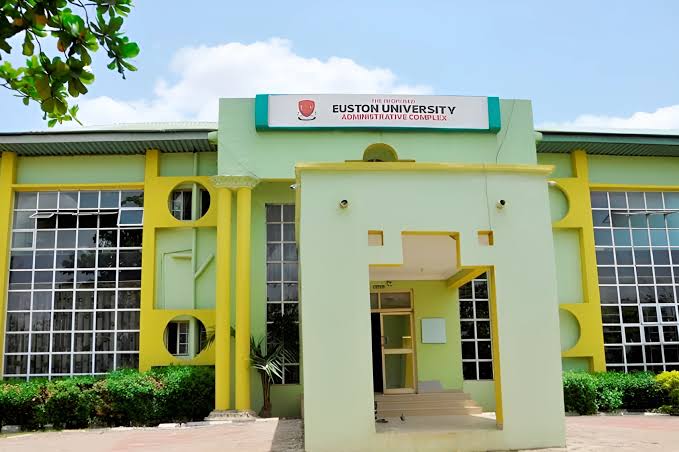
Euston University has invited prospective students to apply for admission into its available academic programmes for the 2026/2027 academic session following the successful completion of a Resource Verification Exercise and subsequent approval by the National Universities Commission (NUC).
The Acting Vice-Chancellor of the university, Professor Felicia Moh, disclosed this during a visit to the University Senate Chambers, where she expressed appreciation to the NUC for the exercise and reaffirmed the institution’s commitment to maintaining the regulatory standards required for quality university education.
Prof. Moh commended the university’s Chancellor, Her Excellency Mrs Eunice Ukamaka Egwu, for her vision and investment in the institution, particularly her commitment to expanding access to quality higher education and creating opportunities for young people in Ebonyi State and beyond.
She noted that the university had made significant investments in infrastructure, academic facilities and human resources to provide a conducive environment for effective teaching, learning and research.
The Acting Vice-Chancellor also praised the leadership of the NUC for its ongoing reforms and commitment to strengthening the quality and relevance of university education in Nigeria.
According to her, the successful Resource Verification Exercise and subsequent approval by the commission represent a significant milestone in the development of Euston University and pave the way for the commencement of academic activities in the approved programmes.
She urged prospective students, parents, guardians and members of the public to take advantage of the opportunity to secure admission into the university for the 2026/2027 academic session.
Education
Ihejirika Hails Mbah’s Infrastructure Drive as Coal City University Inaugurates Governing Council

Former Chief of Army Staff, Lt. Gen. Azubuike Ihejirika (rtd.), has commended Enugu State Governor, Peter Ndubuisi Mbah, for his infrastructural development efforts across the state.
Ihejirika gave the commendation in a special message to Governor Mbah during the inauguration of the Governing Council of Coal City University, Enugu, held on Wednesday, October 7, 2026.
The former Army Chief’s commendation came as the university formally inaugurated its new Governing Council, with its chairman pledging to provide strategic leadership aimed at strengthening academic excellence, good governance and sustainable growth.
In his inaugural address, the Chairman of the Governing Council described his appointment as both an honour and a major responsibility, saying the council had been entrusted with the future of an institution impacting thousands of young people.
He commended the Chancellor and Proprietor of the university, Sir Chinedu Ani, for his vision, determination and personal commitment to establishing and developing Coal City University.
According to him, building a university requires enormous resources, infrastructure, courage and perseverance, stressing that universities remain critical to nation-building because they prepare young people for employment, responsible citizenship and leadership.
The council chairman said the new Governing Council would work closely with the Chancellor, Vice-Chancellor and management to ensure that the university remained faithful to its founding vision.
He identified five major principles that would guide the council: academic excellence; good governance and accountability; student development; institutional growth and sustainability; and preservation of institutional values and integrity.
He said the university would support initiatives aimed at strengthening teaching, research, innovation and scholarship, while promoting transparency, prudent management of resources and adherence to regulatory standards.
On student development, he stressed the need to produce graduates who combine intellectual excellence with discipline, integrity, entrepreneurship, creativity, leadership and respect for human dignity.
The chairman also noted that the higher education sector was changing rapidly due to technology, artificial intelligence, evolving workplace demands, research and innovation.
He therefore called for stronger partnerships, international outlook, research capacity, infrastructure development and financial sustainability to enable Coal City University to anticipate and respond effectively to emerging challenges.
He further warned that the reputation of the university would depend not only on its physical infrastructure but also on the integrity, professionalism, fairness and accountability of members of its community.
The council chairman assured the university’s management of the council’s support while emphasising that the governing body would respect the distinction between governance and administration.
He charged the Vice-Chancellor and principal officers to maintain high standards of excellence, transparency and accountability, while commending members of staff for their contributions to the development of the institution.
He also urged students to take full advantage of the opportunities offered by the university, pursue knowledge with seriousness and cultivate discipline and integrity.
He said the long-term ambition should be for Coal City University to gain recognition for the quality of its graduates, relevance of its research, integrity of its leadership and positive contribution to society.
The chairman expressed appreciation to the Board of Trustees and the Chancellor for the confidence reposed in the newly inaugurated council and prayed for wisdom and courage for its members.
The event was attended by the Chancellor and Proprietor of Coal City University, Sir Chinedu Ani; the Vice-Chancellor; members of the Board of Trustees; principal officers; members of the newly inaugurated Governing Council; university staff and other distinguished guests.
The event ended with prayers for the continued growth of Coal City University, the development of Enugu State and the progress of Nigeria.

The Ondo State Ministry of Education has summoned a public secondary school principal in Oke Aro, Akure, following reports that prospective students were subjected to blood tests as a condition for admission into Junior Secondary School 1 (JSS1).
The development reportedly occurred during the 2026/2027 academic session and has raised concerns among parents and education stakeholders in the state.
Newly admitted students at the school were allegedly directed to undergo blood tests at a small retail shop located opposite the school before their admission could be completed.
A parent alleged that she was instructed to pay ₦8,000 for what was described as an emergency JSS1 admission test, adding that her ward would not be admitted without undergoing the test.
Following the report, the principal was reportedly summoned by officials of the state Ministry of Education to explain the circumstances surrounding the blood-testing exercise.
The principal, according reportedly acknowledged being aware of the blood-taking exercise but denied involvement in organising it. She reportedly told officials that the practice had been in place before she assumed office as the school’s principal.
The Permanent Secretary of the Ministry of Education confirmed that the principal had been summoned on the directive of the Commissioner for Education, Prof. Igbekele Ajibefun, to clarify the circumstances surrounding the development. A query was also reportedly issued to the principal.
The commissioner, in a separate interview said the state government did not authorise any school principal to make blood sampling a requirement for admission.
He described the practice as strange to the ministry and stated that no such directive had been issued by the government.
Meanwhile, the Nigeria Security and Civil Defence Corps (NSCDC) in Ondo State has reportedly taken over the investigation.
The Corps’ spokesperson in the state, David Dan, confirmed that a man identified as Alfa had been arrested in connection with the incident.
According to him, although Alfa’s shop was allegedly used for the blood-taking exercise, the individual who carried out the actual procedure was said to be at large.
The NSCDC reportedly assured that efforts were ongoing to apprehend the fleeing individual, while further information obtained during the investigation could help determine whether other persons were involved.
The development has also renewed concerns among some parents over alleged illegal charges and other practices in public schools.
A parent, Mrs Olaoba Josephine, from Estate High School, Shagari Village, Akure, alleged that parents were instructed to come to the school with their ATM cards to pay school fees, claiming that a POS operator was already stationed at the school to receive payments.
Parents also alleged that some principals continue to engage in practices such as the sale of textbooks to students, despite the reported abolition of such practices.
One parent who spoke on the broader issue alleged that some school principals had adopted different methods of collecting money from parents and newly admitted students, while calling for closer monitoring of public schools by relevant authorities.
The Ministry of Education and security agencies are expected to determine the circumstances surrounding the alleged blood-testing requirement and establish whether any individuals or officials should face further action.
Source: Germane reporters
Education
Governor Mbah Increases Monthly Subvention to ESUT by N115m, Appeals to ASUU to Suspend Strike
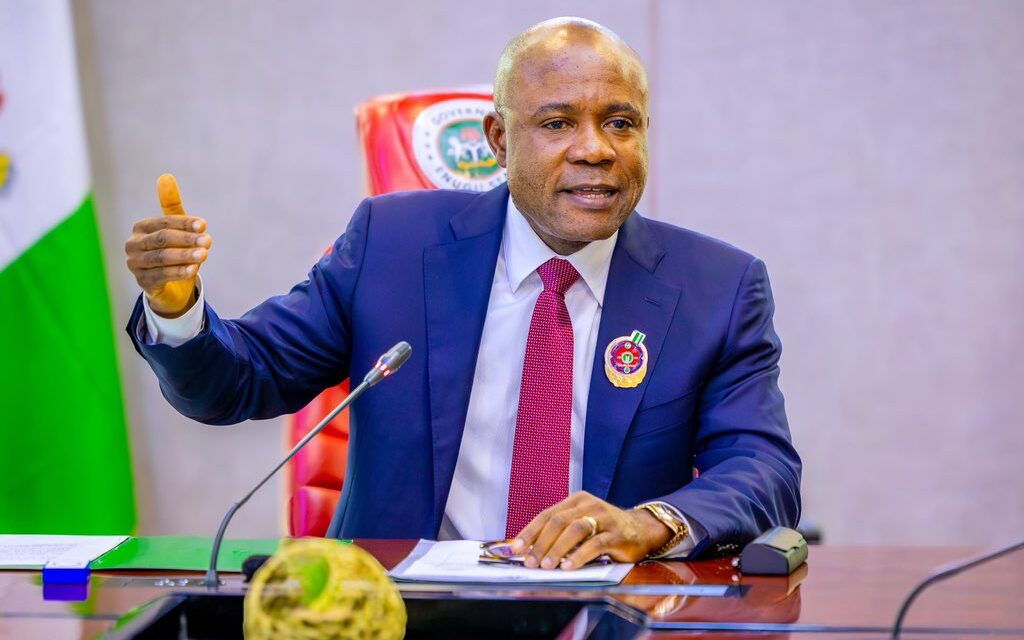
Governor Peter Mbah of Enugu State has approved an additional N115 million monthly subvention for the Enugu State University of Science and Technology (ESUT), as part of efforts to address concerns surrounding the ongoing strike by the Academic Staff Union of Universities (ASUU), ESUT chapter.
The additional funding will raise the state government’s monthly subvention to ESUT from the current N161 million to N276 million, representing a cumulative increase of N140 million since February 2026.
The Secretary to the State Government (SSG), Prof. Chidiebere Onyia, who made this known in a statement on Monday, said the additional funding underscored the administration’s commitment to strengthening ESUT’s capacity to meet its financial obligations, particularly its responsibility to staff and the continued delivery of quality academic services.
“Governor Mbah has demonstrated once again that his administration places the welfare of workers and the uninterrupted education of our young people at the heart of its priorities. This additional N115 million monthly intervention is a substantial commitment of public resources aimed at strengthening ESUT and ensuring that the institution can meet its obligations to its staff and students,” Prof. Onyia said.
He explained that prior to February 2026, the state government was providing N136 million monthly to ESUT. However, beginning in February, the government commenced an additional monthly intervention of N25 million specifically for the ESUT College of Medicine (ESUCOM) to support the payment of 120 additional staff, bringing the total monthly government support to the university to N161 million.
Prof. Onyia said the latest approval of an additional N115 million would raise the state government’s total monthly subvention to ESUT to N276 million.
He further said the increase would help ESUT towards achieving the salary agreement reached between ASUU and the Federal Government.
He appealed to ASUU members at ESUT to reciprocate the government’s intervention by suspending the industrial action and resuming academic activities, in the interest of students whose academic progress may be disrupted by the strike.
“We appeal to ASUU-ESUT to reciprocate this gesture by resuming academic activities, while all outstanding issues are addressed through constructive dialogue. Our students should not be made to bear the consequences of disagreements that can be resolved amicably,” the SSG said.
The SSG reaffirmed Governor Mbah’s commitment to the welfare of workers and the sustained development of ESUT, saying the substantial increase in government funding demonstrated the priority the administration places on education and the uninterrupted academic calendar.
He urged all stakeholders, including the university management and ASUU, to embrace dialogue and work collaboratively towards resolving the outstanding issues, stressing that the ultimate objective should be to ensure that ESUT students receive uninterrupted and quality education.
He further assured the university community that the Mbah administration would continue to support ESUT within available resources, while taking necessary steps to strengthen the institution and position it to fulfil its mandate as a leading university of science and technology.

United Nigeria Airlines has pledged N20 million to sponsor the prestigious annual Chinua Achebe Prize for Fiction, administered by the Association of Nigerian Authors (ANA) for the next 10 years.
The sponsorship deal was disclosed today by the executive chairman of the airline, Professor Obiora Okonkwo, following a discussion with the ANA president, Dr. Usman Akanbi.
Under the arrangement, the airline will provide N2 million every year for the next 10 years to ANA, bringing the total sponsorship to N20 million, a commitment the association says would guarantee the continuation of the prize regardless of the change in the state government.
The yearly award which was initiated by the Anambra State government in 2021 in conjunction with the ANA leadership, has faced financial constraints in the last three years following the failure of the present state administration to continue its sponsorship.
Though the Governor Willie Obiano administration began the sponsorship with one million naira, the Governor Chukwuma Soludo administration that succeeded it in 2022 continued the sponsorship and agreed to ANA’s request to double it in consideration of inflation and administrative costs like payments to judges.
However, after two years, the organisers say the state government appears to have lost interest in continuing with the sponsorship despite several letters reminding it of its promise.
The apparent lack of commitment caused United Nigeria Airlines to intervenee and rescue the prize from uncertainty.
Announcing the airline’s decision to step in, Dr. Akanbi quoted Prof Okonkwo as saying: “Prof Achebe is too precious in our consciousness for the award to continue to suffer the current epileptic funding.”
Speaking on why the airline made the decision to take over the sponsorship, Prof. Okonkwo said that Achebe’s legacy demands this level of commitment.
“Very few men and women of letters and culture in recent history”, he stated, “have brought as much attention and honour to the black race and the African world as the great Achebe through his writings, lectures, speeches, intellectual activism, ethical conduct, and intermittent interventions in political affairs which has made him an authentic conscience of the Nigerian people.
Reacting to the sponsorship, the ANA president, who is a senior academic at the University of Ilorin in Kwara State said: “We are immensely grateful to Prof. Okonkwo and his airline for their patriotic intervention. Prof was not just a world-class raconteur and essayist, but also the ANA founder who started our association in 1981 at the University of Nigeria at Nsukka and accepted to serve as its first president, thus giving it the credibility and platform that has made the association highly respected beyond Nigeria’s shores.”
Akanbi also highlighted Okonkwo’s consistent record of honouring Achebe, stating that Prof. Okonkwo has for some been hard to preserve the late author’s legacy.
For instance, he was solely responsible for financing the erection of a statue of the late Prof. Achebe which was unveiled in July by Governor Chukwuma Soludo of Anambra State at the Ugwunwasike Roundabout in Ogidi, Idemili North Local Government Area, Achebe’s own hometown.
The prize sponsorship is the latest effort made by Prof. Okonkwo and United Nigeria Airlines to cement Achebe’s legacy.
In June, one of the two Boeing 737-800NG aircraft purchased by United Nigeria Airlines was named after the late author, while the other was named after His Royal Majesty, Igwe Nnaemeka Achebe, the Obi of Onitsha.
Naming these two aircraft after both men is in line with Prof. Okonkwo’s determination to uphold their values.

-
 News4 days ago
C’RIVER 2027 BUDGET: GOV OTU PRESENTS ₦987.8bn ESTIMATES TO ASSEMBLY
-

 EverydayNews Telescope5 days ago
Enugu East Senate: The Dark Side of Ada Ogbu, NDC Candidate
-

 News4 days ago
Holy Ghost Transformation: How Enugu North Chairman Ibenaku Onoh Ended Years of Traffic Chaos, Roadside Trading
-

 EverydayNews Telescope5 days ago
Ebonyi 2027: The People’s Quest For ODII Vs Compromised Stakeholders
-
 Politics3 days ago
One Feared Dead, Several Injured as Thugs Attack Ebonyi NDC Assembly Candidate, Burn Campaign Vehicle
-
 Politics5 days ago
2027: Tinubu Has No Hand in Alleged Assassination Plot Against Atiku – APC
-

 Crime5 days ago
N8m Fraud: Job Racket Lands Enugu Businesswoman in EFCC Net
-

 News3 days ago
Onitsha North LG Boss Reads Riot Act to Traders, Residents Over Poor Sanitation