


Politics
IPOB: Panic in S’East, S’South over military clampdown

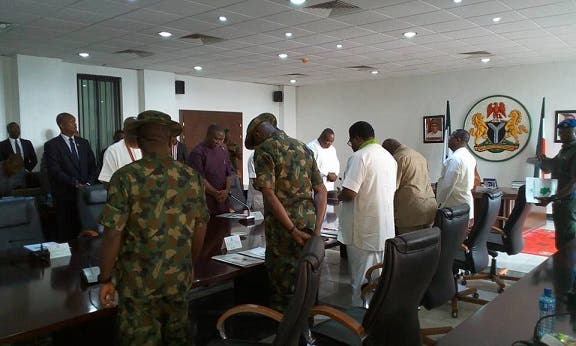

There is palpable tension and fear in South-East and South-South states following plans by the Federal Government to deploy more military assets, including troops, intelligence personnel and the Nigerian Security and Civil Defence Corps (NSCDC) in the areas.
Already, a clampdown is ongoing, targeted at pro-Biafra groups there including newspaper distributors and vendors selling published materials on Biafra.
The two regions, had, in recent weeks, come under attack by armed groups, who killed policemen as well as burnt police stations and correctional facilities in Abia, Anambra, Ebonyi, Imo, Enugu, Akwa Ibom and Rivers States.
Imo has been the worst hit, as security forces have been combing the communities in search of members of the Indigenous Peoples of Biafra (IPOB) and its vigilante outfit, Eastern Security Network (ESN). ESN commander, Kanayo Nwokike (Ikonso) was recently ‘neutralized’ by security forces in his community, Awomamma in Oru East, Imo State, while joint security operations continued in the Orlu axis of the state.
Residents have been severely traumatized by the heavy presence of the military there even as private homes had been invaded. In fact, the home of Awurum Eze, who according to the army was the second in command to the slain ESN commander, Ikonso, was recently burnt down in Mbano, Imo State by troops before his eventual arrest in Aba, Abia State.

IPOB has since denied that Eze was its member, much less a commander of the ESN.
Security challenges in the two zones have attracted the attention of the National Security Council at its series of meetings held in Abuja and chaired by President Muhammadu Buhari.
Saturday Sun gathered that one of the decisions at the meeting last Tuesday, was a fresh ultimatum of three weeks given by the council to the security chiefs to check the rising insecurity in the country.
The council also announced that a new security strategy to contain violence in the two zones would be devised.
As part of the undisclosed security strategy for the two regions, the Inspector-General of Police, Alkali Usman, had in a wireless message with reference CB: 0900/DTS/DOPS/VOL.47/812X, titled “Attack on policemen, snatching of rifles by IPOB” warned police officers and personnel not to accompany their principals to Abia, Anambra, Ebonyi, Abia, Enugu, Imo and Rivers States until the security situation in the region improves.
But, it was learnt that security authorities were concluding plans for a massive troop and security assets deployment in the two zones to restore order.
A similar deployment in the two zones under the former Chief of Army Staff, Lt. Gen. Tukur Buratai (rtd), was codenamed Operation Python Dance in the South-East and Operation Crocodile Smile in the South-South and South-West, respectively.
A highly dependable top security source told Saturday Sun that the new security strategy for the two regions was aimed at neutralizing armed groups as a disincentive to further violence in the two regions.
Anguish in Owerri, Imo-Anambra boundary
The South East zone is presently bearing the fangs of the Federal Government in its fight against insecurity in the country.
In Imo, some innocent citizens have reportedly paid the price with their lives as the clampdown on the purported ‘unknown gunmen’ continued in the zone. A businessman and a first year student of the Imo State University are two known examples.
Still in Imo, vendors and some journalists in the state, including the Sales Representative of The New Telegraph newspaper, Chuks Ugwuoke, were arrested for allegedly propagating the Biafra and IPOB.
Ugwuoke was arrested and detained for being in possession of pamphlets from the stable of pro-Biafra activists. He has since been released, but media practitioners in the state expressed fears that if the matter was not addressed, the situation might lead to endangering press freedom.
Condemning the clampdown on vendors and journalists in particular, the Coalition of South East Igbo Youth Leaders (COSEYL), said such was a coup against democracy.
President General of the group, Goodluck Ibem, described the attack as a travesty of the Nigerian Constitution that gives citizens right to life, freedom of speech and association.
“Even in a banana republic, journalists are respected. In times of war, journalists are permitted to perform their legitimate duties. Now why is the army arresting and torturing journalists and vendors in Imo? Are they arresting and torturing them because they are Igbos? What reason are the army giving for arresting and torturing journalists?
“In recent times, Igbo youths have been used for target practice by the military in Imo State. A young businessman by name Noel Chigbu and a first year law student of Imo State University, Divine Nwaneri, were recently killed for no just reason.
“As representatives of the youths in the South East, we demand a halt to the wanton arrest of journalists, vendors and unlawful, barbaric and wicked killings of Igbo youths. It appears that the army is only efficient when they are deployed to South East zone.
“In South East, the right to life, liberty and pursuit of happiness as enshrined in the Nigerian constitution are threatened by hate, conspiracies and lies,” Ibem stated.
Chairman of the Correspondents’ chapel of Nigeria Union of Journalists in Imo, Chris Njoku of The Nation newspaper, who spoke jointly with the South East Bureau Chief of the New Telegraph newspaper – Steve Uzoechi, had decried the harassment, intimidation arrest and detention of some newspaper distributors, sales representatives and circulation staff by the police and called for its immediate stoppage in order not to stifle information dissemination by journalists.
Our investigation further showed that travelling from one state to another has also become a nightmare, as soldiers, who mount roadblocks at strategic interstate boundaries, subject travellers to tortuous experiences.
The military roadblock at the boundary between Akokwa in Ideato North Local Government Area of Imo State, and Uga community in Aguata Local Government Area of Anambra State, has been a frightening point to those on that route for whatever reason.
Those crossing the area are made to come down from whatever means of transportation they use, and move on foot, raising their hands up before walking through.
A resident of Akokwa community, who gave his name as Izuchukwu Ikezuagu, who claimed his house is close to the military checkpoint, told Saturday Sun: “Before now, it used to be a police checkpoint. But after a confrontation between the police and some citizens of the area that led to the setting of police patrol van on fire at the place, soldiers took over the checkpoint.
“Since then, I always see people complaining about the behaviour of soldiers at the checkpoint. Then, one day, when I was travelling from Akokwa to Uga on my motorcycle, I had a similar experience. I was actually taking some commodities to Oye Uga Market for sale when I was stopped at the checkpoint by soldiers. I was made to push the motorcycle with the heavy load on it till I was able to cross the checkpoint,” he narrated.
He said since he had that experience, it had become difficult for him to take his commodities to Oye Uga for sale, as it could be hellish.
Women, who have shops both at the Uga and Akokwa areas, who also shared their experiences with our reporter, including Eugenia Ikenga, Uzoyibo Udechukwu, Ngozi Ibe and Anthonia Anah, said doing businesses at the area had become unbearable, as people, especially young men, coming from either community to patronize them were either arrested, tortured on baseless grounds or made to go back.
Meanwhile, the Ohanaeze Ndigbo, the Aligbo Development Foundation (ADF) and other prominent Igbo groups, have warned the Federal Government to avoid indiscriminate shooting of Igbo youths.
They said the pattern of deployment of northern military officers to the South-East supported the intelligence report that Igboland would be ruthlessly dealt with by the soldiers.
The apex Igbo organization was disturbed that the Nigerian army had posted Northern Muslims as commanders over its operations and brigades in Anambra, Imo, Abia, Akwa Ibom, Enugu, Benue, Edo, Delta and Rivers.
It asked the Federal Government to refrain from the use of force in resolving the present national crises.
President General of Ohanaeze, George Obiozor said: “In Anambra State, the Cantonment Commandant of the 302 Artillery Regiment, Onitsha, is Col Abdulsalam Abubakar Sambo, a Hausa-Fulani Muslim; while in Imo State, the Brigade Commander of 34 Brigade, Obinze, is Brig Gen Ibrahim Tukura, another northerner; in Abia State, the Brigade Commander of 14 Brigade, Ohafia, is Brig Gen M. Ibrahim, still, a northerner; while in Akwa Ibom State, the Brigade Commander of 2 Brigade, Uyo, is Brig Gen Faruk Mijinyawa, another northerner. This is truly worrisome.
He, then warned that using the military and violent means to solve the national question was bound to fail as it had never worked anywhere in history. Instead, it “leads to further national fractionalization, anarchy and eventual or inevitable disintegration, as in all empires or multi-national states or countries”.
In the same manner, a think-thank of Igbo intellectuals and professionals world over, Nzuko Umunna, within the week, dragged the Nigerian military authorities before the United Nations, Governments of the United States of America (USA), the United Kingdom (UK) and other leading nations.
The group said the recent purported ‘shoot-on-sight’ order by the Chief of Army Staff, Lt. Gen. Ibrahim Attahiru to troops in the South East, was a declaration of war on the Igbo.
Its open letter to the Chief of Army Staff, said that last weekend’s movement of new batches of troops to the region, clearly confirmed its fears.
The letter signed by Dr. Ngozi Odumuko and Dr. Paschal Mbanefo, observed that the hush-hush manner the directive was given made its intent and purpose more ominous, adding that was why it had brought “this properly to your notice with the hope you will take peremptory action.
“We most respectfully urge you to use your good offices to intervene, as a matter of urgency, in this very critical matter to douse the tension and apprehension in the region arising from rumours and the expectation that the killings and unnecessary waste of human lives will escalate.



ABAKALIKI — The camp of the Peoples Democratic Party (PDP) governorship candidate, Chief Dr Ifeanyi Chukwuma Odii, has dismissed reports suggesting that he may withdraw from the 2027 Ebonyi State governorship race and support Governor Francis Nwifuru.
In a statement signed by Odii’s spokesperson, Chief Emmanuel Chidi Igwe, the campaign described the reported withdrawal as false, insisting that Odii remains committed to contesting the election.
According to Igwe, “Chief Dr Ifeanyi Chukwuma Odii will never, under any condition, step down from the 2027 governorship contest.”
The statement said Odii’s political camp remains focused on what it described as its campaign position: “Odii must run and win.”
It added that any political discussions, persuasion or negotiations involving other individuals should not be interpreted as a decision by Odii to abandon his governorship ambition.
Camp Rejects Withdrawal Narrative
The Odii camp further described reports of a possible withdrawal as a political narrative allegedly being promoted by individuals opposed to his candidacy.
Igwe challenged those behind the reports to produce evidence showing that Odii had personally announced his withdrawal from the race.
“There is a fundamental difference between reporting that a politician intends to persuade Chief Odii to withdraw and reporting that Chief Odii has agreed to withdraw,” the statement said, stressing that the latter would require evidence from the candidate himself.
The spokesperson also urged journalists, bloggers and online publishers to maintain professional standards when reporting political developments, warning against presenting speculation or the intentions of third parties as established decisions by political candidates.
24-Hour Retraction Demand
The camp has consequently demanded that publishers of the alleged withdrawal story retract or prominently correct their reports within 24 hours, unless they can produce an authentic statement from Odii confirming that he has decided to withdraw from the 2027 contest.
The statement also reminded online publishers of their responsibilities under Nigerian law, citing the Cybercrimes (Prohibition, Prevention, etc.) Act 2015, as amended, as well as other laws relating to unlawful online publications and defamatory material.
The spokesperson clarified that the reference to the law was not intended as a threat against legitimate journalism or political criticism, but as a reminder that political disagreements should remain within the bounds of the law.
The statement concluded by reaffirming that Odii remains in the 2027 governorship race and urged members of the public to regard reports of his withdrawal as unverified unless supported by a direct statement from him.
By Petrus Obi, London
London — The Peoples Democratic Party (PDP) governorship aspirant in Ebonyi State, Ifeanyi Odii, has intensified his criticism of the administration of Governor Francis Nwifuru, insisting that the people of the state deserve a different approach to governance.
Odii, who spoke with EverydayNewsngr.net in London, said what he described as the “fire brigade approach” of the Nwifuru administration was not the kind of governance Ebonyi needs.
According to him, the state requires a government with a clear vision, long-term planning and the capacity to deliver meaningful development to its people.
“The fire brigade approach of the Nwifuru government is not what the state needs,” Odii said.
He added: “I am coming to bring a new lease of life to my people.”
Odii’s comments come amid renewed political debate in Ebonyi State following the recent removal of the state Commissioner for Works. The development has attracted attention from opposition circles, with critics using it to question aspects of the administration’s handling of governance and infrastructure.
The PDP chieftain said the people of Ebonyi should expect more than what he described as reactive governance, arguing that development should be driven by a coherent programme capable of producing lasting results.
He maintained that his political ambition was motivated by a desire to provide what he described as purposeful leadership and improve the welfare of residents across the state.
“We deserve better government in Ebonyi State,” Odii said, stressing that his vision was centred on giving the people renewed confidence in government and creating opportunities for them to prosper.
As political activities ahead of the next governorship election continue to gather momentum, governance, infrastructure, accountability and the delivery of public services are expected to feature prominently in the emerging contest.
Odii’s intervention in London is likely to add further momentum to the political conversation, particularly as opposition figures seek to distinguish their vision for Ebonyi from that of the incumbent administration.

STATEMENT BY CHIEF EMMANUEL CHIDI IGWE,
SPOKESPERSON TO CHIEF DR. IFEANYI CHUKWUMA ODII
The 2027 governorship election in Ebonyi State is not a family affair, nor is it a matter to be decided by one individual or political godfather. It is a democratic contest, and Ebonyians will ultimately decide who becomes their governor through the ballot box.
No aspirant should be expected to step down simply because another politician believes he should. Every qualified candidate has the right to contest, present his programme and seek the mandate of the people.
Let me make this clear: since Senator Dave Umahi did not bring Chief Dr. Ifeanyi Chukwuma Odii into the governorship race, he cannot now claim the authority to ask him to step down. Chief Odii has his own political identity, supporters, convictions and legitimate right to seek the mandate of Ebonyians.
The decision to contest or withdraw belongs to the candidate, while the ultimate decision on who governs Ebonyi State belongs to the people.
The 2027 election should therefore be about issues, programmes, records, accountability and the future of Ebonyi—not political arrangements made by individuals behind closed doors.
Chief Dr. Ifeanyi Chukwuma Odii is prepared to place his vision and programme before Ebonyians and subject them to public scrutiny. Those seeking to retain power should equally be prepared to defend their records before the electorate.
Ebonyi 2027 is not a family arrangement. It is a contest for the confidence of the people. The people of Ebonyi State—not individuals—will have the final say.
Chief Emmanuel Chidi Igwe
Spokesperson to Chief Dr. Ifeanyi Chukwuma Odii
Politics
BREAKING: SaharaReporters Report on Arrest of Enugu Traditional Ruler, Ex-Lawmaker Is False and Misleading

The recent publication by SaharaReporters alleging that prominent Enugu traditional ruler, Igwe Obiora Igwesi, his brother and former federal lawmaker, Hon. Uchenna Sunday A. Igwesi (USA Igwesi), and eight others were arrested over an alleged attack on an NDC ward meeting in Obuoffia, Nkanu West Local Government Area, is false and deeply misleading.
The report is being described as a deliberate attempt to damage the reputation of respected leaders in Enugu State and create unnecessary political tension ahead of the 2027 elections.
Contrary to the claims contained in the publication, there was no arrest ordered by the Inspector-General of Police against Igwe Obiora Igwesi, Hon. USA Igwesi, or the other individuals named in connection with any alleged attack on an NDC meeting. There was also no operation by detectives from Zone 13 Command, Ukpo, Dunukofia, Anambra State, as alleged in the report.
Similarly, the purported petition dated September 15, 2026, and the allegations of conspiracy, unlawful possession of firearms, attempted murder, assault, threatening violence and stealing are strongly disputed and described as fabricated claims intended to create a damaging narrative around the individuals concerned.
The broader allegation that the 17 Local Government Areas of Enugu State have experienced coordinated armed attacks allegedly sponsored by Local Government Chairmen to silence the opposition is equally rejected as unfounded.
Attempts to associate Igwe Obiora Igwesi and Hon. USA Igwesi with criminal activity or political violence are viewed as an unacceptable effort to tarnish the image of individuals who have served their communities and contributed to the development of Enugu State.
The public, particularly the people of Enugu State, is therefore urged to exercise caution and verify the facts independently before accepting or circulating the allegations contained in the SaharaReporters publication.
Enugu State remains focused on peace, stability and development. Political disagreements should not be allowed to degenerate into the circulation of unverified allegations capable of inflaming tensions or damaging the reputations of individuals.
The position being maintained by the affected parties is clear: there was no arrest of the named individuals in connection with the alleged incident, no evidence has been presented establishing that any Local Government Chairman sponsored an attack, and the allegations contained in the publication are disputed in their entirety.
The public is encouraged to await verifiable facts from the appropriate authorities rather than rely on claims that have not been independently substantiated.
Fresh legal questions emerge over Chijioke Ugwu’s membership registration after Supreme Court restores party-register provisions
By Our Correspondent
Fresh legal questions have emerged over the Peoples Democratic Party’s 2027 governorship ticket in Enugu State following the Supreme Court’s restoration of key provisions of the Electoral Act dealing with political party membership registers and the conduct of primaries.
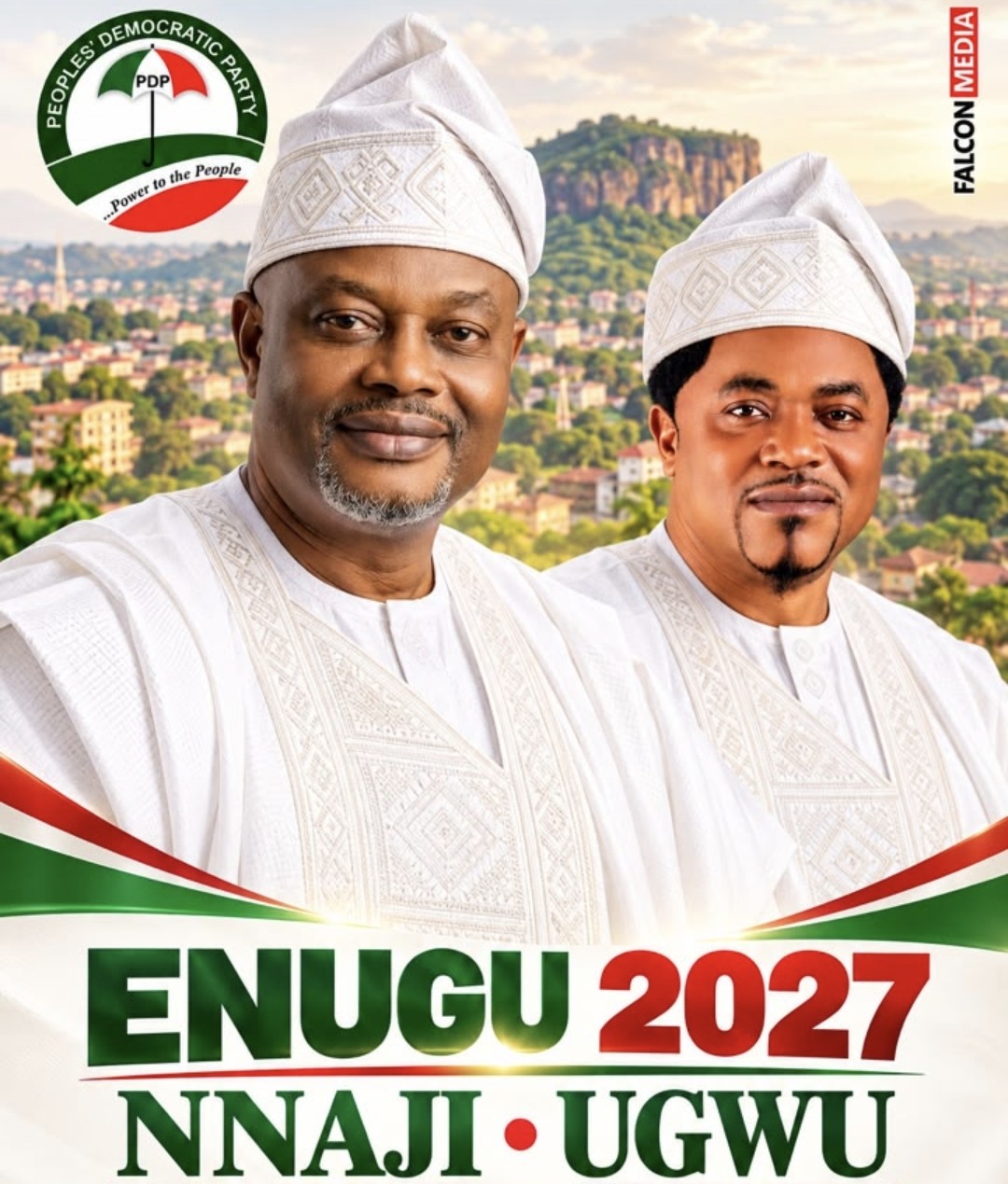
The questions centre on Chief Chijioke Peter Ugwu, who was recently announced by the PDP governorship candidate, Chief Uche Geoffrey Nnaji, as his running mate.
Nnaji announced Ugwu’s selection on September 24, shortly after the Supreme Court delivered its landmark judgment restoring Sections 77(5), 77(6), 77(7) and 84(2) of the Electoral Act 2026. Ugwu’s selection was subsequently reported by several Nigerian media outlets.
But documents and information available to this newspaper raise a question that could potentially become significant if the PDP ticket is challenged in court.
The PDP governorship primary in Enugu State was conducted on May 25, 2026.
However, Ugwu is understood to have registered as a PDP member on May 31, 2026 — six days after the governorship primary.
This means that if the May 31 registration date is accurately reflected in the party’s official records, his name could not have appeared in the PDP membership register submitted to the Independent National Electoral Commission (INEC) before the May 25 governorship primary.
That immediately raises the question:
Can a person who was not a member of the party on the date of its governorship primary subsequently be selected as the deputy governorship candidate without the Supreme Court’s restored membership-register provisions affecting the ticket?
What the Supreme Court restored
The Supreme Court, in a unanimous judgment delivered on September 24, set aside the Court of Appeal’s earlier decision which had declared the disputed provisions of the Electoral Act unconstitutional.
The apex court upheld the validity of Sections 77(5), 77(6), 77(7) and 84(2), following an appeal by INEC against the Court of Appeal judgment in the case involving the Zenith Labour Party.
Section 77(5) provides that only persons whose names are contained in a political party’s membership register submitted to INEC at least 21 days before a primary, congress or convention may participate in the exercise.
Section 77(6) requires political parties to use the membership register submitted to INEC for their primaries, congresses and conventions.
Section 77(7) deals with the consequence of failure by a party to submit its membership register within the prescribed period.
These provisions are now back in force following the Supreme Court judgment. Legal opinions suggest that the law’s insistence on the membership register submitted to INEC is relevant to the validity of the party’s eventual nomination process, depending on how the PDP formally nominated and submitted its governorship and deputy governorship candidates.
The precise documents will therefore be crucial.
Among the questions likely to arise are:
What date did the PDP submit its membership register to INEC?
Was Ugwu’s name contained in that register?
When exactly did Ugwu become a registered PDP member?
Was he a PDP member before the register was submitted to INEC?
How did the PDP formally nominate him as running mate?
Was the nomination made through a procedure recognised by the Electoral Act and the party’s constitution?
The controversy is coming at a sensitive time for the PDP, which has only recently unveiled Ugwu as Nnaji’s running mate. Ugwu, from Nguru in Nsukka Local Government Area, is an entrepreneur, philanthropist and community leader who runs businesses in logistics, contracting, consultancy and hospitality.
However, the governorship candidate and the deputy governorship candidate constitute a single electoral ticket. Therefore, any legal or constitutional issue affecting the eligibility of the deputy governorship candidate automatically has implications for the validity of the joint ticket, including the governorship candidate.
Another legal opinion available to this newspaper insists that “the gubernatorial ticket is a joint one. If the name of a deputy governor is not on the digital register, it invalidates the entire process.”
In the 2019 Bayelsa governorship election, APC’s David Lyon was declared winner. His running mate was Biobarakuma Degi-Eremienyo.
The Supreme Court later disqualified Degi-Eremienyo over the documents he submitted to INEC. The crucial point was that the Supreme Court held that his disqualification affected the joint ticket he shared with David Lyon. Consequently, the court ordered INEC to withdraw the Certificate of Return issued to Lyon and his deputy.
This happened one day before Lyon was due to be sworn in as governor. The certificate was subsequently issued to Douye Diri of the PDP, who had the next-highest lawful votes and the required geographical spread.

-
 News1 day ago
No Survivor Found Yet in Ondo Air Crash — Aiyedatiwa
-
 News1 day ago
How NAF Plane Vanished From Radar Shortly After Take-Off, Crashes In Ondo Swamp
-
 News3 days ago
Sacked Works Commissioner: Release or Charge Him to Court, Oganiru Izzi Challenges Nwifuru
-
 Politics1 day ago
2027: Odii Will Not Step Down, Says Spokesperson
-
 EverydayNews Telescope1 day ago
Nkalagu Cement Factory: Project or 2027 Political Promise?
-
 Crime3 days ago
Police Deploy DIG, Two Commissioners to Rescue 20 Abducted Prospective Corps Members
-
 Crime10 hours ago
Court Denies Alleged Fake Pastor Bail as Seven Witnesses Await Trial
-

 News10 hours ago
NAF Crash Claims Pilot 16 Days After Wedding