



Interview
I bagged first-class degree to fight stigma – Visually impaired graduate



Emmanuel Nweke, a visually impaired 31-year-old that graduated with a first-class degree in Social Works at the University of Nigeria Nsukka, Enugu State, tell how he battled the challenges that came with his disability
Graduating with a first-class degree from a public university in Nigeria is a feat many students desire but do not get. How did you achieve that despite being visually impaired?
Wanting to change the narrative ignited my passion. Naturally, a visually impaired student will be seen by others as someone that won’t do well. I wasn’t born blind, so, facing all manner of stereotyped stigmatisation, I felt that I could as well do it (graduate with a first-class degree) and make people believe that I can do it. Vision is propelled by the heart and not sight. I wanted to just change the narrative and make a new landmark. So, I just wanted to do something remarkable.
You said that you weren’t born blind. At what point did you lose your sight?
I was at Federal Polytechnic, Bida, Niger State. Along the line, I had an issue and couldn’t complete my National Diploma programme. It seemed as if my potential was hindered by the sight problem. It truncated my plans so I left school. You know what it means when a man who is chasing his dreams suddenly loses his sight. The light turns into dark and he can no longer see the sun as it rises. So, I was just left to bear the burden, even when my eyes could no longer control the tears that flowed from them. I asked myself, “What’s next?” Since my sight was gone, I was left with sound. So, that was when I left the polytechnic and eventually was able to attend a special school, take Unified Tertiary Matriculation Examination, and was offered admission into the University of Nigeria, Nsukka.

How long did you spend at the special school?
Well, it was actually meant to be a year’s programme since I was already an adult and I knew the basics of life. I could make use of the computer already but I needed to learn it the other way, performing computer functions. I had to learn the other side of life, then, mobility as the case may be, to navigate here and there. So, I learnt that within that time, then, I took the UTME, got admission, and proceeded to the university.
What was the actual diagnosis made?
I was diagnosed with glaucoma but the whole thing happened at the speed of light. Normally, glaucoma has its modus operandi, such that it takes time to happen but when I was diagnosed, I was placed on medication at St. Mary’s Hospital, Gwagwalada, (Abuja) because I reside in Abuja. But the whole thing happened at the speed of light.
After being diagnosed, how did you receive the news and accepted the new way of life?
I don’t question that, you know. The race is not for the swift nor the strong but for those who can adjust to change when the need arises. It is for those who can adjust to change, it’s not actually for the fit anymore but for those who can adjust to change and change is the only constant thing. It wasn’t like it was easy but the grace of God was sufficient.
I was navigating here and there in hospitals, going to see some people and you know Nigeria is a spiritual country. I went to some spiritual houses within that period but I had to take the bull by the horns because I was bored at home and my mates were doing exploits and all that in their different pursuits.
What were you taught at the special school?
I was taught mobility, how to navigate the road alone as a visually impaired person, and taking precautionary measures while on the road. So, it’s a kind of rehabilitation to reintegrate visually impaired persons into the broader society but you know that the societal acceptance is minimal in this part of the world. We face all forms of stigma and all forms of stereotypes. It’s just being who you are.
What was your experience learning to use Braille?
We were taught Braille, how to read with Braille, taught how to use a (computer) system. We used a regular computer but the difference was that it used an app called JAWS. JAWS is an acronym for Job Access With Speech. It can perform any form of operation within the computer. If you press Ctrl S on the keyboard, it tells you that you have actually saved your work and all that. We also learnt how to use a typewriter. Depending on how you operate intellectually, that depends on what you do. Some people use a typewriter to take exams and some use a computer. It all depends on what you are good at doing. Some like typewriting, Braille, computer operation, and so on. So, that’s it.
How do you live above the stigma that comes with not being sighted?
I will give that to a support system. You know a support system has a way of influencing one’s personality. As it is said, personality is the total of one’s character and sense of reasoning. So, one’s character and sense of reasoning are tied to who they are. If the support system is there, one shouldn’t come to my space and redefine the original me. So, it’s either you take me for who I am or you take a walk. It’s not just being rude but you shouldn’t put it in my face. I’m aware I’m blind, and that’s social awareness but you shouldn’t come and tell me that I am visually impaired either by your action or inaction.
Did you face that?
Yes, people do it, no doubt. Let me give you an instance. I wanted to board a vehicle and there was a particular route I was used to but a man probably thought that I was a novice and he said, “I will help you to get there.” I just laughed and said, “Are you helping me or I am paying for my service?” I don’t think it’s rude but I think it’s knowing my right. There’s a difference between helping one and making them pay for a service and each time I hear that, I just tell the person to his face that they are not helping me, but that I’m paying for the service.
It’s just being strong to myself. Sometimes I go to school and come back with tears in my eyes, no doubt. I face all manner of hurdles, meet people (students) who are 18 just talking to me without regard and I imagine that if it wasn’t for the impairment, I would have been done with school. Sometimes, I went to school, bumped into walls, and fell into gutters. There are challenges, no doubt but you just need to be strong. You need to put on that strong self because no one has got you better than you do. So, it’s just believing in one’s self.
As a student, did you have someone that assisted you to move around the campus?
I lived on selfless individuals who decided to be of help, navigating here and there. Visually impaired people can do a whole lot. Our challenge is just navigation from point A to point B. However, we do other things like laundry and cooking ourselves. I made my meals while at school but it was the aspect of going to the market that I needed the help of a friend. I just made a list of what I wanted and they helped me to get the items while I did the cooking.
What did you study at the university?
I studied social work.
Was that your dream course or was it based on the circumstance?
Let me give you an honest opinion. I was science-inclined and I wanted to study Medicine. The first UTME and post-UTME I took was for the University of Abuja but the issue of quota system (for indigenes) played out because I am from the South-East. So, I could not get Medicine that year. So I never thought I would see myself in the social sciences or the arts but the circumstances made it that way. It wasn’t planned.
What was the biggest hindrance you faced during your stay on campus?
One of the biggest challenges was that as a visually impaired, all I needed was for the lecturers to send me a soft copy (of their lectures) via email but they expected me to record while dictating notes or scan archaic material into soft copies. If the material is not new or not bright enough, the information on it won’t be picked up when scanned. So, that was a challenge. At one point, I had to type my notes in class while a lecturer dictated and with that, I laboured twice as much as those who were not impaired. I appreciate those who gave the soft copies of the materials just to make life easier. Also, to take some exams, I had to climb the stairs of two or three-storey buildings. You know how it is to climb stairs to go and take exams.
Lack of access to resources is one of those things (challenges) because if you do not do them as a blind person, you know it won’t be easy. At every point, a blind person needs to appreciate (gift) friends else you’ll be seen as a burden and people won’t come close to you. You know as it’s said, the left hand washes the right and the right washes the left. So, you need to appreciate your friends either by words or by gifting them, making them feel at home.
I had a financial challenge. I needed money to take care of myself so that I would not be seen as a random blind person out there begging for alms. I also needed money to get study materials like a laptop, a digital scanner, a recorder, and a good phone.
Did you receive special treatment from some of your lecturers?
I submitted my answer sheets during exams like other students did. It was difficult typing without seeing what was being typed. So, I had to advocate. I led a group and we advocated for extra time during exams. Some lecturers frowned at it but we had to step on toes to get it done. Life, they say, is a game of interest, so, we had to get it done and with the help of Prof Uzoma Okoye, we achieved that. We were given 30 extra minutes. I took my exams with my laptop and had to proofread, which took a lot of time. The only thing was that I was allowed to enter the class when I arrived late; you know the Nigerian system of sympathy. They let me in because I am blind but I don’t like it. I believe whatever is sauce for the goose is sauce for the gander. Treat everybody equally and let people just feel accepted.
What kind of social life did you have as an undergraduate?
I am quite a disciplined person. I know I’m principled to an extent. In my class, most people knew me as a jolly fellow. So, time management is one of those key things in managing myself. I went to the stadium on Saturday to jog to keep myself fit. I went to the library when I ought to, and went to church when I ought to. When it was time for social things, I did social things. I got different awards and so on. I attended events, as long as they didn’t affect me or my academic pursuits.
Did you have fewer distractions at school?
I actually made a tweet on that. The truth is that it boils down to individuals. Let me give you an instance. I am a good-looking guy. Do you know ladies flock around me? Even during exams, ladies called me at about 8 or 9pm asking whether I was in my room so they could come and say hello. The truth is that everybody has some form of distraction. It’s not outright correct that we (visually impaired people) don’t get distracted.
Did you have a relationship at the university?
I was in a relationship while in school.
How did you identify your friends and acquaintances while on campus?
For some of my friends, when I gave them a handshake, from their palms, I could identify them. The most important one is the voice. I was able to identify them through their voices.
How did you feel when you found out you were graduating with a first-class degree?
I felt fulfilled. I felt I had laid the foundation for any other visually impaired person coming to Social Work. I know it’s a legacy that I have left at UNN.
On the flip side, in the Nigerian system, people don’t appreciate bright and intelligent minds. So, the question that pops up in my head is, “What’s next?” I was happy and grateful to God for making it a reality but the phobia of the larger society on how to pay my bills and all that is the situation for me.
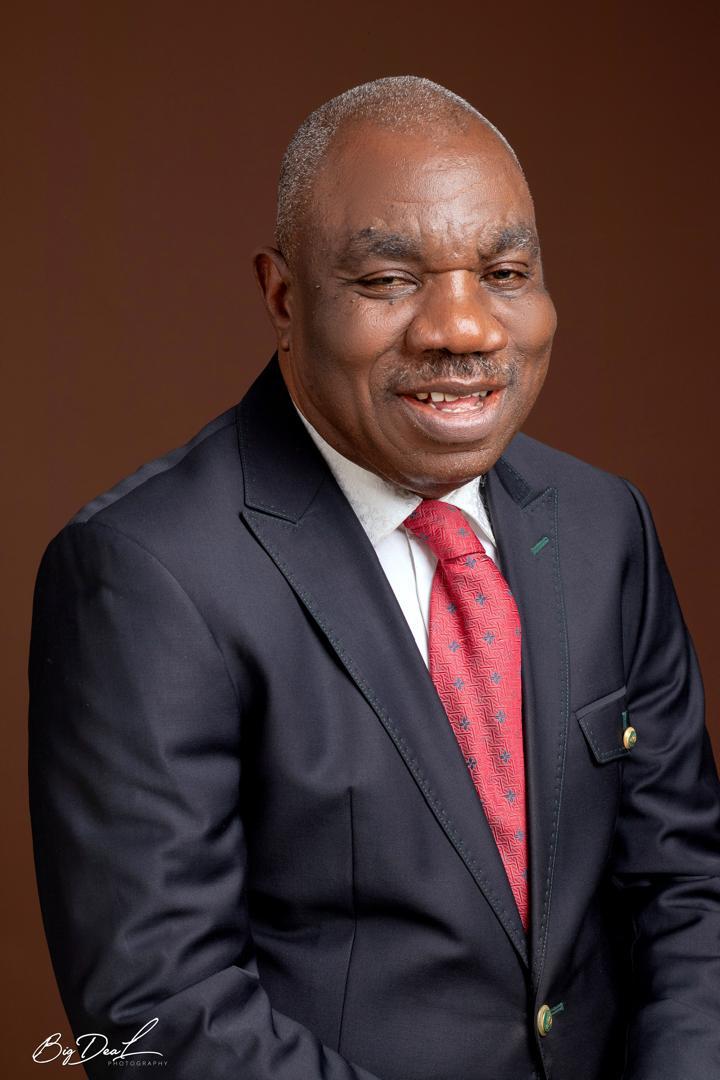
Tracking down Pastor Sam Iyiogwe, a former LGA Chairman and former SSA to Governor Ifeanyi Ugwuanyi for this interview was as difficult as anything one can think of. At a time politicians are avoiding the press ahead the 2027 election Iyiogwe couldn’t help but accept when the issue of infrastrucural development of his people was mentioned.
As Nkanu East LGA Chairman, Iyiogwe, led journalists through neglected communities in his area where schools were scarce, chemist shops doubled as hospitals, and some areas lacked road access for decades. In Amankanu, residents recalled transporting pregnant women in wheelbarrows to distant health facilities.
Iyiogwe began opening up rural roads and improving access to services before Governor Peter Mbah’s election in 2023. In this chat with PETRUS OBI, he reflects on the situation of his people 10 years later.
Interview
“I’m Not Playing Victim; the Contractor Toshel Failed to Do the Job” — Aniagboso Michael Speaks on Jesus Bu Eze Plaza Dispute
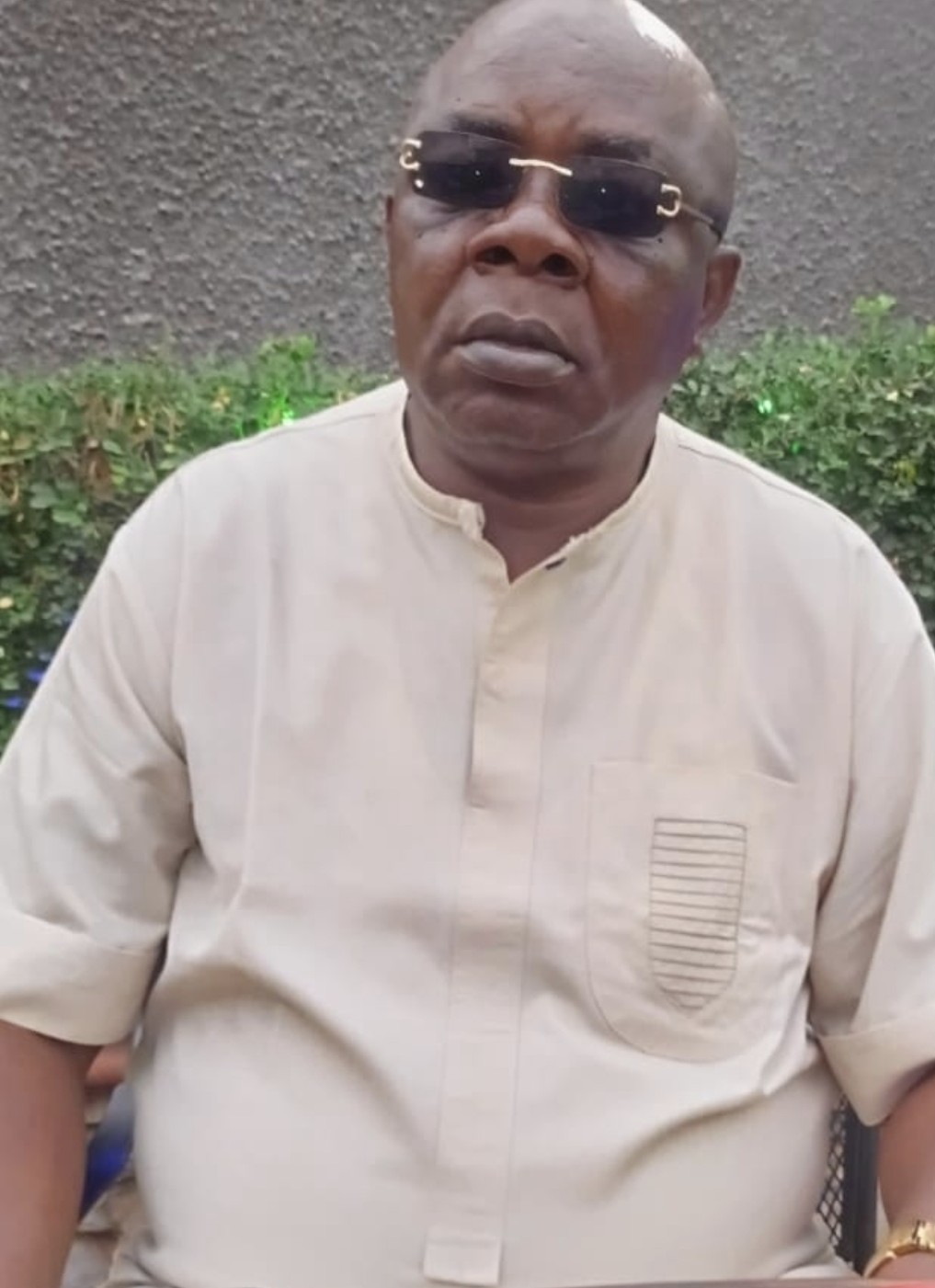
Aniagboso Michael, a real estate developer and promoter of Jesus Bu Eze Plaza, has responded to allegations circulating on social media that he is playing the victim to damage the reputation of Mr. Tochukwu Nzekwe, Chairman of Toshel Company, and to avoid contractual obligations.
In this interview, with EverydayNewsNGR Aniagboso gives his account of the events surrounding the construction of the plaza located along Kano Street, Coal Camp, Enugu State.
Q: There are allegations that you are playing the victim to avoid fulfilling your obligations to the contractor. How do you respond?
Those allegations are completely false. I am not playing any victim card—there is no “victim card” here. The simple truth is that the contractor, Mr. Tochukwu Nzekwe, failed to execute the job he was contracted to do.
This is not about sentiments or social media narratives; it is about facts and contractual performance.
We signed a Memorandum of Understanding (MOU) in which both parties agreed that his company would fund and execute the entire asphalting project, valued at ₦118 million, covering approximately 5,500 square metres of the plaza.
Q: Can you explain the scope of the project and the agreement entered into?
The project covered about 5,500 square metres along Kano Street, Coal Camp. The agreement included construction of access roads, asphalt work, and the entire internal road network, including Silversmith Road.
The Bill of Quantities (BOQ) was prepared by his own engineers, reviewed by both parties, and mutually agreed upon. The total contract sum was ₦118 million, with a completion period of three months.
He undertook to handle everything—from clearing and laterite filling to asphalt work and landscaping.
Q: What went wrong during execution of the project?
After the three-month period elapsed, the project was nowhere near completion. One of the major problems was the use of obsolete and inadequate equipment—bulldozers, graders, and trucks that frequently broke down.
Materials would be brought to site, but work would stall for weeks. These delays seriously disrupted the project timeline. We held several site meetings and issued formal notices pointing out his failure to meet contractual obligations.
Despite repeatedly boasting that he had sufficient funds and equipment, the work did not progress. There were also constant disputes with his workers, drivers, and machine operators, which further slowed down the project.
Q: Was the project eventually completed?
Yes, but not by him. The project was originally scheduled for commissioning within three months. However, due to the contractor’s failure, I had to mobilise my own resources, lease equipment from other operators, and complete the remaining work myself.
The plaza was eventually commissioned on 4 March 2024 by the Governor of Enugu State, Dr. Peter Mbah, who was represented by his deputy, Barr. Ifeanyi Ossai.
Q: Despite this, the contractor is said to be demanding full payment. What is your response?
That demand is unjustified. An independent assessment confirmed that he completed only about 10% of the total work.
Based on that assessment, we paid him ₦27.5 million, which was proportional to the work actually done. He demanded payment for 15%, but that entitlement was conditional upon full completion of the project. Since the job was abandoned, that condition was never met.
Instead, he allegedly began blocking the entrance to the plaza with heavy equipment and issuing threats.
Q: There are claims of police involvement and intimidation. What exactly happened?
Rather than resolving the matter professionally, he reportedly came to the site with police officers and other security personnel, instructing workers to stop work unless he was paid in full.
He reportedly took me to the police station, the DSS, and the EFCC. Subsequently, I experienced repeated harassment, including the presence of thugs at the site, intimidation of workers, vandalism of parts of the plaza, and threats to my personal safety.
Q: Did you seek legal redress?
Yes. I approached the court and filed a suit seeking an injunction to restrain him from further interference with the plaza. By that time, shops had already been sold and business activities were ongoing.
The court issued a statutory order recognising that M & B Company had taken possession of the plaza and that operations were ongoing under the Build, Operate and Transfer (BOT) agreement, which is for 25 years.
At the time, there were about 250 shops and 32 functional toilets in operation. Despite the court process, he allegedly continued to return to the site, boasting of influence and connections.
Q: What is the nature of the BOT agreement and the contractor’s role?
The BOT agreement was entered into with Enugu North Local Government for a period of 25 years. Mr. Tochukwu Nzekwe and his company have no contractual relationship with the local government.
I brought him in solely as a contractor to execute the asphalting project using his own funds, estimated at ₦118 million—as clearly stated in the agreement already tendered in court.
Under the BOT arrangement, the local government is entitled to 30% of revenue, while my company retains 70%. The contractor’s 15% entitlement was conditional upon full completion of the project and was to come from my own share of the revenue generated from park operations and gate tolls.
Q: You have raised serious concerns about your safety. Can you explain?
My greatest fear is that the Chairman of Enugu North Local Government, Hon. Ibenaku Onoh, has allegedly connived with the contractor to forcefully take over the plaza.
I have been barred from accessing a property I developed with my hard-earned money. I have received threats, including claims that my children’s movements are being monitored. Because of this, I have gone into hiding and no longer move freely within Enugu.
I allege that the plaza has been taken over, handed to individuals loyal to the local government, and revenue has been collected for months without reference to me, the developer.
Q: What is your appeal to the government?
I am appealing directly to the Governor of Enugu State, Dr. Peter Mbah, to urgently intervene. I have always supported this administration and remain committed to its success.
If the local government doesn’t want to respect the MOU because of perceived personal interest of the chairman, it’s better the Enugu State Government assume full control of its management, ensure transparency, respect the BOT agreement, and allow me to recover my investment.
I am under severe financial pressure from creditors and cannot withstand further intimidation. My life and the lives of my family members are at risk. I am pleading for urgent intervention before the situation escalates further.

PASTOR Beloved-Dan Anike, the chairman of Enugu East LGA, in this interview said that council fiscal autonomy is working well in Enugu State, adding that the metropolitan council is complementing the state government’s economic and social policies.
He asserts that Governor Peter Mbah is changing the narratives and politics Enugu State.
It has been 100 days full of activities, trying to convert vision to realities, navigate the new environment and connect with the promises made during the campaign and maintain the social contracts with the people. Another influencing factor in the state is the kind of governor we have. Governor Peter Mbah is changing the narratives and politics in Enugu State such that if you’re a public officer, you must rate performance over politics. If you’re not ready to perform, then you won’t even be ready to navigate the scheme and see his break light. So he is a factor that makes everybody to be on their toes, especially the local government because he is working on every ward and so you have to match his strides.
How the grassroots felt his impact in 100 days
From the word go, we announced that we would introduce what we call City Charter which will not leave anyone behind. We will involve people to increase participation. We invited all communities, not wards, to conduct needs assessment and they stated clearly what they want. Our goals are clear, our major target is human capital development, upon which we now launch what we call the greater tomorrow scholarship for young students and also the One youth, one skill.
As part of the greater tomorrow scholarship, 50 students were selected from local schools and they migrated to major highbrow secondary institutions of private and missionary schools, just like a brand of the smart schools that are coming up in Enugu State.
About 1,750 students have been enrolled for WAEC of which about 70 per cent are non-indigenes, only 30 per cent are indigenes of the local government. We still have other educational programmes that are still pending such as the scholarships and bursaries for undergraduates. We have also declared that we want to train nurses as professionals in the health sector and education. These are purely targeted to support the state’s ongoing Primary Health Centres and smart school projects.
On infrastructure, we have commenced the construction of 1.4km road leading to the smart school in Ugwuomu, we have also commenced the construction of 1.2km road leading to a PHC centre at Emene, near Emenite. Drainage and earthworks are ongoing. On power, we said one Ward one transformer and we have 12 wards. So we have 12 transformers which we have distributed and are currently being installed and energized in various wards.
On public participation and open governance, we set up seven committees and I have received five reports of those committees. One was on the Needs Assessment of all our rural roads so as to match them with the state government’s vision of one ward 10km road. The state government has a 60/40 per cent infrastructure financing plan with the local governments, we are even saying if we can get 80/20 per cent rebate having seen the deficit we have on our roads.
Our former secretariat building covering over 3,000 square meters of land is being envisaged for the take-off of the Metropolitan School of Health Technology and Nursing, which we are working on now. We have written to the state government for provisional consent for us to proceed with that project. These are some of the projects under three months and in our budget this year, we are going to launch what we call Family Economic Empowerment Program (FEEP) and that will be a component of One youth one skill. We trained about 350 people in various skills and we have about 10 being trained in ANAMCO now in mechatronics. Some people have enrolled in heavy machines training.
On market developments, because we want to decongest Abakpa market, we’re looking at establishing neighbourhood markets in Ugbene II, Umuchigbo, Ogwuagor, and Ibagwa and two markets are already ongoing in Ugwogo – that is the Amankpaka market and the new Orie Ugwogo produce market.
To achieve this, in the next one month we are going to have an investment dialogue because our budget moved from about N5 billion to over N200 billion, which is about 400 per cent increase and it won’t be feasible if we don’t bring in critical investors in this journey. We want to create spaces and bring in investors who will bring in money to grow our economy.
What has been your experience on the fiscal autonomy of the local government councils?
Actually, the local government councils are in charge of their finances. Every remittance goes to the local government purse and every disbursement has been approved by me since September 2024 when I came in. It comes through the joint state account but it goes straight to the designated account of the local government and from salaries to capital expenditures, to overheads, recurrent and other economic commitments are done by the local government.
Does the state dictate to the local governments how the money is being shared or disbursed; does the state tamper with LG funds in any way?
No, I have told you that all money comes to us and we disburse the money according to our needs. There are obligations we have at the state level, I mean economic obligations like joint ventures with the state such as the 60/40 per cent on road construction and there are others like the 17 local governments coming together for whatever we want to do together; they are obligations on joint economic policies that benefit everyone.
Interview
Biafra: I’m worried over Gowon’s silence on Jan 15 Coup,July 29 Counter Coup, Prof ABC Nwosu
Former Minister of Health and eminent statesman, PROFESSOR A. B. C. NWOSU, in this interview responded to some of the issues raised by General Yakubu Gowon in his recent interview, on his roles in the Nigeria – Biafra War. He is of the view that there are critical issues that the former Head of State did not address, warning that “Nigeria will continue to be an unstable state until we restructure.”
You must have read General Yakubu Gowon’s interview; as a person close to Chukwuemeka Odumegwu Ojukwu and final year undergraduate who was politically active, how did you feel at the time?
I felt sad. Very sad because I had expected that Gowon would reveal at least some of the things which have bothered me and Ndigbo from 1966 till now. Gowon’s interview was not only sad for me because of his self-serving half-truth but for the major things not said. I don’t think that Gowon believes that total deviation from the Aburi agreement was the cause of the civil war but everybody, and I mean everybody who was a “Biafran” at the time, doubted that it was. That’s why ‘On Aburi We Stand’ was the war cry from the East. If Aburi had been implemented there would have been no Nigeria – Biafra War. I thank the respected Journalist, Chuks Iloegbunam, for his masterful response to General Gowon published in the Vanguard.
For example, when General Gowon said that he didn’t call his Secretary to Government to the Aburi meeting whilst Ojukwu did, I said to myself that General Gowon has lost it because Aburi was not a single’s tennis match between him and his so-called friend, Ojukwu.
Why is Aburi critical for Nigeria?
Aburi was critical because every other discussion on what had happened namely, the January 15 coup, May 29 pogrom and the July 29 counter coup had failed to resolve the matter as the various delegations had feared for their lives and would not attend further meetings. Chief Obafemi Awolowo’s meeting with Ojukwu on May 5th and 6th, 1967 did not succeed in bringing the Eastern delegation to the meeting. As Gowon correctly said, the East could not attend any meeting in Nigeria because they feared for their lives. As Gowon also said, a British war plane as well as a Naval war ship were considered but rejected by the East because of the involvement of Britain in the conflict. So the acceptable venue was General Ankrah and his offer of Aburi in Ghana. It was not a meeting between Gowon and Ojukwu, that’s why I insist it was not a single’s tennis match between the two of them. It was a meeting between General Gowon, who came with the federal cabinet secretariat; General Hassan Usman Katsina and the Secretary to the Northern Government; Governor David Ejoor, who came with the Secretary of the Midwest Government; Governor Adeyinka Adebayo, who came with the Secretary of the Western Nigerian government and Governor Odumegwu Ojukwu, who came with Eastern Nigerian government. So, it was a full-fledged Nigerian meeting to avert a war and not a meeting between Gowon and Ojukwu.
One of the key unanimous decisions at Aburi was that the conflict would not be settled through a war. Therefore to say that we fought to live together is not true since all of them had agreed that fighting was not necessary and would not be used to settle the matter. In any case, the matter of dividing Nigeria into 12 states was neither tabled nor discussed at Aburi. What was discussed was devolution of powers from the centre to the federating units including coercive agencies of State like Police, Army etc. What was discussed with unanimity was in making appointments to “Super Permanent Secretaries”, Inspector General of Power, etc. This greatly irked the super permanent secretaries at the time, who submitted an anti-Aburu agreement memo.
What was required in order to keep good faith was a follow-up meeting by all those present at the original meeting where the original agreement was reached. The other members cannot implement their version of the agreement without consulting and getting the concurrence of the Eastern government that wore the shoes that were pinching them on all sides – refugees and rehabilitation, burial of so many dead bodies and fleeing citizens, etc. So, it was wrong to have implemented the civil servant-mutilated Aburi Agreement. If one checks the sequence of events leading to the Nigeria – Biafra war, the creation of 12 states on 5th May 1967, which was not part of Aburi, was done to take the wind off the sails of the urge for the creation of Biafra. This was clearly bad faith shown by the federal government. Unfortunately, this was the impetus that accelerated the declaration of Biafra on 30th May, 1967 because people of the East feared that the federal government could declare a state of emergency and invade the East. Biafra was not declared before the creation of the 12 states, which was not in the spirit of the Aburi agreement.
One of the major agreements of the Aburi was the repatriation of soldiers to their states of origin. The West continued to whine over this until the Nigeria – Biafra war, where they joined the fight against Biafra.
But Aburi will continue to hunt Nigeria in the form of RESTRUCTURING of the Nigerian polity along the intentions of the founding fathers of the republic, where there are no senior or junior Nigerians, and where the federating units are coordinate government, not this nonsense of sub-national government. Sub-national government implies that Tafawa Balewa was senior to Sir Ahmadu Bello, Chief Obafemi Awolowo and Chief Dr. Michael Okpara. To me that is arrant nonsense, and all these people using the term Sub-national government don’t know what a federation is.
You said you are worried about Gowon’s silence over January 15 coup in 1966 and the counter coup of July 1966, what are your worries?
I am worried about the January 15th coup because I know it was fully investigated by the special branch of the police under late Inspector General of Police MD Yusuf and the report up till now is not public, even though some people have managed to lay their hands on it. The report was said to have been submitted to the Chief of Army Staff under General Ironsi (which would be General Gowon) but Gowon has said nothing about it so far. I would have liked to know how many people were investigated; the statement that they made and in particular, whether it was an Igbo coup. I know for certain that the report indicated that Emmanuel Arinze Ifeajuna and Demola Ademoyiga were the central figures of the coup and that Chukwuma Kaduna Nzeogu was involved towards the later part of their planning. There are rumors that others were involved but Nigerians would like to see what the report was like. It was also sad that General Gowon kept total silence on the counter coup of July 29 and how he became Supreme Commander.
That interview by Gowon was also totally silent on the pogrom and killing of civilians in the North and West of Nigeria. Easterners, especially Ndigbo, would wonder why he was silent because these were the bases of fears of insecurity by Easterners, especially Ndigbo, about their lives and property in their own country without being protected by their own government. Knowing the reason why people get killed and their properties seized when they venture out of their states of origin, is critical for stability in Nigeria.
Gowon stated that he gave specific instructions on the rules of engagement for the Nigerian Army for the war…(cuts in)
Really, and were these rules enforced? I never read of the tribunal and trials of those behind the Asaba Massacre for example. Meanwhile, “Asaba still mourns” and have erected a memorial to give their sons respectable rest. The other day Ogbomosho people wanted National Honours for their son and hero, Brigadier Benjamin Adekunle. I wonder whether it was the same Brigadier Adekunle, the Black Scorpion, who ordered that anything moving should be shot, even the dogs, but I leave that for now. And the West still feels that Colonel Emma Nwaobosi should be publicly hanged for killing Governor Akintola and his wife whilst idolizing Chief Awolowo. It perplexes me. ,
Finally, on war crimes, I am still to come to terms with the fact that starvation of new born children, their mothers and toddlers could be a legitimate instrument of war. Is that part of the UN Convention? And yet nobody talks about these things, just wishing that those who lost their loved ones should just hide in the corner and shut their mouths. And Gowon kept quiet on this in the interview.
It is obvious, from what you said, that you expected more from Gowon’s interview…
Yes. As I would have expected from Ojukwu, if he ever gave an interview in the later part of his life. In three months it will be 55 years since the war ended and Nigerians are living together but the same problems that were to be solved by Aburi are still very much with us. We keep having conferences upon conferences on how to live in a more stable united country. We even had under Obasanjo a Truth and Reconciliation Commission under the renowned jurist, Chukwudifu Oputa with also renowned Bishop Matthew Hassan Kukah as Secretary, but nobody was ready to talk. Nobody also had any regrets. Governor Usman Farouk, Governor of Northwest State when Nigeria was a 12 state structure and member of the investigative panel of MD Yusuf Panel for the January 15 coup, wrote his book titled, “There were Victors and There were Vanquished”. Some of us have copies. Nobody is still ready to talk and say exactly what happened. Even when these national conferences agree on issues like State Police, Devolution of Powers, Less funds for the Federal Government, more percentage on Derivation Principle, they don’t get implemented either by a president who throws the report into the trash bin nor by a president, who is supposed to be an apostle of true federalism and fiscal federalism. The consoling issue is that we shall all go the way of all mortals whether we like it or not. And Nigeria will continue to be an unstable state until we RESTRUCTURE.

Nollywood ace, Binta Ayo Mogaji, has urged women over the age of 35 to embrace the idea of having children outside the traditional bounds of marriage.
In a recent candid interview with Oyinmomo TV, the accomplished 60-year-old actress delved into her personal beliefs surrounding marriage, motherhood, and the relentless societal pressures that often dictate a woman’s choices.
She shared her own journey to motherhood, having welcomed her first child at the age of 40—a decision that has profoundly shaped her life and perspective.
Mogaji encouraged women who find themselves unmarried but yearning for the fulfillment of motherhood to seriously explore the liberating option of having children without the wait for a wedding.
She emphasized that the desire to nurture and raise a child should not be confined by societal expectations, urging women to prioritize their personal happiness and the invaluable bond that comes with motherhood, regardless of marital status.
What I’m saying is, once you’re 35 or older and you don’t have a husband, but there’s someone in your life who is with you but not ready for marriage, and he wants a child, have a child with him, even if he won’t accept responsibility for the child,” she advised.
Ayo Mogaji emphasised that women should prioritize motherhood over societal expectations.
She also encouraged women to consider adoption if they cannot find a partner.
“When she is looking for a husband at 35, they’ll say she’s too old and won’t be able to wash clothes for her mother-in-law or be controlled,” the actress said.
“They’ll advise the man to find a younger lady to listen to him. Even if she’s fortunate to marry at that age, she’ll already be old when her child grows up. Some people at 45 or 50 are already grandmothers.
“When your mates are grandmothers, and you’re still saying you’re looking for a husband, when will you find a husband and become a grandmother?
“So, my advice is, if God blesses you with someone who likes you and you can have children together, go ahead and do it.
“If you find someone you like, ask him to impregnate you as long as you want a child and can take care of the child. But if you want a child and cannot find a man to impregnate you, then consider adoption.”

-
 News3 days ago
C’RIVER 2027 BUDGET: GOV OTU PRESENTS ₦987.8bn ESTIMATES TO ASSEMBLY
-
 EverydayNews Telescope4 days ago
Enugu East Senate: The Dark Side of Ada Ogbu, NDC Candidate
-
 News5 days ago
Tension Mounts in Awka Anglican Diocese as Supervising Bishop Ezeofor Moves to Take Over Wednesday
-
 News2 days ago
Holy Ghost Transformation: How Enugu North Chairman Ibenaku Onoh Ended Years of Traffic Chaos, Roadside Trading
-
 EverydayNews Telescope4 days ago
Ebonyi 2027: The People’s Quest For ODII Vs Compromised Stakeholders
-
 Politics2 days ago
One Feared Dead, Several Injured as Thugs Attack Ebonyi NDC Assembly Candidate, Burn Campaign Vehicle
-
 Politics4 days ago
2027: Tinubu Has No Hand in Alleged Assassination Plot Against Atiku – APC
-
 Economy5 days ago
Fuel Subsidy Removal Irreversible, Nigeria Won’t Return to Egypt — Tinub