



Business
Heritage Bank: NDIC begins depositors refund, customers back CBN

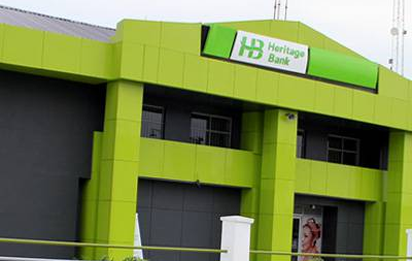

The Bank Customers Association of Nigeria has supported the revocation of the licence of Heritage Bank by the Central Bank of Nigeria as the Nigerian Deposit Insurance Corporation begins to repay depositors of the failed bank.
In an exclusive chat with The PUNCH, the President of the Bank Customers Association of Nigeria, Dr Uju Ogubunka, opined that the apex bank’s decision provided safety for the banking sector.
On Monday, CBN announced that it had revoked the licence of Heritage Bank with immediate effect.
“This action has become necessary due to the bank’s breach of Section 12 (1) of BOFIA, 2020. The board and management of the bank have not been able to improve the bank’s financial performance, a situation which constitutes a threat to financial stability.

“This follows a period during which the CBN engaged with the bank and prescribed various supervisory steps intended to stem the decline. Regrettably, the bank has continued to suffer and has no reasonable prospects of recovery, thereby, making the revocation of the license the next necessary step,” part of the CBN statement read.
CBN went on to appoint the Nigeria Deposit Insurance Corporation as the liquidator of the bank in line with Section 12 (2) of BOFIA, 2020.
Ogubunka told The PUNCH, “The CBN cannot just take action without considering the implications. If a bank has been run aground, of course, it has implications for others. Other banks have dealings with it, and other institutions and individuals deal with the bank. So, if you put all of these together, that institution can jeopardise the system as a whole if the authorities do not take the necessary actions.
“The CBN would have considered the position of the bank; if irredeemable, for instance, from whatever status it is, can it be redeemed? Can it be acquired by another bank or merged with another bank, or can it be allowed to raise more money to shore up its capital and fulfil other obligations? If those questions are answered in the negative, the authorities will have no alternative. Instead of everybody being affected, let just one go and that is exactly what has happened.”
He noted that CBN would have arrived at the decision having engaged with the bank’s senior management and directors.
“They would have been asked to do one or two things they had been unable to do and the situation gets critical. The regulator would have no choice but to take the necessary steps within the law. Whatever CBN had done would be within the law and after several requests from those who are managers or directors of the bank to do certain things,” he asserted.
He added that while the CBN’s move was the right one, it would bring some inconvenience for bank customers, “especially those who have accounts with the bank and those who have relationships with the bank, even fellow bankers because the business is connected”.
“Bank customers, except those who are indebted to the bank, are the ones who will be bothered so much because they are the ones who are supposed to pay back some money to the bank, but if you have credit in your account, you just have to wait until NDIC takes over the bank, sees what is there and how they are going to repay those who have credit,” Ogubunka explained.
Professor of Capital Market, Uche Uwaleke, echoed similar sentiments, saying, “I think the revocation of the license of Heritage Bank by the CBN is a step in the right direction.
“This proactive step by the CBN is in the overall interest of financial system stability. With the NDIC taking over the liquidation process, efforts should be made to protect the depositors as well as the interests of employees using liquidation dividends.”
Meanwhile, the NDIC said that it had commenced the liquidation of the failed bank with immediate verification and payment of insured deposits to the bank depositors.
A statement signed by the NDIC Director of Communication & Public Affairs, Bashir Nuhu, on Monday, said, “Depositors of the bank that have an alternate account within the industry will be paid up to the insured amount of N5m per depositor using their Bank Verification Number to locate their alternate account. While depositors with funds in excess of N5m will be paid liquidation dividends upon realisation of the bank’s assets and recovery of debts owed to the bank.”
The corporation urged the bank’s creditors to visit the nearest branch of the bank to file their claims, or via the online platform.
It explained that the creditors would be paid after the depositors, adding that the failed bank’s debtors who were yet to complete the repayment of loans were advised to do so.
“The NDIC wishes to assure the entire banking public of its commitment to the continued safety of depositors’ funds in all licensed banks. As such, depositors are urged to continue their banking businesses without fear, as banks whose licences have not been revoked remain safe and sound,” the NDIC statement concluded.
Also, the House of Representatives has pledged its commitment to engage with relevant stakeholders, to ensure the safety of depositors’ funds with Heritage Bank.
In a statement issued by its spokesman, Akin Rotimi, the House said it was aware of the revocation of the licence of Heritage Bank and the appointment of the NDIC as the liquidator under the provisions of the Banks and Other Financial Institutions Act.
“We assure the public, particularly depositors and stakeholders of Heritage Bank, that the House is committed to carrying out its constitutional oversight functions to ensure that this development does not negatively impact Nigerians. The relevant House Committees on Banking Regulations and Insurance will be up to their duty, to thoroughly examine the circumstances surrounding this decision and the subsequent steps taken by the NDIC.
“Our priority is to safeguard the interests of all depositors and maintain the stability of the financial system. We will engage with the CBN, NDIC, and other relevant stakeholders to ensure a transparent and orderly resolution process, providing necessary support to mitigate any potential negative impact on the public.
“We urge the CBN and NDIC to establish clear channels of communication to allay the fears of the public and prevent any loss of trust in our financial system. Effective public engagement is crucial to maintaining confidence during this period,” the statement read in part.
The Chairman of the House Committee on Banking Regulations, Mohammed El-Rufai, stated, “The committee will closely monitor the liquidation process to ensure that the rights of depositors are protected and that the process adheres to the highest standards of transparency and accountability.”
Similarly, the Chairman of the Committee on Insurance and Actuarial Matters, Ahmed Jaha, said, “We will work diligently to oversee that the NDIC executes its mandate effectively, ensuring the protection of depositors’ funds and maintaining confidence in the financial sector. The NDIC Act and the Banks and Other Financial Institutions Act are clear in their provisions that depositors’ funds are insured and protected.”

By Chinedu Sabastine
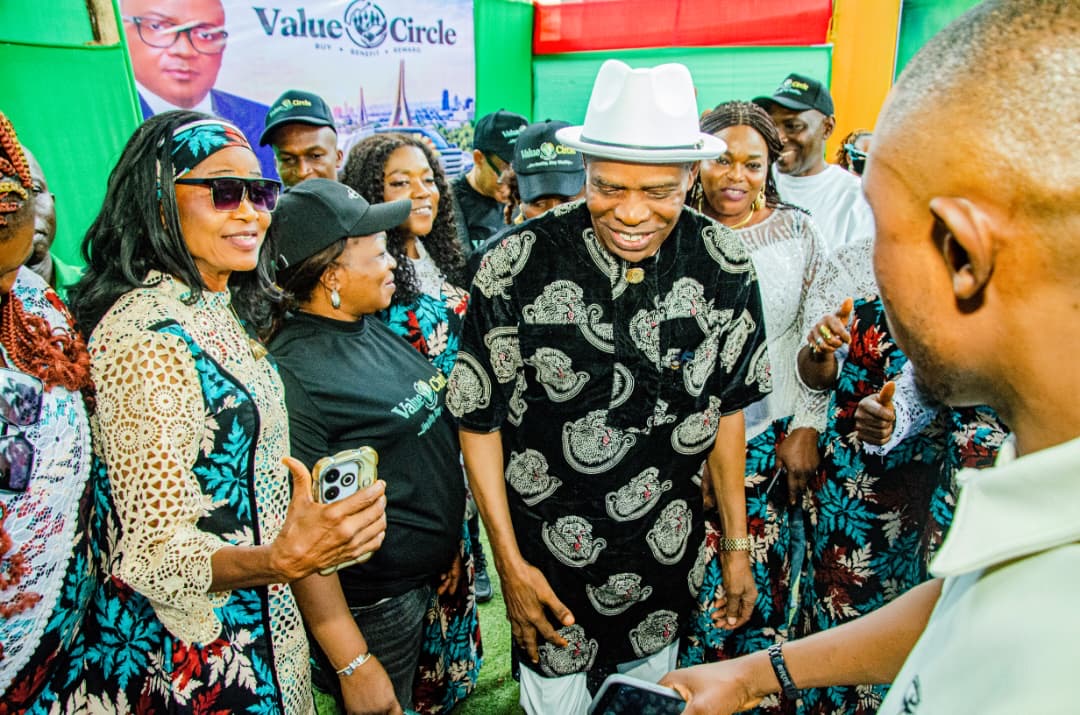
ENUGU – Value Circle Africa (VCA), a marketing outfit dealing in organic food products, has launched operations in Enugu, promising to promote health and wealth creation among millions of Africans.
The company, which markets products including soya bean oil, swallow, fufu and Ganadima mushroom, said it was targeting 20 million Africans through its business model.
Speaking at the unveiling in Enugu, Chairman of VCA, Elder Dennis Ogbonnaya Nwankwo, claimed that participants who purchase products worth N65,000 could earn up to N550,000 over six months under the company’s reward scheme.
Nwankwo said VCA was an offshoot of Nature’s Renaissance International Limited (NRI), founded by High Chief Clinton Brown Odiagbe.
He explained that the initiative was designed to share the company’s profits with customers rather than concentrate its earnings on business expansion.
According to him, a participant who purchases products worth N65,000 would receive N50,000 initially, with subsequent monthly payments of N100,000, subject to the company’s stated terms.
He further claimed that an investment of N6.5 million could yield about N55 million within six months.
Nwankwo said the company manufactured its organic products and intended to use the proceeds to improve the financial circumstances and health of its customers.
“Every other company is marketing its products and making its profit. We manufacture our organic products, including soya bean oil, swallow, fufu and Ganadima mushroom.
“But we decided that we should not use the money to establish an airline or acquire more estates. Instead, we decided to share it with people around us,” he said.
He added that the company encouraged participants to reinvest their earnings to build sustainable financial capacity.
“We believe that if we continue to do this, we will also train people not to consume all the money they earn but to reinvest it. That is how we intend to wipe away poverty,” he said.
The VCA chairman urged interested persons to participate in the scheme, claiming that those who borrowed N65,000 to purchase the products could repay their loans from subsequent payments.
He, however, did not provide independently verified financial records to substantiate the returns being promised.
One of the company’s beneficiaries, Pastor David Ime Jesus, said he joined the scheme in June 2026 and had received payments under the arrangement.
“I began to invest in June and have been earning N100,000 every month since the initial N50,000 I earned in July,” he said.
Business
No Bad Blood Over New Cement Factories, But Our Mining Rights Run Till 2045 — Ibeto Tells Ebonyi Govt

ABAKALIKI, EBONYI STATE — Billionaire industrialist and Chairman of Ibeto Group, Dr. Cletus Ibeto, has clarified his position on plans by the Ebonyi State Government to establish a new cement manufacturing plant, saying he has no objection to fresh investment in the state provided his company’s existing mining rights are respected.
Ibeto, who is also a core investor in the Nigerian Cement Company (Nigercem), said the proposed development should not interfere with areas covered by valid mining leases held by his company.
“We are not against the establishment of new cement factories in Ebonyi State. However, such developments must not interfere with or overlap the specific areas where Ibeto Group holds valid Mining Lease Licences issued by the Federal Ministry,” Ibeto stated.
He said the company’s statutory mining leases covering limestone deposits in the Nkalagu axis remain valid until 2045.
Ibeto stressed the need for proper delineation and mapping of mining areas to prevent conflicts between existing title holders and new investors seeking to establish businesses in the state.
Under Nigeria’s legal framework, mineral resources are vested in the Federal Government, with mineral titles administered through the Federal Ministry of Solid Minerals Development and the Mining Cadastre Office.
Nigercem Ready to Resume Operations
Addressing concerns over the future of the historic Nigercem plant, Ibeto said Ibeto Group remains committed to reviving the facility and is ready to commence work once outstanding administrative issues with the state government are resolved.
He said the company’s position should not be interpreted as opposition to new investment in Ebonyi, stressing that his concern was the protection of legally acquired mining rights.
The development could pave the way for both the revival of Nigercem and the entry of new investors into Ebonyi’s cement industry, provided the respective mining areas are clearly mapped out and existing legal titles are respected.
Business
Patience Jonathan Hails Azikel Boss Eruani as ‘Small Boy’ She Mentored Into Billionaire League
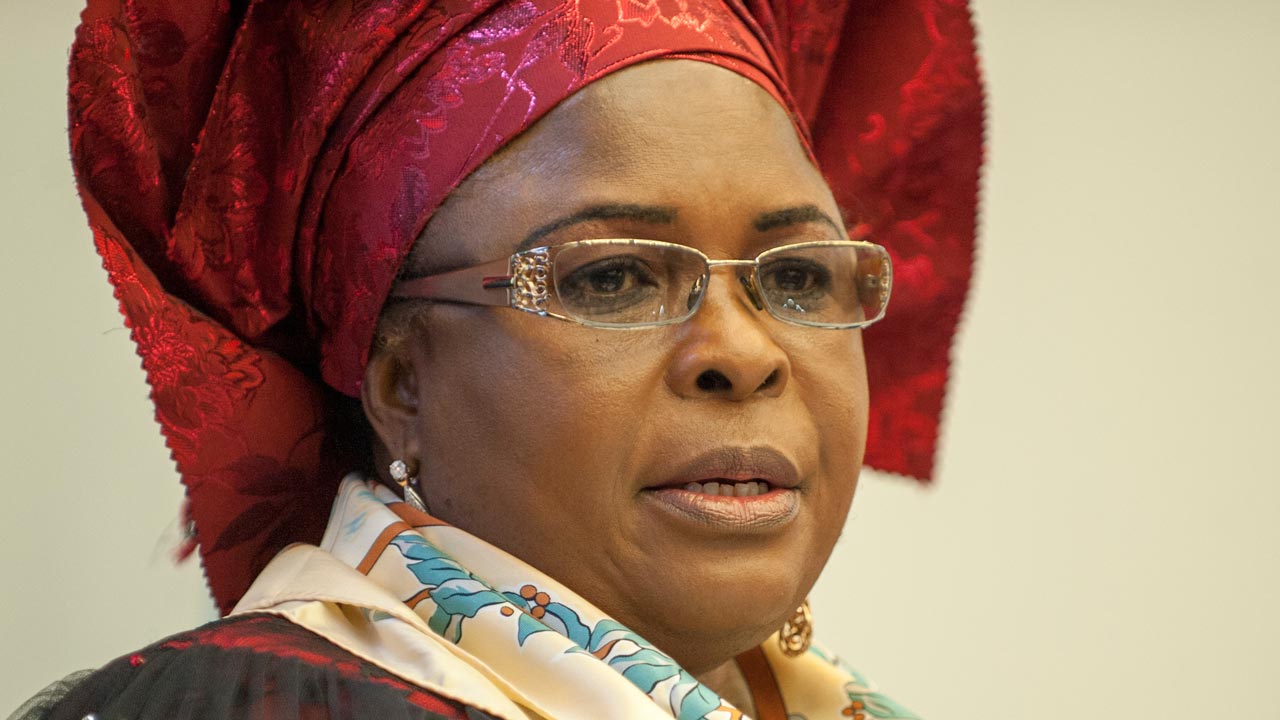
She said her guidance was behind his bold entry into big business at a relatively young age.
The former First Lady spoke on Tuesday in a video which went viral on Thursday during an inspection tour of the Azikel Refinery in Obunagha, Bayelsa State, alongside other dignitaries.
She said she personally introduced Eruani to billionaire businessmen, Aliko Dangote and Aminu Dantata, and pushed him to aspire to their level despite being the youngest among them.
“He’s a boy that I brought up. We are always together. Although he’s the little one among us when we are friends — Dangote, Seyi, Dantata, Eruani — among us, he’s the smallest. But I made sure he followed the Dangotes, he followed Dantata.
“Because I’m a woman in their midst, I made sure I told this small boy, ‘Go and follow them, and stop the grammar.’ But when he told me that one day he would be like Dangote, I said, ‘You’re thinking too high.’ I prayed to God to grant him his heart’s desire,” she said.
The former First Lady also recalled how the immediate past APC administration under Muhammadu Buhari initially failed to grant Eruani a refinery licence before eventually approving three.
“During the Buhari administration, he and others came to me and told me they were going to apply for a refinery. I told him, ‘Eruani, your brother, the President, did not give you a refinery.
“Is it the APC government that will give you one?’ I prayed it would happen. But later, they came back and told me they had been given three refineries,” she said.
The 25,000 barrels-per-day plant is a private hydro-skimming refinery designed to process condensate into petrol, diesel, aviation fuel, kerosene and other products.
It is set to become Nigeria’s second-largest full-slate refinery and the first major privately owned refinery in the Niger Delta.
The Managing Director/Chief Executive Officer of the Niger Delta Development Commission, Samuel Ogbuku, who joined the inspection tour, commended Eruani for his perseverance, noting that he had attended the project’s groundbreaking ceremony eight years ago.
Ogbuku described the refinery as an inspiration and a potential catalyst for investment, job creation and economic growth in Bayelsa State, and urged residents, particularly youths, to key into the opportunities it would create.
He also praised the Bayelsa State Government for improving road infrastructure leading to the refinery site and called for continued support for the project.
Governor Douye Diri, who was represented at the inspection by his deputy, Peter Akpe, has consistently backed the project, which is expected to employ hundreds of workers and drive industrialisation in the state.
Other dignitaries at the event included the Chairman of the Bayelsa State Council of Traditional Rulers, King Bubaraye Dakolo; Vice President of Azikel Group, Presley Asemota; and Isaac Yalah, among others.

A market check on Tuesday showed that NNPCL outlets in Abuja and nearby areas adjusted their petrol price from N1,155 per litre to N1,270 per litre.
The latest adjustment represents an increase of N115 per litre by the state-owned oil company.
The new price change follows recent increases by depot owners and petroleum marketers, who have adjusted their rates twice within a week.
The latest development also comes days after Dangote Refinery resumed the sale of refined petroleum products in dollars, a move that has raised concerns among industry players over the direction of fuel pricing in the country.

The Federal Government has disclosed that 13 of the 50 oil and gas blocks offered in the 2025 Licensing Round will be returned to the licensing basket after failing to attract bids from prospective investors.
The Chief Executive of the Nigerian Upstream Petroleum Regulatory Commission (NUPRC), Oritsemeyiwa Eyesan, disclosed this on Tuesday at the 2025 Commercial Bid Conference in Abuja.
Eyesan said that although 50 blocks were initially put up for bidding, prospective investors showed interest in only 37.
“At the end of the exercise, we had 50 blocks on offer, but we only had representation for 37 of those 50 blocks. Thirteen of those blocks will be returning back to the basket,” she said.
She further disclosed that 143 companies participated in the commercial bid process, submitting about 200 bids for the available oil and gas assets.
“We have a total of 143 companies showing interest for 200 bids. That, for us, was remarkable, and I must say thank you,” Eyesan stated.
According to her, nearly 300 companies initially expressed interest in the licensing round, which she described as a sign of renewed investor confidence in Nigeria’s upstream petroleum sector.
“When we started the journey, we got interest from almost 300 companies. I repeat, almost 300 companies. That, in my view, was an indication that the tide has turned for Nigeria,” she said.
She explained that the number of interested companies was reduced to 196 following the prequalification stage, before the process moved to the technical and commercial evaluation phases.
“From the almost 300 interests that we got, we moved to the pre-qualification stage, and that number was pruned down to 196,” she added.
The 2025 Licensing Round was launched on November 11, 2025, in accordance with the Petroleum Industry Act 2021, with 50 oil and gas blocks put up for bidding across seven sedimentary basins.
The assets comprise 16 Niger Delta onshore blocks, 18 shallow-water blocks, one deep offshore block, three blocks in the Benin Basin, four in the Anambra Basin, four in the Chad Basin and four in the Benue Trough.
The bid portal opened on December 1, 2025, while a pre-bid conference was held in Lagos on January 14, 2026, to provide prospective investors with guidance on the bidding requirements.
Registration and prequalification submissions closed on February 27, 2026, with the prequalification process completed on March 16.
The NUPRC said winning bids are being determined through a weighted evaluation that considers signature bonus commitments, proposed work programmes and performance security. The process combines technical and commercial scores rather than relying solely on financial offers.
The framework is aimed at ensuring that Nigeria’s petroleum assets are awarded to investors with the financial capacity, technical expertise and operational strength required to accelerate exploration and production in the country’s upstream sector.


-

 Education3 days ago
Caleb British International School Wins Zenith Bank Young Innovators Challenge, Bags ₦5m Prize
-

 Politics5 days ago
Ebonyi NDC Reps Candidate Calls for Probe of Attack on Assembly Candidate
-

 News4 days ago
Online Media Professionals Association Emerges in South-East
-

 Crime5 days ago
Gunman Robs Female POS Operator of N200,000 in Enugu, Threatens Pursuers
-

 News4 days ago
Modern Onitsha Main Market With Over 6,000 Shops Ready for Christmas
-
 News4 days ago
Mbah Moves to End Excessive Agency, Legal Fees, Arbitrary Rent Increases in Enugu
-

 Politics5 days ago
2027: Odii’s Camp Tells Nwifuru to Quit Governorship Race
-

 Politics5 days ago
Ebonyi Assembly Candidate Accuses Commissioner of Role in Attack on His Convoy