



Crime
Gunmen receive, rice, beans, release abducted church leaders


The two worshippers abducted last Monday by gunmen at the Celestial Church of Christ, Oshofa, Wasimi, in the Ewekoro Local Government Area of Ogun State, have been released.
The founder of the church, Oluwatomisin Olugbebi, said the victims were released on Saturday.
The gunmen, who wore masks and fez caps, invaded the church and abducted the Assistant Shepherd (assistant pastor) of the parish, Oluwaseun Ajose, and a Sunday school teacher, Dagunro Ayobami.
The gunmen had reduced their demand from N50m to N10m last Thursday.

But on Sunday, Olugbebi disclosed to our correspondent that the church leaders were released after N1m ransom was paid.
He said, “They called on Saturday morning and demanded foodstuffs (rice, beans), cigarettes and gin. They said we should pay N1m for the two of them. I pleaded with them that we didn’t even have up to that, but they said they won’t accept anything less than a million.
“When we heard this, the family of the victims sat on how to get the money and they raised a total of N221,000. Thankfully, well-wishers and other church members balanced it up.
“They did not give a specific location where we should drop the money. They asked to speak to the sister of one of the victims and told her to come to a certain location. When she got there, she called them and they told her to give the phone to the bike rider.
“They told the bike rider their location without disclosing it to her. The bike rider then took her to the location where the money and the requested foodstuffs were dropped. After like 10 minutes, they asked her to come and pick them (victims) up at the bus stop.”
The Ogun State Commissioner of Police, Lanre Bankole, confirmed the release.
He said, “They regained their freedom last night (Saturday) due to sustained pressure mounted by the police on the kidnappers.”
PUNCH

A police corporal attached to the Ajaokuta Division of the Kogi State Police Command has reportedly shot his girlfriend dead before taking his own life with his service rifle.
The incident allegedly occurred around 9 p.m. on Friday, October 23, 2026, leaving both the officer and the woman dead.
According to a report by Veracity News, the officer allegedly shot the woman at close range before turning the weapon on himself.
The circumstances surrounding the incident remain unclear, while the motive behind the alleged killings has yet to be established.
The bodies of the deceased were reportedly evacuated to a mortuary as investigations into the incident commenced.
Efforts to obtain an official reaction from the Kogi State Police Command were unsuccessful, as the command’s Public Relations Officer, ASP Saliu Afusat, could not be reached for comment, according to the publication.
The incident is expected to be investigated to establish the circumstances leading to the deaths and determine the events that preceded the shooting.
As of the time of filing this report, no further details about the identities of the deceased or the outcome of the investigation had been provided in the original report.
Editor’s note: The incident and details in this report have not been independently verified. An official statement from the Kogi State Police Command would be needed to confirm the circumstances of the deaths.

A young woman identified as Messioma Nwaora, who was earlier reported missing, has reportedly been found dead in Uga, Aguata Local Government Area of Anambra State.
Unverified reports circulating on social media allege that her former boyfriend, identified as Chima Emmanuel and said to be from Ebonyi State, killed her after she ended their relationship. The reports further claim that he strangled her with clothing, placed her body in a bag and transported it on a commercial motorcycle, popularly known as an okada.
The alleged confession and the circumstances surrounding the woman’s death have not been independently verified. Therefore, it cannot be conclusively established that the former boyfriend killed her.
As of the time of filing this report, the Anambra State Police Command had not issued an independently confirmed statement establishing the cause of death, confirming the identity of the deceased or stating whether a suspect had been arrested.
The reported death has prompted calls for a thorough investigation. Outstanding questions include where the body was recovered, how the woman died, whether Chima Emmanuel has been detained and whether investigators have obtained evidence linking him to the incident.
Further details are expected as reliable information becomes available.

A birthday party organised by popular Enugu socialite Nnaji Izuchukwu, popularly known as Stone, at Bull Hotel, Asata, Enugu, reportedly turned chaotic following a misunderstanding that allegedly prompted the hotel management to invite the police.
Stone, who was the celebrant, reportedly died from gunshot injuries sustained during the ensuing police operation.
Information available to Everydaynewsngr.net indicated that the misunderstanding at the birthday party degenerated into chaos, prompting the hotel management to call in operatives of the police Anti-Cultism Section.
In the confusion that followed, Stone was said to have attempted to escape through a window alongside another person before he sustained gunshot injuries.
However, the exact circumstances surrounding the shooting remained unclear as of the time of filing this report.
The Enugu State Police Command has since confirmed Stone’s death and ordered an investigation into the incident.
In a press release issued on Friday, October 23, 2026, the command said the Commissioner of Police, CP Mamman Bitrus Giwa, had directed a thorough investigation to establish the circumstances surrounding the death and determine whether the operation and use of firearms complied with established operational standards and applicable laws.
According to the police, operatives of the Anti-Cultism Section of the Violent Crime Response Unit (VCRU) stormed Bull Hotel during an intelligence-led operation targeting Nworie Chidera Kelvin, popularly known as Akidi, an alleged drug dealer and member of the Vikings Confraternity.
The police said Akidi was suspected of involvement in several cases relating to cultism and unlawful possession of firearms.
The operation reportedly led to the arrest of Akidi and nine other suspects, comprising males and females aged between 17 and 28.
The police also said quantities of dried weeds suspected to be cannabis, a weighing scale allegedly used for measuring illicit drugs, and ₦43,400 in cash were recovered during the operation.
Giving its account of how Stone died, the command said preliminary findings indicated that he and another suspect jumped through a window in an attempt to escape.
The statement added that an operative pursuing the two suspects was allegedly confronted by them as they attempted to disarm him.
According to the police, the officer’s firearm discharged during the ensuing struggle, leaving Stone with gunshot injuries, while the other suspect escaped.
Stone was rushed to a hospital, where he was later confirmed dead. His remains have been deposited in a mortuary for preservation and autopsy.
CP Giwa has directed the Assistant Commissioner of Police in charge of the State Intelligence Department to establish the facts of the incident and determine whether the officers involved complied with operational standards and applicable laws.
The commissioner assured that any officer found culpable would face appropriate disciplinary action.
He also urged Stone’s family, associates and members of the public to remain calm, stressing that professionalism, ethical conduct and strict adherence to operational standards, particularly those governing the use of firearms, must be upheld during police operations.
The police statement was signed by the Command’s Public Relations Officer, SP Daniel Ndukwe, on October 23, 2026.

The Nigerian Correctional Service (NCoS), Edo State Command, has launched a manhunt for a 28-year-old awaiting-trial inmate, Osita Thomas, who escaped while being taken to court for trial.
Thomas, an inmate of the Medium Security Custodial Centre, Auchi, reportedly escaped last week during a court appearance over charges bordering on conspiracy and stealing.
The Command’s Public Relations Officer, Aminu Suleman, disclosed the development in a statement dated October 21, 2026, and made available to journalists in Benin City on Thursday.
Suleman said the Controller of Corrections in Edo State had directed intensified efforts towards apprehending the fugitive, assuring residents that security measures across custodial facilities had been strengthened to prevent similar incidents.
The Command appealed to members of the public with useful information about Thomas’s whereabouts to report to the nearest police station or custodial centre.
It also released two telephone numbers, 08038075882 and 08039243704, through which information could be provided to security authorities.
Meanwhile, an official of the Correctional Service attributed the escape to inadequate manpower, explaining that the officer escorting Thomas to court could not abandon other inmates in his custody to pursue the fleeing suspect.
According to the official, pursuing Thomas would have exposed the remaining inmates to possible escape.
The official further raised concerns over worsening personnel shortages in the Service, alleging that more than 1,000 officers were expected to retire this year without corresponding plans for fresh recruitment.
He called on the Federal Government to urgently address the manpower deficit, warning that inadequate personnel could continue to undermine the effective management and security of custodial facilities across the country.
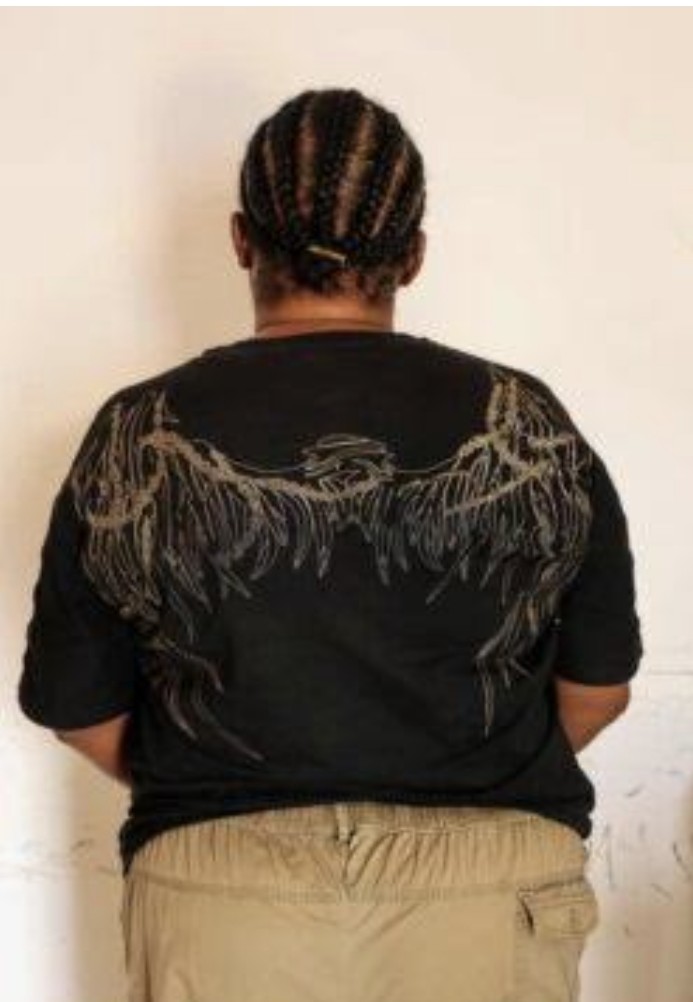
An alleged employment racket involving 21 job seekers and N8.29 million has landed an Enugu-based businesswoman, Stella Ezinne Egotanwa, in the net of the Economic and Financial Crimes Commission (EFCC).
The 45-year-old businesswoman is being investigated for allegedly collecting money from unsuspecting applicants under the guise of securing employment for them at a psychiatric hospital in Enugu State.
The EFCC, in a statement posted on its official X handle on Tuesday, October 20, 2026, disclosed that the suspect allegedly collected the money between December 28, 2025, and June 30, 2026, through bank accounts belonging to different Point of Sale (POS) operators.
According to the commission, trouble began for Egotanwa when 16 aggrieved job seekers petitioned the Nigeria Security and Civil Defence Corps (NSCDC), accusing her of collecting N6.193 million from them without delivering the promised jobs.
The petition subsequently led to her arrest by NSCDC operatives in Anambra State on July 30, 2026.
However, the case took another dimension when five additional victims approached the EFCC, alleging that the businesswoman had similarly defrauded them of N2,098,200 through promises of employment at the same hospital.
The fresh petitions brought the number of alleged victims to 21, with the total amount involved rising to N8,291,200.
One of the victims, who narrated his ordeal to investigators, claimed to have paid Egotanwa N1.05 million on December 28, 2025, believing that she had the connections to secure the promised employment.
“I made the payment in good faith because I believed that the employment opportunity she presented to me was genuine.
“However, after making the payment, the promised employment did not materialise. I subsequently experienced difficulty reaching her and there were periods she did not respond to my calls or messages,” the petitioner stated.
The anti-graft agency further disclosed that Egotanwa was already awaiting trial in a separate case involving a similar alleged employment scam.
It added that the suspect had admitted to the alleged offence during interrogation and would be arraigned in court upon the conclusion of investigations.
The EFCC maintained that investigations were ongoing to establish the full circumstances surrounding the alleged fraudulent recruitment scheme.
Clarify the EFCC’s role in her arrest
Use consistent language for alleged victims
Tighten the opening for stronger impact

-
 News4 days ago
C’RIVER 2027 BUDGET: GOV OTU PRESENTS ₦987.8bn ESTIMATES TO ASSEMBLY
-

 EverydayNews Telescope4 days ago
Enugu East Senate: The Dark Side of Ada Ogbu, NDC Candidate
-

 News3 days ago
Holy Ghost Transformation: How Enugu North Chairman Ibenaku Onoh Ended Years of Traffic Chaos, Roadside Trading
-

 EverydayNews Telescope4 days ago
Ebonyi 2027: The People’s Quest For ODII Vs Compromised Stakeholders
-
 Politics2 days ago
One Feared Dead, Several Injured as Thugs Attack Ebonyi NDC Assembly Candidate, Burn Campaign Vehicle
-
 News5 days ago
Cross River Assembly Passes State Police Bill with 22 Votes
-
 Politics4 days ago
2027: Tinubu Has No Hand in Alleged Assassination Plot Against Atiku – APC
-
 News5 days ago
My Brother’s Murder Not Political — Ebonyi Commissioner