



Agriculture
Gov. Mbah Springs Into Action, Provides Emergency Response To Victims Of Alleged Herdsmen Attacks In Enugu

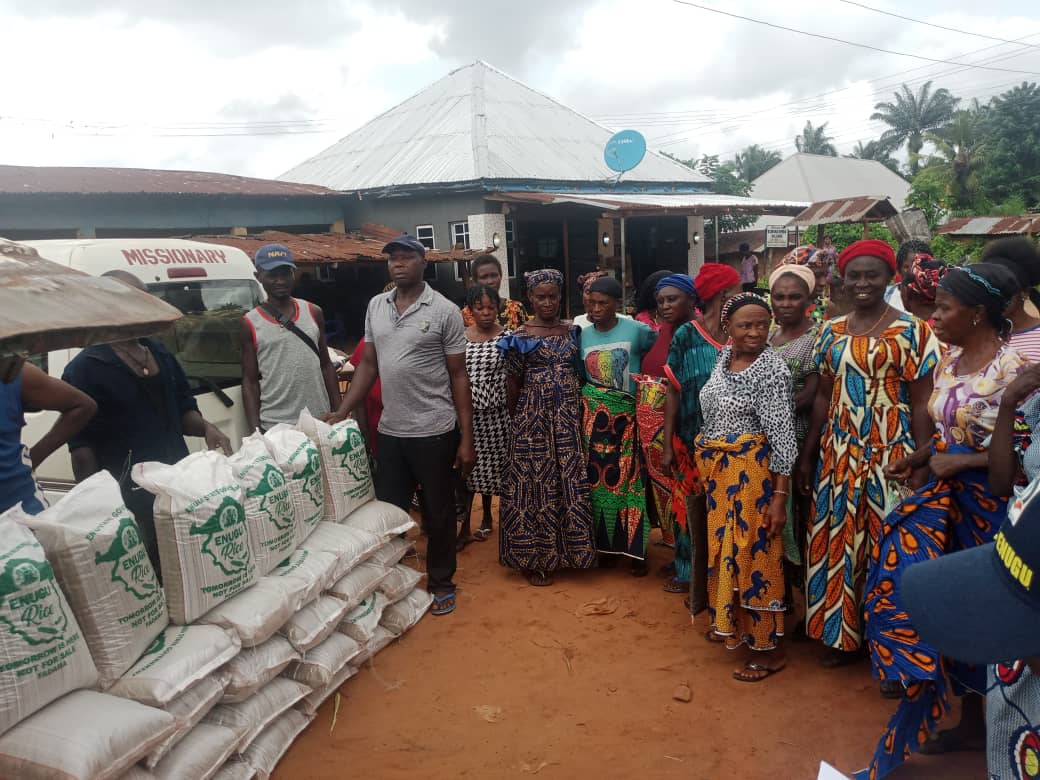

Governor Peter Mbah has launched an emergency response initiative and supported Abor Isi-Ala and Mgbuji Eha-Amufu communities in Isi-Uzo LGA as well as Nimbo community in Uzo-Uwani LGA, affected by alleged herdsmen attacks.
The devastating attacks by alleged herdsmen in Enugu State has left the affected communities reeling, with countless families displaced and livelihoods shattered. However, amidst the chaos, the Enugu State Governor, His Excellency, Dr Peter has swiftly responded to the plight of the victims.
The Governor’s rapid intervention aims to bring much-needed relief to the affected residents, who lost their homes, farms, livelihoods and belongings. The distribution of the relief materials is being facilitated by Nigeria Community Action for Resilience and Economic Stimulus(NG-CARES) programme, Enugu, Result Area2 (Fadama).
The relief package includes agricultural inputs such as bundles of cassava stem, herbicides, organic fertilizers and food assistance (25kg bag of rice to each person), and agricultural assets such as power tiller machines with operator’s kits, cassava graters with jack, rice threshers, communal fryers and multi-purpose grinders among other things.
At the various distribution locations, there abound eloquent testimonies as the victims of alleged herdsmen attacks were seen jubilating and showering accolades on the state government and the Fadama platform for the amazing support services to them.

Mr Festus Ngene, a 55-year old farmer from Nimbo in Uzo-Uwani Local Government Area, is one of the beneficiaries of the programme’s emergency response. His farm was ravaged by the attackers, leaving his family without a source of income.
“I was devastated when I saw my farm destroyed”, Mr Ngene recounted, tears welling up in his eyes. But then, the Fadama team arrived with food assistance, agro-inputs, and assets. It was like a miracle.”
Another beneficiary from Abor-Isiala in Isi-Uzo LGA , Mr Kingsley Obeagu praised the programme’s transparent and efficient distribution process, ensuring that the aid reached those who needed it most. “We received high-quality cassava stems, organic fertilizers and farming tools, the food assistance will also help us feed our families. We are grateful to the governor and the Fadama platform for their timely intervention.”
“This emergency response has given us hope again,” Mr Obeagu said smiling. The team worked tirelessly to identify genuine victims and deliver assistance, we are thankful for the dedication and compassion, we will never forget this kindness.”
Prior to the distribution of the relief items, the Enugu State CARES Steering Committee Chairman and the Commissioner for Budget and Planning, Barr. Chris-Roberts Ozongwu noted that the state government is collaborating with NG-CARES using Fadama platform to provide emergency relief to the victims of alleged herdsmen attacks.
“This programme is a critical component of our response strategy, and we will continue to work tirelessly to ensure its success, as the intervention reinforces the state government’s resolve to protect and empower vulnerable communities,” he said.
“Our response initiatives include the distribution of agricultural inputs and assets, such as cassava stems, herbicides, organic fertilizers, food assistance, power tillers with operator’s kit, cassava graters with jack, rice threshers, communal fryers and multi-purpose grinders. We are committed to alleviating the suffering of affected residents and ensuring they receive necessary aid”, said Barr. Ozongwu.
He noted that the state government has allocated a significant portion of its budget to support relief efforts, focusing on emergency response mechanisms, livelihood support and food security to ensure that the affected communities receive comprehensive support to recover and rebuild their lives.
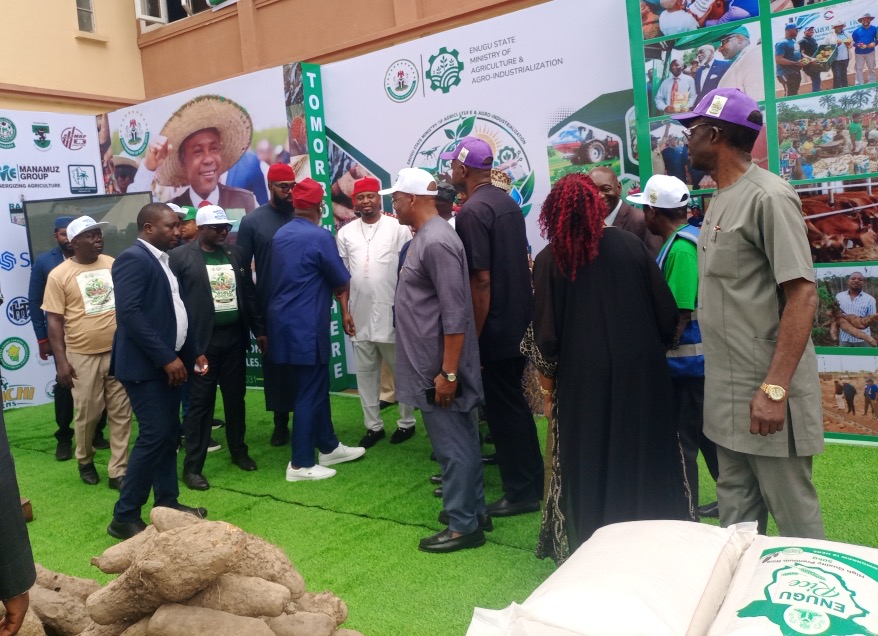
…targets $30bn economy by 2031
By Chinedu Sabastine
Enugu State Governor, Dr Peter Mbah, has reiterated his administration’s commitment to reducing poverty, eliminating hunger and ensuring food security through agricultural transformation.
Mbah stated this on Friday during the 2026 World Food Day celebration organised by the state Ministry of Agriculture and Agro-Industrialisation in Enugu.
The governor, represented by the Secretary to the State Government, Prof Chidiebere Onyia, commended the ministry and development partners for their efforts to boost agricultural production and improve food security.
He said the state was targeting increased agricultural production beyond local consumption to meet export demands.
“We’re here today to commemorate the world food day with a theme, “innovate today and nourish tomorrow” which falls online with the important responsibility before us to build agricultural transformation that will feed our people livelihood and contribute meaningful to economic development of our state and country,” he said.
Mbah said his administration viewed agriculture not merely as a means of food production but as a critical driver of economic growth, employment generation and rural development.
Speaking on the theme, “Innovate Today, Nourish Tomorrow,” the Commissioner for Agriculture and Agro-Industrialisation, Dr Patrick Ubru, said the state was pursuing a transition from subsistence farming to commercial agriculture capable of creating wealth and generating employment.
According to him, the administration is investing in mechanisation and developing 260 Smart Farm Estates across the state’s wards to improve productivity and strengthen agricultural value chains.
“We are bringing tomorrow here today,” the commissioner said, explaining that the state’s tractor-leasing programme was designed to provide farmers with affordable access to machinery and reduce the time and cost of land preparation.
He said the proposed farm estates would cluster agricultural production with essential infrastructure, making it easier to aggregate produce and supply processors with cassava, grains and other raw materials.
The commissioner also highlighted the Enugu Anchor Greenhouse Cluster Model, which provides cooperative farmers with greenhouses and solar-powered cold-chain facilities to reduce post-harvest losses.
He said the initiative would create opportunities for women, young people and persons with disabilities to establish agribusinesses, cultivate high-value vegetables and earn sustainable incomes.
On livestock development, he disclosed that the state was building the Enugu Livestock Development Centre at Ubahu/Amankanu to bring animal healthcare, production, processing and marketing services under one roof.
He added that the government had advanced efforts to revive dormant agricultural assets, including Enugu Tribu Songhai Farms in Ezeagu and Enugu United Palm Products Limited, which he said had progressed to commercial production.
The commissioner stressed that value addition was critical to maximising the economic benefits of agriculture.
“When we sell raw produce alone, we leave much of its potential value unrealised,” he said.
He linked the state’s agricultural transformation agenda to Mbah’s ambition of expanding Enugu’s economy from an estimated $4.4 billion to $30 billion by 2031.
The commissioner also announced that Enugu State would host the 48th Annual General Meeting of the National Council on Agriculture and Food Security next month, describing it as an opportunity to showcase the state’s agricultural initiatives and attract further investment.
He urged farmers to adopt improved farming practices, participate in training and cooperative programmes, and take advantage of available government support.
He also called on development partners, researchers and investors to collaborate with the state in strengthening agricultural production, processing and marketing.
The commissioner expressed appreciation to the governor for providing counterpart funding for agricultural programmes, which he said had helped the state access development initiatives and establish partnerships to support farmers.
He said sustained investment and collaboration were necessary to build a food-secure state where farmers prospered, agribusinesses thrived and households had access to safe, sufficient and nutritious food.

 The Enugu State Commissioner for Agriculture and Agro-Industrialization, Mr Patrick Ubru, says the state government is set to launch its 260 Smart Farm Estates meant to revolutionise agriculture and get residents back to farm.
Ubru said this on Monday while leading a team of inspectors on behalf of Gov. Peter Mbah to the site of the Gov. Peter Mbah Smart Farm Estate pilot project at Akpawfu in Nkanu East Local Government Area of Enugu State.


It would be recalled that the state government had earmarked N2 billion in the 2025 budget for Smart Farm Estates initiative across its 260 political wards in the 17 council areas within the state.
The initiative is under Gov. Mbah’s grassroots agriculture revolution tagged: “One Ward, One Smart Farm Estate’’.
Ubru said that there was a need for step-down town hall meetings for farmers in council areas to take advantage of the initiative, adding: “Time should not be wasted in organising the town hall meeting with the targeted farmers”.
He called on individuals, cooperative societies, communities, corporate organisations and other agencies in the state into agriculture and agro-industrialisation business like IFAD-VCDP and FADAMA to key into the initiative for collaboration in the interest of the people.
According to him, the ‘One Ward, One Smart Farm Estate Initiative’ will be a game-changer for our people, as our agriculture-loving governor is putting everything in place to ensure that our people get its maximum benefits.
The commissioner said, “It will be done in hectares of land, where all types of farming activities such as crop farming and exotic/economic plant such as cocoa, casava, sorghum, vegetables, exotic pepper and spices among others will be practiced.
“The state government will actively collaborate with local government councils to ensure that the initiative works efficiently as well as engage the people, especially youths, in each locality to participate in the initiative as it holds lots of benefits.
”The One Ward, One Smart Farm Estate initiative will solve so many issues particularly unemployment among youths in localities, hunger, food insecurity and knowledge gap on modern agriculture practices as workshops will be organised at local levels.”
On the Smart Farm Estate pilot project inspection, the commissioner expressed satisfaction on the zeal demonstrated by the consultant and his team so far in the project.
“I must confess that the zeal demonstrated here is in consonance with the aspirations of His Excellency, Dr Peter Ndubuisi Mbah on all projects targeted towards shoring up the state’s economy, especially agriculture and agro-industrialisation projects.
“I am personally happy with the level of security infrastructure placed here and the State Ministry of Agriculture will always be available for any need to ensure that the success story attained by this pilot farm continues,” he added.
Corroborating, the SPA on Agriculture to the Governor, Engr. Mike Ogbuekwe, explained that the initiative was meant to diversify the state’s economy through agriculture and agro-industrialisation aimed at shoring up the state’s Internally Generated Revenue (IGR).
“The Smart Farm Estates are expected to grow local needed crops as well as special crops and other agricultural produce for export such Sorghum and Ose Nsukka (special aromatic and ornamental yellow pepper of Nsukka),” Ogbuekwe said.
He also informed the commissioner of the approach by Nigeria Breweries to the state government to work out a partnership for the supply of Sorghum which is its principal raw material at the appropriate time.
Contributing, the Permanent Secretary of the Ministry, Mr Victor Ngwu, said that there was a need for staff of the ministry with experience in communication and documentation to be part of the initiative to get reliable data and statistics.
Earlier, the Consultant to the Smart Farm Estate pilot project, Alh. Friday Nnaji, said that the pilot project is a 200 hectares of farmland for split farms to be allocated to 200 farmers of the local council with each to grow a specific crop.
“The pilot Smart Farm Estate has two entrance points located at its opposite points and there will be an unstoppable electricity supply as well as water supply in the Smart Farm with a plan for irrigation as well as adequate security.
“As you can see, we have commenced the perimeter fencing of the whole farm area; while the central warehouse for the farmers is already constructed above lintel level,” Nnaji said.

A political economist and 2007 presidential candidate of the African Democratic Congress, Prof. Pat Utomi, has advised President Bola Tinubu on ways to tackle Nigeria’s surging inflation and food security crisis.
Tinubu, in his New Year address, pledged to prioritise food production and achieve economic stability by implementing policies aimed at reducing inflation and ensuring food security.
The President also pleaded his administration’s commitment to reduce inflation from its current 34.6 per cent to 15 per cent.
But Utomi said the success of the President’s goals would depend on his administration’s ability to tackle insecurity, provide incentives for farmers, and implement effective agricultural policies to create a stable and sustainable food production system in the country.
Utomi, who spoke in an interview with Saturday PUNCH, cautioned against the idea of massive food importation as a solution, warning that it would worsen Nigeria’s foreign exchange problems and undermine local agricultural production.
He argued that imported food would remain costly due to unfavourable exchange rates, maintaining that any subsidy on such imports would harm the nation’s capacity for sustainable food production.
Utomi said, “There is hunger, real hunger in the land. One of the biggest causes of inflation is food price inflation and it is central to how people feel and their abilities to do other things.
“To address this, the government needs to make a deliberate policy to push down the cost of food by investing in agriculture, giving massive incentives to young people to make farming attractive to them and check insecurity as quickly as possible.”
To address insecurity, Utomi proposed the creation of special agricultural security forces, forest rangers”, to protect farmlands and prevent clashes between farmers and herders or attacks by bandits.
He called on the government to support farmers to embark on irrigation schemes to enable year-round farming.
“The government should create schemes for unemployed youths, provide them with one hectare of land each, supply inputs, and train them in modern agricultural practices. In 90 days, we could see a significant increase in food production that would force down prices,” Utomi explained.

Borno State Governor, Babagana Zulum, has announced that the state government will subsidise the cost of petrol to N600 per litre for farmers in communities affected by Boko Haram insurgency.
A statement on Saturday by the governor’s Senior Special Assistant on New media, Abdulrahman Bundi, said Zulum announced the subsidy on Friday evening during the flagged-off distribution of farm inputs to over 5,000 farmers displaced by Boko Haram insurgents in Bama town.
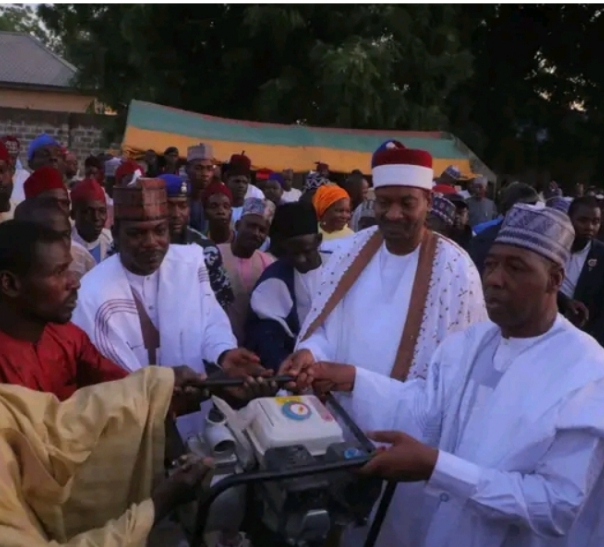 He said a litre of petrol sold between N1,000 and N1,200 in Maiduguri will be subsidised to the farmers for N600.
“This is aimed at alleviating the financial burdens faced by farmers in communities that have suffered economic and infrastructural destruction due to years of conflict.
“One of the major challenges that are facing the farming communities here as regards irrigation farming is the increasing cost of fuel. As a result, I want to announce to the general public that the government will procure petroleum products and sell them to the farmers at a subsidised rate. A litre of petrol is being sold in Maiduguri at the cost of about N1,200, but inshallah, henceforth, for irrigation farmers this season, a litre of petrol will be sold at the rate of N600.
“The Commissioner for Agriculture will work with the Brigade Commander to ensure the delivery of the petroleum products to farmers in Bama town as soon as possible,” he quoted the governor.
He said Zulum distributed farm inputs, including 2000 bags of blended NPK fertiliser, 1000 units of water pumps, and 620 units of gasoline pumps.
According to him, other materials include 380 units of solar water pumps, 1000 units of sprayers, 800 rolls of 2-inch flexible hoses, and 1000 litres of pesticides and seeds, among other items.
He said Zulum expressed gratitude to the federal government for the tremendous support of his administration’s effort in reconstructing and resettling communities affected by insurgency.

The All Farmers’ Association of Nigeria has criticized the Senate’s recent passage of a bill to criminalise the export of maize, which includes a minimum one-year jail term for offenders.
In an interview on Thursday, AFAN Chairman, Ifraimu Dauda, called the bill “ill-conceived,” arguing that farmers should have the right to sell their produce wherever they receive the best price.
The Senate, on Wednesday, approved the bill during plenary.
The legislation, which originated from the House of Representatives, prohibits the export of unprocessed maize in quantities of at least one metric ton, introducing penalties that include fines or imprisonment.
The bill states: “Any individual who exports, facilitates the export, induces another person to export, or attempts to export unprocessed maize—whether in grains, on cobs, fresh, or dry—in large commercial quantities is guilty of an offence.”
Dauda contended that the restrictions would negatively impact commercial farmers, who rely on export opportunities for profit maximisation.
He noted that while smallholder farmers producing for local consumption might remain unaffected, large-scale mechanised farmers would suffer.
“Farmers are in business to maximise profits and minimise costs. A restriction on exports denies them access to competitive pricing in international markets,” Dauda said.
The AFAN chairman also warned of unintended consequences, including increased local maize prices due to exporters sourcing supplies through informal channels.
Dauda urged the government to clarify its objectives and prepare contingency plans in case the policy backfires.
“The long-term impact on the agricultural sector and food security must be carefully assessed,” he added.
The bill will now proceed to a conference committee to address outstanding issues, including the treatment of maize derivatives. Its passage has sparked wider debates on balancing agricultural exports with local food security.

-
 News3 days ago
C’RIVER 2027 BUDGET: GOV OTU PRESENTS ₦987.8bn ESTIMATES TO ASSEMBLY
-

 EverydayNews Telescope4 days ago
Enugu East Senate: The Dark Side of Ada Ogbu, NDC Candidate
-
 News2 days ago
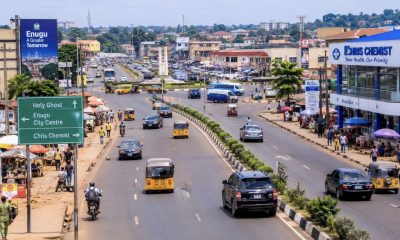
Holy Ghost Transformation: How Enugu North Chairman Ibenaku Onoh Ended Years of Traffic Chaos, Roadside Trading
-

 News5 days ago
Tension Mounts in Awka Anglican Diocese as Supervising Bishop Ezeofor Moves to Take Over Wednesday
-

 EverydayNews Telescope4 days ago
Ebonyi 2027: The People’s Quest For ODII Vs Compromised Stakeholders
-
 Politics1 day ago
One Feared Dead, Several Injured as Thugs Attack Ebonyi NDC Assembly Candidate, Burn Campaign Vehicle
-
 Politics4 days ago
2027: Tinubu Has No Hand in Alleged Assassination Plot Against Atiku – APC
-
 Economy5 days ago
Fuel Subsidy Removal Irreversible, Nigeria Won’t Return to Egypt — Tinub