



Business
FG grants N16tn waiver to Dangote, Honeywell, others



The TES deals with revenue forgone on Company Income Tax, Value Added Tax, Petroleum Production Tax, and Customs Duty.
In the TES report for 2019, it was stated that the Federal Government had forgone revenue of N4.2tn from two main sources, CIT and VAT.
For CIT, the estimated amount of revenue forgone was N1.1tn while N3.1tn was for VAT.
The TES report read, “The most significant conclusion is the large size of Nigeria’s revenue forgone from just two of the main taxes, i.e., CIT and VAT. Nigeria’s non-oil revenue potential is at least twice its current collections.

“The preliminary estimate of revenue forgone from CIT incentives and concessions in 2019 is N1.1tn; for contrast, 2019 CIT collections was N1.6tn. The preliminary estimate of revenue forgone from VAT policy choices and compliance gaps is estimated to be NGN 3.1tn and could possibly be more. It is worth reiterating that revenue forgone from Customs Duty, Excises, Petroleum Production Tax, Personal Income Tax and concessions under the Oil and Gas Zones legislation is still to be computed.”
According to the TES report, the figure for revenue foregone would likely exceed N4.2tn if there were sufficient data, especially from Customs Duty, Excises, PPT, Personal Income Tax and concessions under the Oil and Gas Zones legislation.
By 2020, the figure rose to N5.8tn, with majority of it coming from revenue forgone under VAT. A breakdown showed that N4.3tn was forgone under VAT; N457bn under CIT; N307bn under PPT, and N780bn under customs duty.
It was also noted that five countries accounted for about 86 per cent of total customs relief, with China accounting for nearly two-thirds of total relief granted. Netherlands, Togo, Benin and India were the other top sources of supplies benefitting from the reliefs.
The total figure continued to rise in 2021, hitting N6.79tn, with revenue foregone on VAT accounting for most of it. A breakdown showed that N3.87tn was forgone under VAT, N548.40bn under CIT; N337.70bn under PPT; N1.84tn under customs duty; and N111.15bn under imports VAT.
For the three-year period, therefore, the Federal Government had to forgo a total of N16.79tn in tax reliefs, Customs duty waivers and concessions, according to an analysis.
Under this figure, tax exemptions covered imported goods covered by diplomatic privileges, military hardware, fuels and lubricants, hospital and surgical equipment, aircraft (their parts and ancillary equipment), plant and machinery imported for use by companies in export processing zones, health and medical supplies to abate the spread of COVID.
Other exemptions included: reliefs on the presidential initiative on COVID-19 supplies, Import Duty and VAT on commercial airlines.
It was also noted that five countries accounted for about 92 per cent of total Customs relief with China accounting for nearly half of the total relief granted. Singapore, Netherlands, Togo, Benin Republic and India were the other top sources of supplies benefitting from the reliefs.
Meanwhile, the beneficiaries of the tax reliefs and concessions included Dangote, Lafarge, Honeywell and 43 other major beneficiaries.
As of the end of 2021, 46 companies had benefitted from the tax incentive scheme while the requests of 186 companies were still pending.
They were beneficiaries of the pioneer status tax relief under the Industrial Development Income Tax Act with tax reliefs for a three-year period.
This was contained in the Q4 2021 PSI report released by the Nigeria Investment Promotion Commission.
The pioneer status is an incentive offered by the Federal Government, which exempts companies from paying income tax for a certain period. This tax exemption can be full or partial.
The incentive is generally regarded as an industrial measure aimed at stimulating investments in the economy.
The products or companies eligible for this pioneer status are those that do not already exist in the country.
These companies included: Dangote Sinotrucks West Africa Limited, Lafarge Africa Plc, Honeywell Flour Mills Nigeria Plc, Jigawa Rice Limited, and Stallion Motors Limited.
Others included: African Foundries Limited, Royal Pacific Group Limited, Kunoch Hotels Limited, Princess Medi Clinics Nigeria Limited, Medlog Logistics Limited, and Masters Liquefied Gas Limited.
Economists back waivers
Economic experts have stressed the role of tax waivers in driving economic growth but questioned the transparency and objective rate of the Federal Government in granting the tax waivers.
The Managing Director/Chief Executive Officer, Cowry Asset Management Limited, Mr Johnson Chukwu, explained that what was forgone could not be seen as revenue leakages, describing it as delayed gratification which would enable the Federal Government to achieve long-term higher revenues.
He added, “Tax is a fiscal tool and fiscal tools are used to stimulate economic activities or discourage certain harmful or inappropriate economic activities.
“I won’t call the amount as losses unless those tax concessions were not granted with an objective motive and national interest.”
He stressed that there were benefits that would accrue from granting these waivers, noting that they would stimulate the economy.
The Chief Executive Officer, Centre for the Promotion of Private Enterprise, Dr Muda Yusuf, also noted that there was nothing wrong with waivers if they were in line with tax policies.
He noted that tax incentives were necessary to encourage investment and the establishment of some pioneer businesses.
He said, “The whole idea of incentives is to grow the economy. When you are growing the economy, you are not only looking at revenue, you are looking at employment and multiplier effects. In the medium to long term, you will get this revenue by the time you are able to grow these investments. It is inappropriate to see it as revenue loss unless the incentive policy itself is discriminatory.”
He stressed that the process should be transparent and seen as an effort by the government to grow the economy.
Waivers discriminatory — Experts
However, some experts are of the opinion that tax reliefs and waivers granted by the government were discriminatory, noting that some of the processes were not transparent enough.
A former President of the National Accountants of Nigeria, Dr Sam Nzekwe, said there was a need for the process of granting certain tax reliefs, import duty waivers and concessions to be transparent.
He said, “The issue here is how transparent it is. The problem we have is who and who are given the tax waivers and how transparent they are. It is good to give tax waivers, especially to pioneer industries to enable them to start.”
For a professor of Economics at the Nnamdi Azikiwe University, Uche Nwogwugwu, such waivers were naturally discriminatory.
“They fulfil an economic theory that says that the rich man should not be taxed so as to provide jobs for the poor man. If the rich were taxed, the poor would not get jobs, that is what they are applying, which is a negative economic theory.”
He wondered why companies would be selected to benefit from such humongous tax waivers when the country’s revenues were seriously leaking.
He further questioned why the small and medium-scale businesses, which were the real job creators in the economy, were not provided with waivers.
“The SMEs created 59 million jobs as of 2017, which was around 80 per cent of the employment in the economy. The majority who created these jobs were micro businesses, which made up 99 per cent of SMEs group. Many of them are looking for just as little as N50, 000 to expand. Why is our government not looking in this direction?” he queried.
However, the Fiscal Policy Partner and Africa Tax Leader at PricewaterhouseCoopers, Mr Taiwo Oyedele, noted that tax incentives were crucial in driving investments when properly targeted.
He said, “Tax incentives are not necessarily bad. They can be applied in a manner that benefits the overall economy by encouraging investments in critical areas.
“However, incentives must be properly designed and targeted to be meaningful while the government must periodically review incentive schemes to ensure they are still relevant and provide value for money. For instance, the N16tn tax for the last three years includes VAT exemption on basic food items which is necessary given the level of poverty and rising food inflation.”
He further urged the government to close the non-compliance gap, leverage technology and tax intelligence while ensuring tax harmonisation to boost tax revenue.
“To improve revenue from taxation, the government needs to focus on closing the non-compliance gap, leverage on technology and tax intelligence, while ensuring tax harmonisation both in terms of reducing multiple agencies to a single revenue agency per level of government as well as harmonising multiplicity of taxes,” Oyedele added.
Nigeria ranks low
Nigeria is not in the right fiscal shape as exemplified by its poor tax revenues. The country earned N6.4tn in taxes in 2021, according to the Federal Inland Revenue Service. This represents about $15.433bn.
“The FIRS, in the year 2021 collected a total of N6.405tn in both oil (N2.008tn) and non-oil (N4.396tn) revenues as against a target of N6.401tn,” a statement released by the Special Assistant on Media and Communications to the Chairman of FIRS, Muhammad Nami, in January 2022, had said.
“Non-oil sector contributed 69 per cent of the total collection in the year, while oil sector’s contribution was 31 per cent of the total collection.
“The Service issued certificates for the sum of N147.8bn tax credit to private investors and the NNPC for road infrastructure under the Road Infrastructure Development Refurbishment Investment Tax Credit Scheme created by Executive Order No. 007 of 2019,” he added
However, this number was dwarfed by the revenues that accrued to Africa’s second-largest economy in the same year.
South Africa collected $107bn (R1.56tn) in tax revenues in 2021, which was a 25 per cent increase in tax revenues from the 2020 figure, according to the South African Revenue Services.
Personal income tax contributed 35.5 per cent to the figure, while VAT had a 25 per cent share. Similarly, CIT contributed 20.7 per cent while customs duties’ contributed 3.7 per cent, the revenue agency said.
Business
No Bad Blood Over New Cement Factories, But Our Mining Rights Run Till 2045 — Ibeto Tells Ebonyi Govt

ABAKALIKI, EBONYI STATE — Billionaire industrialist and Chairman of Ibeto Group, Dr. Cletus Ibeto, has clarified his position on plans by the Ebonyi State Government to establish a new cement manufacturing plant, saying he has no objection to fresh investment in the state provided his company’s existing mining rights are respected.
Ibeto, who is also a core investor in the Nigerian Cement Company (Nigercem), said the proposed development should not interfere with areas covered by valid mining leases held by his company.
“We are not against the establishment of new cement factories in Ebonyi State. However, such developments must not interfere with or overlap the specific areas where Ibeto Group holds valid Mining Lease Licences issued by the Federal Ministry,” Ibeto stated.
He said the company’s statutory mining leases covering limestone deposits in the Nkalagu axis remain valid until 2045.
Ibeto stressed the need for proper delineation and mapping of mining areas to prevent conflicts between existing title holders and new investors seeking to establish businesses in the state.
Under Nigeria’s legal framework, mineral resources are vested in the Federal Government, with mineral titles administered through the Federal Ministry of Solid Minerals Development and the Mining Cadastre Office.
Nigercem Ready to Resume Operations
Addressing concerns over the future of the historic Nigercem plant, Ibeto said Ibeto Group remains committed to reviving the facility and is ready to commence work once outstanding administrative issues with the state government are resolved.
He said the company’s position should not be interpreted as opposition to new investment in Ebonyi, stressing that his concern was the protection of legally acquired mining rights.
The development could pave the way for both the revival of Nigercem and the entry of new investors into Ebonyi’s cement industry, provided the respective mining areas are clearly mapped out and existing legal titles are respected.
Business
Patience Jonathan Hails Azikel Boss Eruani as ‘Small Boy’ She Mentored Into Billionaire League
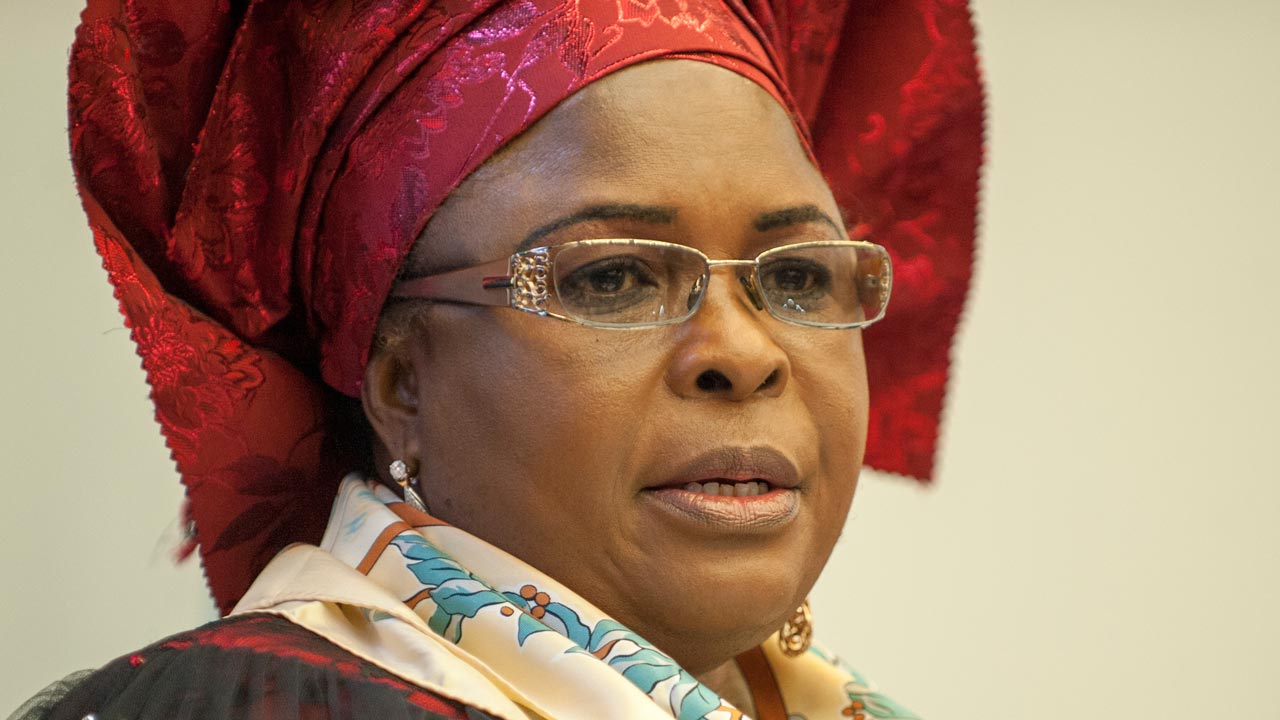
She said her guidance was behind his bold entry into big business at a relatively young age.
The former First Lady spoke on Tuesday in a video which went viral on Thursday during an inspection tour of the Azikel Refinery in Obunagha, Bayelsa State, alongside other dignitaries.
She said she personally introduced Eruani to billionaire businessmen, Aliko Dangote and Aminu Dantata, and pushed him to aspire to their level despite being the youngest among them.
“He’s a boy that I brought up. We are always together. Although he’s the little one among us when we are friends — Dangote, Seyi, Dantata, Eruani — among us, he’s the smallest. But I made sure he followed the Dangotes, he followed Dantata.
“Because I’m a woman in their midst, I made sure I told this small boy, ‘Go and follow them, and stop the grammar.’ But when he told me that one day he would be like Dangote, I said, ‘You’re thinking too high.’ I prayed to God to grant him his heart’s desire,” she said.
The former First Lady also recalled how the immediate past APC administration under Muhammadu Buhari initially failed to grant Eruani a refinery licence before eventually approving three.
“During the Buhari administration, he and others came to me and told me they were going to apply for a refinery. I told him, ‘Eruani, your brother, the President, did not give you a refinery.
“Is it the APC government that will give you one?’ I prayed it would happen. But later, they came back and told me they had been given three refineries,” she said.
The 25,000 barrels-per-day plant is a private hydro-skimming refinery designed to process condensate into petrol, diesel, aviation fuel, kerosene and other products.
It is set to become Nigeria’s second-largest full-slate refinery and the first major privately owned refinery in the Niger Delta.
The Managing Director/Chief Executive Officer of the Niger Delta Development Commission, Samuel Ogbuku, who joined the inspection tour, commended Eruani for his perseverance, noting that he had attended the project’s groundbreaking ceremony eight years ago.
Ogbuku described the refinery as an inspiration and a potential catalyst for investment, job creation and economic growth in Bayelsa State, and urged residents, particularly youths, to key into the opportunities it would create.
He also praised the Bayelsa State Government for improving road infrastructure leading to the refinery site and called for continued support for the project.
Governor Douye Diri, who was represented at the inspection by his deputy, Peter Akpe, has consistently backed the project, which is expected to employ hundreds of workers and drive industrialisation in the state.
Other dignitaries at the event included the Chairman of the Bayelsa State Council of Traditional Rulers, King Bubaraye Dakolo; Vice President of Azikel Group, Presley Asemota; and Isaac Yalah, among others.

A market check on Tuesday showed that NNPCL outlets in Abuja and nearby areas adjusted their petrol price from N1,155 per litre to N1,270 per litre.
The latest adjustment represents an increase of N115 per litre by the state-owned oil company.
The new price change follows recent increases by depot owners and petroleum marketers, who have adjusted their rates twice within a week.
The latest development also comes days after Dangote Refinery resumed the sale of refined petroleum products in dollars, a move that has raised concerns among industry players over the direction of fuel pricing in the country.

The Federal Government has disclosed that 13 of the 50 oil and gas blocks offered in the 2025 Licensing Round will be returned to the licensing basket after failing to attract bids from prospective investors.
The Chief Executive of the Nigerian Upstream Petroleum Regulatory Commission (NUPRC), Oritsemeyiwa Eyesan, disclosed this on Tuesday at the 2025 Commercial Bid Conference in Abuja.
Eyesan said that although 50 blocks were initially put up for bidding, prospective investors showed interest in only 37.
“At the end of the exercise, we had 50 blocks on offer, but we only had representation for 37 of those 50 blocks. Thirteen of those blocks will be returning back to the basket,” she said.
She further disclosed that 143 companies participated in the commercial bid process, submitting about 200 bids for the available oil and gas assets.
“We have a total of 143 companies showing interest for 200 bids. That, for us, was remarkable, and I must say thank you,” Eyesan stated.
According to her, nearly 300 companies initially expressed interest in the licensing round, which she described as a sign of renewed investor confidence in Nigeria’s upstream petroleum sector.
“When we started the journey, we got interest from almost 300 companies. I repeat, almost 300 companies. That, in my view, was an indication that the tide has turned for Nigeria,” she said.
She explained that the number of interested companies was reduced to 196 following the prequalification stage, before the process moved to the technical and commercial evaluation phases.
“From the almost 300 interests that we got, we moved to the pre-qualification stage, and that number was pruned down to 196,” she added.
The 2025 Licensing Round was launched on November 11, 2025, in accordance with the Petroleum Industry Act 2021, with 50 oil and gas blocks put up for bidding across seven sedimentary basins.
The assets comprise 16 Niger Delta onshore blocks, 18 shallow-water blocks, one deep offshore block, three blocks in the Benin Basin, four in the Anambra Basin, four in the Chad Basin and four in the Benue Trough.
The bid portal opened on December 1, 2025, while a pre-bid conference was held in Lagos on January 14, 2026, to provide prospective investors with guidance on the bidding requirements.
Registration and prequalification submissions closed on February 27, 2026, with the prequalification process completed on March 16.
The NUPRC said winning bids are being determined through a weighted evaluation that considers signature bonus commitments, proposed work programmes and performance security. The process combines technical and commercial scores rather than relying solely on financial offers.
The framework is aimed at ensuring that Nigeria’s petroleum assets are awarded to investors with the financial capacity, technical expertise and operational strength required to accelerate exploration and production in the country’s upstream sector.
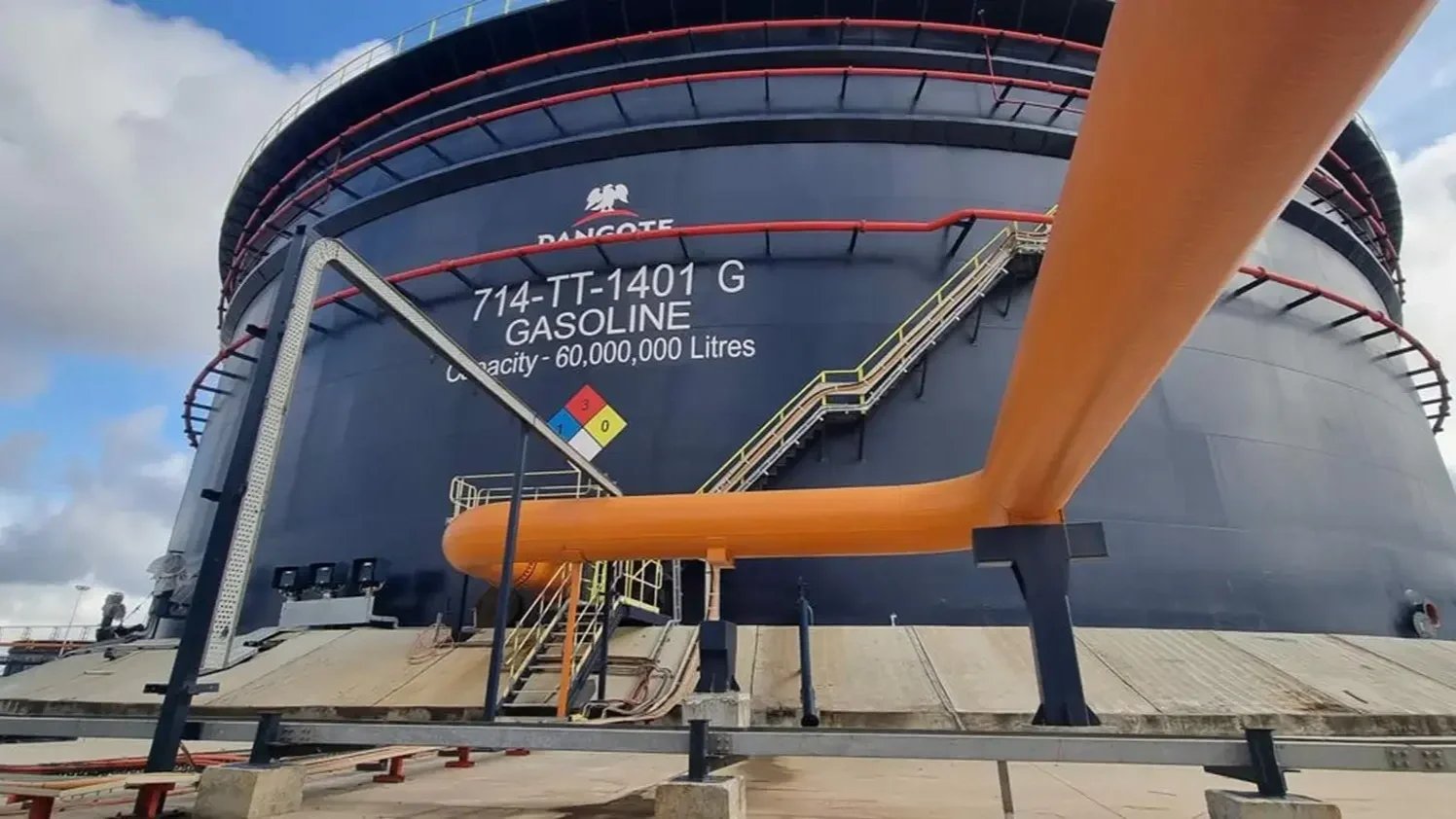
The new pricing template, which took effect on July 13, 2026, also pegs Automotive Gas Oil (diesel) at $1.087 per litre and Aviation Turbine Kerosene (ATK) at $0.942 per litre, while coastal deliveries of PMS have been fixed at $1,044.62 per metric tonne.
The development marks the end of naira payments for refined petroleum products, a policy introduced after the commencement of the Federal Government’s naira-for-crude initiative on October 1, 2024.
In a notice issued to petroleum marketers and customers, the refinery announced that all previously issued naira-denominated Proforma Invoices and Deal Recaps for both gantry and coastal transactions had become invalid.
The notice, signed by the refinery’s Group Commercial Operations, directed customers not to make payments against the cancelled invoices, stating that all transactions would now be conducted in United States dollars.
Under the revised pricing schedule, petrol supplied through the gantry will sell for $0.779 per litre, diesel for $1.087 per litre, aviation fuel for $0.942 per litre, while coastal PMS supplies will cost $1,044.62 per metric tonne.
The refinery, however, clarified that the transition does not affect Liquefied Petroleum Gas (LPG), which will continue under its existing payment arrangement.
Industry sources said the decision followed a growing imbalance between the currency used to procure crude oil and that used to sell refined products.
According to the sources, the refinery now receives a larger share of its crude oil from the Nigerian National Petroleum Company Limited (NNPCL) under dollar-denominated supply arrangements, while a significant volume of its refined products had continued to be sold locally in naira.
The resulting mismatch, coupled with exchange-rate volatility and fluctuations in global crude oil prices, reportedly increased the refinery’s foreign exchange exposure and prompted the adoption of a uniform dollar-based pricing framework.
A source familiar with the development explained that the shift became necessary as the volume of naira-denominated crude supplies declined relative to dollar-based crude cargoes.
“The refinery is receiving fewer naira-denominated crude cargoes while a larger proportion of its refined products has continued to be sold in naira. That imbalance, combined with foreign exchange volatility, made the transition to dollar pricing inevitable,” the source said.
The decision is expected to have significant implications for petroleum marketers who source products directly from the refinery for nationwide distribution. It could also influence retail pump prices, depending on movements in the exchange rate, international crude oil prices, logistics costs and marketers’ operating expenses.
The Federal Government had introduced the naira-for-crude policy to encourage domestic refining, reduce pressure on foreign exchange demand and stabilise fuel prices. However, industry stakeholders have recently reported implementation challenges, noting that a growing proportion of crude supplies to local refiners has reverted to dollar-based transactions.
Analysts believe the latest development underscores the continued foreign exchange challenges facing Nigeria’s downstream petroleum sector despite efforts to deepen local refining and reduce dependence on imported fuel.

-

 Politics5 days ago
2027: Odii Will Not Step Down, Says Spokesperson
-

 EverydayNews Telescope4 days ago
Nkalagu Cement Factory: Project or 2027 Political Promise?
-

 News4 days ago
How NAF Plane Vanished From Radar Shortly After Take-Off, Crashes In Ondo Swamp
-

 News4 days ago
No Survivor Found Yet in Ondo Air Crash — Aiyedatiwa
-
 Crime3 days ago
Court Denies Alleged Fake Pastor Bail as Seven Witnesses Await Trial
-

 News2 days ago
Curfew Continues as Soludo Sets Up Commission of Inquiry Over Aguleri–Umuoba Anam Clash
-

 Education2 days ago
Ihejirika Hails Mbah’s Infrastructure Drive as Coal City University Inaugurates Governing Council
-

 News3 days ago
NAF Crash Claims Pilot 16 Days After Wedding