


Featured
Festive Season: Many Nigerians Reconsider Travelling Plans Amid Hardship And Rising Cost

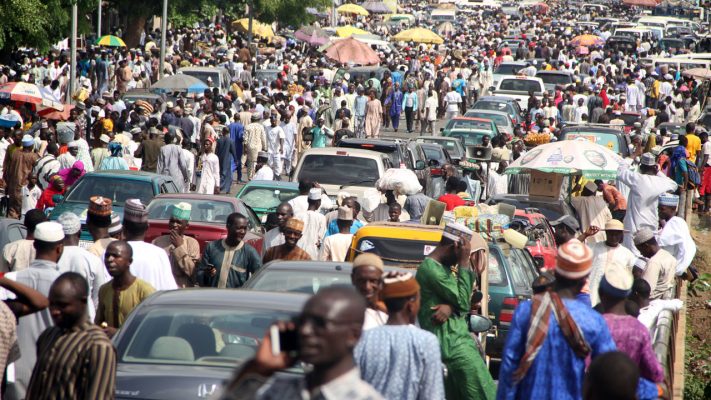

As the yuletide season approaches, Nigerians in different parts of the country have expressed fear and worry over the possibility of travelling to their ancestral homes in the South-East, South-West, and northern regions due to the rising cost of transport fares and worsening insecurity.
Last year, the Federal Government slashed interstate road transport fares by 50 per cent and approved free rides for commuters on all train services during the Yuletide.
The transportation subsidy, which took effect from December 21, 2023, to January 4, 2024, benefitted no fewer than 112,000 passengers, according to the Association of Luxury Bus Owners of Nigeria.
According to the Nigerian Bureau of Statistics, as of December 2023, the average price of fuel stood at N671 per litre—225.85 per cent higher than the N206.19 price in 2022.
By Thursday afternoon, fuel prices had risen to between N1,025 and N1,045 per litre at various filling stations in Lagos.

Consequently, transport fares to the South-East, South-South, and northern states skyrocketed.
A visit to some major motor parks in Lagos and a review of the websites of some interstate transport companies revealed that transport costs from Lagos had nearly doubled compared to last year.
A trip from Lagos to Benin, which cost between N6,000 and N12,000 earlier last December, now costs between N15,000 and N21,000, depending on the transport company and bus quality.
Similarly, a trip from Lagos to Enugu, which cost about N19,000 in 2023, now costs N41,500, according to the God Is Good Motors website.
Transport companies like GIGM, Peace Mass Transit, and Young Shall Grow now charge between N22,000 and N50,500 per person for trips from Lagos to Owerri, Aba, Warri, Port Harcourt, and Abuja.
Last December, these fares ranged from N17,000 to N20,000.
Even within the South-West, fares have risen significantly as a trip from Lagos to Ibadan, Ilorin, or Osogbo, which cost between N1,500 and N4,500 last year, now goes for between N3,000 (Ibadan) to N7,500 (Osogbo and Ilorin), depending on the bus.
Many Nigerians in different states of the federation expressed concern about the hike in transport fares.
They also expressed fear about rising insecurity in the eastern and northern regions—both hotbeds of banditry, kidnappings, and killings.
Just last week, gunmen suspected to be enforcing the illegal sit-at-home order invaded two communities in Anambra State, killing at least four people.
Earlier, about 10 people were murdered in Nibo community, Awka South Local Government Area of the state.
In Benue State, at least 30 people were reportedly killed and several injured when armed gangs attacked farmers and local communities in Katsina-Ala LGA of the state last week Monday.
Speaking with Sunday PUNCH, the Chairman of Nsu Development Union, one of the Ndigbo associations in Lagos State, Mr Blessing Nwokejiegbe, said it was customary for all Igbos in the state to travel home during the yuletide, adding that the prevailing hike in fuel price and deepening insecurity had been of serious concern to them.
“It is our tradition. When it comes to this particular period, we always want to converge on our villages and have Christmas fun. But everybody is skeptical about the security concerns and high cost of fares. As I speak to you now, from Lagos to Owerri is about N45,000. Mind you, Owerri is not a village. It will take me another N15,000 to get home from there. But that is not even the real thing.
“The problem is that I have called people in the village and they said there is peace. But how do you travel to get to the village? Is it not by road? We don’t know when these bad boys can stage their ambush. That is why everybody is prayerful now,” he stated.
Speaking further, Nwokejiegbe said, “There are events ahead. You know, many people are dying. And for a lot of them that have died, we are moving them to the East. So, that (yuletide) period is when we bury as many as we can. Many people that died have not been buried.
“For some of them that we hurriedly buried, there is something we call burial rites. It hasn’t been done for them. So, many events are supposed to take place. But people are very careful.”
A trader at the Ile Epo Market, Lagos, Muhammed Isa, said although he had planned to travel during the yuletide to see his wife and children in the north, the hike in transport fares and fear of being attacked might make him change his mind.
“I planned to travel probably next week because I haven’t seen my family since the beginning of this year. But as it stands now, I may likely not go because of the high cost of transportation.
“Last year, it was around N14,000 to N19,000 from Lagos to Kano State by bus. But as we speak, it is between N25,000 and N40,000. Imagine the rise. Mind you, there is also fear because these days, we hear of different attacks and killings in the north. I just want to be careful,” he added.
Also, the Chairman of Umuezeala Nsu Development Union, an association of some Imo State residents in the state, Henry Chukwuyere, admitted that the hike in the cost of transport was key, but said he would still travel.
“It is our tradition; so, we will. Here in Lagos, some people have said they won’t travel, perhaps because of the increase in fares. But once we approach December 21st, I am sure Lagos will be empty.
“How people will get money for this, I don’t know. In fact, I don’t even know how I will get the money for the trip, but it is a must we go because we have some occasions lined up for the end of the year, which we see as a period for our vacation,” he added.
Another member of the Igbo community in the state, Mr Uzoma Korie, said even though he had decided to travel, the high cost of transportation was giving him serious concern about whether to go with his family or not.
Ahead of the yuletide, residents in Abia State said unless the economy improved, they might consider staying put in their places of residence.

The Alaigbo Development Foundation has issued a stern warning against any attempt to deny Rivers State its constitutional right to produce the next President-General of Ohanaeze Ndigbo in the January 2025 elections.
In a statement on Wednesday, signed by its President, Nze Coleman Chukwudelunzu, the ADF described those seeking to undermine the Ohanaeze Constitution as the “number one enemies of the Igbo nation.”
Chukwudelunzu stressed the importance of adhering to constitutional principles and maintaining fairness in Ohanaeze Ndigbo’s leadership.
“Whoever wants to deny our brothers in Rivers State their right to produce the President-General of Ohanaeze Ndigbo is an enemy of Ndigbo and the Igbo nation. We must resist them,” he said.
The ADF leader identified two major challenges undermining Ohanaeze Ndigbo: external forces attempting to control Igbo affairs and internal actors seeking federal appointments at the expense of Igbo unity.
Chukwudelunzu alleged that powerful individuals from other ethnic groups had, in the past, influenced the selection of Ohanaeze President-Generals and criticised some Igbo governors for prioritising personal gains over regional interests.
“Tragically, some so-called Ohanaeze chieftains act as errand boys to governors and ministers instead of speaking truth to power as great leaders like Akanu Ibiam and Z.C. Obi once did,” he lamented.
Despite these challenges, Chukwudelunzu expressed gratitude for the resilience of patriotic Igbo leaders within the ADF, emphasising the need for Ohanaeze Ndigbo to remain a vital socio-cultural institution for Igbo unity and progress.
Reflecting on historical moments of Igbo unity, Chukwudelunzu recalled the efforts of Igbo delegates during the 1994-1995 Abuja National Constitutional Conference.
Leaders such as Okogbule Wanodi, Peter Odili, and Emeka Ojukwu stood together to defend Igbo interests against divisive agendas like the Justice Mamman Nasir Committee’s state creation plans.
“At that conference, Igbo delegates showcased an unbreakable bond of unity that Justice Mamman Nasir himself could not ignore,” Chukwudelunzu reminisced, calling for similar unity as the January elections approach.

Adopting a motion to that effect, sponsored by Senator AbdulFatai Buhari (APC Oyo North) during plenary, the Red Chamber particularly charged its Committee on Aviation to unravel the circumstances behind the incessant flight delays and cancellations to find lasting solutions to the problem.
The PUNCH exclusively reported on Wednesday that about 2,000 air passengers lost 19,274 pieces of luggage between January and June this year, according to data from the Federal.
The report stated that data obtained from the half-year report of the Nigerian Civil Aviation Authority, an agency of the Federal Government that regulates civil aviation, further indicated that 19,250 passengers were delayed for long hours during the review period.
Senator Buhari, while presenting the motion, said the problem which he noted had been on the increase in recent times, is all over the media.
“This development is worrisome as air travel is one of the most reliable, dependable, and quicker means of transportation, often undertaken for business/official purposes and to keep other scheduled appointments, which are usually time-bo,” he said.
Buhari pointed out that “the quest for economic diversification and foreign direct investment, which are parts of the current administration’s policy thrust, will remain an illusion if the country’s aviation industry falls short of the acceptable best practices across the globe.”
“Part 19 of the Nigerian Civil Aviation Authority Regulations of 2023, makes provisions for consumer protection in the civil aviation industry in Nigeria.”
He added, “However, enforcement has been an issue as most Nigerians are not even aware that they are entitled to compensation for time lost due to unnecessary delay, hence the need for the NCAA to activate this aspect of its regulation so that airline operators will sit up and be alive to their responsibilities.”

The Senate further instructed its Committee on Finance to stay action on the public hearing pending the time the agitation in the public space was addressed.
It further constituted a special committee to meet with the executive arm and work with the Federal Government to resolve the issues surrounding the Tax Reform Bills.
This was made known by the Deputy Senate President, Jibrin Barau, who presided during plenary on Wednesday.
There has been controversy over the Tax Reform Bills since its introduction to the National Assembly.
The bills are Tax Reform Bills comprising the Joint Revenue Board of Nigeria (Establishment) Bill, 2024; Nigeria Revenue Service (Establishment) Bill, 2024; Nigeria Revenue Service (Establishment) Bill, 2024 and Nigeria Tax Bill, 2024.
The northern Governors rejected the bills outright, describing them as anti-democracy.
Following this, the National Economic Council, Nigeria’s highest economic advisory body, requested that the tax reforms bill be withdrawn from the NASS for more consultations.
Oyo State Governor, Seyi Makinde, announced the council’s position after its 144th meeting chaired by Vice President Kashim Shettima at the State House, Abuja.
Makinde said council members agreed that the bill be withdrawn as some sections of the country are uncomfortable with some of its sections. He said this would allow for consensus building and understanding.
Following the various controversies that greeted the bills, the Senate on Wednesday invited the president’s Economic team led by the Chairman of the Presidential Committee on Fiscal Policy and Tax Reforms, Taiwo Oyedele, alongside the Chairman of the Federal Inland Revenue Tax, Zacchaeus Adedeji, Director General of the Budget Office, Tanimu Yakubu, into plenary to explain the Tax Reform bills in detail to lawmakers.
After the interaction with the President’s economic team, the Senate passed the bill for a second reading and transmitted it to the Senate Committee on Finance.
After the passage of the bill, the Borno State Governor, Prof Babagana Zulum, accused Oyedele’s team of rushing the enactment of the tax reforms, alleging that the bills are accompanied by misconceptions that require deeper consultations.
“On this tax issue, there are a lot of misconceptions. We felt that the VAT provision in the tax law, based on the calculations we did, would only benefit Lagos and Rivers States. We did our research and concluded that we would lose,” Zulum said.
“Why are we in a rush? We advised the Federal Government to take a pause and expunge some of the clauses that are inimical to Northern Nigeria. What we are saying is, give more time, let us do a deeper consultation to understand the nitty-gritty of this tax regime before passing it into law,” Zulum added during an interview on Channels Television.
Amidst the controversy, Senator Shehu Buba (APC, Bauchi South), in an interview with the British Broadcasting Service Hausa Service said northern Senators agreed to recall the Tax Reforms Bills.
He said, “These bills are complex and require thorough review by tax policy experts.”
He claimed that northern lawmakers strongly oppose the proposed “derivation” formula in the value-added tax distribution system, arguing that northern states would be unfairly impacted.
Also on Tuesday, the President instructed the judiciary to liaise with the legislative arm of government.
Speaking on the controversies, the Deputy Senate President noted that the delegation would meet on Thursday at the National Assembly to resolve all the issues that had caused the uproar.
Barau said, “On the tax reform bills currently before us, we acknowledge that the Senate remains the highest legislative assembly in this country.
“The Senate comprises men and women of wisdom and experience, entrusted to legislate for the peace, stability, and development of the nation.
“The Senate of the Federal Republic of Nigeria, like similar bodies globally, serves as a stabilising force in times of difficulty or disagreement. Through dialogue and consensus, the Senate has consistently provided solutions to national challenges since 1999.”
He added, “In this regard, we have decided to set aside politics, ethnicity, and regionalism to work together on resolving the issues surrounding the tax reform bills.
“In collaboration with the Executive Arm of Government, we agreed to establish a forum to identify and address contentious areas to ensure national unity and progress.
“Before the introduction of these bills, we faced numerous challenges, including insecurity and economic issues.
“The President has been working to address these problems, and we are committed to supporting these efforts while tackling global economic challenges. We also agreed that no other issues should aggravate the country’s current difficulties.”
On Tuesday, following the controversy emanating from the bills, President Tinubu directed the Ministry of Justice to work closely with the National Assembly to address “grey areas” concerning the bill with the legislature.
The Minister of Information and National Orientation, Mohammed Idris, stated this in a statement titled ‘President Tinubu committed to accountability on tax bills, directs Ministry of Justice to work with NASS on concerns.’
Mohammed said, “In line with the established legislative procedure, the Federal Government welcomes meaningful inputs that can address whatever grey areas there may be in the bill.
“In this vein, President Tinubu has already directed the Federal Ministry of Justice and relevant officials who worked on the drafts to work closely with the National Assembly to ensure that all genuine concerns have been addressed before the bills are passed.”
Barau confirmed that the Senate committee would meet with the Attorney-General of the Federation on Thursday (today).
“It has been mutually decided between the Executive and the Senate to engage the Judiciary to sort out these matters.
“The Attorney-General of the Federation will be involved in discussions to identify and resolve areas of disagreement for the nation’s benefit.
“Tomorrow (today), the committee established by the Senate, along with its leadership, will meet with the Attorney-General to address these issues.”
Barau added, “Consequently, the Senate Committee on Finance has been directed to pause further actions on public hearings and other matters related to the tax reform bills until the issues are resolved.”
However, there are indications that the Attorney-General of the Federation and Minister of Justice, Lateef Fagbemi (SAN), may not be present to attend the meeting on the tax reform bill slated for today.
A senior official at the Ministry of Justice confirmed to our correspondent that the AGF was out of the country and billed to return today.
The source said, “The AGF is not in the country at the moment but he will return tomorrow (today).”

The Organised Labour in Enugu State has refuted the media reports that the new minimum wage was yet to be paid in the state, saying that the implementation of the N80,000 minimum wage, which is above the N70,000 national minimum wage, commenced in November 2024.
The workers also said that they had no plan to go on strike since. They said that observed discrepancies in consequential adjustment in the implementation of the N80,000 minimum wage had already been conveyed to Governor Peter Mbah and nursed no doubts that it would be addressed subsequently, as he had already earned workers’ trust by his commitment to their welfare since his assumption of office.
This was made known in a joint statement in the state capital on Tuesday by the Chairman, Nigeria Labour Congress, NLC, Enugu State Council, Comrade Fabian Nwigbo; Chairman of the Trade Union Congress, TUC, Comrade Ben Asogwa; and the Chairman of the state’s Joint Public Service Negotiating Council, JNC, Comrade Ezekiel Omeh.
The statement read, “The Orgaised Labour in Enugu State wishes to make clarifications in several media reports, which wrongly project Enugu among the states that are yet to pay the national minimum wage.
“We want to acknowledge the fact that the Enugu State Government paid the N80,000 minimum wage approved by the governor in the November 2024 salary.
“However, the minimum wage paid did not reflect the consequential adjustments inherent in minimum wage implementation.
“As labour leaders, we have already communicated to His Excellency the observed discrepancies and in his usual magnanimity to the welfare of workers, we strongly believe that he will address this subsequently.
“Our confidence in the governor remains intact, considering his usual dispositions to the wellbeing of workers.
“It is worthy of note that he continued to pay wage award of N25,000 he approved for workers from December 2023 till October 2024 when the new minimum wage of N80,000 was approved and consequently reflected in the November salary.
“We also recall his good faith in ensuring that local government employees were included from the onset in the new minimum wage of N80,000, having earlier upgraded them to full N30,000 minimum wage upon assumption of office after several years of waiting.
“Likewise, he approved the payment of the N1.9bn four-year accumulated leave allowances owed to teachers of public primary schools in the state and eight-month salary arrears valued at over N467m, which were also owed the academic, non-academic, and casual staff of the Enugu State College of Education Technical, ESCET, Enugu, before his assumption of office.
“Consequently, in the same culture, we trust him to address all the concerns regarding consequential adjustments in the implementation of N80,000 minimum wage.
“So, we have not gone on strike. We do not also contemplate or foresee any strike in the near future because there is no need for that yet.”

The NLC had given directives to workers whose state governments did not implement the new minimum wage to embark on strike.
But Nwifuru, in a live broadcast on Monday, kicked against the industrial action, vowing he would withhold the salaries of the striking workers and also replace any of them who failed to report to office in the next 72 hours.
He said, “If you don’t go to work, not only that I will not pay you salary, I will replace you within 72 hours. As far as I am not guilty, I do not owe you. I am paying you what is supposed to be paid and according to the agreement and constitution, I do not owe you. If you don’t go to work within 72 hours, I will replace you.”
He added, “I have called the Chairman of the Civil Service Commission. I have directed all the commissioners to go to their offices. All the agencies and all the departments of government must be in their offices and record the people that come to work.
But Ajaero, in his reaction to Nwifuru’s outburst, noted that the strike action was preceded by failed conversations and notices to the governor on the need to implement the 2024 national minimum wage signed into law several months ago.
The labour leader, in a statement, said, “The law has provisions for enforcement by workers. Besides this, strike action is a lawful/legitimate tool in the hands of aggrieved workers. In light of this, we consider the threat by the governor as irresponsible and unhelpful.
“What a reasonable governor acting reasonably ought to have done was to invite the labour leaders in the state for dialogue for a speedy resolution of the facts in issue. But he thinks he is God. On our part, we want the world to know that Governor Nwifuru is the first to draw blood in a matter of which he is completely guilty.’’
“We also want the world to know that the right of response is available to us in pursuance of a just cause. Accordingly, the National Secretariat of the Congress has directed all the affiliates, including those in the private sector, to immediately join in the strike action.
“It similarly urged the workers already on strike to not yield to the threats of the governor. They are to sustain the momentum until the governor sees the need to not only behave properly but pay the minimum wage in compliance with the law. In the coming hours, further directives will be given as we deem fit,” Ajaero said.
Meanwhile, the Kaduna State chapter of the NLC has suspended its strike over the non-payment of the minimum wage to workers in the state.
The strike was suspended for seven days to give the state government time to revisit its payment template, which was rejected by the labour union due to certain inconsistencies.
The NLC chairman in Kaduna State, Ayuba Suleiman, disclosed this to journalists on Tuesday.
According to him, the decision to suspend the strike was taken after a Monday night meeting with government representatives.
“We rejected the payment because it exempted some workers, paid some less, and paid some more. We want a uniform payment template that reflects the new minimum wage,” he said.
Suleiman expressed gratitude to the workers for their support during the strike.
“We thank you for your compliance, and we assure you that your interests are our priority. You can now return to work tomorrow morning, and we will continue to fight for your rights,” he said, while commending the National Monitoring Committee for giving the union the go-ahead to suspend the strike.
“We contacted the NLC National Monitoring Committee, and they gave us the go-ahead to suspend the strike. We are confident that the state government will revisit its payment template and come up with a uniform payment structure that reflects the new minimum wage, ‘’ he explained.
However, Governor Uba Sani’s Chief Press Secretary, Ibraheem Musa, clarified that the issue was related to salary adjustments, not the minimum wage itself.
“The least paid worker in Kaduna State received N72,000 in November,” Musa said, adding, “The issue is not about the minimum wage but about the consequential adjustments. We urge patience, as the state’s limited revenue, which comprises an average monthly allocation of N8bn from the Federal Account Allocation Committee and N4bn in internally generated revenue, makes it difficult to implement the adjustments immediately.”
In a related development, civil servants in Akwa Ibom State have resolved to embark on strike from Wednesday (today) following the non-implementation of the national minimum wage in the state.
This was contained in a communique issued after an emergency meeting of the State Executive Council held at the NLC Secretariat, Uyo on Monday.
The meeting was attended by members of the State Administrative Council and State Executive Council.
The statement, signed by the chairman of SEC, Sunny James, and made available to our correspondent in Uyo, on Tuesday, read, “The Sec -in-session made the following resolutions: That His Excellency direct for the signing of the New National Minimum Wage Agreement, which shall state the effective date of implementation while the staff verification exercise shall continue;
“That if by midnight of Tuesday, December 3, 2024, the agreement mentioned in (1) above is not signed with the effective date and month of commencement for payment properly indicated. All workers in the state shall commence an indefinite strike action over the non-implementation of the new wage.
“That the SEC-in-Session hereby acknowledges the directives of the national leadership of the NLC and that of the presidents of the affiliate unions to commence action on December 1, 2024, but following the peculiar situation of the burial of the First Lady of our state, there was the need to shift our date by three days and hereby direct all the workers to proceed on strike on Wednesday, 4th December, 2024 if the agreement is not signed by that time.
“That workers are further directed to come out en-masse to the Akwa Ibom State Government House gate at Wellington Bassey Way, Uyo on Monday December 9, 2024 to massively protest for their new national minimum wage payment.”
PUNCH

-
 News3 days ago
C’RIVER 2027 BUDGET: GOV OTU PRESENTS ₦987.8bn ESTIMATES TO ASSEMBLY
-

 EverydayNews Telescope4 days ago
Enugu East Senate: The Dark Side of Ada Ogbu, NDC Candidate
-
 News2 days ago
Holy Ghost Transformation: How Enugu North Chairman Ibenaku Onoh Ended Years of Traffic Chaos, Roadside Trading
-
 News5 days ago
Tension Mounts in Awka Anglican Diocese as Supervising Bishop Ezeofor Moves to Take Over Wednesday
-
 EverydayNews Telescope4 days ago
Ebonyi 2027: The People’s Quest For ODII Vs Compromised Stakeholders
-
Politics1 day ago
One Feared Dead, Several Injured as Thugs Attack Ebonyi NDC Assembly Candidate, Burn Campaign Vehicle
-
 Politics4 days ago
2027: Tinubu Has No Hand in Alleged Assassination Plot Against Atiku – APC
-
 Economy5 days ago
Fuel Subsidy Removal Irreversible, Nigeria Won’t Return to Egypt — Tinub