



News
Exposed: NNPCL didn’t remit N500bn revenue in 2024 – W’Bank


This disclosure is contained in the latest World Bank Nigeria Development Update, which highlights concerns over fiscal transparency and revenue management following the deregulation of the downstream petroleum sector.
It said out of the N1.1tn revenue from crude sales and other income in 2024, the NNPCL only remitted N600bn, leaving a deficit of N500bn unaccounted for.
The biannual report, titled “Building Momentum for Inclusive Growth,” said the national oil company used the remaining amount to settle its debt arrears.
In 2023, President Bola Tinubu received commendation from international financial agencies after he announced the removal of controversial petrol subsidies, a move that tripled petrol prices overnight but was projected to save the government billions of dollars annually.

The decision, part of broader economic reforms, was expected to free up funds for critical infrastructure and social programs.
But the plan was scuttled after backlash from Nigerians, as prices of household commodities more than tripled. The government only allowed full deregulation in October 2024, after the commencement of the Dangote refinery.
Despite the official removal, the World Bank report revealed that the NNPCL delayed the transfer of the associated revenue windfall, only commencing remittances to the Federation Account three months later, in January 2025.
It said the national oil firm has since been remitting just half of the proceeds, with the remainder reportedly used to offset legacy arrears.
The World Bank noted that the Federal Government’s revenues for 2025 are anticipated to be 70 per cent from oil and 30 per cent from non-oil sources, assuming full remittance of the fiscal savings from PMS subsidy removal.
“The fiscal outlook remains cautiously optimistic but hinges on the necessary consolidation of recent advances. First, it is essential to ensure that the full revenue gains from the removal of the PMS subsidy—estimated at 2.6 per cent of GDP in 2024—are transferred to the Federation.
“Despite the subsidy being fully removed in October 2024, NNPCL started transferring the revenue gains to the Federation only in January 2025. Since then, it has been remitting only 50 per cent of these gains, using the rest to offset past arrears,” the World Bank stated.
A further breakdown showed that NNPCL was the only laggard, remitting just N0.6tn to FAAC in 2024, down from N1.1tn in 2023.
The World Bank attributed this drop to the implicit subsidy regime that persisted until the third quarter of 2024.
It explained, “Gross FAAC revenues surged in 2024, but a large share was deducted and remitted back as revenues to states and local governments.
“Gross revenues collected by Nigeria’s main revenue agencies surged in 2024, despite minimal remittances from NNPCL. FAAC data show that gross revenues collected by the main revenue agencies (FIRS, NCS, NNPCL, and NUPRC) rose significantly from N16.5tn (7 per cent of GDP) in 2023 to N29.5tn (10.6 per cent of GDP) in 2024.
“The largest revenue increases came from FX-denominated sources that benefited from the removal of the FX subsidy, including oil revenues (royalties, taxes, signature bonuses), customs revenues, and the foreign trade-related component of VAT.”
While other FX-denominated revenue sources, such as oil royalties, taxes, and customs duties, recorded significant increases, the report noted that NNPCL remained the major laggard in remitting revenues to the Federation Account Allocation Committee.
“However, NNPCL was the only laggard, remitting just N0.6tn to FAAC in 2024, down from N1.1tn in 2023, largely due to the implicit PMS subsidy, which remained in place until the end of September 2024. Although the subsidy was fully removed on October 1, 2024, NNPCL did not start transferring the resulting revenue gains to the Federation until January 2025. From that point, it began remitting 50 per cent, with the other half being used to settle past arrears.
“As of February 2025, the bank noted that NNPCL’s claimed arrears stood at N7.8tn, while the Federation’s claims totalled N6.1tn, leaving net arrears of N1.7tn still owed to the national oil company.
“In spite of a sharp rise in gross revenues by the country’s main revenue-generating agencies from N16.5tn in 2023 to N29.5tn in 2024, NNPCL’s remittance fell to N600bn in 2024, down from N1.1tn in the previous year.”
To enhance fiscal discipline, the World Bank recommended a forensic audit of NNPCL’s finances and the adoption of standardised reporting templates to FAAC.
It also called for improved transparency in oil revenue accounting and stronger public financial management systems.
The Bretton Woods institution warned that unless full subsidy gains are channelled into the Federation Account, Nigeria’s fiscal consolidation efforts may be undermined, limiting the government’s ability to invest in infrastructure and social development.
The report stressed that resolving net arrears and ensuring full remittance of subsidy savings are critical for maintaining fiscal stability.
It stated, “The fiscal outlook remains cautiously optimistic but hinges on the necessary consolidation of recent advances.”
“It is essential to ensure that the full revenue gains from the removal of the PMS subsidy—estimated at 2.6 per cent of GDP in 2024—are transferred to the Federation.”
“Resolving any remaining net arrears and channelling the full benefits of subsidy reform to the Federation is critical for sound fiscal management.
“Improve public finance management. Revenues are still low, constraining development spending. Ensure that revenue gains from the removal of the PMS subsidy flow to the Federation.
“The bank also advised to improve transparency in accounting for oil revenues by conducting a forensic audit of NNPCL, and adopting standardised reporting to FAAC.”
Source; PUNCH

By Okey Maduforo, Awka
The Mayor of Onitsha North Local Government Area of Anambra State, Ezennia Emelie Ibekwe, has issued a stern warning to traders and residents against indiscriminate dumping of refuse and blockage of drainage channels, threatening sanctions against those who fail to comply with sanitation directives.
Ibekwe, who handed down the warning during an inspection of Ajasa Market, expressed displeasure over the deteriorating environmental conditions in parts of the commercial city, describing the situation as unacceptable and detrimental to healthy living and business activities.
During the inspection, the Mayor observed that refuse and other waste materials generated from market activities were being dumped into drainage channels, obstructing the free flow of water and exposing traders, residents and their properties to flooding.
“This practice contributes to flooding whenever it rains, putting traders, residents and their properties at risk.
“An environment of this nature is not conducive to business and healthy living. It does not speak well of a commercial city that houses one of the largest markets in sub-Saharan Africa,” he stated.
Consequently, Ibekwe directed traders and other persons responsible for the blocked drainage channels to ensure their immediate clearance, giving them until the following day to comply.
He further announced that he would return to the market for another inspection to ascertain the level of compliance with the directive.
“People should be alive to their responsibilities by ensuring a clean and healthy environment. Government alone cannot handle this effectively without the active participation of residents and traders.
“I am going to come back here to see what you have done,” he warned.
The Mayor stressed that the sanitation directive was not restricted to Ajasa Market but extended to all markets within Onitsha North Local Government Area.
He consequently charged market leaders to take responsibility for enforcing environmental sanitation regulations within their respective markets, warning that the council would no longer tolerate practices capable of worsening flooding and environmental degradation.
“It is not only Ajasa Market but all the markets in Onitsha North Local Government Area. Market leaders should ensure that this directive is not compromised,” Ibekwe declared.

The Speaker of the Cross River State House of Assembly, Rt. Hon. Elvert Ayambem, has commissioned a community market in Afi, Ikom II State Constituency, as part of his commitment to sustainable development and improved living conditions in rural communities.
The project, facilitated and completed by the Speaker, was identified as one of the priority needs of the community following consultations by the Constituency Needs Assessment Team established by Ayambem to evaluate infrastructure and identify projects that would directly benefit the people.
The team was mandated to identify critical infrastructure capable of improving the livelihoods of residents and promoting sustainable economic growth across the constituency.
According to community members, the absence of a suitable trading environment had been a major challenge for years, forcing traders to conduct business under harsh weather conditions, including rain and intense sunshine.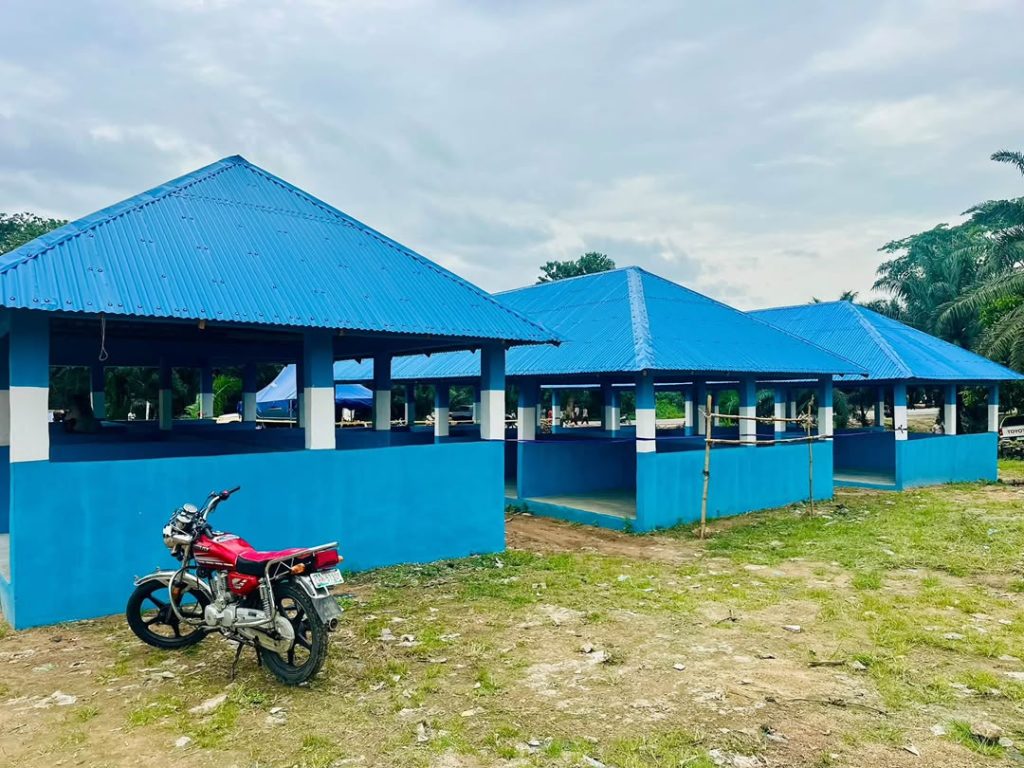
Speaking on behalf of the community, the village head, Chief Etta Ekawor, commended Ayambem for the intervention, describing the market as a miracle and a blessing that would transform the fortunes of the people.
In his remarks, Ayambem expressed appreciation to the Cross River State Governor, Senator Bassey Edet Otu, for his continued support for people-oriented projects and development initiatives across rural communities in the state.
He also thanked the people for their patience, support for his leadership and commitment to the All Progressives Congress (APC).
The Speaker was accompanied by the member representing Yala I State Constituency, Hon. Brian Odey; the Vice Chairman of Ikom Local Government Area, Hon. Maurice Ndome; and the Assistant Financial Secretary of the APC in Cross River State, Hon. Akanya Agbor.
Other stakeholders from Nde Ward who attended the commissioning included the former Vice Chairman of Ikom Local Government Area, Hon. Asinya Ntan, and the Community Relations Officer, Hon. Abang Neji.
Matthew Okache
Chief Press Secretary to the Speaker
October 22, 2026
News
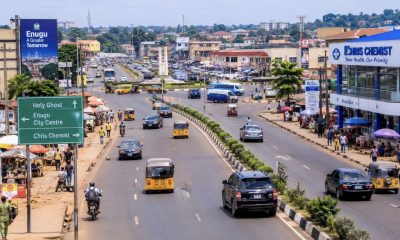
Holy Ghost Transformation: How Enugu North Chairman Ibenaku Onoh Ended Years of Traffic Chaos, Roadside Trading
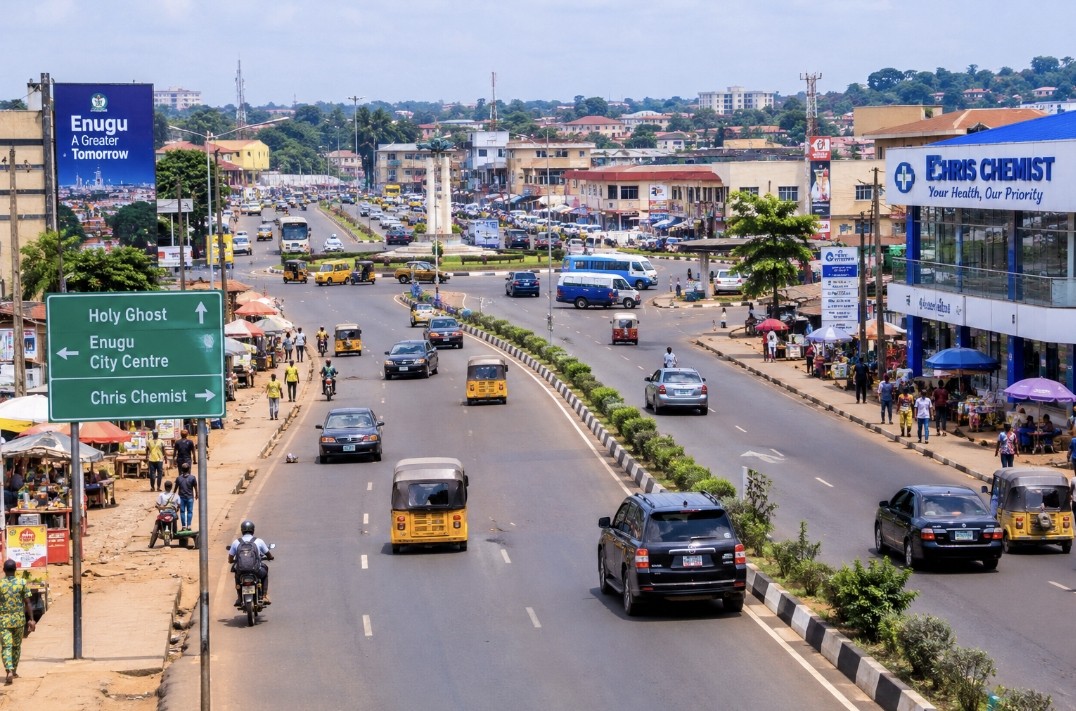
Driving through Holy Ghost and Chris Chemist Roundabout in Enugu metropolis was, until recently, a nightmare many motorists dreaded. Those who dared to navigate the busy commercial corridor often had unpleasant tales to tell.
Beyond the chaotic traffic situation, the area was notorious for rowdy and unorganised roadside trading, indiscriminate parking, commercial buses competing for passengers and the activities of illegal levy collectors who allegedly extorted motorists under various guises, including car radio licences and local government levies.
It was a situation that appeared to have defied successive interventions, leaving residents and motorists wondering whether sanity could ever return to one of Enugu’s busiest commercial districts.

Onoh, Executive Chairman Enugu North
Today, however, the Chairman of Enugu North Local Government Area, Hon. Ibenaku Onoh, appears to have achieved what many considered almost impossible.
Through a combination of political will, infrastructural adjustments and sustained enforcement, the once-chaotic Holy Ghost corridor has witnessed a remarkable transformation, with improved traffic flow and a significant reduction in the disorder that previously characterised the area.
Onoh explained that his decision to tackle the perennial congestion was inspired by the massive road rehabilitation, urban renewal and aesthetic improvements being undertaken across Enugu metropolis by Governor Peter Mbah.
According to him, having witnessed the governor’s determination to give Enugu a modern outlook through infrastructural development and beautification, he considered it necessary for the local government to key into the vision by sanitising Holy Ghost and its adjoining commercial areas.
He noted that it would amount to a contradiction for the state government to invest heavily in road rehabilitation and urban renewal while one of the city’s busiest commercial corridors remained overwhelmed by traffic congestion, illegal trading and environmental disorder.
Consequently, Onoh identified the Holy Ghost traffic situation as one of his administration’s immediate priorities upon assuming office.
He disclosed that he visited the area four times within his first week in office to personally assess the challenges before approaching Governor Mbah with a proposal to remove the Chris Chemist Roundabout.
“When I came on board, I paid attention to that area. In my first week of working here, I went there like four times. And I knew that was the problem. So I told the governor that the Chris Chemist Roundabout was a problem and that it had to go. The governor told me, go ahead and do whatever you want,” he recalled.
Armed with the governor’s approval, the council commenced the removal of the roundabout, expanded and asphalted portions of the road, and redesigned the median separating traffic moving into and out of Holy Ghost.
The chairman explained that the median had virtually become a market, with traders occupying every available space and contributing to the perennial congestion.
Rather than merely displacing the traders, his administration reconstructed the median in a manner that made it uncomfortable and unsuitable for roadside trading, thereby discouraging their return.
He also acknowledged the contribution of the new Holy Ghost transport terminal constructed by the Mbah administration, noting that commercial buses which previously clustered along the roads had been moved into the facility.
“The terminal has also helped. We thank the governor for that terminal. Some of these buses that used to cluster the road, we have now pushed them into the terminal,” he stated.
But beyond the physical transformation, Onoh identified sustained enforcement as the greatest challenge in restoring sanity to the area.
He explained that roadside traders and other operators frequently attempted to return to prohibited locations despite repeated efforts to remove them.
According to him, the situation required not only determination but also the establishment of a legal framework to deal with persistent offenders.
Consequently, the council approached the Chief Judge and subsequently enacted a by-law establishing a mobile court for the local government.
Onoh said the court provided a legal mechanism for prosecuting offenders, ensuring that resistance to enforcement would no longer end in mere confrontations with council officials.
He further alleged that some individuals had attempted to compromise enforcement efforts by offering monthly financial inducements, insisting that his administration would not sacrifice its objectives for personal gains.
“For me, I know exactly what I want, and once I see what I don’t want, I know I don’t want it. I think it is also that discipline, strength and consistency that have made us sustain it for as long as we have,” he said.
The chairman disclosed that enforcement remained a daily exercise, recalling how he recently directed his Chief Security Officer to remove wheelbarrows that had resurfaced around the council premises.
He maintained that without consistency, the gains recorded in Holy Ghost could easily be reversed by individuals determined to reclaim public spaces for unauthorised commercial activities.
Meanwhile, the council has shifted attention to another major environmental challenge in the area: indiscriminate waste disposal.
Onoh disclosed that his administration recently took delivery of about 35 large waste bins procured from Lagos, which would be deployed across the commercial district.
He explained that additional metal fabrication was being carried out to make the bins compatible with evacuation trucks operated by the Enugu State Waste Management Authority (ESWAMA).
According to him, the initiative would provide traders, residents and commuters with designated refuse disposal points before the council intensifies prosecution of environmental offenders.
“People just come and dump their waste on the road. What I have said is to give them an option. I will give you an option of where you are supposed to put waste. But when you don’t do it, by the time we take you to mobile court and have you arraigned there, you will know that you had an option,” he explained.
For motorists familiar with the old Holy Ghost, the difference is striking. What was once regarded as an unavoidable traffic nightmare is gradually becoming an example of how local government leadership can complement the urban renewal agenda of the state government.
For Onoh, however, the achievement is not merely about removing a roundabout or displacing roadside traders. It is about ensuring that the massive investments being made by Governor Mbah in transforming the Enugu capital are complemented by discipline, environmental responsibility and orderliness at the grassroots.
The challenge now is to sustain the transformation and ensure that the disorder which once defined the Holy Ghost and Chris Chemist corridor does not return.

By Chinedu Sabastine
The Enugu State House of Assembly has thrown its weight behind the establishment of state police, saying decentralising the country’s policing architecture would improve security and strengthen the protection of lives and property.
The lawmakers expressed their positions on Tuesday, November 20 during plenary while considering a proposed constitutional amendment to provide for the establishment of State Police Service and related matters.
Supporting the proposal, the member representing Ezeagu Constituency, Hon. Chima Obieze, said the establishment of state police would make policing more effective by bringing security operations closer to the people.
According to him, “The establishment of State Police will decentralise the policing architecture of the country and make it more effective in the protection of lives and property across the state.”
Similarly, the member representing Nkanu East Constituency, Hon. Okey Mbah, said state police could help tackle recurring security challenges, including violence and attacks attributed to herders in different parts of the state.
Mbah maintained that a decentralised policing system would enable authorities to respond more effectively to security threats within their respective communities.
He said the establishment of state police would help “curtail incessant violence and herdsmen attacks in different parts of the state.”
However, the member representing Igbo-Eze South Constituency, Hon. Harrison Ogara, cautioned that the proposed state police system could be abused by political officeholders if adequate safeguards were not established.
Ogara expressed concern that state police formations might be used to intimidate political opponents, stressing that effective oversight and accountability mechanisms were necessary to protect the institution from political interference.
He said, “State Police formations could be used to intimidate political opponents if adequate safeguards are not put in place.”
The lawmaker also called for professional standards, transparent accountability structures and sustainable funding arrangements to ensure that state police personnel discharge their duties without undue political influence.
According to him, effective oversight would be essential to ensuring that the proposed security structure serves the public interest rather than the interests of those in power.
The Speaker of the House, Chief Uche Ugwu, said the proposed changes to the naming of Nigeria’s policing institutions could also influence institutional orientation and the attitudes of personnel.
The proposal includes changing the name of the Nigeria Police Force to the Federal Police Service, alongside the establishment of the State Police Service.
Ugwu said the changes could contribute to a shift in institutional orientation and personnel attitudes, potentially improving the delivery of policing services.
The proposed constitutional amendment comes amid growing calls for the decentralisation of Nigeria’s security architecture to enable states to respond more effectively to local security challenges.
Proponents argue that state police would improve intelligence gathering and response times, while critics have raised concerns about possible political abuse, inadequate funding and the need for strong accountability mechanisms.
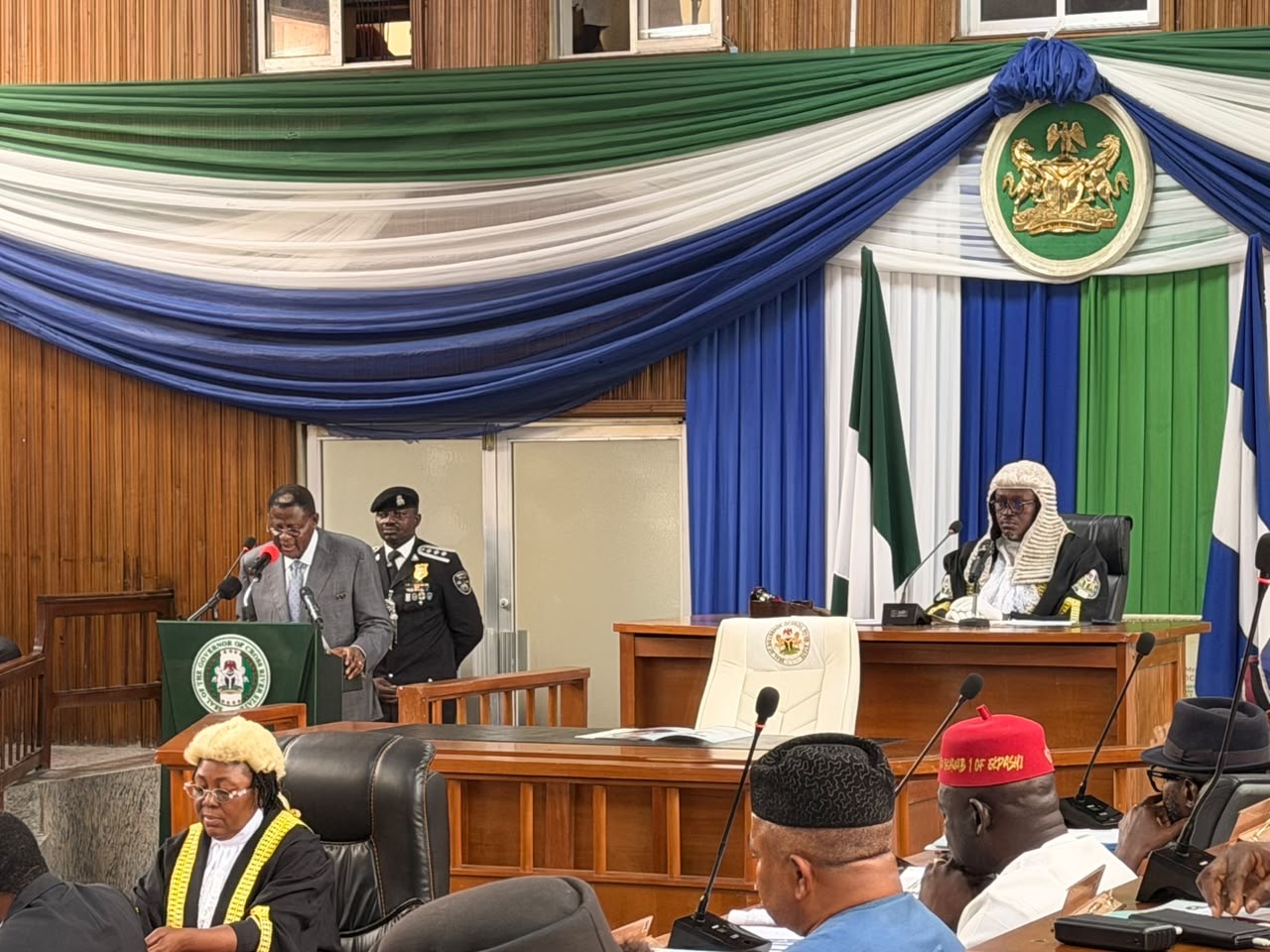
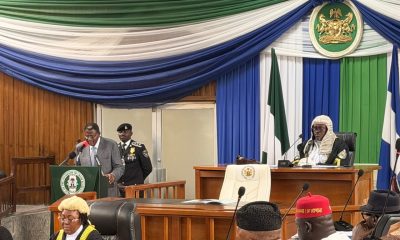
Cross River State Governor, Senator Bassey Edet Otu, has presented a proposed budget of ₦987, 808, 089, 235.92bn for the 2027 fiscal year christened: The Budget of Consolidation and Renewed Hope.
Presenting the budget before the lawmakers at the Assembly Complex in Calabar, Governor Otu described the proposed estimates as ” a Solemn and sacred pact laden with the trust, expectation and aspiration of the people for their improved livelihoods”.
The 2027 proposed budget represents an increase of about 2.57 percent increase over the 2026 budget was prepared to consolidate the achievements of his administration while addressing critical developmental needs in key sectors of the state’s economy.
According to him, the proposed expenditure comprises ₦279.38 bn or 28.28 percent for recurrent expenditure and ₦708.43 bn for capital expenditure, representing 71.72 per cent of the total budget respectively.
He explained that the substantial capital allocation reflects his administration’s commitment to prioritise infrastructure, human capital development and productive investment to stimulate economic activities.
On the state’s debt profile, Governor Otu disclosed that his administration had refrained from domestic and external loans since assumption of office stressing that debt servicing from previous administrations had constrained the pace of development projects.
” I cannot, and will never mortgage the future of our children with unsustainable loans”. He declared.
On sectoral allocations, the Governor stated that ₦246.1bn had been earmarked for infrastructure and road development, followed by education with #99.6 to strengthen educational infrastructure and improve the quality of learning across the state.
The health sector is projected to receive ₦85.4bn to improve healthcare delivery, agriculture has #28.2bn and aviation #21.8bn.
Other provisions include #20.2 bn for the House of Assembly, #19.1bn for the Judiciary, #16.6bn for power and #11.3 bn for Tourism.
The Governor assured that the budget will continue to align with the United Nations Sustainable Development Goals while promising continuity in uncompleted projects. He also pledged continued investment in forest conservation and the green economy, Judicial Infrastructure, security and youth empowerment.
Governor Otu further highlighted his administration’s plans to improve internally generated revenue, attract private-sector investment and strengthen fiscal discipline to ensure effective implementation of the budget.
“My administration shall continue to be responsive to the yearnings of the citizenry, prudent in the management of the State’s resources and accountable to the people. l will continue to work with the legislature and Judiciary for the betterment of the State.”
He commended the 10th Assembly for hardwork and urged the lawmakers to give the proposed estimates the necessary legislative consideration and speedy passage to facilitate the timely execution of government programmes and projects.
In his remarks, the Speaker of the Cross River State House of Assembly, Rt. Hon. Elvert Ayambem, commended the Governor for presenting the budget which demonstrates his respect for democratic institutions. He assured Governor Otu of the Assembly’s commitment to a thorough legislative examination of the estimates.
The Speaker said the House would scrutinise the proposals to ensure that the budget reflect the needs and aspirations of Cross Riverians as well as promote transparency and accountability in public expenditure.
” I wish to assure you, your Excellency and the good people of Cross River State that this Assembly will subject the estimates to thorough, rigorous and expeditious scrutiny”.
Speaker Ayambem assured that the Assembly will engage with Ministries, Departments and Agencies (MDAs) to ensure that the budget promotes even development across the State and is implemented within available resources.
He commended the Governor for zero tolerance for cultism, kidnapping, and other social vices which has restored peace and tranquility in the State adding that the 10th Assembly remains committed to providing robust legislative support to the Executive for the benefit of Cross Riverians.
“We have passed critical bills and motions aimed at strengthening governance, improving the ease of doing business and ensuring the welfare and security of Cross Riverians. We have diligently performed our oversight functions to ensure that projects and programmes captured in the 2026 Budget are executed to specification for the benefit of our people.
He hailed Governor Otu for his achievements in the various sectors of the state while appealing for the Governor’s assistance in the comprehensive renovation of the Assembly Complex and Quarters as well as the provision of buses for the Assembly’s use.
The event featured presentation and cutting of birthday cake by the Governor who recently turned 67 years as well as good will messages from Rt Hon Hillary Bisong (Boki 2) and Rt Hon Davies Etta (Abi ) and a vote of thanks from the Leader of the House, Rt Hon FrancisBasseyAsuqu ( Odukpani).
Present at the event were; the Deputy Governor, Rt Hon Peter Agbe Odey, the Secretary to the State Government, Prof Anthony Owan-Eno, Service Chiefs, Members of the State Executive Council, Chairman and Members of the Assembly Service Commission amongst other dignitaries.
The 2027 budget estimates will undergo the necessary legislative processes in line with constitutional provisions before its passage.

-
 News3 days ago
C’RIVER 2027 BUDGET: GOV OTU PRESENTS ₦987.8bn ESTIMATES TO ASSEMBLY
-
 Politics5 days ago
2027: Nigeria Risks Civil War If Election Results Are Manipulated, Pat Utomi Warns
-
 Politics5 days ago
2027: Igbo Presidency Not Subject to Anyone’s Approval, Onoh Tackles Sowunmi
-

 EverydayNews Telescope3 days ago
Enugu East Senate: The Dark Side of Ada Ogbu, NDC Candidate
-
 News5 days ago
BREAKING: Former Delta Governor, Emmanuel Uduaghan, Dies at 71
-

 Opinion5 days ago
Christian Chinyeaka Ohaa: THE BUTTERFLY THAT THINKS IT’S A BIRD!
-
 News4 days ago
Tension Mounts in Awka Anglican Diocese as Supervising Bishop Ezeofor Moves to Take Over Wednesday
-
 News2 days ago
Holy Ghost Transformation: How Enugu North Chairman Ibenaku Onoh Ended Years of Traffic Chaos, Roadside Trading