



Crime
Exposed: How drug pushers plant cocaine, others on air travellers

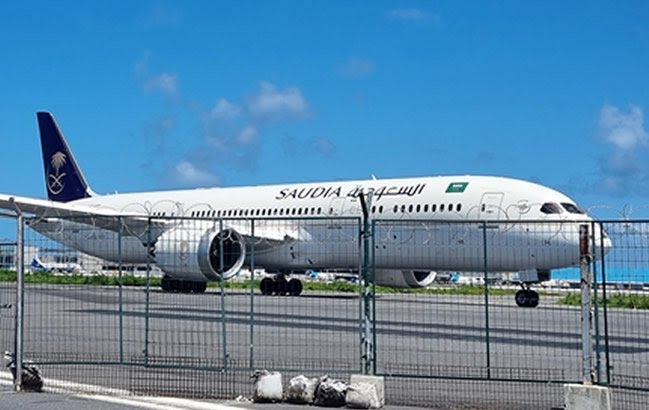

The viral video which captured the employee being manhandled by the passenger who billed to travel to Accra, Ghana, was first posted on Thursday, January 18, by an X information and commentary page named Sabi Radio.
The traveller caused a scene at the airport alleging that one of the employees, later identified as Ugochukwu, attempted to use him to smuggle what he believed to be illicit drugs hidden in a parcel.
The flyer, it was gathered, was approached by Ugochukwu while at the airport who asked him to deliver a parcel which he claimed was a medication to an individual at his destination.
A caption attached to the 16-second video which garnered over 5.1 million views on Sabi Radio as of Wednesday afternoon, read, “That’s how a stupid FAAN staff (sic) tried to set us up to smuggle drugs, today. A whole (sic) Port Harcourt boy.”

The passenger, in an X post accompanying the video, opined that if he had not raised the alarm and rattled the airport, his picture would have been posted everywhere by the National Drug Law Enforcement Agency accusing him of being a drug trafficker.
“Either (sic) it is their usual operation to set people up but they know they jammed (sic) their match today. As I begin razz the whole airport, them know say person dey.
“That’s how my life would have gone like that. Una for see my picture for everywhere for NDLEA says I smuggle drug for an international airport.
“Innocent people are jailed daily through this method but they jam (sic) their match today. The NDLEA personnel were not acting shocked. Y’all (sic) need to be careful at these airports,” he wrote, in a post interspersed with Pidgin English.
In the video sighted by our correspondent, Ugochukwu could be seen kneeling before the miffed passenger and trying to explain himself to two other onlookers.
“I didn’t even open the drug; I just saw this man and told him to please help me,” he was heard saying as the angry air passenger charged at him.
“Tell me the f***ing content of this drug,” the traveller interrupted, slapping Ugochukwu across the face.
Mixed reactions
Many Nigerians took to social media in response to the video. Some said that such an action could have led to the false accusation of drug trafficking against numerous innocent persons while other netizens argued that it was not a case of drug smuggling since the airport’s screening machine had cleared the passenger’s luggage.
One of them, a travel agent, Lucky Ehiorobo, claimed that a false narrative had been added to the story.
“This happened since Tuesday. He (airport worker) didn’t put the medicine (sic) in the pocket of the passenger, please. The staff (sic) asked the man to help him carry some vitamin supplements to Accra and give them to someone there. The passenger agreed and collected the package.
“The so-called drugs passed through the screening machine and checkpoints all cleared it. It was when the man was boarding and he had the fear of not knowing the content of the medicine (sic) that he started acting up. It was not drug smuggling, please be guided,” Ehiorobo wrote.
Conversely, an X user, @Gidi_Traffic said the incident could be more serious than it looked and a plot to incriminate an innocent traveller.
“According to our sources, in cases like these, there’s a standby corrupt NDLEA operative on the receiving end waiting to arrest the innocent traveller on a low key.
“In some instances, the receiver tracks the luggage and takes the merchandise, either by stealing the entire luggage or in some extreme cases, kidnapping, killing the passenger and making it seem like a robbery!
“If the passenger is not lucky and is stopped by security, well then, passengers are unfortunately criminalised, paraded on national TV and legally sentenced for crimes they didn’t commit. The airport CCTV footage could be having selective amnesia and may not help your case,” the netizen wrote.
Meanwhile, a British lawyer on X, Baron Chymaker, pointed out that he had witnessed a Nigerian face the consequences of illicit substances stuffed into his luggage.
He wrote, “We had a drug case a few years ago, and the defendant, who came from Nigeria, swore and cried profusely that he was not the owner of the drug and sincerely was (not) aware of how that drug got to his luggage, but none of us believed him.
“Since I saw this video, I (have) felt maybe, just maybe, we didn’t do our best for him, and he may have been a victim.”
Another X user and legal practitioner, Usman Shamaki, said the MMIA incident should lead to a review of all drug trafficking arrests made by the National Drug Law Enforcement Agency.
“In a sane society, this incident should immediately trigger a review of all arrests and convictions, as well as an investigation into all officials at the airport. But this is Nigeria. We’ll just say, ‘Oh well’ and move on,” he wrote.
FAAN responds
However, in its response to the viral video, the Federal Airport Authority of Nigeria, in a statement signed by its Director of Public Affairs and Consumer Protection, Mrs Obiageli Orah, on Thursday, disclosed that Ugochukwu was not an employee of the agency but a private company that worked with airlines.
It also said the item with the name, ‘New Age Glucosamine Chondroitin Sulfate Complex’ was taken to the NDLEA for further investigation.
The statement read partly, “The Authority wishes to set the records straight by stating that the officer being manhandled in the video is not a staff of FAAN. He has been identified as a member of the staff of Pathfinder Company.
“The employee was said to have approached a passenger to help him convey a parcel through the flight. When the passenger became sceptical, he raised the alarm, alleging that he was being set up for drug trafficking.
“The employee was immediately arrested for questioning by the Crime Investigation and Intelligence Unit of the Aviation Security Services.
“The passenger involved has since departed on Ibom Air to Accra while the medication with the name ‘New Age Glucosamine Chondroitin Sulfate Complex’ has been taken to the National Drug Law Enforcement Agency for further investigation.”
Tramadol owner, airline worker arrested
But two later, the spokesperson of the NDLEA, Femi Babafemi, revealed that though an investigation was ongoing, the substances had been tested and one of them was found to test positive for tramadol, an opioid pain medication.
“Both the consignment and the suspect are already with the NDLEA. We have tested the two substances and a formal investigation is still going on, but one of the substances tested positive for tramadol and the other one is a supplement. We have arrested a lot of people like that,” he added.
On January 21, Babafemi, in a statement, disclosed that the parcel which Ugochukwu gave to the traveller contained 50 pills of tramadol concealed in the bottle of dietary supplement.
He added that the suspected owner of the opioid medicine was arrested upon his return from Ghana along with Ugochukwu.
“NDLEA operatives on Friday, January 19 arrested one Okosun Paul Punitt, the consignee of a consignment of tramadol concealed in a bottle of dietary supplements, which a staff (member) of Pathfinder International Ltd, Ajuzieogu Mac-Elvis Ugochukwu attempted sending through an intending passenger on Ibom Air to Accra, Ghana at the Lagos airport on Tuesday, January 16.
“A video of the face-off between the passenger and Ajuzieogu later went viral after the vigilant passenger suspected the consignment contained illicit substances.
“Both Ajuzieogu and the exhibit were later transferred to NDLEA on Thursday, January 18 by the FAAN for investigation.
“Preliminary findings by NDLEA showed the parcel contained 50 pills of tramadol 225mg concealed in a bottle of dietary supplements.
“A follow-up operation by the agency led to the arrest of Okosun upon his return from Ghana on Friday. He has in his statement confirmed ownership of the drug,” the statement read in part.
Why is tramadol abused?
According to a fact sheet published by the United Nations Office on Drugs and Crime and the European Union, tramadol is a prescription medicine used to treat immediate and long-term pain of moderate to moderately severe intensity.
“It is a synthetic (man-made) opioid, which has actions similar to those of morphine. Tramadol is currently the most common non-medically used opioid in Nigeria. In Nigeria, tramadol is available in tablet, capsule or liquid form,” the report added.
Speaking with Sunday PUNCH, a clinical pharmacist, James Ucheaga, explained that while tramadol was legal in the country, it was often sought by many drug users and traffickers due to its psychological side effects.
He explained, “Tramadol is mostly taken orally, but sometimes injected. Tramadol is typically prescribed in medical dosages of 50 and 100 milligrammes, both internationally and in Nigeria.
“When taken for non-medical purposes or without a prescription, tramadol frequently surpasses the dosage that is advised by doctors. Tramadol dosages of 200 mg, 225 mg, 300 mg, 400 mg, 500 mg, and higher are available on the black market in Nigeria.
“Many people abuse it because it produces feelings of ‘high,’ intense happiness, and excitement, alters the mood and also alters feelings of fear and pain.
“The medicine also produces increased energy, and decreased alertness and makes people feel relaxed.”
Ucheaga, however, added that the tramadol in the recent incident at the hospital might have been packed together with the Glucosamine supplements because of their pain-relieving effect.
“Glucosamine Chondroitin Sulphates are minerals that are usually found in bones, cartilage, and joint supplements. This medication helps to alleviate pains in the joints and bones.
“But in 2019, the Arthritis Foundation recommended that the medication shouldn’t be used alone for people with osteoarthritis but should be combined with a pain reliever.
Drug cartels using passengers as mules
Commenting on the tactic of planting drugs on passengers, an employee of a travel agency, Busayo Ajala, told our correspondent that though some airport workers often asked travellers to help them deliver parcels, travellers ought to be vigilant.
“Passengers just need to be on the alert to know what is in such parcels and I heard this was what happened in this case. It could be dangerous because some drug traffickers use this tactic to convert innocent travellers into drug mules.
“Some of these traffickers will not let you know, they will just use you as a mule. That’s why when travelling, padlock all pockets even if you don’t put any valuables in there.
“Better still, buy luggage without many pockets outside your luggage. Unscrupulous elements can go to great lengths, but we must be vigilant during international flights,” Ajala added.
A YouTube video shared by Roots TV Nigeria illustrated how drug cartels could break the zipper of a piece of luggage and open up the travel bag without breaking the lock.
In the video, the tip of a pen was inserted into the teeth of the zipper and this opened the zipper fully and made the luggage open to the possible introduction of illicit substances by a desperate trafficker.
A Nigerian researcher based in Germany, Francis Odianose, told our correspondent in a chat that a person could be arrested for drug trafficking even when they were merely a mule unknowingly used by a cartel.
He said, “Some of these people could tell you that you should help them hold their luggage and that they want to go to the restroom. Don’t ever accept it.
“That’s one trick they can use to divert attention towards you as security personnel will be alerted to you so that they can get away with their real possessions.
“And don’t ever leave your luggage unattended, or only entrust it with someone whom you truly trust. Some of them can approach you with money too.
“The best plan is to go to the security of the airport and say that you’ve found an unknown package in your bag and turn it in. You might be delayed and miss your flight, but it’s better than if they find drugs on you.”
Different shades of dark art
In 2022, the NDLEA arrested a 27-year-old drug trafficker, Opoola Mujidat, who planted illegal drugs concealed in local bowls containing “scary native black soap and sponge” on two Oman-bound male passengers at the departure hall of the MMIA in Lagos.
The passengers, Raji Kazeem and Akinbobola Omoniyi, were reportedly travelling together to Oman on an Ethiopian Airline flight in July when they were intercepted by NDLEA operatives at the airport.
The spokesman for the agency, Femi Babafemi, in a statement, noted that both Kazeem and Omoniyi immediately alerted the anti-narcotic officers that Mujidat, who was still within the vicinity, had given them the bag containing the illicit substance at the airport before she was arrested.
In the same month in 2022, an attempt by a human trafficker, Matthew Bassey, to use an orphan, Gift Eno, to smuggle an illicit drug to Dubai, the United Arab Emirates, was also thwarted by the operatives of the NDLEA.
In a statement, Babafemi disclosed that Bassey who had already recruited Eno for a phantom job in the Arab country was arrested following the interception of Eno at the departure hall of the MMIA in Lagos.
When Eno’s luggage was searched, 50 parcels of cannabis (2.8 kg) concealed in food items were discovered, and there were discrepancies between the age she declared and the date of birth on her international passport.
Bassey, who was said to be lurking around the airport, waiting for Eno’s departure was promptly tracked by the officials and arrested.
Babafemi said it was further discovered that the recruiter leveraged Eno’s naivety and planted the drugs in her bag for onward delivery to his contact in Dubai.
In 2019, the NDLEA announced that it had nabbed an airport cartel which specialised in planting drugs on passengers.
The then chairman of the NDLEA, Col. Muhammad Abdallah (retd.), said the cartel was uncovered after detectives embarked on an investigation of a Nigerian lady identified as Zainab Aliyu, who was accused of entering Saudi Arabia with tramadol.
On December 26, 2018, Zainab was arrested by Saudi Arabia police shortly after she arrived for lesser Hajj, over allegations that a luggage bearing her name tag contained the unlawful substance.
However, while in detention, the NDLEA received a petition from her father, seeking a probe of his daughter’s ordeal.
Consequently, the NDLEA commander launched an investigation, which culminated in the arrest and arraignment of seven staff members of the airport.
The accused were identified as Idris Umar Shehu, Sanni Suleiman, Nuhu Adamu, Rhoda Adetunji, Udosen Itoro Henry and Sanni Hamisu.
The cartel had reportedly planted the tramadol-bearing luggage on Zainab.
It was further established that Zainab, who had only a piece of luggage, was not aware that a second bag had been labelled in her name.
Speaking of Zainab’s case, then-permanent secretary of the Ministry of Foreign Affairs, Mustapha Sulaiman, said, “We piled pressure and there have been discussions at various levels between the Ministry of Foreign Affairs and Saudi authorities.
“The ministry used all available diplomatic channels to secure her release.”
He explained that an investigation by the Federal Government revealed that a drug cartel in Nigeria placed the drugs in her bag, leading to her arrest in Jeddah.
This discovery by the NDLEA raised concerns that some Nigerians arrested and executed for drug trafficking in Saudi Arabia might have been innocent.
Russian used by Nigerian lover
In 2017, a 30-year-old Russian woman, Maria Dapirka, who was accused of being a cocaine mule faced the death penalty in Vietnam.
But Dapirka stated that she was set up by her Nigerian lover, identified as Nick, also known as ‘Chib Eze’, who posed as a top footballer.
Dapirka, who lived in Thailand, was caught with almost 3kg of cocaine by Vietnamese customs on a flight from Singapore.
She said the cocaine was planted in her luggage by Nick who had a penchant for seducing attractive young women before conning them into becoming drug couriers.
Although Dapirka’s execution was overturned, an online report published on February 7, 2021, and sighted by our correspondent on Wednesday, said she was sentenced to life imprisonment.




A police corporal attached to the Ajaokuta Division of the Kogi State Police Command has reportedly shot his girlfriend dead before taking his own life with his service rifle.
The incident allegedly occurred around 9 p.m. on Friday, October 23, 2026, leaving both the officer and the woman dead.
According to a report by Veracity News, the officer allegedly shot the woman at close range before turning the weapon on himself.
The circumstances surrounding the incident remain unclear, while the motive behind the alleged killings has yet to be established.
The bodies of the deceased were reportedly evacuated to a mortuary as investigations into the incident commenced.
Efforts to obtain an official reaction from the Kogi State Police Command were unsuccessful, as the command’s Public Relations Officer, ASP Saliu Afusat, could not be reached for comment, according to the publication.
The incident is expected to be investigated to establish the circumstances leading to the deaths and determine the events that preceded the shooting.
As of the time of filing this report, no further details about the identities of the deceased or the outcome of the investigation had been provided in the original report.
Editor’s note: The incident and details in this report have not been independently verified. An official statement from the Kogi State Police Command would be needed to confirm the circumstances of the deaths.

A young woman identified as Messioma Nwaora, who was earlier reported missing, has reportedly been found dead in Uga, Aguata Local Government Area of Anambra State.
Unverified reports circulating on social media allege that her former boyfriend, identified as Chima Emmanuel and said to be from Ebonyi State, killed her after she ended their relationship. The reports further claim that he strangled her with clothing, placed her body in a bag and transported it on a commercial motorcycle, popularly known as an okada.
The alleged confession and the circumstances surrounding the woman’s death have not been independently verified. Therefore, it cannot be conclusively established that the former boyfriend killed her.
As of the time of filing this report, the Anambra State Police Command had not issued an independently confirmed statement establishing the cause of death, confirming the identity of the deceased or stating whether a suspect had been arrested.
The reported death has prompted calls for a thorough investigation. Outstanding questions include where the body was recovered, how the woman died, whether Chima Emmanuel has been detained and whether investigators have obtained evidence linking him to the incident.
Further details are expected as reliable information becomes available.

A birthday party organised by popular Enugu socialite Nnaji Izuchukwu, popularly known as Stone, at Bull Hotel, Asata, Enugu, reportedly turned chaotic following a misunderstanding that allegedly prompted the hotel management to invite the police.
Stone, who was the celebrant, reportedly died from gunshot injuries sustained during the ensuing police operation.
Information available to Everydaynewsngr.net indicated that the misunderstanding at the birthday party degenerated into chaos, prompting the hotel management to call in operatives of the police Anti-Cultism Section.
In the confusion that followed, Stone was said to have attempted to escape through a window alongside another person before he sustained gunshot injuries.
However, the exact circumstances surrounding the shooting remained unclear as of the time of filing this report.
The Enugu State Police Command has since confirmed Stone’s death and ordered an investigation into the incident.
In a press release issued on Friday, October 23, 2026, the command said the Commissioner of Police, CP Mamman Bitrus Giwa, had directed a thorough investigation to establish the circumstances surrounding the death and determine whether the operation and use of firearms complied with established operational standards and applicable laws.
According to the police, operatives of the Anti-Cultism Section of the Violent Crime Response Unit (VCRU) stormed Bull Hotel during an intelligence-led operation targeting Nworie Chidera Kelvin, popularly known as Akidi, an alleged drug dealer and member of the Vikings Confraternity.
The police said Akidi was suspected of involvement in several cases relating to cultism and unlawful possession of firearms.
The operation reportedly led to the arrest of Akidi and nine other suspects, comprising males and females aged between 17 and 28.
The police also said quantities of dried weeds suspected to be cannabis, a weighing scale allegedly used for measuring illicit drugs, and ₦43,400 in cash were recovered during the operation.
Giving its account of how Stone died, the command said preliminary findings indicated that he and another suspect jumped through a window in an attempt to escape.
The statement added that an operative pursuing the two suspects was allegedly confronted by them as they attempted to disarm him.
According to the police, the officer’s firearm discharged during the ensuing struggle, leaving Stone with gunshot injuries, while the other suspect escaped.
Stone was rushed to a hospital, where he was later confirmed dead. His remains have been deposited in a mortuary for preservation and autopsy.
CP Giwa has directed the Assistant Commissioner of Police in charge of the State Intelligence Department to establish the facts of the incident and determine whether the officers involved complied with operational standards and applicable laws.
The commissioner assured that any officer found culpable would face appropriate disciplinary action.
He also urged Stone’s family, associates and members of the public to remain calm, stressing that professionalism, ethical conduct and strict adherence to operational standards, particularly those governing the use of firearms, must be upheld during police operations.
The police statement was signed by the Command’s Public Relations Officer, SP Daniel Ndukwe, on October 23, 2026.

The Nigerian Correctional Service (NCoS), Edo State Command, has launched a manhunt for a 28-year-old awaiting-trial inmate, Osita Thomas, who escaped while being taken to court for trial.
Thomas, an inmate of the Medium Security Custodial Centre, Auchi, reportedly escaped last week during a court appearance over charges bordering on conspiracy and stealing.
The Command’s Public Relations Officer, Aminu Suleman, disclosed the development in a statement dated October 21, 2026, and made available to journalists in Benin City on Thursday.
Suleman said the Controller of Corrections in Edo State had directed intensified efforts towards apprehending the fugitive, assuring residents that security measures across custodial facilities had been strengthened to prevent similar incidents.
The Command appealed to members of the public with useful information about Thomas’s whereabouts to report to the nearest police station or custodial centre.
It also released two telephone numbers, 08038075882 and 08039243704, through which information could be provided to security authorities.
Meanwhile, an official of the Correctional Service attributed the escape to inadequate manpower, explaining that the officer escorting Thomas to court could not abandon other inmates in his custody to pursue the fleeing suspect.
According to the official, pursuing Thomas would have exposed the remaining inmates to possible escape.
The official further raised concerns over worsening personnel shortages in the Service, alleging that more than 1,000 officers were expected to retire this year without corresponding plans for fresh recruitment.
He called on the Federal Government to urgently address the manpower deficit, warning that inadequate personnel could continue to undermine the effective management and security of custodial facilities across the country.
An alleged employment racket involving 21 job seekers and N8.29 million has landed an Enugu-based businesswoman, Stella Ezinne Egotanwa, in the net of the Economic and Financial Crimes Commission (EFCC).
The 45-year-old businesswoman is being investigated for allegedly collecting money from unsuspecting applicants under the guise of securing employment for them at a psychiatric hospital in Enugu State.
The EFCC, in a statement posted on its official X handle on Tuesday, October 20, 2026, disclosed that the suspect allegedly collected the money between December 28, 2025, and June 30, 2026, through bank accounts belonging to different Point of Sale (POS) operators.
According to the commission, trouble began for Egotanwa when 16 aggrieved job seekers petitioned the Nigeria Security and Civil Defence Corps (NSCDC), accusing her of collecting N6.193 million from them without delivering the promised jobs.
The petition subsequently led to her arrest by NSCDC operatives in Anambra State on July 30, 2026.
However, the case took another dimension when five additional victims approached the EFCC, alleging that the businesswoman had similarly defrauded them of N2,098,200 through promises of employment at the same hospital.
The fresh petitions brought the number of alleged victims to 21, with the total amount involved rising to N8,291,200.
One of the victims, who narrated his ordeal to investigators, claimed to have paid Egotanwa N1.05 million on December 28, 2025, believing that she had the connections to secure the promised employment.
“I made the payment in good faith because I believed that the employment opportunity she presented to me was genuine.
“However, after making the payment, the promised employment did not materialise. I subsequently experienced difficulty reaching her and there were periods she did not respond to my calls or messages,” the petitioner stated.
The anti-graft agency further disclosed that Egotanwa was already awaiting trial in a separate case involving a similar alleged employment scam.
It added that the suspect had admitted to the alleged offence during interrogation and would be arraigned in court upon the conclusion of investigations.
The EFCC maintained that investigations were ongoing to establish the full circumstances surrounding the alleged fraudulent recruitment scheme.
Clarify the EFCC’s role in her arrest
Use consistent language for alleged victims
Tighten the opening for stronger impact

-
 News4 days ago
C’RIVER 2027 BUDGET: GOV OTU PRESENTS ₦987.8bn ESTIMATES TO ASSEMBLY
-

 EverydayNews Telescope4 days ago
Enugu East Senate: The Dark Side of Ada Ogbu, NDC Candidate
-

 News3 days ago
Holy Ghost Transformation: How Enugu North Chairman Ibenaku Onoh Ended Years of Traffic Chaos, Roadside Trading
-

 EverydayNews Telescope4 days ago
Ebonyi 2027: The People’s Quest For ODII Vs Compromised Stakeholders
-
 Politics2 days ago
One Feared Dead, Several Injured as Thugs Attack Ebonyi NDC Assembly Candidate, Burn Campaign Vehicle
-
 News5 days ago
Cross River Assembly Passes State Police Bill with 22 Votes
-
 Politics4 days ago
2027: Tinubu Has No Hand in Alleged Assassination Plot Against Atiku – APC
-

 Health4 days ago
Abuja Ebola case: Enugu Govt strengthens surveillance, puts health officials on alert