



Crime
Emefiele operated 593 illegal US, UK, China accounts – CBN investigator

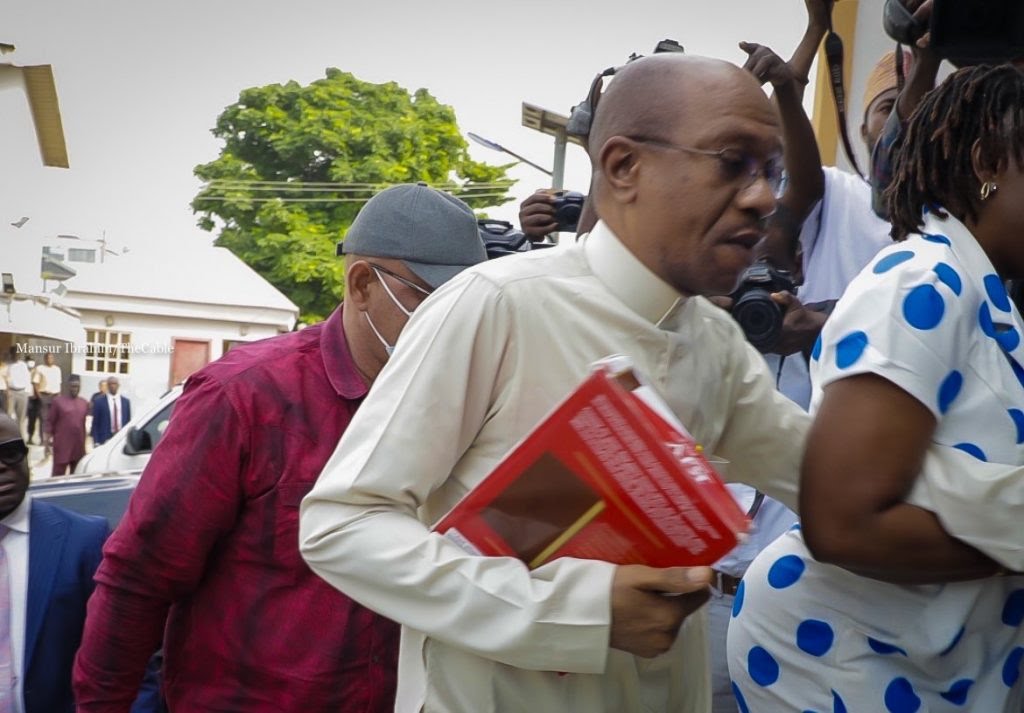

The Special Investigator on the CBN and Related Entities, Jim Obaze, found that the ex-CBN governor lodged £543, 482,213 in fixed deposits in UK banks alone without authorisation.
When contacted, counsel for Emefiele, Mathew Bukkaa, SAN, asked one of our correspondents to send him a text message. He has yet to reply to the message as of the time of filing this report.
Meanwhile, Obaze submitted his final report tagged, ‘Report of the Special Investigation on CBN and Related Entities (Chargeable offences) to President Bola Tinubu on Wednesday.
The report partly read, “The former governor of CBN, Godwin Emefiele invested Nigeria’s money without authorization in 593 foreign bank accounts in United States, China and United Kingdom, while he was in charge.

“All the accounts where the billions were lodged have all been traced by the investigator.”
In a letter dated July 28, 2023, President Bola Tinubu had named a former Executive Secretary of the Financial Reporting Council of Nigeria, Obazee, as the CBN special investigator
Emefiele, who is currently in Kuje Custodial Centre, is being prosecuted for N1.2 billion procurement fraud.
He has not been able to perfect the N300m bail granted him by a High Court of the Federal Capital Territory on November 22.
However, documents obtained by our correspondent on Thursday indicated that the former apex bank governor might face fresh criminal charges over the handling of the CBN naira redesign policy.
Emefiele could be prosecuted for illegal issuance of currency under section 19 of the CBN Act alongside Tunde Sabiu, a former aide to former President Muhammadu Buhari, and 12 top directors of the CBN.
It was gathered that the naira redesign policy was sold to Buhari at the instance of Sabiu and that the initiative was done without the approval of the board of the CBN.
No approval
The investigator found that Buhari didn’t approve of the naira redesign. It was Tunde Sabiu who first told Emefiele in September 2022 to consider the redesign of the naira. On October 6, 2022, Emefiele wrote to Buhari that he wanted to redesign and reconfigure N1000, N500 and N200 notes.
“The former President tagged along but did not approve the redesign as required by law. Buhari merely approved that the currency be printed in Nigeria. The redesign was only mentioned to the board of the CBN on December 15, 2022, after Emefiele had awarded the contract to the Nigerian Security Printing and Minting Plc on October 31, 2022,’’ the documents noted.
Emefiele was said to have contracted the redesign of the naira to De La Rue of the UK for £205, 000 pounds under the vote head of the Currency Operations Department after the NSPM said it could not deliver the contract within a short timeframe.
The special investigator found that N61.5bn was earmarked for the printing of the new notes out of which N31.79bn had been paid.
As of August 9, 2023, findings revealed that N769bn of the new notes were in circulation.
The probe of the CBN also revealed the fraudulent use of N26.627tn Ways and Means of the Apex Bank as well as the misuse of the COVID-19 intervention fund.
For instance, the CBN under Emefiele at its 661st meeting held on October 27, 2020, approved that the Consolidated Revenue Fund Account should be debited with the sum of N124.860bn, and the decision was implemented on October 9.
Similarly, the Committee of Governors at its 670th meeting held on December 9, 2020, granted anticipatory approval ‘’pending receipt of a formal request by Mr President and ratification by the board of directors the payment of the sum of N250bn only to the Federal Government of Nigeria to address challenges as a result of low revenue inflow and the payment of salaries.
The decision was implemented on December 15, 2020.
Anticipatory approval
Also on December 30, 2020, the committee of governors at its 672nd meeting granted another anticipatory approval for N250bn to the Federal Government for payment of salaries pending receipt of a formal request by Mr President and ratification by the board of directors.
The apex bank’s management through the Finance and General Purpose Committee equally granted anticipatory approval on the investment of $200mn in equity warrants of the Africa Finance Corporation.
The section also provides that such advances are to be repaid by the end of the financial year in which they are granted otherwise, the CBN shall be stopped from granting such advances in the subsequent year.
The advance is not to be repaid by way of promissory note, securitization or issuance of treasury bills.
The CBN investigator discovered that the CBN Ways and Means was abused under the Buhari administration.
The document further said, “In an instance, they (senior CBN and government officials) padded what the former President Muhammadu Buhari approved with N198,963,162, 187. There are instances where no approvals are received from the former president and yet, N500bn is taken and debited to Ways and Means.
“There are more shocking instances where the erstwhile CBN governor and his four deputy governors connived to steal outright in order to balance the books of the CBN.
“This was by violently taking money from the Consolidated Revenue account and then charging it to Ways and Means. It was a total of N124.860bn. They even created the narration as a presidential subsidy and expanded the ways and Means portfolio to accommodate crime.
“The CBN officers and even the then acting CBN governor could not produce the Presidential Approval of most of the expenses described as ‘Ways and Means.’ When confronted, to provide the breakdown of the supposed N22.7trn that was presented to the 9th National Assembly to illegally securitise as ‘Ways and Means’ financing, they were only able to partially explain a total of N9.063 trn or N9.2trn depending on which official you are considering his submission and an unreasonable attribution of non-negotiated interest element of N6.5tn.
“This shows that this was the point where the officers of the immediate past administration as well as the erstwhile CBN governor and his four deputy governors connived, defrauded, and stole from the commonwealth of our country with the aid of civil servants.’’
Continuing, the report said, “The true position of the Ways and Means as documented from the reconciliation between the CBN and the Ministry of Finance at the time is N4,449,149,411,584.54.
“This may have been the main reason the past administration hurriedly sought that the advances of N22.7trn be securitised by the 9th National Assembly on December 19, 2022, which they also hurriedly did despite the fact that it contravenes section 38 of the CBN Act, 2007.”
Legal fees
The CBN under Emefiele was also said to have spent N1.7bn on questionable legal fees for 19 cases instituted against the naira redesign policy.
The investigator also discovered how Emefiele misrepresented the presidential approval for the NESI Stabilisation Strategy Limited approved by former president Goodluck Jonathan.
The document read, “The Presidential approval granted by then President Goodluck Jonathan was rightly stated by him NESI should be a company limited by guarantee but the Committee of Governors misled the Board of the CBN by relying on non-existent advice by the office of Attorney-General and Minister of Justice to incorporate a company limited by shares for which the allotted share capital exceeded the authorised share capital (See 380th meeting of the Committee of Governors held in January in January 2015) and allotting unauthorised share capital to Mr Godwin Emefiele and Mr Mudashiru Olaitan without lawful approval by the President.
“N1.325bn was stolen pre-incorporation and the money funnelled to four companies, including a legal firm which got N300mn.’’
Between 2015 and 2021, an investment company was said to have collected unlawfully a total of N4.89bn.
A breakdown indicated that the firm received N262mn in 2015, N464mn in 2016, N550mn in 2017, N726mn in 2018, N762 in 2019, N684 in 2020 and N1.44bn in 2021, totalling N4.89bn.
Emefiele also allegedly paid N17.2bn to 14 deposit money banks participating in the Nigerian Electricity Market Stabilisation Facility.
“A total of 14 DMBs engaged in the manipulation by unlawfully arranging and collecting 1.9535 per cent of the total disbursements paid to the DMBs participating in the Nigerian Electricity Market Stabilisation Facility.
The fees are paid to the banks in the ratio of their contributions to the NEMSF disbursement, according to External Auditor’s Notes to the Financial Statement of NESI Stabilisation Strategy Limited.
“The CBN also went further by authorising the issuance of debenture for the NESI SPV, starting with N64.8bn in 2015. By 2021, N952bn debenture had been issued. The investigator said the money was diverted from public funds,’’ the document further stated.
It was further gathered that Emefiele could be tried for alleged manipulation of the naira exchange rate, fraudulent implementation of the e-naira project, and exemption of three foreign firms from paying income tax.
Meanwhile, the investigation has uncovered the strange illegal withdrawal/theft of $6.23mn from the CBN vault by two persons who used a forged presidential letter.
The suspects currently in custody were said to have presented a forged letter on February 7 and 8, 2023, purportedly signed by Buhari to withdraw the money allegedly meant for payment for foreign election observation missions.
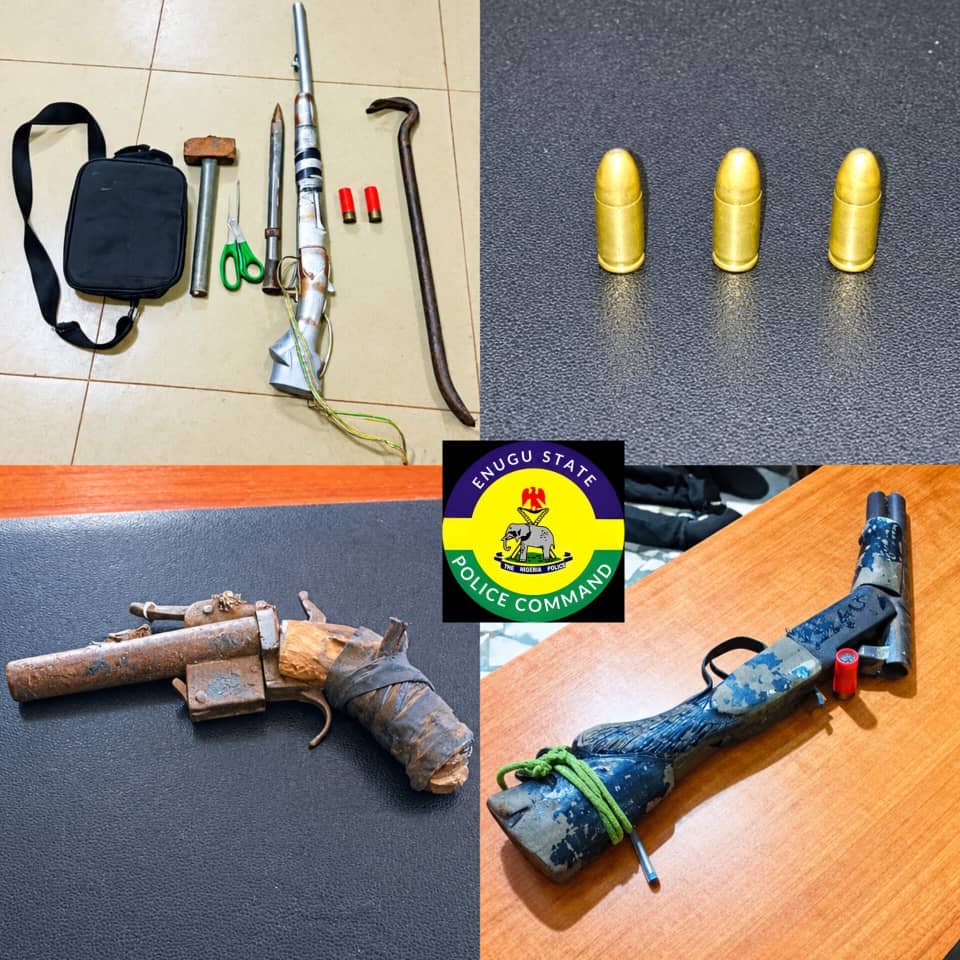
ENUGU — The Enugu State Police Command says it has arrested five male suspects in separate operations across the state and recovered three firearms, six rounds of live ammunition and other exhibits.
The Command disclosed this in a statement issued on Thursday, October 8, 2026, by its Police Public Relations Officer, SP Daniel Ndukwe.
According to the statement, police operatives attached to Inyi Division responded to a distress call about an armed robbery at Umuaor, Umukabia Isiama Awlaw Community, Oji-River Local Government Area, at about 5:10 a.m. on October 7.
One suspect, identified as 26-year-old Arinze Osita Onwuaso, was arrested while other suspects reportedly fled the scene. Police said they recovered a locally made cut-to-size single-barrel gun, two live cartridges, a pry-bar, hammer, scissors and chisel from him.
In a separate operation on October 5, operatives of the Anti-Cultism Section of the Violent Crime Response Unit arrested two suspected cultists, 24-year-old Jonas Adejo, also known as J-Money, and 25-year-old Okoro Innocent, also known as Virus, at Umudioka Community in Nsukka.
Three live rounds of 9mm ammunition were recovered from the suspects. Police said the two men confessed during interrogation to membership of the Supreme Vikings Confraternity.
Meanwhile, on September 25, operatives of Aninri Division, working with members of the Neighborhood Watch Group, raided a suspected criminal hideout at Amagu Mpu Community in Aninri LGA.
The operation led to the arrest of 25-year-old Anichebe Ogbonna, from whom police said one locally made pistol was recovered.
Similarly, on September 18 at about 11:00 p.m., operatives of 9th Mile Division, acting on information and in collaboration with Neighborhood Watch members, arrested 38-year-old Chukwujekwu Chukwuemeka at Ameke-Ngwo, Udi LGA.
He was arrested over alleged involvement in armed robberies in the area. Police said one cut-to-size pump-action gun and one live cartridge were recovered from him.
The Command said investigations into the cases are ongoing and that the suspects would be arraigned in court after the conclusion of investigations.
The Commissioner of Police, CP Mamman Bitrus Giwa, commended members of the public for providing information and praised the police operatives for their response to credible intelligence.
He reiterated the Command’s commitment to intelligence-led operations against armed robbery, cultism and other violent crimes, while urging residents to remain vigilant, law-abiding and supportive of security agencies.

By Okey Maduforo, Awka
The Awka High Court, on Tuesday, denied bail to the General Overseer of Day Spring Assembly, Mr Harrison Anazodo, who is standing trial over alleged offences relating to his activities as a pastor.
Anazodo had applied for bail on health grounds, but the presiding judge, Justice Jude Obiora, rejected the application, citing concerns over possible interference with witnesses.
The development came as seven persons, believed to be members of the congregation, are expected to testify in the case.
The court adjourned the matter until October 16 for further proceedings.
Speaking shortly after the hearing, State Counsel, Victoria Ekwerekwu, commended the Anambra State Government for its efforts to tackle alleged fraudulent activities by some religious figures.
She said, “We thank Governor Charles Soludo for trying to sanitise our society from pastors who make the younger generation believe that making money without hard work is possible.”
According to her, the prosecution has established a prima facie case against Anazodo, although the state would still be required to prove the allegations beyond reasonable doubt.
“Today, there is a prima facie case against the accused, Mr Harrison Anazodo, though it is left for us to prove it beyond reasonable doubt.
“The court ruled on the bail application and denied him bail because of the witnesses, to ensure that they are not interfered with. The matter was subsequently adjourned until October 16,” she said.
The Anambra State Commissioner for Information, Dr Law Mefor, expressed optimism that the case would be concluded expeditiously, stressing that the ultimate decision rests with the court.
“We have been here since 9am. The court considered the bail application filed by his counsel and, after weighing its merits, the judge ruled that bail should be denied.
“We are looking forward to the quick dispensation of the matter and we assure you that justice will be done and will be seen to have been done,” Mefor said.
By Our Correspondent
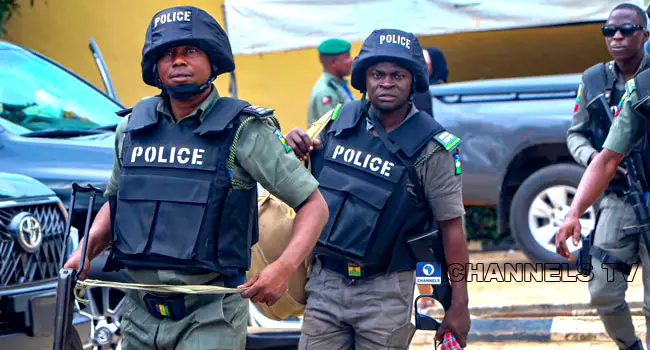
The Inspector-General of Police, Olatunji Disu, has deployed the Deputy Inspector-General of Police in charge of Operations, Shehu Nadada, to Imo State to coordinate the search-and-rescue operation for 20 prospective National Youth Service Corps members and other passengers abducted along the Owerri-Onitsha Road.
The victims were reportedly abducted on Thursday, October 1, 2026, around Umunoha in Imo State.
The Force Public Relations Officer, Force Headquarters, CSP Anietie Iniedu, disclosed this in a statement issued on Friday.
According to the statement, Nadada arrived in the state alongside two Commissioners of Police and immediately conducted an on-the-spot assessment of the incident and the ongoing rescue operation.
He also reviewed the operational strategies, deployment of personnel and available assets, while issuing additional directives aimed at strengthening the coordinated response.
The assessment was conducted alongside the Imo State Commissioner of Police, CP Audu Garba Bosso; the Commissioner of Police in charge of Federal Operations, CP Akpan Anifiok; the Commissioner of Police in charge of the Police Mobile Force; other service commanders and members of the management team of the Imo State Police Command.
Iniedu said the search-and-rescue operation had been intensified, with additional tactical teams and operational assets deployed to identified areas.
He added that the operation was being supported by intelligence-led tracking of the abductors and coordinated efforts with other security agencies.
Nadada assured members of the public that the police remained committed to securing the safe release of the abducted persons.
“The Nigeria Police Force is committed to securing the safe rescue of the 20 abducted persons and will sustain the operation until the mission is successfully concluded,” Iniedu quoted Nadada as saying.
The police boss urged members of the public and the media to remain calm and vigilant, while appealing to anyone with credible information that could assist the operation to contact the police or the nearest security formation.
He assured the public that all information received would be treated with strict confidentiality.
The police said further updates would be provided as the rescue operation progresses.
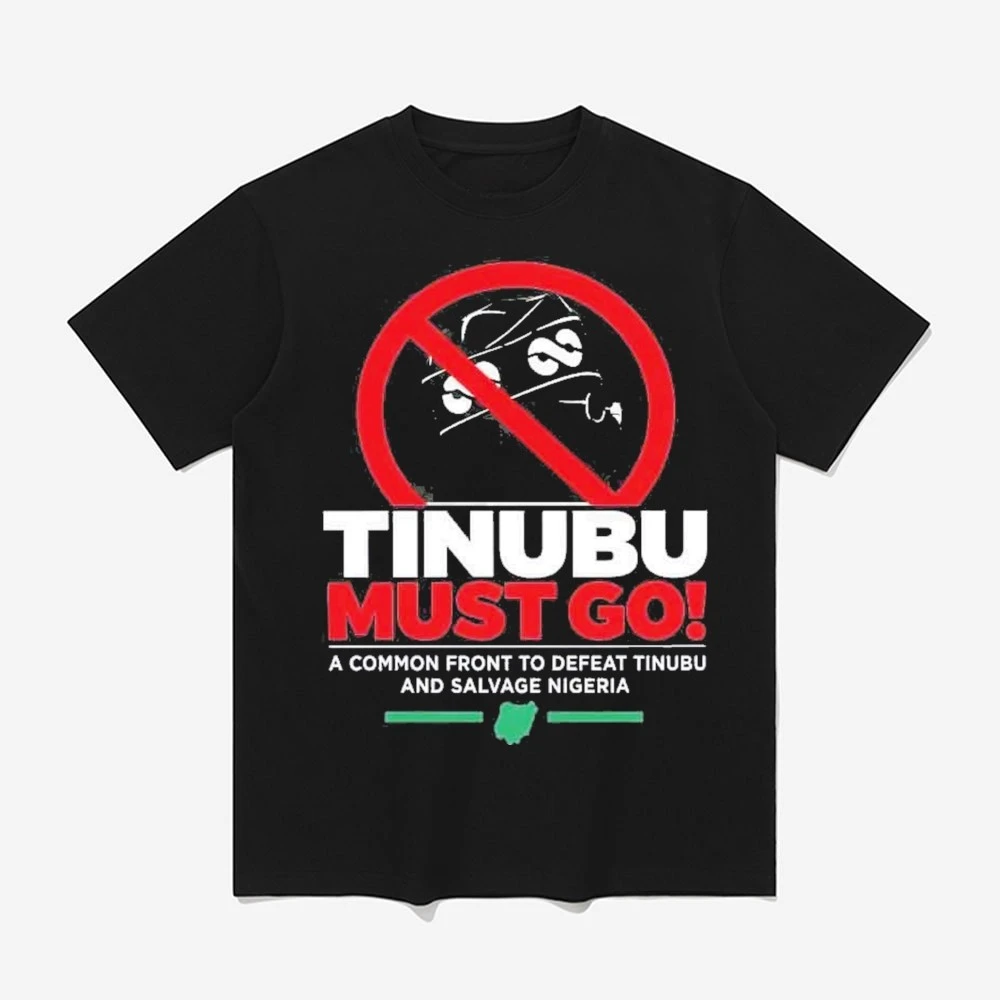
Five men have been arrested and arraigned before a Chief Magistrate’s Court in Maiduguri, Borno State, after police allegedly found them wearing T-shirts bearing the words “Tinubu Must Go.”
The defendants were identified as Baba Aji Gremami, 44; Mustapha Abba Yemen, 28; Abbacha Mohammed Ali, 32; Adam Umar Gubio, 21; and Abdulhamid Mohammed, 21.
According to a First Information Report issued by the State Criminal Investigation Department, the incident occurred on September 25, 2026, near West End Roundabout in Maiduguri.
Police charged the five men with criminal conspiracy, inciting disturbance, disturbance of public peace and thuggery under Sections 60, 78, 79 and 392 of the Borno State Penal Code.
The defendants pleaded not guilty to the charges when they appeared before Chief Magistrate Court I in Maiduguri.
Their lawyer subsequently applied for bail. The court adjourned the matter until October 6, 2026, to rule on the bail application, while the substantive trial has been scheduled for October 26.
The case has drawn attention because the alleged conduct involved wearing clothing displaying a political message.
Amnesty International criticised the prosecution, describing the arrests as arbitrary and arguing that peaceful political expression is protected by fundamental human rights. The organisation called for the immediate release of the five men and urged authorities to discontinue the case.
Amnesty International also expressed concern that the prosecution could have implications for political expression and opposition activities in Borno State.
The case has generated reactions on social media, with some commentators questioning whether the display of political messages on clothing should constitute a criminal offence.
There have also been allegations that a prominent politician in Borno State may have influenced the arrests. The allegation has not been independently verified.
Efforts to obtain a comment from the Borno State Police Public Relations Officer, ASP Kenneth Daso, were reportedly unsuccessful as of the time of filing.
The defendants remain subject to the court process, and the allegations against them have not been established in court.
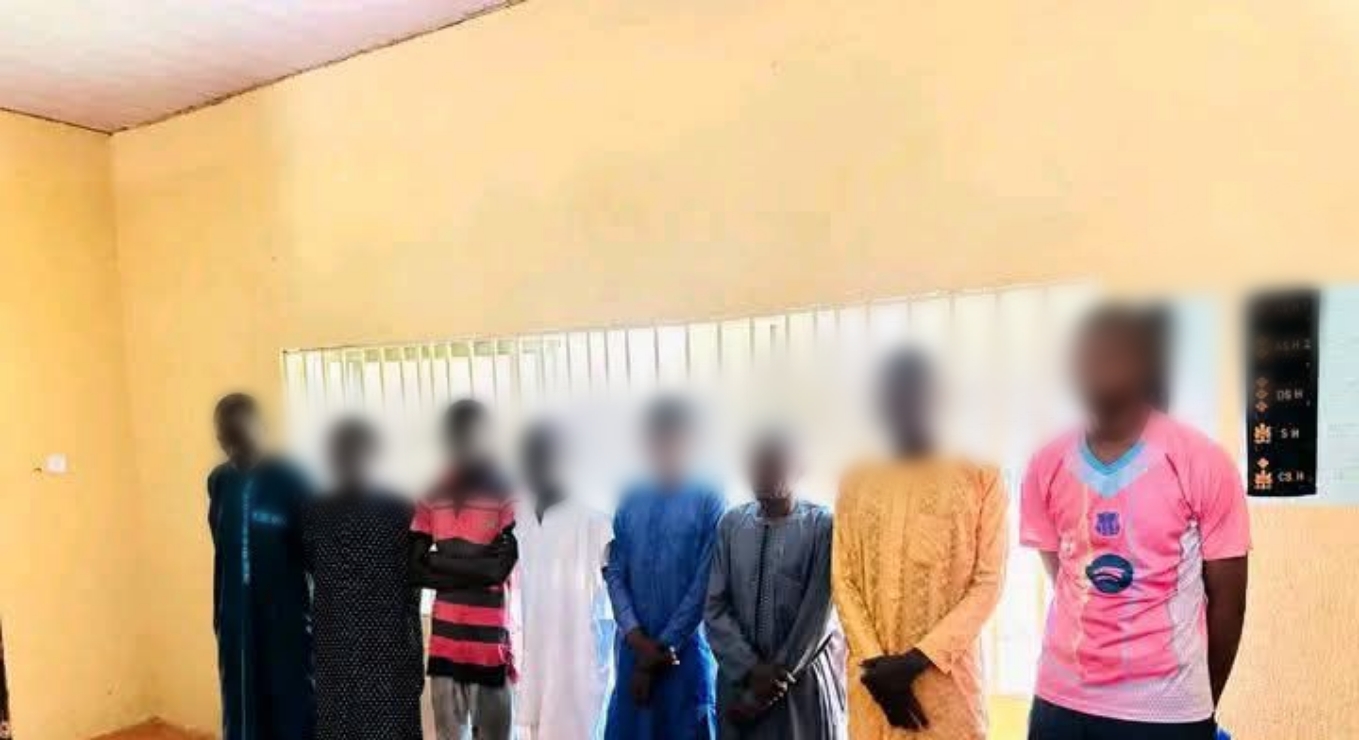
The Jigawa State Hisbah Board has arrested eight people in Kazaure Local Government Area over alleged homosexual acts, according to the board.
The board’s Public Relations Officer, Dauda Hadejia, disclosed this in a statement issued on Saturday, September 26, 2026.
Hadejia said the arrests followed a complaint filed by a 22-year-old man, who alleged that nine individuals had engaged in sexual acts with him on different occasions.
According to the statement, the complainant also claimed that he later contracted HIV, which he attributed to the alleged encounters. He reportedly appealed to the Hisbah authorities for justice, describing the alleged conduct as deceptive and harmful to his life.
Following the complaint, Hadejia said Hisbah operatives launched an investigation and began searching for the nine individuals named by the complainant.
“So far, eight suspects have been arrested, while efforts are ongoing to arrest the remaining suspect,” Hadejia said.
He added that the eight arrested individuals reportedly admitted during preliminary investigations to having engaged in sexual acts with the complainant.
Hadejia said the board had gathered information and evidence that would be presented before a court. He added that the investigation remained ongoing and that the suspects would be charged upon its completion.
The Deputy Commander-General of the Jigawa State Hisbah Board, Dr. Hussain Baban, reportedly urged parents to pay closer attention to their children’s upbringing and the people with whom they associate.
He also called on members of the public to be mindful of the consequences of their actions and to uphold religious and moral values.
The board further expressed appreciation to the Jigawa State Government for its support and cooperation in carrying out its responsibilities.

-

 Politics4 days ago
2027: Odii Will Not Step Down, Says Spokesperson
-
 EverydayNews Telescope4 days ago
Nkalagu Cement Factory: Project or 2027 Political Promise?
-
 News4 days ago
How NAF Plane Vanished From Radar Shortly After Take-Off, Crashes In Ondo Swamp
-
 News4 days ago
No Survivor Found Yet in Ondo Air Crash — Aiyedatiwa
-
 News2 days ago
Curfew Continues as Soludo Sets Up Commission of Inquiry Over Aguleri–Umuoba Anam Clash
-
Crime3 days ago
Court Denies Alleged Fake Pastor Bail as Seven Witnesses Await Trial
-
 Education2 days ago
Ihejirika Hails Mbah’s Infrastructure Drive as Coal City University Inaugurates Governing Council
-

 News3 days ago
NAF Crash Claims Pilot 16 Days After Wedding