





News
Coup trial: Accused colonel rejects military court


Ma’aji, in a preliminary objection filed before the court martial in charge No: DHQ/GAR/ABJ/49/ADM, between the Armed Forces of Nigeria and Brig Gen M.A. Sadiq, Col Ma’aji, alongside 35 others, urged the court martial to strike out the charges instituted against him, arguing that the military tribunal lacked the jurisdiction to entertain the case.
Ma’aji, in the objection, contended that the charges were fundamentally defective and incompetent in law.
The objection, brought pursuant to Rules 36(1) and 37(1) of the Rules of Procedure Army 1972, urged the tribunal to make an order striking out and/or dismissing the charges against the 2nd Accused.

“An Order striking out and/or dismissing the charges against the 2nd Accused in Charge No: DHQ/GAR/ABJ/49/ADM for lack of jurisdiction. An order declining jurisdiction to entertain the charge as constituted.
“And for such further order(s) as the Honourable General Court Martial may deem fit to make in the circumstances.”
The second accused in the charge also argued that the complainant, listed as the Armed Forces of Nigeria, lacked the legal capacity to institute criminal proceedings.
According to Ma’aji, “The complainant (Armed Force of Nigeria) is not a juristic person and thereby lacks the requisite competence to initiate and prosecute the criminal proceedings in Charge No: DHQ/GAR/ABJ/49/ADM.”
Ma’aji further maintained that because the complainant allegedly lacked legal personality, the General Court Martial was equally deprived of jurisdiction to hear the matter.
Citing several Supreme Court and Court of Appeal authorities, including Green v. Green, Fawehinmi v NBA, and Mothercat Nig Ltd v Reg. Trustees of the Full Gospel Assembly Nig, the defence argued that only natural persons or entities expressly recognised by law could sue or be sued.
The written address submitted in support of the objection stated, “The name ‘Armed Forces of Nigeria’ described as ‘complainant’ in Charge No: DHQ/GAR/ABJ/49/ADM is unknown to law and destitute of any legal capacity to exercise Prosecutorial powers in respect of the charges preferred against the 2nd Accused.”
The second accused also challenged the competence of counts one to nine of the charge, which allegedly accused him of inciting other officers to join a plot to overthrow President Tinubu.
Ma’aji insisted that the allegations contained in the particulars of the charges did not fall within the offence of mutiny as contemplated under Section 52(1)(b) of the Armed Forces Act, 2004.
He argued that the particulars of the charge “disclose offences against the Sovereign State otherwise known as the Federal Republic of Nigeria and constitutional order rather than offences relating to military or service discipline or command structure.”
He maintained that the phrase “plot to overthrow the government of the Federal Republic of Nigeria” contained in the charge could not be equated with “lawful authority in the Federation” as envisaged under Section 52(3) of the Armed Forces Act.
“It is submitted that the Federal Republic of Nigeria does not fall within the phrase ‘a lawful authority in the Federation’ as used in Section 52(3) of the Armed Forces Act, Laws of Federation, 2004,” Ma’aji contended.
Ma’aji also cited the Supreme Court’s warning against judicial expansion of statutory provisions, insisting that any ambiguity in penal legislation must be resolved in favour of the accused persons.
Quoting the Supreme Court decision in Nigerian Navy v. Lambert, the second accused submitted: “It is settled law that penal statutes are to be construed strictly to the benefit of the accused person and that where there is a reasonable construction that avoids the penalty in any particular case, the court must adopt that construction.”
The preliminary objection further contended that for a charge of mutiny or incitement to mutiny to stand, there must be allegations of concerted insubordination, defiance of military authority or refusal of lawful command or organised military rebellion against superior military command.
According to the defence, the particulars supplied by the prosecution failed to disclose those essential ingredients.
On this ground, he urged the General Court Martial to uphold his preliminary objection and dismiss the charges against him for want of jurisdiction.
Meanwhile, a witness in the ongoing trial of six alleged coup plotters before the Federal High Court in Abuja, on Wednesday, told investigators that Ma’aji allegedly threatened to force his way into the Presidential Villa, even if insiders refused to cooperate.
The fourth defendant, Zekeri Umoru, made the allegation in a video previewed in court during proceedings in the trial-within-trial over the admissibility of the defendants’ extrajudicial statements.
Umoru and five others in April were arraigned before Justice Joyce Abdulmalik on 13 counts of criminal charges over alleged complicity in an alleged coup plot to overthrow Tinubu’s government.
The six defendants: Maj Gen Mohammed Ibrahim Gana (retd), Capt Erasmus Victor (retd), Insp Ahmed Ibrahim, Zekeri Umoru, Bukar Kashim Goni and Abdulkadir Sani, however, pleaded not guilty to all the counts after the charge was read to them.
At the resumed sitting, Umoru, who worked with Julius Berger on the Presidential Villa clinic project, alleged that Ma’aji, through the third defendant, Insp Ibrahim, asked him to recruit between 18 and 19 persons working inside the Villa, including soldiers, Department of State Service personnel and Julius Berger staff.
According to the video evidence played in court, Umoru alleged that plans were discussed to switch off electricity within the Presidential Villa to aid the operation, but he warned that such an action would immediately trigger investigations and lead to the detention of workers on duty.
He further claimed that Insp Ibrahim later demanded N100m from Ma’aji to facilitate access into the Villa through an ambulance route, but Ma’aji allegedly rejected the amount as excessive, insisting he could still gain entry by force, although “there would be bloodshed.”
The witness also told investigators that he became uncomfortable with the alleged plan and repeatedly attempted to return the money given to him, insisting that the Presidential Villa “was not child’s play.”
He denied having access to the Villa’s solar power plant, despite allegations that he intended to sabotage the electricity supply within the complex.
The court further heard that Umoru did not immediately report the alleged plot to authorities because Insp Ibrahim allegedly advised him to delete messages and avoid contacting Ma’aji due to an ongoing audit in their office.
Following the screening of the video evidence, Justice Abdulmalik adjourned the matter until May 21 for continuation of the trial-within-trial.


Motorists in Abuja have received fresh relief following a ₦70 reduction in the pump price of petrol by MRS filling stations across the Federal Capital Territory.
The latest adjustment, which took effect on Tuesday, November 24, 2026, saw the retail price of petrol drop from ₦1,365 to ₦1,295 per litre.
A market survey conducted by DAILY POST showed that the reduction followed a downward review of the gantry price by Dangote Refinery over the weekend.
The refinery reportedly reduced its gantry price from ₦1,159 to ₦1,060 per litre, representing a ₦99 reduction.
The latest development marks the second petrol price reduction by MRS within four days.
Four days earlier, the company had reduced its pump price by ₦34 per litre, bringing it down to ₦1,365.
Similarly, the Nigerian National Petroleum Company Limited (NNPC) had reduced its retail price by ₦25 per litre within the same period, bringing its pump price to ₦1,300 per litre.
With the latest adjustment, MRS is now selling petrol at ₦1,295 per litre, which is ₦5 lower than the NNPC price previously reported.
However, petrol prices across Abuja remain varied, with other filling stations dispensing the product between ₦1,325 and ₦1,380 per litre.
The latest reduction is expected to provide some relief to motorists and other consumers amid continuing fluctuations in the downstream petroleum market.
The development also highlights the influence of Dangote Refinery’s gantry price adjustments on retail petrol prices, particularly among marketers sourcing products from the refinery.
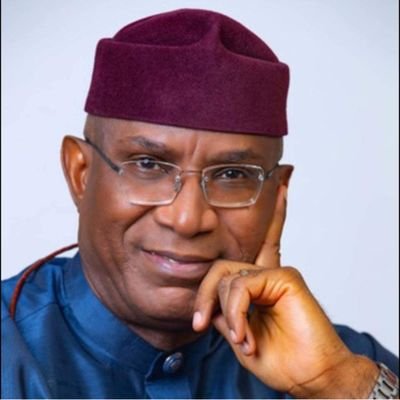
The Federal High Court sitting in Warri, Delta State, has nullified the nomination of former Deputy President of the Senate, Senator Ovie Omo-Agege, as the Nigeria Democratic Congress (NDC) candidate for Delta Central Senatorial District in the 2027 general elections.
The court, presided over by Justice Hyeladzira Ajiya Nganjiwa, ordered the Independent National Electoral Commission (INEC) to remove Omo-Agege’s name from its list of candidates for the election and restrained him from parading himself as the party’s senatorial candidate.
The court also reportedly held that the statutory window for conducting fresh primaries to nominate another candidate had elapsed, thereby raising questions about the NDC’s ability to field a replacement for the former deputy Senate president.
The judgment followed a suit instituted by Professor Alexander Osondu Akpodiete, marked FHC/WR/CS/120/2026, challenging the validity of Omo-Agege’s emergence as the NDC candidate.
Akpodiete had questioned Omo-Agege’s resignation from the All Progressives Congress (APC), his membership of the NDC and his eligibility to participate in the party’s senatorial primary.
Delivering judgment, Justice Nganjiwa reportedly dismissed five preliminary objections raised by Omo-Agege, the NDC and INEC challenging the competence of the suit before proceeding to determine the substantive issues.
The court held that the NDC failed to comply with the mandatory provisions of the Electoral Act regarding the submission of its membership register to INEC ahead of its primary election.
Specifically, the judge found that Omo-Agege’s name was not contained in the NDC membership register submitted to INEC at least 21 days before the party conducted its primary.
The court also reportedly held that the NDC failed to provide credible evidence establishing that the membership register was subsequently updated and submitted within the statutory period.
On Omo-Agege’s previous membership of the APC, the court reportedly relied on INEC’s revised electoral timetable and evidence relating to the APC senatorial primary held on May 18, 2026.
According to the judgment as reported, his participation in the APC primary established that he was still a member of the party at the material time.
Justice Nganjiwa maintained that only persons whose names appeared in a political party’s membership register submitted to INEC in accordance with the Electoral Act were eligible to participate in its primaries.
On the admissibility of a previously withdrawn affidavit, the court held that a party was entitled to withdraw an affidavit already filed in a proceeding, adding that once withdrawn, such an affidavit ceased to form part of the court records and could not be relied upon in determining the matter.
The judge further stressed that a political party’s nomination process must comply with statutory requirements, noting that INEC could not recognise a candidate whose emergence was founded on a process that violated the Electoral Act.
Consequently, the court invalidated Omo-Agege’s nomination, ordered INEC to delist him and restrained him from presenting himself as the NDC candidate for Delta Central Senatorial District.
The ruling marks a major development in the political contest for the Delta Central senatorial seat, particularly as the court reportedly held that the statutory period for conducting fresh primaries had expired.
The development also raises questions about the legal options available to the NDC and whether the party can challenge the judgment on appeal.
The full certified judgment was not available at the time of filing this report. Responses from Omo-Agege, the NDC and INEC were also being awaited.

The National Independence Electoral Commission (INEC) says that no fewer than 520 polling units, two per registration area, will be used for upcoming Mock voting in Enugu State on Saturday.
The INEC Resident Electoral Commissioner (REC) in Enugu State, Dr Chukwuemeka Chukwu, disclosed this during the Combined Stakeholders’ Meeting on Preparations for the 2027 General Elections held in Enugu on Monday.
Chukwu said that the commission had scheduled a nationwide “Mock Accreditation Exercise” for Nov. 28, to test the functionality and operational readiness of its accreditation technology and election-day processes.
“To ensure effective implementation, a total of 1,040 personnel will be deployed for the exercise, comprising two personnel assigned to each of the 520 selected Polling Units (PUs).
“This arrangement is intended to ensure adequate personnel coverage, effective coordination and a proper assessment of the commission’s accreditation technology and operational procedures ahead of the 2027 General Elections.
“I encourage all stakeholders, particularly political parties, civil society organisations and the media, to support the exercise and sensitise voters in the selected areas,” he said.
On staff capacity building, the REC said that the commission just-concluded a three-day training for Electoral Officers (EOs) and Assistant Electoral Officers (AEOs) from Nov. 16 to Nov. 18.
“The training strengthened officers’ capacity in election planning, coordination, implementation and compliance with established guidelines; thus, ensuring that officers demonstrate professionalism, neutrality, discipline and accountability in the discharge of their responsibilities,” he said.
Chukwu said that INEC held a meeting with the Inter-Party Advisory Council (IPAC) on Nov. 20, to discuss preparations for the 2027 General Elections and strengthen cooperation with political parties.
The REC said that the commission organised an Electoral Risk Management Sensitisation Workshop on Oct. 29 to familiarise stakeholders with the commission’s Electoral Risk Management Framework and strategies for identifying and mitigating electoral risks.
“The Commission has continued to promote inclusive electoral participation through people living with disability sensitisation as well as gender-related and youths activities.
“A total of 540 women from the 17 LGAs were sensitised already through organised workshops,” he said.
Speaking, CP Fidelis Ogarabe, the Commissioner of Police and Co-Chairman on Election Security, assured that security agencies would provide security for all INEC programmes and activities in the state.
“Security agencies are always ready. We are assuring INEC and residents of the state of adequate security before, during and after the elections.
“We are ready; call on us and tell us the security challenges and we will resolve it on time,” Ogarabe assured.Contributing, the Chairman, Enugu State Traditional Rulers’ Council, Igwe Samuel Asadu, urged INEC to do more enlightenment and awareness on its statewide programmes and activities, especially those affecting residents in localities.
Asadu noted that more should be done on awareness concerning collection of Permanent Voter Cards, upcoming mock voting, need for mass participation in the electoral process and frequent engagement of stakeholders for them to ginger the people to participate.
The combined stakeholders’ meeting involved political parties, security agencies, traditional and religious institutions, civil society organisations, organisations of Persons with Disabilities, media, INEC head of departments and electoral officers in the state.

Nigeria is not currently equipped to host the FIFA World Cup due to inadequate infrastructure, particularly stadiums, airports and transportation networks, FIFA President Gianni Infantino has said.
Infantino made this assessment during an exclusive interview with ARISE News in Abuja on Monday while responding to a question on whether Nigeria could host a tournament of the magnitude of the World Cup.
“Today, no. But tomorrow, why not?” he said.
The FIFA president, however, expressed optimism that Nigeria could become capable of hosting the competition in the future, noting that the country had the resources, passion and determination to pursue the ambition.
According to him, the key requirements for hosting the tournament include world-class stadiums, airports and efficient transportation infrastructure.
“The key to hosting a World Cup is obviously the infrastructure, the stadiums, the airports, transportation, and this is where best practice is needed,” Infantino said.
He added that Nigeria had the resources and political will to move forward with planned sporting infrastructure projects.
“I think Nigeria has the resources, has the passion, has the will as well to move ahead with the projects that are planned in terms of stadiums,” he said.
Infantino also spoke positively about some football facilities he had visited in Abuja and Warri, describing them as impressive.
“For example, I visited a national training centre in Abuja, in Warri as well. A very nice stadium. Very nice,” he said.
His comments came days after he inspected the ongoing FIFA Forward Technical Centre project at the Moshood Abiola National Stadium in Abuja and the renovated Warri City Stadium in Delta State.
The Abuja technical centre, being developed in collaboration with the Nigeria Football Federation, received $4.88m in funding from FIFA under its Forward 3.0 programme.
The project includes a 68-room players’ hostel, two training pitches and other facilities designed to support the development of Nigeria’s national teams.
Meanwhile, the Warri City Stadium, which has a seating capacity of 15,000, is undergoing extensive remodelling as part of efforts to upgrade sporting facilities in Delta State.
Africa has hosted the men’s FIFA World Cup only once, with South Africa making history as the first African country to stage the tournament in 2010.
Morocco will become the second African host in 2030 when it co-hosts the competition with Spain and Portugal. Uruguay, Argentina and Paraguay are also scheduled to host one centenary celebration match each.

The Creek To Creek Movement has learned with deep sadness the tragic boat mishap involving mourners traveling for a funeral in Southern Ijaw Local Government Area of Bayelsa State.
The last reports available to the Creek To Creek Movement state that the number of deaths from this unfortunate accident has risen to 29, with over 50 survivors receiving treatment in hospitals.
We wish to deeply commiserate with His Excellency, Senator Duoye Diri, Governor of Bayelsa State, the families of the victims, and the entire Bayelsa State for this avoidable tragedy.
While we cannot overstate the importance of heeding all protocols for safety and best practices in all forms of transportation, and, indeed, in the daily lives of our people in the creeks, and all over the Federal Republic of Nigeria, we wish to extend our hands to support the Government, the families of the victims and the people of Bayelsa State as they recover and heal from this tragedy.
It continues to be our objective in the Creek To Creek Movement to continue to partner with authorities to advance the cause of the creek communities and work to help in improving the living conditions of our people.
Signed:
Chief Mike Ebi Ayapaye
Founder/Director-General


-
 News3 days ago
37th NAFEST Kicks Off In Enugu As Mbah Seeks Unity, Economic Gains Through Culture
-
 News5 days ago
Ferotex CEO, Festus Oshaba-Onuh, Dies In Fatal Road Accident
-
 Crime4 days ago
Enugu Police Launch Manhunt for Kidnappers After 73-Year-Old Victim’s Release
-
 Politics5 days ago
‘Bamayi’ Chant Sparks Violence As Suspected Mob Attack APC Convoy, 5 buses destroyed
-
 News5 days ago
ESUT to be renamed after Jim Nwobodo – Mbah
-
 Opinion3 days ago
PETER MBAH AND THE QUESTION OF CONTINUITY: A CALL FOR REFLECTION
-
 News4 days ago
Soludo Approves N50,000.00 December Bonus For Anambra Civil Servants
-
 News4 days ago
Ex-Super Eagles Captain, Segun Odegbami, Survives Machete Attack