



Business
Clampdown: Currency traders petition IGP, to write Senate, CBN



The dealers will also send a copy of their petition to the Senate even as members of the Association of Bureau De Change Operators in the Federal Capital Territory, on Thursday and Friday met with operatives of the anti-graft agency.
The meeting was aimed at resolving the forex crisis occasioned by the rush for dollars following the announcement by the Central Bank of Nigeria to redesign some naira notes.
This is happening as the anti-graft agency intensified investigations into the financial transactions of the forex dealers in a bid to spot illicit activities such as money laundering.
The forensic probe of their bank accounts, it was learnt, would help detectives in tracking down the forex dealers’ sponsors and their high-profile customers, especially government officials and political officeholders.

A source disclosed that the essence of the EFCC raids was to identify the big men behind the BDC operators, their sources of funds, transactions and customers, and ultimately to frustrate moves by hoarders to offload their naira cash haul ahead of December 15 when the high denominations would be released to the public.
“Detectives have obtained some necessary information from the forex dealers who were arrested and a forensic analysis and probe of their financial transactions have commenced,’’ the source disclosed.
It was further learnt that the EFCC had released all the forex dealers who were arrested during the two-day raids after obtaining the necessary information from them, including their personal and bank details, and who they were working for.
The anti-graft agency had launched a massive clampdown on forex dealers across the country and arrested 87 of them in Abuja, Lagos and Kano between Tuesday and Wednesday last week, forcing the BDC operators to go into hiding.
It was learnt on Friday that the BDC operators were advised by the EFCC officials during the meeting to be wary of illegal financial activities that could harm the economy.
Confirming the meeting, the Assistant Provost, Association of Bureau De Change Operators, Zone 4, Wuse, Abuja, Mallam Muhammed Nera, said the group was also planning to meet with the EFCC Chairman, Abdulrasheed Bawa.
He stated, “We had a meeting with the EFCC on Thursday and Friday, a meeting of understanding. They didn’t come to raid on Thursday and Friday. But we told them that if they were looking for missing money, they should start from the ministries. They should start with the Presidency, ministers, directors and others. They are just beating around the bush, they know those stealing money.
“They were asking our members who gave them the naira used in their transactions. If you think that money is missing, follow the trail from the ministries and other places. People are struggling to survive; every Bureau De Change has about 200 persons under him. They have parents, children and people working for them.”
Nera advised the detectives to follow the money trail and bank accounts instead of chasing down forex dealers struggling to survive.
He contended that the commission had no authority to order people into its vehicles without presenting warrants of arrest.
He said the EFCC had access to the bank accounts and financial transactions of every citizen, wondering why the agency was not tracking Boko Haram fighters and their financiers, and focusing on other urgent national issues.
According to him, the association has cautioned its members not to run away the next time EFCC operatives storm their offices, insisting that they are ready to confront the commission.
“We have told our people that nobody should run when we see them (EFCC operatives) and nobody should follow them (to their office) unless we ask them to do so. They are part of the government; they have the law, they know what to do. But they have to do things in a proper manner. We are ready for them, we are ready to face them not by fighting or through argument, but facing them with the law,” Nera stated.
He also disclosed that the association had petitioned the IG and would also write to the Senate and the CBN over the alleged harassment of its members by the EFCC.
He explained that the dealers had sought to meet with the CBN leadership before the latest incidents, but their request was not acknowledged, adding, “We have written letters to them over 10 times, but they didn’t acknowledge them.”
When asked why the anti-graft agency was raiding the BDC offices, the Head, Media and Publicity, EFCC, Wilson Uwujaren, pleaded for time to find out. But he had yet to provide a response as of the time of filing this report.
Business
No Bad Blood Over New Cement Factories, But Our Mining Rights Run Till 2045 — Ibeto Tells Ebonyi Govt

ABAKALIKI, EBONYI STATE — Billionaire industrialist and Chairman of Ibeto Group, Dr. Cletus Ibeto, has clarified his position on plans by the Ebonyi State Government to establish a new cement manufacturing plant, saying he has no objection to fresh investment in the state provided his company’s existing mining rights are respected.
Ibeto, who is also a core investor in the Nigerian Cement Company (Nigercem), said the proposed development should not interfere with areas covered by valid mining leases held by his company.
“We are not against the establishment of new cement factories in Ebonyi State. However, such developments must not interfere with or overlap the specific areas where Ibeto Group holds valid Mining Lease Licences issued by the Federal Ministry,” Ibeto stated.
He said the company’s statutory mining leases covering limestone deposits in the Nkalagu axis remain valid until 2045.
Ibeto stressed the need for proper delineation and mapping of mining areas to prevent conflicts between existing title holders and new investors seeking to establish businesses in the state.
Under Nigeria’s legal framework, mineral resources are vested in the Federal Government, with mineral titles administered through the Federal Ministry of Solid Minerals Development and the Mining Cadastre Office.
Nigercem Ready to Resume Operations
Addressing concerns over the future of the historic Nigercem plant, Ibeto said Ibeto Group remains committed to reviving the facility and is ready to commence work once outstanding administrative issues with the state government are resolved.
He said the company’s position should not be interpreted as opposition to new investment in Ebonyi, stressing that his concern was the protection of legally acquired mining rights.
The development could pave the way for both the revival of Nigercem and the entry of new investors into Ebonyi’s cement industry, provided the respective mining areas are clearly mapped out and existing legal titles are respected.
Business
Patience Jonathan Hails Azikel Boss Eruani as ‘Small Boy’ She Mentored Into Billionaire League
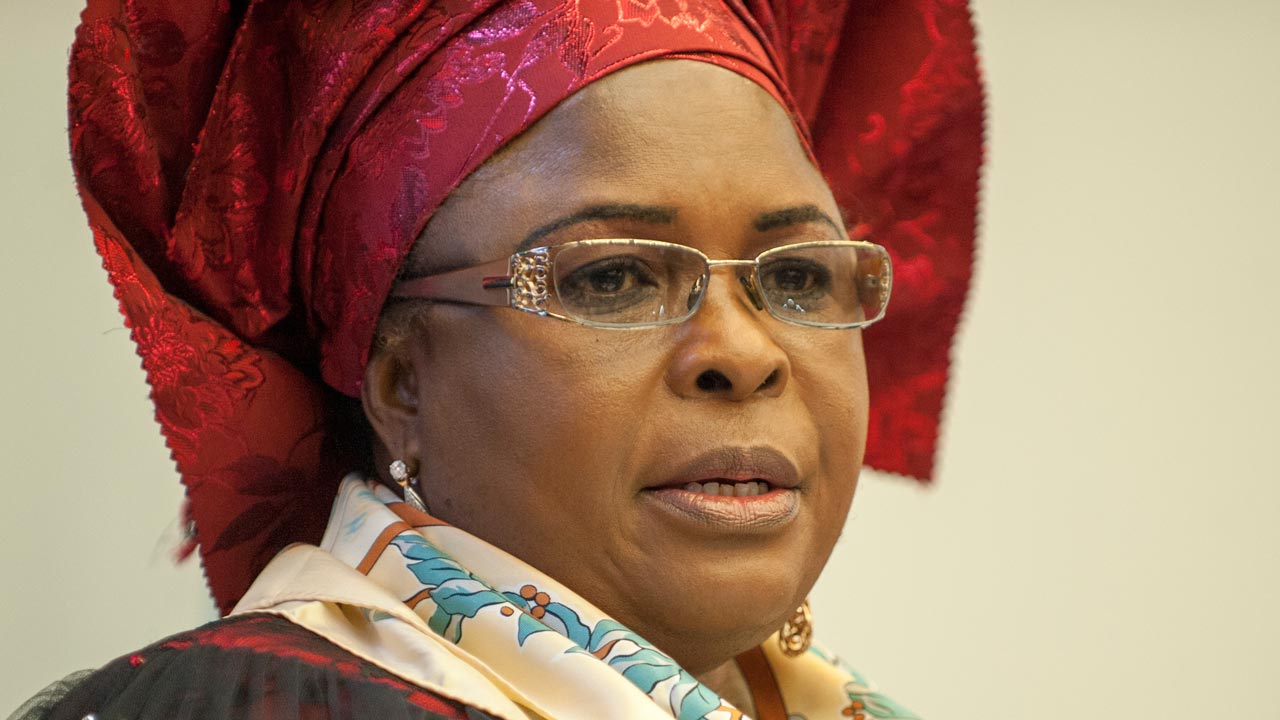
She said her guidance was behind his bold entry into big business at a relatively young age.
The former First Lady spoke on Tuesday in a video which went viral on Thursday during an inspection tour of the Azikel Refinery in Obunagha, Bayelsa State, alongside other dignitaries.
She said she personally introduced Eruani to billionaire businessmen, Aliko Dangote and Aminu Dantata, and pushed him to aspire to their level despite being the youngest among them.
“He’s a boy that I brought up. We are always together. Although he’s the little one among us when we are friends — Dangote, Seyi, Dantata, Eruani — among us, he’s the smallest. But I made sure he followed the Dangotes, he followed Dantata.
“Because I’m a woman in their midst, I made sure I told this small boy, ‘Go and follow them, and stop the grammar.’ But when he told me that one day he would be like Dangote, I said, ‘You’re thinking too high.’ I prayed to God to grant him his heart’s desire,” she said.
The former First Lady also recalled how the immediate past APC administration under Muhammadu Buhari initially failed to grant Eruani a refinery licence before eventually approving three.
“During the Buhari administration, he and others came to me and told me they were going to apply for a refinery. I told him, ‘Eruani, your brother, the President, did not give you a refinery.
“Is it the APC government that will give you one?’ I prayed it would happen. But later, they came back and told me they had been given three refineries,” she said.
The 25,000 barrels-per-day plant is a private hydro-skimming refinery designed to process condensate into petrol, diesel, aviation fuel, kerosene and other products.
It is set to become Nigeria’s second-largest full-slate refinery and the first major privately owned refinery in the Niger Delta.
The Managing Director/Chief Executive Officer of the Niger Delta Development Commission, Samuel Ogbuku, who joined the inspection tour, commended Eruani for his perseverance, noting that he had attended the project’s groundbreaking ceremony eight years ago.
Ogbuku described the refinery as an inspiration and a potential catalyst for investment, job creation and economic growth in Bayelsa State, and urged residents, particularly youths, to key into the opportunities it would create.
He also praised the Bayelsa State Government for improving road infrastructure leading to the refinery site and called for continued support for the project.
Governor Douye Diri, who was represented at the inspection by his deputy, Peter Akpe, has consistently backed the project, which is expected to employ hundreds of workers and drive industrialisation in the state.
Other dignitaries at the event included the Chairman of the Bayelsa State Council of Traditional Rulers, King Bubaraye Dakolo; Vice President of Azikel Group, Presley Asemota; and Isaac Yalah, among others.

A market check on Tuesday showed that NNPCL outlets in Abuja and nearby areas adjusted their petrol price from N1,155 per litre to N1,270 per litre.
The latest adjustment represents an increase of N115 per litre by the state-owned oil company.
The new price change follows recent increases by depot owners and petroleum marketers, who have adjusted their rates twice within a week.
The latest development also comes days after Dangote Refinery resumed the sale of refined petroleum products in dollars, a move that has raised concerns among industry players over the direction of fuel pricing in the country.

The Federal Government has disclosed that 13 of the 50 oil and gas blocks offered in the 2025 Licensing Round will be returned to the licensing basket after failing to attract bids from prospective investors.
The Chief Executive of the Nigerian Upstream Petroleum Regulatory Commission (NUPRC), Oritsemeyiwa Eyesan, disclosed this on Tuesday at the 2025 Commercial Bid Conference in Abuja.
Eyesan said that although 50 blocks were initially put up for bidding, prospective investors showed interest in only 37.
“At the end of the exercise, we had 50 blocks on offer, but we only had representation for 37 of those 50 blocks. Thirteen of those blocks will be returning back to the basket,” she said.
She further disclosed that 143 companies participated in the commercial bid process, submitting about 200 bids for the available oil and gas assets.
“We have a total of 143 companies showing interest for 200 bids. That, for us, was remarkable, and I must say thank you,” Eyesan stated.
According to her, nearly 300 companies initially expressed interest in the licensing round, which she described as a sign of renewed investor confidence in Nigeria’s upstream petroleum sector.
“When we started the journey, we got interest from almost 300 companies. I repeat, almost 300 companies. That, in my view, was an indication that the tide has turned for Nigeria,” she said.
She explained that the number of interested companies was reduced to 196 following the prequalification stage, before the process moved to the technical and commercial evaluation phases.
“From the almost 300 interests that we got, we moved to the pre-qualification stage, and that number was pruned down to 196,” she added.
The 2025 Licensing Round was launched on November 11, 2025, in accordance with the Petroleum Industry Act 2021, with 50 oil and gas blocks put up for bidding across seven sedimentary basins.
The assets comprise 16 Niger Delta onshore blocks, 18 shallow-water blocks, one deep offshore block, three blocks in the Benin Basin, four in the Anambra Basin, four in the Chad Basin and four in the Benue Trough.
The bid portal opened on December 1, 2025, while a pre-bid conference was held in Lagos on January 14, 2026, to provide prospective investors with guidance on the bidding requirements.
Registration and prequalification submissions closed on February 27, 2026, with the prequalification process completed on March 16.
The NUPRC said winning bids are being determined through a weighted evaluation that considers signature bonus commitments, proposed work programmes and performance security. The process combines technical and commercial scores rather than relying solely on financial offers.
The framework is aimed at ensuring that Nigeria’s petroleum assets are awarded to investors with the financial capacity, technical expertise and operational strength required to accelerate exploration and production in the country’s upstream sector.
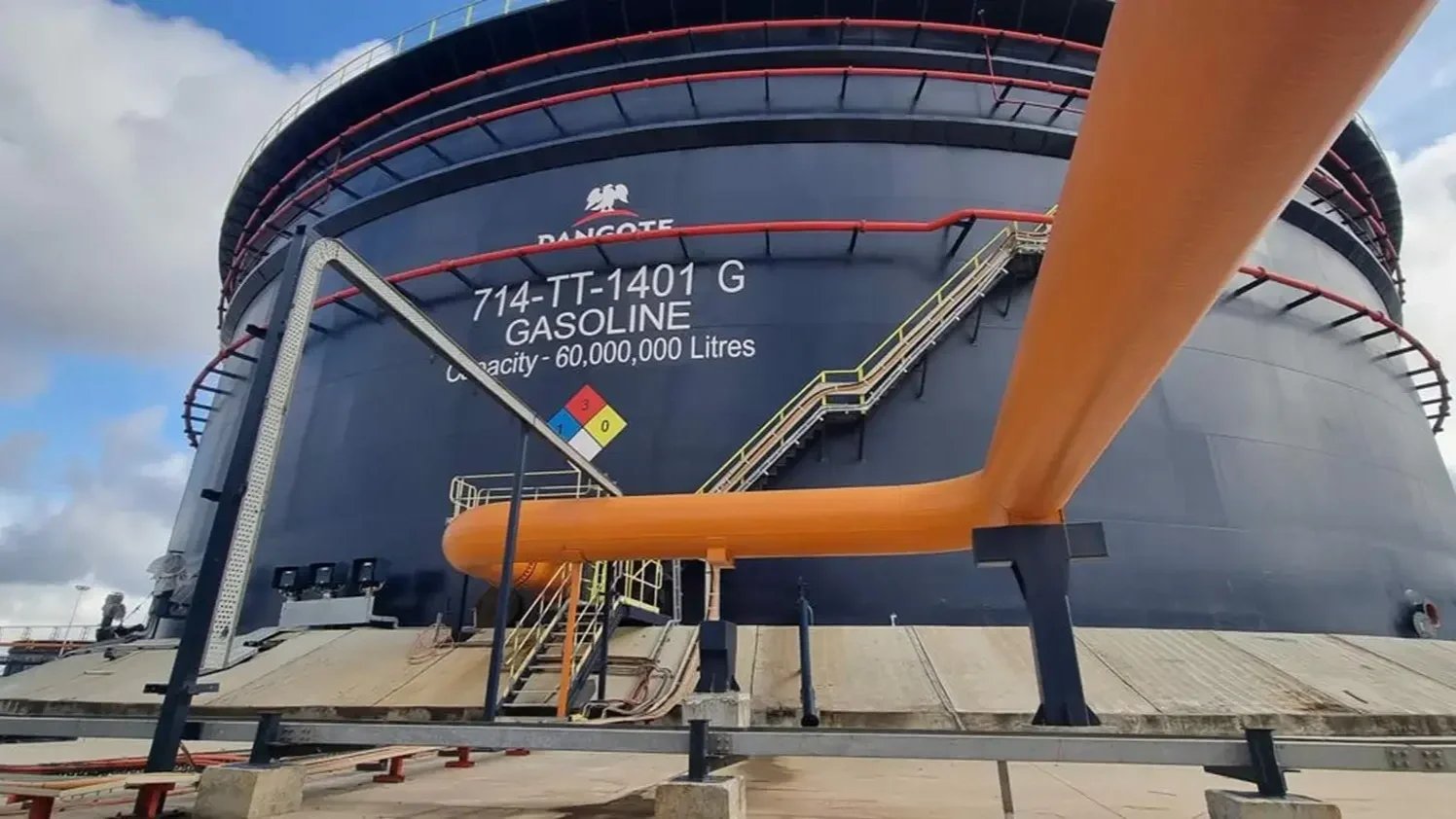
The new pricing template, which took effect on July 13, 2026, also pegs Automotive Gas Oil (diesel) at $1.087 per litre and Aviation Turbine Kerosene (ATK) at $0.942 per litre, while coastal deliveries of PMS have been fixed at $1,044.62 per metric tonne.
The development marks the end of naira payments for refined petroleum products, a policy introduced after the commencement of the Federal Government’s naira-for-crude initiative on October 1, 2024.
In a notice issued to petroleum marketers and customers, the refinery announced that all previously issued naira-denominated Proforma Invoices and Deal Recaps for both gantry and coastal transactions had become invalid.
The notice, signed by the refinery’s Group Commercial Operations, directed customers not to make payments against the cancelled invoices, stating that all transactions would now be conducted in United States dollars.
Under the revised pricing schedule, petrol supplied through the gantry will sell for $0.779 per litre, diesel for $1.087 per litre, aviation fuel for $0.942 per litre, while coastal PMS supplies will cost $1,044.62 per metric tonne.
The refinery, however, clarified that the transition does not affect Liquefied Petroleum Gas (LPG), which will continue under its existing payment arrangement.
Industry sources said the decision followed a growing imbalance between the currency used to procure crude oil and that used to sell refined products.
According to the sources, the refinery now receives a larger share of its crude oil from the Nigerian National Petroleum Company Limited (NNPCL) under dollar-denominated supply arrangements, while a significant volume of its refined products had continued to be sold locally in naira.
The resulting mismatch, coupled with exchange-rate volatility and fluctuations in global crude oil prices, reportedly increased the refinery’s foreign exchange exposure and prompted the adoption of a uniform dollar-based pricing framework.
A source familiar with the development explained that the shift became necessary as the volume of naira-denominated crude supplies declined relative to dollar-based crude cargoes.
“The refinery is receiving fewer naira-denominated crude cargoes while a larger proportion of its refined products has continued to be sold in naira. That imbalance, combined with foreign exchange volatility, made the transition to dollar pricing inevitable,” the source said.
The decision is expected to have significant implications for petroleum marketers who source products directly from the refinery for nationwide distribution. It could also influence retail pump prices, depending on movements in the exchange rate, international crude oil prices, logistics costs and marketers’ operating expenses.
The Federal Government had introduced the naira-for-crude policy to encourage domestic refining, reduce pressure on foreign exchange demand and stabilise fuel prices. However, industry stakeholders have recently reported implementation challenges, noting that a growing proportion of crude supplies to local refiners has reverted to dollar-based transactions.
Analysts believe the latest development underscores the continued foreign exchange challenges facing Nigeria’s downstream petroleum sector despite efforts to deepen local refining and reduce dependence on imported fuel.

-

 Politics4 days ago
2027: Odii Will Not Step Down, Says Spokesperson
-

 EverydayNews Telescope4 days ago
Nkalagu Cement Factory: Project or 2027 Political Promise?
-

 News4 days ago
How NAF Plane Vanished From Radar Shortly After Take-Off, Crashes In Ondo Swamp
-

 News4 days ago
No Survivor Found Yet in Ondo Air Crash — Aiyedatiwa
-
 Crime3 days ago
Court Denies Alleged Fake Pastor Bail as Seven Witnesses Await Trial
-

 News2 days ago
Curfew Continues as Soludo Sets Up Commission of Inquiry Over Aguleri–Umuoba Anam Clash
-

 Education2 days ago
Ihejirika Hails Mbah’s Infrastructure Drive as Coal City University Inaugurates Governing Council
-

 News3 days ago
NAF Crash Claims Pilot 16 Days After Wedding