



Health
BRAIN DRAIN: 40 Doctors Leave Nigeria Weekly — REPORT



Professor Ayo Omotayo, Director General of the National Institute of Policy and Strategic Studies, NIPSS, left the podium and spoke extempore, momentarily.
Omotayo said he wasn’t at the gathering to massage anyone’s ego but to hit the nail on the head of our problems and ensure solutions are proffered. There was a pin-drop silence while his 15 minutes’ admonition lasted.
The event was a one-day symposium on medical brain drain in Nigeria facilitated by the development Research and Project Centre (dRPC) in collaboration with NIPSS and held in Abuja.
The high-level symposium was themed, ‘Nigeria’s health sector brain drain and its implications for sustainable child and family health service delivery and financing in the context of new national priorities’.

The assemblage of participants showed the importance attached to the event. They include the Federal Government through the Office of the Vice President, the Office of the Minister of Health, the Budget Office of the Federation, President, Association of Public Health Physicians of Nigeria, Permanent Secretary, Lagos State Primary Health Care Board, Registrar, Pharmacy Council of Nigeria, Registrar, Medical And Dental Council of Nigeria, President, National Association of Community Health Practitioners, Director, Family Health, Federal Ministry of Health, President, Nigerian Doctors in the UK, and Canadian High Commissioner.
Omotayo said the theme of the event was timely as more persons are leaving the country to settle in developed climes even as he said all sectors in Nigeria have one problem or another, including health which is a critical sector.
Nigeria, according to a foreign publication, Guardian of London, is a top exporter of medical talent to other countries; its doctors are a permanent fixture in emergency rooms in the UK, the US, Canada & Saudi Arabia. In South Africa, it is estimated that there are 5,000 Nigerian doctors; in the UK, that figure is 7,500, according to figures from the UK General Medical Council.
Currently, Nigeria is the highest, outside India and Pakistan, parading foreign medical doctors working in the United Kingdom, making doctors to patient ratio in the country to be 1:10,000 as against the WHO recommendation of 1:1,000.
Nigeria, according to research, lost over 9,000 medical doctors to the UK, Canada and the US between 2016 and 2018.
A total of 727 medical doctors trained in Nigeria relocated to the UK alone in six months, between December 2021 and May 2022.
The data from the Register of the Nursing and Midwifery Council (NMC) of the UK shows that the number of Nigeria-trained nurses increased by 68.4 percent from 2,790 in March 2017 to 7,256 in March 2022.
Problems abound on why the droves may continue: Poor funding; stressful medical education; non-existent house job slots; difficulty in gaining employment as residents, insecurity and poor remuneration among others.
Incentives, like sane system/society with order; ambient work and living environment; well ordered and timed residency training program; training institutions with cutting-edge technology medical equipment; readily available employment with little or no need for any form of bribery; rapid and easy recruitment interviews without much stress from immigration services of destination nations; better salary (in some instances negotiable) which is purposely made tax-free in some countries just for doctors, have gradually disappeared.
Precarious
Ejiro Eyaru, President of Nigerian Doctors in the UK, who joined the conversation via zoom, said the precarious health situation in Nigeria is such that at least 40 doctors leave the shores of the country every week.
According to him, the Nigerian government can make more efforts in the health sector to prevent doctors from leaving the country.
The representative of the Population Association of Nigeria (PAN), Godwin Aidenagbon, believed that brain drain across all sectors has a significant impact on population dynamics even as he highlighted the negative implications for the health of the population.
According to him, PAN is for the advancement of demographic knowledge and controls the population question in Nigeria’s developmental process.
To Uche Rowland Ojinmah, President of NMA, Nigeria, from 1963 to date, produced only 93, 000 doctors, a number, he said, is inadequate to cater for the population. He said it was sad that developing countries are confronted with the loss of their most valuable intellectuals and the investment in their education, to the benefit of developed nations
He was not surprised by the trend. Given the opportunity, he would join the bandwagon. According to him, he would have relocated to Saudi Arabia but for his children.
“In Saudi Arabia, they offered me N5m per month, outside other benefits including vacation abroad. I am still ruminating about the offer”, he said.
“Based on WHO established minimum threshold, a country needs a mix of 23 doctors, nurses and midwives per 10,000 population to deliver essential maternal and child health services. This explains why Nigeria ranks as one of the countries with the worst maternal and child mortality rates”.
His speech didn’t end without proffering solutions. His words: “A private sector driven healthcare system with government support and enabling environment will over time stop and may even initiate brain gain.
“What shall we do with existing federal tertiary health institutions?
“I suggest a graded disposal thus:
• 51% of the shares federal tertiary health institutions sold to a core investor to become majority share holder and responsible for the day-to-day running of the institution, fixing salary, hiring and firing, and it turns in profit after tax.
• 30% of the shares should be retained by government to maintain control of prices and policies of the institution .
• 19% shares be sold to the workers so as to strengthen their commitment to the institution.
Health Development Bank
“This bank will facilitate development of health care sector”.
The Minister of Health, Dr Ehanire, represented by Mr Sydey Ibeanusi, admitted that doctors are leaving the country even as he reminded that every country has its own problems, including the country they are migrating from.
He said the situation was not totally bleak as being painted as some doctors are willing to return to the country. To encourage such return, he said an enabling environment must be created.
The Minister agreed that increased welfare package will go a long way to address the issues of doctors’ migration.
“We must have a way to reintegrate them and bring them back into the country”, Ehanire said.
“We need to look at the countries taking our best brains. We can tax countries that our doctors are relocating to”.
While a symposium like this should be encouraged, it can only be impactful when outcomes are put into use and not allowed to remain on shelves like other important recommendations and solutions gathering dust.
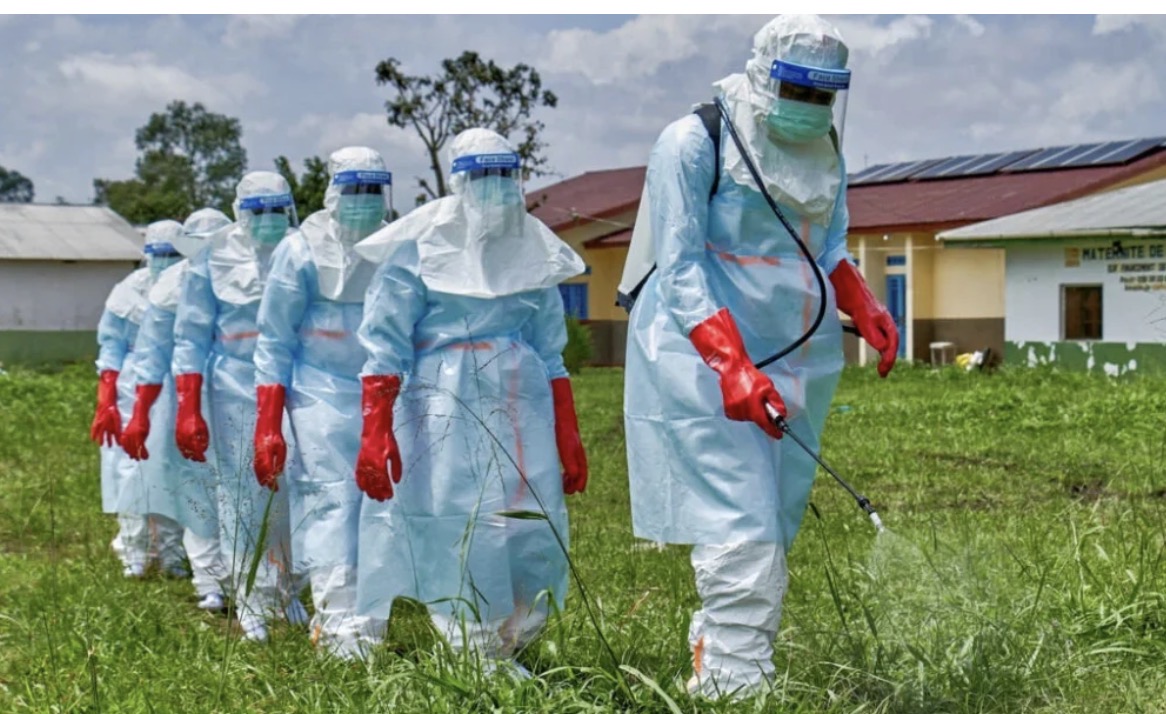
The Federal Government has intensified emergency measures to contain the possible spread of Ebola Virus Disease in Nigeria, with plans to establish treatment and isolation centres in states hosting designated ports of entry.
The development follows an increase in the number of persons identified as contacts of Nigeria’s confirmed Ebola patient from 44 to 53.
The national incident management system has also been activated under the coordination of the Minister of Health and Social Welfare, Prof Muhammad Ali Pate.
The confirmed case involves a woman who travelled to Nigeria after visiting Uganda, following an earlier trip to the Democratic Republic of the Congo.
She reportedly developed symptoms on October 7, sought medical attention in Abuja on October 11 and tested positive for the Bundibugyo strain of Ebola on October 20.
The World Health Organisation is investigating the possible source of the infection.
Health authorities have urged Nigerians to remain calm, maintain proper hygiene, avoid direct contact with the bodily fluids of suspected Ebola patients and promptly report suspected infections.
The NCDC also warned against stigmatising persons undergoing monitoring, stressing that public cooperation, early detection and effective contact tracing remain critical to preventing further transmission.
The woman who tested positive for Ebola in Nigeria has been identified as the wife of a Swiss diplomat stationed in Abuja, with preliminary investigations suggesting that she contracted the deadly virus during a recent trip to Uganda.
According to Reuters, Switzerland’s Federal Department of Foreign Affairs confirmed on Thursday that the 42-year-old Ugandan-born woman tested positive on October 20, marking Nigeria’s first confirmed Ebola case in over a decade.
The Swiss authorities disclosed that the patient had spent approximately one week receiving treatment at a private hospital in Abuja after developing symptoms before laboratory tests confirmed the infection.
The ministry explained that the woman was believed to have contracted the virus during a visit to Uganda about two weeks earlier.
Her husband, who accompanied her on the trip, has since been placed in isolation as a precautionary measure, although he has not exhibited any symptoms of the disease.
However, uncertainty remains over the actual source of the infection, as international health agencies intensify efforts to reconstruct the patient’s travel history and identify possible exposure routes.
Ugandan authorities had suggested that the woman visited eastern Democratic Republic of the Congo before travelling through Uganda, but the World Health Organisation (WHO) and Africa Centres for Disease Control and Prevention (Africa CDC) said the claim had not been independently verified.
Africa CDC official Wessam Mankoula disclosed during an online briefing that Nigerian and Ugandan health authorities were exchanging information to establish the patient’s movements.
He maintained that there was currently no validated evidence confirming that the woman travelled to the Democratic Republic of the Congo.
Providing further clarification, WHO Representative in Nigeria, Pavel Ursu, said available records indicated that the patient travelled to Uganda on September 16 and returned to Abuja on October 3.
Ursu also confirmed that the woman remained hospitalised, adding that medical indicators showed signs of improvement.
Meanwhile, WHO Emergency Response Manager Patrick Otim said investigations were continuing to establish where the infection originated and identify health facilities the patient visited after developing symptoms.
The Nigerian case has been linked to an outbreak involving the Bundibugyo strain of Ebola, first reported in the Democratic Republic of the Congo in May.
Ebola is transmitted through direct contact with the blood or bodily fluids of infected persons, including deceased victims. Common symptoms include fever, vomiting and diarrhoea, while severe infections can result in death.
Health authorities are currently tracing the patient’s contacts and reviewing her movements to identify individuals who may have been exposed and prevent further transmission of the virus.
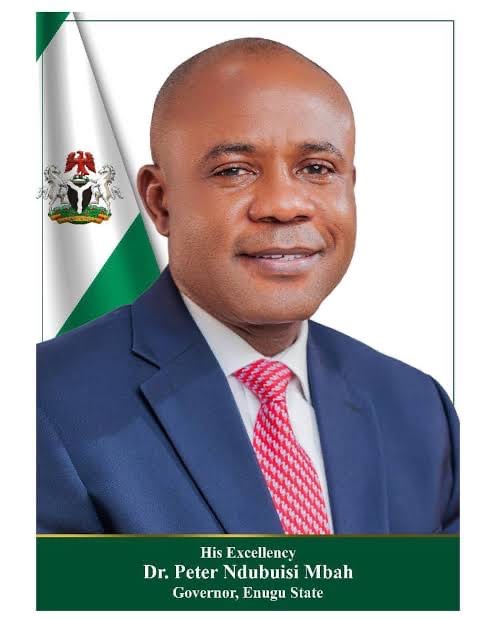
The Enugu State Government says it has strengthened its disease surveillance and puts health officials on alert within the 17 council areas in the state.
The Commissioner for Health, Prof. George Ugwu, said this on Wednesday in Enugu during a press conference on Actions of the State Government in Response to Confirmed Case of Ebola in Abuja.
Ugwu said that following the confirmation of the case, the government had reactivated and strengthened the Enugu State Public Health Emergency Operations Centre (PHEOC) to coordinate preparedness, surveillance and response activities.
“Specifically, the State has intensified disease surveillance across its 17 Local Government Areas and strengthened coordination with relevant agencies and partners.
“Surveillance activities around the Akanu Ibiam International Airport are also being strengthened in collaboration with Port Health Services and other relevant stakeholders.
“The state is further maintaining its Rapid Response Teams and relevant technical personnel on standby, while preparedness measures are being reviewed to ensure that the state is able to respond promptly should a suspected case be identified.
“Public awareness and risk communication activities are also being strengthened to ensure that members of the public receive accurate and timely information,” Ugwu, who is a Member of Presidential Committee on Ebola Prevention, said.
He said that health ministry would continue to work closely with Federal Ministry of Health and Social Welfare, its agencies and other partners to ensure effective preparedness, early detection, appropriate response and timely communication
The commissioner said that the government considers the health security of the state’s residents as a major priority and had taken appropriate precautionary measures without creating unnecessary fear or panic.
He urged health workers to maintain a high index of suspicion, strictly observe infection prevention and control measures, use appropriate protective equipment, and promptly report any suspected case through the established channels.
According to him, the government will continue to provide the necessary support and guidance to ensure health workers safety and effective response.
“To the good people of Enugu State, I urge you to remain calm and vigilant. There is currently no confirmed case of Ebola in Enugu State, and the measures being taken are precautionary.
“The public is advised to maintain good hand hygiene, avoid contact with the body fluids of sick persons, seek medical attention promptly when necessary, and report suspected sick person,” he said.
He specifically urged public and private health facilities across the state to remain on heightened alert and maintain a high index of suspicion for suspected cases, particularly among persons with relevant travel or exposure history.
“All suspected cases should be promptly isolated and immediately reported to the appropriate Disease Surveillance and Notification Officer (DSNO) or the State Public Health Emergency Operations Centre, while strict infection prevention and control measures are observed.
“I urge all health facilities to cooperate fully with the Enugu State Ministry of Health and other response agencies, as early detection and prompt notification are critical to preventing transmission,” he said.
It would be recalled that state government, through the Ministry of Health, for months had been undertaking Ebola Prevention Preparedness mesdures at Akanu Ibiam International Airport, Enugu, which is an international entry point.
The current Ebola Prevention measures at the airport is undertaking with collaboration of the Nigeria Centre for Disease Control and Prevention (NCDC), Federal Ministry of Health and Social Welfare, Port Health Services, airport authorities and other relevant partners.
.
The Enugu State Government says there is no confirmed case of diphtheria in the state, urging residents to disapprove unfounded ongoing rumours.
The Commissioner for Health, Prof George Ugwu, made the clarification in a briefing on Wednesday in Enugu on update on the rumoured suspected case of a diphtheria patient in University of Nigeria Teaching Hospital (UNTH), Ituku/Ozalla, Enugu.
“In response to this, the Public health and Surveillance unit of the State Ministry of Health are already at alert and to ensure appropriate prevention control measure and early detection as may be necessary.
“A few days ago, there was a report of suspected case of diphtheria at the University of Nigeria Teaching Hospital (UNTH), Enugu which was followed by our team.
“However, the diagnosis of diphtheria could not be sustained or confirmed; while the patient, wito was rumoured and suspected to have diphtheria,
had tonsillitis,” he said.
The commissioner noted that accordingly, contact traces and other appropriate measures are ongoing and “yet diphtheria are not diagnosed or confirmed in the state.”
He explained that the suspected patient had been traced to his home in Achara Layout in Enugu and he did not have any record of travel and had not being to the northern part of the country as rumoured.
“Our surveillance and tracing teams have also contacted his family members and others but no trace of diphtheria established,” he said.
Ugwu noted that although the state had remained on high alert against infectious diseases, “Enugu State is never at high risk of contacting diphtheria”.
“For the state, we have a robust routine and mop up vaccination especially on Penta 3, which provides effective immunisation against diphtheria for a whole life time.
“In 2026 Vaccination, we had 91 per cent record of coverage on Penta 3 vaccination, which is even above the national target or threshold,” he said.
The commissioner urged residents to remain calm and avoid spreading rumours or unverified information as well as seek medical attention promptly if they develop symptoms of any sickness.
He said, “The ministry is calling on parents and caregivers to ensure children are fully immunised with diphtheria containing vaccines (Penta 3).
“Residents are urged to follow the advice of health authorities during contact tracing and monitoring.
“Healthcare workers are urged to maintain appropriate standard precautions, promptly notify suspected cases through the surveillance system and ensure appropriate infection prevention and control measures.
“The Enugu State Ministry of Health, in collaboration with UNTH and relevant international partners, continues to monitor the situation and will be proactive for further information as necessary,” he added.
It would be recalled that there is an outbreak of diphtheria in Nigeria and 19,799 suspected cases sent to molecular laboratory test; with 15,309 confirmed cases and 517 confirmed death across 26 states and 357 Local Government Areas.
The worst affected states accounting for over 98 per cent cases of diphtheria are Kano, Bauchi, Borno, Kastin, Sokato, Zamfara, Kaduna and Plateau according to Nigeria Centre for Disease Control and Prevention (NCDC).
Diphtheria is a serious but vaccine preventable bacterial disease that can spread though respiratory droplets and close contact.
Symptoms of Diphtheria include: fever, sore throat, difficulty or pain when swallowing, cough, difficulty breathing, swelling of the neck and greyish/white membrane in the throat.
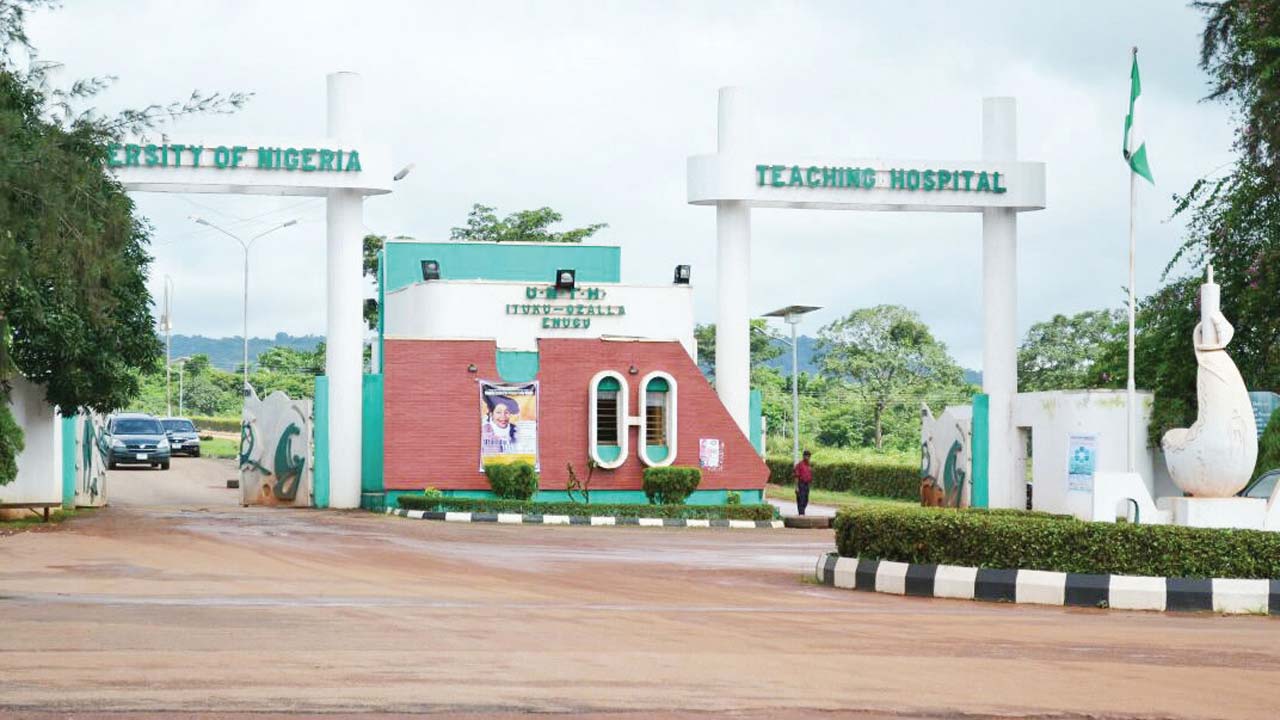
The University of Nigeria Teaching Hospital (UNTH), Ituku-Ozalla, Enugu State, has urged patients, visitors and members of the public to remain calm following the management of a clinically suspected case of diphtheria at the hospital.
The reassurance followed concerns over the admission and subsequent death of a paediatric patient at the hospital’s Children’s Emergency Room (CHER).
According to a statement issued by the hospital management on Wednesday, the patient received medical intervention immediately after admission but died two days later despite efforts by the attending medical team.
The hospital said a subsequent clinical post-mortem review suggested that the severe symptoms may have been caused by severe pharyngotonsillitis with massive exudate, rather than diphtheria as initially suspected.
However, as a precautionary measure, UNTH said comprehensive contact tracing had commenced to identify and monitor individuals who may have had close contact with the deceased.
The hospital also confirmed that the Children’s Emergency Room had undergone standard decontamination in line with established infection prevention and control protocols.
UNTH said it had previously managed sporadic cases of diphtheria successfully and possesses the specialist personnel, isolation facilities and medical equipment required to manage infectious disease cases.
The management urged members of the public to remain vigilant for symptoms associated with diphtheria, including persistent fever, severe sore throat and difficulty swallowing.
It advised anyone experiencing such symptoms, as well as parents whose children develop them, to seek immediate medical attention at a recognised healthcare facility and avoid self-medication.
Healthcare workers, patients and visitors were also advised to maintain proper hand hygiene and respiratory etiquette while within the hospital premises.
The hospital management assured the public that it would continue to prioritise community safety and public health, while providing updates based on verified medical information.


-

 News4 days ago
Holy Ghost Transformation: How Enugu North Chairman Ibenaku Onoh Ended Years of Traffic Chaos, Roadside Trading
-
 Politics3 days ago
One Feared Dead, Several Injured as Thugs Attack Ebonyi NDC Assembly Candidate, Burn Campaign Vehicle
-

 News3 days ago
Onitsha North LG Boss Reads Riot Act to Traders, Residents Over Poor Sanitation
-
 Health3 days ago
Nigeria’s Ebola Patient Identified as Wife of Swiss Diplomat, Infection Traced to Uganda
-

 Entertainment3 days ago
Nollywood Thrown Into Mourning as Veteran Actor Francis Duru Dies at 57
-
 Politics3 days ago
2027: APGA, APC Set for Joint Meeting in Anambra to Mobilise Support for Tinubu’s Re-election
-
 Politics3 days ago
2027: It’s Not South-East’s Turn, Obi Not Our Best Presidential Candidate – Umahi
-

 Politics3 days ago
2027: Minister Udeh to Unveil ‘ATM’ Political Group for Tinubu, Mbah’s Re-election