





Crime
Borno missing children rise as Boko Haram steps up recruitment

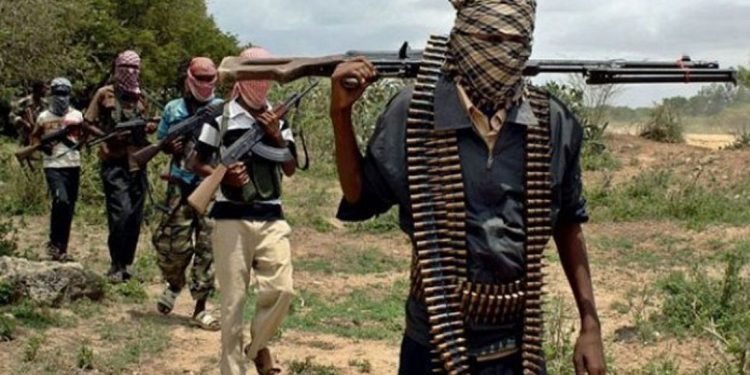

Some residents who spoke on Sunday recounted the agony of their missing loved ones and expressed the fear that the rise in child disappearance cases in the state may be linked to insurgent recruitment efforts.
The development comes as the #BringBackOurGirls movement renewed calls for the Nigerian government to release the findings of the fact-finding committee on the 2014 Chibok schoolgirls’ abduction.
With 78 girls still unaccounted for more than a decade later, the group urged transparency and accountability in the search for those still missing.
A video of a boy, around 10 years old, confessing to undergoing arms training along with approximately 30 other yet-to-be-identified children in a forest near Ajiri in Mafa Local Government Area of Borno State, went viral on social media at the weekend.

The video, posted by Zagazola Makama on X and reportedly recorded on January 22, 2025, captured the boy demonstrating his knowledge of handling firearms.
He confessed that he and other children of similar age were receiving military drills deep inside the forest.
“They are training us on weapons handling. Ali Shehu, Umar, Alhaji, and Malam Oro are the ones training us. We are at least 20 to 30. We are all young boys; some are bigger than me, while I am older than some of them,” the boy stated.
To support his claims, the child was handed an AK-47 rifle, which he expertly stripped and reassembled with near-perfect precision.
He also unloaded and reloaded a magazine, displaying an alarming level of proficiency in handling the weapon.
Some of the residents lamented the increasing rate of missing children in the state, an occurrence they alleged might be connected with the trending video.
One of the residents and a mother of two in Mafa, a location close to the Ajiri forest allegedly said to be the camping area for the children, Aisha Ali, confirmed the disappearance of her six-year-old child for over three years without trace.
“Around February 2022, my last born, Mustapha went missing. At the time, he was just six years old. It was during the late evening. All of a sudden, his whereabouts could not be traced, the last thing I remembered was seeing him eating while I was going to a friend’s place around 3 pm.”
She added, “Upon my return, I learnt he stepped out. We searched and searched. Just like a joke, we could not find him again. In fact, we just concluded he is dead because his whereabouts remain a mystery we can’t explain.”
Another resident in Maiduguri, the state capital, Muhammad Mamman, expressed concern as he narrated a recent experience.
“Around early last year, my brother lost his child, not that the baby girl died. She was just four years or so at the time. She just went missing. We immediately announced on the radio, yet she was nowhere to be found to date. Either dead or alive, we can’t explain,” he said.
To corroborate these experiences, an announcer in one of the popular radio stations in Borno State, who pleaded not to be identified because he was not authorised to speak on the matter, said in two weeks, at least one announcement on a missing child would be made.
“We have always announced cases of missing children. I can say at least we see such cases once every two weeks. This is alarming,” he said.
Other residents called on the government for immediate action, by combing the surrounding forests for missing children.
“With that video, security agencies must rise to the task. These places are not unknown. It may and may not, but we can’t continue to hear cases of missing children on local radio and a boy came out to say that he and others have been camped in a forest receiving training, yet the government will be comfortable,” Umar Abdulrahman, a resident said.
When contacted, the state police command said there had been at least one reported case of missing children every week in the state.
In an interview, the spokesperson of the command, Nahum Daso, said many such cases had been resolved in the past with a few still ongoing.
“Yes, there have always been cases of missing children. In aggregate, we can say at least one per week.
“Often, we do get the children back. I don’t have the current statistics with me, but we have reunited many missing children with their families.
Reacting to the video, Daso dismissed the recency of the claims, saying the act of using children as foot soldiers was in the past.
“You know, some of these clips are mostly old ones. From us, we don’t have any threat in regards to maybe children being used as child soldiers, but it used to be in the past. For over a decade, we have not recorded any cases like that,” he said.
Also reacting, the Special Adviser to the Governor on Security, Brig Gen Abdullahi Sabi Ishaq (retd.), said such operations were usually perpetrated by members of the Islamic State of West Africa.
“What you saw on that video is not part of the known activities of Boko Haram. That is the trademark of ISWAP.
“They take small almajiri children who are suffering and malnourished, get them to the bush, feed them and take care of them before training and turning them into combatants.
“Does that boy look malnourished? No. It is the evidence of good living they are having there,” he said.
When asked how the state government would address the claims by the suspect that other children were still undergoing training, he said, “You know, the war is still on and the state is using the non-kinetic model while the army is carrying out operations.
“We must acknowledge that the army is doing its best. However, I must tell you that one thing the army is seriously considering is the issue of collateral damage.
“If the Air Force visits these locations and detonates bombs, considering the little children there, the whole of Nigeria will rise and say that they have burned children. So these are some of the challenges.
“As for us, we rely on the army for this type of operation. Our Civilian Joint Task Force cannot handle it, especially as it concerns ISWAP. We relied more on military strength,” he added.
Highlighting the challenges to tackling the uprising, he said the use of traditional methods in fighting the insurgency was a serious setback.
“War is no longer fought as it was in the olden days. There is a need for technology that will prevent the soldiers from moving about in the bushes with legs and vehicles, to minimise casualties,” he added.
In a statement issued on Sunday and signed by its spokesperson, Jeff Okoroafor, the #BringBackOurGirls movement criticised successive governments for withholding the report on the abducted Chibok girls.
“The #BringBackOurGirls movement wishes to remind President Bola Tinubu’s administration of its constitutional duty to protect all citizens.
“To this effect, the administration has a duty to provide an account of the status of the rescue of the remaining Chibok girls to their families and the Nigerian people.
“We reiterate the importance of bringing closure for the families of the remaining 78 missing school children.
“Critically, the Tinubu administration has, like their predecessors, failed to release the Sabo fact-finding committee report, despite our movement’s request including through an FoI process,” the statement read.
The group recalled that on the night of April 14, 2014, 276 schoolgirls were abducted by terrorists from Government Secondary School, Chibok, in Borno State.
Following global outrage and mounting pressure, then-President Goodluck Jonathan set up the Sabo committee on May 6, 2014, to investigate the incident.
The committee’s report, submitted on June 20, 2014, confirmed the abduction, noting that while 57 girls escaped, 219 remained missing at the time.
More than a decade later, BBOG reported that 141 of the originally missing girls had regained freedom, with many resuming their education.
It, however, said 78 girls remained unaccounted for, with concerns that some may have been assimilated into terrorist enclaves.
Okoroafor also urged citizens to join the BBOG to demand comprehensive public disclosure of the tragedy and release of all investigations conducted into the abduction of the Chibok girls on April 14, 2014.

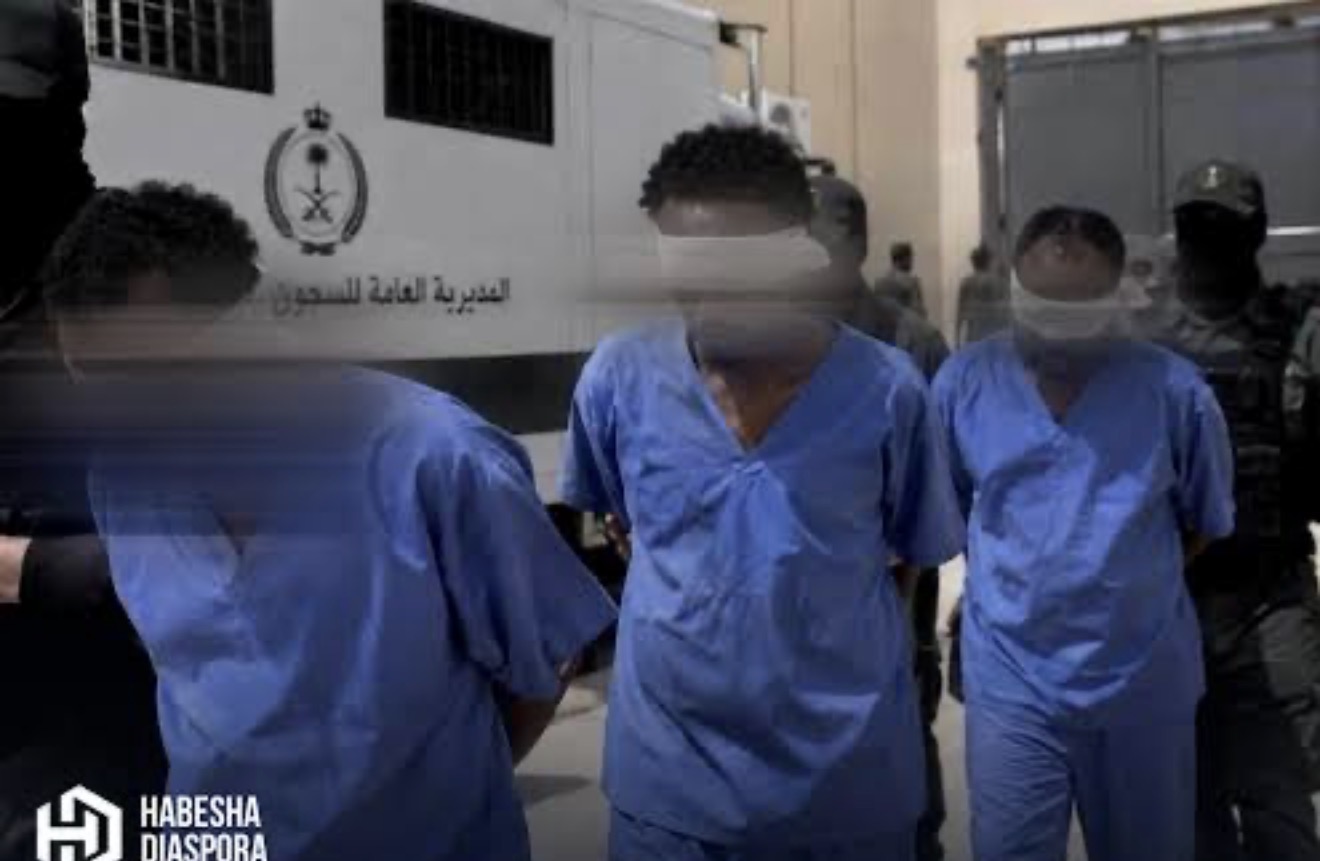
Saudi Arabia has executed five Ethiopian nationals convicted of smuggling hashish into the kingdom, bringing the number of executions carried out in the country this year to 205.
The Saudi Interior Ministry announced the executions on Thursday, November 5, 2026, saying the five men were found guilty of participating in the smuggling of hashish into the country.
According to a statement published by the official Saudi Press Agency, the executions were carried out in the Asir region in southwestern Saudi Arabia.
The latest executions bring to 32 the number of Ethiopian nationals put to death in Saudi Arabia in 2026, making Ethiopians the largest foreign nationality among those executed this year.
Five Ethiopians were reportedly executed in June, while another five were put to death in July over similar drug-related offences.
The latest development comes amid growing international concern over Saudi Arabia’s increasing use of capital punishment, particularly against foreign nationals convicted of drug-related offences.
Human Rights Watch (HRW), in a report published in July, warned that at least 79 Ethiopian nationals remained at imminent risk of execution over similar charges.
The rights organisation also raised concerns about alleged violations of fair trial guarantees, including inadequate access to legal representation and interpretation services for some Ethiopian migrants facing capital punishment.
Saudi Arabia recorded 356 executions in 2025, its highest annual figure on record.
Thousands of Ethiopians live and work in Saudi Arabia, many of whom migrate in search of employment through the dangerous Eastern Route connecting the Horn of Africa to the oil-rich kingdom through Yemen.
The route exposes migrants to serious security and humanitarian risks during their journey.
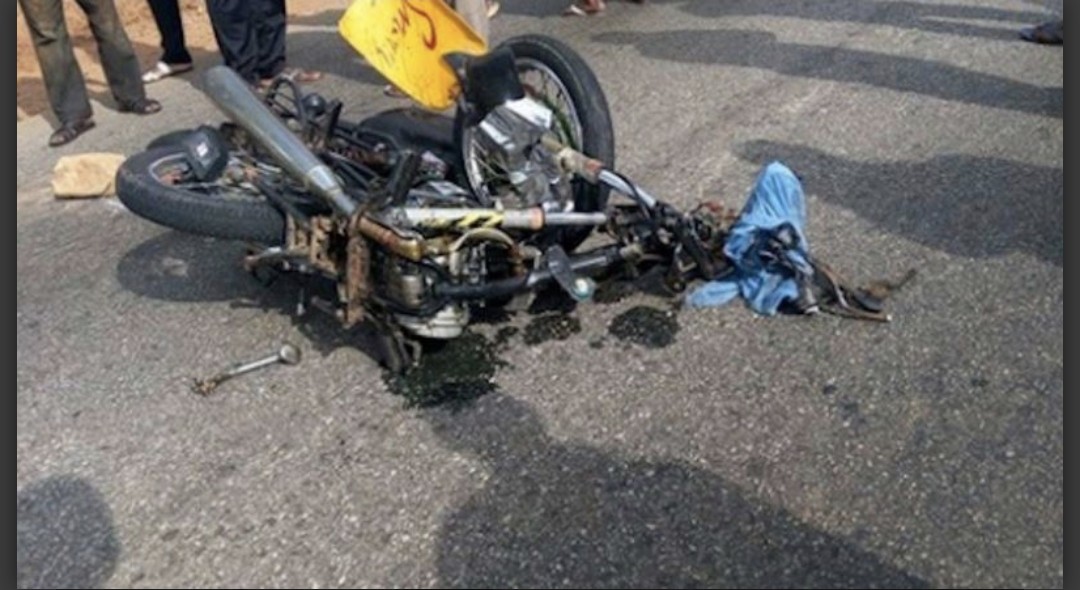
A 25-year-old amateur boxer, Kehinde Asimiyu, popularly known as KBlaq, has been stabbed to death following a disagreement over transport fare involving a commercial motorcyclist in Oyo State.
The incident occurred at Olodo Garage in Lagelu Local Government Area of the state.
The Oyo State Police Command confirmed the killing, announcing the arrest of two suspects in connection with the incident.
The Police Public Relations Officer, DSP Olayinka Ayanlade, said in a statement that the command received a report of the incident on November 1, 2026.
According to the police, the deceased was allegedly stabbed with a broken bottle by a suspect identified as Taiwo Babarinde during the disagreement.
“Following receipt of the report, police operatives, accompanied by a patrol team, immediately mobilised to the scene, while the victim was rushed to Academy Hospital, Texaco, Iwo Road, Ibadan, where he was confirmed dead by the doctor on duty,” the statement said.
The police added that the deceased’s remains were subsequently deposited at Adejare Embalming Centre for preservation, while photographs were taken as part of the preliminary investigation.
Two suspects, identified as Taiwo Babarinde, who allegedly inflicted the fatal injury, and Ishola Semiu, who is suspected of involvement in the incident, have been arrested.
“Both suspects are currently in police custody, while the case has been transferred to the State Criminal Investigation Department (SCID), Iyaganku, Ibadan, for comprehensive investigation,” Ayanlade stated.
The police said investigations were ongoing to establish the circumstances surrounding the killing.
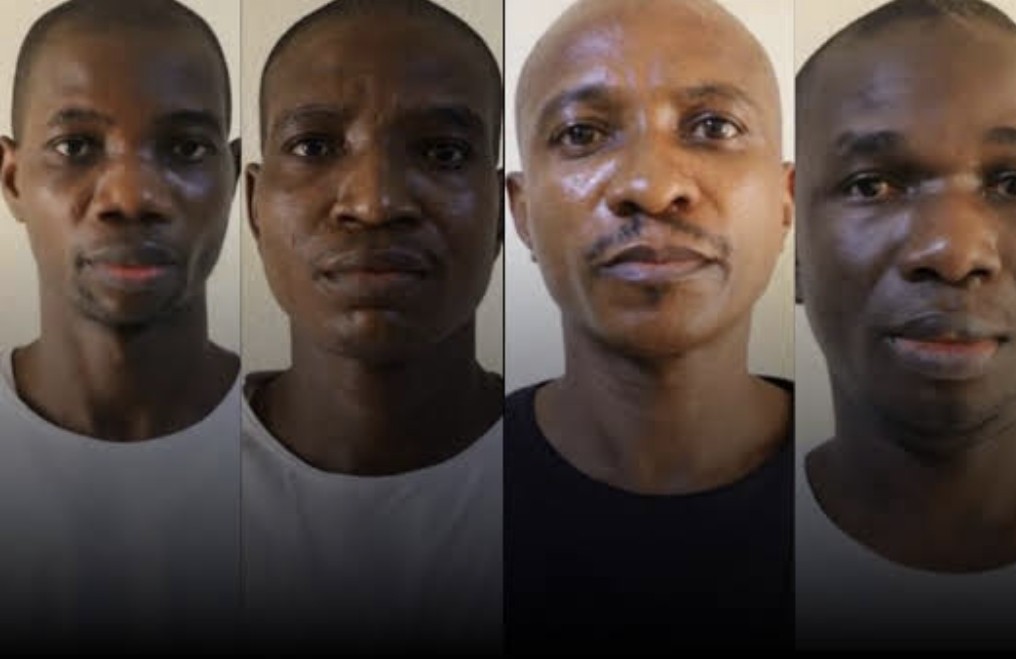
The Department of State Services (DSS) has released four men arrested over suspected links to the Indigenous People of Biafra (IPOB) and awarded them a total of N20 million in compensation after investigations cleared them of the allegations.
The four men described their release as the happiest day of their lives after spending about four years in DSS custody.
The Director-General of the DSS, Oluwatosin Adeola Ajayi, reportedly ordered their release and the payment of N5 million to each of them following their clearance.
The beneficiaries are Emele Uduma Ibe, Berefgagha Appah, Ondokeyilemi Aggry and Oyeinmokebebeton Aggry. They were arrested in May 2022 in Sampou and Akeddei communities in Kolokuma/Opokuma and Sagbama Local Government Areas of Bayelsa State.
According to Vanguard, a source familiar with the development disclosed that investigations established that the men had been misled into believing they would receive a monthly payment of N100,000 under the Federal Government’s Amnesty Programme.
They were allegedly lured by individuals linked to IPOB, who are currently facing trial.
Speaking on behalf of the four men, Emele Uduma Ibe expressed gratitude to the DSS leadership, describing the day of their release as the happiest moment of his life.
He said the experience had taught him valuable lessons which he intended to share with others, while offering prayers for the DSS Director-General and the management of the Service.
Meanwhile, their lawyer, Deji Adeyanju & Partners, commended the DSS for its efforts towards national security and respect for human rights.
The law firm particularly praised Ajayi’s approach to human rights issues, describing the level of hygiene and professionalism within the Service as exceptional.
The development is part of a broader review of inherited terrorism-related cases initiated by Ajayi after assuming office in 2024.
The DSS reportedly reviewed more than 300 cases, with the exercise leading to a reduction in the number of detainees at its facilities to about 100 following investigations. The agency has also reportedly paid over N1 billion in compensation to individuals cleared of allegations or affected by operational mistakes.
Other beneficiaries include a Jos-based businessman who received N20 million after being mistakenly shot by DSS operatives in Plateau State, Chineze Ozoadibe, who was paid N10 million following her wrongful arrest, and Sunday Ifedi, who also received N10 million after investigations cleared him of links to IPOB.
Kenneth Okechukwu Nwafor was similarly awarded N5 million after investigations absolved him of IPOB-related allegations.
A source disclosed that the four newly released men would also receive psychological and medical support, in addition to assistance with their reintegration into society.
In a recent media interview, Ajayi acknowledged that the DSS, like every human institution, could make mistakes, stressing that such errors must be addressed.
He reportedly maintained that whenever the Service acknowledges wrongdoing, it has a responsibility to provide remedies, including compensation, while improving its operations in line with the rule of law.

Islamic cleric, Sheikh Ahmad Gumi, has said some bandits he engaged with claimed they could not abandon their violent activities because they feared being killed if they surrendered or gave up their weapons.
Gumi said the armed men described the persistent attacks as a cycle of revenge, alleging that military operations and killings in their communities had fuelled their resolve to continue attacking.
According to the cleric, some of the bandits admitted that the bloodshed had become excessive but insisted they felt compelled to sustain the violence in retaliation for attacks against their communities.
“One of the bandits was telling us the bloodshed is too much,” Gumi said.
He added, “They, too, are not happy. And they say they are forced to do it.”
Gumi made the remarks during an interview on PAPShow, published on October 29, with excerpts from the conversation circulating widely on social media on Tuesday.
Explaining the grievances of the armed groups, the cleric said they accused security forces and local vigilantes of killing women and children during operations initially aimed at tackling cattle rustling.
He said the bandits questioned the killing of civilians in their communities and viewed such incidents as justification for retaliatory attacks.
“But why did they kill their women and children? Why are they killing their women and children? Why are the vigilantes arresting them and killing them? Why?” he quoted the bandits as asking.
Gumi said the armed men believed the situation had degenerated into a cycle of violence characterised by revenge, attacks and counterattacks.
“So, they feel it’s a field of blood, revenge, attack and counterattack,” he said.
The cleric called for negotiations to end the killings, arguing that religious leaders should help create an avenue for dialogue between the parties.
“So, we, as clergy, our own duty is to look at how to stop it. Let’s stop the bloodshed. Let’s come to the table,” he said.
Asked why the bandits could not abandon their activities, Gumi attributed their reluctance to fears that they would be killed if they surrendered.
“Because they thought they were killed. So, we need to reaffirm to them, to put confidence in them that they will not be killed,” he said.
The cleric also alleged that financial sponsorship and rivalry among armed groups were contributing to the proliferation of sophisticated weapons.
Asked whether individuals were financing the bandits, Gumi said such a possibility could not be ruled out.
“It’s possible now. You know, it’s possible now,” he said.
He explained that rival groups were acquiring more powerful weapons to outmatch and intimidate one another, creating what he described as an arms race.
“They buy more weapons because there’s an arms race between them. You know, there are different groups.
“There’s an arms race. So, this den has more machine guns than this one. So, they should fear them,” he said.
On the source of the firearms, Gumi claimed that the armed groups obtained weapons through illegal markets, where buyers could access them if they had the money.
“Well, it’s a black market, like drugs. It’s a black market. If you just have the money, you get them,” he said.
Gumi further alleged that foreign intelligence agencies were involved in supplying weapons to armed groups operating in Nigeria, although he did not provide evidence to substantiate the claim.
“Foreign intelligence definitely have a hand in it,” he said.
Asked whether foreign countries could be supplying weapons to Nigerian bandits and terrorists, the cleric said it was possible, suggesting that countries with strategic interests in Nigeria could be involved.
“It’s possible,” he replied.

…Ondo State Police Arrest Suspect, Recover Three Bags of Fake Dollar Notes
Men of the Ondo State Police Command have uncovered a suspected counterfeit United States dollar printing factory in Kiniso Village, via Ajue, Odigbo Local Government Area, arresting one suspect and recovering three bags of suspected fake dollar notes.
The operation followed a complaint by a businessman, Yusuf Nasiru, from Sabo, Okitipupa, who allegedly lost $6,000, equivalent to about N8.6 million, to two men in a fraudulent foreign exchange transaction.
The suspects reportedly approached Nasiru for a currency exchange transaction but allegedly returned counterfeit dollar notes to him.
According to Nasiru, the incident occurred on October 25, 2026, when two men, identified as Peter Desmond and Olami Toro, visited his shop and requested to exchange United States dollars for their naira equivalent.
He said he handed over $6,000 to the men but they later returned the money, claiming they did not have enough funds to complete the transaction, before leaving.
Nasiru said he subsequently discovered that the dollar notes returned to him were counterfeit and reported the incident to the police on October 28.
The State Police Public Relations Officer, Abayomi Jimoh, who confirmed the arrest and discovery of the suspected printing factory, said detectives immediately commenced an investigation following the complaint.
Jimoh said operatives from the Okitipupa Divisional Police Headquarters launched an investigation, while intelligence gathering and technical tracking led them to Kiniso Village, where one of the suspects was traced.
He disclosed that police operatives raided the suspected hideout on October 29 following intelligence provided by members of the community.
However, some occupants reportedly escaped through the perimeter fence during the operation.
A search of the premises led to the recovery of three bags containing suspected counterfeit United States dollar notes and a small wooden box believed to be connected to the alleged illegal printing operation.
The arrested suspect, whose identity was not disclosed, reportedly provided useful information to assist the ongoing investigation.
The police spokesman said the command had ordered an intensified investigation to apprehend other members of the suspected criminal network and establish the full extent of its operations.
He reiterated the command’s commitment to bringing all those found culpable to justice and warned members of the public against engaging in suspicious foreign exchange transactions with unverified individuals.
Jimoh also advised residents to authenticate foreign currencies before accepting them and report suspicious activities to the nearest police station.


-
 Crime3 days ago
End Of The Road: Kidnapper Arrested While Collecting ₦200,000 Ransom
-

 Politics5 days ago
Enugu APC Warns Residents Against NDC’s ‘Alarmism’, Urges Vigilance
-
 Politics2 days ago
Court Nullifies Enugu NDC Primary, Orders INEC to Delist Candidate
-

 Opinion5 days ago
HONOURABLE REP. BASHIR ZUBAIRU USMAN: BLESSED HEART, BLESSED MIND
-
 News4 days ago
Man arrested for Allegedly Pushing 17-Year-Old Girl From Two-Storey Building in Imo
-

 Sports3 days ago
Super Falcons Receive $100,000 Each as Tinubu Fulfils Reward Pledge
-

 Politics5 days ago
Nwifuru vs Wike: Gov fights back says No Rainbow Coalition In Ebonyi
-

 News1 day ago
OPay Explains How Nigerians Can Check Eligibility for FG’s ₦50,000 Monthly Cash Suppor