



Crime
Police Arrest Suspected Armed Robber, Recover Pistol, Live Cartridge in Enugu

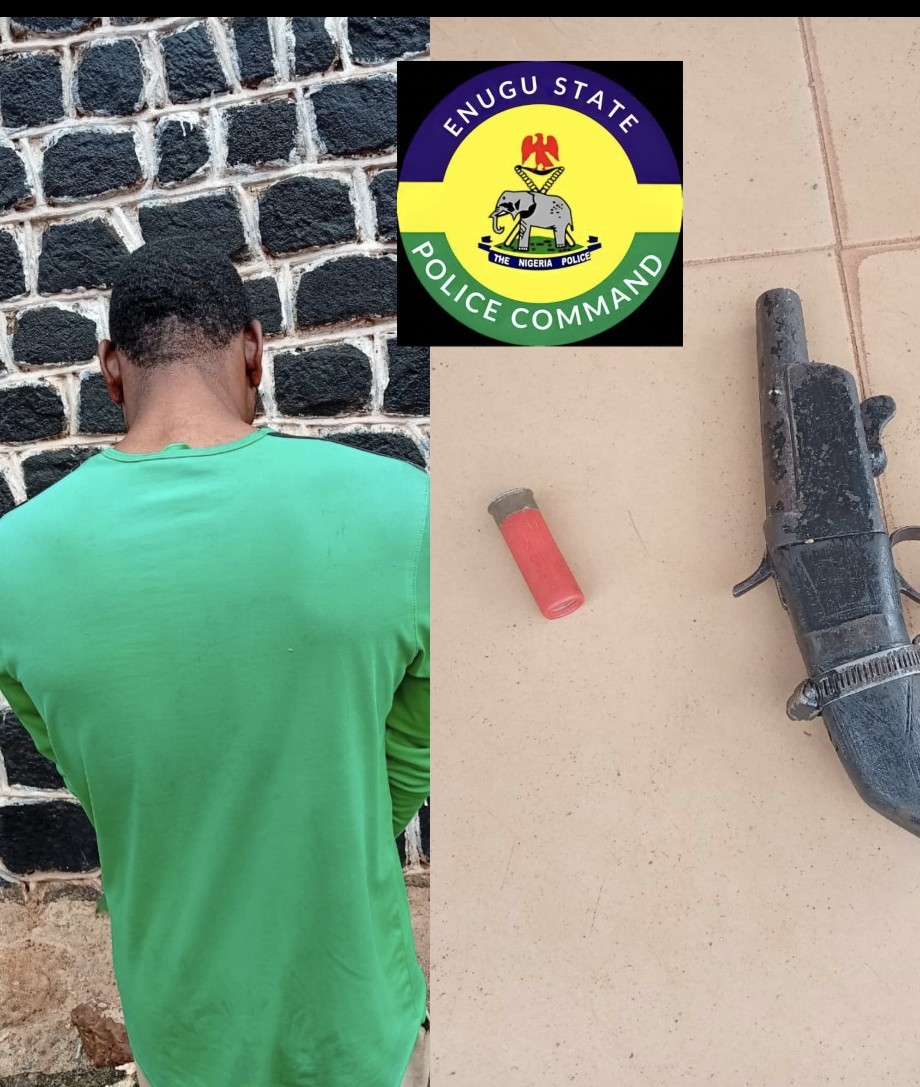

The Enugu State Police Command has arrested a 26-year-old man, Chekwube Agbo, for alleged armed robbery and recovered a locally made pistol and a live cartridge from him.
The suspect was arrested on Monday, August 10, 2026, at about 1:45 p.m. at Obollo Etiti in Udenu Local Government Area of Enugu State, following credible information provided by a member of the public.
According to a statement issued on Tuesday by the Command’s spokesperson, SP Daniel Ndukwe, the suspect had arrived at a hotel purportedly to lodge when police operatives, acting on the information, searched his bag and found the firearm and ammunition.
The police said Agbo was subsequently taken into custody along with the recovered exhibits.
During preliminary interrogation, the suspect allegedly confessed to being a member of an armed robbery gang that specialised in threatening and robbing Point-of-Sale (POS) operators of their valuables.

The suspect reportedly told investigators that other members of the gang fled the scene following his arrest.
The police said the suspect would be prosecuted after investigations are concluded, while efforts are ongoing to identify and arrest the fleeing members of the gang.
The Commissioner of Police in Enugu State, CP Mamman Bitrus Giwa, commended the individual who provided the information that led to the arrest.
Giwa also urged residents to promptly report suspicious persons and activities to the police, assuring the public that the Command would continue to work with citizens to prevent and tackle crime across the state.

A Lagos State Special Offences Court sitting in Ikeja has ordered the remand of Nigerian-American car dealer Oluwatobi Adegoke at the Kirikiri Maximum Security Correctional Centre over an alleged $680,000 vehicle-import fraud.
Justice Olubunmi Abike-Fadipe issued the order on Friday following Adegoke’s arraignment by the Ilorin Zonal Directorate of the Economic and Financial Crimes Commission (EFCC) on a one-count charge of stealing.
According to the EFCC, Adegoke was arrested in July 2026 over an alleged cross-border scheme involving the purported purchase and importation of luxury vehicles from the United States to Nigeria.
Investigators reportedly linked him to a US-based syndicate allegedly targeting Nigerians seeking to purchase vehicles abroad.
The commission alleged that Adegoke, while residing in the United States, circulated photographs of a 2024 Mercedes-Benz G63 AMG to prospective buyers, claiming he could procure and ship the vehicle to Nigeria.
The EFCC further alleged that two victims paid more than $320,000, equivalent to approximately ₦434.88 million, in connection with the transaction.
However, the charge before the court cited an alleged theft of $680,000 belonging to Ikechukwu Osita Ifeabunike.
According to the charge, the money was transferred to the bank account of Adegoke’s company, Omosco Auto Sales LLC, for the purchase of a 2022 G-Wagon from an individual identified as Mr Robinson.
The alleged offence is punishable under Sections 278(1)(b) and 285(1)(a) of the Criminal Law of Lagos State, 2015.
Adegoke pleaded not guilty to the charge.
Following the plea, EFCC counsel Arazeem Adebayo urged the court to fix a trial date and remand the defendant.
Defence counsel Olalekan Abiodun, whose earlier objection to the arraignment was overruled, subsequently asked the court to keep his client in EFCC custody pending the filing of a bail application.
The judge rejected the request and ordered that Adegoke be remanded at the Kirikiri Maximum Security Correctional Centre.
The court adjourned the case until January 13, 2027, for the commencement of trial.
The allegations against Adegoke remain subject to judicial determination.
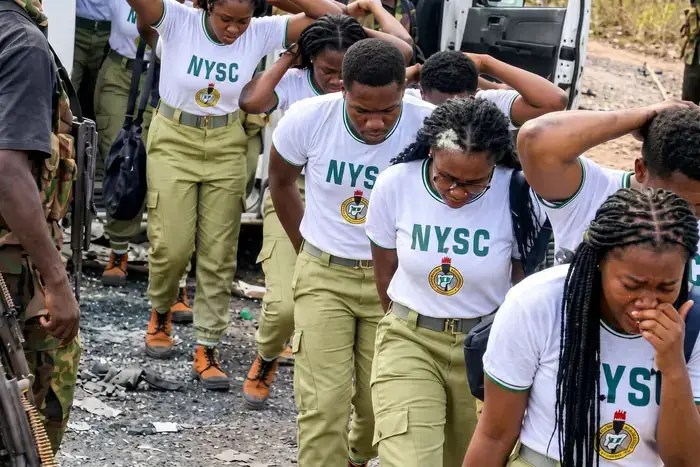
The 20 prospective National Youth Service Corps (NYSC) members abducted in Imo State have reportedly been given the opportunity to choose any of the six South-West states for their national service.
According to Saturday PUNCH, the graduates were kidnapped on October 1 along the Owerri–Onitsha Road, near Umunoha in Mbaitoli Local Government Area of Imo State, while travelling in two commercial buses belonging to Uko Akwa Ibom Motors. They were reportedly heading to Abia and Akwa Ibom states.
Families of the victims disclosed that they paid ₦6 million per captive to secure their release, after the kidnappers initially demanded ₦50 million per person. One victim’s mother said the demand was later reduced to ₦15 million before the kidnappers agreed to accept ₦6 million following appeals from the family.
Relatives and well-wishers reportedly contributed money towards the ransom. Some family members also described the emotional and physical toll of the incident, with one mother revealing that she and her daughter had been hospitalised following the ordeal.
The Imo State Police Command, however, maintained that the graduates were rescued through sustained security operations and denied knowledge of any ransom payment. The police had announced their rescue on Wednesday, after which the victims were taken to a Department of State Services hospital in Owerri for medical evaluation.
The Director-General of the NYSC, Brigadier General Olakunle Nafiu, also visited the released graduates alongside senior security officials.
However, the NYSC had yet to officially confirm the reported offer allowing the graduates to choose their preferred South-West states as of the time of publication.
The incident has renewed concerns over the safety of corps members travelling long distances for national service. Similar kidnappings in other parts of the country have intensified calls for improved security measures and, in some quarters, the scrapping of the 53-year-old scheme.
Although the Federal Executive Council approved NYSC reforms in June 2026, including risk-sensitive deployment and a technology-driven mobilisation process, questions remain about how effectively the measures will protect young graduates from security threats.
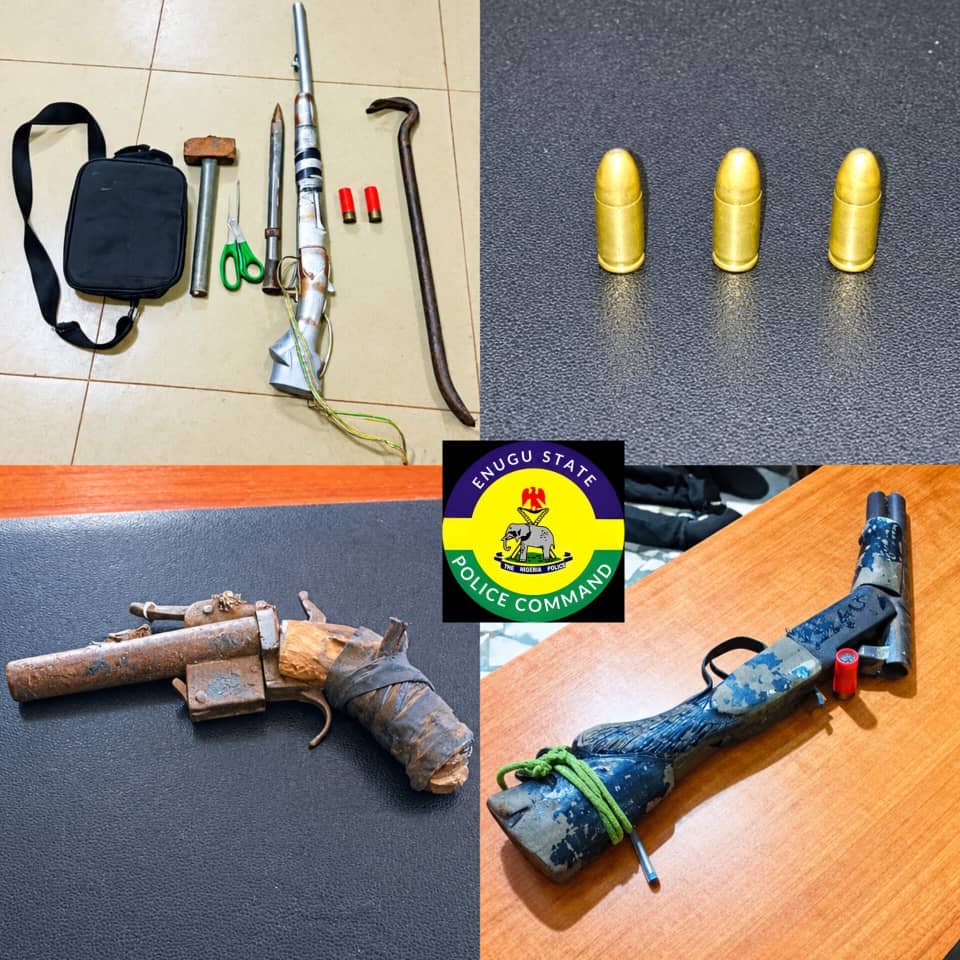
ENUGU — The Enugu State Police Command says it has arrested five male suspects in separate operations across the state and recovered three firearms, six rounds of live ammunition and other exhibits.
The Command disclosed this in a statement issued on Thursday, October 8, 2026, by its Police Public Relations Officer, SP Daniel Ndukwe.
According to the statement, police operatives attached to Inyi Division responded to a distress call about an armed robbery at Umuaor, Umukabia Isiama Awlaw Community, Oji-River Local Government Area, at about 5:10 a.m. on October 7.
One suspect, identified as 26-year-old Arinze Osita Onwuaso, was arrested while other suspects reportedly fled the scene. Police said they recovered a locally made cut-to-size single-barrel gun, two live cartridges, a pry-bar, hammer, scissors and chisel from him.
In a separate operation on October 5, operatives of the Anti-Cultism Section of the Violent Crime Response Unit arrested two suspected cultists, 24-year-old Jonas Adejo, also known as J-Money, and 25-year-old Okoro Innocent, also known as Virus, at Umudioka Community in Nsukka.
Three live rounds of 9mm ammunition were recovered from the suspects. Police said the two men confessed during interrogation to membership of the Supreme Vikings Confraternity.
Meanwhile, on September 25, operatives of Aninri Division, working with members of the Neighborhood Watch Group, raided a suspected criminal hideout at Amagu Mpu Community in Aninri LGA.
The operation led to the arrest of 25-year-old Anichebe Ogbonna, from whom police said one locally made pistol was recovered.
Similarly, on September 18 at about 11:00 p.m., operatives of 9th Mile Division, acting on information and in collaboration with Neighborhood Watch members, arrested 38-year-old Chukwujekwu Chukwuemeka at Ameke-Ngwo, Udi LGA.
He was arrested over alleged involvement in armed robberies in the area. Police said one cut-to-size pump-action gun and one live cartridge were recovered from him.
The Command said investigations into the cases are ongoing and that the suspects would be arraigned in court after the conclusion of investigations.
The Commissioner of Police, CP Mamman Bitrus Giwa, commended members of the public for providing information and praised the police operatives for their response to credible intelligence.
He reiterated the Command’s commitment to intelligence-led operations against armed robbery, cultism and other violent crimes, while urging residents to remain vigilant, law-abiding and supportive of security agencies.

By Okey Maduforo, Awka
The Awka High Court, on Tuesday, denied bail to the General Overseer of Day Spring Assembly, Mr Harrison Anazodo, who is standing trial over alleged offences relating to his activities as a pastor.
Anazodo had applied for bail on health grounds, but the presiding judge, Justice Jude Obiora, rejected the application, citing concerns over possible interference with witnesses.
The development came as seven persons, believed to be members of the congregation, are expected to testify in the case.
The court adjourned the matter until October 16 for further proceedings.
Speaking shortly after the hearing, State Counsel, Victoria Ekwerekwu, commended the Anambra State Government for its efforts to tackle alleged fraudulent activities by some religious figures.
She said, “We thank Governor Charles Soludo for trying to sanitise our society from pastors who make the younger generation believe that making money without hard work is possible.”
According to her, the prosecution has established a prima facie case against Anazodo, although the state would still be required to prove the allegations beyond reasonable doubt.
“Today, there is a prima facie case against the accused, Mr Harrison Anazodo, though it is left for us to prove it beyond reasonable doubt.
“The court ruled on the bail application and denied him bail because of the witnesses, to ensure that they are not interfered with. The matter was subsequently adjourned until October 16,” she said.
The Anambra State Commissioner for Information, Dr Law Mefor, expressed optimism that the case would be concluded expeditiously, stressing that the ultimate decision rests with the court.
“We have been here since 9am. The court considered the bail application filed by his counsel and, after weighing its merits, the judge ruled that bail should be denied.
“We are looking forward to the quick dispensation of the matter and we assure you that justice will be done and will be seen to have been done,” Mefor said.

By Our Correspondent
The Inspector-General of Police, Olatunji Disu, has deployed the Deputy Inspector-General of Police in charge of Operations, Shehu Nadada, to Imo State to coordinate the search-and-rescue operation for 20 prospective National Youth Service Corps members and other passengers abducted along the Owerri-Onitsha Road.
The victims were reportedly abducted on Thursday, October 1, 2026, around Umunoha in Imo State.
The Force Public Relations Officer, Force Headquarters, CSP Anietie Iniedu, disclosed this in a statement issued on Friday.
According to the statement, Nadada arrived in the state alongside two Commissioners of Police and immediately conducted an on-the-spot assessment of the incident and the ongoing rescue operation.
He also reviewed the operational strategies, deployment of personnel and available assets, while issuing additional directives aimed at strengthening the coordinated response.
The assessment was conducted alongside the Imo State Commissioner of Police, CP Audu Garba Bosso; the Commissioner of Police in charge of Federal Operations, CP Akpan Anifiok; the Commissioner of Police in charge of the Police Mobile Force; other service commanders and members of the management team of the Imo State Police Command.
Iniedu said the search-and-rescue operation had been intensified, with additional tactical teams and operational assets deployed to identified areas.
He added that the operation was being supported by intelligence-led tracking of the abductors and coordinated efforts with other security agencies.
Nadada assured members of the public that the police remained committed to securing the safe release of the abducted persons.
“The Nigeria Police Force is committed to securing the safe rescue of the 20 abducted persons and will sustain the operation until the mission is successfully concluded,” Iniedu quoted Nadada as saying.
The police boss urged members of the public and the media to remain calm and vigilant, while appealing to anyone with credible information that could assist the operation to contact the police or the nearest security formation.
He assured the public that all information received would be treated with strict confidentiality.
The police said further updates would be provided as the rescue operation progresses.

-

 News3 days ago
Curfew Continues as Soludo Sets Up Commission of Inquiry Over Aguleri–Umuoba Anam Clash
-
Crime4 days ago
Court Denies Alleged Fake Pastor Bail as Seven Witnesses Await Trial
-

 Education3 days ago
Ihejirika Hails Mbah’s Infrastructure Drive as Coal City University Inaugurates Governing Council
-

 News4 days ago
NAF Crash Claims Pilot 16 Days After Wedding
-
 News2 days ago
Ebonyi Cement Project: Where Is the Limestone Evidence?
-

 Politics52 minutes ago
Odii Shuts Down Abakaliki, Buys Fuel for Thousands of Supporters at Grand Reception
-
 Crime3 days ago
Enugu Police Arrest Five Suspects, Recover Three Firearms, Six Rounds of Ammunition
-
 News3 days ago
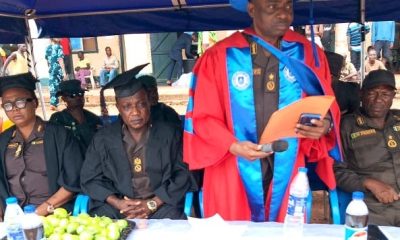
Inclusivity: NOUN Matriculates 70 Prison Inmates at Special Study Centre, Enugu