



News
Big money, small impact: Non-Performing Govs on fire over N9tn FAAC windfall

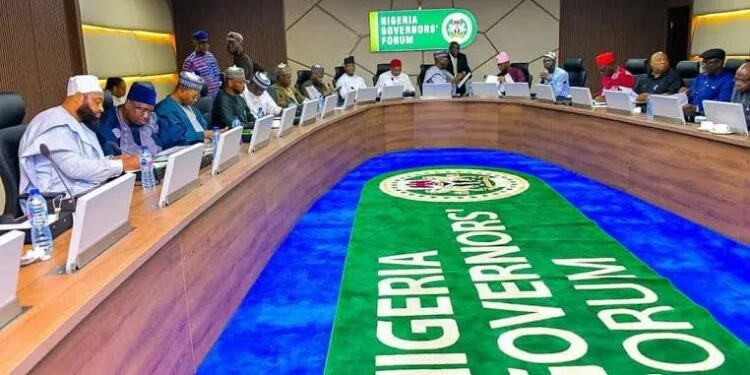

FAAC allocations to states surged by over N2tn in one year, according to an analysis of Federation Account disbursement data published by the National Bureau of Statistics highlighting the scale of the revenue windfall that flowed to subnational governments in 2025 amid higher federation inflows.
The sharp rise has triggered criticism from organised labour and opposition political parties, with the Nigeria Labour Congress warning that higher allocations have failed to deliver meaningful improvements in citizens’ welfare due to weak governance, misplaced priorities, and corruption at the state level.
Civil society organisations have also faulted state governments, accusing them of mismanaging the inflows and failing to translate increased revenues into visible development outcomes, while calling for stronger accountability and oversight.
Economists, meanwhile, say the surge has expanded states’ fiscal space but caution that heavy dependence on federally shared revenue and poor revenue management continue to undermine sustainable development at the subnational level.

The Federation Account disbursement data show that state governments received a total of N7.315tn from the Federation Account Allocation Committee in 2025, compared with N5.186tn in 2024. The year-on-year increase of roughly N2.13tn represents a jump of about 41 per cent in direct FAAC allocations to states.
When the constitutionally mandated 13 per cent derivation revenue is added, total inflows attributable to states climbed to N8.934tn (about N9tn) in 2025, up from N6.533tn in 2024, a rise of N2.4tn or 36.74 per cent.
This surge came against the backdrop of a sharp expansion in total FAAC distributions. Aggregate allocations to the three tiers of government, including derivation, rose from N15.259tn in 2024 to N21.897tn in 2025.
States therefore captured a substantial share of the overall increase, both in absolute terms and as a proportion of total federation revenues. Without the 13 per cent derivation component, states’ N7.315tn allocation in 2025 accounted for about 33.4 per cent of the N21.897tn total FAAC disbursement for the year, compared with roughly 34.0 per cent in 2024.
When derivation revenue is included, total state-linked receipts of N8.934tn represented about 40.8 per cent of total FAAC disbursements in 2025, down from around 42.8 per cent in 2024, indicating that while inflows grew in nominal terms, their relative share declined as allocations to all tiers expanded.
A closer look at monthly disbursements shows that state allocations improved steadily throughout 2025. States received N498.50bn in January, well above the N396.69bn recorded in January 2024.
Monthly allocations continued to trend higher, peaking at N727.17bn in October before easing to N601.73bn in December. By contrast, only two months in 2024 recorded allocations above N500bn, with the highest monthly figure being N549.79bn in December.
By the end of June 2025, states had already received over N3.32tn, compared with about N2.33tn in the first half of 2024, easing short-term liquidity pressures, particularly for states with heavy wage bills and debt service obligations.
Derivation revenue also played a critical role. In 2025, derivation payments rose to N1.619tn from N1.347tn in 2024, an increase of about N272bn or just over 20 per cent. Monthly derivation inflows were especially strong in September 2025, when oil-producing states shared N183.01bn, compared with N99.47bn in September 2024.
Despite the surge, states did not disproportionately outpace other tiers. Federal Government allocations rose from N4.951tn in 2024 to N7.613tn in 2025, while local government allocations increased from N3.774tn to N5.351tn.
Nevertheless, the impact on states is particularly significant given their responsibility for delivering education, healthcare, and infrastructure. The additional N2.4tn received in 2025 alone is equivalent to nearly half of what states received from FAAC in total in 2024.
The 10th edition of the BudgIT State of States Report, titled ‘A Decade of Subnational Fiscal Analysis: Growth, Decline and Middling Performance’, revealed that over 30 states rely heavily on FAAC allocations.
An executive of BudgIT said on Channels Television’s Politics Today programme, “At least thirty states, excluding Lagos, Ogun, and Enugu, relied on FAAC for more than sixty per cent of their recurrent revenue. Lagos remains an outlier, but Ogun and Enugu also seem to be performing quite well.
“In total, 31 states depended on FAAC for at least 80 per cent of their current revenue, which shows just how challenging the fiscal situation has become for many of them.
“For example, Lagos’s FAAC allocation rose from N4.24bn to N11.38bn, a massive increase that highlights how significant federation account transfers have become within a single fiscal year. Still, credit should go to the states that recorded strong year-on-year growth, as well as those that grew consistently over the ten-year period we reviewed.”
The report added that 29 states relied on FAAC receipts for at least half of their total revenue, 28 relied on it for at least 55 per cent, and 21 relied on it for over 70 per cent.
The BudgIT executives expressed concern that rising FAAC inflows were discouraging states from expanding internally generated revenue. This is “concerning because the more FAAC money states receive, the less incentive some of them have to develop their own internal revenue sources”.
They noted that “the proportion of IGR within total recurrent revenue declined slightly from 25.27 per cent in 2023 to 20.27 per cent in 2024, indicating continued dependence on federal transfers”.
The Managing Director of Optimus by Afrinvest, Dr Ayodeji Ebo, said, “These revenues are volatile and largely outside state control, making budgets vulnerable to oil price shocks. Over time, this approach also discourages ingenuity, as states become dependent on external inflows rather than building durable local revenue sources.”
A development economist and Chief Executive Officer of CSA Advisory, Dr Aliyu Ilias, said subnational governments are creating challenges for the federation through how they manage FAAC allocations.
He suggested “counterpart funding,” where states that increase their IGR receive proportional benefits, warning that without incentives, states would continue to rely heavily on Abuja. Ilias said, “While FAAC allocations are at unprecedented levels, they are not necessarily translating into improved living standards.”
NLC speaks
The country’s biggest labour union said rising FAAC allocations have failed to deliver meaningful benefits to citizens, blaming weak governance, misplaced priorities, and persistent corruption at the state level.
“Very few states are doing well in terms of how they deploy what they receive,” Assistant Secretary-General of the NLC, Onyeka Christopher, said. “The idea behind federal allocations is to bring the government closer to the grassroots, but unfortunately, in many states, this has not translated into the desired results for well-known reasons.”
The NLC added that, “Once people know there are no consequences, they will continue to steal public funds,” warning that kleptocracy continues to undermine development. “For FAAC to truly benefit the people, the issue of kleptocracy must be addressed. What are the EFCC and ICPC doing?” it asked.
News
REC urges Enugu residents not to wait for rush hours in Claims/Objections, PVC collection windows

The Independent National Electoral Commission (INEC) has urged residents of Enugu State to avoid waiting for rush hours before participating in the ongoing Claims and Objections, and Permanent Voter Card (PVC) collection windows.
INEC, on Friday, Oct. 9, 2026, commenced nationwide Claims and Objections for fresh registrants and PVC collection for those who did transfer of voting location and those who are yet to collect their PVCs.
INEC Residents Electoral Commissioner (REC) for Enugu State, Dr Chukwuemeka Chukwu, during a press briefing on Friday in Enugu, said that the Claims and Objections window would last for seven days from Oct. 9 to Oct. 15.
Chukwu said that both exercises would commence simultaneously on Oct. 9 across all the 260 Registration Areas (RAs) in the 17 Local Government Areas of Enugu State.
He said that INEC had concluded training and retraining for designated personnel on the procedures and processes for the Display and Hearing of Claims and Objections, as well as the distribution of PVCs.
According to him, I urge all eligible persons concerned to take advantage of this opportunity and avoid waiting until rush hours or the last day before visiting their designated Registration Areas.
He said, “The Display and Hearing of Claims and Objections is an important aspect of the voter registration process.
“It provides an opportunity for eligible citizens to examine the voters’ register and bring forward legitimate claims or objections regarding entries in the register in accordance with the Commission’s established procedures.
“This process is designed to help identify and correct errors, address legitimate concerns, and improve the accuracy and integrity of the voters’ register ahead of future electoral activities.
“I therefore encourage members of the public to visit their respective Registration Areas during the seven-day period to participate in the exercise and bring any legitimate claims or objections to the attention of designated INEC officials”.
On PVC distribution, Chukwu said the distribution was intended for eligible citizens who registered during first-phase of the Continuous Voter Registration (CVR) and those who applied for voter transfers or replacement of lost or damaged PVCs.
He said, “All affected persons are strongly advised to visit the appropriate Registration Areas where their PVCs are available and collect them within the stipulated period.
“They should follow the instructions of designated INEC officials to ensure an orderly and seamless process. The PVC collection will continue till December.”
The REC disclosed that Enugu State currently had a total of 2,213,768 registered voters across its 17 council area, adding that the figure underscored the importance of maintaining an accurate, credible, and up-to-date voters’ register.
He said that commission remained committed to ensuring that eligible citizens had the opportunity to participate in the electoral process in accordance with the law.
“I call on all stakeholders, community leaders, civil society organisations, political parties, and members of the public to support the successful conduct of these exercises by sensitising eligible citizens and encouraging them to participate.
“INEC Enugu State remains committed to transparency, inclusiveness, professionalism, and the continuous improvement of the electoral process,” he added.

Questions Over Geological Studies, Core Drilling, Mining Licence and 2027 Political Timing
By Our Correspondent
ABAKALIKI — The proposed new cement factory in Ebonyi State is generating growing questions over the technical evidence behind the project, particularly the availability of a commercially viable limestone deposit, geological studies, core drilling, laboratory analysis and the required mineral rights.
The project has been presented as a major industrial investment capable of transforming the state’s economy, creating employment and strengthening its industrial base.
But before a cement factory can become a viable commercial project, one fundamental question must be answered: Where is the raw material?
Limestone is the principal raw material for conventional cement production. Establishing its suitability and commercial viability requires more than identifying rocks on the surface.
It ordinarily involves geological mapping, geophysical surveys, exploratory drilling, core recovery and core logging, followed by laboratory analysis of the samples.
The laboratory tests are expected to establish the chemical composition and quality of the limestone, including its calcium carbonate content and the levels of silica, alumina, iron, magnesium and other materials that could affect cement production.
The drilling and analysis also help establish the thickness, continuity and quality of the deposit and ultimately provide the basis for estimating the quantity of recoverable limestone available to sustain the proposed factory.
It is therefore against this technical background that questions are being asked about the proposed Ebonyi project.
Where are the geological and geophysical survey reports? Where are the core-drilling records and core logs? Where are the laboratory results? What quantity of limestone has been established, and how many years could the reserve sustain the proposed factory?
There is also the question of the project’s mineral title or mining licence.
The promoters and the state government may need to identify the precise limestone deposit on which the proposed factory will depend and make clear the mineral rights covering the area.
The issue is particularly significant because establishing a cement plant requires enormous capital investment. Investors would ordinarily need credible geological data and a proven raw-material reserve before committing substantial resources to construction.
Political Questions
The timing of the announcement has also raised political questions, coming as Ebonyi and other parts of the South-East move towards the 2027 general elections.
Critics may therefore question whether the proposed cement factory is already at an advanced technical and investment stage or whether the announcement is still largely a proposal.
That question can only be conclusively answered by documents.
If the project has progressed beyond the conceptual stage, the government should be able to provide evidence of the geological investigations, exploratory drilling, core analysis, reserve estimation, mineral rights and feasibility work supporting it.
Conversely, if these processes are still ongoing, the government could clarify that the project remains at the preliminary stage and provide a realistic timeline for completing the studies and moving to construction.
There is nothing inherently wrong with announcing an industrial project at an early stage. What would be problematic is creating the impression that a commercially ready cement factory is imminent when the fundamental geological and regulatory groundwork has not yet been completed.
Public Demand for Evidence
The controversy, therefore, is not whether Ebonyi should establish another cement factory. It is whether the proposed project is backed by the technical evidence required for such an investment.
The Ebonyi State Government and promoters of the project should clarify:
– The exact location of the limestone deposit;
– The geological and geophysical studies already completed;
– The number and location of exploratory boreholes;
– The results of core drilling and core logging;
– The laboratory analysis of the limestone samples;
– The estimated proven and recoverable limestone reserves;
– The expected lifespan of the deposit;
– The mineral title or mining licence covering the deposit;
– The environmental and other regulatory approvals;
– The identity of the investors and financing arrangements; and
– The projected construction and production timelines.
Until these questions are answered with verifiable evidence, doubts about the technical readiness of the proposed factory are likely to persist.
For Ebonyi residents, the demand is straightforward:
Show the geological studies. Show the core-drilling results. Show the laboratory analysis. Show the limestone reserve estimate. Show the mining licence.
Those documents, more than political declarations, will demonstrate whether the proposed cement factory is a fully developed industrial project or an investment proposal still awaiting the technical groundwork required to make it viable.
News
Governor Mbah Hails Chibuikem Emmanuel as Youth Entrepreneurship Reference Point, Commends Powell Homes’ Housing Investment

………..As Council Chairman, Traditional Ruler Applaud Quality of Work at Hosanna Estate, Ibagwa Nike.
Governor Peter Ndubuisi Mbah has praised the business prowess and vision of the Managing Director of Powell Homes and Shelters, Architect Chibuikem Onyekachi Emmanuel, calling him a reference point for youths in entrepreneurship.
Governor Mbah made this known Wednesday during the official commissioning of Hosana Estate, Ibagwa Nike, where he also commended Powell Homes and Shelters Ltd. for investing in the state’s housing sector.
The Governor, who was represented by his Deputy, Barr Ifeanyi Ossai, stated that such a gesture by an Enugu-born entrepreneur was part of the state government’s development agenda, driven by resilience and a determination to leave Enugu better than it was inherited.
He also commended the Managing Director of Powell Homes and Shelters Ltd. as well as other investors for committing resources to Enugu, describing their investments as an encouragement to the government’s drive to reposition the state.
Barr Ossai assured investors and residents that the administration of Governor Peter Ndubuisi Mbah would continue to provide a safe environment for businesses and communities to thrive.
According to him, “As government, our primary objective is to provide security for the people and I’m delighted with what I’ve seen about the estate,” he said, while encouraging the investors to cooperate with the estate management for effective management of the development.
He also assured residents that the government would continue expanding infrastructure across the state.
“On our part, we’ll keep expanding infrastructure and for all those we’ve not attended to, do not be disappointed, we’re already on that path and we’re progressing geometrically. However, I thank all the investors and assure you that as a government, we’ll continue to provide security for the state.”
Speaking at the event, the Chairman of Enugu East Local Government Area, Beloved-Dan Anike, commended Powell Homes and Shelters for choosing Ibagwa Nike for the project, noting that the ongoing dualisation of the road had positioned the area as an emerging urban centre.
He also stated that Powell Homes and Shelters Ltd. had “blazed the trail” by investing in what he described as a future goldmine, adding that the local government was committed to supporting the development agenda of Governor Mbah.
The council chairman also noted that housing developments such as Hosana Estate would contribute to addressing the country’s housing deficit, particularly in Enugu State.
The traditional ruler of Ibagwa Nike, His Royal Highness, Igwe Emma Ugwu, expressed satisfaction with the project, saying the community understood and supported the development initiatives of Powell Homes and Shelters Ltd.
He recalled that when members of the community approached him to make enquiries about the project, he assured them that it was consistent with the developmental agenda of Governor Mbah and the community’s quest to support genuine businesses.
“When my people came to my palace to make enquiries about the project, I assured them that it aligns with the developmental initiative of His Excellency, Dr Peter Ndubuisi Mbah, and that the company is genuine and reliable.”
The traditional ruler also thanked the Managing Director of Powell Homes and Shelters Ltd. for choosing Ibagwa Nike as the location for the estate, assuring him that the community would give their best to make the project a success.
In his remarks, the Managing Director of Powell Homes and Shelters Ltd., Architect Chibuikem Onyekachi Emmanuel, said the commissioning was more than the unveiling of another housing project, describing it as a celebration of vision, perseverance, partnership and purpose.
He attributed the successful completion of the project to the grace of God and the collective efforts of everyone who contributed to bringing the vision to reality.
“Today is not simply about commissioning another housing project. It is a celebration of vision, perseverance, partnership and the power of purpose. Above all, we acknowledge that it is by the grace of Almighty God that we have reached this point. What we are witnessing today is a reflection of His faithfulness and the collective efforts of everyone who contributed, in one way or another, to bringing this vision to reality.”
Architect Chibuikem Onyekachi Emmanuel, on behalf of the Board, Management and entire team of Powell Homes and Shelters Ltd., also appreciated Governor Mbah, represented at the event by Deputy Governor Ossai, for honouring the commissioning.
He explained that the company viewed housing as more than the construction of physical structures, describing a home as a source of security, dignity and stability for families.
“At Powell Homes and Shelters, we believe that housing is more than bricks, concrete and physical structures. A home represents security. A home represents dignity. A home provides stability for families. Access to decent housing contributes significantly to the development of healthy, productive and prosperous communities.”
He also posited that Hosana Estate was conceived as a planned and functional community designed to meet the needs of modern families rather than merely as a collection of houses.
He further stated that the estate was equipped with essential infrastructure and amenities, including internal roads, drainage systems, electricity infrastructure, recreational facilities, a synthetic football pitch and a children’s playground.
The Managing Director also acknowledged the significant housing deficit facing Nigeria and the financial difficulties confronting many families, saying the company was determined to make homeownership more accessible. He added that the company would continue to develop quality homes at affordable price points while exploring innovative financing models, strategic partnerships and appropriate housing solutions to enable more Nigerians and members of the organised private sector to own homes.
“The commissioning of Hosana Estate marked not an end but a new phase in the company’s expansion plans. While today marks the successful completion and commissioning of Hosana Estate, our journey does not end here. If anything, this achievement strengthens our resolve to do more. We are also committed to expanding our housing developments outside Enugu. This is because Powell Homes and Shelters Ltd. is committed to building more homes, developing more communities and expanding access to decent housing, not only in Enugu but in other parts of Nigeria where the need exists.”
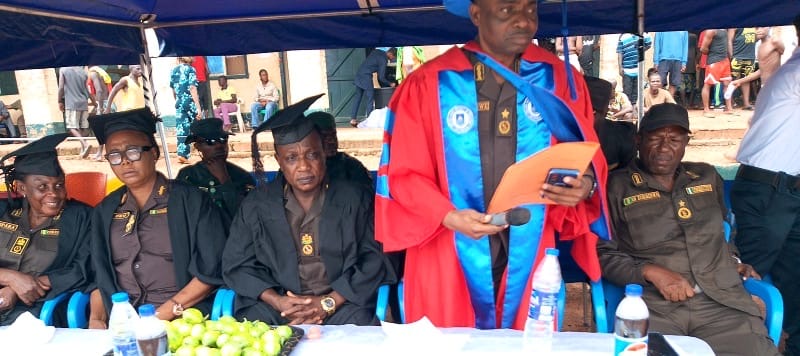
The National Open University of Nigeria (NOUN) has matriculated 70 inmates enrolled in various undergraduate programmes at its Special Study Centre within the Maximum-Security Custodial Centre, Enugu.
The matriculation took place on Wednesday during the 31st matriculation ceremony of the centre.
In an address at the ceremony, the Controller-General of the Nigerian Correctional Service (NCoS), Sylvester Nwakuche, described the event as a milestone in the Service’s commitment to using education as an instrument for the reformation, rehabilitation and reintegration of inmates.
Nwakuche, who was represented by the Assistant Controller-General of Corrections in charge of Zone M, Prisca Oku, said the NCoS would continue to strengthen correctional education and expand opportunities for academic, vocational and skills development across custodial centres.
He encouraged the matriculating inmates to remain focused, abide by the rules and regulations of both the university and the Service, and strive to become worthy ambassadors of the correctional education programme.
“I therefore encourage our matriculating inmates to remain focused, uphold the rules and regulations of the University and the Service, and strive to become worthy ambassadors of the correctional education programme,” he said.
He added: “To the matriculating students, I also urge you to embrace this opportunity with seriousness, discipline and determination.
“Your present circumstances should not define your future; rather, let this opportunity equip you with the knowledge, skills and character needed to build a productive and responsible life beyond custody.
“Your academic journey is not merely about obtaining a qualification; it is also about transforming your mindset, broadening your horizons and preparing yourselves for meaningful reintegration into society.”
Speaking at the ceremony, the Vice-Chancellor of NOUN, Prof. Udoma Oji Udoma, said the university had continued to provide quality and accessible higher education to inmates by offering 100 per cent tuition-free education at all levels.
Udoma, who was represented by the Director of NOUN Enugu Study Centre, Prof. Loveth Ekwueme, said the university had consistently championed inclusivity by providing educational opportunities for inmates.
“NOUN affirms its belief that education is a fundamental right, not a privilege,” he said.
According to him, the initiative reflects NOUN’s commitment to national development, social justice and the rehabilitation of citizens who deserve a second chance.
“To our new students: today you pledge to uphold the values of scholarship, discipline, and integrity. Your enrollment signifies courage, determination, and the desire to transform your lives through knowledge.
“Remember that education is the most powerful tool for personal renewal and societal reintegration,” he said.
The Controller of Corrections in Enugu State, Mr Valins Obizue, encouraged inmates to take advantage of the free educational opportunities available to them and pursue academic qualifications that could improve their lives.
Obizue commended the Controller-General of the NCoS and NOUN for providing a veritable and accessible platform for the reformation and academic advancement of inmates across the country.
In his welcome address, the Officer-in-Charge of the NCoS Maximum-Security Custodial Centre, Enugu, Dr Sunday Igwe, said the study centre commenced in July 2011 with 12 students but had grown to 262 students.
Igwe described the growth as more than a numerical increase, saying it represented “262 dreams, 262 aspirations, 262 opportunities and 262 journeys towards personal and professional development.”
He said the NCoS firmly believed that education was one of the most powerful instruments for human development, reformation, rehabilitation, reintegration, empowerment and positive transformation.
“Our custodial environment is not only about security and safe custody. It is also about preparing individuals for meaningful contributions to society.
“The presence and growth of NOUN academic activities within this environment demonstrates that education can flourish wherever there is commitment, discipline and determination.
“NOUN remains and offers the foremost Open and Distance Learning opportunity in Nigeria,” he said.
One of the matriculating inmates, whose name was withheld, appreciated the Controller-General of the NCoS and the Vice-Chancellor of NOUN for providing the educational and reformative programme and making it accessible to inmates.
The newly admitted undergraduates enrolled in various programmes, including Public Administration, Peace and Conflict Resolution, and Criminology and Security Studies, among others.
Highlights of the ceremony included the administration of the matriculation oath to the new students and the cutting of the matriculation cake.
By Okey Maduforo, Awka
The indefinite curfew imposed on Aguleri and Umuoba Anam communities in Anambra State following their recent communal clash remains in force as Governor Chukwuma Soludo has set up a Judicial Commission of Inquiry to investigate the crisis.
The governor also ordered an immediate ceasefire, warning that the state government would not tolerate further lawlessness or any breach of peace and order in the two communities.
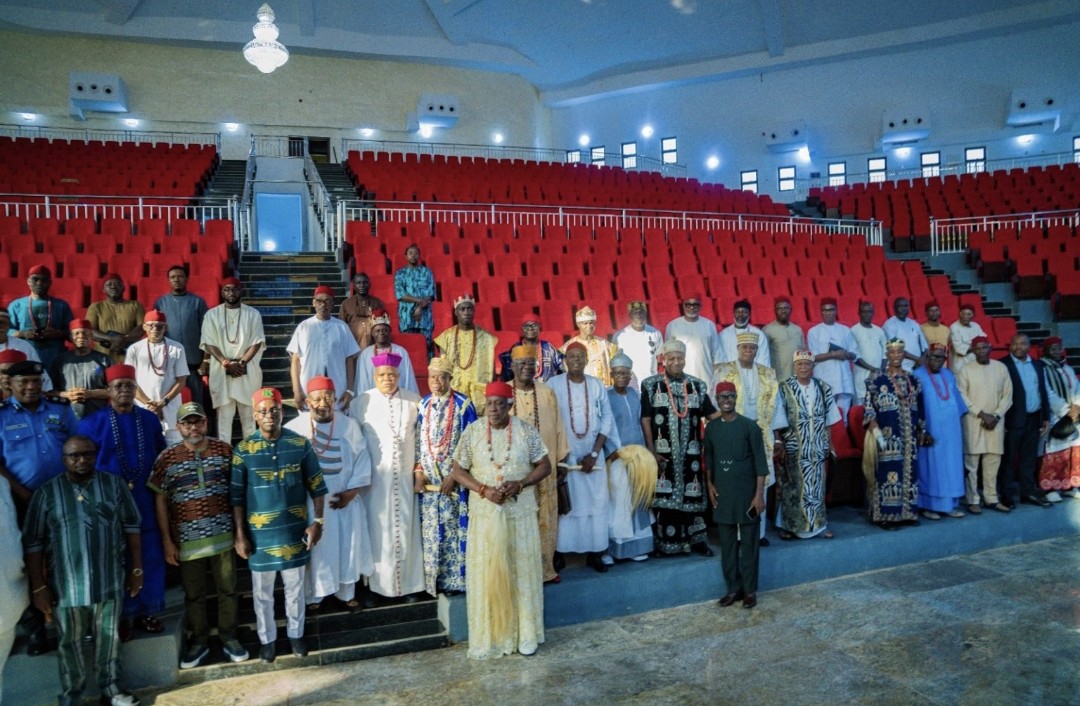
The directives followed a conflict-resolution meeting convened by the governor at the Light House, Awka, which was attended by traditional rulers and other leaders from the affected communities.
At the meeting, the stakeholders agreed that both communities must lay down their arms and embrace peace.
In a statement by the Chief Press Secretary to the governor, Christian Aburime, Soludo lamented the loss of lives and destruction of property, saying the violence was inconsistent with his administration’s vision of a peaceful and prosperous Anambra State.
“Opening the deliberations, the Governor decried the tragic loss of lives and the widespread destruction of properties, emphasizing that such lawlessness is entirely unacceptable to the administration,” the statement said.
Soludo also directed security agencies to maintain a round-the-clock presence in the affected areas to ensure compliance with the ceasefire.
The governor assured the parties that the government would remain “firm, fair, and uncompromising” in its pursuit of lasting peace and justice.
Community leaders, including Igwe Michael Idigo and Hon. Fidel Okafor, condemned the violence, particularly the killing of a minor and an unarmed person from Umuoba Anam, as well as the retaliatory destruction of the historic Idigo Palace.
They called for an immediate end to the hostilities and the prosecution of those responsible for the violence.
Speaking as an observer on behalf of the Umueri community, retired Justice Charles C. Okaa appealed for restraint and urged the state government to enforce the 1982 Supreme Court judgment on boundary matters involving Umueri and Aguleri as part of efforts to achieve a lasting resolution.
The stakeholders also agreed on the immediate cessation of hostilities, prosecution of perpetrators, accountability for community leadership and the rebuilding of the destroyed Idigo Palace.
Condemning the destruction of the traditional palace as an attack on the heritage of the state, Soludo announced that the state government would assist in rebuilding it and restoring its traditional dignity.
The governor also established a Judicial Commission of Inquiry to examine petitions, complaints and historical grievances connected to the crisis. The commission is expected to submit its comprehensive report within four months.
However, the state government has yet to make public the names and number of members of the commission.
Meanwhile, the indefinite curfew remains in force as security agencies continue to maintain heightened surveillance in the affected communities.

-

 News4 days ago
Curfew Continues as Soludo Sets Up Commission of Inquiry Over Aguleri–Umuoba Anam Clash
-

 Education4 days ago
Ihejirika Hails Mbah’s Infrastructure Drive as Coal City University Inaugurates Governing Council
-
News3 days ago
Ebonyi Cement Project: Where Is the Limestone Evidence?
-

 Politics1 day ago
Odii Shuts Down Abakaliki, Buys Fuel for Thousands of Supporters at Grand Reception
-

 News4 days ago
Inclusivity: NOUN Matriculates 70 Prison Inmates at Special Study Centre, Enugu
-

 Crime4 days ago
Enugu Police Arrest Five Suspects, Recover Three Firearms, Six Rounds of Ammunition
-
News3 days ago
Governor Mbah Hails Chibuikem Emmanuel as Youth Entrepreneurship Reference Point, Commends Powell Homes’ Housing Investment
-

 News3 days ago
REC urges Enugu residents not to wait for rush hours in Claims/Objections, PVC collection windows