





Crime
Abductions surge: Northern govs demand mining suspension, unveil N228bn security fund

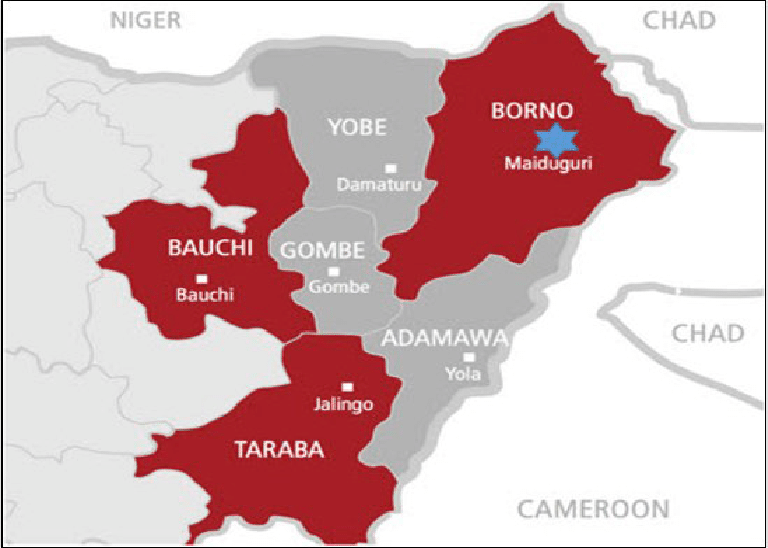

Northern governors and traditional rulers on Monday called for a six-month suspension of mining activities across the region, blaming illegal mining for the worsening insecurity in many states.
The northern leaders also announced plans to mobilise N228bn to fight bandits terrorising communities across the region.
Under the arrangement, each state and its local governments will contribute N1bn monthly, to be deducted at source under an agreed framework.
This means that the 19 northern states will raise N228bn annually.
They said the fund would provide sustainable financing for joint operations, intelligence-driven interventions and coordinated security responses across the North.

These were contained in a communiqué issued after a joint meeting of the Northern States Governors’ Forum and the Northern Traditional Rulers’ Council held at the Sir Kashim Ibrahim House, Kaduna.
In recent weeks, multiple school raids have rocked the region, leaving families traumatised and several communities deserted.
No fewer than 500 students and residents have been kidnapped by criminal gangs from schools and communities, forcing authorities to shut down schools in several states.
On November 17, 2025, armed men attacked the Government Girls Comprehensive Secondary School in Maga, Kebbi State, abducting 24 schoolgirls. The school’s vice-principal was killed during the attack. The students were freed a few days later.
Four days later, on November 21, gunmen invaded St. Mary’s Catholic School in the Papiri community, Agwara LGA of Niger State, abducting hundreds of pupils and staff.
Church and local officials later confirmed that 303 students and 12 teachers were taken away.
The escalating attacks prompted several states to order the temporary closure of schools in Kebbi, Bauchi, Yobe, Adamawa, Taraba, Plateau, Niger, Katsina and Kwara states. The Federal Government also ordered the closure of 41 Federal Unity Colleges nationwide.
In response to the crisis, President Bola Tinubu last Wednesday declared a nationwide security emergency, directing immediate recruitment by the army, police and intelligence agencies.
He also urged the National Assembly to begin the process of legalising state police to curb kidnappings and terrorist attacks.
At Monday’s meeting, the northern leaders endorsed the state policing initiative, reversing decades of political opposition to multi-level policing.
The meeting, chaired by the Governor of Gombe State and NSGF Chairman, Muhammadu Inuwa Yahaya, had in attendance the 19 northern governors and chairmen of the 19 states’ traditional councils.
The high-level meeting was attended by Governors Uba Sani (Kaduna), Mohammed Bago (Niger), Inuwa Yahaya( Gombe), Umar Namadi (Jigawa), Dauda Lawal (Zamfara), Mai Mala Buni (Yobe), Nasir Idris (Kebbi), Ahmadu Fintiri (Adamawa), Abdullahi Sule (Nasarawa), Caleb Mutfwang (Plateau), Hyacinth Alia (Benue), and Usman Ododo (Kogi), while others were represented by their deputies.
The participants insisted that decentralised policing had become inevitable.
“The Forum reaffirms its wholehearted support and commitment to the establishment of state police,” the communiqué stated, urging federal and state lawmakers from the region to “expedite action for its actualisation.”
On illegal mining, the forum asserted that criminal mining networks were fuelling violence and providing resources for armed groups.
As a corrective measure, they asked President Tinubu to direct the Minister of Solid Minerals to suspend mining activities to allow for a full audit and revalidation of licences.
“The Forum observed that illegal mining has become a major contributory factor to the security crises in Northern Nigeria,” it said. “We strongly recommend a suspension of mining exploration for six months to allow proper audit and to arrest the menace of artisanal illegal mining.”
To strengthen the fight against insecurity, the governors also announced the creation of a regional Security Trust Fund.
“Each of the 19 Northern states and their local governments will contribute N1bn monthly, to be deducted at source, into a dedicated security fund. The framework for the fund will be finalised soon,” the communiqué added.
The forum commended the President for securing the release of recently abducted schoolchildren and praised the sacrifices of the armed forces.
They pledged their “renewed and total support” for military action to eliminate insurgent enclaves.
They also extended sympathies to the governments and people of Kebbi, Kwara, Kogi, Niger, Sokoto, Jigawa, Kano, Borno and Yobe states over recent killings, abductions and Boko Haram attacks.
Speaking at the opening session, Governor Yahaya warned that insecurity had reached a point where “the future of the northern region is being mortgaged.”
He emphasised that the crisis was multi-layered, driven by years of underdevelopment, weak policing and economic hardship. “The targeting of our schools is a direct assault on our collective future,” he said.
He also warned that failure to address the rising population of out-of-school children and the persistence of the Almajiri system would continue to fuel radicalisation.
The NSGF chairman praised Tinubu for “leaving no stone unturned” in efforts to secure the release of abducted students.
He reiterated that only massive investments in infrastructure — roads, rail lines, power and digital connectivity — would unlock the region’s economic growth.
Yahaya also stressed the governors’ long-standing support for state policing, citing its inclusion in their May 2025 communiqué.
Also speaking, the Sultan of Sokoto and Chairman of the Northern Traditional Rulers Council, Alhaji Sa’ad Abubakar III, urged the governors to double their efforts and work with absolute unity to rescue the North from its mounting challenges.
He dismissed speculations that the meeting was an emergency intervention triggered by recent attacks, saying it had been long scheduled for review and assessment.
“This meeting was supposed to be held in September but was put off a couple of times for various reasons. It is not an emergency meeting,” he explained.
The Sultan expressed the full support of the traditional institution for the governors, pledging collaboration in the fight against insecurity, poverty and social dislocation.
“As leaders, we need to tell ourselves the truth. But I want to assure you — just listen to the governors — we are 100 per cent with you in this drive to make the North a better place because we don’t have any other place to be,” he said.
He urged political leaders to resist divisive tendencies and remain open to constructive criticism, saying that “listen to critics. Listen to criticisms. Make amendments whenever they arise.”
Abubakar said traditional rulers would continue offering counsel and support when needed. “You have our confidence, you have our trust. You can reach out to us any time of the day,” he told the governors.
He also renewed his call for continuous prayers for national leaders.“Please pray for our leaders. When you pray for them, and they do good things, we all enjoy it.”
NSA visits Niger school
Meanwhile, the National Security Adviser, Nuhu Ribadu, on Monday visited the Proprietor of St. Mary Private Catholic Primary and Secondary Schools, Papiri, Agwara LGA, Bishop Bulus Yohanna of the Kontagora Diocese.
The NSA was at the school to commiserate with the authorities over the abduction of more than 265 students and teachers.
He was accompanied by the Minister of Humanitarian Affairs and Poverty Alleviation, Dr Bernard Doro, the Director General of the Department of State Services, Oluwatosin Ajayi and Chairman of the Christian Association of Nigeria, Northern Nigeria, Rev. Joseph Hayab.
Ribadu told parents and school officials that the abducted children were safe and would return soon, assuring them that security had been strengthened in the area.
“This is a very solemn and difficult moment for us… Mr President is in pain. He suspended his journey to focus on this,” Ribadu said.
He urged unity in the face of the attack, saying, “Let us not allow bad people to divide us.”
Ribadu praised Bishop Yohanna for his resilience, adding that international partners, including the United States, the United Kingdom and France, were offering support.
“The children will come back safely. Evil will not win,” he assured.
Earlier, Bishop Yohanna thanked the NSA and President Tinubu for their visit and presented a report before proceeding into a closed-door meeting.
FCT police foil attack, arrest suspect
In another development, the Federal Capital Territory Police Command has foiled a planned attack on an unnamed community following a targeted operation by its Anti-Kidnapping Unit.
The operation followed a surge in kidnappings in the ACO community in Gwagwalada and in Bwari, prompting the Commissioner of Police to order intensified efforts to dismantle the network behind the attacks.
FCT police spokesperson, Josephine Adeh, said intelligence later revealed that the gang had fixed another raid for December 1, with plans to abduct residents for ransom.
Acting on the tip-off, operatives on November 30 arrested a wanted kidnapper and armed robbery suspect, Sani Mohammed Umar, also known as Boko. His mobile phone, allegedly used to coordinate gang activities, was recovered.
Investigations linked Umar to earlier attacks in ACO, Dupa and Gwagwalada, as well as multiple robberies in Gwagwalada, Kuje and Kwali. He reportedly admitted that his gang members were waiting for him at Gada Biyu Hills, Kwali, ahead of the planned assault.
Adeh said the Anti-Kidnapping Unit moved into the forest around 11:01 p.m., laid an ambush and came under fire from the heavily armed gang. A 30-minute gun duel followed, during which three bandits were killed, while others fled with gunshot wounds.
Recovered items included three AK-47 rifles, three magazines and 33 rounds of live ammunition.
She added that police and troops of the Army’s 176 Battalion had launched a joint operation to comb the forest and block escape routes, while medical centres were directed to report persons with gunshot injuries.
Bandits levy Sokoto villages
Residents of Bakale village in Kilgori district, Yabo LGA of Sokoto State, are panicking after suspected bandits demanded a ₦20m levy from the community.
An audio message circulating on social media captured the gang leader directing the village head to mobilise payment, warning that refusal would trigger attacks and mass abductions.
A community leader said Bakale was not the only settlement under pressure, listing affected villages across Kilgori and Torankawa districts, including Bazar, Alkalije, Gari, Dagel, Adarawa, Kwaidaza, Runji, Tudu, Tile, Kibiyare and Barmadu. Levies reportedly range from ₦3m to ₦20m.
He added that recent attacks left six people dead in Alkalije and four in Tile.
The spokesperson of the Sokoto Police Command, DSP Ahmad Rufa’i, did not respond to calls seeking comment.
Ekiti urges calm, says borders fortified
The Ekiti State Government has urged residents to remain calm despite reports of bandit activity in neighbouring Kogi and Kwara states.
Special Adviser on Security Matters, Brig. Gen. Ebenezer Ogundana (retd.), told journalists after a quarterly security meeting that Ekiti remained “one of the safest states,” citing increased military and police presence along border towns and improved intelligence networks.
He said traditional rulers and local government chairmen had been briefed to reassure residents and escalate credible information promptly.
“We want our people to be vigilant and report anything unusual. We have the resources to verify every piece of information,” he said.
Ogundana added that the state was working to prevent the spill-over of attacks affecting farmers, herders and rural communities in neighbouring states.
Ondo boosts Amotekun operations
Ondo State Governor, Lucky Aiyedatiwa, has reiterated his administration’s commitment to enhancing security, pledging continued support for the Amotekun Corps.
Speaking at the inauguration of the corps’ Command and Control Centre and Training Auditorium in Akure, Aiyedatiwa said the facility would strengthen intelligence coordination, tactical readiness and rapid response.
He praised Amotekun Commander, Adetunji Adeleye, for his leadership and promised more logistics, welfare and training support. He also lauded the late former governor, Rotimi Akeredolu, for championing Amotekun’s establishment.
Adeleye said the corps’ evolution since 2020 showed that local security structures—with strong political backing—could tackle emerging threats. The governor recently approved the recruitment of 500 new officers.
Enugu deploys drones
Enugu State Governor, Peter Mbah, on Monday, unveiled two long-range security drones, 10 patrol vans, 40 motorbikes and 400 bullet-proof helmets and vests to boost operations.
Speaking at the Command and Control Centre, Mbah said despite an 80 per cent drop in violent crimes, more equipment was needed to fight rising kidnapping incidents, especially in Udenu and border communities with Benue and Kogi.
The drones, equipped with day and night-vision cameras, will support surveillance in high-risk areas.
Security operatives are expected to begin expanded patrols and aerial monitoring immediately.
Kebbi steps up NYSC camp security
The Kebbi State Commissioner of Police, Bello Sani, has strengthened security at the NYSC orientation camp in Basaura, Jega LGA.
During a visit to the camp, he warned security personnel against complacency and emphasised inter-agency collaboration for a safe orientation exercise. A closed-door review of the camp’s security architecture was held with military and government officials.
Police spokesperson Nafi’u Kotarkoshi said discussions focused on early warning systems and rapid response mechanisms.

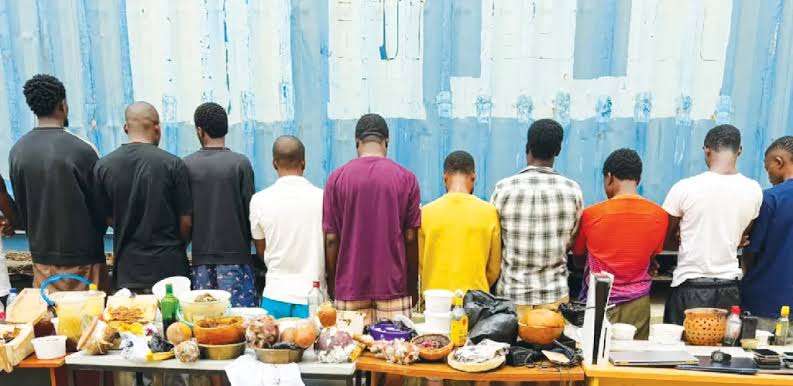
The Police Special Fraud Unit (PSFU) has arrested 11 suspected internet fraudsters during a raid on an alleged Yahoo academy in Abeokuta, Ogun State, recovering suspected human remains, charms and blood-stained fetish items.
The suspects were arrested at House 10, Second Hill Estate, Oloke-Meji, Onikolobo, Abeokuta, following intelligence-led investigations by detectives of the unit.
Items recovered during the operation included 11 iPhones, three Samsung mobile phones, eight laptops and a 2014 Lexus RX 350.
The police said the suspects were allegedly operating an organised internet fraud network known as “Hustle Kingdom”, using the apartment as a base for cyber-related fraud and other criminal activities.
According to a statement issued on Monday by the Police Public Relations Officer of the PSFU, DSP Ovie Ewhubare, the suspects admitted to using the identities and personal details of foreign nationals to defraud unsuspecting victims online.
The arrested suspects were identified as Adedolapo Samuel, 25; Timothy Babatunde, 27; Ibrahim Sholete, 30; Torioza Oluwatosin, 30; Yusuf Alabi, 30; Adeyemi Seyi, 32; Tobiloba Oguntoyinbo, 32; Taiwo Mathew, 23; Shoyombo Ayomide, 24; Abayomi Rahmon, 32; and Abolaji Tunji, 28.
The police, however, said the alleged leader of the operation, Goriola Oluwaseun Olanrewaju, popularly known as Update, remained at large.
The statement disclosed that Olanrewaju rented the apartment in 2021 and subsequently recruited young men into the alleged fraud network.
It partly read, “Investigations revealed that one Goriola Oluwaseun Olanrewaju, male, also known as Update, currently at large, rented the apartment in 2021 and subsequently recruited young men into an organised internet fraud operation, commonly known as a ‘Hustle Kingdom’, where they use the facility as a base for cyber-related fraud and other criminal activities.
“The suspects admitted that they exploit the identities and personal details of foreign nationals to defraud unsuspecting victims online.”
The Commissioner of Police, Eloho Okpoziakpo, said the operation underscored the importance of credible information, intelligence-led policing and professional investigative skills in tackling organised financial and cyber-enabled crimes.
He said investigations were ongoing to establish the circumstances surrounding the occupation of the property and determine whether the owners fulfilled their responsibilities in verifying and monitoring their occupants.
The police commissioner added that efforts were being intensified to trace and recover proceeds of the alleged criminal activities.
The development comes less than two weeks after the same police unit uncovered an alleged counterfeit footwear production factory in Makun, Sagamu, Ogun State.
The factory was linked to Meibalun International Nigeria Limited, which was accused of manufacturing and marketing footwear bearing the trademarks of international brands without authorisation.
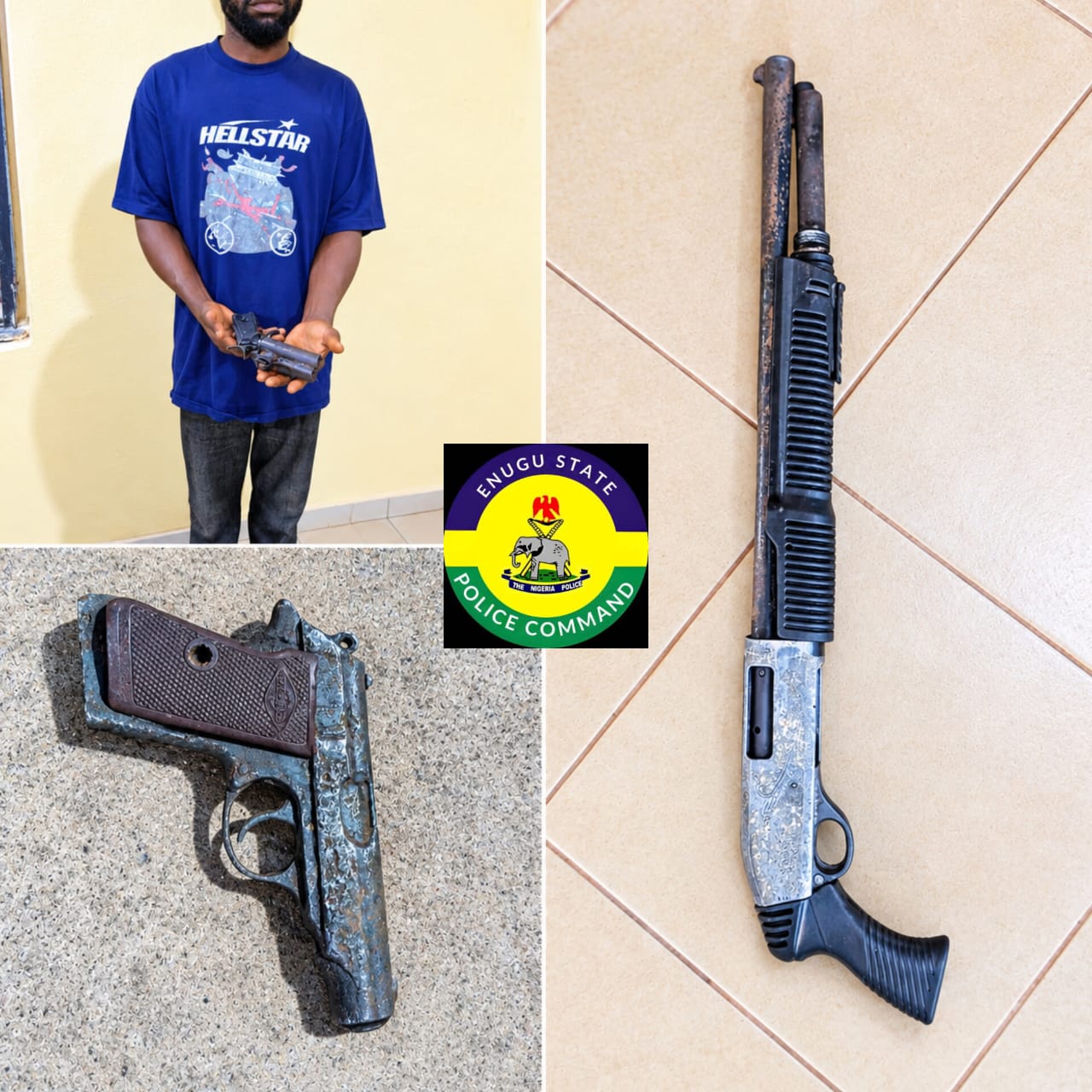
The Enugu State Police Command has arrested a 28-year-old man for unlawful possession of a firearm and recovered two other guns during separate raids on suspected criminal hideouts across the state.
The operations, carried out on November 21, 2026, followed intelligence reports received by operatives of the command.
The Commissioner of Police, CP Fidelis Ndubuisi Ogarabe, disclosed this in a statement issued on Monday by the Police Public Relations Officer, SP Daniel Ndukwe.
According to the statement, operatives of the Udenu Area Command, acting on intelligence, raided a suspected criminal hideout at Ugbelle Ohullor, Abollo Afor, in Udenu Local Government Area, at about 3:30 p.m.
During the operation, the police arrested one Odo Ejiofor, 28, and recovered a locally made pistol from him.
In a separate operation at about 6:05 p.m., operatives of the Violent Crime Response Unit (VCRU) raided a suspected criminal hideout at Abakpa-Nike, Enugu, where they recovered another pistol.
The police said the suspects, who allegedly used the location for the sale and consumption of illicit drugs and other criminal activities, fled upon sighting the operatives.
Similarly, operatives of the VCRU Anti-Cultism Section, acting on credible information, raided a suspected criminal hideout at Old Artisan, Enugu, at about 7:00 a.m., where fleeing suspects abandoned a pump-action gun.
The statement said investigations were ongoing to identify and arrest the fleeing suspects, adding that the arrested suspect would be arraigned in court upon the conclusion of investigations.
Reacting to the operations, Ogarabe reaffirmed the command’s commitment to proactive and intelligence-led policing, as well as targeted operations aimed at denying criminal elements safe havens across the state.
He urged residents to continue providing credible and timely information to the police, assuring them that all information received would be treated with utmost confidentiality.
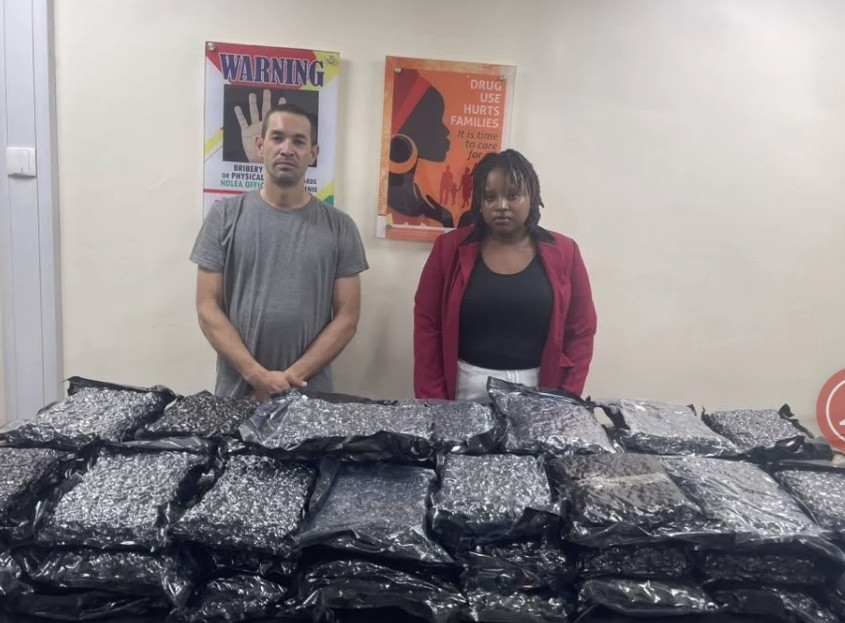
NDLEA Arrests South African Golfer, Kenyan Chef Over 50.4kg Cannabis
The National Drug Law Enforcement Agency (NDLEA) has arrested a 37-year-old South African professional golfer, Grobler Henlo, and a 25-year-old Kenyan chef, Abubakar Njambi, over an alleged attempt to smuggle 50.40 kilogrammes of a potent cannabis strain known as Loud into Nigeria.
The suspects were arrested at the Murtala Muhammed International Airport, Ikeja, Lagos, in October, according to a statement issued on Sunday by the NDLEA spokesperson, Femi Babafemi.
The agency said Henlo arrived in Lagos from South Africa aboard a South African Airways flight on October 11 and was intercepted at the Terminal 2 arrival hall.
A search of two travelling boxes in his possession reportedly led to the discovery of 46 parcels of Loud weighing 50.40kg.
According to the NDLEA, investigations revealed that although the boxes were in Henlo’s possession, they bore the luggage tags of Njambi, who had collected two other boxes bearing his tags from the airport conveyor belt before leaving the terminal.
The agency said the exchange of luggage tags was a deliberate strategy by the syndicate to conceal ownership of the consignments and enable each courier to deny responsibility if intercepted.
During preliminary interrogation, Henlo reportedly disclosed that he was recruited by a South African associate identified as Shanel, who connected him with other members of the syndicate whom he had never met physically.
The golfer, who travelled in business class while his alleged accomplice flew economy, said a driver picked him up from his home in South Africa, handed him four travelling boxes and took him to the airport.
He was allegedly instructed to meet the Kenyan woman and exchange luggage tags with her. He claimed he was promised 5,000 South African rand upon successful delivery of the consignment.
The NDLEA added that further examination revealed that tracking devices had been installed in the travelling boxes and on Henlo’s mobile phone. Similar devices were reportedly discovered in bags abandoned by an American basketball player arrested a month later.
The agency said the discovery showed how closely international drug cartels monitor their couriers and consignments.
It further disclosed that the passport biodata page of Abubakar Faiza Njambi, recovered from the golfer’s phone, was used to profile her and place her on its watchlist.
She was subsequently arrested at the departure boarding gate of the Lagos airport on Thursday, October 15, 2026, as she attempted to board a South African Airways flight to Kenya.
The 25-year-old private chef reportedly told investigators that she was recruited by a man through a friend in Kenya, who persuaded her to accept an offer of $8,000 upon successful delivery of the drugs.
She said she travelled from Kenya to South Africa on October 4, stayed in a hotel for about a week and met the golfer at the South African airport on October 11.
According to her account, Henlo handed her two of the four boxes before they checked in the luggage under their respective tags.
Upon arrival in Lagos, she allegedly collected the two boxes bearing the golfer’s tags before a driver conveyed her to a hotel in the Lekki area of the state.
The claim tag for the two boxes bearing her name, which she reportedly abandoned at the airport, was recovered from her hand luggage. Both suspects subsequently identified each other during an identification parade.
In a separate operation at the Lagos airport on November 13, NDLEA operatives intercepted a consolidated consignment from the United Kingdom aboard an Allied Air flight.
The shipment reportedly contained 10 parcels of synthetic cannabinoids weighing 10.10kg, 27 packs of marshmallow weighing 318.80kg and precursor chemicals weighing 34.55kg.
A freight agent, Sobowale Oladayo, was arrested when he presented himself to clear the consignment.
The alleged consignee, identified as 35-year-old Kareem Issa, also known as Ola, was arrested the following day when he arrived to collect the shipment at a logistics company’s premises in a grey Lexus 460 SUV.
The agency said Issa, a plumber residing on Lagos Island, allegedly posed as a senior security official and routinely used a siren installed in his vehicle when visiting the logistics company to collect consignments.
In Kaduna State, operatives arrested two men, Lawali Muhammad, 35, and Aliyu Mohammed, 30, in connection with 160 pieces of explosives intercepted along the Abuja-Kaduna Expressway at Jere on November 17.
The intended recipient, Mohammed, was arrested in a follow-up operation in Gusau, Zamfara State, the agency said.
Two other suspects were also arrested along the same route with 6,900 tablets of tramadol, 20,000 tablets of diazepam and 25,000 tablets of Exol-5.
NDLEA operatives also recovered 627,500 capsules of tramadol weighing 21.50kg from a Hummer bus along the Zaria-Kano Expressway after the driver reportedly abandoned the vehicle and fled.
In Ogun State, a woman, Esther Ogundipe, was arrested on November 19 during a raid on a suspected drug joint at Eleweran, Abeokuta. Two locally made firearms and five live cartridges were also recovered.
Two other women were arrested in Ilaro on November 17 with 7.4 grammes of cocaine, 638 grammes of cannabis and 5.9 grammes of methamphetamine.
In Osun State, a 43-year-old man, Francis Oduke, was arrested along the Ikire-Ibadan Expressway with 359 bags of skunk weighing 4,627.7kg.
The drugs were allegedly concealed beneath a load of granite in a truck.
In neighbouring Ondo State, operatives intercepted a truck conveying 93 bags of cannabis weighing 1,045kg and heading towards Kano State.
The seizure was made along the Zango-Ado Expressway in Akure on November 16, leading to the arrest of four suspects identified as Adamu Yerima, 19; Mohammed Mohammed, 19; Nura Mohammed, 25; and Usman Mohammed.
The agency also reported arrests and drug seizures in Edo, Katsina, Abia and Rivers states.
In Edo, Emmanuel Eze, 48, was arrested with 11 and a half bags of cannabis weighing 156kg at Aduwawa community, Benin City, on November 20.
In Katsina, Abbas Bello, 39, was arrested in the Gafai area on November 17 with 148 blocks of cannabis weighing 72kg, allegedly concealed in the boot of his white Honda Accord.
In Abia, operatives recovered 2kg of cannabis from a hole beneath the tiled floor of a shop belonging to a 25-year-old woman, Oluebube Innocent, at Amankwa Street, Obingwa Local Government Area, on November 18.
In Rivers State, a 46-year-old physically challenged man, Peter Sunday, was arrested with 300 grammes of cannabis during a raid in Eneka on November 17.
The NDLEA also said its commands and formations across the country had continued to intensify its War Against Drug Abuse (WADA) sensitisation campaigns in schools, worship centres, workplaces and communities.
The activities included lectures for students and staff of Local Government Primary School, Ebute Ikorodu, Lagos; Government Girls Unity College, Birnin Kebbi; and Community Secondary School, Usa, Enugu Ezike.
The Ondo State Command also paid an advocacy visit to the Deji of Akure, Oba Aladetoyinbo Ogunlade Adelusi.
Commending officers of the affected commands, the NDLEA Chairman, Brig. Gen. Mohamed Buba Marwa (retd.), said the arrests of the South African golfer and Kenyan chef, coming within the same period as that of the American basketball player, indicated that international drug cartels were changing their couriers while retaining their methods.
He said the cases showed a growing trend of international drug syndicates recruiting sportsmen and other professionals as couriers in the belief that their profiles would shield them from scrutiny.
Marwa warned that no profession, passport or travel class would provide protection for anyone attempting to traffic illicit drugs through Nigeria’s ports of entry.
He urged officers at all ports of entry to remain vigilant and professional, while charging personnel across the agency’s commands to sustain efforts towards reducing both drug supply and demand, particularly through sensitisation campaigns in schools, workplaces, worship centres and communities.

Critics question legality of arming local security operatives ahead of 2027 elections
Mixed reactions have continued to trail the recruitment and inauguration of over 200 personnel of a local security outfit, known as Neighbourhood Watch, by the Chairman of Ohaozara Local Government Area of Ebonyi State, Engr. Osborne Umahi, amid concerns over the possible implications for security and the 2027 general elections.
The development has triggered public debate, with some residents and social commentators questioning the authority of a local government council to establish and arm a security outfit, particularly with the 2027 general elections approaching.
The security outfit was inaugurated on Friday at the council headquarters in Obiozara.
Speaking at the ceremony, Umahi said the initiative was established to strengthen grassroots security, safeguard lives and property, and complement the efforts of existing security agencies, particularly during the Christmas and New Year festivities.
Addressing the newly inaugurated personnel, the council chairman charged them to demonstrate discipline, commitment and professionalism in the discharge of their responsibilities.
He warned against any conduct capable of undermining public confidence in the outfit or bringing the organisation into disrepute.
Umahi also emphasised the need for strict adherence to the rule of law and effective collaboration with established security agencies to ensure efficient policing and the protection of communities across the local government area.
He assured the personnel of his administration’s commitment to their welfare, provision of a conducive working environment and the necessary infrastructure to facilitate their operations.
The council chairman subsequently announced Mr. Amos Eze of Umunaga Ward as the Leader and Commander of the Neighbourhood Watch.
According to him, the outfit, with more than 200 personnel enlisted, would work alongside established security institutions to promote safer communities and protect residents, businesses and property throughout Ohaozara.
However, the inauguration has attracted criticism from some social commentators, who have raised concerns about the composition, training, armament and possible political implications of the security outfit.
A social critic, Mr. Nwoba Chika Nwoba, condemned the development in a post on his social media platform, questioning the constitutional authority of a local government council to establish and arm such an outfit.
He wrote: “This is not a good beginning. Does a local government have the constitutional authority to establish a security outfit and arm them, moreover as election is two months away?”
Nwoba further alleged that the initiative could be used to intimidate political opponents and compromise the credibility of the 2027 general elections.
He also described the personnel as suspected political thugs and warned against what he perceived as the possible use of the outfit for electoral manipulation.
Another social media commentator, Mr. Idaga, questioned the type of firearms reportedly issued to the personnel, arguing that individuals without coordinated security training should not be armed with sophisticated weapons.
“My interest is the type of guns those guys are armed with. People without coordinated security training have no business being armed with the type shown in this optic,” he wrote.
Similarly, another commentator, Mr. Kelvin, expressed concern over the implications of arming civilians and linked the development to the ongoing national debate on the establishment of state police.
He argued that if civilians could be armed with sophisticated weapons without adequate oversight, the introduction of state police could raise additional security concerns.
The controversy has brought renewed attention to the need for clarification on the legal framework governing the establishment, recruitment, training and arming of community-based security outfits, as well as their relationship with conventional security agencies.
As the 2027 general elections approach, stakeholders are expected to seek greater transparency and assurances that local security initiatives will operate within the law and remain insulated from partisan political activities.
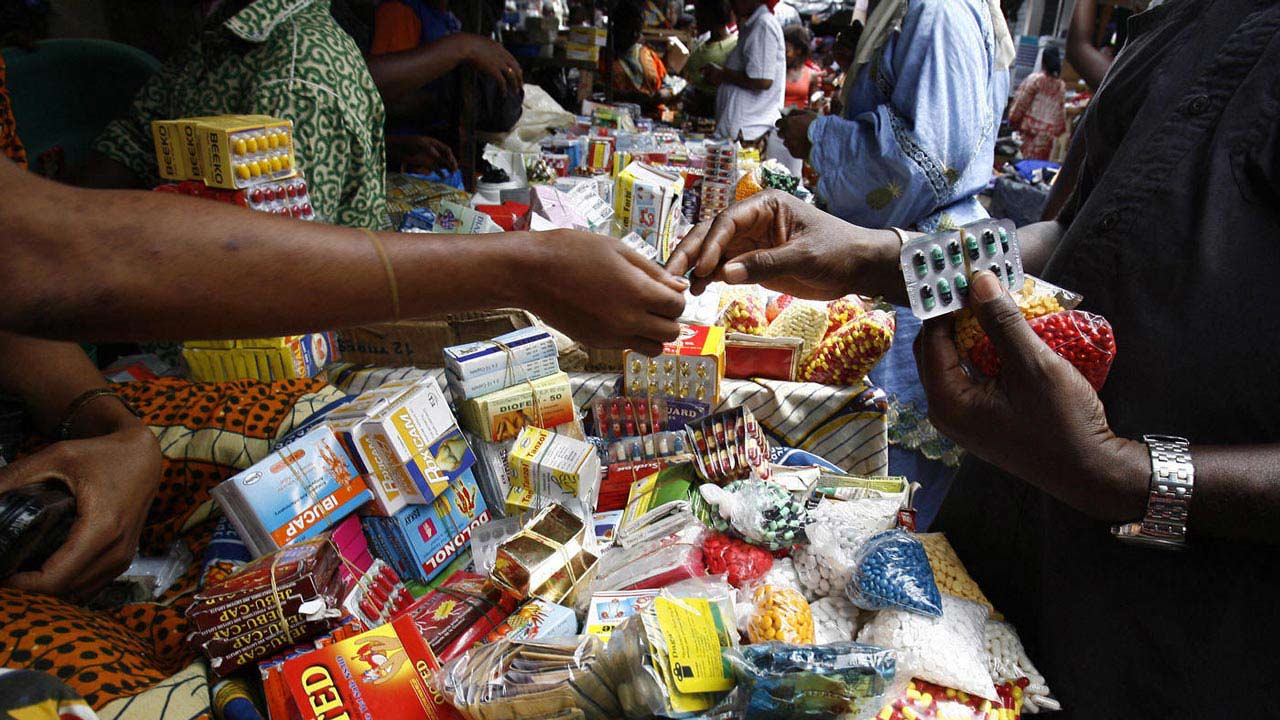
The National Agency for Food and Drug Administration and Control (NAFDAC) has called for tougher punishment, including life imprisonment or the death penalty, for individuals involved in the production and distribution of counterfeit drugs and other dangerous regulated products in Nigeria.
The agency’s Director-General, Professor Mojisola Adeyeye, described counterfeiters as “merchants of death”, arguing that their activities pose a serious threat to public health and endanger millions of Nigerians.
Adeyeye said the existing penalties were insufficient to deter offenders who continue to manufacture and distribute fake medicines, adulterated food, contaminated water and substandard consumer products for financial gain.
The call comes amid growing concerns over the circulation of counterfeit products across the country.
NAFDAC enforcement statistics show that between January and August 2026, the agency recorded 474 new cases, 821 product seizure entries and 213 raids nationwide.
During the period, 52 suspects were arrested, 179 establishments were closed or sealed, while 295 cases were concluded.
The agency also disclosed that its surveillance operations between May and July 2026 covered 5,738 facilities across the 36 states and the Federal Capital Territory, resulting in the removal of 7,210 non-compliant product brands.
In recent operations, NAFDAC uncovered alleged counterfeit CWay dispenser water bottles, as well as products bearing the names of established brands, including Oral-B, Colgate, Nivea and Listerine.
The agency also warned Nigerians against purchasing suspicious KY Jelly lubricant products currently circulating in the market.
Adeyeye further disclosed that NAFDAC had secured 64 convictions against counterfeiters, with offenders receiving prison sentences ranging from one to seven years without an option of fine.
The agency recalled that its enforcement operations in Lagos, Aba and Onitsha between February and March 2025 resulted in the seizure and destruction of more than 137 truckloads of counterfeit and substandard products valued at over N1.5 trillion.
Similarly, in February 2026, counterfeit and expired medicines worth more than N15 billion were destroyed in Ibadan, Oyo State.
The Pharmaceutical Society of Nigeria (PSN) has also raised concerns over the country’s pharmaceutical supply chain, calling on the Federal Government to declare a state of pharmaceutical insecurity.
The PSN President, Ayuba Ibrahim Tanko, who spoke at the society’s 99th Annual National Conference in Awka, Anambra State, warned that drug diversion, illicit trafficking and unregulated distribution were undermining public health and national security.
The society advocated the establishment of a Federal Drug Management Agency, stronger government supervision of pharmaceutical distribution and the replacement of unregulated open drug markets with licensed Coordinated Wholesale Centres.
Meanwhile, NAFDAC’s proposed death penalty has generated wider questions about the adequacy of existing laws and the proportionality of punishment.
Under the existing Counterfeit and Fake Drugs and Unwholesome Processed Foods Act, offenders face imprisonment of between five and 15 years, a fine of up to N500,000, or both, depending on the offence.
The death penalty is not currently prescribed under the law for counterfeit drug-related offences. Its introduction would therefore require legislative amendments.
Beyond tougher punishment, stakeholders have stressed the need for stronger border surveillance, improved regulatory monitoring, better coordination among security agencies and effective prosecution of those behind counterfeit production and distribution networks.
NAFDAC has also urged Nigerians to purchase medicines from licensed pharmacies, verify product registration details and report suspected fake or unsafe products to the agency.
The agency maintains that the fight against counterfeit products requires sustained enforcement and public cooperation to protect consumers and prevent avoidable deaths.


-
 News3 days ago
37th NAFEST Kicks Off In Enugu As Mbah Seeks Unity, Economic Gains Through Culture
-
 News5 days ago
Ferotex CEO, Festus Oshaba-Onuh, Dies In Fatal Road Accident
-
 Crime4 days ago
Enugu Police Launch Manhunt for Kidnappers After 73-Year-Old Victim’s Release
-
 Politics5 days ago
‘Bamayi’ Chant Sparks Violence As Suspected Mob Attack APC Convoy, 5 buses destroyed
-
 News5 days ago
ESUT to be renamed after Jim Nwobodo – Mbah
-
 Opinion3 days ago
PETER MBAH AND THE QUESTION OF CONTINUITY: A CALL FOR REFLECTION
-
 News4 days ago
Soludo Approves N50,000.00 December Bonus For Anambra Civil Servants
-
 News3 days ago
Ex-Super Eagles Captain, Segun Odegbami, Survives Machete Attack