





Crime
Breaking: US begins evacuation of embassy staff as Talibans takeover Afghanistan



The Taliban have moved closer to retaking full control of Afghanistan, with the capital Kabul now the only major city left in government hands.
On Sunday the militants took control of Jalalabad, a key eastern city, without a fight.
It followed the seizure of the government’s northern bastion of Mazar-i-Sharif just a day earlier.
The rapid collapse of government forces has left President Ashraf Ghani under growing pressure to resign.
He appears to face a stark choice between surrender or a fight to hold the capital.
Meanwhile, the US has begun evacuating members of staff from its embassy in Kabul. On Sunday morning they were being taken to the airport where they have been seen boarding six large military transport planes. The US has deployed 5,000 troops to help with the operation.

President Joe Biden has defended his decision to escalate the US withdrawal from Afghanistan, saying he could not justify an “endless American presence in the middle of another country’s civil conflict”.
What happened in Jalalabad?
Reports on Sunday morning said the Taliban overran the city, the capital of Nangarhar province, without a shot being fired.
“There are no clashes taking place right now in Jalalabad because the governor has surrendered to the Taliban,” a local Afghan official told Reuters news agency.
“Allowing passage to the Taliban was the only way to save civilian lives.”
Journalist Tariq Ghazniwal tweeted images purportedly showing the provincial governor handing over control to the Taliban.
The capture of Jalalabad means the Taliban have secured the roads connecting the country with Pakistan.
It came hours after Mazar-i-Sharif – the capital of Balkh province and fourth-largest city in Afghanistan – also fell largely without a fight.
Abas Ebrahimzada, a lawmaker from Balkh, told the Associated Press news agency that the national army were the first to surrender, which then prompted pro-government forces and other militia to give up.
The insurgents now control 23 of 34 provincial capitals.
More than a quarter of a million people have been displaced by the fighting and many have sought refuge in Kabul.
Some who had fled areas controlled by the Taliban said militants there were demanding families hand over unmarried girls and women to become wives for their fighters.
Muzhda, 35, a single woman who fled from Parwan to Kabul with her two sisters, said she would take her own life rather than let the Taliban force her to marry.
“I am crying day and night,” she told AFP news agency.
Women from Taliban-held areas have also described being forced to wear burkas – one-piece veils that cover the face and body – and militants are reported to have beaten people for breaking social rules.
“God forbid we will see war in Kabul,” city resident Sayed Akbar, 53, told the New York Times. “People here have gone through 40 years of sorrows. The roads on which we are walking are built on people’s bones.”
One 17-year-old, named only as Abdullah, told AFP news agency that he and his family had fled the northern city of Kunduz after it was seized by the Taliban and were now sleeping under a tent in a Kabul park.
He said he and other youths in Kunduz had been forced into carrying rocket-propelled grenades and other munitions for the militants.
Afghan police are manning checkpoints in Kabul
Kabul residents have formed long queues at banks trying to withdraw their savings. Some branches have reportedly already run out of money.
There were also reports of a riot at Pul-e-Charkhi prison on the outskirts of the capital, with local residents saying gunfire was heard from the facility.
In a pre-recorded TV address on Saturday, President Ashraf Ghani said a top priority was the remobilisation of the Afghan armed forces to prevent further destruction and displacement of people.
The speech came amid speculation by some that Mr Ghani might have been about to announce his resignation.



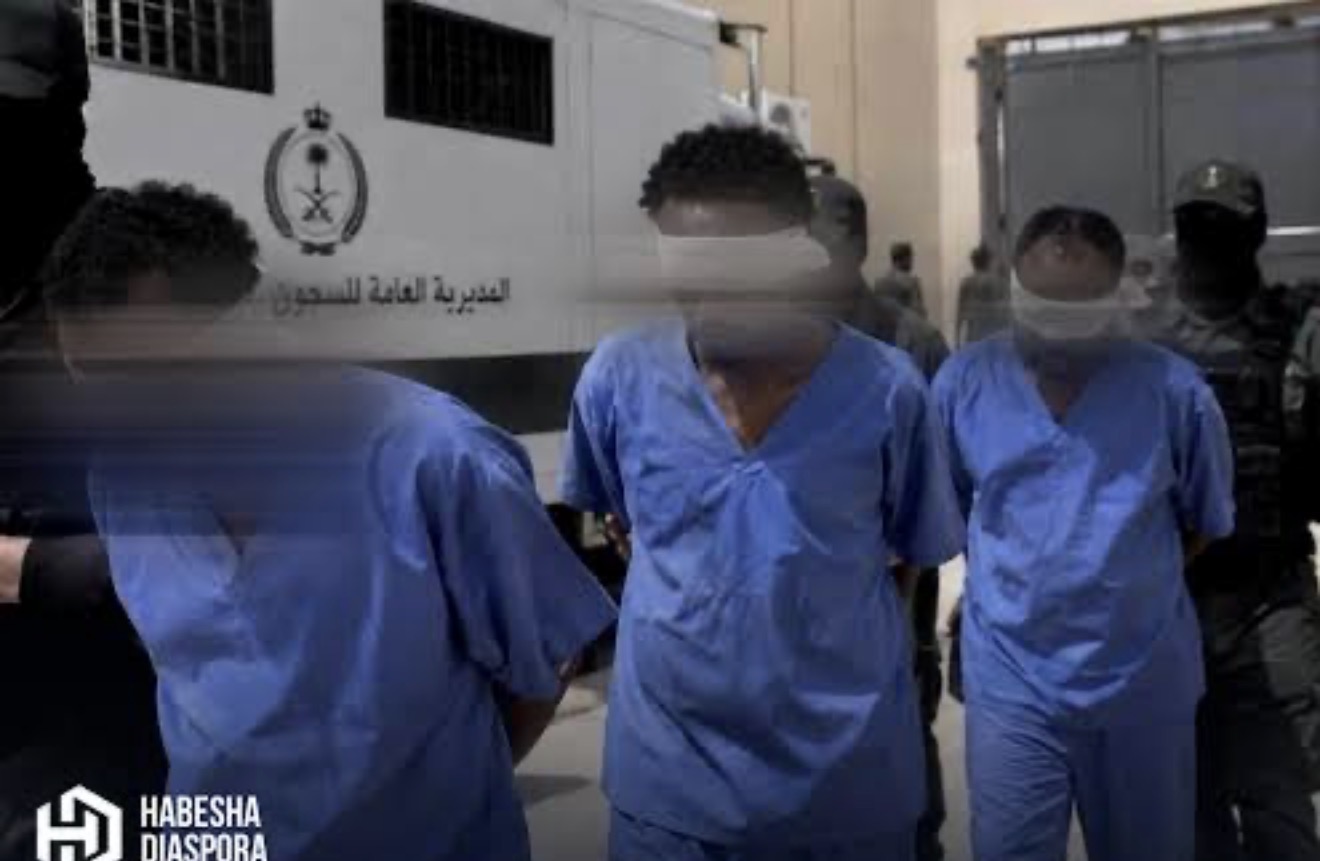
Saudi Arabia has executed five Ethiopian nationals convicted of smuggling hashish into the kingdom, bringing the number of executions carried out in the country this year to 205.
The Saudi Interior Ministry announced the executions on Thursday, November 5, 2026, saying the five men were found guilty of participating in the smuggling of hashish into the country.
According to a statement published by the official Saudi Press Agency, the executions were carried out in the Asir region in southwestern Saudi Arabia.
The latest executions bring to 32 the number of Ethiopian nationals put to death in Saudi Arabia in 2026, making Ethiopians the largest foreign nationality among those executed this year.
Five Ethiopians were reportedly executed in June, while another five were put to death in July over similar drug-related offences.
The latest development comes amid growing international concern over Saudi Arabia’s increasing use of capital punishment, particularly against foreign nationals convicted of drug-related offences.
Human Rights Watch (HRW), in a report published in July, warned that at least 79 Ethiopian nationals remained at imminent risk of execution over similar charges.
The rights organisation also raised concerns about alleged violations of fair trial guarantees, including inadequate access to legal representation and interpretation services for some Ethiopian migrants facing capital punishment.
Saudi Arabia recorded 356 executions in 2025, its highest annual figure on record.
Thousands of Ethiopians live and work in Saudi Arabia, many of whom migrate in search of employment through the dangerous Eastern Route connecting the Horn of Africa to the oil-rich kingdom through Yemen.
The route exposes migrants to serious security and humanitarian risks during their journey.
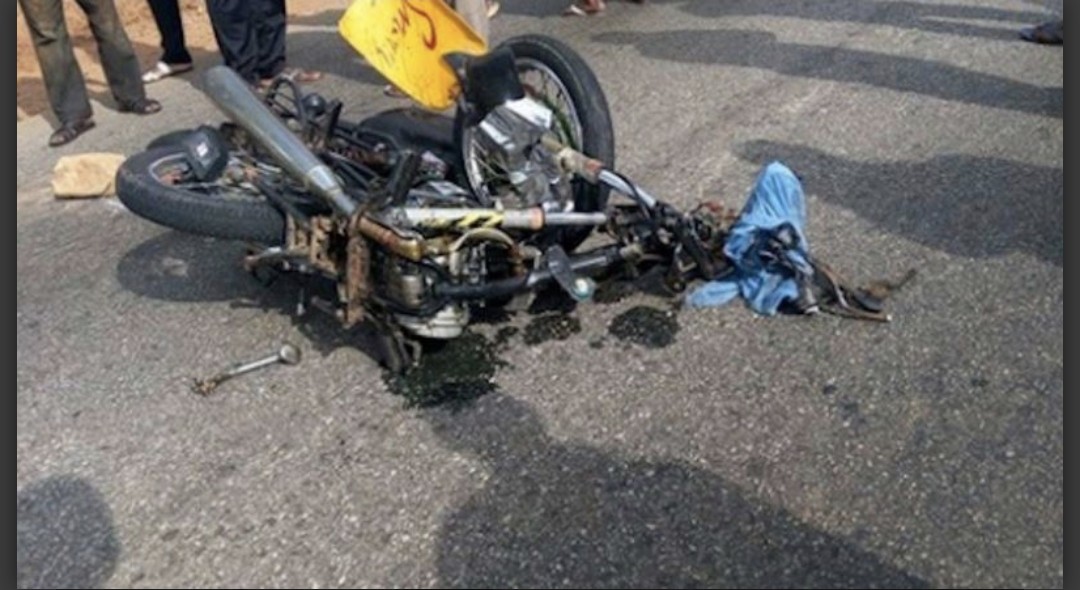
A 25-year-old amateur boxer, Kehinde Asimiyu, popularly known as KBlaq, has been stabbed to death following a disagreement over transport fare involving a commercial motorcyclist in Oyo State.
The incident occurred at Olodo Garage in Lagelu Local Government Area of the state.
The Oyo State Police Command confirmed the killing, announcing the arrest of two suspects in connection with the incident.
The Police Public Relations Officer, DSP Olayinka Ayanlade, said in a statement that the command received a report of the incident on November 1, 2026.
According to the police, the deceased was allegedly stabbed with a broken bottle by a suspect identified as Taiwo Babarinde during the disagreement.
“Following receipt of the report, police operatives, accompanied by a patrol team, immediately mobilised to the scene, while the victim was rushed to Academy Hospital, Texaco, Iwo Road, Ibadan, where he was confirmed dead by the doctor on duty,” the statement said.
The police added that the deceased’s remains were subsequently deposited at Adejare Embalming Centre for preservation, while photographs were taken as part of the preliminary investigation.
Two suspects, identified as Taiwo Babarinde, who allegedly inflicted the fatal injury, and Ishola Semiu, who is suspected of involvement in the incident, have been arrested.
“Both suspects are currently in police custody, while the case has been transferred to the State Criminal Investigation Department (SCID), Iyaganku, Ibadan, for comprehensive investigation,” Ayanlade stated.
The police said investigations were ongoing to establish the circumstances surrounding the killing.
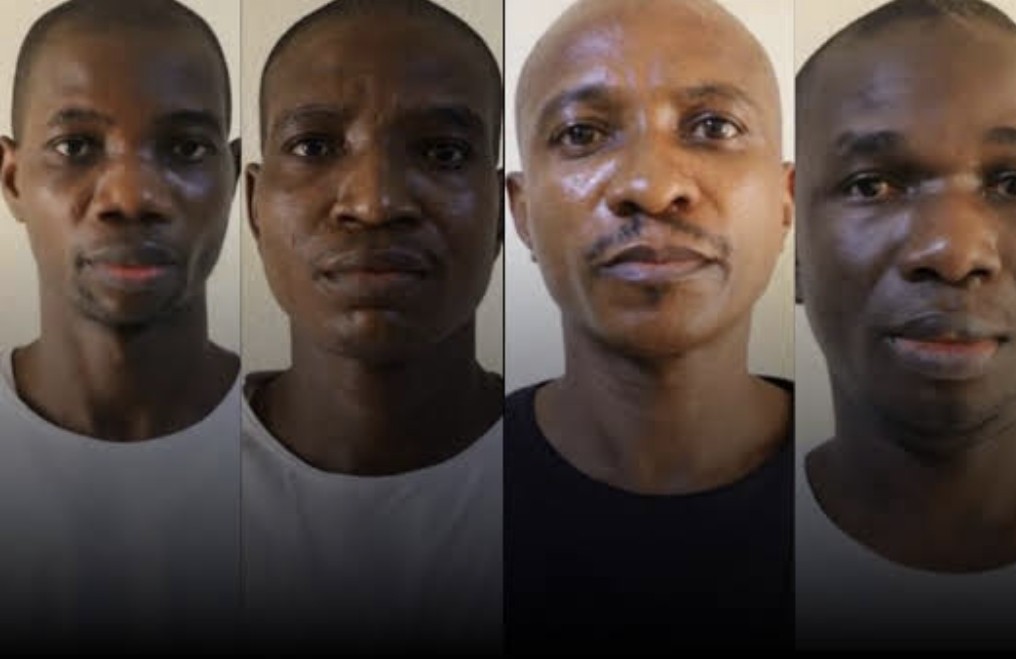
The Department of State Services (DSS) has released four men arrested over suspected links to the Indigenous People of Biafra (IPOB) and awarded them a total of N20 million in compensation after investigations cleared them of the allegations.
The four men described their release as the happiest day of their lives after spending about four years in DSS custody.
The Director-General of the DSS, Oluwatosin Adeola Ajayi, reportedly ordered their release and the payment of N5 million to each of them following their clearance.
The beneficiaries are Emele Uduma Ibe, Berefgagha Appah, Ondokeyilemi Aggry and Oyeinmokebebeton Aggry. They were arrested in May 2022 in Sampou and Akeddei communities in Kolokuma/Opokuma and Sagbama Local Government Areas of Bayelsa State.
According to Vanguard, a source familiar with the development disclosed that investigations established that the men had been misled into believing they would receive a monthly payment of N100,000 under the Federal Government’s Amnesty Programme.
They were allegedly lured by individuals linked to IPOB, who are currently facing trial.
Speaking on behalf of the four men, Emele Uduma Ibe expressed gratitude to the DSS leadership, describing the day of their release as the happiest moment of his life.
He said the experience had taught him valuable lessons which he intended to share with others, while offering prayers for the DSS Director-General and the management of the Service.
Meanwhile, their lawyer, Deji Adeyanju & Partners, commended the DSS for its efforts towards national security and respect for human rights.
The law firm particularly praised Ajayi’s approach to human rights issues, describing the level of hygiene and professionalism within the Service as exceptional.
The development is part of a broader review of inherited terrorism-related cases initiated by Ajayi after assuming office in 2024.
The DSS reportedly reviewed more than 300 cases, with the exercise leading to a reduction in the number of detainees at its facilities to about 100 following investigations. The agency has also reportedly paid over N1 billion in compensation to individuals cleared of allegations or affected by operational mistakes.
Other beneficiaries include a Jos-based businessman who received N20 million after being mistakenly shot by DSS operatives in Plateau State, Chineze Ozoadibe, who was paid N10 million following her wrongful arrest, and Sunday Ifedi, who also received N10 million after investigations cleared him of links to IPOB.
Kenneth Okechukwu Nwafor was similarly awarded N5 million after investigations absolved him of IPOB-related allegations.
A source disclosed that the four newly released men would also receive psychological and medical support, in addition to assistance with their reintegration into society.
In a recent media interview, Ajayi acknowledged that the DSS, like every human institution, could make mistakes, stressing that such errors must be addressed.
He reportedly maintained that whenever the Service acknowledges wrongdoing, it has a responsibility to provide remedies, including compensation, while improving its operations in line with the rule of law.

Islamic cleric, Sheikh Ahmad Gumi, has said some bandits he engaged with claimed they could not abandon their violent activities because they feared being killed if they surrendered or gave up their weapons.
Gumi said the armed men described the persistent attacks as a cycle of revenge, alleging that military operations and killings in their communities had fuelled their resolve to continue attacking.
According to the cleric, some of the bandits admitted that the bloodshed had become excessive but insisted they felt compelled to sustain the violence in retaliation for attacks against their communities.
“One of the bandits was telling us the bloodshed is too much,” Gumi said.
He added, “They, too, are not happy. And they say they are forced to do it.”
Gumi made the remarks during an interview on PAPShow, published on October 29, with excerpts from the conversation circulating widely on social media on Tuesday.
Explaining the grievances of the armed groups, the cleric said they accused security forces and local vigilantes of killing women and children during operations initially aimed at tackling cattle rustling.
He said the bandits questioned the killing of civilians in their communities and viewed such incidents as justification for retaliatory attacks.
“But why did they kill their women and children? Why are they killing their women and children? Why are the vigilantes arresting them and killing them? Why?” he quoted the bandits as asking.
Gumi said the armed men believed the situation had degenerated into a cycle of violence characterised by revenge, attacks and counterattacks.
“So, they feel it’s a field of blood, revenge, attack and counterattack,” he said.
The cleric called for negotiations to end the killings, arguing that religious leaders should help create an avenue for dialogue between the parties.
“So, we, as clergy, our own duty is to look at how to stop it. Let’s stop the bloodshed. Let’s come to the table,” he said.
Asked why the bandits could not abandon their activities, Gumi attributed their reluctance to fears that they would be killed if they surrendered.
“Because they thought they were killed. So, we need to reaffirm to them, to put confidence in them that they will not be killed,” he said.
The cleric also alleged that financial sponsorship and rivalry among armed groups were contributing to the proliferation of sophisticated weapons.
Asked whether individuals were financing the bandits, Gumi said such a possibility could not be ruled out.
“It’s possible now. You know, it’s possible now,” he said.
He explained that rival groups were acquiring more powerful weapons to outmatch and intimidate one another, creating what he described as an arms race.
“They buy more weapons because there’s an arms race between them. You know, there are different groups.
“There’s an arms race. So, this den has more machine guns than this one. So, they should fear them,” he said.
On the source of the firearms, Gumi claimed that the armed groups obtained weapons through illegal markets, where buyers could access them if they had the money.
“Well, it’s a black market, like drugs. It’s a black market. If you just have the money, you get them,” he said.
Gumi further alleged that foreign intelligence agencies were involved in supplying weapons to armed groups operating in Nigeria, although he did not provide evidence to substantiate the claim.
“Foreign intelligence definitely have a hand in it,” he said.
Asked whether foreign countries could be supplying weapons to Nigerian bandits and terrorists, the cleric said it was possible, suggesting that countries with strategic interests in Nigeria could be involved.
“It’s possible,” he replied.

…Ondo State Police Arrest Suspect, Recover Three Bags of Fake Dollar Notes
Men of the Ondo State Police Command have uncovered a suspected counterfeit United States dollar printing factory in Kiniso Village, via Ajue, Odigbo Local Government Area, arresting one suspect and recovering three bags of suspected fake dollar notes.
The operation followed a complaint by a businessman, Yusuf Nasiru, from Sabo, Okitipupa, who allegedly lost $6,000, equivalent to about N8.6 million, to two men in a fraudulent foreign exchange transaction.
The suspects reportedly approached Nasiru for a currency exchange transaction but allegedly returned counterfeit dollar notes to him.
According to Nasiru, the incident occurred on October 25, 2026, when two men, identified as Peter Desmond and Olami Toro, visited his shop and requested to exchange United States dollars for their naira equivalent.
He said he handed over $6,000 to the men but they later returned the money, claiming they did not have enough funds to complete the transaction, before leaving.
Nasiru said he subsequently discovered that the dollar notes returned to him were counterfeit and reported the incident to the police on October 28.
The State Police Public Relations Officer, Abayomi Jimoh, who confirmed the arrest and discovery of the suspected printing factory, said detectives immediately commenced an investigation following the complaint.
Jimoh said operatives from the Okitipupa Divisional Police Headquarters launched an investigation, while intelligence gathering and technical tracking led them to Kiniso Village, where one of the suspects was traced.
He disclosed that police operatives raided the suspected hideout on October 29 following intelligence provided by members of the community.
However, some occupants reportedly escaped through the perimeter fence during the operation.
A search of the premises led to the recovery of three bags containing suspected counterfeit United States dollar notes and a small wooden box believed to be connected to the alleged illegal printing operation.
The arrested suspect, whose identity was not disclosed, reportedly provided useful information to assist the ongoing investigation.
The police spokesman said the command had ordered an intensified investigation to apprehend other members of the suspected criminal network and establish the full extent of its operations.
He reiterated the command’s commitment to bringing all those found culpable to justice and warned members of the public against engaging in suspicious foreign exchange transactions with unverified individuals.
Jimoh also advised residents to authenticate foreign currencies before accepting them and report suspicious activities to the nearest police station.



-

 Crime4 days ago
End Of The Road: Kidnapper Arrested While Collecting ₦200,000 Ransom
-

 News2 days ago
OPay Explains How Nigerians Can Check Eligibility for FG’s ₦50,000 Monthly Cash Suppor
-

 Sports5 days ago
Super Falcons Receive $100,000 Each as Tinubu Fulfils Reward Pledge
-
 Politics3 days ago
Court Nullifies Enugu NDC Primary, Orders INEC to Delist Candidate
-
 Politics3 days ago
2027: Tomorrow Is Here Group Rallies Thousands of Nsukka’s Voters for APC, Mbah, Tinubu’s Re-elections
-
 Politics4 days ago
Soludo: Obi and I Remain Friends Despite Political Differences
-

 News3 days ago
Mbah Has Wiped Our Tears, Says Enugu Pensioner After Receiving 20-Year Gratuity Arrears
-

 News3 days ago
Enugu Air To Commence Direct Flights To London In December