


News
Fuel price: Again, FG rejects govs’ N380/litre proposal

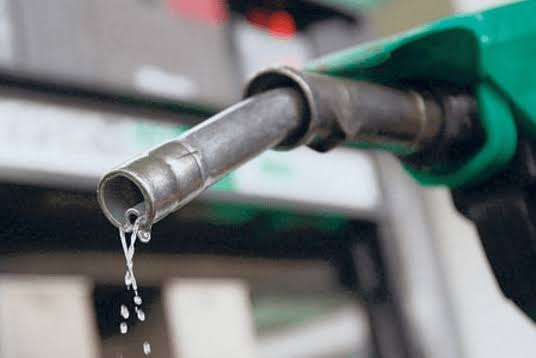

Barely three months after the Federal Government turned down the recommendation by the Nigeria Governors’ Forum for an increase in the price of Premium Motor Spirit, popularly called petrol, the Federal Government again on Friday reiterated its stance, insisting that no decision on the adjustment of petrol price would be reached until the ongoing negotiations with the organised labour were concluded.
The Federal Government had first, on May 21, rejected the governors’ recommendation of shooting petrol price up to between N380 and N408.5 per litre and removing fuel subsidy.
The governors’ advice was based on the report of its committee chaired by the Kaduna State Governor, Mallam Nasir El-Rufai, seeking the full deregulation of the oil sector.
El-Rufai, while presenting the report of his committee to the NGF, explained that the current subsidy regime was unsustainable because smugglers and illegal markets in neighbouring African countries were the beneficiaries.
But the Minister of State for Petroleum Resources, Chief Timipre Sylva, in a statement, said the current petrol price of between N162 and N165 per litre would stay.
Sylva said the current price would be retained until the ongoing negotiations with the organised labour were concluded.

He said, “Once again, it has become necessary to assure Nigerians that despite the huge burden of under-recovery, the Federal Government is not in a hurry to increase the price of Premium Motor Spirit (petrol) to reflect current market realities.
“The current price of petrol will be retained in the month of June until the ongoing engagement with organised labour is concluded.
“This clarification becomes necessary in the light of recent reports regarding the resolution of the Nigeria Governors’ Forum to increase the pump price of petrol.”
Sylva also asked oil marketers not to engage in any activity that could jeopardise the “seamless” supply and distribution system of the commodity.
Despite the Federal Government’s initial stance, oil marketers under the aegis of Petroleum Products Retail Outlets Owners Association of Nigeria, on Friday, demanded an immediate end to fuel subsidy in line with the state governors’ recommendation of May.
The President of PETROAN, Dr Billy Gillis-Harry, insisted that oil marketers’ position that fuel subsidy should be stopped remained.
“When it (fuel subsidy) is stopped, the prices of petroleum products will be determined by market forces and this will create competition and lead to an increase in product availability,” he argued.
Gillis-Harry asked the Federal Government to listen to the governors’ call, especially now that the country was grappling with funding challenges.
However, the Federal Government reiterated its stance of May, stating that no decision on the adjustment of petrol price would be reached until the ongoing negotiations with the organised labour were concluded.
The Special Assistant on Media to the Minister of State for Petroleum Resources, Garba-Deen Muhammad, stated that he would re-echo the position of his boss, Sylva, who had earlier stated the position of the Federal Government on the matter.
Muhammad said people were free to make analyses and recommendations but stressed that the government’s position on petrol price had not changed.
He said, “The truth is that the key component for us to make the decision is basically for us to have a consensus with labour. So regardless of what the governors or anybody else is saying, labour is the key partner in this project.
“The negotiations with labour officials are ongoing. A decision will not be reached until the negotiations are over. So anybody can say what they want.”
He added, “The fact is that the labour represents the Nigerian people and the government is working with the Nigerian people. So it is a cardinal objective that the labour is carried along.”
Asked when the negotiations would possibly be concluded, Muhammad stated that the deadline was not completely dependent on the Federal Government.
“People can make their analyses and arrive at whatever proposals, but at the end of the day, a consensus has to be reached and in that consensus, the labour is a major voice and key partner,” he said.
Sylva had also during a recent briefing stated that the government would not discontinue petrol subsidy until its negotiations with the labour were over.
Although Sylva admitted that the burden of petrol subsidy was humongous, he insisted that negotiations with labour were a cardinal factor, stressing that the parties in the talks would soon resolve the concerns.
He said, “Of course, everybody would have their perspective, but from where I sit, I believe that subsidy removal is the best thing for Nigeria, not just for the industry. Discussions with the stakeholders are still ongoing.
“I’ll also bring to your attention that when the President assents to the Petroleum Industry Bill, subsidy issues will become a matter of law because it is already in the PIB that petroleum products will be sold at market-determined prices.”
The Petroleum Industry Bill was passed by the 9th National Assembly on July 1 after over a decade of legislative rigmarole.
The PIB contains five chapters, including governance and institutions, administration, host communities development, petroleum industry fiscal framework and miscellaneous provisions in 319 clauses and 8 schedules.
The National Assembly had in 2018 passed a harmonised version of the bill, but the President, Major General Muhammadu Buhari (retd), refused assent to it due to “legal and constitutional reasons.”
As of March 2021, fuel subsidy was costing the government up to N120bn per month based on the average daily consumption of around 60 million litres of petrol, according to the Group Managing Director of the Nigerian National Petroleum Corporation, Mele Kyari.
Also, according to an analysis by Reuters in April, subsidy cost around N10tn between 2006-2018 – more than the budget of any of the health, education or defence sector.
When contacted on Friday, the Spokesperson for the NGF, Abdulrazaque Bello-Barkindo, said, “I cannot comment on any issue that has not been collectively discussed and agreed upon by governors.”
Meanwhile, oil marketers including the Independent Petroleum Marketers Association of Nigeria on Friday backed the governors by calling for the complete removal of fuel subsidy.
The oil marketers stated that the rise in the landing cost of petrol had further highlighted the need to put a stop to petrol subsidy.
On Monday, The PUNCH reported that the landing cost of petrol imported into Nigeria had increased to a new high of N249.42 per litre on the back of high global crude oil prices.
The further rise in the landing cost of petrol means increased subsidy as the pump price of the product remains between N162 and N165 per litre.
Speaking with Saturday PUNCH, the National Public Relations Officer of IPMAN, Chief Chinedu Ukadike, insisted that petrol price should be determined by market forces.
He said, “In a deregulated sector where subsidy is completely removed, the forces of demand and supply drive the market. There are no institutions that determine the prices of petroleum products in such a deregulated sector or fix the price of the products.
“It is important that the forces of demand and supply should drive the prices of petroleum products in the country, whereby you can be able to buy products from your local refinery and go to your local filling station and sell it.”
Ukadike, however, said the subsidy should be removed in a way that it would not inflict hardship on the consumers.
“IPMAN supports the removal of subsidy, but this should be based on the provisions of the PIB so that marketers and consumers will not suffer hardship,” he said.
“Also, in doing this, we should ensure indigenous production of refined products,” Ukadike added.
The Group Managing Director, Rainoil Limited, Dr Gabriel Ogbechie, had also recently said the country might end up spending N2tn on petrol subsidy this year.
Ogbechie, who spoke at the Nigeria History Series of the Centre for Values in Leadership, lamented the lack of deregulation in the downstream sector.
He said, “The biggest elephant in the room today as far as the downstream is concerned is the failure, so to speak, of the government to deregulate the downstream. Fixing the prices at which petroleum products are sold, I believe, is very seriously harmful to this economy.
“Petrol is being sold for between N162 and N165 per litre. I believe that petrol is being subsidised with at least N100 per litre. If you look at the national consumption of anything between 60 and 80 million litres per day, we are spending about N8bn every day just to subsidise one product.”
Petrol subsidy, which was removed in March 2020, resurfaced earlier this year as the government has left the pump price of the product unchanged since last December despite the increase in global oil prices.
Just as the oil marketers, the state-owned oil company, NNPC, had repeatedly kicked against the continuation of subsidy, but stated that it was awaiting the outcome of negotiations between the government and labour.
FG must divest from refineries after rehabilitation, PENGASSAN insists
Meanwhile, the Petroleum and Natural Gas Senior Staff Association of Nigeria has said it will not support the sale of the nation’s refineries.
But the union added that it would insist that the Federal Government divested its interests and allows the private sector to run them after their rehabilitation.
Speaking at a security awareness programme organised by the union in Abuja on Friday, the PENGASSAN National President, Festus Osifo, stated that his association would carry out advocacy for private sector management of the refineries.
He stated that the government could also adopt the public-private model adopted for the Nigeria Liquified Natural Gas Ltd, in which the Federal Government holds minority 49 per cent shares against the 51 per cent by the private sector.
Osifo said, “PENGASSAN has never advocated that refineries be sold. What we have always advocated is that there should be a public-private partnership in such a way that the government will not be involved in the day-to-day running of the refineries.
“Why is the Federal Government not exploring the possibility of adopting the LNG model where the government holds minority 49 per cent while the private sector will take 51 per cent? That model has worked very well.”
Speaking on the ongoing rehabilitation of the refineries, he stated, “PENGASSAN welcomes the rehabilitation of the refineries. Our advocacy, once the rehabilitation work is complete, will be to call on the government to divest from the refineries and allow the private sector to run all of them.
“If we were to sell the refineries the way they are, they will be sold as scraps. If the government fixes the refineries and then divests, the money that government will get will be reasonable.”
He disclosed that while PENGASSAN had never opposed deregulation, it would not support a deregulation policy hinged on importation.
“That is why our position to support the rehabilitation of the refineries is justified. Nigeria will be ripe for full deregulation when the three refineries in the country are fully rehabilitated and are functioning under the efficient private sector.
“With the refineries coming on stream in the next few months and with the Dangote refinery coming on board as well, Nigeria will soon be self-sufficient in refined petroleum products,” Osifo said.
Osifo, a staff member of Total Nigeria Plc, argued that the Petroleum Industry Bill could be amended to reflect the five per cent demanded by the oil-producing communities.
He added, “For us in PENGASSAN, three per cent of operating expenditure is a good place to start. Let the bill be signed to end the uncertainty that shrouded the petroleum industry. The host communities can then seek an amendment.
“In my rough estimation gotten from the expenditure of the oil companies in the last one year, three per cent translates to about $45m (N18.5bn). The most important thing is how the fund will be administered.”
Inspiration most at times comes from leaders who are audacious. The present regime in Ebonyi State has weaponized the system against the people. Instead of working to provide *welfare and security*, which is the primary duty of every government, for the people they govern, the system has become a terror against the citizens.
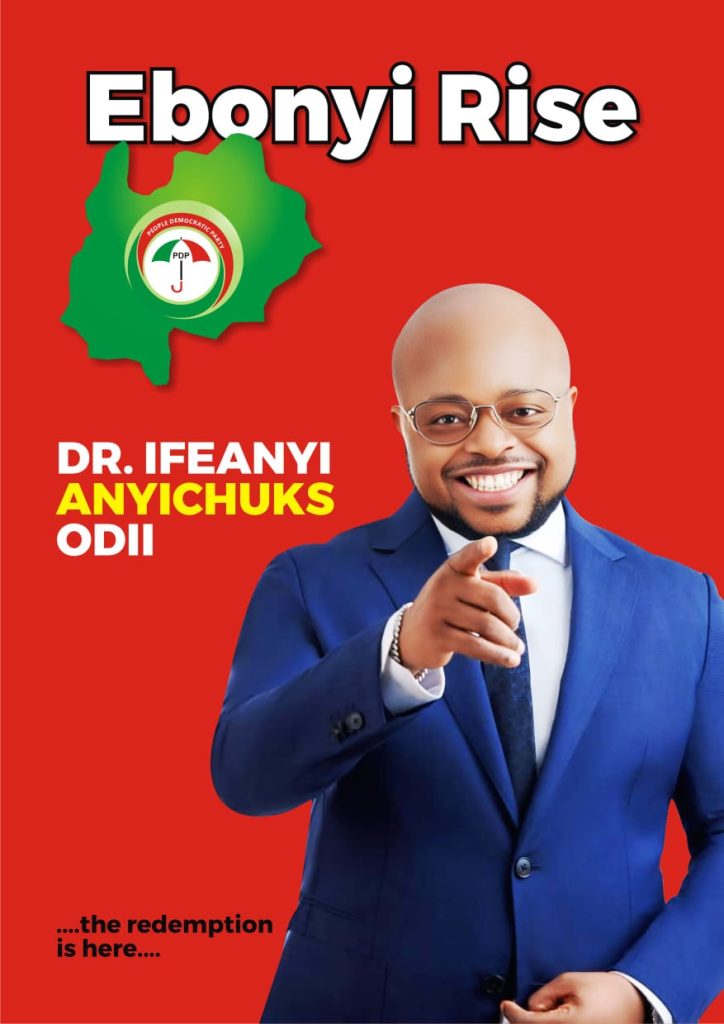
The vision of Dr Anyichuks Odii, the PDP governorship candidate to reconstruct Ebonyi state, economically, politically and developmentally is well known. *Under his government, the people will rejoice because the Bible says that *WHEN THE RIGHTEOUS IS IN AUTHORITY, THE PEOPLE REJOICE, BUT WHEN THE WICKED BEAR RULE, THE PEOPLE MOURN*!
This is the position of what is taking place in Ebonyi state today. The wicked is bearing rule, now in Ebonyi, the people are mourning. The present regime is bearing rule from a very wicked perspective hence the people are mourning.
*”I told them when we start campaigning, I will be campaigning as a private citizen. Show me what you have done, I will show you what I have done. If you can do it as a private citizen, I will surrender, I will resign and I will bow and allow you to continue…”* – Chief Dr. Ifeanyi Chukwuma Odii
This a very audacious declaration by the PDP governorship candidate in Ebonyi State, I want to say, *EBONYI RISE, A DANIEL HAS COME TO JUDGEMENT*
ANYICHUKS ODII IS HERE.
Dr. Kenneth Anozie
Political Analyst
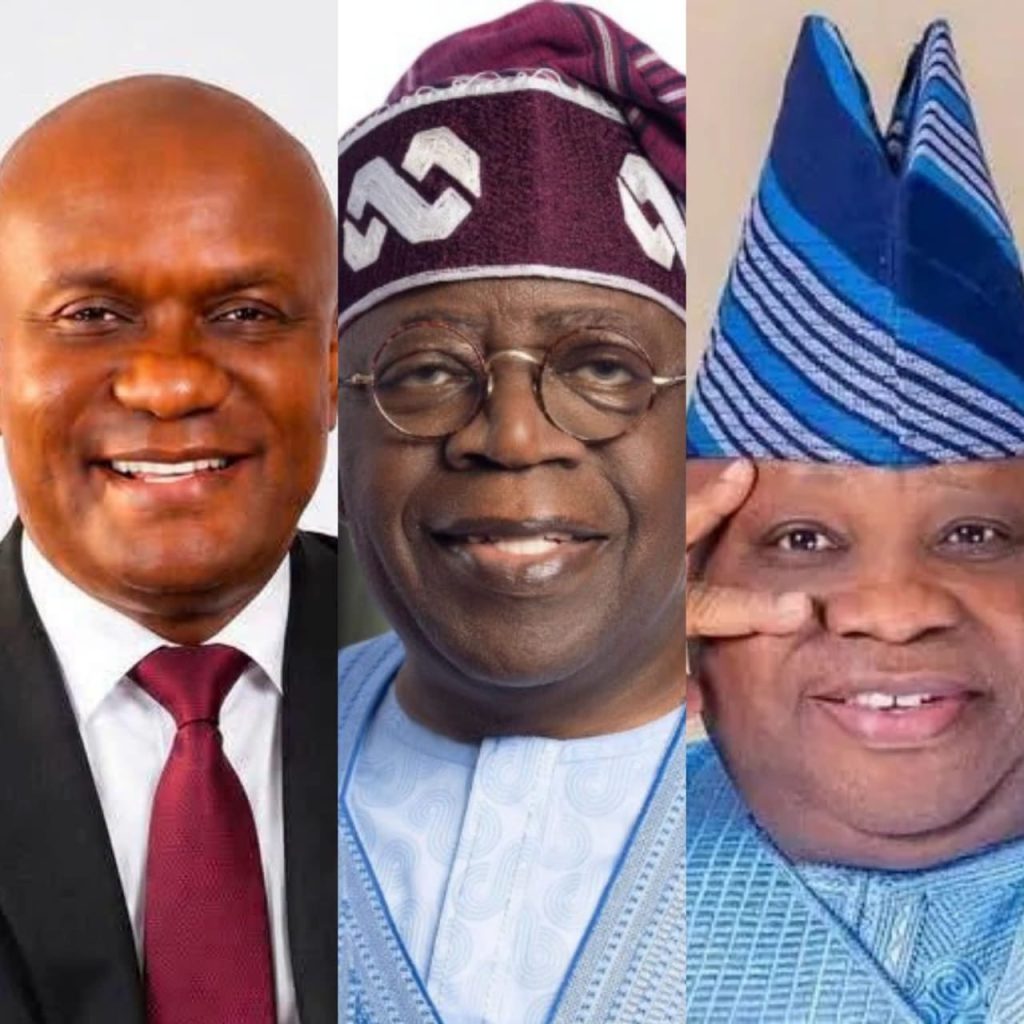
Former Speaker of the Abia State House of Assembly and APC House of Representatives candidate for Ikwuano/Umuahia Federal Constituency, Rt. Hon. Chinedum Enyinnaya Orji, has said the recent Osun State governorship election proved that the Independent National Electoral Commission (INEC) can conduct free and fair polls, while President Bola Ahmed Tinubu’s transparency reforms are taking hold and redefining Nigerian democracy.
In an article titled “Transparency, Trust, and Transformation: Why INEC’s Credibility and Tinubu’s Reforms Are Redefining Nigerian Democracy,” Orji argued that transparency is the oxygen of true democracy, enabling free elections, economic growth, and citizens’ ability to hold leaders to account.
“Transparency is the oxygen of true democracy. Without it, elections become rituals, policies become decrees, and public trust erodes. With it, citizens can see the process, judge the outcomes, and believe that their votes and their taxes actually matter,” Orji wrote.
The former Speaker said President Tinubu’s commitment to openness is a governing philosophy anchored on the belief that legitimacy comes from process, not pronouncement.
He cited the Osun election as a defining moment for INEC’s credibility. According to Orji, despite widespread skepticism that the ruling APC had predetermined the winner, INEC conducted a free and fair election.
“To their dumbfounding surprise, INEC conducted a free and fair election. Voters were accredited, results were transmitted, and party agents were allowed to witness the process at every level. The atmosphere reflected competition, not coercion,” he wrote.
Orji noted that Accord Party candidate Ademola Adeleke emerged as winner, adding that the outcome “cut across expectations and party lines” and forced even skeptical observers to reassess.
He said President Tinubu’s posture before, during, and after the election reinforced INEC’s credibility, adding that there was no directive from the Villa to skew the process.
“That is adherence to the Rule of Law in practice. When the head of government allows institutions to function independently, he is telling Nigerians that no one, including his own party, is above the process,” Orji stated.
The APC chieftain also linked INEC’s credibility to the administration’s economic transparency agenda, describing both as “two sides of the same coin.”
“One protects political rights, the other protects economic rights. Both depend on institutions being allowed to work,” he wrote.
On the removal of petroleum subsidy, Orji described the policy as a “difficult but necessary path” that has delivered immediate and measurable results.
“Federation allocations to states have quadrupled in many cases. Money that previously disappeared into subsidy payments is now flowing into state coffers,” he wrote.
He said governors across party lines now have more fiscal space to pay salaries, rehabilitate schools, invest in healthcare, and fix roads, adding that it is “only fair and only right” that they acknowledge President Tinubu’s role in the reform.
Orji said transparency in the reform matters because Nigerians can now see monthly FAAC figures published, track what comes into the federation account, and demand accountability from their state governments.
“When citizens know how much their state received, they can also ask how it is being spent. That is democracy extending beyond election day into governance itself,” he wrote.
He said the judiciary has also benefited from the executive’s respect for court judgments and due process, adding that public trust is being slowly rebuilt because people can point to concrete examples.
“Osun is one. Improved allocations is another. There is a pattern forming,” Orji stated.
He concluded that President Tinubu has demonstrated a consistent willingness to uphold the principles of democratisation—free elections, open policies, and governance that answers to the people.
“In the final analysis, transparency is not a slogan. It is an enabler. It enables free elections, it enables economic growth, and it enables citizens to hold leaders to account,” he wrote.
“That is the standard Nigerians should now demand, and it is the standard this administration has set.”
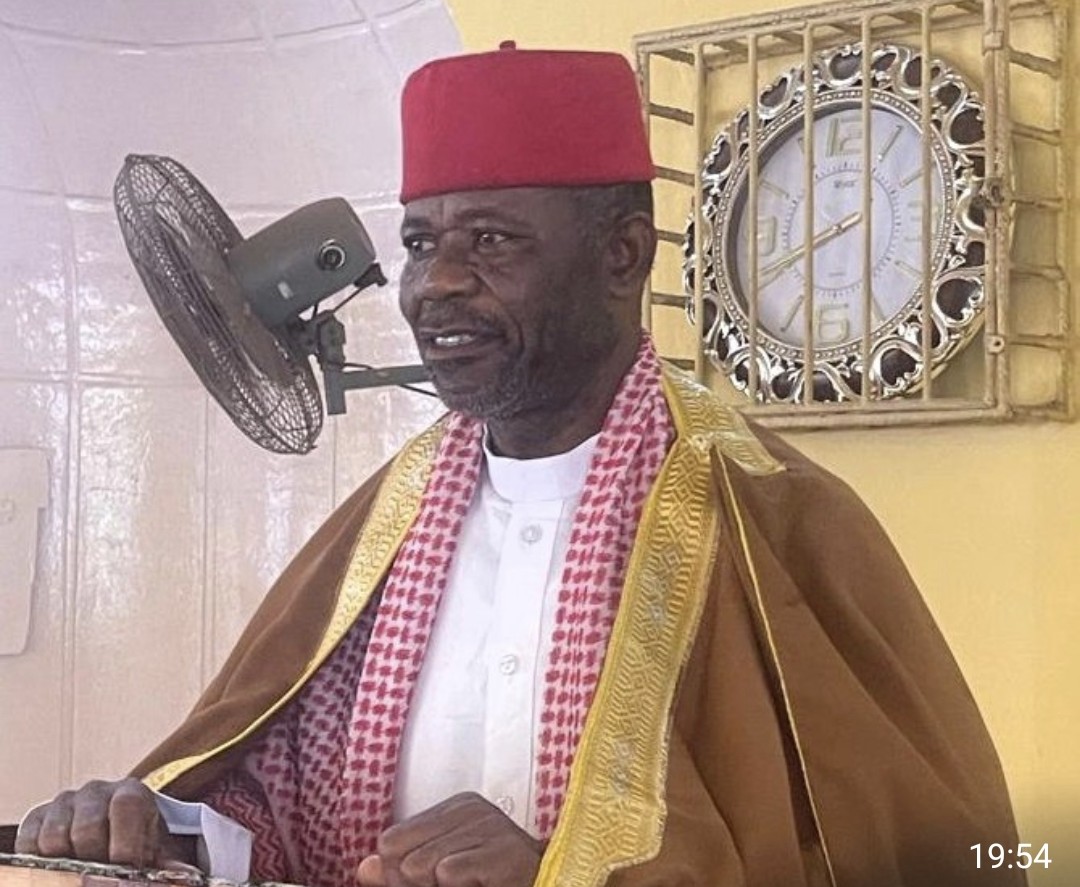
The Chief Imam of 81 Division of the Nigerian Army, Lt.-Col. Husein Eleje, has charged Nigerians emulate and imbibe Prophet Muhammad’s peaceful, truthful and just lifestyle in order to build a progressive nation.
Eleje gave the charge in an interview on Tuesday from Abakaliki, Ebonyi State to commemorate Eid-el-Maulud celebration being the celebration of the birth of the Holy Prophet Muhammad (may Allah’s peace be upon Him).
He said that Muhammad, who was born at Middle-East in Saudi Arabia in the year 570 AD, displayed worthy character among all people and was known as “a trustworthy, honest and simple person”.
According to him, so the celebration of the Maulud is done to emulate the good life-style, which Prophet Muhammad lived.
“The Holy Prophet lived peaceful and humble life and always mediate among disputing parties. He never cheated anyone nor shy away from speaking the truth.
“Prophet Muhammad associated freely, traded, worked together with the common people to establish a city (Medina) where people of different faiths lived together and practiced their faith and had freedom of worship.
“He stood against any oppression and injustice and he always say ‘your bloods are sacred, and your wealth and property are sacred’.
“To Him, it is prohibited for any one to harm his brother or take his property unjustly,” he said.
The cleric urged Nigerians to tolerate one another and protect the interest of one another as the Prophet had exemplified.
Eleje said that the Prophet humbled Himself to even those who followed and accept Islam as well as participated equally with them in any communal work to build the society.
“We must be a people who advocate for peaceful co-existence among others and our neighbours,” he added.
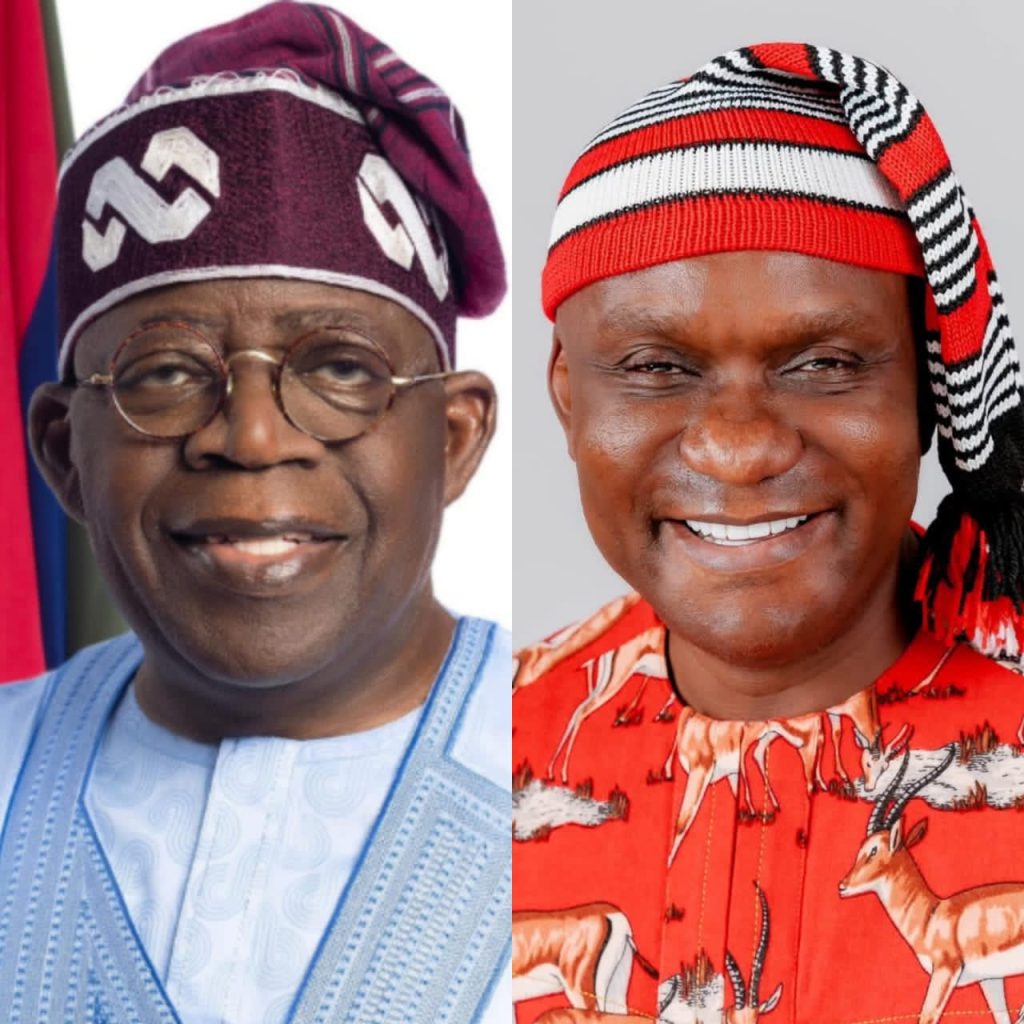
When Alhaji Atiku Abubakar recently said he would restore petroleum subsidy if elected president, he tapped into a familiar frustration. Fuel prices are high, transport costs bite, and households are feeling the squeeze. That pain is real. But the promise to bring back the old subsidy regime is not relief. It is a return to a policy that bled the treasury, starved the states, and kept Nigeria dependent on borrowing to buy fuel.
For decades the subsidy was sold as a welfare program for the poor. In practice it became the most expensive welfare program for smugglers, marketers, and a handful of importers. The Nigerian National Petroleum Company would claim billions monthly, and no one could audit where the product actually went. That was not social protection. That was fiscal leakage at scale.
The first and most immediate benefit of subsidy removal is fiscal breathing room. In 2022 alone, subsidy gulped over 4 trillion naira. That was more than we spent on education, health, and capital projects combined. When that money stopped going to fuel, it did not disappear. It stayed in government coffers, and a large share of it flows directly to the sub nationals through FAAC.
The sub nationals are where the difference is being felt most. States and local governments now receive significantly higher monthly allocations. Governors in Rivers, Lagos, Kano, and others have reported FAAC receipts nearly doubling compared to pre-removal levels. That is money that can pay teachers, fix primary health centers, and clear pension arrears without waiting for Abuja bailouts.
In Rivers State, for example, the additional resources have allowed the state government to accelerate road projects, expand the school feeding conversation, and invest in water and sanitation. Across the country, states are using the windfall to clear salary backlogs and to fund security. That is the direct link between subsidy removal and better services at your doorstep.
Beyond recurrent needs, the removal unlocked capital spending. With subsidy gone, the federal government and states are no longer borrowing just to keep petrol cheap. Instead, we are seeing commitments to CNG buses, mass transit, student loans, and conditional cash transfers. These are targeted interventions. They reach the vulnerable without subsidizing a businessman in Cotonou who drives across the border to buy cheap fuel.
One of the quietest but biggest wins is the end of the subsidy-driven smuggling economy. When Nigerian petrol was artificially cheap, an estimated 30 to 40 percent was leaving our borders daily. That drained our forex and rewarded criminal networks. With prices aligned to market, the incentive to smuggle collapsed almost overnight. That saves dollars and restores integrity to our supply chain.
Sub nationals also gained policy space. Before, states were trapped. They could not raise IGR fast enough to match their responsibilities because the center was spending all its revenue on fuel. Now, with more money coming from FAAC and with subsidy no longer a federal albatross, states can plan medium-term budgets. They can borrow for infrastructure knowing their revenue base is real, not propped up by a phantom fuel bill.
The macroeconomic case is just as strong. Subsidy removal freed up foreign exchange that was being used to import and “subsidize” fuel. That pressure contributed to naira volatility. With the drain gone, the CBN has more room to stabilize the market, and investors see a government willing to make hard choices. Confidence matters for FDI, and FDI builds factories, not just fuel stations.
Let us be honest about the counterargument. Atiku and others argue that Nigerians cannot afford the current prices and that government should cushion the pain by restoring subsidy. The compassion is understandable. But the method is wrong. A blanket subsidy is the bluntest tool possible. It subsidizes the rich who own three cars, it subsidizes generators in malls, and it subsidizes our neighbors.
Targeted support is both cheaper and fairer. The savings from subsidy removal are already funding student loans, nano-grants, and public transport reforms. Those programs can be scaled. If we put 1 trillion naira directly into transport, health insurance, and food support, the impact on the poor will be ten times what the same 1 trillion did when spread thinly across every liter of petrol.
International experience backs this. Indonesia, India, and Ghana all removed fuel subsidies and redirected the savings to health, education, and cash transfers. In each case there was short-term pain, followed by stronger public services. Countries that reversed course and brought subsidies back, like Egypt in 2014 before its second reform, ended up in deeper debt crises.
Restoring subsidy now would also reverse private sector investment. Since the removal, private companies have begun investing in refineries, CNG conversion centers, and logistics. Dangote Refinery, modular refineries, and gas infrastructure are viable only because prices reflect costs. If we announce that subsidy will return, those investors pause. That means fewer jobs in Port Harcourt, Warri, and Lagos.
For the sub nationals, a return to subsidy is a direct pay cut. FAAC would shrink again. States would go back to borrowing to pay salaries. Projects started with the new revenues would stall. Local governments, which depend almost entirely on federal transfers, would be the first to feel it. That is not theoretical. We lived it for 20 years.
Atiku’s argument rests on the idea that the timing was wrong and the palliatives were insufficient. Fair critique. But the solution to poor implementation is better implementation, not abandoning the reform. We should demand faster rollout of CNG buses, more transparency in how FAAC windfalls are spent, and stronger monitoring of state budgets. We should not demand a return to the policy that caused the weakness.
The subsidy was also a corruption magnet. It created a system where claims were king and verification was optional. Removing it broke that cycle. Bringing it back without fixing the governance structure is inviting the same fraud, only now with higher global oil prices and a weaker naira.
There is also a climate and energy angle. Cheap petrol discouraged gas adoption and kept us locked into generators. With market pricing, CNG, electric tricycles, and solar become economically sensible. States can lead this transition because they now have the funds to subsidize conversion kits, not fuel itself.
Politically, the promise to restore subsidy sounds popular in the short term. But governance is about trade-offs. The trade-off here is clear: cheap fuel for a few months versus hospitals, roads, and jobs for years. Sub nationals have already shown what they can do with the extra money. To take it away is to punish the very level of government closest to the people.
Finally, debt. Subsidy was financed largely by borrowing and by unpaid arrears to NNPC. That debt was crowding out everything else. Every naira we do not spend on subsidy is a naira we do not have to borrow. That lowers interest payments, which in turn frees more money for states and local governments.
Nigeria does not need a return to the past. We need to finish the work of this reform. That means plugging leakages, auditing state spending, and scaling targeted support so no family is left behind.
Alhaji Atiku is a respected Nigerian, but on this point he is wrong. Restoring subsidy would undo the single most important fiscal correction we have made in a generation. It would hurt the states, weaken the naira, and put us back on the borrowing treadmill.
The better path is forward. Keep the subsidy gone. Let the sub nationals keep the resources. And let government prove that the savings can translate into tangible relief. That is how we turn pain into progress, and that is how we build a Nigeria that works beyond election cycles.
CHINEDUM ENYINNAYA ORJI writes from Amaokwe Ugba, Umuahia Ibeku and the All Progressives Congress Candidate for Ikwuano Umuahia Federal Constituency.

Seven people have died and seven others sustained injuries in a fatal road crash on the Bida-Kutigi road in Niger State, the Federal Road Safety Corps (FRSC) has confirmed.
The FRSC Niger Sector Commander, Corps Commander Aishatu Sa’adu, confirmed the incident to the News Agency of Nigeria (NAN) on Sunday.
Sa’adu said the crash occurred on Sunday afternoon at Shebe village, a few kilometres from Kutigi town.
According to her, the accident involved a Mazda vehicle and a Siena bus travelling along the Bida-Kutigi road.
“Seven people lost their lives, seven others were injured while four were rescued without injuries, bringing the total involved to 18,” she said.
The sector commander said the seven victims who died were confirmed dead at the scene, while the injured victims sustained injuries of varying degrees.
She said the injured were evacuated to Kutigi General Hospital for medical attention, while the remains of the deceased were deposited at the hospital’s mortuary.
The FRSC official did not immediately disclose the identities of the victims or provide further details on the circumstances surrounding the collision.
The crash involved a total of 18 people, comprising seven fatalities, seven injured persons and four uninjured survivors.
Authorities are expected to investigate the cause of the accident and determine the circumstances that led to the fatal collision.

-
 Politics4 days ago
2027: Mbah’s Second Term: A Smooth Ride or Tough Battle?
-
 Politics5 days ago
2027: Wike Explains Why He Rejected Tinubu’s Campaign DG Role, Says ‘I Don’t Want to Lose My States’
-
 News4 days ago
Nwabueze Denies Running ‘Fake Agency’, Says Made-in-Nigeria Project Has Operated Under OSGF for 16 Years
-
 Crime4 days ago
End of the Road: Man Dies While Attempting to Steal Transformer Cables
-
 Crime5 days ago
Over 60 Worshippers Abducted as Terrorists Attack Niger Mosque During Prayer
-
News5 days ago
Former Abia Speaker Chinedum Orji Celebrates Pastor Jerry Eze on Birthday
-
 Crime3 days ago
Gunmen Ambush Joint Security Team, Kill Police Inspector, Injure Another
-
 News3 days ago
FAAC bonanza: Govs face questions as payouts hit N47tn