



Politics
Ebonyi Central Senate: How Laz Ogbee’s Entry Has Redrawn the Political Map

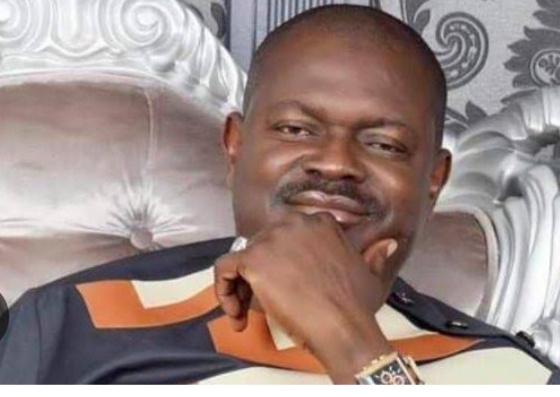

By PETRUS OBI
The race for the Ebonyi Central Senatorial seat ahead of the 2027 general elections may have taken a decisive turn with the entrance of former House of Representatives member, Rt. Hon. Lazarus Ogbee.
In a zone where political contests are often shaped by a delicate balance of grassroots appeal, elite influence, and party structure, Ogbee’s decision to join the race has effectively altered the existing equation.
For months, the contest appeared to tilt in favour of the incumbent, Senator Ken Eze, who has leveraged the advantages of office to consolidate his position through constituency outreach, empowerment programmes, and growing stakeholder endorsements. Incumbency, in Nigeria’s political environment, is rarely a small advantage—it provides visibility, access, and an already-established political structure.
However, Ogbee’s entry introduces a disruptive dynamic.
A former chairman of Ezza South Local Government Area and a seasoned grassroots mobiliser, Ogbee is not a newcomer to the political terrain. His enduring connection with the grassroots, built over years of local engagement, positions him as a formidable contender. More importantly, his political network cuts across wards and communities in ways that could challenge existing alignments.
What makes his entrance particularly significant is the timing and the platform. Within the All Progressives Congress (APC), his ambition sets the stage for what could become a high-stakes internal contest. Rather than a straightforward general election battle, the real struggle may begin at the party primary level, where influence over delegates, loyalty of party stakeholders, and control of local structures will prove decisive.
Crucially, the role of the state governor cannot be overlooked. In Ebonyi’s political architecture, as is often the case across many states, the governor remains a central figure in determining party direction, particularly in the selection of candidates. Through influence over party structures, stakeholders, and consensus-building processes, the governor’s preference can significantly shape the outcome of the primaries.
It is within this context that Ogbee’s growing grassroots appeal becomes even more consequential. Political analysts believe that his strong support base at the local level could exert pressure on party leadership and stakeholders, making it difficult to ignore his candidacy. In situations where popular sentiment is clearly aligned with a candidate, party leaders including the governor may be compelled to factor electability into their final decision.
This development shifts the narrative from a largely incumbent-driven race to a competitive, multi-layered contest. It also reintroduces a critical factor often underestimated in modern elections, candidate popularity.
In Ebonyi Central, where voters are deeply influenced by personal connection and perceived accessibility of candidates, popularity can rival, and sometimes outweigh, institutional advantages. Ogbee’s reputation as a grassroots politician could therefore resonate strongly with a significant segment of the electorate.
Yet, it would be premature to discount the incumbent. Senator Eze retains the benefits of office, an existing support base, and the ability to leverage ongoing projects as political capital. The unfolding contest is therefore shaping into a classic battle between structure, executive influence, and grassroots momentum.
As the political climate gradually builds toward 2027, one thing is clear: Ogbee’s entrance has injected uncertainty, competition, and renewed interest into the Ebonyi Central senatorial race.
What once looked predictable is now anything but.
The road to the Senate seat will no longer be a straight path—it will be a contest defined by strategy, alliances, executive calculations, and the ever-unpredictable will of the people.

By Okey Maduforo, Awka
Ahead of the 2027 National Assembly elections, a mass protest voting movement may be building up in Anambra South Senatorial District, following reported moves by members of major political parties to support the candidate of the Nigeria Democratic Congress (NDC), Chief Ebuka Onunkwo.
The development is said to be linked to grievances among some members of the All Progressives Grand Alliance (APGA), All Progressives Congress (APC), African Democratic Congress (ADC) and remnants of the Peoples Democratic Party (PDP) over the treatment allegedly meted out to Onunkwo during previous political contests.
Onunkwo, who had previously contested the Anambra South senatorial seat under APGA, later emerged as the NDC candidate for the 2027 election.
Although the ADC is currently embroiled in legal disputes over the authentic candidates and the conduct of its primary elections, some members of the APC and APGA are also reportedly dissatisfied with developments within their respective parties.
It was gathered that a section of APGA members, in particular, are backing Onunkwo as a form of protest over the conduct of the party’s senatorial primary, while some members of other parties are also believed to be considering voting for him irrespective of their party affiliations.
Confirming the growing support for Onunkwo, the Chief Executive Officer of NOWAS Oil and Gas Limited and a major stakeholder in Anambra South politics, Chief Ignesus Ikechukwudere Nnubia, said the NDC candidate currently enjoys widespread acceptability across party lines.
Nnubia said the growing support for Onunkwo had made his party affiliation less significant, arguing that voters would ultimately vote according to their conscience and assessment of the candidates.
He said, “At the moment, the number of APGA members with him and supporting him makes one wonder what is left of that party. Even the remnants of the PDP have pitched their tents with him, while members of the ruling APC at the national level are also behind him.
“So, the party that he belongs to is not a factor at all. You know that it is a game of numbers, and people are going to vote according to their conscience and not necessarily because of the political party they belong to.
“People are not bound to vote for their party, and some of them are ready and willing to vote for him.
“We are not talking about the party because he will surely get votes from the NDC, APGA, APC and even other political parties that are already closing ranks to support him as their candidate.”
Nnubia further described Onunkwo as the candidate currently standing tall among the contenders for the Anambra South senatorial seat, expressing confidence that his emergence would usher in what he described as a “new dawn” for the district.
He said political parties should not be the major consideration for voters, stressing that what matters most is the ability of elected representatives to improve the lives of their constituents.
According to him, political parties exist because of the people, and therefore the influence of party structures and incumbency has its limits during elections.
Nnubia said those factors would ultimately be tested by the electorate in the 2027 election, which he described as a contest in which voters’ choices would determine the outcome.

The Peoples Democratic Party (PDP) governorship candidate for the 2027 Ebonyi State election, Chief Ifeanyi Chukwuma Odii, has pledged to attract more than ₦2 trillion in private-sector investment to the state within six months of assuming office if elected.
Odii made the pledge while addressing supporters in Lagos ahead of the formal commencement of his campaign.
He said his investment strategy would cover key sectors of the Ebonyi economy, including mining, hospitality, real estate and manufacturing.
According to the PDP candidate, he has identified more than 2,000 prospective investors, each capable of investing about ₦1 billion in the state.
“I have over 2,000 people who can invest ₦1 billion each. When you multiply it, you will get over ₦2 trillion. This has been structured in such a way that all aspects of the economy will be involved,” Odii said.
He said the proposed investment drive was designed not only to inject capital into the state but also to create jobs, expand the productive base of the economy and provide opportunities for young people and entrepreneurs.
Odii said Ebonyi’s natural resources and strategic location placed it in a strong position to attract large-scale investments if its economic potential was properly harnessed.
He promised that his administration would prioritise private-sector participation, industrialisation and job creation while creating an enabling environment for both local and foreign investors.
The candidate also said existing businesses in the state would be supported to expand, while new investors would be encouraged to establish operations across various sectors.
His pledge comes amid growing political activities ahead of the 2027 governorship election, with economic development, employment generation and wealth creation featuring prominently in his campaign message.
The proposed ₦2 trillion investment target within six months, if achieved, would represent a significant boost to Ebonyi’s economy and rank among the most ambitious private-sector investment mobilisation plans proposed in the state.
By Okey Maduforo, Awka
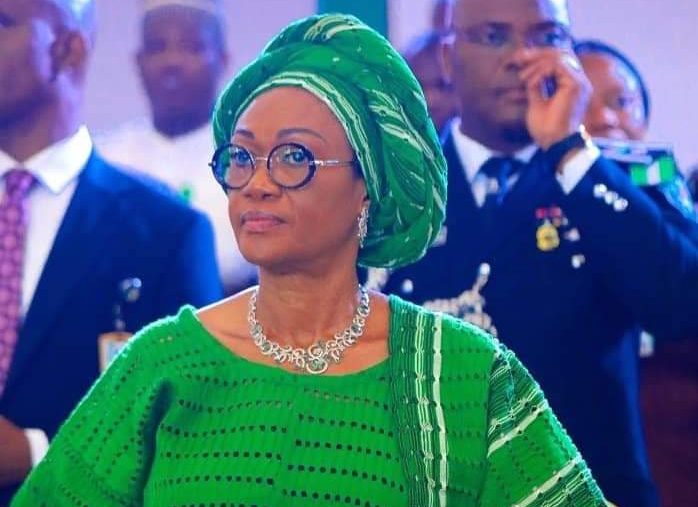
The planned visit of the First Lady of Nigeria, Senator Oluremi Tinubu, to Anambra State has sparked controversy following a protest by the state Chairman of the All Progressives Congress (APC), Senator Emma Anosike, that the party was not informed about the visit.
Anosike said the APC in Anambra was never consulted or briefed about the proposed visit, adding that the party was taken aback by reports that the wife of the party’s national leader and presidential candidate, President Bola Ahmed Tinubu, would be visiting the state without recourse to the state chapter.
He said, “It is indeed strange that the First Lady of our presidential candidate is visiting Anambra State without recourse to the party in the state.
“The party wishes to state categorically that we are not part of the arrangements for the reception of our First Lady, Senator Oluremi Tinubu, because the party was never put in the picture.”
Anosike also dismissed the mantra that “The Progressives Are Working Together”, being canvassed by the All Progressives Grand Alliance (APGA), describing it as a smokescreen by the ruling party in Anambra to hijack President Tinubu’s re-election from the APC.
He said, “For instance, the APGA-led government in Anambra State did not interface with us on the organisation of the visit, and the party wonders if the progressives are indeed working together.”
The APC chairman, however, said the development would not compromise the First Lady’s visit, urging all APC members and supporters in the state to turn out and give Senator Oluremi Tinubu a warm welcome.
He stressed that despite the party’s reservations over the arrangements, APC members remained committed to welcoming the First Lady to Anambra State.
Former Deputy Governor of Bauchi State, Sagir Saleh, has resigned his membership of the All Progressives Congress (APC).
Saleh, who served as deputy governor under former Governor Isa Yuguda, announced his resignation in a letter submitted to the party leadership in Katagum Local Government Area.
He cited personal reasons for his decision but did not provide further details.
His exit comes amid growing disagreements within the Bauchi APC following the party’s 2027 governorship primary. Other prominent members, including former governorship aspirant Bala Jibrin and Sunusi Kunde, an associate of Coordinating Minister of Health and Social Welfare, Prof. Ali Pate, have also reportedly left the party.
Jibrin, a former National Auditor of the defunct Congress for Progressive Change (CPC), resigned on August 31, 2026, following his opposition to the emergence of former Bauchi Governor Muhammad Abubakar as the APC’s 2027 governorship candidate.
He had criticised the primary process and questioned how the candidate emerged.
Kunde also resigned from the APC in August, submitting his resignation to the party chairman of Beti Ward in Misau Local Government Area.
The latest departures are coming as efforts continue to resolve internal disputes and disagreements among APC members in the state.
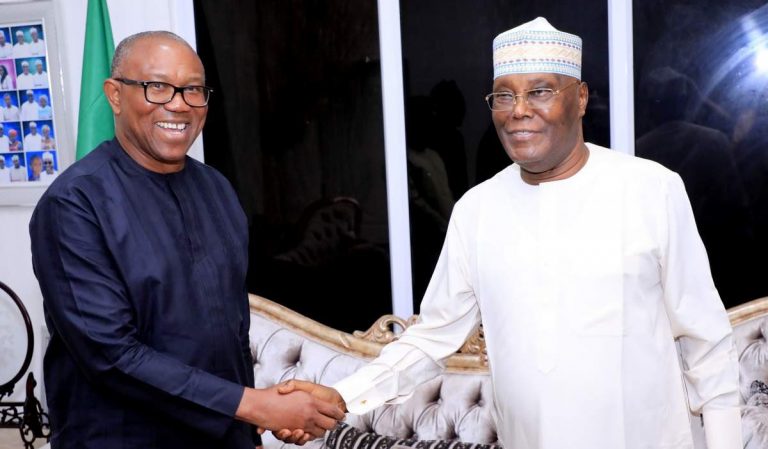
The Leader of INRI Evangelical Spiritual Church, Primate Elijah Ayodele, has raised the alarm over an alleged plot to assassinate former Anambra State Governor, Peter Obi, and former Vice President Atiku Abubakar ahead of the 2027 general election.
Ayodele issued the warning in a video shared on his verified X account on Sunday, urging both opposition figures to strengthen their security and remain vigilant.
The cleric did not identify those allegedly behind the purported plot but claimed that attempts were being made to eliminate Obi and Atiku.
According to him, divine intervention would prevent the alleged plan from succeeding.
“Obi and Atiku, be very conscious of your security. They are looking for any means to eliminate Obi and Atiku.
“But God will never allow it to happen. Watch out and be cautious about your security,” he said.
Ayodele also urged President Bola Tinubu to reconsider travelling to the United States, alleging that there were forces in America working against his political fortunes.
The claims come as political activities and realignments intensify ahead of Nigeria’s 2027 general elections.

-

 News5 days ago
Commissioner Dies Suddenly at Abuja Hospital
-

 News5 days ago
Sept. 26 Polls: ‘ENSIEC is over 90% ready’ – Chairman
-

 Uncategorized5 days ago
UK Confirms Koi Herpesvirus Outbreak, Restricts Fish Movement
-
News5 days ago
Niger Delta Chambers Unveils Plan to Transform Region Into Investment Hub
-
News5 days ago
Niger Delta Chamber Breaks Silence on Alleged Summit Trademark Dispute
-

 Health3 days ago
UNTH Begins Contact Tracing After Suspected Diphtheria Case
-
 News4 days ago
Dangote Reveals He Bought First Private Jet at 22
-

 Entertainment5 days ago
Poco Lee Granted Bail in UK Ahead of September 15 Court Hearing