



Politics
Ighodalo, Okpebholo in tight race as INEC uploads results

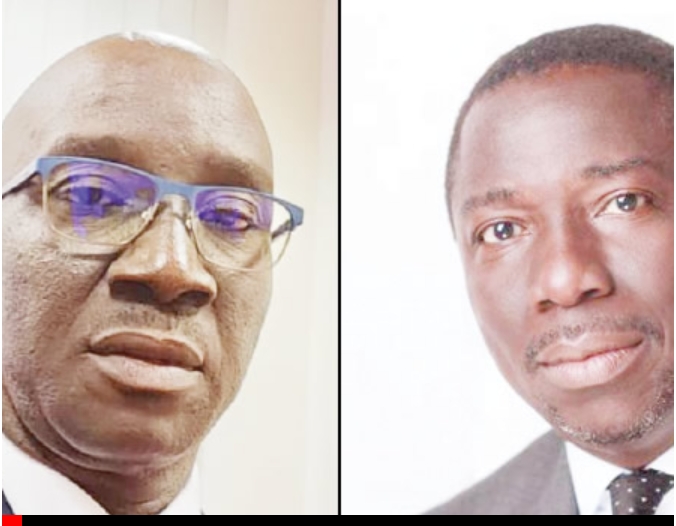

The candidates of the Peoples Democratic Party, Asue Ighodalo, and his All Progressives Congress counterpart, Senator Monday Okpebholo, are in a tight race as the Independent National Electoral Commission uploads the results of Saturday’s governorship election in Edo State.
As of the time of filing this report, INEC had uploaded 97 per cent of election results onto the Results Viewing portal.
Despite early morning rains, which delayed the arrival of materials at the polling units, the election witnessed a large turnout of voters across the state.
A preliminary analysis of election results so far uploaded on the IReV indicated that the APC candidate is leading in the Edo North Senatorial District, while the PDP candidate leads in the Edo South Senatorial District.

Edo State has a total of 18 Local Government Areas, divided into Edo North, Edo South and Edo Central. Traditionally, Edo North has always been the stronghold of the APC, while the PDP has always shown strength in Edo Central and Edo South.
However, in the last senatorial election, an APC candidate won the election in Edo Central.
Ighodalo, Okpebholo win polling units
The PDP and APC candidates won their polling units, while the LP candidate, Akpata, lost his polling unit.
At Ewohimi, Unit 11, Ward 1 in Esan South-East Local Government Area of the state, where PDP Ighodalo cast his ballot, he polled 200 votes, while APC Okpebholo had 45 votes.
However, the APC candidate floored his PDP counterpart at Unit 03, Ward 1, Uwessan in Esan Central Local Government Area of the state, where he (Okpebholo) cast his ballot. Okpebholo polled 102 votes, while both Ighodalo and the Labour Party candidate, Akpata, received one vote each.
The Edo APC leader, Oshiomhole, delivered his polling unit to the APC. At Iyamho, Ward 10, Unit 01 in Etsako West Local Government Area, where the former governor voted, the APC polled 403 votes, while the PDP and ADC each had one vote.
At Polling Unit 19, Ward 04 in the Oredo LGA where Obaseki cast his vote, the PDP polled 127 votes, APC had 35 votes, and LP got 11 votes.
Meanwhile, the LP candidate, Akpata, lost in his polling unit in Ward 6 of Oredo Local Government Area. He received only two votes, while the PDP polled 41 votes and the APC garnered 19.
Face off in strongholds
Calculations from the results uploaded on INEC IREV late Saturday evening indicated that Okpebholo and Ighodalo are in a tight race for victory.
In wards 1, 2, 4 and 6, which had a total of 43 polling units in Igueben LG, Ighodalo led with 2,778 votes, while Okpebholo polled 2,189 votes. In three wards in Ovia North-East LG, Okpebholo polled a total of 1,824 votes, while Ighodalo had 1,745 votes.
In six wards with a total of 60 polling units in the Ikpoba/Okha LG, Ighodalo led with 3,412 votes, followed by Okpebholo, who polled 1,232 votes.
In two wards with a total of 20 polling units in Oredo LG, Ighodalo led with 879 votes, while Okpebholo secured 538 votes.
In five wards and a total of 44 polling units in the Uhunmwode LG, Okpebholo led with 2,574 votes, but Ighodalo polled 2,172 votes.
From figures calculated in 103 polling units in the Esan Central LG, the APC led with 8,132 votes, while the PDP trailed with 6,902.
Figures calculated from 24 polling units in Owan West LG showed that Ighodalo had 1,979 votes, while Okpebholo secured 2,493.
In Ovia South West LG, the PDP garnered 871, while the APC had 972 out of the figures calculated from 17 polling units.
Also, from 13 polling units in Etsako East LG, Okpebholo led with 2,421 votes, followed by Ighodalo who scored 968 votes.
Figures from five wards and 10 polling units each from Esan West LGA showed that Okpebholo polled 4,105 votes, Ighodalo had 3,264 votes and Akpata had 41 votes.
In 151 polling units in 11 wards in the Owan West LGA, Ighodalo led with 26,870 votes, Okpebholo had 11,211 and Akpata had 184 votes.
In five polling units in two wards in Egor LG, Ighodalo led with 385 votes, while Okpebholo had 313 votes.
As of 11pm on Saturday, the final results collation had yet to begin at the INEC state collation centre in Benin.
Parties trade blame
Though the election was violence-free, there were reports of open inducement of voters with cash and food items by agents of the various political parties.
The security agencies made some arrests while the leading parties were locked in a war of words over the development.
The PDP and its candidate, Asue Ighodalo, alleged electoral fraud and accused the APC of vote-buying, while also lamenting the alleged oppression of their supporters by the police.
In a statement by its National Publicity Secretary of the party, Debo Ologunagba, the PDP alleged massive fraud.
The party called for the cancellation of the election result in the affected polling unit and urged authorities to address the reported infraction.
Also speaking to reporters after casting his vote in his ward, the PDP candidate, Ighodalo, decried delayed voting, saying INEC did not justify the claim that it was prepared for the poll.
“I am not happy with the process that delayed the delivery of the materials. This is a single-state election. INEC had all the time to prepare. We are not comfortable with the little shenanigans that are going on. There are rumours that some people in the opposition are trying to undermine the election process.
“The worst is that they go round trying to buy votes. They buy votes for N15,000 to N20,000. They are trying everything to subvert the process,” Ighodalo said.
He, however, expressed confidence that he would win the poll despite the obstacles.
“The kind of numbers I am hearing from Edo North, Edo Central, and Edo South overwhelms me. You know, in Nigeria, funny things happen. I don’t know the magic anybody wants to perform.
“I believe INEC to deliver free and fair election until they prove otherwise. We will win hands down in this election,” he added.
Similarly, the deputy governorship candidate of the Labour Party, Prince Asamah Kadiri, alleged vote-buying, pointing accusing fingers at the APC.
Kadiri made the allegation after casting his vote at Ward 1, Unit 6 in Estako West Local Government Area of the state.
He said, “It is sad that the APC is engaging in vote-buying in my unit and the reports available to me across Auchi and the Edo North district show that the APC is buying votes for N10,000.”
The LP chieftain, however, commended “some courageous voters” who turned down the monetary offer and insisted on voting for the party of their choice.
Kadiri also commended INEC’s performance in the conduct of the poll.
But in a swift reaction, the leader of the APC in Edo State, Senator Adams Oshiomole, denied the allegation that his party was involved in vote-buying.



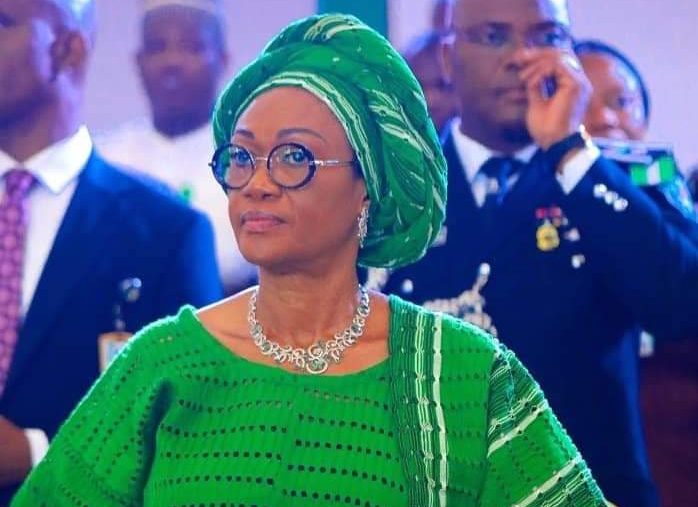
By Okey Maduforo, Awka
The planned visit of the First Lady of Nigeria, Senator Oluremi Tinubu, to Anambra State has sparked controversy following a protest by the state Chairman of the All Progressives Congress (APC), Senator Emma Anosike, that the party was not informed about the visit.
Anosike said the APC in Anambra was never consulted or briefed about the proposed visit, adding that the party was taken aback by reports that the wife of the party’s national leader and presidential candidate, President Bola Ahmed Tinubu, would be visiting the state without recourse to the state chapter.
He said, “It is indeed strange that the First Lady of our presidential candidate is visiting Anambra State without recourse to the party in the state.
“The party wishes to state categorically that we are not part of the arrangements for the reception of our First Lady, Senator Oluremi Tinubu, because the party was never put in the picture.”
Anosike also dismissed the mantra that “The Progressives Are Working Together”, being canvassed by the All Progressives Grand Alliance (APGA), describing it as a smokescreen by the ruling party in Anambra to hijack President Tinubu’s re-election from the APC.
He said, “For instance, the APGA-led government in Anambra State did not interface with us on the organisation of the visit, and the party wonders if the progressives are indeed working together.”
The APC chairman, however, said the development would not compromise the First Lady’s visit, urging all APC members and supporters in the state to turn out and give Senator Oluremi Tinubu a warm welcome.
He stressed that despite the party’s reservations over the arrangements, APC members remained committed to welcoming the First Lady to Anambra State.
Former Deputy Governor of Bauchi State, Sagir Saleh, has resigned his membership of the All Progressives Congress (APC).
Saleh, who served as deputy governor under former Governor Isa Yuguda, announced his resignation in a letter submitted to the party leadership in Katagum Local Government Area.
He cited personal reasons for his decision but did not provide further details.
His exit comes amid growing disagreements within the Bauchi APC following the party’s 2027 governorship primary. Other prominent members, including former governorship aspirant Bala Jibrin and Sunusi Kunde, an associate of Coordinating Minister of Health and Social Welfare, Prof. Ali Pate, have also reportedly left the party.
Jibrin, a former National Auditor of the defunct Congress for Progressive Change (CPC), resigned on August 31, 2026, following his opposition to the emergence of former Bauchi Governor Muhammad Abubakar as the APC’s 2027 governorship candidate.
He had criticised the primary process and questioned how the candidate emerged.
Kunde also resigned from the APC in August, submitting his resignation to the party chairman of Beti Ward in Misau Local Government Area.
The latest departures are coming as efforts continue to resolve internal disputes and disagreements among APC members in the state.
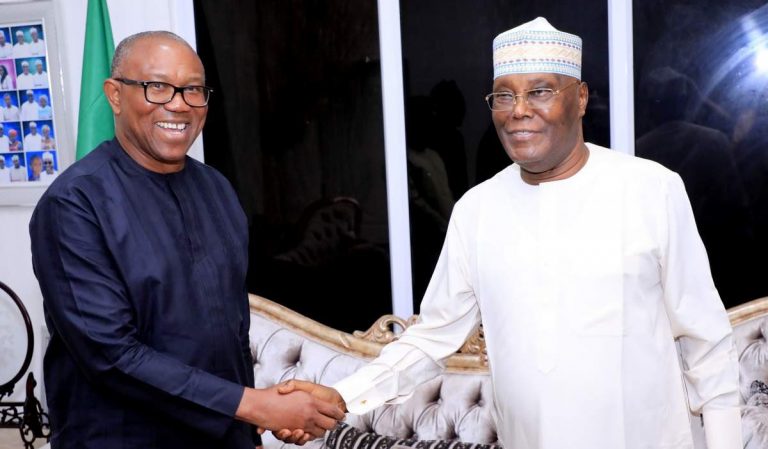
The Leader of INRI Evangelical Spiritual Church, Primate Elijah Ayodele, has raised the alarm over an alleged plot to assassinate former Anambra State Governor, Peter Obi, and former Vice President Atiku Abubakar ahead of the 2027 general election.
Ayodele issued the warning in a video shared on his verified X account on Sunday, urging both opposition figures to strengthen their security and remain vigilant.
The cleric did not identify those allegedly behind the purported plot but claimed that attempts were being made to eliminate Obi and Atiku.
According to him, divine intervention would prevent the alleged plan from succeeding.
“Obi and Atiku, be very conscious of your security. They are looking for any means to eliminate Obi and Atiku.
“But God will never allow it to happen. Watch out and be cautious about your security,” he said.
Ayodele also urged President Bola Tinubu to reconsider travelling to the United States, alleging that there were forces in America working against his political fortunes.
The claims come as political activities and realignments intensify ahead of Nigeria’s 2027 general elections.
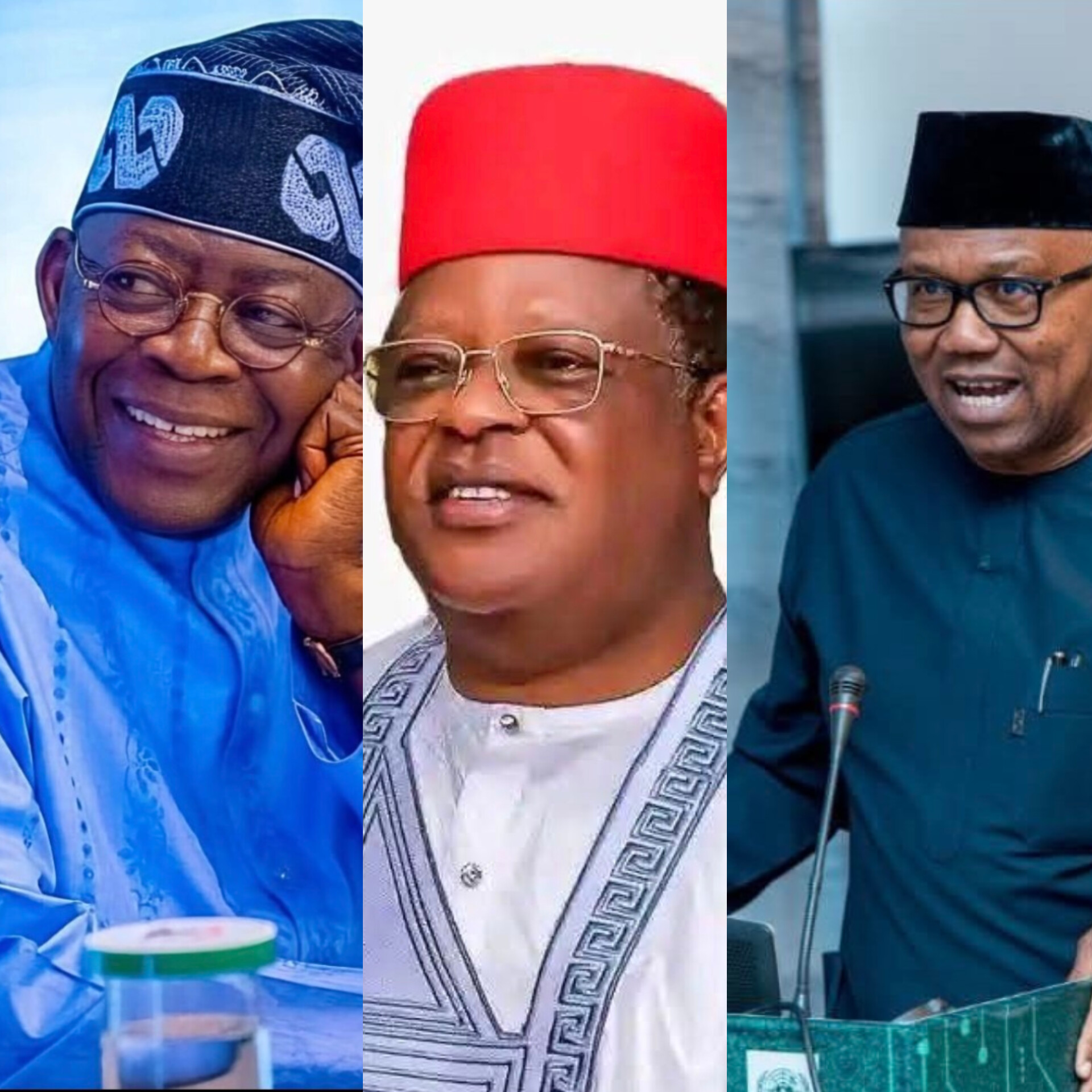
Why the Igbo Must Choose Political Strategy Over Emotional Politics
By Emma Igwe
There comes a moment in the political history of every people when sentiment must give way to strategy.
For the South-East, 2027 may be that moment.
The question before the Igbo nation is not whether an Igbo man should one day become President of Nigeria. Of course he should. The question is whether the Igbo people are prepared to do the difficult political calculations required to make that aspiration a reality.
And that is where the 2027 presidential election becomes more than a contest between political parties.
It becomes a referendum on the political intelligence of the South-East.
Will the region continue to vote primarily to satisfy ethnic emotions and demonstrate loyalty to its own?
Or will it begin to think several political moves ahead—like a chess player who understands that sometimes the best way to capture the king is to first control the board?
THE HARD TRUTH THE SOUTH-EAST MUST CONFRONT
Peter Obi has demonstrated something remarkable.
He has shown that an Igbo politician can generate extraordinary enthusiasm among millions of Nigerians, particularly young people. His political movement has changed the conversation about presidential politics and created a new generation of politically conscious voters.
But enthusiasm is not the same thing as electoral mathematics.
The South-East must ask a difficult question:
Can regional popularity, without a sufficiently broad and durable national coalition, deliver the presidency?
That question is not an attack on Obi.
It is the central question of Nigerian politics.
The same principle applies to Rabiu Musa Kwankwaso. His influence in Kano and parts of the North is considerable. Historically, Mallam Aminu Kano demonstrated how powerful regional political mobilisation could become.
But regional strength alone has never been enough to guarantee the Nigerian presidency.
Nigeria is a federation of competing interests.
The presidency is won by coalition.
And the Igbo must learn to build coalitions without surrendering their identity.
AZIKIWE, EKWUEME AND THE POLITICS OF REALISM
History provides the South-East with a political textbook.
Dr. Nnamdi Azikiwe was one of Nigeria’s most influential nationalist leaders. Yet his enormous stature and regional influence did not automatically translate into the presidency.
Alex Ekwueme took a different route.
In the Second Republic, he became Vice-President through a political arrangement that placed an Igbo leader at the very heart of the federal government.
That distinction is important.
Zik represented the grandeur of the national dream. Ekwueme demonstrated the power of political positioning.
The lesson is not that the Igbo should abandon presidential ambition.
The lesson is that presidential ambition must be accompanied by political architecture.
This is precisely why the David Umahi argument deserves a more sophisticated examination than the usual name-calling that accompanies it.
UMAHI’S POLITICAL GAMBLE
Like him or hate him, David Umahi understands one fundamental principle of politics:
You cannot negotiate from the margins if you want to control the centre.
His decision to work with President Bola Ahmed Tinubu has attracted criticism from many quarters of the South-East.
But political history will ultimately judge whether that decision was merely opportunistic or whether it represented a calculated attempt to reposition the South-East within Nigeria’s governing establishment.
As Minister of Works, Umahi is also uniquely positioned to make the infrastructure argument.
The Federal Government says major road and bridge projects are currently being executed across Ebonyi and the wider South-East, including sections of the Calabar–Ebonyi–Benue–Nasarawa–Abuja corridor and the Ndi-Egbe Bridge linking Ebonyi with Cross River.
Umahi has repeatedly argued that the Tinubu administration is reversing decades of infrastructure neglect in the region. In June 2026, he specifically cited projects that he said had remained unrealised for decades.
These claims should be scrutinised, not blindly accepted.
But neither should they be dismissed simply because they come from a politician whose political position many people dislike.
THIS IS NOT ABOUT LOVING TINUBU
Here lies the fundamental misunderstanding.
The argument for the South-East supporting Tinubu in 2027 does not have to mean that every Igbo man suddenly becomes an APC loyalist.
It does not mean that every policy of the Tinubu administration must be applauded.
It does not mean that the South-East should surrender its independent political voice.
It means something much more sophisticated:
The South-East should negotiate with power instead of permanently positioning itself outside power.
There is a difference between loyalty and strategy.
A political party is not a religion.
A presidential candidate is not a tribal deity.
Politics is transactional.
Every serious political region negotiates.
The Yoruba negotiate.
The North negotiates.
The South-South negotiates.
Why should the Igbo be the only people expected to vote purely from emotion?
THE 2031 CALCULATION
This is where the debate becomes particularly interesting.
If Tinubu wins in 2027, the political conversation will inevitably move toward the succession question.
Who takes over after Tinubu?
Which region?
Which coalition?
Which political bloc has accumulated sufficient goodwill, influence and bargaining power to negotiate the next presidential arrangement?
The South-East cannot wait until 2031 before asking these questions.
The political preparation must begin in 2027.
That is the strategic argument behind Umahi’s position.
If the South-East becomes a critical component of the governing coalition in 2027, it potentially creates a stronger negotiating platform for the future.
That does not guarantee an Igbo presidency.
Nothing in Nigerian politics comes with such a guarantee.
But it may create a better platform from which to negotiate one.
And that is the difference between political fantasy and political strategy.
THE BIGGEST MISTAKE WOULD BE TO TURN OBI AND UMAHI INTO ENEMIES
There is perhaps a more important question.
Why must Peter Obi and David Umahi be treated as political enemies simply because they have chosen different routes?
They are both prominent Igbo political figures.
One has demonstrated extraordinary grassroots mobilisation and national visibility.
The other currently occupies one of the most influential positions in the federal infrastructure establishment.
One understands mass political mobilisation.
The other understands the mechanics of government and federal power.
Why should these strengths not be brought together?
Why must the argument always be:
Obi versus Umahi?
Why can’t it become:
Obi and Umahi—what is the best strategic route for the Igbo nation?
The two men do not have to belong to the same political party.
They do not have to endorse the same presidential candidate.
They do not even have to agree on every issue.
But they can sit down as Igbo leaders and discuss the future beyond their personal political ambitions.
That conversation is long overdue.
THE SOUTH-EAST NEEDS A POLITICAL RESET
The greatest danger facing the South-East is not that it supports the wrong candidate.
It is that it continues to approach Nigerian politics primarily through the prism of emotional solidarity.
Every election becomes:
“This is our turn.”
“This is our brother.”
“This is our son.”
But Nigeria does not operate on sentiment.
The presidency is a national institution.
To occupy it, you need national numbers.
To acquire national numbers, you need alliances.
To sustain alliances, you need political relevance.
And to achieve political relevance, you must be present where national decisions are being made.
That is the political centre.
THE PRICE OF PERMANENT OPPOSITION
The South-East has spent years complaining about marginalisation.
Yet political marginalisation cannot be defeated by political isolation.
That is the paradox.
You cannot complain that Abuja is ignoring you while simultaneously refusing to develop a sustainable strategy for influencing Abuja.
You cannot demand inclusion while permanently behaving as though participation in the governing coalition is a betrayal of your identity.
The Igbo are too politically sophisticated for that contradiction.
The region must move beyond the politics of grievance to the politics of negotiation.
WHAT SHOULD THE IGBO DEMAND FROM TINUBU?
If the South-East is to support Tinubu, it should not be a blank cheque.
It should be a contract of political expectations.
The region should demand:
accelerated completion of strategic federal roads and bridges;
stronger federal presence in industrial and economic development;
greater political inclusion;
protection of businesses and investments;
improved security and regional connectivity;
greater representation in national appointments;
deliberate inclusion in future national power-sharing negotiations; and
a credible pathway toward greater political participation in the post-2027 era.
That is how mature politics works.
You do not merely vote. You negotiate.
UMAHI’S MESSAGE MAY BE UNCOMFORTABLE—BUT SHOULD NOT BE DISMISSED
Umahi has reportedly urged South-East political stakeholders to rally behind Tinubu in 2027, and has even framed the choice in terms of continued access to federal development projects.
That formulation will certainly provoke controversy.
But perhaps controversy is precisely what the South-East needs.
For too long, political debate has been reduced to accusations of betrayal.
Anyone who disagrees with the dominant regional political position is quickly labelled an enemy of the Igbo cause.
That mentality must end.
A political argument should be defeated with a better political argument—not with abuse.
If Umahi is wrong, prove that his strategy cannot deliver greater political influence.
If Obi is wrong, demonstrate why his strategy cannot build the coalition necessary to win the presidency.
But let the debate be about strategy, not personality.
THE CHOICE BEFORE THE SOUTH-EAST
The South-East now stands at a crossroads.
One road offers emotional satisfaction.
The other offers strategic uncertainty but potentially greater access to the political centre.
One says:
“Let us vote for our own because he is our own.”
The other asks:
“What political arrangement gives our people the greatest bargaining power?”
The second question is the question of statesmen.
The Igbo presidential dream should not be abandoned.
It should be redesigned.
It should be negotiated.
It should be built upon alliances stretching across the six geopolitical zones.
And if supporting Tinubu in 2027 can place the South-East in a stronger bargaining position for 2031 and beyond, then the question should not be whether such a strategy is emotionally satisfying.
The question should be whether it is politically intelligent.
LET UMAHI AND OBI SIT DOWN
Ultimately, this debate should not end with Tinubu.
It should begin with the future of the Igbo nation.
David Umahi and Peter Obi should sit down.
Not for a television debate.
Not for political combat.
Not to determine who is more popular.
They should sit down as two influential Igbo sons and ask one question:
“How do we get the Igbo nation back to the centre of Nigerian political power?”
If the answer requires supporting Tinubu today, let them say so.
If the answer requires another route, let them articulate it.
But let the South-East have the conversation.
Because the real tragedy would not be losing an election.
The real tragedy would be winning the argument for ethnic pride while losing the opportunity for political power.
The Igbo do not need another election of emotional satisfaction.
They need a political strategy.
And perhaps, for the first time in decades, the South-East must learn to choose not merely the candidate it loves—but the political arrangement that can take it where it wants to go.
National relevance must become more important than ethnic ego.
That is the uncomfortable conversation 2027 demands.
The African Democratic Congress has unveiled its governorship and deputy governorship candidates for the 2027 general elections in 28 states.
The party announced the candidates in a statement on Friday, saying they would fly the ADC flag in the various states and provide Nigerians with what it described as a credible alternative in the forthcoming elections.
Among the prominent candidates unveiled are Gbadebo Rhodes-Vivour in Lagos State, Isa Mohammed Ashiru in Kaduna, Great Ogboru in Delta, Senator Ahmad Babba Kaita in Katsina and former Attorney-General of the Federation, Abubakar Malami, in Kebbi.
Other states where the party has fielded candidates include Adamawa, Kano, Rivers, Oyo, Ogun, Plateau, Zamfara, Enugu and Ebonyi.
The ADC said the candidates were selected as part of its efforts to present credible leadership and offer Nigerians a “real alternative” ahead of the 2027 elections.
The full list is as follows:
- Abia: Kalu Kalu Agu — Governor; Alozie Ogadinma Darlington — Deputy Governor
- Adamawa: Modibbo Hammantukur Ribadu — Governor; Aguwa Kevin Iliya — Deputy Governor
- Akwa Ibom: Akpanudoedehe John James — Governor; Nsien Mkpombuk Tommy — Deputy Governor
- Bauchi: Senator Halliru Dauda Jika — Governor; Sama’ila Mohammed Kabir — Deputy Governor
- Benue: Rt. Hon. Herman Iorwase Hembe — Governor; Abba John Abba — Deputy Governor
- Borno: Babagana Buhari — Governor; Mamman Dauda — Deputy Governor
- Cross River: Nkoyo Toyo — Governor; Okwoche Andrew Adagbor — Deputy Governor
- Delta: Chief Great Ogboru — Governor; Afiari Gloria — Deputy Governor
- Ebonyi: Ukpai Mba Udeh — Governor; Onwe Daniel Ede — Deputy Governor
- Enugu: Ocho Obodoeze Chukwuma — Governor; Eze Arinze Christopher — Deputy Governor
- Gombe: Bala Bello — Governor; Bala Sani Isa — Deputy Governor
- Jigawa: Sabo Mohammed Nakudu — Governor; Musa Ya’u Balarabe — Deputy Governor
- Kaduna: Isa Mohammed Ashiru — Governor; Kantiok Irmiya Ishaku — Deputy Governor
- Kano: Ibrahim Ali Amin — Governor; Shehu Abdulkadir Bari — Deputy Governor
- Katsina: Senator Ahmad Babba Kaita — Governor; Aminu Yar’adua Ahmed — Deputy Governor
- Kebbi: Abubakar Malami — Governor; Zagi Musa Mohammed — Deputy Governor
- Kwara: Zakari Mohammed — Governor; Olawuyi Julius Olayide — Deputy Governor
- Lagos: Gbadebo Rhodes-Vivour — Governor; Gbadamosi Babatunde Olalere — Deputy Governor
- Nasarawa: Nuhu Angbazo — Governor; Ahmed Yusuf — Deputy Governor
- Niger: Dr Mohammed Kpautagi — Governor; Musa Mamman — Deputy Governor
- Ogun: Biodun Collins Ogundipe — Governor; Muraina Oluwaranti Oluyemi — Deputy Governor
- Oyo: Taofeek Adegboyega Adegoke — Governor; Wahab Adeniyi — Deputy Governor
- Plateau: Brig. Gen. John Sunday Sura — Governor; Pwajok-Kele Chundung Bitrus — Deputy Governor
- Rivers: Gabriel Pidomson — Governor; Okumgba David Amapakaye — Deputy Governor
- Sokoto: Manir Mohammad Daniya — Governor; Isah Bello Ambarura — Deputy Governor
- Taraba: Abubakar Umar Tutare — Governor; Kwetishe Haruna Kwenyan — Deputy Governor
- Yobe: Kassim G. Gaidam — Governor; Kori Lawan Mohammed — Deputy Governor
- Zamfara: Shinkafi Bilyaminu Yusuf — Governor; Muhammad Abdulmuddalib Auwal — Deputy Governor
The party said the candidates would work under its platform to advance its agenda and present voters with an alternative ahead of the 2027 governorship elections.

-

 Crime4 days ago
Murder of Aiza Nwosu: Niece, 12 Suspected Cultists Arrested, Nephew at Large
-

 News4 days ago
Anambra Community Petitions Soludo Over Erosion Caused by Illegal Sand Mining
-
 News4 days ago
Major Generals to Receive Up to ₦25.91m Yearly as Tinubu Approves New Military Pension Structure
-
 Crime4 days ago
Anambra Police Deny N600,000 Bribe Demand, Explain Arrest of Suspected Cultist’s Sister
-
 Politics4 days ago
2027: Former Deputy Governor Resigns From APC
-

 Entertainment4 days ago
Davido Reveals How Dangote Drove His Mother Home
-

 News2 days ago
FCC Urges Enugu Youths to Prepare for Federal Job Opportunities
-
Politics4 days ago
Anambra APC Sidelined Over First Lady’s Visit, Says Chairman Anosike