



Business
Food crisis: 82 million Nigerians may go hungry soon, UN warns



The United Nations has again predicted that 82 million Nigerians, about 64 per cent of the country’s population, may go hungry by 2030, calling on the government to tackle climate change, pest infestations, and other threats to agricultural productivity.
The prediction comes in the wake of a persistent hike in food prices in the country.
According to the National Bureau of Statistics, Nigeria’s food inflation rate hit a record high of 40.66 per cent in May 2024, surpassing the previous month’s 40.53 increase.
This surge represents the largest year-on-year increase in food prices since records began in 1996.

Historically, food inflation in Nigeria has averaged 13.42 per cent, with the lowest point of -17.50 per cent in January 2000.
In 2023, the Food and Agriculture Organisation predicted that no fewer than 2.6 million Nigerians in Borno, Sokoto and Zamfara states, and the FCT may face a food crisis between June and August 2024.
According to a government-led Cadre Harmonisé analysis released in March, 2024, approximately 4.8 million people in Borno, Adamawa and Yobe states are experiencing severe food insecurity, the highest level in seven years.
Also, as Nigerian workers commemorated the 2024 May Day, Organised Labour expressed concern about the country’s rising food prices and fuel scarcity, saying that the current situation threatened the survival of workers.
A Senior Advocate of Nigeria, Olisa Agbakoba, also recently warned that a hunger riot might soon break out in Nigeria, calling on the Federal Government to act fast.
Speaking recently at the launch of CropWatch in Abuja, the Resident Humanitarian Coordinator of the Food and Agriculture Organisation, represented by one of the UN officials, Taofiq Braimoh, said, “The government of Nigeria, in collaboration with others, conducts an annual food security survey. This year’s results are alarming: approximately 22 million Nigerians will face food insecurity in 2023, and around 80-82 million are at risk of severe food insecurity by 2030.
“Nigeria, like many countries, grapples with food insecurity, climate change, unreliable water patterns, pest infestations, and other threats to agricultural productivity. As an agrarian society, our farms’ success directly impacts food availability for our population. Leveraging technology is crucial to strengthening our agriculture sector and ensuring food security.”
He stressed that satellite-based crop monitoring provided real-time data on crop conditions, enabling farmers and policymakers to make informed decisions and optimise agricultural practices.
He noted that the technology could help expedite the accomplishment of sustainable development goals in food and agriculture.
‘Climate change fuelling high hunger rate’
An agricultural economist from the Centre for Agricultural Development and Sustainable Environment at the Federal University of Agriculture, Abeokuta, Tobi Awolope, attributed the high hunger rate in Nigeria to climate change, which has severely affected smallholder farmers, the main players in food production.
Awolope, who spoke to our correspondent on Friday, noted that those farmers had a low adaptive capacity to cope with the effects of climate change, such as irregular rainfall patterns and lack of irrigation.
“Climate change has reversed the progress towards achieving Sustainable Development Goals 1 and 2, which aim to eradicate poverty and hunger. Smallholder farmers are struggling to adapt to the changing climate, and this has led to declining food availability and rising prices,” she said.
She emphasised the need for government support for farmers, including subsidising production inputs, and providing technology and irrigation assistance.
“Farmers cannot mitigate the effects of climate change alone. The government needs to step in and support them to ensure food security,” she stated.
Awolope also stressed the importance of utilising research recommendations to inform policy decisions, saying, “This is not the time to leave research output on the shelf. We need to use those recommendations to make informed decisions that will support our farmers and ensure food availability.”
Transform agriculture with science, technology — Expert
Meanwhile, the Director General of the National Space Research and Development Agency, Dr Adepoju Mathew, highlighted the importance of science, technology, and innovation in advancing agricultural development and food security.
“The world population is projected to reach 9.5 billion by 2050, and food production must increase by 70 per cent to meet this demand.
“Space science, technology, and innovation play a crucial role in transforming agriculture and enhancing food security,” he added.
UN report reflects real situation— Farmers
Speaking with Saturday PUNCH, the National Secretary of the All Farmers Association of Nigeria, Dr Yinusu Alidu, said the UN report should be taken seriously, noting that it reflects the real situation in the country.
He said, “What the UN said is trending at the moment, because it reflects the real situation in the country. It is not magic; the UN is only gathering reports, and speaking to the current situation. They are using global warming, climate change, insecurity, and other factors to make the report. People like us on the field know already that the UN’s report is becoming real.
“This is July and there is not enough rain yet. Weather forecast experts have predicted that there is going to be a drought. They predicted that there was going to be a short rain period, and that rain may not fall after August. They advised farmers to plant crops that will yield and mature fast. If not, the crops will be stunted and will not yield well. If people use conventional modes of planting, their farms will be affected by drought.”
Alidu urged the government to act on the report to prevent a food crisis.
He said, “It is the responsibility of the government to prevent a food crisis. The government should encourage irrigation farming systems. The government needs to create dams and channel waste water for farming purposes. Water is being wasted a lot. This is the right time for the government to be serious about off-season farming. Seventy per cent of crops grown in Nigeria are planted with direct rain; few people use irrigation systems. The government has a responsibility to make farming easy for farmers. They should support the irrigation system.
“I don’t know why the government is taking a lackadaisical approach to farming. Maybe they believe they have the money to buy anything they want, regardless of the price, because they have money. What about the average Nigerian? I would only advise farmers to be smart and fast in farming.”
‘UN report reflection of govt failure’
Also speaking with our correspondent, the President of Integrated Agricultural Services, South-West, Mr Adeyemi Adejare, described the UN’s report as a pointer to the government’s failures in supporting agriculture and farmers.
Adejare said Nigeria was already witnessing a shortage of food, saying only aggressive farming could help Nigeria out of the crisis.
He said, “The only way to avert the UN’s prediction is to engage in aggressive farming, and get genuine support from the government. Nigeria is facing food insecurity already, so we can’t shy away from what the UN said. It is a pointer to the government’s failure to support agriculture.
“The food industries and our farming system must reach a sustainable level to avert the prediction, and that requires a holistic approach. We need to discard the old farming, storing, and processing systems. Government at all levels must be genuinely committed to promoting agriculture.
“The government must empower farmers and encourage mechanised farming for the youth. The government must also provide soft loans and subsidise farming inplements for genuine farmers.”
Adejare noted that the UN report was correct, adding that the nation must take proactive actions to end food insecurity.
He said, “The UN report is correct. Currently, it will take Nigeria 30 uninterrupted farming and harvesting seasons to achieve food security, because of the shortage we have already.
“The government has not been fair to farmers. The northern farmers are enjoying little benefits from the government, but the South-West governors are not helping the farmers at all. The governors have not been helpful; they have been paying lip service to the promotion of agriculture.”
Source: PUNCH



Business
Patience Jonathan Hails Azikel Boss Eruani as ‘Small Boy’ She Mentored Into Billionaire League
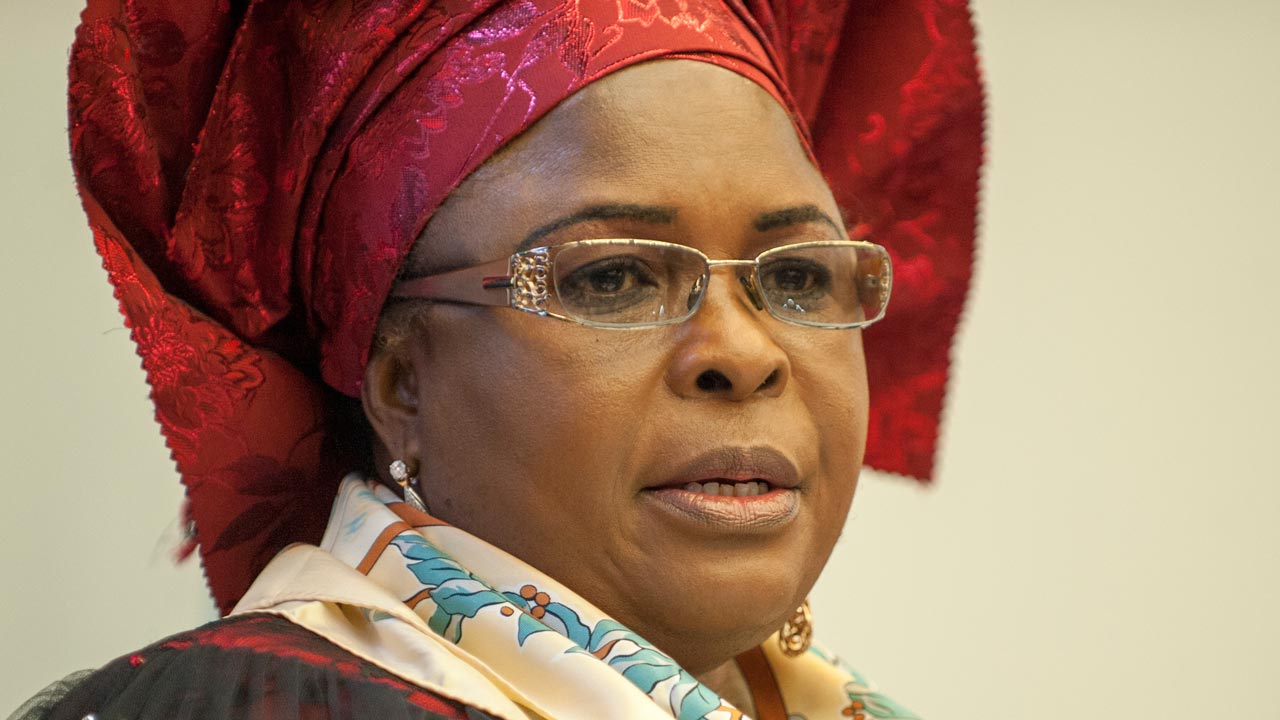
She said her guidance was behind his bold entry into big business at a relatively young age.
The former First Lady spoke on Tuesday in a video which went viral on Thursday during an inspection tour of the Azikel Refinery in Obunagha, Bayelsa State, alongside other dignitaries.
She said she personally introduced Eruani to billionaire businessmen, Aliko Dangote and Aminu Dantata, and pushed him to aspire to their level despite being the youngest among them.
“He’s a boy that I brought up. We are always together. Although he’s the little one among us when we are friends — Dangote, Seyi, Dantata, Eruani — among us, he’s the smallest. But I made sure he followed the Dangotes, he followed Dantata.
“Because I’m a woman in their midst, I made sure I told this small boy, ‘Go and follow them, and stop the grammar.’ But when he told me that one day he would be like Dangote, I said, ‘You’re thinking too high.’ I prayed to God to grant him his heart’s desire,” she said.
The former First Lady also recalled how the immediate past APC administration under Muhammadu Buhari initially failed to grant Eruani a refinery licence before eventually approving three.
“During the Buhari administration, he and others came to me and told me they were going to apply for a refinery. I told him, ‘Eruani, your brother, the President, did not give you a refinery.
“Is it the APC government that will give you one?’ I prayed it would happen. But later, they came back and told me they had been given three refineries,” she said.
The 25,000 barrels-per-day plant is a private hydro-skimming refinery designed to process condensate into petrol, diesel, aviation fuel, kerosene and other products.
It is set to become Nigeria’s second-largest full-slate refinery and the first major privately owned refinery in the Niger Delta.
The Managing Director/Chief Executive Officer of the Niger Delta Development Commission, Samuel Ogbuku, who joined the inspection tour, commended Eruani for his perseverance, noting that he had attended the project’s groundbreaking ceremony eight years ago.
Ogbuku described the refinery as an inspiration and a potential catalyst for investment, job creation and economic growth in Bayelsa State, and urged residents, particularly youths, to key into the opportunities it would create.
He also praised the Bayelsa State Government for improving road infrastructure leading to the refinery site and called for continued support for the project.
Governor Douye Diri, who was represented at the inspection by his deputy, Peter Akpe, has consistently backed the project, which is expected to employ hundreds of workers and drive industrialisation in the state.
Other dignitaries at the event included the Chairman of the Bayelsa State Council of Traditional Rulers, King Bubaraye Dakolo; Vice President of Azikel Group, Presley Asemota; and Isaac Yalah, among others.

A market check on Tuesday showed that NNPCL outlets in Abuja and nearby areas adjusted their petrol price from N1,155 per litre to N1,270 per litre.
The latest adjustment represents an increase of N115 per litre by the state-owned oil company.
The new price change follows recent increases by depot owners and petroleum marketers, who have adjusted their rates twice within a week.
The latest development also comes days after Dangote Refinery resumed the sale of refined petroleum products in dollars, a move that has raised concerns among industry players over the direction of fuel pricing in the country.

The Federal Government has disclosed that 13 of the 50 oil and gas blocks offered in the 2025 Licensing Round will be returned to the licensing basket after failing to attract bids from prospective investors.
The Chief Executive of the Nigerian Upstream Petroleum Regulatory Commission (NUPRC), Oritsemeyiwa Eyesan, disclosed this on Tuesday at the 2025 Commercial Bid Conference in Abuja.
Eyesan said that although 50 blocks were initially put up for bidding, prospective investors showed interest in only 37.
“At the end of the exercise, we had 50 blocks on offer, but we only had representation for 37 of those 50 blocks. Thirteen of those blocks will be returning back to the basket,” she said.
She further disclosed that 143 companies participated in the commercial bid process, submitting about 200 bids for the available oil and gas assets.
“We have a total of 143 companies showing interest for 200 bids. That, for us, was remarkable, and I must say thank you,” Eyesan stated.
According to her, nearly 300 companies initially expressed interest in the licensing round, which she described as a sign of renewed investor confidence in Nigeria’s upstream petroleum sector.
“When we started the journey, we got interest from almost 300 companies. I repeat, almost 300 companies. That, in my view, was an indication that the tide has turned for Nigeria,” she said.
She explained that the number of interested companies was reduced to 196 following the prequalification stage, before the process moved to the technical and commercial evaluation phases.
“From the almost 300 interests that we got, we moved to the pre-qualification stage, and that number was pruned down to 196,” she added.
The 2025 Licensing Round was launched on November 11, 2025, in accordance with the Petroleum Industry Act 2021, with 50 oil and gas blocks put up for bidding across seven sedimentary basins.
The assets comprise 16 Niger Delta onshore blocks, 18 shallow-water blocks, one deep offshore block, three blocks in the Benin Basin, four in the Anambra Basin, four in the Chad Basin and four in the Benue Trough.
The bid portal opened on December 1, 2025, while a pre-bid conference was held in Lagos on January 14, 2026, to provide prospective investors with guidance on the bidding requirements.
Registration and prequalification submissions closed on February 27, 2026, with the prequalification process completed on March 16.
The NUPRC said winning bids are being determined through a weighted evaluation that considers signature bonus commitments, proposed work programmes and performance security. The process combines technical and commercial scores rather than relying solely on financial offers.
The framework is aimed at ensuring that Nigeria’s petroleum assets are awarded to investors with the financial capacity, technical expertise and operational strength required to accelerate exploration and production in the country’s upstream sector.
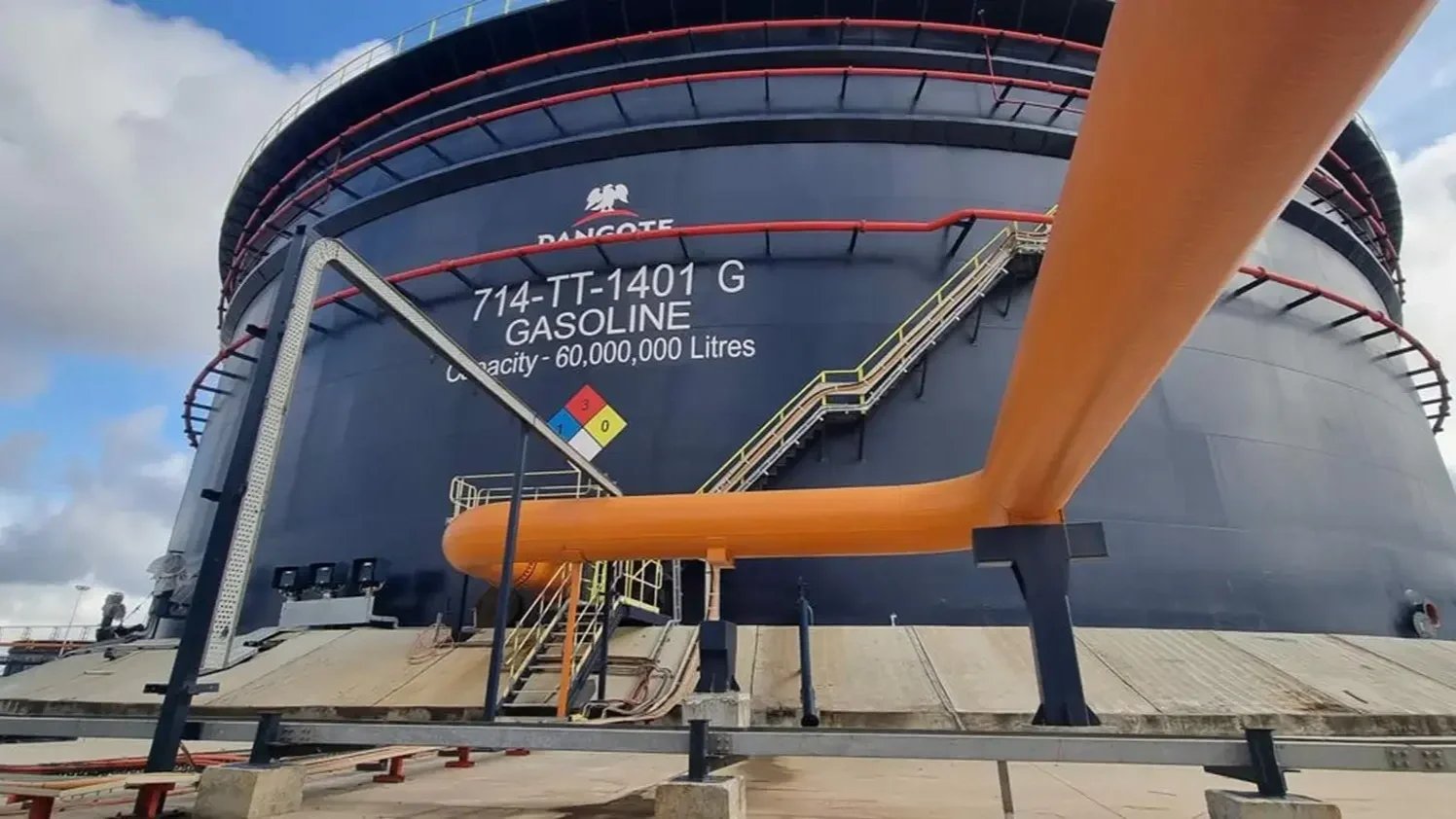
The new pricing template, which took effect on July 13, 2026, also pegs Automotive Gas Oil (diesel) at $1.087 per litre and Aviation Turbine Kerosene (ATK) at $0.942 per litre, while coastal deliveries of PMS have been fixed at $1,044.62 per metric tonne.
The development marks the end of naira payments for refined petroleum products, a policy introduced after the commencement of the Federal Government’s naira-for-crude initiative on October 1, 2024.
In a notice issued to petroleum marketers and customers, the refinery announced that all previously issued naira-denominated Proforma Invoices and Deal Recaps for both gantry and coastal transactions had become invalid.
The notice, signed by the refinery’s Group Commercial Operations, directed customers not to make payments against the cancelled invoices, stating that all transactions would now be conducted in United States dollars.
Under the revised pricing schedule, petrol supplied through the gantry will sell for $0.779 per litre, diesel for $1.087 per litre, aviation fuel for $0.942 per litre, while coastal PMS supplies will cost $1,044.62 per metric tonne.
The refinery, however, clarified that the transition does not affect Liquefied Petroleum Gas (LPG), which will continue under its existing payment arrangement.
Industry sources said the decision followed a growing imbalance between the currency used to procure crude oil and that used to sell refined products.
According to the sources, the refinery now receives a larger share of its crude oil from the Nigerian National Petroleum Company Limited (NNPCL) under dollar-denominated supply arrangements, while a significant volume of its refined products had continued to be sold locally in naira.
The resulting mismatch, coupled with exchange-rate volatility and fluctuations in global crude oil prices, reportedly increased the refinery’s foreign exchange exposure and prompted the adoption of a uniform dollar-based pricing framework.
A source familiar with the development explained that the shift became necessary as the volume of naira-denominated crude supplies declined relative to dollar-based crude cargoes.
“The refinery is receiving fewer naira-denominated crude cargoes while a larger proportion of its refined products has continued to be sold in naira. That imbalance, combined with foreign exchange volatility, made the transition to dollar pricing inevitable,” the source said.
The decision is expected to have significant implications for petroleum marketers who source products directly from the refinery for nationwide distribution. It could also influence retail pump prices, depending on movements in the exchange rate, international crude oil prices, logistics costs and marketers’ operating expenses.
The Federal Government had introduced the naira-for-crude policy to encourage domestic refining, reduce pressure on foreign exchange demand and stabilise fuel prices. However, industry stakeholders have recently reported implementation challenges, noting that a growing proportion of crude supplies to local refiners has reverted to dollar-based transactions.
Analysts believe the latest development underscores the continued foreign exchange challenges facing Nigeria’s downstream petroleum sector despite efforts to deepen local refining and reduce dependence on imported fuel.

Independent petroleum marketers on Monday pushed for the restoration of importation rights and projected that the pump price of Premium Motor Spirit, popularly called petrol, could fall below N800 per litre as the Federal Government intensified efforts to force down the cost of petrol.
The development came as the Federal Government met with major operators in the downstream petroleum sector, including representatives of the Dangote Petroleum Refinery, over what it described as the disconnect between falling global crude oil prices and the relatively high pump prices of petrol in the domestic market.
The stakeholders’ meeting on cost-reflective pricing of PMS, held at the headquarters of the Nigerian Midstream and Downstream Petroleum Regulatory Authority in Abuja, brought together the Federal Competition and Consumer Protection Commission, the Independent Petroleum Marketers Association of Nigeria, the Major Energy Marketers Association of Nigeria, the Depot and Petroleum Products Retailers Association of Nigeria, the Depot and Petroleum Products Marketers Association of Nigeria, the Nigerian Association of Road Transport Owners, and other major operators in the sector.
Also in attendance were chief executives and representatives of TotalEnergies, Eterna Plc, Matrix Energy Group, officials of the NMDPRA, and delegates from the Dangote refinery.
Petrol prices have remained a major source of hardship for households and businesses in Nigeria, with pump prices surging following the spike in global crude oil prices triggered by tensions in the Middle East, particularly between Iran and the United States.
Although crude prices have moderated after diplomatic efforts eased the tensions, the reduction has yet to be fully reflected in domestic petrol prices, prompting the Federal Government to convene a stakeholders’ meeting aimed at driving a fair reduction in pump prices.
The National President of the Independent Petroleum Marketers Association of Nigeria, Abubakar Maigandi, urged the government to permit independent marketers to import petroleum products directly, saying greater competition would ultimately reduce prices.
Maigandi also called for support for local refineries, particularly the Dangote Petroleum Refinery, while stressing the need to allow marketers to import products whenever necessary.
“Our major concern is that if products are to be distributed, let IPMAN buy products directly from the Dangote refinery and then, if we request importation, let IPMAN import by themselves. What we are trying to encourage is our local refinery. Let the government allow the local refinery to function properly and assist those who intend to refine products too,” he said.
The IPMAN president assured Nigerians that independent marketers were prepared to slash petrol prices significantly and projected that pump prices could fall below N800 per litre under the right market conditions.
“The price of the product is coming down bit by bit. Even when the price was increased, it was not increased at the same time. Likewise, now, as the price is coming down, we too are bringing the price down. If you check prices all over the country, you will see that independent petroleum marketers are reducing their prices gradually. Presently, we have reduced by N125 per litre nationwide,” he stated.
Miagandi added, “At any time when there is a reduction in price, we are ready to reduce the price to even below N800 per litre, not even N900. It depends on the way we buy the product from the private depot owners and the Dangote refinery.
“I thank God that the Dangote refinery has accepted independent petroleum marketers to start purchasing products directly. It is a plus, and very soon the populace will see the change in terms of price.”
The renewed push for importation comes amid an intense pricing battle in the downstream sector following the commencement of large-scale production at the Dangote refinery and the deregulation of the petrol market.
Speaking to journalists after a closed-door session with the stakeholders, the Minister of State for Petroleum Resources (Oil), Senator Heineken Lokpobiri, said the government remained concerned that current petrol prices were not reflective of prevailing crude oil prices in the international market.
According to him, the government had engaged marketers in frank discussions aimed at ensuring that the reduction in global crude prices translates into lower pump prices for Nigerians.
Lokpobiri said, “The engagements are ongoing. We had very fruitful and frank discussions with the marketers and the leaders of the downstream sector of the petroleum industry with a view to driving down the price of PMS.
“My own opinion is that the petrol prices are not cost-reflective; they are not reflective of the cost of crude oil. But the marketers are also saying that crude oil prices are still high.
“In fact, somebody told us right there that the crude oil price for a month is still over $90 per barrel. But we are saying that when Brent crude was over $118 per barrel, the price was rapidly going up. Now that the price has come down drastically, why has petrol not come down correspondingly? That is a worry.”
The minister said the government had communicated the concerns of consumers to operators and directed them to return with practical measures that would lead to lower petrol prices.
“We have said that these are the issues of concern to the government. They have also said they will go back and think about what they can put together with a view to addressing the issue of the high cost of PMS that is not reflective of the price of crude in the market.
“We told them the concern of the Nigerian consumer, and they have also said they will go back and think of what concrete steps can be taken with a view to ensuring that the price drops,” he stated.
On when Nigerians should expect a reduction in petrol prices, Lokpobiri said discussions were still ongoing and declined to give a deadline. “As we called you today, we will call you as soon as possible. But the important thing is that discussions are ongoing,” he added.
Before the closed-door meeting, Lokpobiri warned petroleum marketers against using profits from previously acquired expensive fuel inventories as justification for maintaining high petrol prices, insisting that the benefits of lower replacement costs must be passed on to consumers.
The government said the continued disconnect between falling international crude oil prices and domestic petrol prices had become a source of concern, warning petroleum marketers against sustaining high pump prices of Premium Motor Spirit despite declining global crude prices and insisting that Nigerians should enjoy the benefits of lower replacement costs in a deregulated market.

-

 News5 days ago
Commissioner Dies Suddenly at Abuja Hospital
-

 News5 days ago
Sept. 26 Polls: ‘ENSIEC is over 90% ready’ – Chairman
-

 Crime5 days ago
Kidnappers Dump 16-Year-Old Enugu Boy Near Onitsha Checkpoint, Police Rescue Him
-

 Uncategorized5 days ago
UK Confirms Koi Herpesvirus Outbreak, Restricts Fish Movement
-
News5 days ago
Niger Delta Chambers Unveils Plan to Transform Region Into Investment Hub
-
News5 days ago
Niger Delta Chamber Breaks Silence on Alleged Summit Trademark Dispute
-

 Health3 days ago
UNTH Begins Contact Tracing After Suspected Diphtheria Case
-
 News4 days ago
Dangote Reveals He Bought First Private Jet at 22