



Politics
Insecurity: US won’t relocate Africa Command to Nigeria, others, Pentagon replies Buhari

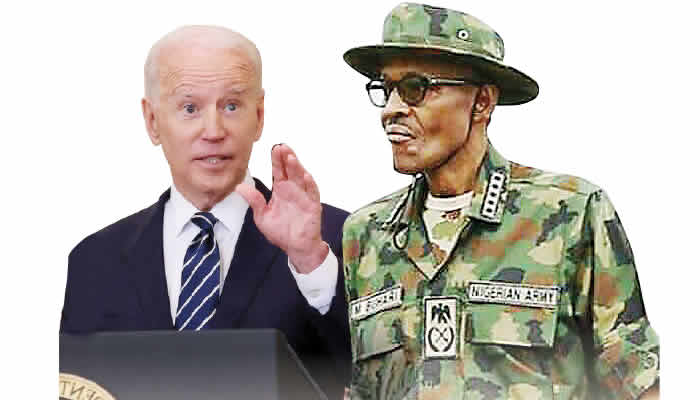

Why it’s ‘near impossible’ for US to accept Nigeria’s invitation –Ex-envoy, Chatham House fellow
The United States has said there is no plan to relocate its Africa Command from its current base in Germany to Nigeria or any other part of Africa despite the worsening state of insecurity in the region.
The US gave the response barely two weeks after the President, Major General Muhammadu Buhari (retd), appealed to the US government to consider relocating AFRICOM to Africa to assist Nigeria and other adjoining countries to combat worsening terrorism, banditry and other security crises.
The President made the plea in a virtual meeting with the US Secretary of State, Antony Blinken, on April 27.
Germany-based Africa Command (AFRICOM) is the US military headquarters that oversees its operations in Africa.
Buhari’s request followed a series of recent military casualties in Nigeria’s decade-long fight against Boko Haram terrorists, fresh expansion of the insurgents’ bases to Niger and Nasarawa States, and heavy waves of abductions and killings by bandits in the North.

Buhari said, “The security challenges in Nigeria remain of great concern to us and impacted more negatively, by existing complex negative pressures in the Sahel, Central and West Africa, as well as the Lake Chad Region.
“Compounded as the situation remains, Nigeria and her security forces remain resolutely committed to containing them and addressing their root causes.
“The support of important and strategic partners like the United States cannot be overstated as the consequences of insecurity will affect all nations, hence the imperative for concerted cooperation and collaboration of all nations to overcome these challenges.
“In this connection, and considering the growing security challenges in West and Central Africa, Gulf of Guinea, Lake Chad region and the Sahel, weighing heavily on Africa, it underscores the need for the United States to consider relocating AFRICOM headquarters from Stuttgart, Germany to Africa and near the Theatre of Operation.”
However, the US government on Thursday ruled out any plan to relocate AFRICOM from its current base in Germany to Nigeria or any part of Africa.
According to the United States Department of Defence’ Pentagon, previous studies have shown that the cost of relocating AFRICOM from Germany to Africa is very huge.
In an emailed response to Saturday PUNCH, the Pentagon said although it would continue to value Nigeria and other countries in Africa as important partners, the American government would not consider relocating AFRICOM to any part of the African continent at the moment.
This newspaper had asked if the US would consider Nigeria’s request to relocate AFRICOM to the continent.
“It would be inappropriate to speculate on any future actions. However, at this time, moving this headquarters (AFRICOM HQ) to Africa is not part of any plans, but USAFRICOM’s commitment to their mission, our African and other partners, remains as strong today as when we launched this command more than a decade ago,” US Pentagon spokesperson, Ms Cindi King, said.
King also ruled out any plan to consider Buhari’s request in an ongoing global US defence review.
She said, “Although there is an ongoing Global Posture Review, the relocation of Combatant Command headquarters is outside the scope of its assessment. In the case of AFRICOM, previous studies have concluded that the cost associated with the relocation of this headquarters is significant and likely to incur the expense of other engagement opportunities and activities that more directly benefit our valued African partners.
“We greatly value the partnership with Nigeria and appreciate President Buhari’s recognition of the United States’ positive contribution to African peace and security, as well as other regional partners that have made similar past pronouncements. The United States remains committed to continuing our close partnership with African countries and organisations to promote security and stability.”
It’s ‘near impossible’ for America to accept Buhari’s invitation –Campbell, ex-US ambassador
Meanwhile, a former United States Ambassador to Nigeria, John Campbell, has listed reasons why it is “unlikely or near impossible” for the US government to relocate AFRICOM from Stuttgart in Germany to Nigeria or any part of the continent.
He said aside from the fact that the cost of doing so is very huge, the Nigerian military had proved to be a difficult partner for the US over the years.
In an emailed interview with Saturday PUNCH, Campbell, who is the Ralph Bunche Senior Fellow for Africa Policy Studies at the Council on Foreign Relations, a Washington, DC-based think-tank, said, “From an American perspective, moving AFRICOM’s headquarters after 14 years in Stuttgart would be a major undertaking.
“However, should the AFRICOM headquarters move, it is unlikely – if not impossible – that it would be to Africa, with its logistical challenges. Some in the US Congress support moving AFRICOM’s headquarters to the United States as a cost-effective alternative. For example, South Carolina’s senators, both Republican, have advocated moving it to Charleston, the site of large US military installations.
“It is mostly a matter of money. Moving AFRICOM to Africa would require the construction of a sophisticated installation in areas where the basic infrastructure may not yet have been developed. Moving it to the United States would mean making use of already existing but underused installation (e.g., perhaps Charleston) that could be quickly and more cheaply expanded, if necessary.”
The ex-envoy, however, said Buhari’s request marked a reversal of Nigeria’s official opposition to AFRICOM plans to move it to the continent 14 years ago.
“The shift likely reflects the conclusion that the security situation in West Africa and Nigeria is out of control, spurring a willingness to consider options hitherto unacceptable. Buhari argued that AFRICOM’s headquarters should be closer to the theatre of operations. He also seemed to imply greater US involvement in West African security, including a kinetic dimension in the context of greater Western support for West Africa’s response to its security threats.”
He recalled that when President George W Bush established AFRICOM in 2007, a military-civilian hybrid command in support of Africa, African official reaction was largely hostile, seeing the effort as “neo-colonialist.”
Campbell said, “The Nigerian government took the lead in persuading or strong-arming other African states against accepting the AFRICOM headquarters, which was thereupon established at Stuttgart, Germany, already the headquarters of the European Command.
“In addition to opposing AFRICOM in the first place, the Nigerian military authorities have been largely uncooperative with the US military. Hence, the US military involvement in Nigeria, beyond limited training operations, is minimal, and the country does not host any American defence installations.
“Successive Nigerian governments have wanted to purchase sophisticated American military equipment but have rejected US oversight. In fact, Nigerian purchases of US military materials have been rare, despite their high-profile, ultimately successful purchase of 12 A-29 Super Tucanos – sophisticated aircraft.”
Why US can’t relocate AFRICOM troops from Germany to Nigeria –Chatham House fellow
Corroborating Campbell’s view, an Associate Fellow at the United Kingdom-based Chatham House, Matthew Page, said there was no prospect of the US relocating its AFRICOM HQ from Germany to any part of Africa.
Chatham House, also known as the Royal Institute of International Affairs, is an independent policy institute headquarters whose mission is to provide authoritative commentary on world events and offer solutions to global challenges.
Page said, “There is absolutely no prospect of this happening. A combatant command headquarters is an administrative node that requires enormous physical infrastructure and thousands of personnel (and their families) to sustain it. They need to be able to safely live, work, and send their children to school locally. The Nigerian government is unable to safeguard the lives of hard-working Nigerians, never mind a US military installation that would be a juicy target for a terrorist attack.
“With the exception of European Command and Africa Command – which for longstanding historical reasons are located and headquartered in Germany – all combatant commands are located in the United States. These commands do have forward elements and subordinate commands based in the theatre of operations, such as Combined Joint Task Force-Horn of Africa (CJTF-HOA) based in Djibouti. But these typically are task-specific and have a light local footprint. The United States is not – and doesn’t want to be – an imperial power with permanent military outposts on the continent. Nor should African leaders be asking it to become one.”
Page, who was previously with the US Department of State’s Bureau of Intelligence and Research, further said, “I am sure the Biden administration was puzzled by President Buhari’s invitation, given that Nigeria has been a reluctant and difficult security partner for the United States. The Nigerian Army has long viewed US military engagement in West Africa with deep suspicion, shunning deeper ties and ignoring Washington’s calls for security sector reform and human rights improvements. Inviting AFRICOM to relocate to Nigeria is the equivalent of proposing marriage before going on a first date.”
Nigeria, other African leaders must take responsibility for citizens’ security –Expert
However, a counter-terrorism expert and Senior Researcher for the Lake Chad Basin Programme at the Institute for Security Studies, Dakar, Senegal, Dr Akinola Olojo, has said that Buhari and other African leaders must take responsibility for the security of their citizens, noting that the entire burden cannot be pushed on foreign countries.
He spoke against a backdrop of Nigeria and African countries getting US help in the fight against terrorists and other criminals in the region.
Olojo said, “The relocation of the United States Africa Command from Germany to Africa would depend on a number of factors anchored on the foreign policy priorities of the US in the current period. Beyond this, however, is the need for Nigeria (and African countries) to be sincere with a self-interrogation regarding whether the relocation of an external entity such as AFRICOM will address Africa’s challenges of insecurity.
“The ultimate burden of responsibility for ensuring the human security of African citizens lies on the leadership or governments in Africa. The presence of French troops supporting the G5 Sahel Joint Force for nearly a decade has not really solved the fundamental or root causes of the crisis affecting Mali, Niger and Burkina Faso. To be clear, there is nothing wrong with global partnerships when it comes to addressing insecurity. Besides, challenges such as violent extremism have a transnational character and in early 2020, the US and Kenya launched a joint terrorism task force. As long as such frameworks are mutually beneficial, this is good.
“However, the governments of Nigeria and countries in Africa must begin to live up to the responsibility entrusted to them by citizens. In other words, leadership in Africa must inspire and drive the process for implementing the different policy frameworks and national action plans which already exist on the continent.
Meanwhile, a government official familiar with US operations said even if the US chose to relocate its AFRICOM to Nigeria or any part of the West Coast, it would come with its own challenges which might affect Nigeria or its neighbours adversely.
The official, who spoke on condition of anonymity because he was not authorised to speak on the matter, said, “Bringing AFRICOM to Africa or Nigeria will be a major problem for Nigeria and the African continent. Bringing AFRICOM to Nigeria, for example, will be tantamount to inviting or attracting all the enemies of the US, including global terrorist organisations, to the host country. Such a host country will become a subject of attack from terrorist organisations.”
President Joe Biden had in February stopped the planned withdrawal of US troops from Germany that was ordered last year by the Donald Trump administration but had never actually begun, Associated Press reported.
Biden said the troops’ pullout would be halted until the US Defence Secretary Lloyd Austin did a review of America’s troops presence around the globe.
Austin, he said, would ensure that “our military footprint is appropriately aligned with our foreign policy and national security priorities.”
In a statement, Austin said the US Department of Defence would conduct “a global force posture review of U.S. military footprint, resources, strategy and missions.”
The review, he said, “will inform my advice to the commander in chief about how we best allocate military forces in pursuit of national interests. The review will be led by the acting undersecretary of defence for policy, in close consultation with the chairman of the Joint Chiefs of Staff.”
Last year, President Trump announced that he was going to pull out about 9,500 of the roughly 34,500 US troops stationed in Germany. The US has several major military facilities in the country, including Ramstein Air Base, the headquarters for US European Command and US Africa Command, and Landstuhl Regional Medical Centre, the largest American hospital outside the United States.
Trump’s order met resistance from Congress as well as from within the military, which has long relied on Germany as a key ally and base of operations. Trump announced the troop cuts after repeatedly accusing Germany of not paying enough for its own defence, calling the long time NATO ally “delinquent” for failing to spend two per cent of its GDP on defence, the alliance benchmark.
Austin hinted at a likely reconsideration of the order in a conversation with his German counterpart.
German officials believe the order will be rescinded by the new administration, and the German Defence Ministry said that in Austin’s call with his German counterpart, he “emphasised that Germany is highly valued as a station and that American soldiers feel very comfortable here.”
“The US continues to consider its presence in Germany as an important part of joint security,” the Defense Ministry said.
PUNCH

By Petrus Obi, London
London — The Peoples Democratic Party (PDP) governorship aspirant in Ebonyi State, Ifeanyi Odii, has intensified his criticism of the administration of Governor Francis Nwifuru, insisting that the people of the state deserve a different approach to governance.
Odii, who spoke with EverydayNewsngr.net in London, said what he described as the “fire brigade approach” of the Nwifuru administration was not the kind of governance Ebonyi needs.
According to him, the state requires a government with a clear vision, long-term planning and the capacity to deliver meaningful development to its people.
“The fire brigade approach of the Nwifuru government is not what the state needs,” Odii said.
He added: “I am coming to bring a new lease of life to my people.”
Odii’s comments come amid renewed political debate in Ebonyi State following the recent removal of the state Commissioner for Works. The development has attracted attention from opposition circles, with critics using it to question aspects of the administration’s handling of governance and infrastructure.
The PDP chieftain said the people of Ebonyi should expect more than what he described as reactive governance, arguing that development should be driven by a coherent programme capable of producing lasting results.
He maintained that his political ambition was motivated by a desire to provide what he described as purposeful leadership and improve the welfare of residents across the state.
“We deserve better government in Ebonyi State,” Odii said, stressing that his vision was centred on giving the people renewed confidence in government and creating opportunities for them to prosper.
As political activities ahead of the next governorship election continue to gather momentum, governance, infrastructure, accountability and the delivery of public services are expected to feature prominently in the emerging contest.
Odii’s intervention in London is likely to add further momentum to the political conversation, particularly as opposition figures seek to distinguish their vision for Ebonyi from that of the incumbent administration.

STATEMENT BY CHIEF EMMANUEL CHIDI IGWE,
SPOKESPERSON TO CHIEF DR. IFEANYI CHUKWUMA ODII
The 2027 governorship election in Ebonyi State is not a family affair, nor is it a matter to be decided by one individual or political godfather. It is a democratic contest, and Ebonyians will ultimately decide who becomes their governor through the ballot box.
No aspirant should be expected to step down simply because another politician believes he should. Every qualified candidate has the right to contest, present his programme and seek the mandate of the people.
Let me make this clear: since Senator Dave Umahi did not bring Chief Dr. Ifeanyi Chukwuma Odii into the governorship race, he cannot now claim the authority to ask him to step down. Chief Odii has his own political identity, supporters, convictions and legitimate right to seek the mandate of Ebonyians.
The decision to contest or withdraw belongs to the candidate, while the ultimate decision on who governs Ebonyi State belongs to the people.
The 2027 election should therefore be about issues, programmes, records, accountability and the future of Ebonyi—not political arrangements made by individuals behind closed doors.
Chief Dr. Ifeanyi Chukwuma Odii is prepared to place his vision and programme before Ebonyians and subject them to public scrutiny. Those seeking to retain power should equally be prepared to defend their records before the electorate.
Ebonyi 2027 is not a family arrangement. It is a contest for the confidence of the people. The people of Ebonyi State—not individuals—will have the final say.
Chief Emmanuel Chidi Igwe
Spokesperson to Chief Dr. Ifeanyi Chukwuma Odii
Politics
BREAKING: SaharaReporters Report on Arrest of Enugu Traditional Ruler, Ex-Lawmaker Is False and Misleading

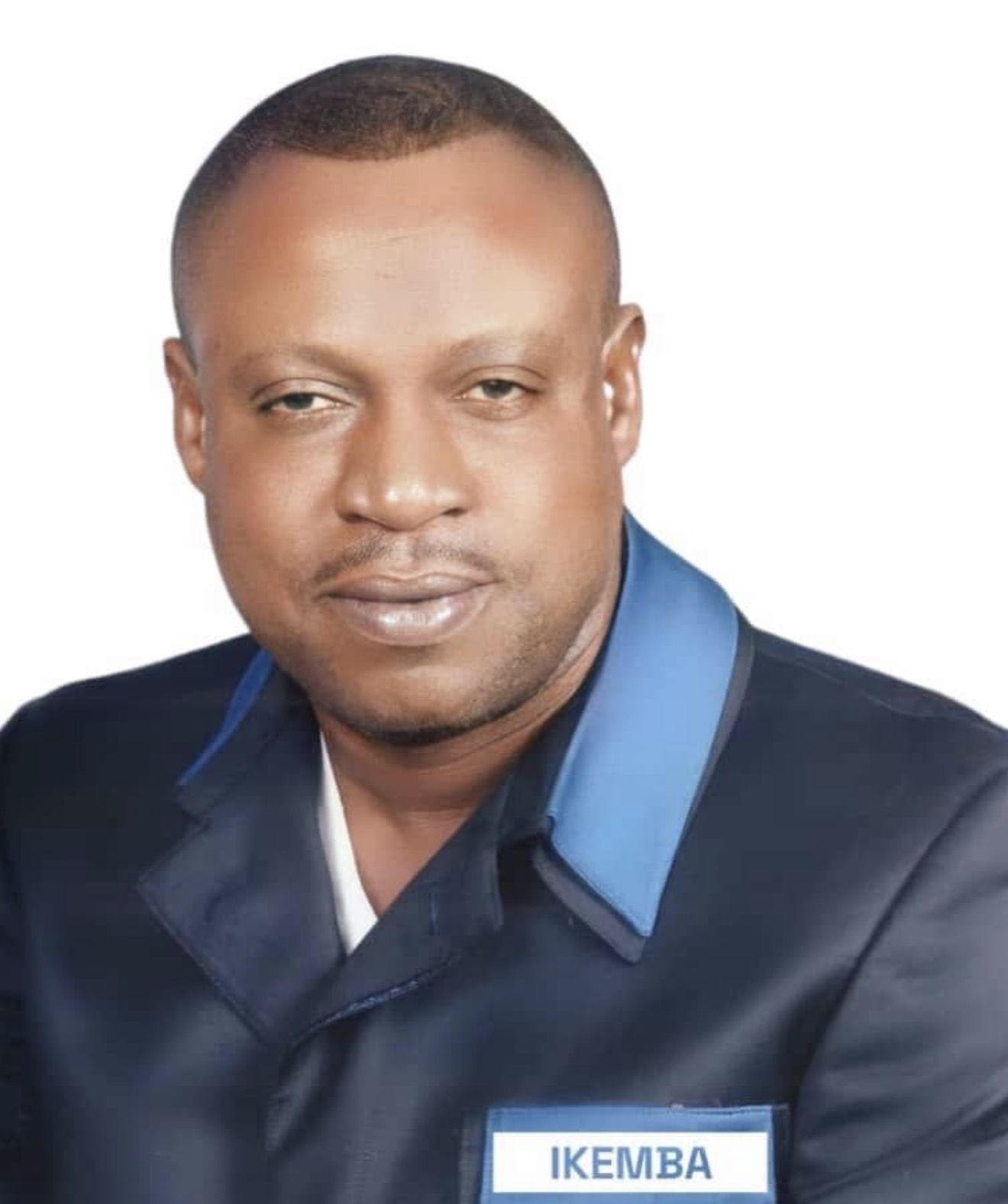
The recent publication by SaharaReporters alleging that prominent Enugu traditional ruler, Igwe Obiora Igwesi, his brother and former federal lawmaker, Hon. Uchenna Sunday A. Igwesi (USA Igwesi), and eight others were arrested over an alleged attack on an NDC ward meeting in Obuoffia, Nkanu West Local Government Area, is false and deeply misleading.
The report is being described as a deliberate attempt to damage the reputation of respected leaders in Enugu State and create unnecessary political tension ahead of the 2027 elections.
Contrary to the claims contained in the publication, there was no arrest ordered by the Inspector-General of Police against Igwe Obiora Igwesi, Hon. USA Igwesi, or the other individuals named in connection with any alleged attack on an NDC meeting. There was also no operation by detectives from Zone 13 Command, Ukpo, Dunukofia, Anambra State, as alleged in the report.
Similarly, the purported petition dated September 15, 2026, and the allegations of conspiracy, unlawful possession of firearms, attempted murder, assault, threatening violence and stealing are strongly disputed and described as fabricated claims intended to create a damaging narrative around the individuals concerned.
The broader allegation that the 17 Local Government Areas of Enugu State have experienced coordinated armed attacks allegedly sponsored by Local Government Chairmen to silence the opposition is equally rejected as unfounded.
Attempts to associate Igwe Obiora Igwesi and Hon. USA Igwesi with criminal activity or political violence are viewed as an unacceptable effort to tarnish the image of individuals who have served their communities and contributed to the development of Enugu State.
The public, particularly the people of Enugu State, is therefore urged to exercise caution and verify the facts independently before accepting or circulating the allegations contained in the SaharaReporters publication.
Enugu State remains focused on peace, stability and development. Political disagreements should not be allowed to degenerate into the circulation of unverified allegations capable of inflaming tensions or damaging the reputations of individuals.
The position being maintained by the affected parties is clear: there was no arrest of the named individuals in connection with the alleged incident, no evidence has been presented establishing that any Local Government Chairman sponsored an attack, and the allegations contained in the publication are disputed in their entirety.
The public is encouraged to await verifiable facts from the appropriate authorities rather than rely on claims that have not been independently substantiated.

Fresh legal questions emerge over Chijioke Ugwu’s membership registration after Supreme Court restores party-register provisions
By Our Correspondent
Fresh legal questions have emerged over the Peoples Democratic Party’s 2027 governorship ticket in Enugu State following the Supreme Court’s restoration of key provisions of the Electoral Act dealing with political party membership registers and the conduct of primaries.
The questions centre on Chief Chijioke Peter Ugwu, who was recently announced by the PDP governorship candidate, Chief Uche Geoffrey Nnaji, as his running mate.
Nnaji announced Ugwu’s selection on September 24, shortly after the Supreme Court delivered its landmark judgment restoring Sections 77(5), 77(6), 77(7) and 84(2) of the Electoral Act 2026. Ugwu’s selection was subsequently reported by several Nigerian media outlets.
But documents and information available to this newspaper raise a question that could potentially become significant if the PDP ticket is challenged in court.
The PDP governorship primary in Enugu State was conducted on May 25, 2026.
However, Ugwu is understood to have registered as a PDP member on May 31, 2026 — six days after the governorship primary.
This means that if the May 31 registration date is accurately reflected in the party’s official records, his name could not have appeared in the PDP membership register submitted to the Independent National Electoral Commission (INEC) before the May 25 governorship primary.
That immediately raises the question:
Can a person who was not a member of the party on the date of its governorship primary subsequently be selected as the deputy governorship candidate without the Supreme Court’s restored membership-register provisions affecting the ticket?
What the Supreme Court restored
The Supreme Court, in a unanimous judgment delivered on September 24, set aside the Court of Appeal’s earlier decision which had declared the disputed provisions of the Electoral Act unconstitutional.
The apex court upheld the validity of Sections 77(5), 77(6), 77(7) and 84(2), following an appeal by INEC against the Court of Appeal judgment in the case involving the Zenith Labour Party.
Section 77(5) provides that only persons whose names are contained in a political party’s membership register submitted to INEC at least 21 days before a primary, congress or convention may participate in the exercise.
Section 77(6) requires political parties to use the membership register submitted to INEC for their primaries, congresses and conventions.
Section 77(7) deals with the consequence of failure by a party to submit its membership register within the prescribed period.
These provisions are now back in force following the Supreme Court judgment. Legal opinions suggest that the law’s insistence on the membership register submitted to INEC is relevant to the validity of the party’s eventual nomination process, depending on how the PDP formally nominated and submitted its governorship and deputy governorship candidates.
The precise documents will therefore be crucial.
Among the questions likely to arise are:
What date did the PDP submit its membership register to INEC?
Was Ugwu’s name contained in that register?
When exactly did Ugwu become a registered PDP member?
Was he a PDP member before the register was submitted to INEC?
How did the PDP formally nominate him as running mate?
Was the nomination made through a procedure recognised by the Electoral Act and the party’s constitution?
The controversy is coming at a sensitive time for the PDP, which has only recently unveiled Ugwu as Nnaji’s running mate. Ugwu, from Nguru in Nsukka Local Government Area, is an entrepreneur, philanthropist and community leader who runs businesses in logistics, contracting, consultancy and hospitality.
However, the governorship candidate and the deputy governorship candidate constitute a single electoral ticket. Therefore, any legal or constitutional issue affecting the eligibility of the deputy governorship candidate automatically has implications for the validity of the joint ticket, including the governorship candidate.
Another legal opinion available to this newspaper insists that “the gubernatorial ticket is a joint one. If the name of a deputy governor is not on the digital register, it invalidates the entire process.”
In the 2019 Bayelsa governorship election, APC’s David Lyon was declared winner. His running mate was Biobarakuma Degi-Eremienyo.
The Supreme Court later disqualified Degi-Eremienyo over the documents he submitted to INEC. The crucial point was that the Supreme Court held that his disqualification affected the joint ticket he shared with David Lyon. Consequently, the court ordered INEC to withdraw the Certificate of Return issued to Lyon and his deputy.
This happened one day before Lyon was due to be sworn in as governor. The certificate was subsequently issued to Douye Diri of the PDP, who had the next-highest lawful votes and the required geographical spread.
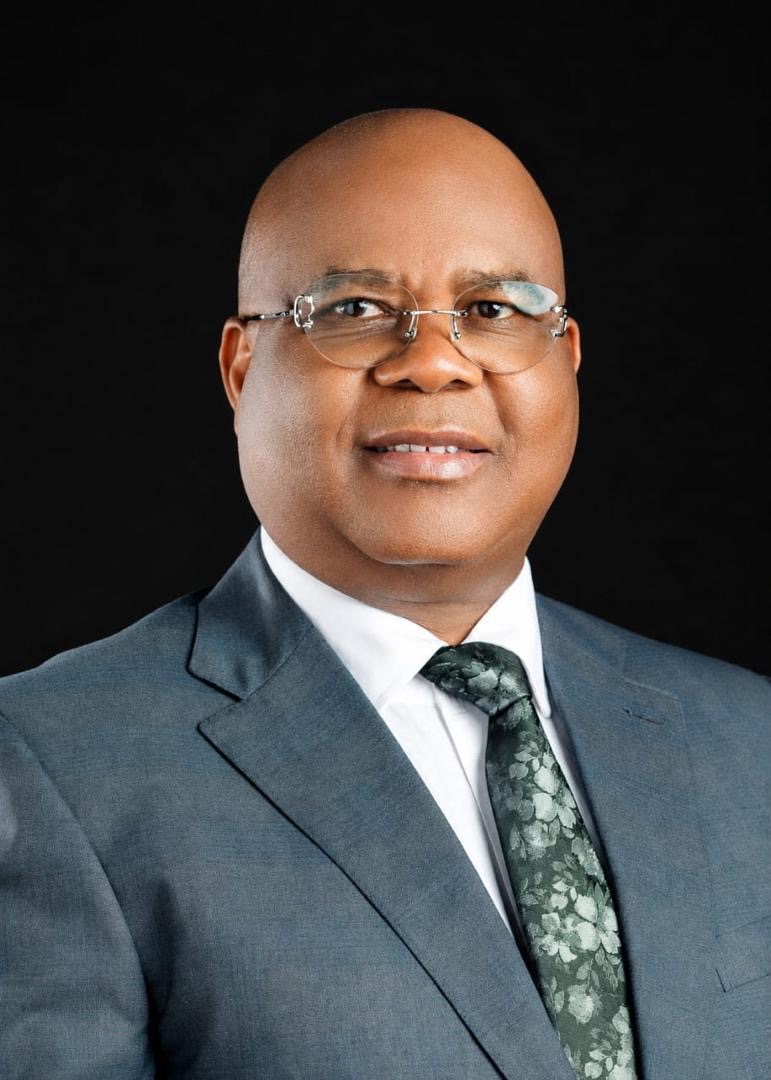
The Independent National Electoral Commission (INEC) has announced that the collection of Permanent Voter Cards (PVCs) will commence nationwide on October 9.
The development has prompted calls for eligible voters to visit the INEC office in their respective Local Government Areas to collect their PVCs and ensure they are prepared to participate in the electoral process.
Meanwhile, supporters of Hon. Engr. Anayo Onwuegbu, Omeiheukwu Akpugoeze, have urged constituents in the Aninri/Awgu/Oji River Federal Constituency to support his bid for a second term in the Federal House of Representatives.
The supporters made the appeal while encouraging eligible residents to collect their PVCs and exercise their franchise in the forthcoming election.
Voters are advised to follow official INEC guidelines and verify the applicable collection procedures and dates before visiting their designated collection centres.

-

 Business3 days ago
No Bad Blood Over New Cement Factories, But Our Mining Rights Run Till 2045 — Ibeto Tells Ebonyi Govt
-

 Sports3 days ago
Enugu Speaker’s boxing talent hunt unearths 5 budding stars
-
News3 days ago
Nigeria at 66: Macmaduson Concepts Limited Sends Independence Day Greetings to Clients
-

 Crime4 days ago
Five Arrested By Police For Wearing ‘Tinubu Must Go’ T-Shirts
-

 Politics4 days ago
EBONYI 2027: The People, Not Individuals Will Decide Who Becomes Governor – Igwe
-
 News3 days ago
66th Independence: Elder statesman wants policies to reduce hardship, calls for peace
-

 Politics3 days ago
Ebonyi Guber: ‘Our People Deserve Better Government,’ Odii Insists
-

 News3 days ago
Nigeria @66: Democracy Evolving, Says Anambra APC Chairman Anosike