



Politics
It’s a strange judgement, LP Legal Adviser, Atiku, Obi head to Supreme Court



The Legal Adviser to the Labour Party, Kehinde Edun, vowed to challenge the judgment at the Supreme Court.
Also, Atiku’s Lead Counsel, Chris Uche, SAN, said he had received instructions from his client to file an appeal at the Supreme Court.
He said “The judgment has been delivered but we have not received justice. Luckily, the law has given us leverage to go on appeal to the Supreme Court. We have instructions from our clients to go to the Supreme Court. The struggle continues.”
The PEPT which began sitting at 9.40am at the Court of Appeal, Abuja, ruled that the petition filed by Atiku and Obi and their parties had no merit and unanimously upheld Tinubu’s electoral victory in the February 25 presidential election.

The five-member panel took turns to dismiss the petitions presented by Atiku and Obi against the declaration of Tinubu as the winner of the presidential election by the Independent National Electoral Commission on March 1, 2023.
The judgment was delivered by the Chairman of the tribunal, Justice Haruna Tsammani, assisted by other members of the panel-Justices Stephen Adah, Monsurat Bolaji-Yusuf, Moses Ugo and Abba Mohammed.
Delivering the death knell to Atiku’s petition on Wednesday night, Tsammani stated, “This petition accordingly lacks merit. I affirm the return of Bola Ahmed Tinubu as the duly elected President of the Federal Republic of Nigeria. The parties are to bear their cost.”
The National Legal Adviser of the LP, Edun, expressed disappointment with the judgment, stressing that the tribunal was unfair to reject 10 of their 13 witnesses, adding that the decision weakened their case.
Edun said, “We already had a premonition that this might happen. For example, where the court was saying the statements of some key witnesses should have been filed along with the petitions. How can that be? Subpoena is an order of court by which the court has compelled a witness to come and give evidence before or as of the time you are filing the petition.
‘’This is because I have not assumed jurisdiction, the tribunal has also not assumed jurisdiction. We are just filing. It is only after filing that the court assumes jurisdiction, not before. So how can you file a witness statement at the time of filing the petition? It is when the court signs the subpoena.”
He explained, ‘’That subpoena is an invitation to the person indicating that the court has given him an order to come and give evidence. So, if the court has not ordered the person, how can he give any statement?
‘’This is why I said the judgment is so strange. And it is on the basis that they knocked out the evidence of 10 of our 13 witnesses, which inevitably weakened our case. It is a strange judgment.”
On the next point of action for the party, the legal adviser disclosed that the apex court will be the final arbiter.
“There are some filings that are unacceptable to us. So we need to see what the apex court has to say to this. We have to address this, not only for today, but for the sake of our jurisprudence. We want to see what the judges at the Supreme Court will say about all these. It is so important to do this for the sake of tomorrow.”
Delivering judgment earlier on Obi and LP’s petition marked CA/PEPC/03/2023, Tsammani said the petitioners failed to prove the allegations in their petition as required by the law and went ahead to knock off the planks of the case one after the other.
The tribunal held that although the petitioners alleged that the election was marred by irregularities, they, however, failed to give specific details of where the alleged infractions took place.
The court noted that whereas Obi and the LP insisted that the election was rigged in 18, 088 polling units across the federation, they were unable to state the locations of the said polling units.
In the verdict that was read for five hours, the tribunal further held that Obi’s allegation that fictitious results were recorded for the Tinubu and the All Progressives Congress by the Independent National Electoral Commission was not proved.
Moreso, it pointed out that the petitioners were unable to state the figures they claimed were reduced from the election results they garnered in different states of the federation, especially in Ondo, Oyo, Rivers, Yobe, Borno, Tabara, Osun and Lagos States.
It added that the petitioners equally failed to state the polling units where over-voting occurred or the exact figures of unlawful votes that were credited to Tinubu by the INEC.
It stressed that though Obi and LP said they would rely on spreadsheets as well as forensic reports and expert analysis of their expert witnesses, they failed to attach the documents to the petition or serve the same on the respondents as required by the law.
The court stated that though the petition contained serious allegations that bordered on violence, non-voting, suppression of votes, fictitious entry of election results and corrupt practices, Obi and his party, however, failed to give particulars of specific polling units where the incidents took place.
It held that several portions of the petition that contained the allegations were “vague, imprecise, nebulous and bereft of particular materials.”
Therefore, the court struck out paragraphs 9, 60, 61, 66, 67, 68, 69, 70, 71, 72, 73, 76, 77, 78, 83 and 89 of the petition.
“They failed to state the number of votes affected and the number of people disenfranchised. The determination of the election is about figures,” Justice Mohammed declared.
He further stated, “It is unimaginable that a petitioner will allege widespread rigging in 176,000 polling units, over 8,000 wards, 774 LGAs, 36 states and FCT without stating the specific place where the alleged irregularities occur.
“The law is very clear that where someone alleged irregularities in a particular polling unit, such person must prove the particular irregularities in that polling unit for him to succeed in his petition.
“Labour Party made generic allegations of irregularities and said they would rely on spreadsheets, inspection reports, and forensic analysis but the documents promised by the petitioners were not attached to the petition.”
Obi nomination validated
Nevertheless, the court dismissed the contention of the respondents-Tinubu and the APC-that Obi was not validly nominated by the LP to contest the presidential election.
It noted that the respondents had argued that Obi left the PDP on May 24, 2022 and joined the LP on May 27, 2022.
The respondents in its petition claimed that as of May 30, 2022, Obi was not a valid member of the LP and could not have duly participated in its presidential primary election.
They insisted that his name could not have been contained in the membership register of the LP, which ought to be submitted to INEC 30 days before the primary election was held.
However, the court held that the issue of membership is an internal affair of a political party, which is not justiciable.
It maintained that only the LP has the prerogative of determining its members, adding that the respondents were bereft of the legal authority to query Obi’s membership of the LP.
Likewise, the court held that contrary to contention by Tinubu and the APC, the petitioners were not under any obligation to join Atiku who came second in the election or his party, the PDP, in the case.
It noted that both Atiku and the PDP are not statutory respondents or necessary parties to the petition.
On the alleged $460,000 forfeiture made by Tinubu to the United States Government, Justice Tsammani said, “The petitioners have evidently failed to establish their allegation that the 2nd respondent is disqualified from contesting the presidential election under section 137 (1)(d) of the 1999 constitution because he was fined $460,000 by a district court in Illinois.
“The order of forfeiture in exhibit P5 on which the petitioners have relied does not qualify as a sentence of fine for an offence involving dishonesty or fraud within the formulation of section 137 (d) of the 1999 constitution.”
25% FCT votes
On the interpretation of the 25 per cent votes cast in the Federal Capital Territory, Tsammani ruled that the interpretation of the constitution on the issue by the LP is “fallacious.”
According to him, sections 134 (1) and (2) of the 1999 Constitution of Nigeria (as amended) stipulate that a presidential candidate must attain or score a majority of votes cast in a presidential election, where two or more candidates are involved, and at least 25 per cent in two-thirds of the 36 states and the FCT to meet the constitutional requirement to be declared as duly elected as President of Nigeria.
“With due respect to counsel to the petitioners, their interpretation of the provision of the constitution as regards the 25 per cent in Abuja is fallacious if not completely ludicrous,” the jurist affirmed, stressing that there is equality of rights irrespective of which part of the country voters prefer to live.
Puncturing Obi’s claims, Tsammani added, “The futility and hollowness in the arguments of the petitioners that the votes of the voters in the FCT have more weight than others in other parts of the country to the extent that their votes purportedly have a greater effect on other votes is null and void.”
Meanwhile, the tribunal has said it is not mandatory for the INEC to transmit election results electronically, adding that INEC is at liberty to define the mode it intends to use.
It emphasised that the sole technological requirement mandated for use by the commission during elections is the Bimodal Voter Accreditation System.
“By the provision of section 52 and section 65 of the Electoral Act, INEC is at liberty to prescribe the manner in which results can be transmitted. INEC cannot be compelled to electronically transmit results,” the court held.
The tribunal rejected the European Union Election Observers Mission report on the February 25 presidential election on by Peter Obi and the Labour Party.
The court said it rejected the report on the grounds that it was not tendered by an official of the body which is the author and has custody of the document.
The tribunal similarly dismissed allegations of non-compliance with the Electoral Act 2022 filed against Tinubu’s election by Atiku and the PDP.
Justice Adah said the petitioners failed to substantiate their claim that the election did not comply with the provisions of sections 134 and 135 of the Electoral Act.
He said, “There has to be sufficient grounds before the petitioners can establish that there was no substantial compliance with the Electoral Act in the conduct of the election. The petitioners have in their petition listed some of the facts relating to their complaints of non-compliance with the Electoral Act 2022.
‘’The key facts are in paragraphs 18, 22, 23,, 25, 28, 29, 35, 36, 37, 38, 39, 40-44, 46 and 48 of the petition. The respondents have issues with the petitioners in respect of this issue and they all denied the facts pleaded by the petitioners.
“In paragraphs 17, 18, 19, 31, 32, 33, 34, 35, 36 and 37, the first respondent, the Independent National Electoral Commission replied to the petition and denied all the allegations in the petition. The verdict of proof remains on the petitioners to establish their claim as required by the law.
‘’Apart from the first respondent who is the primary respondent due to the fact that it is its acts that are challenged in this petition, the second and third respondents who are the beneficiaries of the declaration of the result, vary issues with the petitioners.
He added, “The second respondent in his reply to the petition countered all the petitions pleaded in the case of the issue. The third respondents countered the petitioners’ allegations in paragraphs 36, 37 and 40 in his reply to the petition.
“Non-compliance means failure to or refusal to do something that you are officially or statutorily required to do. The Electoral Act 2022 in an explicit manner has laid clear ground on which election can be questioned in section 134 thereof and section 135 which looks like a provision to section 134.
“For proper appreciation of the intention of the law, sections 134 and 135 of the Electoral Act must be considered together.”
Electoral Act sections
Section 134 (1) says that an election may be questioned on any of the following grounds-A person whose election is questioned was, at the time of the election, not qualified to contest the election; the election was invalid by reason of corrupt practices or non-compliance with the provisions of this Act.
“And 135 (1) says “An election shall not be liable to be invalidated by reason of non-compliance with the provisions of this Act if it appears to the Election Tribunal or Court that the election was conducted substantially in accordance with the principles of this Act and that the non-compliance did not affect substantially the result of the election.”
That said, Justice Adah further held that “This ground of non-compliance with the Electoral Act has been in all our election laws even when we had a parliamentary system of government.”
Adah, who read the ruling on objections against the petition, expunged several documents tendered by Atiku on the grounds that the exhibits were made during the pendency of the petition.
The tribunal equally expunged from the court’s records several key witnesses presented by Atiku for having been made in manners not known to law.
It held that the wrongful mode adopted by the Adamawa-born presidential candidate in the construction of the petition made several paragraphs liable for expunging due to lack of merit.
The court went further to strike out some portions of the reply filed by Atiku and his party, including the part where they accused Tinubu of having dual citizenship.
It also rejected the aspect where the petitioners claimed Tinubu was not qualified on the grounds of alleged criminal conviction and criminal forfeiture in the US.
The court held that the information contained in the reply was an attempt to smuggle in fresh evidence to cover for the information they failed to provide in their petition in support of their claim that Tinubu was not qualified.
It declared that the two witnesses’ statements and other documents filed along with the reply were inadmissible.
Delivering judgment in some objections argued by Tinubu’s lead counsel, Wole Olanipekun SAN, Justice Ugoh averred that several parts of Atiku’s petition could neither stand nor survive, hence, is incompetent.
In a similar judgement pronounced on Obi’s petition, the court stated that the former vice president failed to provide several facts fundamentally required to support his petition.
It said the PDP candidate failed to name the places where ballot boxes were snatched, the ways and manners the BVAS machines were manipulated, and specific polling units where the alleged malpractices happened.
Atiku, who claimed to have polled the majority of lawful votes, was said to have failed to state in strong terms, the total lawful votes he claimed to have scored.
Though the former VP alleged that Tinubu did not score the majority of lawful votes, the court said he failed to reveal the perceived lawful votes in his petition to the tribunal.
The panel recalled that the petitioner made grievous allegations against Governor Yahaya Bello of Kogi State and the Chairman of Olamaboro Local Government Area of Kogi, Friday Adejoh, but he neglected to join them as respondents in his petition.
Justice Ugoh held that the failure to join the governor who was accused of electoral fraud obstructed the petition because the governor was denied the opportunity to defend himself as required by law.
Therefore, the justice dismissed the allegations of over-voting nationwide by the petitioner saying such pleadings run foul of the law because he failed to mention the specific locations where the alleged over-voting took place.
Atiku’s petition was also faulted for introducing several facts and allegations in unlawful ways that caught the respondents unaware, adding that the tactic employed was unfair and made him clever by half.
Amongst the new facts he was said to have wrongfully introduced were the allegations of certificate forgery, criminal conviction, and dual citizenship of Guinea made against Tinubu outside the mode of filing a petition.




By Petrus Obi, London
London — The Peoples Democratic Party (PDP) governorship aspirant in Ebonyi State, Ifeanyi Odii, has intensified his criticism of the administration of Governor Francis Nwifuru, insisting that the people of the state deserve a different approach to governance.
Odii, who spoke with EverydayNewsngr.net in London, said what he described as the “fire brigade approach” of the Nwifuru administration was not the kind of governance Ebonyi needs.
According to him, the state requires a government with a clear vision, long-term planning and the capacity to deliver meaningful development to its people.
“The fire brigade approach of the Nwifuru government is not what the state needs,” Odii said.
He added: “I am coming to bring a new lease of life to my people.”
Odii’s comments come amid renewed political debate in Ebonyi State following the recent removal of the state Commissioner for Works. The development has attracted attention from opposition circles, with critics using it to question aspects of the administration’s handling of governance and infrastructure.
The PDP chieftain said the people of Ebonyi should expect more than what he described as reactive governance, arguing that development should be driven by a coherent programme capable of producing lasting results.
He maintained that his political ambition was motivated by a desire to provide what he described as purposeful leadership and improve the welfare of residents across the state.
“We deserve better government in Ebonyi State,” Odii said, stressing that his vision was centred on giving the people renewed confidence in government and creating opportunities for them to prosper.
As political activities ahead of the next governorship election continue to gather momentum, governance, infrastructure, accountability and the delivery of public services are expected to feature prominently in the emerging contest.
Odii’s intervention in London is likely to add further momentum to the political conversation, particularly as opposition figures seek to distinguish their vision for Ebonyi from that of the incumbent administration.

STATEMENT BY CHIEF EMMANUEL CHIDI IGWE,
SPOKESPERSON TO CHIEF DR. IFEANYI CHUKWUMA ODII
The 2027 governorship election in Ebonyi State is not a family affair, nor is it a matter to be decided by one individual or political godfather. It is a democratic contest, and Ebonyians will ultimately decide who becomes their governor through the ballot box.
No aspirant should be expected to step down simply because another politician believes he should. Every qualified candidate has the right to contest, present his programme and seek the mandate of the people.
Let me make this clear: since Senator Dave Umahi did not bring Chief Dr. Ifeanyi Chukwuma Odii into the governorship race, he cannot now claim the authority to ask him to step down. Chief Odii has his own political identity, supporters, convictions and legitimate right to seek the mandate of Ebonyians.
The decision to contest or withdraw belongs to the candidate, while the ultimate decision on who governs Ebonyi State belongs to the people.
The 2027 election should therefore be about issues, programmes, records, accountability and the future of Ebonyi—not political arrangements made by individuals behind closed doors.
Chief Dr. Ifeanyi Chukwuma Odii is prepared to place his vision and programme before Ebonyians and subject them to public scrutiny. Those seeking to retain power should equally be prepared to defend their records before the electorate.
Ebonyi 2027 is not a family arrangement. It is a contest for the confidence of the people. The people of Ebonyi State—not individuals—will have the final say.
Chief Emmanuel Chidi Igwe
Spokesperson to Chief Dr. Ifeanyi Chukwuma Odii
Politics
BREAKING: SaharaReporters Report on Arrest of Enugu Traditional Ruler, Ex-Lawmaker Is False and Misleading

The recent publication by SaharaReporters alleging that prominent Enugu traditional ruler, Igwe Obiora Igwesi, his brother and former federal lawmaker, Hon. Uchenna Sunday A. Igwesi (USA Igwesi), and eight others were arrested over an alleged attack on an NDC ward meeting in Obuoffia, Nkanu West Local Government Area, is false and deeply misleading.
The report is being described as a deliberate attempt to damage the reputation of respected leaders in Enugu State and create unnecessary political tension ahead of the 2027 elections.
Contrary to the claims contained in the publication, there was no arrest ordered by the Inspector-General of Police against Igwe Obiora Igwesi, Hon. USA Igwesi, or the other individuals named in connection with any alleged attack on an NDC meeting. There was also no operation by detectives from Zone 13 Command, Ukpo, Dunukofia, Anambra State, as alleged in the report.
Similarly, the purported petition dated September 15, 2026, and the allegations of conspiracy, unlawful possession of firearms, attempted murder, assault, threatening violence and stealing are strongly disputed and described as fabricated claims intended to create a damaging narrative around the individuals concerned.
The broader allegation that the 17 Local Government Areas of Enugu State have experienced coordinated armed attacks allegedly sponsored by Local Government Chairmen to silence the opposition is equally rejected as unfounded.
Attempts to associate Igwe Obiora Igwesi and Hon. USA Igwesi with criminal activity or political violence are viewed as an unacceptable effort to tarnish the image of individuals who have served their communities and contributed to the development of Enugu State.
The public, particularly the people of Enugu State, is therefore urged to exercise caution and verify the facts independently before accepting or circulating the allegations contained in the SaharaReporters publication.
Enugu State remains focused on peace, stability and development. Political disagreements should not be allowed to degenerate into the circulation of unverified allegations capable of inflaming tensions or damaging the reputations of individuals.
The position being maintained by the affected parties is clear: there was no arrest of the named individuals in connection with the alleged incident, no evidence has been presented establishing that any Local Government Chairman sponsored an attack, and the allegations contained in the publication are disputed in their entirety.
The public is encouraged to await verifiable facts from the appropriate authorities rather than rely on claims that have not been independently substantiated.

Fresh legal questions emerge over Chijioke Ugwu’s membership registration after Supreme Court restores party-register provisions
By Our Correspondent
Fresh legal questions have emerged over the Peoples Democratic Party’s 2027 governorship ticket in Enugu State following the Supreme Court’s restoration of key provisions of the Electoral Act dealing with political party membership registers and the conduct of primaries.
The questions centre on Chief Chijioke Peter Ugwu, who was recently announced by the PDP governorship candidate, Chief Uche Geoffrey Nnaji, as his running mate.
Nnaji announced Ugwu’s selection on September 24, shortly after the Supreme Court delivered its landmark judgment restoring Sections 77(5), 77(6), 77(7) and 84(2) of the Electoral Act 2026. Ugwu’s selection was subsequently reported by several Nigerian media outlets.
But documents and information available to this newspaper raise a question that could potentially become significant if the PDP ticket is challenged in court.
The PDP governorship primary in Enugu State was conducted on May 25, 2026.
However, Ugwu is understood to have registered as a PDP member on May 31, 2026 — six days after the governorship primary.
This means that if the May 31 registration date is accurately reflected in the party’s official records, his name could not have appeared in the PDP membership register submitted to the Independent National Electoral Commission (INEC) before the May 25 governorship primary.
That immediately raises the question:
Can a person who was not a member of the party on the date of its governorship primary subsequently be selected as the deputy governorship candidate without the Supreme Court’s restored membership-register provisions affecting the ticket?
What the Supreme Court restored
The Supreme Court, in a unanimous judgment delivered on September 24, set aside the Court of Appeal’s earlier decision which had declared the disputed provisions of the Electoral Act unconstitutional.
The apex court upheld the validity of Sections 77(5), 77(6), 77(7) and 84(2), following an appeal by INEC against the Court of Appeal judgment in the case involving the Zenith Labour Party.
Section 77(5) provides that only persons whose names are contained in a political party’s membership register submitted to INEC at least 21 days before a primary, congress or convention may participate in the exercise.
Section 77(6) requires political parties to use the membership register submitted to INEC for their primaries, congresses and conventions.
Section 77(7) deals with the consequence of failure by a party to submit its membership register within the prescribed period.
These provisions are now back in force following the Supreme Court judgment. Legal opinions suggest that the law’s insistence on the membership register submitted to INEC is relevant to the validity of the party’s eventual nomination process, depending on how the PDP formally nominated and submitted its governorship and deputy governorship candidates.
The precise documents will therefore be crucial.
Among the questions likely to arise are:
What date did the PDP submit its membership register to INEC?
Was Ugwu’s name contained in that register?
When exactly did Ugwu become a registered PDP member?
Was he a PDP member before the register was submitted to INEC?
How did the PDP formally nominate him as running mate?
Was the nomination made through a procedure recognised by the Electoral Act and the party’s constitution?
The controversy is coming at a sensitive time for the PDP, which has only recently unveiled Ugwu as Nnaji’s running mate. Ugwu, from Nguru in Nsukka Local Government Area, is an entrepreneur, philanthropist and community leader who runs businesses in logistics, contracting, consultancy and hospitality.
However, the governorship candidate and the deputy governorship candidate constitute a single electoral ticket. Therefore, any legal or constitutional issue affecting the eligibility of the deputy governorship candidate automatically has implications for the validity of the joint ticket, including the governorship candidate.
Another legal opinion available to this newspaper insists that “the gubernatorial ticket is a joint one. If the name of a deputy governor is not on the digital register, it invalidates the entire process.”
In the 2019 Bayelsa governorship election, APC’s David Lyon was declared winner. His running mate was Biobarakuma Degi-Eremienyo.
The Supreme Court later disqualified Degi-Eremienyo over the documents he submitted to INEC. The crucial point was that the Supreme Court held that his disqualification affected the joint ticket he shared with David Lyon. Consequently, the court ordered INEC to withdraw the Certificate of Return issued to Lyon and his deputy.
This happened one day before Lyon was due to be sworn in as governor. The certificate was subsequently issued to Douye Diri of the PDP, who had the next-highest lawful votes and the required geographical spread.
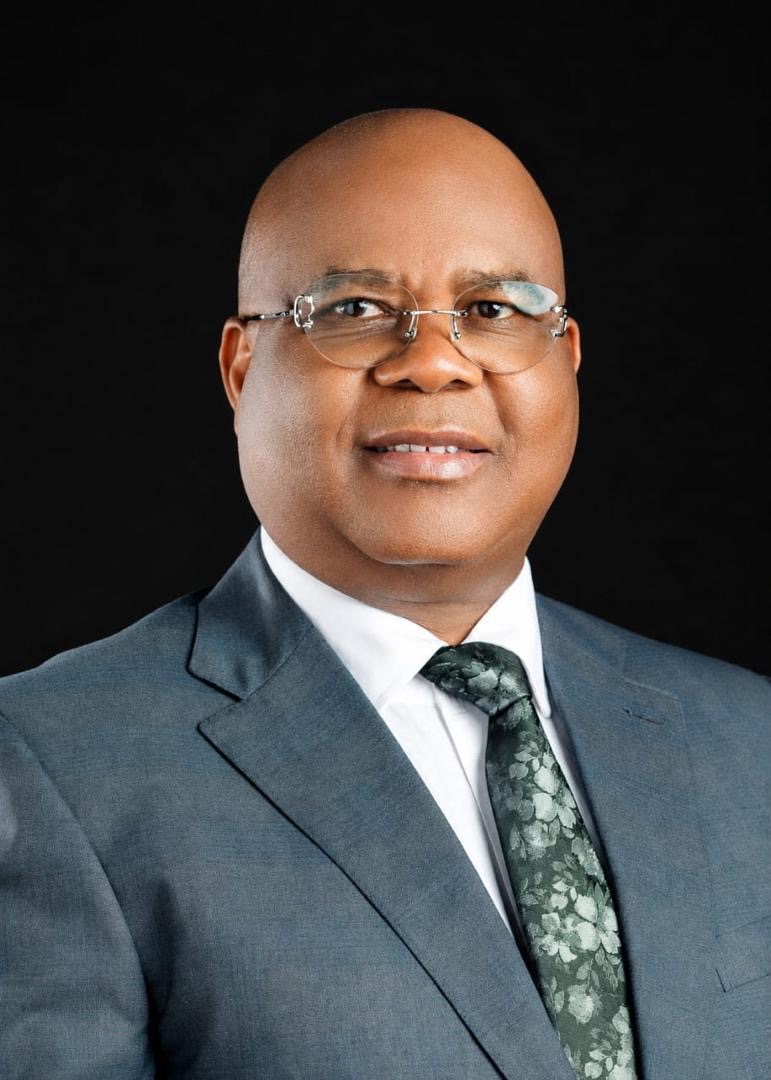
The Independent National Electoral Commission (INEC) has announced that the collection of Permanent Voter Cards (PVCs) will commence nationwide on October 9.
The development has prompted calls for eligible voters to visit the INEC office in their respective Local Government Areas to collect their PVCs and ensure they are prepared to participate in the electoral process.
Meanwhile, supporters of Hon. Engr. Anayo Onwuegbu, Omeiheukwu Akpugoeze, have urged constituents in the Aninri/Awgu/Oji River Federal Constituency to support his bid for a second term in the Federal House of Representatives.
The supporters made the appeal while encouraging eligible residents to collect their PVCs and exercise their franchise in the forthcoming election.
Voters are advised to follow official INEC guidelines and verify the applicable collection procedures and dates before visiting their designated collection centres.

-
 Business4 days ago
No Bad Blood Over New Cement Factories, But Our Mining Rights Run Till 2045 — Ibeto Tells Ebonyi Govt
-

 Sports4 days ago
Enugu Speaker’s boxing talent hunt unearths 5 budding stars
-
News4 days ago
Nigeria at 66: Macmaduson Concepts Limited Sends Independence Day Greetings to Clients
-

 Politics4 days ago
EBONYI 2027: The People, Not Individuals Will Decide Who Becomes Governor – Igwe
-
 Crime4 days ago
Five Arrested By Police For Wearing ‘Tinubu Must Go’ T-Shirts
-

 News3 days ago
66th Independence: Elder statesman wants policies to reduce hardship, calls for peace
-

 Politics3 days ago
Ebonyi Guber: ‘Our People Deserve Better Government,’ Odii Insists
-
 News3 days ago
Nigeria @66: Democracy Evolving, Says Anambra APC Chairman Anosike