


Opinion
2023: While we wait for the manifestoes – By Anayo Agu



The People’s Democratic Party (PDP), reputed for its internal cohesion, national outlook and ability to resolve internal differences appears at this auspicious time unwilling or unable to put behind itself the fallouts of its presidential primary held in May 2022.
While this unnecessary war of attrition is raging, His Excellency Peter Obi is causing a big stir across Nigeria and everywhere else Nigerians reside around the world.
He is doing so with gutsy and unusual boldness against all odds. Obi’s team is masterfully leveraging the “ripple effect” principle of social mobilization.
We had a glimpse of the ripple effect model during the “End SARS” protests championed by Nigerian youths. It turns out that before the “Obidient Movement” hit Enugu State, the chatter in the social media had clearly shown that a number of stakeholders across political parties had adopted an attitude of “Siddon Look.”
According to such people, the political process, especially the recruitment of candidates for elections had become an expensive and very intriguing conspiracy of the elite. So they had just opted to siddon look.Siddon look (which actually means, sit down and look) is a “pidgin English “catch phrase coined by Chief Bola Ige, Nigeria’s assassinated Federal Attorney General and Minster of Justice under President Olusegun Obasanjo, and one of Nigeria’s most daring, eloquent and resourceful politicians.

When the 10th Military Head of State of Nigeria, General Sani Abacha, announced his decision to midwife a transition to a constitutional democracy in 1997, Chief Bola Ige was among those who smelt a rat. Like a few of his discerning contemporaries, he queried the honesty of purpose of “the maximum ruler” who had cleverly positioned himself to be unanimously nominated as the sole presidential candidate of the five political parties he had secretly bankrolled.
Chief Ige declined to join the frenzy calling the five parties “five fingers of a leprous hand.” As a result, he adopted an attitude he aptly described as “Siddon Look,” an enlightened indifference to the national malaise. The beauty of democracy is the freedom and the liberties it guarantees the citizens, and the free space it provides political aspirants to contest ideas, debate principles and interrogate prevailing practices as they seek to convince party members as well as voters that their agendas are not only superior, but also in the best interest of the electorate.
When this essential tenet is lost or surrendered for whatever reason, an irreversible damage is done to the spirit of democracy. According to Albert Einstein, “The world is a dangerous place, not because of those who do evil, but because of those who look on and do nothing.”
PDP has had a rare privilege of governing Enugu State since 1999. While the scorecard is substantially commendable, the party needs to renew its mindset as well as install a new operating system to seize opportunities and meet challenges under the present dispensation.
There’s also the necessity to urgently figure out how to make the most of the huge trade and investment potentials the state offers, and what strategy to use to tackle rising insecurity in rural communities and farms. Otherwise the party may face an uphill task retaining “continuity” as its campaign slogan, and leveraging the goodwill it has garnered from the electorate over the past 23+ years.
At a time like this, according to Charles Darwin, “it is not the strongest of the species that survive, or the most intelligent, but the one more responsive to change.” Perhaps, I should urge the party leadership even at the risk of being misunderstood to consider comparing notes with Lagos State, which has had a similar experience of continuity since the return of democracy in 1999. It is fortuitous that the PDP gubernatorial candidate, Barrister Peter Ndubuisi Mbah has had an enviable tenure and a rewarding experience investing and doing business in Lagos State. And his slogan, “Tomorrow is Here” suggests that he is ready for a “Moon Shot.” Benchmarking is a fast-track, learning process and a world-acclaimed tool of performance improvement.
Benchmarking Lagos can bring new perspectives to the essence of continuity as a political philosophy. After all, success leaves clues even in political domains. That’s why great companies as well as advanced nations of the world, friends and foes, are always keeping tabs on one another. According to Mother Teresa, “I cannot change the world, but I can cast a stone across the waters to create ripples.”Permit me, please, to stand on her wisdom to make the following suggestions:
ECONOMIC FREEDOM: entrepreneurship and business thrives where there is economic freedom, and where public institutions are galvanized toward fueling creativity and empowering innovation. Enugu State is strategically located to serve as an economic hub for the South East as well as a transit for goods heading to and coming from Northern Nigeria.
The beauty of it is that our commercial environment already has all the raw ingredients required to boost the private sector, significantly reduce poverty, create employment, and give internally generated revenue a quantum leap. To do that, however, the next government must prioritize the economy by reforming and investing heavily in the critical institutions that drive private sector growth and development.
For instance, the state can follow the footsteps of Lagos State that has successfully transformed its Ministry of Commerce and Industry, created and equipped functional entrepreneurial/skills development centers across the state, and mastered and effectively leverages public-private partnership.
In his 2021 budget, His Excellency Governor Ifeanyi Ugwuayi recognized and cited the imperative of building a model enterprise peculiar to each of the seventeen local government areas in Enugu State. In addition, the state should remodel and equip its agric extension facilities and repurpose some of its critical commercial interests.
TOURISM AND HOSPITALITY: Enugu State is the birthplace of Nollywood and music icons such as Flavor and Phino. It is the converging point of Igbo politicians, the intelligentsia and the business moguls. This traditional role is taking a new dimension as insecurity heightens in Igbo land. To harness the opportunities offered by its geographic location, Enugu State Government needs to complete and commission abandoned tourism and hospitality infrastructures in the state.
They include the legacy Hotel Presidential and the stalked Conference Center started by the administration of His Excellency Senator Chimaroke Nnamani more than 16 years ago. Those facilities and others like them are strategic state assets currently depreciating in value every passing day. Above all, Enugu State needs to be rebranded as a destination of choice for investment, tourism, entertainment, and conferences, rather than a docile, civil-service state.
A GAME OF WIT, STRENGTH & RESOURCEFULLNESS: The sound bites we’re already getting from different stakeholder groups across Nigeria suggest that the 2023 campaign and elections will be a game of wit, strength, and resourcefulness with a candidate’s track record, attitude, and leadership skills serving as critical mobilization factors. The ability to hold opposing ideas, to thrive in an environment of shifting variables, and to navigate through the mucky swamps of our ethno-religious labyrinths will be strategic assets.
In Enugu State, the stewardship of our common wealth will be a hot campaign theme. The question of a candidate’s conscientious commitment to the “triangular equilibrium,” to justice, equity and fairness in the management of our patrimony will be tested. The premise of the triangular equilibrium is the fact that a progressive state, like a productive system cannot be built by an obsessive focus on anyone of its parts. The key to sustainable development is the adoption of system’s mindset, and a holistic approach in policy design and project implementation.
In conclusion, I think that now that we have achieved a measure of peace in the state, it’s time to renew our minds, and to seek a new model of reality to instigate some breakthroughs in the economy by prioritizing certain industry sectors such as investment, agriculture, and tourism. Bearing this agenda in mind and recognizing the complexity of our political environment, let’s go for a governorship candidate who has a clear vision of the issues at stake and a definite plan of implementation. This is a season of shepherd-entrepreneurial leadership. Hope, good intentions and rhetoric are not a winning strategy to fight the existential war staring us in the face. We need an achiever whose faith in Enugu State is a rock.
Anayo Agu wrote from Enugu





By Onyekwere Nwobodo
Barely one week after Chinyeaka Ohaa wrestled the Enugu NDC guber ticket from the rightful winner, Prof Peter Eneh-Nwangene, in an unprecedented, odious chicanery, painted for the optics as voluntary abdication by the beleaguered academic, Enugu was immediately inflicted with strange tales of political violence !
In a single day, Mr Ohaa imported dangerous touts whom he claimed were supporters,unleashed them against security agents on duty at the Akanu Ibiam International Airport, Enugu, in the guise of campaign flag-off!
It was a near-mayhem, but the besieged gallant officers apparently prevailed,repelling the marauding gang into retreat, but that was hardly the end of the story : another round of violence reportedly broke out same day, at the NDC headquarters; that one ultimately claimed the life of an innocent bystander!
An ostensibly fulfilled Ohaa, his goons and ‘data gang’ went to town, accusing state agents indiscriminately without a shred of evidence, as perpetrators of the violence which became the signature of the day.
Governor Peter Mbah, a man of peace and due process, has distanced himself and government from the unfortunate occurrences of that day, while urging security agents to spare no efforts to bring perpetrators to book !
While we await the outcome of investigations,it is important to painstakingly evaluate, between the state government and Chinyeaka camps, which had the need and/or the predilection to orchestrate lawlessness: between the two camps, which would expect or hope to leverage from the atmosphere of insecurity and fear in Enugu state?
Is it a Governor that has invested humorous resources, made enormously unprecedented sacrifices to take the state back from the vile grip of criminal gangs and swashbuckling non-state actors?
Or, is it a deluded candidate, without a program of action, by way of blueprint, that needs to ebb viciously, even violently, by any means possible, from the irrefutable, imperishable goodwill of an uncommon leader, to have a chance in hell to make any inroads, in pursuit of a vaulting ambition, that had become dead on arrival?
Chinyeaka has not told Ndi Enugu what he would do if he became governor, has he?
The last time I checked, he had only attempted to glamorize his inglorious resume as administrator of many years. May I, please ask : Is it how long or how well?
It’s almost TWO full weeks since that ill fated political outing that took a precious human life; Chinyeaka has not unveiled the manifesto he promised Enugu!
Did he go back to work on the document after he had made the public declaration?
He had obviously put the cart before the horse…this is the kind of cluelessness he had so carefully plotted to mask with exaggerated and misattributed tales of violence and obfuscation of opposition in the state.
But Odalije nwanne, there’s no hiding place for you or your ilk; not while you are on this mission, or in this dispensation!
Remember you had abandoned this same guber ambition in 2022 after your plot to surreptitiously ‘use’ His Excellency, Senator Jim Ifeanyichukwu Nwobodo, unraveled, as soon as you set it in motion?
You had tricked the elder statesman to your new GRA residence allegedly to bless the mansion before you put it to use. The innocent leader, oblivious of your devious intentions, obliged: before he got back to his home after the brief visit, the news was all over the place that he had blessed and anointed Odalije as Enugu East official candidate !
The mortified Chief summoned you in a matter of minutes, unbraided you for your treachery in the strongest words possible, whereupon you apologized, seemingly profusely, removed your shoes and swore you never authorized the publication and sacked your dutiful media aide, Ajay, on the spot! You made the innocent guy a scapegoat, threw him under bus, and had him run over; you made him pay the price for your unabashed desperation for power, dishonorable capitulation from your own instructions, and unquenchable vaulting ambition!
You tout yourself as experienced technocrat who would govern Enugu like no other, didn’t you?
Pray, as Pro-Chancellor and Chairman of the Governing Council of ESUT, Nigeria’s premier university of science and technology from March 2024 to February 2926, what were your imprints?
The Governing Council of a university is the highest policy and administrative body responsible for governance, oversight and strategic direction. In fulfillment of any or all of these roles, at ESUT, what and what did you bring to the table as pro-chancellor, during your tenure, Mr Technocrat?
You were docile, unimaginative and added no value, and despite your current grandstanding as supper former perm sec., subordinated yourself to a vice chancellor you were meant to superintend over! Is that the character and personality of someone ready to lead Enugu of today, dear Odalije?
You do not possess the presence of mind, the mental enablement to govern Enugu; even the position of Secretary to the State Government (SSG) has become too big for you, based on what the world has seen Professor Chidiebere Onyia, make of that role, today!
Mr Democrat,Odalije, but you clung to the position of President-General of Awkunanaw Welfare Association for nearly three decades, rebuffed attempts to elect your replacement and turned the clan association into your personal estate; didn’t you?
Where are your handover notes, after your prolonged tenure? Do they really exist?
As president General, you regularly launched appeal funds, year in, year out, raked in humongous donations from folks at home and in diaspora but had the notorious reputation of initiating snd building the Akpasha Civic Center, the only visible project of your era, for the entirety of your endless tenure, without completing it!
Thanks to Honorable Nnoli Nnaji, for his personal intervention ; the civic center would never have been reality. And you want Ndi Enugu to trust you with their future?
The man who eventually took over as your predecessor at Awkunanaw Welfare Association, didn’t live long after, or last in that role, did he? It could’ve been a coincidence, and without imputing culpability,the truth remains that he was assassinated! That man was Chief Stephen Aniagu.
Those who know violence preach violence; those who know peace, preach peach!
When the President-General of your Obuoffia homestead, Chief Osita Mambo, was assassinated in Amechi in 2025, was it ordered by APC?
What a hypocrite! You want Ndi Enugu to ascribe vicariously to the government of the day, any incident of violence anywhere in Enugu!
You conveniently ignore the fact of history which you can’t possibly obliterate: criminals took over and governed territories outside the reach of previous Enugu Governments: Agu ibeje in Igboeze North, Agu udele, in Akpawfu and parts of Awgu and Uzo Uwani, were criminal havens, until the advent of the Governor Peter Mbah administration!
Enugu people cannot forget where they were coming from…and they know and trust where Peter Mbah is taking them!
They are neither forgetful nor deluded…
Let Chinyeaka Ohaa reel out his own program of action, his blueprint for his own Enugu; the truth, however, is that he is incapable of anything close to what we see today under Governor Peter Mbah!
His predicament is akin to that of a butterfly that thinks it’s a bird…
Onyekwere is Special Adviser to the Enugu State Governor on Media.
Opinion
EBONYI GUBER 2027: Are Clergy, Youths, Political Stakeholders Becoming Accomplices in Bad Governance?
When respected voices fall silent, society is left at the mercy of bad leadership.
By Emma Igwe
There comes a time in the life of every society when silence becomes more dangerous than the actions of those perpetuating injustice. When respected voices that once spoke courageously against oppression, injustice and bad governance suddenly go silent, every well-meaning citizen should be concerned.
As Ebonyi State approaches another defining political moment ahead of the 2027 governorship election, a fundamental question demands urgent attention: Are the clergy, youths, political stakeholders and other influential voices still prepared to defend the interests of the people, or are they gradually becoming comfortable spectators in the face of growing concerns over governance?
The clergy, in particular, occupy a unique position in society. Beyond their spiritual responsibilities, they have a moral obligation to speak truth to power, defend the vulnerable and remind those in authority that political power is a sacred trust, not a licence for personal aggrandisement.
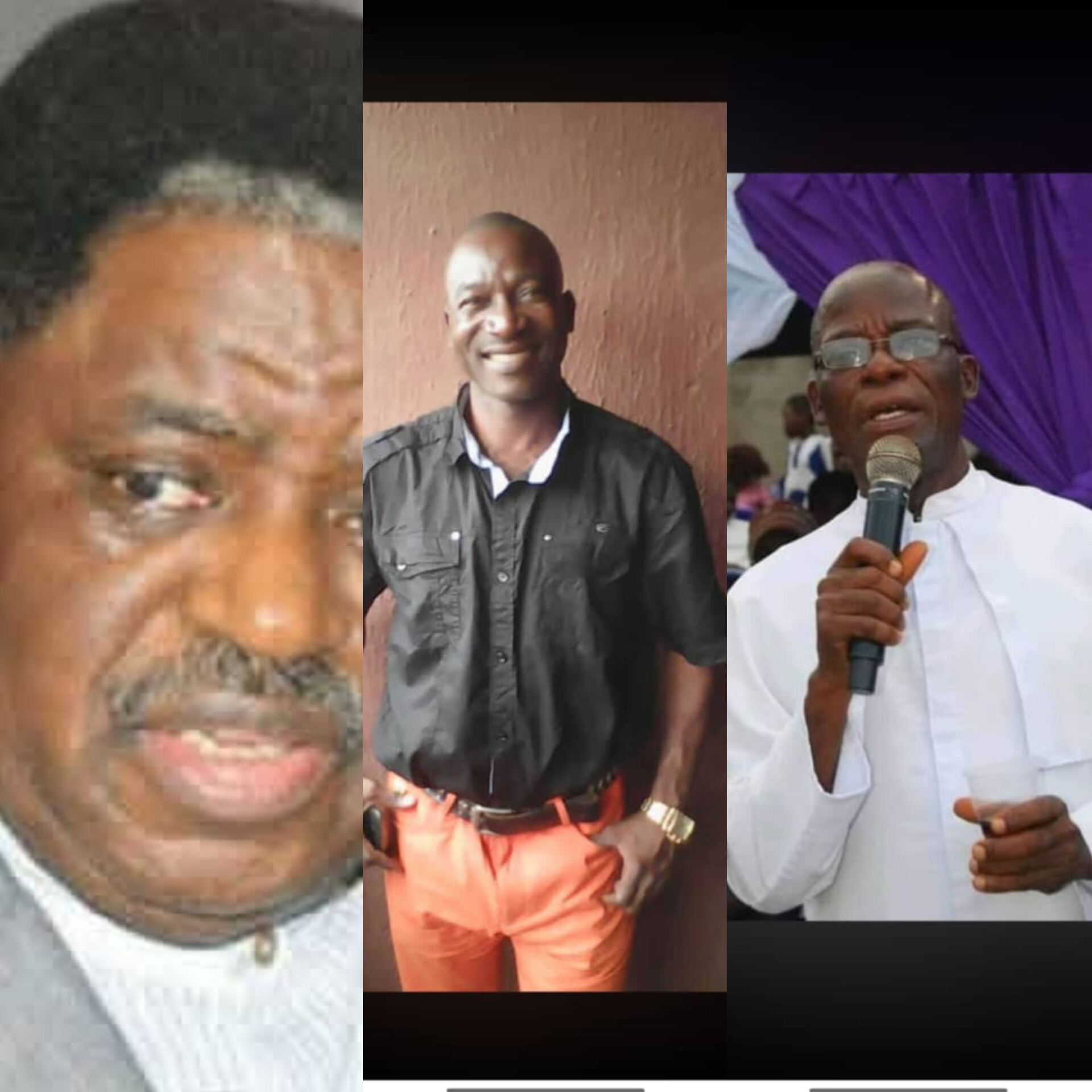
My thoughts go particularly to Rev. Fr. John Odey, whose voice was once prominent in the struggle for good governance and the protection of ordinary citizens.
Father, I recognise the difficult experiences and alleged persecution you endured while standing up for the common people, including reports of a punitive transfer following your courageous interventions. One can only imagine the personal sacrifices involved in defending a cause greater than oneself.
However, my concern today extends beyond those sacrifices to the very constituency whose interests you once championed.
What has become of those people? Have their circumstances improved so remarkably that your voice is no longer needed? Have the injustices you once challenged disappeared, or have we simply surrendered to the prevailing political atmosphere?
These questions are not intended to diminish your sacrifices but to remind you, and indeed other courageous clergymen, that the struggle for a just society cannot end merely because those who speak out encounter resistance.
Ebonyians still need courageous moral voices. They need religious leaders who will stand with the oppressed, challenge injustice and demand accountability, irrespective of who occupies Government House.
The youths must equally awaken to their responsibility.
Politics must not be reduced to the sharing of money, securing political appointments, attending rallies or defending political personalities on social media.
The 2027 election is about their future. It is about employment opportunities, quality education, accessible healthcare, infrastructure, economic empowerment and the kind of society the next generation will inherit.
Young people who mortgage their future for temporary political patronage must realise that the consequences of bad leadership often outlive the immediate benefits of political loyalty.
Political stakeholders are equally challenged to rise above personal interests, political patronage and the pursuit of relevance.
A society cannot make meaningful progress when its influential citizens become more interested in protecting those in power than demanding accountability from them. Leadership should be assessed by its impact on the people, not by the privileges it extends to a select few.
2027 Must Be About the People, Not Political Interests
As the governorship election approaches, Ebonyians must resist every attempt to intimidate, manipulate or deny them the freedom to make independent political choices.
The people must be allowed to determine who governs them based on competence, character, verifiable achievements and a credible development agenda.
Good governance must never be sacrificed on the altar of political loyalty, zoning arguments or the ambitions of a privileged few.
Those who once condemned injustice must not suddenly become its defenders simply because political circumstances or personal interests have changed.
Similarly, those who previously demanded accountability from political leaders must not abandon those principles when their preferred personalities assume positions of authority.
The standard for assessing governance must remain consistent, regardless of who holds power.
I therefore respectfully appeal once again to Rev. Fr. John Odey and other respected voices across Ebonyi State: Do not allow the sacrifices of yesterday to become forgotten chapters in our political history.
The people still need your voices. The vulnerable still need defenders. The political class still needs to be reminded that public office exists for public service.
History will not judge us merely by the injustices we witnessed, but also by what we did, or failed to do, when our voices mattered most.
Silence in the face of injustice does not promote peace; it merely gives injustice room to grow.
Ebonyi deserves better, and the responsibility to demand better belongs to all of us.
Emma Igwe, a public affairs commentator, writes from Abakaliki.
Reduce repetition and tighten the opening
Clarify the appeal to Father Odey
Balance the criticism with specific actions
By Felix Oboagwina
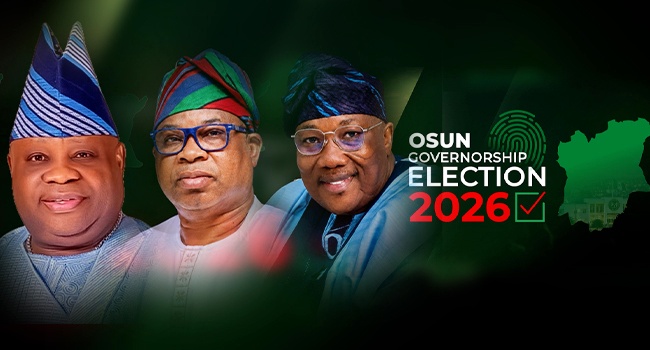
Towards the Osun State governorship election of August 15, not a few expected heaven to fall. All the signs were there. “Dead body surplus,” as they say on the streets. No fewer than 29 corpses laid underneath the soil, lives cut short for a purely political reason. Records cited 79 violent incidents. Thugs had been imported to complement local thugs.
When E-Day came, Nigeria’s ruling All Progressives Congress (APC) invaded Osogbo, the state capital, with all its Federal might. Up to 16 governors, alongside national figures like the Senate President and Speaker, vacated their comfort zones and migrated with brazenly loud–mouthed and foul–mouthed foot–soldiers into Osun, a state their party had declared a warzone they must conquer at all costs.
It did not matter to these APC goons that what they desired did not desire them. Osun people did not hide their love for their dancing Governor Ademola Adeleke. For these citizens, this beautiful soul with a distinguished family pedigree had not only waltzed his way into their hearts, he had in performance and projects surpassed the last two APC governors.
The Nigerian police had taken sides. They were unabashedly pro-APC. For all the killings unleashed against Accord, Adeleke’s party, the police still haven’tbrought any murderer to trial. Unfettered andunrestrained, the death squad roamed the streets of Osun seeking Accord people to devour. But as the Yoruba say, the craftiness of a concubine’s inner-circle can be equally matched by the cunningness of the husband’s own. Accord supporters also showed that, when pushed to the wall, they could match fire for fire. They made APC members too to pay the supreme price. Miffed with the fight-back, a certain Senator publicly egged his people to “kill Accord” members on sight. He spoke openly and on record. Yet the police failed to rein him in. On the other hand, Osun State Government VIPs, like the Chief of Staff, were rounded up. The Chief of Staff to the Governor, ANY GOVERNOR, is His Excellency’s nerve centre. Picking up Adeleke’s CoSamounted to going for Adeleke himself. But this was police victimising the victim.
The Progressives’ usual bad boys breezed in from Lagos and Abuja. They dared the Governor. They brazenly defied his efforts to enforce the peace. With police serving as their rear guard, they raided bus–stops. When Navyofficers, equally brought in to provide security, picked up these goons and guns, police trampled upon “espirit de corps,” attacked this sister Force and freed the hoodlums.
In the midst of all this bizarreness, Grammy nominee musician and nephew to the Governor, Davido, internationalised APC’s iniquity. He swore to drag the Federal-ruling party to the US, the UN, the UK and the EU if it rigged the election results.
However, the most important element in Nigeria’s election is the umpire: INEC. Would the Independent National Electoral Commission (INEC) withstand or would it kowtow to the Federal ruling party like the police had done? It all boiled down to the new man running the commission.
When the newest Sheriff landed in INEC in October 2025, sceptics shook their fists in anger. Like the President, Professor Joash Amupitan is Yoruba. And sceptics quickly disparaged the appointment of this University of Jos Law Professor as fitting into the established profile of the President as a regional, Yoruba-centric leader. Multifarious attacks landed from several sides. The appointee’s anonymity did not help matters. Who was this Amupitan? Unlike Professor Attahiru Jega, Justice Victor Ovie–Whiskey, Justice Tayo Akpata, Professor Maurice Iwu, Professor Humphrey Nwosu and others who hugged the klieg–lights long before securing the electoral umpire job, Amupitan came from the shadows. No one knew him. UNIJOS, from where he obtained his Bachelor’s, Master’s and Doctorate degrees, hardly made the news –much less this Professor of Law who earned his silk as a Senior Advocate of Nigeria in 2014. Even the little known about this UNIJOS teacher, who rose to become its Deputy Vice Chancellor, sparked controversy and rendered him politically incorrect to the powers-that-be in the Northern establishment. Why? One paper he wrote undid him. In the paper he presented in 2020, this Christian Prof had dared to pontificate against the terrorism that ravaged the North and the Fulani militants behind the bloodshed. Titling his paper as, “Nigeria’s Silent Slaughter,” the Senior Advocate of Nigeria called for urgent international intervention to stop what he termed “pogrom and attacks against the Christians and minority groups in Nigeria” by two extremist movements —Boko Haram and Fulani herdsmen. He didn’t stop with just naming and shaming these two genocide squads. Amupitan went ahead and committed the unpardonable sin of criticising the government for recognising Boko Haram as a terrorist organisation but failing to officially label Fulani herdsmen as terrorists. And in 2020, when Amupitan wrote that paper, remember, the Pan-Fulani Muhammadu Buhari held sway as President.
For that singular literary work, the Northern oligarchydeclared the North-Central Kogi State-born Amupitan an anathema. They piled pressure on Tinubu to discard him like a menstrual rag. The President stubbornly paid them deaf ears.
Amupitan appears to have justified Tinubu’s confidence, and that of those who spoke up for this SAN. Under this 62-year-old Prof, INEC has held by-elections and off-cycle elections, and not one governorship poll has been returned inconclusive. None!
Think! This was the same INEC which, under its last Chairman Mahmood Yakubu, littered the entire country with “inconclusive” elections. In Mahmood’s first four years (2015-2019), his INEC conducted 46 inconclusive elections. In 2019 alone, Mahmood delivered seven inconclusive governorship elections: Sokoto, Bauchi, Adamawa, Benue, Kano, Plateau, Rivers and Kano. But Amupitan’s tenure looks like a breath of fresh air.
Same INEC!
Same Commissioners!
Same Resident Electoral Commissioners!
So what changed? A new man steers INEC’s wheel! A new sheriff came to town! Not many have sung his praise. But the Osun elections proved just how stubborn and principled this gentleman can be. Governors, 16 of them, encamped in Osun. They came with tons of cash and foot–soldiers primed to snatch, grab and run. But all theirthunder and their shenanigans fizzled out into a whimper. But their efforts didn’t die easily. Phone calls assailed Amupitan from all corners –the National Assembly, The Presidency– ordering him: Stop the counting! Announce the election as inconclusive! But the UNIJOS Prof turned deaf ears and insisted the process ran its course. At the end of the day, votes counted. This unsung hero, Amupitan, ensured this happened in Osun. It took guts! It took strength of character! Say it: Yes, it took the fear of God!
What many don’t know is that Amupitan happens to be one of these public servants who cannot but flaunt their born-again toga. He is an Elder of the Christ Apostolic Church, CAC. Those who know him testify that he has lived by the CAC creed and grail. To boot, he holds no less a position than the Pro-Chancellor of the CAC-owned Joseph Ayo Babalola University, JABU. The Prof practises not orthodox Christianity, but the fire-bred brand of fundamental Christianity.
What does all this portend for 2027? When it matters mostto Nigerians, will the saintly principles of this unsung hero of the Osun State election goad him to deliver a credible election? Can he? Will he?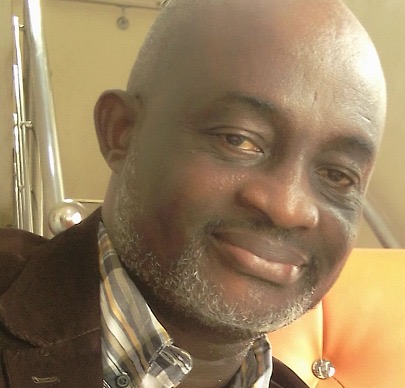
OBOAGWINA, JOURNALIST, AUTHOR AND MEDIA CONTENT PROVIDER, SENT THIS PIECE FROM LAGOS, AND WILL WELCOME FEEDBACK VIA “FOBOAGWINA@GMAIL.COM”
The 2027 governorship election in Ebonyi State must not be viewed as just another political contest. For many Ndi Ebonyi, it represents a defining moment — an opportunity to reflect on the direction of the state and make a decisive choice about the kind of leadership they want for the future.
Across the vast lands of Ebonyi, there is a growing sense of frustration and uncertainty. Many citizens are asking difficult questions about security, youth empowerment, employment opportunities, poverty alleviation and the welfare of vulnerable groups, particularly women and young girls.
The concerns are real, and they deserve serious political attention.
A state blessed with human and natural resources should be one where young people can look to the future with confidence, where women have meaningful opportunities to thrive, and where government policies translate into tangible improvements in the lives of ordinary citizens.
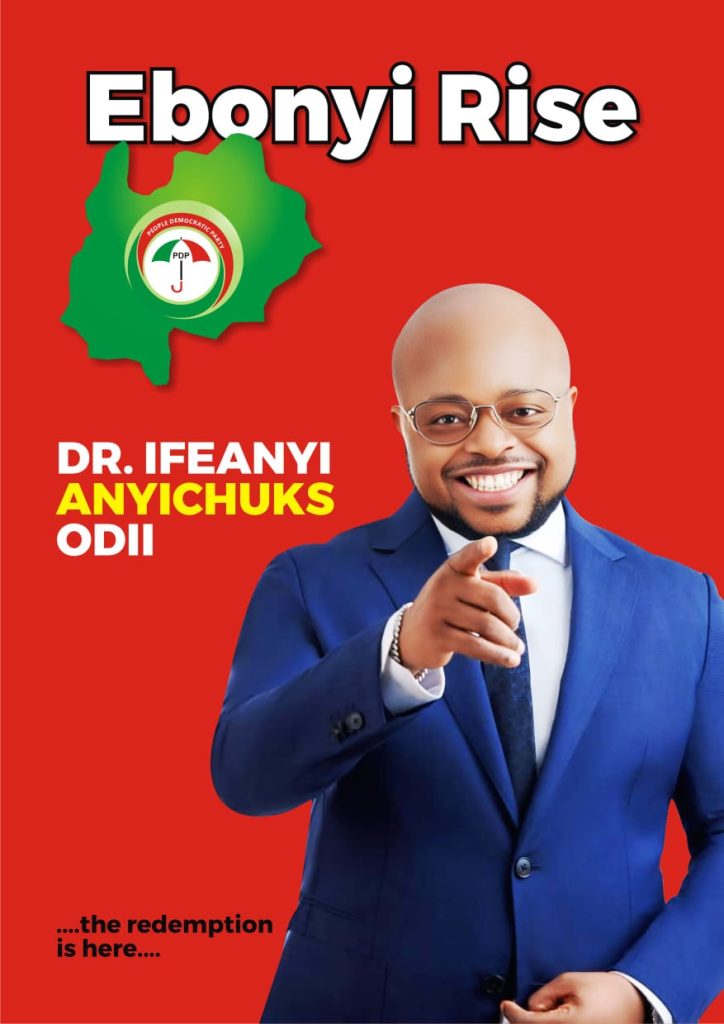
It is against this backdrop that Anyichuks Odii has emerged as a political figure attracting growing attention among those seeking a different direction for Ebonyi.
To his supporters, Anyichuks Odii represents a combination of experience, vision, capacity and determination — qualities they believe are necessary to reposition the state and restore hope among its people.
The argument is straightforward: Ebonyi needs leadership that does not merely administer the state but actively creates opportunities for its people.
The youths need more than political promises. They need practical skills, access to opportunities, entrepreneurship support, employment pathways and an environment where their talents can translate into sustainable livelihoods.
Women need more than symbolic representation. They need economic empowerment, access to finance, skills development, education and policies that enable them to become stronger contributors to their families and communities.
And every citizen deserves to feel secure enough to live, work and pursue legitimate aspirations without fear.
The 2027 election therefore provides Ndi Ebonyi with an opportunity to critically assess the records, ideas and capacity of every candidate seeking their mandate.
Democracy ultimately belongs to the people. Their voter cards are their instruments of choice, and their votes should reflect their aspirations for a better Ebonyi.
Already, political conversations are intensifying across the state. One of the songs gaining attention among supporters captures the mood of those calling for a change in political direction:
“Nwifuru kwakoro naba, onye ndozi abiago, naba, onye ndozi abiago, naba… Ka Anyichuks bata.”
For the supporters of Anyichuks Odii, the message is clear: they believe a new chapter is possible and that the 2027 governorship election could be the moment when Ndi Ebonyi choose the leadership they believe can deliver that change.
But beyond slogans and political songs, the real test will be the issues.
Ebonyi deserves a serious conversation about security, economic development, infrastructure, education, healthcare, youth employment, women’s empowerment and inclusive governance.
The people must demand clear plans, measurable commitments and accountability from all contenders.
If 2027 is indeed to become a moment of redemption, it must ultimately be a redemption achieved through the informed choice of the people.
And for those who believe Anyichuks Odii embodies the leadership Ebonyi needs, the journey to 2027 has already begun.
The message from his supporters is unmistakable:
Ebonyi is ready for a new conversation. Ebonyi is ready to choose. Ebonyi is ready for a new direction.
By Dr. Kenneth Anozie, Political Strategist
By Emma Igwe
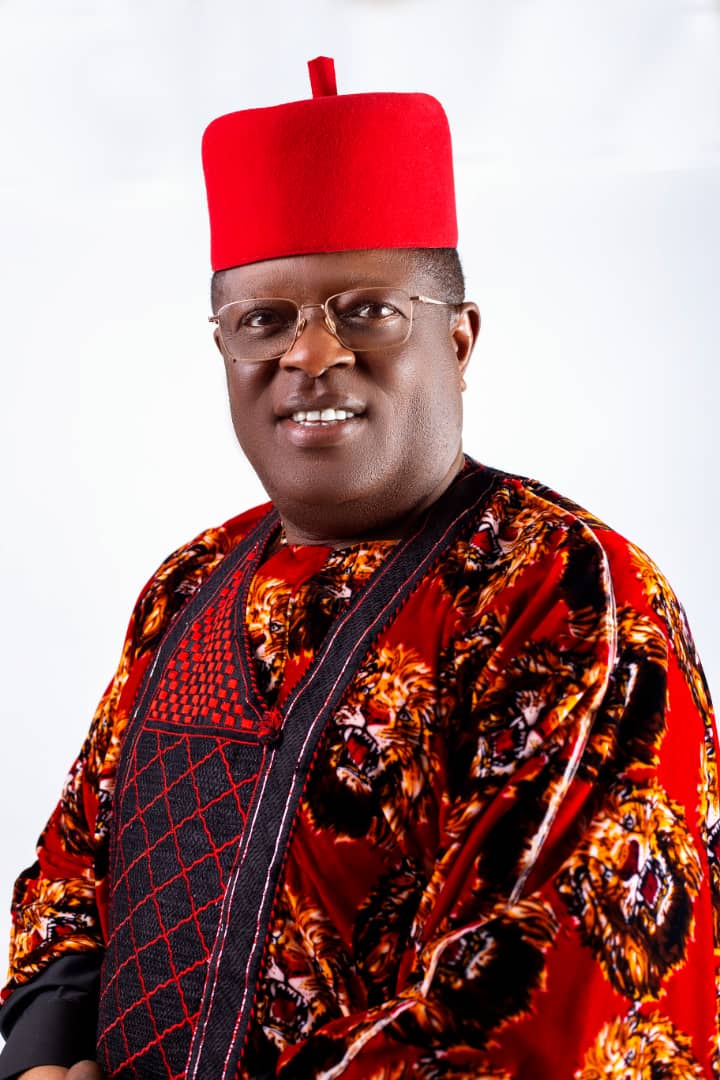
The decision by the Minister of Works, Engr. David Umahi, to institute a defamation action against Linda Ikeji, Linda Ikeji TV Limited and Stella Ifeoma Okengwu should not be dismissed as an attempt to silence criticism.
At the heart of the case is a much more fundamental question: how far can individuals and media platforms go in publishing serious allegations against a person’s character and reputation without being held accountable if those allegations are found to be false?
Umahi has approached the High Court of the Federal Capital Territory, Abuja, with suit No. GWD/CV/264/26, filed on August 24, 2026. He alleges that publications and videos circulated between March 2025 and March 2026 contained allegations of bribery, corruption, intimidation, sexual misconduct, land grabbing, sexual harassment and claims that he was unfit for public office. He maintains that the allegations were false, malicious and calculated to damage his reputation.
These are not minor accusations.
A public official can be criticised over policies, projects, political decisions and performance. That is an essential part of democracy. But allegations of corruption, bribery and sexual misconduct are qualitatively different. If such allegations are published without adequate factual foundation and are ultimately found to be false and defamatory, the damage to the subject’s reputation can be enormous.
THE SCALE OF PUBLICATION MATTERS
Another important consideration is the alleged reach of the publications.
According to the reports on the suit, Umahi alleges that material posted by Stella Okengwu was subsequently amplified through Linda Ikeji’s media platforms, including Linda Ikeji TV and its Instagram platform.
That distinction matters.
An allegation whispered privately to a few people is one thing. An allegation disseminated through platforms with substantial online audiences is another.
If the court ultimately finds that defamatory statements were repeatedly disseminated to a large audience, the extent of publication would naturally become relevant when assessing the injury allegedly suffered by the claimant.
UMAHI SAYS HE DID NOT RUSH TO COURT
The minister also says that his lawyers first demanded that the alleged publications be removed, that an unreserved apology be issued and that the defendants undertake not to repeat similar allegations.
He alleges that those demands were not complied with.
If that account is established before the court, it strengthens the argument that litigation was not necessarily his first response, but followed an alleged failure to resolve the dispute through a demand for correction and retraction.
WHY THE CLAIM FOR DAMAGES IS SIGNIFICANT
Umahi is seeking ₦500 million in general damages and ₦2 billion in exemplary damages, making ₦2.5 billion in damages. He is separately seeking ₦500 million as costs of the action and 10 percent post-judgment interest.
The amount claimed should not, however, be confused with an amount already awarded by a court.
It is a claim that must be proved.
And that is precisely why the court process is important.
If Umahi can establish that the publications were false and defamatory, that they caused serious injury to his reputation and that the defendants were legally responsible for their publication or republication, then compensation would serve more than a personal purpose.
It would reinforce the principle that freedom of expression does not automatically translate into freedom from responsibility for demonstrably false and defamatory statements.
THIS IS NOT ABOUT PROTECTING POLITICIANS FROM CRITICISM
There is a dangerous tendency in Nigeria to treat every defamation action involving a politician as an attempt to suppress free speech.
That approach is too simplistic.
Democracy requires vigorous criticism of public officials. Journalists, bloggers and citizens must remain free to investigate government and expose genuine wrongdoing.
But democracy also requires accountability for what is published.
If a journalist has evidence of corruption, the appropriate response is to present the evidence and defend the publication in court. If a person makes an allegation and can prove its substantial truth, that too is a legitimate defence.
But if a court eventually determines that serious allegations were knowingly or recklessly published without justification and caused reputational damage, the law must provide a remedy.
THE COURT SHOULD DECIDE — NOT SOCIAL MEDIA
This is perhaps the most important aspect of the Umahi case.
At present, the allegations made by Umahi in his Statement of Claim remain allegations before the court. The defendants had not, according to reports available as of August 25, been served with the writ, and no hearing date had been fixed. They will have the opportunity to present their defence.
Therefore, neither Umahi nor his opponents should declare victory prematurely.
The proper question is not whether Umahi is powerful enough to sue.
The proper question is whether the publications complained of were true, substantially true, fair comment, privileged, or defamatory and unjustified.
That is what evidence and the judicial process should determine.
THE REAL TEST
Umahi deserves compensation if he proves his case.
If the court establishes that he was falsely accused of serious criminal, corrupt or sexually improper conduct; that the allegations were defamatory; that the defendants were legally responsible for the publications; and that he suffered compensable injury, then a substantial award would not be an attack on journalism.
It would be an application of the law.
Conversely, if the defendants can substantiate their allegations or establish a recognised legal defence, the court should equally protect their right to publish matters of legitimate public interest.
That is the essence of the rule of law.
The court — not social media, not political supporters, and not bloggers — should have the final word.

-
 News3 days ago
C’RIVER 2027 BUDGET: GOV OTU PRESENTS ₦987.8bn ESTIMATES TO ASSEMBLY
-

 EverydayNews Telescope4 days ago
Enugu East Senate: The Dark Side of Ada Ogbu, NDC Candidate
-
 News5 days ago
Tension Mounts in Awka Anglican Diocese as Supervising Bishop Ezeofor Moves to Take Over Wednesday
-
 News2 days ago
Holy Ghost Transformation: How Enugu North Chairman Ibenaku Onoh Ended Years of Traffic Chaos, Roadside Trading
-
 EverydayNews Telescope4 days ago
Ebonyi 2027: The People’s Quest For ODII Vs Compromised Stakeholders
-
 Politics2 days ago
One Feared Dead, Several Injured as Thugs Attack Ebonyi NDC Assembly Candidate, Burn Campaign Vehicle
-
 Politics4 days ago
2027: Tinubu Has No Hand in Alleged Assassination Plot Against Atiku – APC
-
 Economy5 days ago
Fuel Subsidy Removal Irreversible, Nigeria Won’t Return to Egypt — Tinub