



Special Report
GOVERNOR UGWUANYI’S GIANT STRIDES IN THE JUDICIARY: A GLIMMER OF HOPE

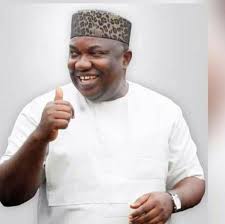

Steve Oruruo
Saddled with weak institutions oftentimes tied to conflicting functions, Nigeria’s prospects at major fronts have languished in perennial cycle of only potentiality. Why has a hugely endowed Country with both human and material resources so retrogressed while its peers climb into quantum leaps on the ladder of socio-economic progress?
Despite elaborate outlines of the constitution and other key regulations, manipulating the formal state institutions, ignoring court order and upending the due process are the well known art of the Nigerian political class and other key players in the country’s public life. Institutions largely function as mere facades, for which nocturnal and primordial interests essentially manipulate to realise goals of ethnic hegemony, primitive accumulation of wealth and other sundry perverse goals that are not expressly or impliedly outlined in the constitution or any other regulatory framework.
Sequel to the fact that the frameworks of formal state institutions are mostly farcical, they are unable to inspire or mobilize the latent human resource of the huge population into a national asset to prosecute the agenda of sustainable and inclusive economic development. Elite consensus on political accommodation and method of leadership recruitment to public institutions have ensured that the process produces mediocrity, depriving the country the services of her best materials.

The structural enablers of corruption are the weak state institutions, and fighting corruption without first tinkering with its underlying infrastructure is basically a public relations stunt without any possibility of institutional entrenchment. More worrisome than the missed opportunities is the fact that the Nigerian power elite has neither reckoned nor felt ashamed that they are punching far below the country’s potential and manifest destinies.
The Judiciary as the third organ of the government is the pillar of political democratic governance, saddled with the cardinal responsibility of adjudication, and interpretation of the law in line with the doctrine of Separation of Powers. From the citizens’ perspective, the judiciary is prime among the tripod of democracy because it functions as their protector against the possible excesses of the other arms and therefore ought to be tenaciously shielded or insulated in the maze of the prevailing incongruities. It is the beacon of justice, egalitarianism and hence the guardian of the soul of society. Political corruption and its associated malfeasances, and societal ills can only thrive on the nourishing humus of a judiciary infected with chronic debauchery and/or uttermost incompetence.
Andrew Jackson, the American soldier and statesman who served as the seventh president of the United States from 1829 to 1837 succinctly captured the great import of the Judiciary’s mantle when he posited that *_“all the rights secured to the citizens under the Constitution are worth nothing, and a mere bubble, except guaranteed to them by an independent and virtuous Judiciary.”_* From the priests of the _Ius Civile_ in the Archaic Roman Law (650–264 BC) to Henry II’s jury of 12 local knights (1154-1189), the primer of the modern justice system in England, to the present era, the Judiciary has remained imperative to the birth, sustenance and evolution of democracy.
Unfortunately, the judiciary in Nigeria is afflicted with political cankerworms threatening its sanctity and desecrating its hallowed integrity. The most vicious are often the theatricals between the executive arm of government and the Judiciary across federal and state levels; usually stemming from illegal interference and assumption of prerogative by the former over judicial matters. The polity is awash with stories of how the judiciary had been shackled, its courts shut down; and that of a bleak time, when grim security operatives invaded the residences of Supreme Court judges in the dead of the night. Hence, it is safe if not apt to say that the constitutionally touted independence of the Nigerian Judiciary remains by a disquieting degree, cosmetic, utopian and a mirage. When the judiciary is robbed of its independence, the doctrine of Separation of Powers is flushed down the toilet of impunity. Consequently, political structures lie decrepit, institutions falter and the ordinary masses suffer the mess created by a few feudal Lords of the Manor.
The absence of financial independence for the Judiciary has often led to manipulation of this vital arm of government, both at the federal and state levels. This is why the Executive Order No.10(EO 10) 2020, recently signed into Law by President Muhammadu Buhari for the implementation of the financial autonomy for state Judiciary in line with powers vested on him under Section 5 of the 1999 Constitution (as amended) must be commended. The section extends to the Executive and maintenance of the constitution, laws made by the National Assembly, including but not limited to Section 121(3) of the Constitution which guarantees financial autonomy of the state Judiciary. Section 77(a) of the Executive Order makes provision for a Presidential Implementation Committee to ensure compliance.
Therefore, the Executive Order 10 makes it compulsory for the 36 states to include the allocations of the Judiciary in the first-line charge of their budgets. Besides, Article 6(1) of the Order provides that “not withstanding the provisions of the Order, in the three years of its implementation, there shall be special capital allocations for the Judiciary to undertake capital development of the state Judiciary Complex, High Court of Appeal and other court complexes befitting the status of a Court.”
We must therefore celebrate leaders in the executive arm of government in Nigeria, who unlike some of their overstepping predecessors and counterparts, respect the Judiciary and support its independence and operational efficiency.
It is at this point that the name of the Executive Governor of Enugu State, His Excellency Rt. Hon. Ifeanyi Ugwuanyi resonates with this commendable renaissance. The Governor, a famed apostle of democratic tenets, in his usual clairvoyance has been a copper-bottomed fortress and advocate of justice and fairness. This explains why social justice is firmly integrated in his governance agenda geared towards realizing the visions of our founding fathers and equitably delivering the dividends of democracy to his people. It is undisputable that social justice flows from the estuary of judicial activities even more than from the firth of religious crusades. Unlike many political leaders of the days of yore and a few of the present, Governor Ugwuanyi is vitalized, rather than threatened by this esteemed place of the Judiciary as ‘checkers & balancers’, moral watchdog of the society and soldiers of conscience. Through inter-organ collaborations across various political fora and a conscious infrastructural rebirth, the governor has sufficiently lent his executive privileges to consolidating the independence and enhancing the productivity of the Judiciary in Enugu state. A central part of his commitment,as a Governor, has not only been delivery of justice, but also its speedy delivery to all classes of people, without prejudice to socio-economic cum political status or influence.
Rt. Hon. Ugwuanyi’s achievements on the front of Judiciary reform since 2015 is hardly surprising for the impact of his stewardship in the Southeast capital reverberates across all facets of human endeavour. The Judiciary couldn’t have been left out of this revolutionary train for Governor Ugwuanyi acknowledges it as a partner in progressive leadership, an albatross of social inequality and injustice, and the final hope of the common man.
*Perhaps, Governor Ugwuanyi’s stoical determination to promote the ideals of an independent judicial system, through zero interference and continued support for its self-regulation, is the poster child of his administration’s pro-Judiciary movement. Also screaming volumes are his infrastructural exploits which are crystallizing the emergence of an improved prototype of judicial system in Nigeria.*
The first ever Enugu State Customary Court of Appeal Headquarters complex was constructed by the Ugwuanyi administration and furnished with state-of-the-art facilities. Justice Zainab Adamu Bulkachuwa, the former President of the Court of Appeal, on inspection of the architectural masterpiece, heartily commended the governor for his unfaltering resolve to reposition the state Judiciary.
On other vanguards of Judiciary reform, the governor constructed 34 modern Customary Courts (two in each local government area), 24 magistrate courts 16 of which are new court buildings, and open registries in the judicial divisions and magisterial districts across the state. The government has within the last six years created two additional judicial divisions and six additional magisterial districts to decongest courts. The governor also undertook a massive renovation of the State Judiciary Headquarters complex and the former DAD Building which was consequently converted to the State Ministry of Justice Headquarters. He established the Multi-Door Court House in Enugu and on June 12, 2020, commissioned a modern complex of eight Magistrate Court Halls and another complex of two High Court Halls with one Open Registry at Nsukka Judicial Division. These reecho Governor Ugwuanyi’s unquestionable desire for speedy, effective and efficient dispensation of justice, at the urban centres and the hinterlands. Multi-Door Court for mediation has also been set up to achieve amicable and seamless resolutions of some cases without necessarily passing through the hurdle of litigation. Lawyers from the ministry of Justice are now constantly attached to courts to ensure steady representation and expedited judgements.
Encomiums deservedly need to be poured on the Bench, ably led by the Chief Judge of the State, Hon Justice Ozoemena, the Attorney General and Commissioner for Justice, Mr. Meletus Eze, and the Bar of Enugu chapter, for their resilience when put on trial. All these achievements were only possible because of the relentless efforts, sacrifices and solid foundations laid by the retired Chief Judge of the State, Justice N. P Emehelu. Greed and avarice are always the banana peels whose predilection of recyclability remains a blight upon the majesty of our democracy .The role of Judges in a democracy is an enviable one and in fact sacred. Judges are like viceroy of God on earth. While Judicial officers must essentially exhibit high degree of diligence, unquestionable competencies, uncompromising sense of discipline, an untainted level of probity, impeccable integrity, unscathed transparency and glaring incorruptibility; the Executive must never, in any circumstance, employ coercion in the guise of anti-corruption crusade against the Judiciary. It’s axiomatic that the Bar is the major casualty of an attack on the Judiciary. Therefore, the battalion of the Bar must advance with a steadied resolve not to relent in performing its role as the “guardian angel” of the Independence of democracy. The Bar must fight with fervour and pursue with resilience the cause of justice without succumbing to intimidation. It’s only if the Bar and the Bench abdicate their utilitarian roles that the Judiciary can be realistically placed under siege.
Even as the most unscrupulous naysayers and hirelings will easily concede to Ugwuanyi’s glittering credentials in the Judicial sector, more efforts are still needed to firmly accentuate the arrival of his name in the Hall of fame.
Without prejudice to Covid-19 protocols, the newly recruited and sworn in customary court chairmen and members are very crucial in dispensing justice. Appointments of more High Court judges renowned for their dexterity and unwavering integrity, and the employment of stenographers highly skilled in transcription of speeches will provoke expeditious conclusions of cases if justice is to be served early. Administration of Criminal Justice Law of Enugu State will be effectively implemented if Judges, Magistrates, Police and other institutional stakeholders in the administration of criminal justice system are properly trained and periodically retrained, while the members of the public are constantly sensitized on the provisions of the aforementioned Law. If a monitoring committee is specifically set up by the Chief Judge for the implementation and enforcement of compliance of this Law (ACJL), it will definitely inspire the birthing of an improved image-narrative for the State, nay the Nation . The magistrates are enjoined to regularly pay visits to custodial centres (police cells, DSS, NDLEA, etc) to ensure that they are not in dehumanising conditions and to ascertain the reasons behind detentions as well as detect human rights abuses.
Towards consolidating social justice in Enugu State, closing chasms of inequality across the strata of society and fueling sustainable economic prosperity, Governor Ugwuanyi is instituting a new culture of accountability and transparency in governance; strengthening the state’s Judiciary via enabling environment for a sweeping reform and deploying our patrimony for common good. Posterity will judge him justly as a hero of democracy and one of the founding fathers of a modern Judicial system; trademarked with inalienable independence, robust infrastructure and an unflagging commitment to fairness, equity and good conscience.
*Steve Oruruo is the Special Adviser to the Governor of Enugu State on Information*
Special Report
Federal Roads: Umahi Closing the Gap as Tinubu Addresses Years of Neglect in South-East
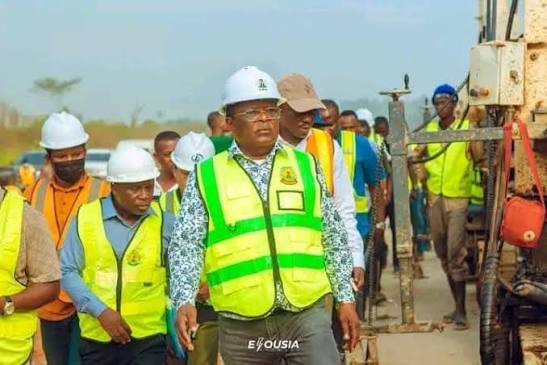
By PETRUS OBI
The Federal Government’s renewed intervention in major infrastructure projects across the South-East is beginning to give fresh meaning to the argument that the region is witnessing a stronger federal presence under President Bola Ahmed Tinubu.
At the centre of the renewed push is the Minister of Works, Senator Dave Umahi, whose aggressive supervision of federal road projects has placed the region’s long-standing infrastructure deficit firmly on the national agenda.
The latest demonstration of that commitment is the ongoing reconstruction of the 65-kilometre Afikpo-Uturu-Okigwe Federal Road, linking communities and major highways across Ebonyi, Abia and Imo states.
During an inspection of the project in Okigwe, Umahi disclosed that the Federal Government had commenced preparatory works to remove a mountain more than 60 metres high that has for years constituted a major danger to motorists and contributed to fatal accidents along the route.
“This mountain, by the command of President Bola Ahmed Tinubu, must collapse for the people of South-East,” the minister declared, underscoring the administration’s determination to confront difficult infrastructure challenges rather than continue to allow them to hinder economic activity and endanger lives.
The mountain section represents one of the most technically demanding portions of the project. According to the contractor, Hi-Tech Construction, three excavators are being deployed to intensify excavation and reshape the terrain to create a safer and more efficient road alignment. 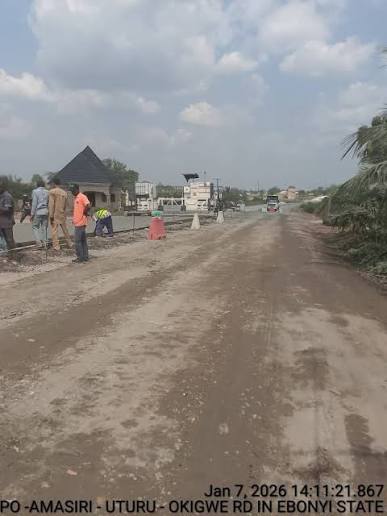
For a region where poor road infrastructure has historically been blamed for restricting trade, increasing transportation costs and slowing economic development, the significance of the project goes beyond the road itself.
The Afikpo-Uturu-Okigwe corridor is an important arterial route connecting communities and adjoining federal highways. When completed, it is expected to improve movement between Ebonyi, Abia and Imo, open up markets and strengthen regional integration.
More than 20 kilometres of the 65-kilometre project have already been completed, according to the Minister of Works, with the remaining sections progressing under the Federal Government’s tax-credit arrangement involving Dangote Industries Limited as sponsor and Hi-Tech Construction as contractor.
The project is also notable for the use of concrete pavement, which Umahi described as superior to what is obtainable on some other major federal highway projects.
But the Afikpo-Uturu-Okigwe road is only one component of a wider federal infrastructure push across the South-East.
Other major projects highlighted by the Presidency include the Enugu-Onitsha, Enugu-Port Harcourt, Enugu-Abakaliki, Abakaliki Trans-Sahara and Onitsha-Owerri roads.
Taken together, the projects suggest an attempt to address some of the region’s most persistent infrastructure bottlenecks while integrating its commercial centres more effectively with the national economy.
For Umahi, the issue is not merely the number of projects being undertaken, but their practical impact on the lives and economic fortunes of the people.
The minister has consistently argued that the Federal Government’s interventions in the South-East should be judged through tangible infrastructure delivery rather than political sentiments.
That argument is particularly significant in a region that has, for years, complained of inadequate federal infrastructure investment and what many residents perceive as neglect.
The ongoing projects therefore offer the Tinubu administration an opportunity to change that narrative through visible delivery on the ground.
The mountain at Okigwe provides perhaps the clearest symbol of the challenge.
For decades, the obstacle stood as a physical barrier to smoother transportation, while accidents and difficult road conditions imposed additional costs on motorists and communities.
Its planned removal is consequently more than an engineering exercise. It represents an attempt to physically dismantle one of the obstacles that have impeded movement, commerce and connectivity in the region.
Beyond road construction, improved connectivity could have wider economic consequences. Better roads can reduce travel time, improve the movement of agricultural produce and manufactured goods, strengthen access to schools and health facilities, and encourage investment along previously difficult corridors.
This is why the intervention is being viewed as part of a broader effort to close the infrastructure gap in the South-East.
The Senior Special Assistant to the President on Community Engagement, South-East, Barrister Chioma Nweze, reinforced this position, saying the projects would strengthen connectivity, open up communities and markets and stimulate commercial activities across the region.
The scale of the ongoing interventions provides the Tinubu administration with a strong opportunity to demonstrate that federal presence in the South-East can be defined not by political rhetoric but by roads, bridges, connectivity and economic infrastructure.
And with Umahi taking a hands-on approach to monitoring projects, the Federal Government appears determined to make infrastructure delivery one of the most visible signs of its engagement with the region.
If the Afikpo-Uturu-Okigwe road is completed as planned, including the removal of the 60-metre mountain, it could become one of the most striking examples of how a difficult infrastructure challenge can be transformed into an economic opportunity.
For the South-East, where infrastructure deficit has long featured prominently in conversations about federal neglect, the emerging picture is one of a region increasingly being brought into the centre of the Federal Government’s infrastructure agenda.
By Emma Igwe
In Ebonyi South, a scenario is playing out, following the loss of Igariwey Idu in securing the APC ticket for Edda/Afikpo North federal constituency, and the likely disposition of his followers to work against APC candidates. These anti-party activities and internal political realignments are now intersecting with broader dynamics in Ebonyi North and Ebonyi South senatorial districts, where the All Progressives Congress (APC) may face unexpected setbacks due to deep-rooted local interests, personal influence networks, and intra-party divisions.
In Ebonyi North, the political landscape is particularly complex, driven largely by a long-standing kindred dichotomy between the two dominant subgroups, Unwueru and Igbojima.
This internal division continues to influence voting behaviour across Izzi, Abakaliki, and Ebonyi local government areas, often outweighing party ideology or candidate competence. At the same time, the ripple effects of political dissatisfaction in Ebonyi South—especially from aggrieved APC stakeholders like Igariwey Idu—are beginning to shape cross-district alignments and quiet opposition strategies that could weaken APC’s overall electoral strength.
The APC candidate in Ebonyi North, Senator Onyekachi Peter Nwebonyi, who serves as Deputy Chief Whip and hails from the Unwueru subunit of Izzi, is widely acknowledged for his legislative performance and constituency projects across various communities in the district. However, his political strength is being challenged by deep-seated intra-ethnic sentiments, with his kindred of origin becoming a major political liability in the current contest. Some local political actors within Izzi are reportedly not fully aligned with his candidacy, further weakening his grassroots consolidation.
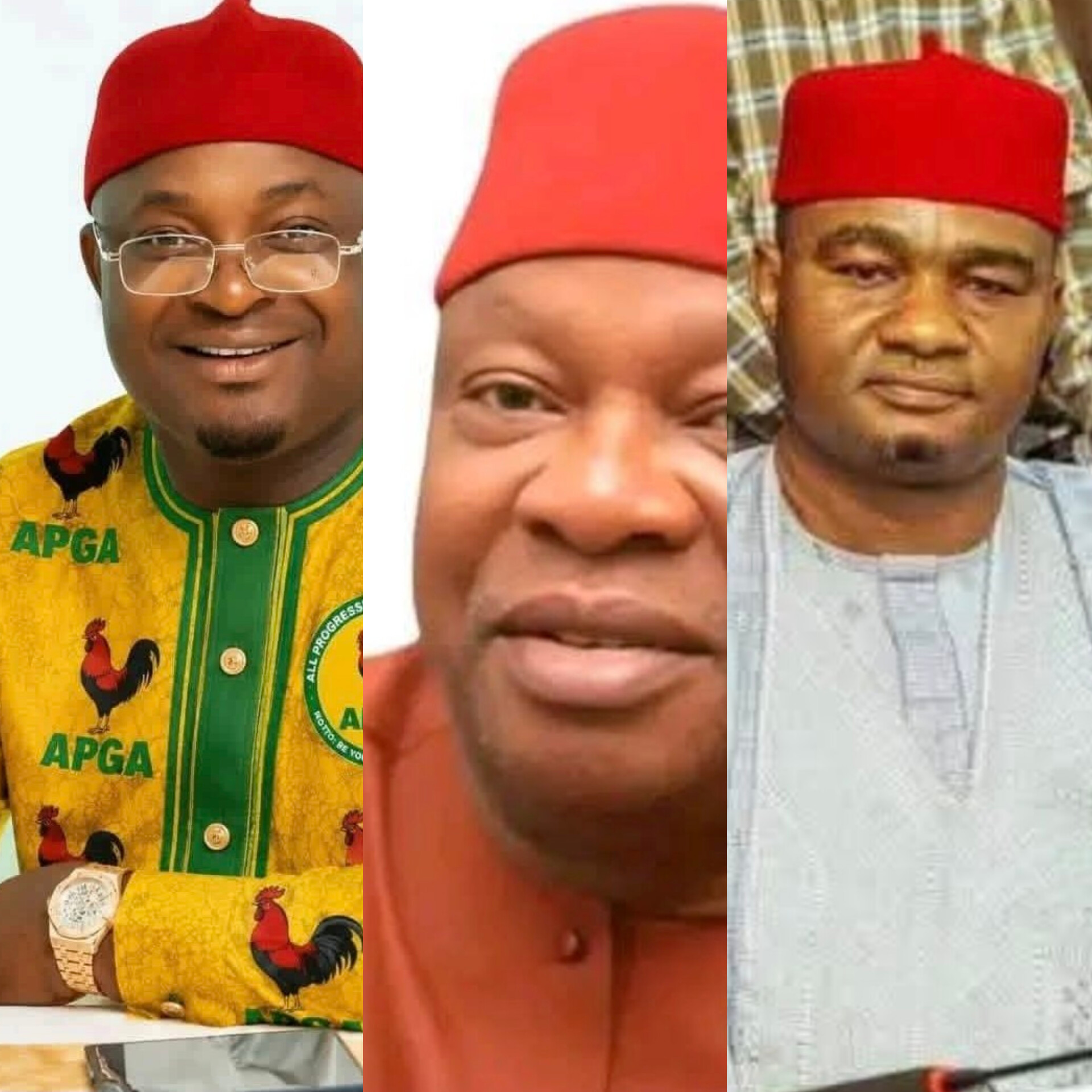
On the other hand, Chief Chikaodili Ojemba of the All Progressives Grand Alliance (APGA), who hails from the Igbojima axis—the same broader bloc as Governor Francis Ogbonna Nwifuru—appears to be gaining significant traction. Despite running under APGA, Ojemba is perceived by many as enjoying tacit support from influential political structures within the state. His alignment with both Governor Nwifuru and President Bola Ahmed Tinubu, at least in political posture, has further strengthened his acceptability across party lines.
Ojemba’s appeal is also reinforced by his position as chairman of the Quarry Dealers Association of Ebonyi State, as well as his philanthropic engagements, including recent scholarship awards to indigent students within the senatorial district. These activities have enhanced his visibility and grassroots goodwill, particularly among younger voters and economically disadvantaged communities.
While Senator Nwebonyi maintains a strong record of attracting federal projects and development initiatives across the district, the contest is increasingly being shaped less by performance and more by identity politics. The election is gradually evolving into a struggle for kindred supremacy rather than a comparison of competence or legislative effectiveness.
Demographically, the Igbojima bloc holds a population advantage and also benefits from the perceived influence of the incumbent governor, which may translate into significant electoral gains for Ojemba. He is also expected to perform strongly in Izzi areas, where local sentiments and political alignments are currently fluid.
In urban centres such as Abakaliki and parts of Ebonyi local government area, APGA may also enjoy considerable support due to the presence and influence of non-indigenous populations, particularly Anambra indigenes who have established strong socio-economic networks in these areas.
In a parallel development, Toochukwu Ogalagu, the APGA House of Representatives candidate for Ohaukwu/Ebonyi Federal Constituency, is also expected to command strong followership in urban centres such as Ezzangbo, Effium, and Alioma. However, he may face stronger resistance in Mgbo-speaking areas, where the incumbent representative retains influence. The simultaneous conduct of both senatorial and House of Repre

BY Emma Igwe
“Those who live ahead of their time should always expect criticism.”
— Dr. Nnamdi Azikiwe
Dr. Nnamdi Azikiwe reportedly made this statement on two notable occasions.
The first was during the campaign for Nigeria’s independence, when Southern members of the then National Assembly advocated for self-rule while many Northern members opposed the move. When Dr. Azikiwe was interviewed at Heathrow Airport in the United Kingdom, he responded with those words.
The second was during the Nigeria–Biafra War. After advocating dialogue between Nigeria and Biafra, Radio Biafra reportedly labelled him a saboteur. Once again, he repeated the same statement. Supporters argue that history later vindicated his position.
A Religious Reflection
If Jesus Christ, revered by Christians as the Saviour of the world, was persecuted and crucified despite His innocence, then public criticism and unfounded allegations against public figures should not come as a surprise.
It is painful for anyone to be associated with a crime in which they had no involvement.
Sen. David Umahi: A Record of Public Service
Supporters of Sen. David Umahi point to a number of achievements during his political career, including:
- Becoming the first Deputy Governor in Ebonyi State to openly oppose the imposition of candidates within the Peoples Democratic Party (PDP), eventually emerging as Governor.
- Introducing the use of concrete pavement technology for road construction in Ebonyi State.
- Prioritising infrastructure development over patronage politics and the distribution of public resources.
When Sen. Umahi defected from the PDP to the All Progressives Congress (APC), he faced widespread criticism, particularly in the South-East. Today, many of those who opposed his decision have also joined the APC.
His supporters also argue that his performance as Minister of Works and his strong defence of President Bola Tinubu’s policies have attracted political opposition and criticism from rivals.
The Main Issue: The Death of Ms. Mary Habila
It is not disputed that Ms. Mary Habila died at Sen. David Umahi’s country home. However, the central issue should be determined by facts rather than assumptions.
The mere fact that a person dies at another person’s residence does not, by itself, establish that the owner or occupant is responsible for the death.
Liability can only be established through credible and verifiable evidence.
Among the issues that require proper investigation are:
- Whether there is evidence linking any individual to the cause of the death.
- Whether those present cooperated fully with law enforcement authorities.
- Whether medical assistance was sought promptly and the incident duly reported.
- The findings of forensic experts, medical examiners, and other investigators.
The cause and circumstances surrounding Ms. Mary Habila’s death are matters that should be determined through lawful investigation.
The Legal Position
Both criminal and civil liability must be established through credible evidence demonstrating that an unlawful act caused the death.
Sen. David Umahi has consistently denied any wrongdoing and has stated that he has cooperated with the relevant authorities throughout the investigation.
Ultimately, the circumstances surrounding the incident should be determined by witness testimony, forensic evidence, medical reports, and other admissible evidence—not by speculation based solely on the location where the death occurred.
It is a fundamental principle of justice that every person is presumed innocent until proven guilty by a court of competent jurisdiction. Accordingly, any conclusion regarding legal responsibility must rest on established facts and the applicable law, rather than suspicion or conjecture.
The occurrence of a death at Sen. Umahi’s residence, standing alone, is insufficient to establish legal liability without clear and convincing evidence linking him to the cause of the death.
By Okey Nwanguma
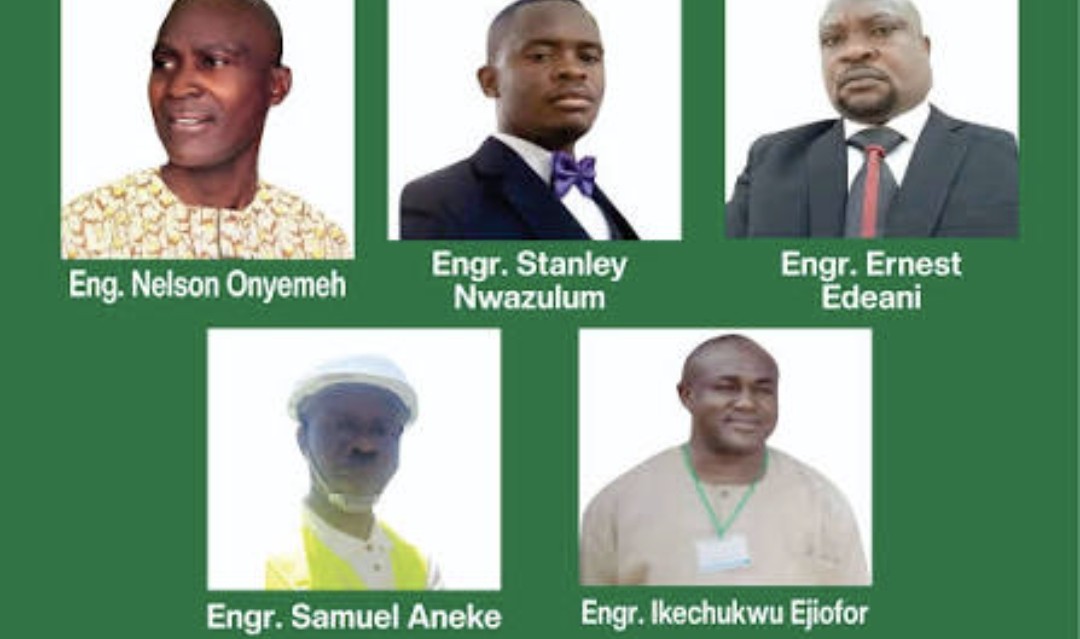
Nearly five years after five Nigerian engineers disappeared while carrying out their professional duties in Ebonyi State, the country still has no credible answers. Their families remain trapped between hope and despair, while the justice system appears unable—or unwilling—to establish the truth.
This is no longer merely the story of five missing professionals. It has become a defining test of Nigeria’s commitment to human rights, the rule of law, and public accountability.
On 3 November 2021, Engr. Nelson Onyemeh, Engr. Ernest Edeani, Engr. Ikechukwu Ejiofor, Engr. Samuel Aneke, and Engr. Stanley Nwazulum left Enugu for Ebonyi State to supervise the construction of the Abakaliki Ring Road under a contract funded by the African Development Bank (AfDB). They never returned.
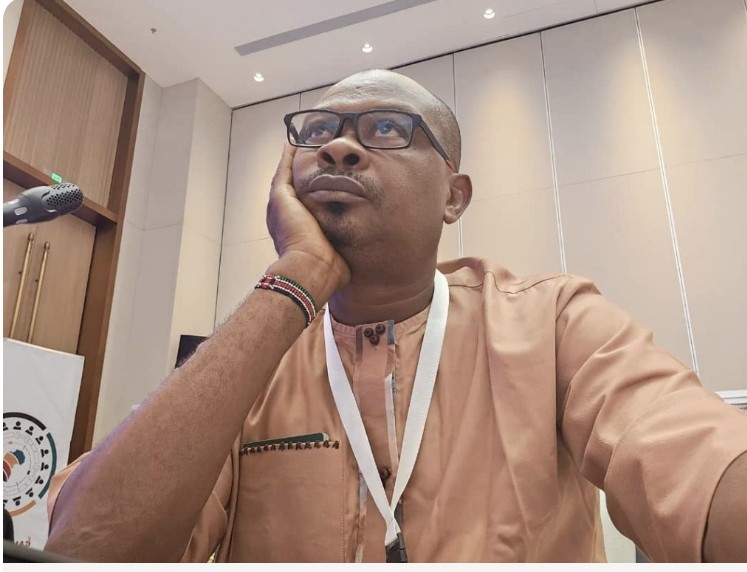
Okey Nwanguma
The engineers were employees of NELAN Consulting Limited, an independent engineering consultancy appointed through an international competitive bidding process to supervise the project in accordance with AfDB standards. Their role was not ceremonial. Independent supervision is central to ensuring that public infrastructure projects meet contractual specifications, maintain quality standards, and protect public resources from abuse.
Their disappearance would have been shocking under any circumstances. But the allegations that preceded it make the case especially disturbing.
According to the families, disagreements had arisen between NELAN and the Ebonyi State Government over project supervision, certification of completed work, and control of payments. They allege that the engineers refused to compromise their professional obligations by certifying work outside the procedures required under the AfDB-financed contract.
These allegations have been denied, and no court has established that they are connected to the disappearance. Yet they provide a context that any serious investigation cannot afford to ignore.
The rule of law demands neither blind acceptance of accusations nor premature dismissal of them. It demands an impartial investigation guided solely by evidence.
Instead, the public has been presented with a series of troubling contradictions.
The engineers disappeared without trace. Government officials reportedly attributed the incident to communal violence. Later, public statements suggested they had been killed based on alleged confessions, even while investigations were reportedly still ongoing. Yet no bodies have been conclusively identified.
Perhaps the most disturbing aspect is the reported DNA evidence. According to the families, skeletal remains presented as belonging to the missing engineers were subjected to independent DNA analysis, which reportedly excluded them as belonging to the victims. One set of remains was reportedly identified as female.
If accurate, such findings raise fundamental questions. What became of the original investigation? Why were contradictory forensic findings not fully explained? What happened to the search for the missing engineers?
These are not political questions. They are questions of justice.
Equally troubling are reports that prosecutions proceeded while the fate of the victims remained uncertain and that the proceedings have since become stalled. Justice delayed is often justice denied—not only for defendants but also for victims and their families.
The wives of the missing engineers have refused to allow the case to disappear into official silence. Their petitions to the President, the National Assembly, the National Human Rights Commission, security agencies, and professional bodies reflect not merely personal grief but an insistence that the Nigerian state fulfil its constitutional obligations.
Their central demand is simple: tell us the truth.
The Constitution guarantees the right to life. International human rights law imposes on governments a positive obligation to conduct prompt, effective, impartial and transparent investigations whenever people disappear under suspicious circumstances. Families also have a right to know the truth about what happened to their loved ones.
These obligations do not expire with time.
Nor should they depend on the political status of those whose actions may come under scrutiny.
It is equally important to emphasize that allegations against any individual, including former Ebonyi State Governor and current Minister of Works, Senator David Umahi, remain allegations unless established through credible evidence and due process. Justice demands accountability, but it also demands fairness. The objective is not to convict people in newspaper headlines or on social media, but to establish the truth through lawful investigation.
Precisely because allegations and counter-allegations have persisted for years without resolution, there is now a compelling case for an independent federal-level review of the investigation. Such a review should involve investigators with no prior involvement in the matter, modern forensic expertise, and transparent public reporting.
Nigeria cannot afford unresolved disappearances involving professionals carrying out public duties on major infrastructure projects. If engineers, auditors, consultants, journalists, lawyers, or civil servants cannot discharge their professional responsibilities without fear, public accountability itself becomes endangered.
This case is therefore about far more than five missing engineers.
It is about whether public institutions inspire confidence or suspicion.
It is about whether forensic evidence is pursued wherever it leads.
It is about whether political influence can overshadow justice.
Above all, it is about whether every Nigerian life carries equal value before the law.
The families have waited for nearly five years. That is far too long.
Justice demands answers.
The rule of law demands accountability.
Nigeria demands the truth.
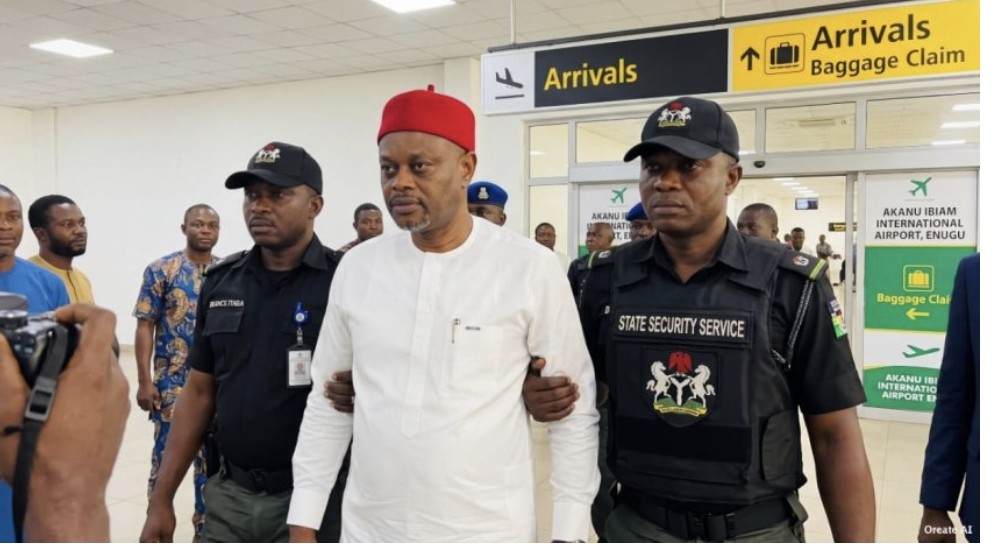
The attention of Enugu State Government has been drawn to a salacious report in the social media, credited to one Igboayaka O.Igboayaka, purportedly of Ohaneze Youth council, wherein he made an obvious, clearly laughable attempt to drag the name and office of Executive Governor of Enugu State, His Excellency, Dr. Peter Ndubuisi Mbah, into odious travails of disgraced former Minister of Science and Technology, Uche NNAJI.
It was obviously a convenient, last ditch effort to deflect attention and liability by dragging the name of the Governor into the mess Uche NNAJI had single-handedly inflicted on himself!
Pray, up until this moment, at what point in this matter did the name of Dr Mbah, feature in all these, whether as complainant or witness?
When did red herring become an acceptable defence against certificate forgery?
On all available records, the Federal Republic of Nigeria is the complainant in the criminal complaint against Uche Nnaji, definitely NOT Peter Mbah!
It is, therefore , absurd and disingenuous to think that accusing a perceived adversary of involvement in one’s unsavoury situation, in itself, would mitigate assured fate, tilt public opinion or hamstring legitimate law enforcement.
It is germain to state categorically here, that Governor Peter Mbah has filed no complaints against Uche NNAJI anywhere, civil or criminal.
Is being a sitting Governor sufficient to make one accountable for all criminal liabilities of any or all his opponents?
It would have been better for cheap hirelings like Igboayaka to explore available legal and/or judicial means under the law, to assist Mr NNAJI prove his innocence swiftly, rather than spending precious time and effort seeking to drag in someone that has nothing whatsoever, to do with his situation.
And threatening a statutory institution like ICPC, to dissuade it from performing it’s lawful duty, because a politically exposed person is involved, would set a dangerous precedent: availing criminal immunity to all manner of fugitives, who ordinarily deserve to be in jail.
It is unhelpful, indeed unnecessary here, going into the merits or demerits of the case against suspect, Uche Nnaji, but it would have made better sense to channel his endeavours to mounting a credible legal defence for self, than procuring charlatans and social media goons, to seek to use blackmail and intimidation to help him escape justice.
The best a well-advised accused person can ask for, is an expeditious, free and fair trial, not immunity !
Uche NNAJI should be anxious and ready for his impending day in court,so he can have the chance to prove his innocence, once and for all…
His Excellency,Governor Peter Mbah, is focused on governance, and has neither interest in, nor time for frivolities.
Signed:
Onyekwere Nwobodo
Special Adviser on Media, to the Executive Governor.
July 8,2026.

-
 News3 days ago
Sacked Works Commissioner: Release or Charge Him to Court, Oganiru Izzi Challenges Nwifuru
-

 News1 day ago
No Survivor Found Yet in Ondo Air Crash — Aiyedatiwa
-
 Politics1 day ago
2027: Odii Will Not Step Down, Says Spokesperson
-

 News21 hours ago
How NAF Plane Vanished From Radar Shortly After Take-Off, Crashes In Ondo Swamp
-
 Crime3 days ago
Police Deploy DIG, Two Commissioners to Rescue 20 Abducted Prospective Corps Members
-
 EverydayNews Telescope21 hours ago
Nkalagu Cement Factory: Project or 2027 Political Promise?
-
 Crime5 hours ago
Court Denies Alleged Fake Pastor Bail as Seven Witnesses Await Trial
-

 News5 hours ago
NAF Crash Claims Pilot 16 Days After Wedding