



News
We can’t control Abuja’s population explosion — FCT Minister

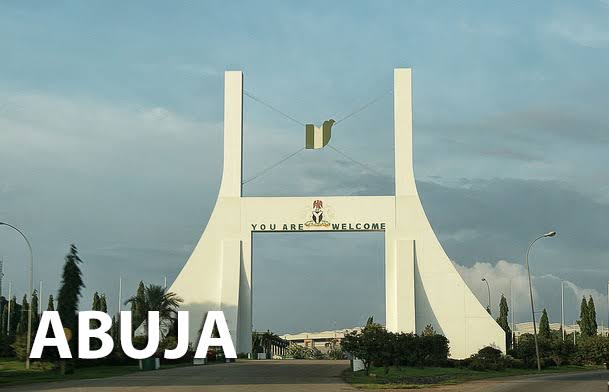

The Federal Government, on Wednesday, said it cannot contain the exploding population in the Federal Capital Territory.
Minister of the FCT, Mohammed Bello, who disclosed this while fielding questions from State House Correspondents after the week’s virtual Federal Executive Council meeting at the Presidential Villa, Abuja, however, said the regime is working to manage the situation.
According to him, stopping the FCT’s population increase is not probable because of the nature of the city and the purpose it serves.
He explained that the rising population situation is simply a trend in urbanisation which is a global phenomenon.
Bello further noted that the regime is doing everything to manage the crowd by strengthening institutions and increasing infrastructure to meet the needs of the city.
He said, “Urbanisation is a reality that we cannot reverse, it’s a worldwide phenomenon and urbanisation will continue. As a matter of fact, it has been projected that by 2050, 70 per cent of the world’s population will be living in urban areas, Abuja is no exception.

“It has served as a magnet because it’s the centre of government, it’s secure, it’s peaceful, it’s in the centre of the country and it provides a tremendous amount of opportunities for young people. So, this will continue.
He continued, “But it’s something that we are trying to manage. How do we manage it? We are strengthening our institutions, increasing infrastructure within the available resources, but with urbanisation and movement of people, obviously, crime also increases; the need to handle urban waste increases, and so many other things.
“It’s something that we’ll keep on working on, and some of the demolitions we even do is as a result of that. When people come in, they don’t have housing, they don’t have accommodation, they go into shanties and they create slums.”
Bello added that as economic activities continue, labour is required.
He said, “So, we are trying and Abuja is trying to see how we can fit into the Millennium Development Goals of sustainability. We are trying to make a sustainable city and I tell you, it’s not going to be just the government, it has to be a combination of government, the private sector, the citizenry and all of us. But despite what you said, by and large, it’s still one of the best cities in Africa and we’ll continue to do our best”, he explained.
Meanwhile, the Minister has affirmed that there would be no payment of compensation for illegal structures demolished to restore the master plan of the FCT.”
Bello said that many illegal structures and shanties demolished were built during the lockdown imposed due to the COVID-19 pandemic.
He, however, said that the government will pay compensation for any structure demolished to expand roads or provide essential facilities.
Bello explains, “The issue of renovations in the FCT is not new, it’s something that occurs as part of the daily work of enforcement, unfortunately, in the recent past, particularly during COVID-19, when most of the inspectorate staff were not able to cover many parts of the city, a lot of people went and started doing illegal constructions.
“The policies and guidelines for building in the FCT are very clear, they are well documented, the laws are there. So, what we have been doing, is just to remove infringements. So, the issue of compensation, normally, will not arise because everything is illegal.
“But there are some areas where, as part of our urban renewal and upgrade, if we need to take down a building, either to expand the road corridor or to create essential facilities for social services these will be compensated, it has always been happening.”
PUNCH.
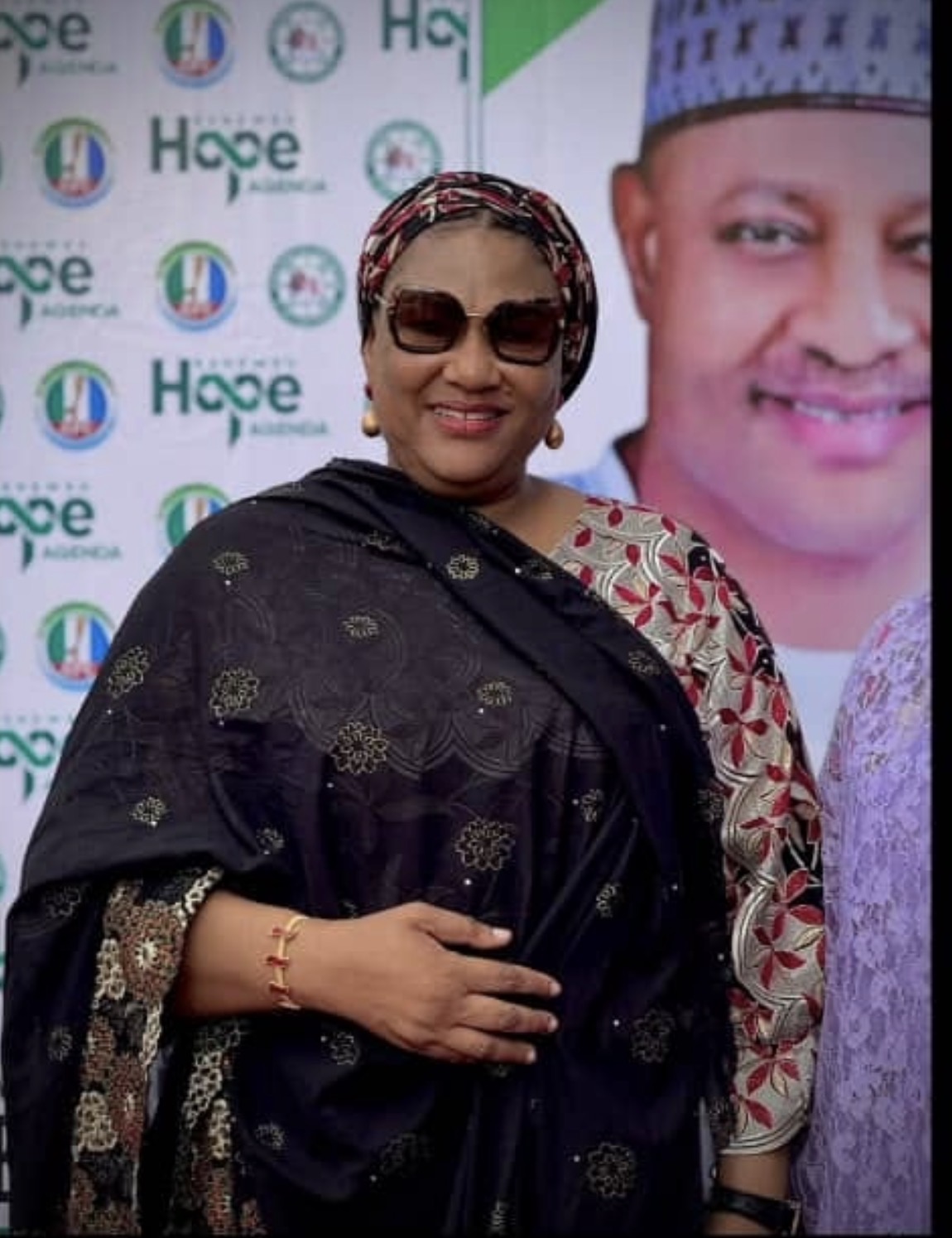
The Federal Commissioner representing Kaduna State at the National Population Commission (NPC), Hon. Sa’adatu Garba Dogonbauchi, has presented letters of permanent and pensionable appointment to three youths drawn from different local government areas of the state.
The presentation, according to a statement issued by Dogonbauchi, is aimed at expanding employment opportunities for young people and supporting youth empowerment in line with the Federal Government’s development objectives.
The beneficiaries are Shamsuddeen Abdulaziz Bagi from Igabi Local Government Area, Abdulfatah Abdulwakil from Kaduna South Local Government Area, and Aisha Adamu from Birnin Gwari Local Government Area.
Speaking during the presentation, Dogonbauchi described the appointments as more than an administrative exercise, saying they provide beneficiaries with an opportunity to build sustainable careers in public service while improving their economic prospects and contributing to national development.
She said the initiative aligns with President Bola Ahmed Tinubu’s Renewed Hope Agenda, which prioritises employment generation, economic empowerment and improved living standards for Nigerians.
The NPC commissioner expressed appreciation to President Tinubu for the opportunity to serve and represent Kaduna State, pledging to continue supporting programmes that create opportunities for young people and strengthen public institutions.
She also acknowledged Kaduna State Governor Uba Sani, Speaker of the House of Representatives Abbas Tajudeen, and Hon. James Abiodun Faleke for their support, which she said contributed to her appointment and service.
Dogonbauchi urged the new employees to discharge their duties with discipline, integrity and professionalism, while adhering to public service rules and serving as worthy representatives of their communities.
She congratulated the beneficiaries and encouraged them to justify the confidence reposed in them through excellence, accountability and dedication to public service.

Hon. Obi Aguocha, member representing Ikwuano/Umuahia North/Umuahia South Federal Constituency in the House of Representatives, is facing mounting criticism and backlash over his video in which he is seen singing and vibing to a sexually vulgar and demeaning song against women.
In the video, which is currently making the rounds online and in Ikwuano/Umuahia WhatsApp groups, Aguocha is clearly seen singing and enjoying the Ogele cultural song, whose lyrics reduce women to objects of sexual gratification.
The footage was reportedly recorded at a public gathering that had families in attendance, including children, a detail that has intensified the backlash.
The song, performed in the Ogele cultural music tradition associated with communities in Abia State, has sparked outrage among women and women’s groups who say the lyrics are not just vulgar but deeply degrading.
“This is not culture. This is humiliation dressed in tradition,” said Mrs. Ngozi Ibe, a women’s leader in Umuahia North. “We have watched the video. The words used against women in that song are not the kind of thing any serious leader should be associated with. A lawmaker representing our constituency should be defending our dignity, not promoting content that strips women of it.”
Another woman, a trader in Umuahia South who identified herself simply as Madam Grace, said the video had caused deep anger among market women.
“We heard about it and we watched it. Many of us were shocked. You cannot claim to represent women and then be seen singing and vibing to a song where women are being insulted in the most vulgar way. We are not laughing. We are insulted,” she said.
A coalition of women’s groups in the constituency, under the aegis of the Ikwuano/Umuahia Concerned Women’s Forum, also issued a statement condemning the video.
“The lyrics go beyond ordinary expressions of affection. They employ vulgar sexual references that reduce women to objects and make our sexuality the subject of degrading entertainment. For a serving federal lawmaker to be seen actively singing and enjoying such content is a serious indictment on his judgment and his respect for the women he claims to represent,” the group said.
The women’s forum also expressed concern over the presence of children at the event.
“What message does it send to our children when a leader they look up to is seen celebrating a song that reduces women to sexual objects? This is not the kind of example we should be setting for the next generation,” the statement added.
“Ogele is our heritage. But heritage is not a licence for vulgarity. Culture should uplift, not humiliate. We call on Hon. Aguocha to explain his involvement in this video and to apologise to the women and families of Ikwuano/Umuahia,” the group said.
The controversy raises questions about the judgment expected of a public officeholder and the appropriateness of associating with content that many women and families could reasonably find offensive and humiliating.
Aguocha has not responded to requests for comment as of press time.
News
National Assembly Receives Proposals for New LGAs as Lagos Seeks 37, Akwa Ibom Missing from Lis

The National Assembly has reportedly received proposals for the creation of additional local government areas (LGAs) across Nigeria, with Lagos State seeking 37 new councils, while Akwa Ibom State is conspicuously missing from a published list of submissions.
The proposals, according to a report by The Insight Lens Project, cover various communities across the country’s six geopolitical zones and reflect demands for administrative restructuring, improved grassroots representation and better access to government services.
However, the complete list of submissions has not been independently verified, and the proposals do not constitute approval for the creation of new local government areas.
In the North-East, the reported requests include Bidoma and Michika South in Adamawa State, Boi-Tapshin in Bauchi, Banki in Borno, Cham in Gombe, Gudi in Yobe and Wukari in Taraba State.
In the North-West, the proposed areas reportedly include locations in Jigawa, Piriga in Kaduna, Dankama in Katsina, as well as Moriki and other communities in Zamfara State.
The North-Central zone also features in the reported submissions, with proposals covering Agasha and other communities in Benue State, alongside several areas in Kogi, Kwara, Nasarawa, Niger and Plateau states.
In the South-East, the list includes Abiriba in Abia State, proposed councils around Obosi in Anambra State, several communities in Ebonyi State and numerous proposed local government areas in Imo State.
The South-West proposals reportedly include Eso-Obe and Gbonyin in Ekiti State, Ogijo and other areas in Ogun State, as well as additional proposed councils in Osun and Oyo states.
Lagos State stands out with a reported request for 37 new local government areas, although the published report did not provide the names and proposed boundaries of all the councils.
In the South-South, the reported proposals include Akassa and other communities in Bayelsa State, Ughievwen in Delta State, several areas in Edo State, and Ataba, Evo and Alesa in Rivers State.
Cross River State is also listed, with proposed councils around Mbube and Calabar. Akwa Ibom State, however, has no clearly identified entry in the published list, raising questions about whether the state submitted proposals or was omitted from the report.
Constitutional Requirements
The creation of new local government areas is governed by Section 8 of the 1999 Constitution of Nigeria, which prescribes a series of procedures involving consultations, a referendum, legislative approval and the submission of relevant records to the National Assembly.
The constitutional process must be completed before newly created councils can be recognised and reflected in the relevant constitutional schedules.
Consequently, proposals submitted by states or communities do not automatically translate into legally recognised local government areas.
The reported development comes amid broader constitutional review efforts by the National Assembly. In October 2025, the legislature reported receiving 278 requests for additional local government areas and 55 proposals for the creation of new states.
Nevertheless, the specific state-by-state submissions contained in the latest published list, including Lagos State’s reported demand for 37 additional councils and the absence of Akwa Ibom, remain subject to confirmation through official National Assembly records.
The proposals, if confirmed, could reopen discussions on administrative boundaries, grassroots governance and the constitutional procedures required for the creation of additional local government areas in Nigeria.

By Okey Maduforo, Awka
The Mayor of Onitsha North Local Government Area of Anambra State, Ezennia Emelie Ibekwe, has issued a stern warning to traders and residents against indiscriminate dumping of refuse and blockage of drainage channels, threatening sanctions against those who fail to comply with sanitation directives.
Ibekwe, who handed down the warning during an inspection of Ajasa Market, expressed displeasure over the deteriorating environmental conditions in parts of the commercial city, describing the situation as unacceptable and detrimental to healthy living and business activities.
During the inspection, the Mayor observed that refuse and other waste materials generated from market activities were being dumped into drainage channels, obstructing the free flow of water and exposing traders, residents and their properties to flooding.
“This practice contributes to flooding whenever it rains, putting traders, residents and their properties at risk.
“An environment of this nature is not conducive to business and healthy living. It does not speak well of a commercial city that houses one of the largest markets in sub-Saharan Africa,” he stated.
Consequently, Ibekwe directed traders and other persons responsible for the blocked drainage channels to ensure their immediate clearance, giving them until the following day to comply.
He further announced that he would return to the market for another inspection to ascertain the level of compliance with the directive.
“People should be alive to their responsibilities by ensuring a clean and healthy environment. Government alone cannot handle this effectively without the active participation of residents and traders.
“I am going to come back here to see what you have done,” he warned.
The Mayor stressed that the sanitation directive was not restricted to Ajasa Market but extended to all markets within Onitsha North Local Government Area.
He consequently charged market leaders to take responsibility for enforcing environmental sanitation regulations within their respective markets, warning that the council would no longer tolerate practices capable of worsening flooding and environmental degradation.
“It is not only Ajasa Market but all the markets in Onitsha North Local Government Area. Market leaders should ensure that this directive is not compromised,” Ibekwe declared.
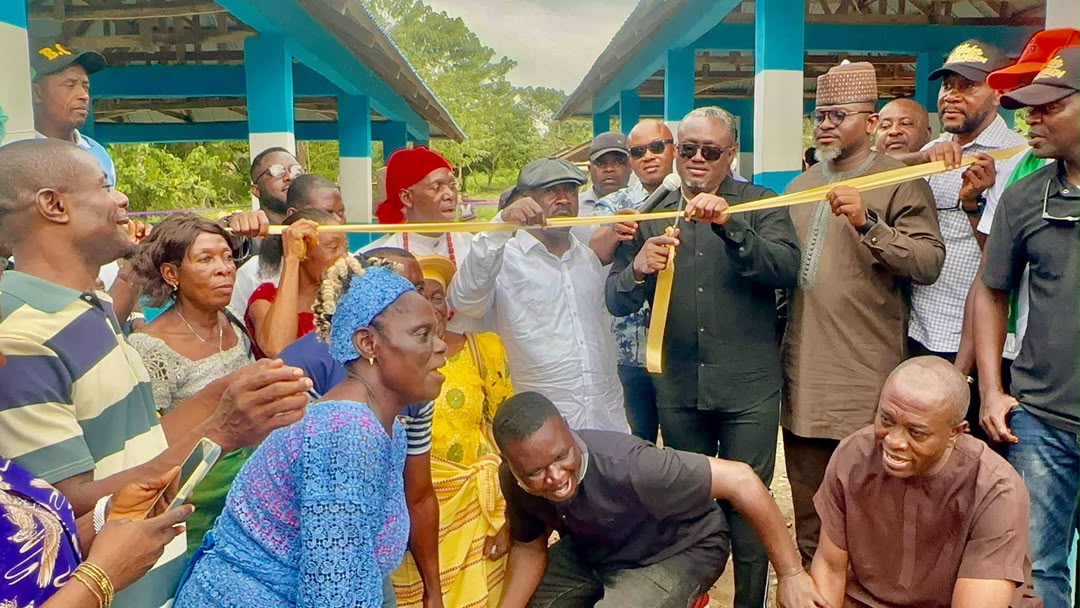
The Speaker of the Cross River State House of Assembly, Rt. Hon. Elvert Ayambem, has commissioned a community market in Afi, Ikom II State Constituency, as part of his commitment to sustainable development and improved living conditions in rural communities.
The project, facilitated and completed by the Speaker, was identified as one of the priority needs of the community following consultations by the Constituency Needs Assessment Team established by Ayambem to evaluate infrastructure and identify projects that would directly benefit the people.
The team was mandated to identify critical infrastructure capable of improving the livelihoods of residents and promoting sustainable economic growth across the constituency.
According to community members, the absence of a suitable trading environment had been a major challenge for years, forcing traders to conduct business under harsh weather conditions, including rain and intense sunshine.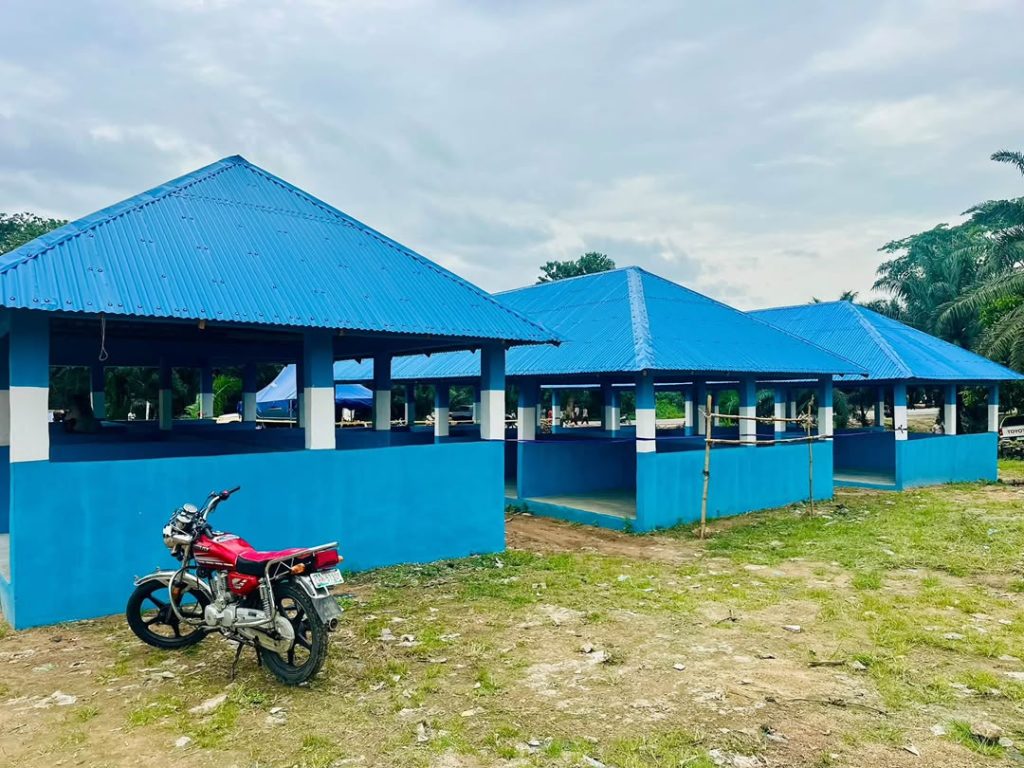
Speaking on behalf of the community, the village head, Chief Etta Ekawor, commended Ayambem for the intervention, describing the market as a miracle and a blessing that would transform the fortunes of the people.
In his remarks, Ayambem expressed appreciation to the Cross River State Governor, Senator Bassey Edet Otu, for his continued support for people-oriented projects and development initiatives across rural communities in the state.
He also thanked the people for their patience, support for his leadership and commitment to the All Progressives Congress (APC).
The Speaker was accompanied by the member representing Yala I State Constituency, Hon. Brian Odey; the Vice Chairman of Ikom Local Government Area, Hon. Maurice Ndome; and the Assistant Financial Secretary of the APC in Cross River State, Hon. Akanya Agbor.
Other stakeholders from Nde Ward who attended the commissioning included the former Vice Chairman of Ikom Local Government Area, Hon. Asinya Ntan, and the Community Relations Officer, Hon. Abang Neji.
Matthew Okache
Chief Press Secretary to the Speaker
October 22, 2026

-
 News3 days ago
C’RIVER 2027 BUDGET: GOV OTU PRESENTS ₦987.8bn ESTIMATES TO ASSEMBLY
-

 EverydayNews Telescope4 days ago
Enugu East Senate: The Dark Side of Ada Ogbu, NDC Candidate
-
 News5 days ago
Tension Mounts in Awka Anglican Diocese as Supervising Bishop Ezeofor Moves to Take Over Wednesday
-

 News3 days ago
Holy Ghost Transformation: How Enugu North Chairman Ibenaku Onoh Ended Years of Traffic Chaos, Roadside Trading
-

 EverydayNews Telescope4 days ago
Ebonyi 2027: The People’s Quest For ODII Vs Compromised Stakeholders
-
 Politics2 days ago
One Feared Dead, Several Injured as Thugs Attack Ebonyi NDC Assembly Candidate, Burn Campaign Vehicle
-
 News4 days ago
Cross River Assembly Passes State Police Bill with 22 Votes
-
 Politics4 days ago
2027: Tinubu Has No Hand in Alleged Assassination Plot Against Atiku – APC